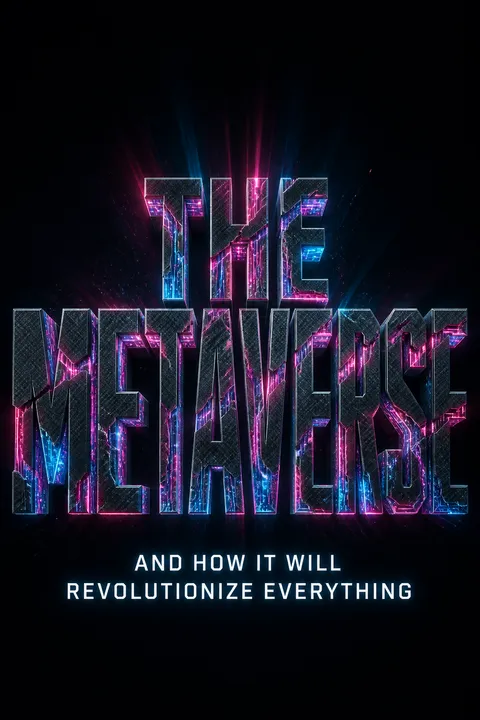


Key Takeaways
Define the Metaverse by what it connects, not by the headset you wear.
A network, not a gadget. The Metaverse is not simply virtual reality, a game, or a single company’s platform. It is a vast network of real-time, three-dimensional virtual worlds that people can share at the same time. The worlds must persist, support many users, and carry data such as identity, possessions, communications, and payments between them. That continuity is what could make virtual spaces part of ordinary life, rather than isolated visits to separate apps.
Access can take many forms. A headset may help people feel present, but it is not required. The defining shift is from using separate digital services to moving among connected worlds where people and their information can persist. The book also distinguishes this technical vision from Web3: blockchain and decentralization may contribute, but neither is a necessary part of the definition.
The definition usefully moves attention from futuristic hardware to the less glamorous question of whether experiences connect. That makes the concept testable: can people share a world, carry meaningful data, and return to an experience that has not simply reset? It also prevents any company from claiming that a headset or branded game alone is the Metaverse. The choice to make three-dimensional shared worlds central is more debatable. Some tasks work better as text, video, or flat interfaces, so a successor to the internet need not make every activity spatial.
Treat confusion as a signal of transition, not proof the idea is empty.
New platforms look vague first. The Metaverse has been imagined for decades, from Neal Stephenson’s fictional virtual world to early text-based online games. In the 1970s, Multi-User Dungeons let people explore shared spaces through typed commands. Lucasfilm’s 1986 Habitat added a graphical world where users could make rules and trade. Second Life later supported businesses and a virtual economy, while Minecraft, Roblox, and Fortnite brought world-building and social events to much larger audiences.
Adoption needs a critical mass. The book compares this development to the mobile internet. Mobile networks existed well before smartphones became indispensable, but useful devices, fast connections, apps, and consumer habits had to converge. Predictions about exactly what people would do online often missed the mark. The practical lesson is to track the capabilities coming together, rather than insist on a precise forecast of daily life in a future world.
The historical sequence helps distinguish a long-running idea from a near-term product promise. Each generation of virtual worlds made participation easier or more social, but none alone delivered the broad, persistent network in the definition. That is a useful antidote to both hype and dismissal. Still, confusion can signal opportunity without proving that a large new market will follow. The book’s comparison to mobile is instructive, but not conclusive: a new platform can gather its necessary technologies and still fail to attract habits, institutions, or business models that justify widespread use.
Expect networks and computing, not imagination, to set the Metaverse's speed.
Real time is demanding. A virtual world must continually send data, process users’ actions, and render new images. Bandwidth determines how much information can travel; latency is the delay before it arrives. Both matter, but interaction is especially sensitive to delay. In a fast game, a lagging player may act on a version of the world that other players have already left behind. The book notes that even a 10-millisecond change in gaming latency can affect weekly play time.
Scale forces trade-offs. Microsoft Flight Simulator streams detailed data for a virtual Earth too large to store on a consumer device. EVE Online, by contrast, supports a persistent shared universe partly because its vast, mostly empty space limits what needs rendering. A 2021 EVE battle drew 12,000 players to one system, overwhelming servers and preventing many from joining. Greater realism, more users, and richer interaction all consume scarce computing and network capacity.
The contrast between Flight Simulator and EVE Online shows that a virtual world’s technical limits are also design choices. A world can feel enormous by limiting detail, or vivid by keeping the experience smaller. The book’s strongest point is that seamless presence requires more than impressive graphics: users must remain synchronized and able to affect the same world. That standard may be unnecessarily demanding for every use. A training simulation, a social gathering, and a competitive game have different tolerances for delay, so useful virtual experiences may arrive well before any universal world can support them all.
Build on gaming's toolkits, but don't mistake Roblox for the whole universe.
Games trained the technology. For decades, games pushed consumer devices to render increasingly complex worlds and taught developers how to handle multiplayer interaction. This matters because entertainment can be worthwhile even when it simplifies physics: a game can be fun without simulating every property of fire or gravity. Those constraints helped make real-time 3D feasible before many businesses had a reason to use it. Game engines such as Unity and Unreal now also support film production, engineering, and digital twins.
Platforms are not the whole network. Roblox, Minecraft, and Fortnite Creative make it easier for users, including inexperienced creators, to build worlds using shared tools and services. Roblox reported more than 4 billion hours of use in January 2022 and millions of user-made worlds. Yet such integrated platforms are only part of a much larger field of engines, studios, and specialized simulations. A popular platform can be a major destination without containing every virtual world.
Gaming’s contribution is easy to underestimate because the products look like entertainment, not infrastructure. Yet games have made interaction, rendering, and creator tools practical at consumer scale, while revealing that people may value social play as much as victory. Integrated platforms also demonstrate how shared tools can lower the cost of creation. Their strength creates a tension, however: convenience comes with dependence on the platform’s rules and economy. The distinction between a successful world-building platform and a truly interoperable network matters precisely because a vibrant garden is not the same thing as an open landscape.
Make interoperability useful enough that closed worlds feel economically expensive.
Sharing requires agreement. In the physical world, a pair of shoes can enter almost any shop without the shop’s systems needing to understand the shoes. Virtual objects are different: another world needs compatible data and code to display and operate them. Even defining an avatar is complicated. Is it one model, or a body plus clothing, movements, and adjustable features? Ownership records, payments, and rules about where an object is allowed add further complications.
Benefits can change policy. Interoperability is not all-or-nothing. Worlds may share some identities or items while restricting others. The book points to Fortnite’s cross-platform play as a market force: its popularity helped prompt Sony to allow PlayStation users to play with people on competing systems. Common game engines and shared 3D formats can similarly reduce repeated work. Standards spread most readily when developers and users gain enough from compatibility to pressure platforms to cooperate.
The shoe comparison captures why virtual openness does not arise automatically. Software must interpret the object, its behavior, and the rights attached to it. This is a coordination problem as much as a technical one, because companies may fear losing control of sales or customers. Fortnite’s cross-platform success illustrates how user demand can alter a platform’s incentives without eliminating competition. At the same time, complete portability is not always desirable: a classroom, a realistic simulation, and a cartoon game may reasonably impose different rules. The practical goal is useful exchange, not universal sameness.
Challenge the 30% toll: app stores bundle payment with control.
A fee became an architecture. The book traces the gaming industry’s customary 30% commission to early console deals, when manufacturers licensed games and produced costly cartridges. Digital distribution made manufacturing far cheaper, but the fee persisted and expanded to in-game purchases. App stores inherited the model, bundling billing with distribution, identity, software tools, and other services. Developers often cannot choose a cheaper payment option while keeping access to the same customers.
Creators bear the squeeze. Roblox pays creators roughly 25% of player spending, while platform and operating costs also consume revenue. On mobile, Apple’s store commission can make Roblox lose money on each $100 spent, even as Apple receives a substantial share. These economics shape what gets built: a tutor may find it more viable to sell a video lesson than an interactive 3D class. Payment rules therefore influence not just prices, but which kinds of virtual experiences can grow.
The chapter’s key insight is that payments are not a neutral checkout lane when access to the market is bundled with them. A commission can redirect investment, privilege some business models, and leave creators with little room to experiment. The historical origin of the 30% rate does not by itself establish what a fair rate should be today. Platforms also provide valuable services, including distribution and infrastructure. The important question is whether each service can be chosen and priced separately, so that fees reflect real competition rather than a developer’s dependence on a single gatekeeper.
Use blockchains to test new ownership, not to declare ownership solved.
A shared ledger changes control. A blockchain is a database maintained by a distributed network rather than one company. Advocates see it as a way to record ownership and move value without asking a single platform for permission. Smart contracts are programs that automatically carry out agreed rules, such as distributing payments among contributors. Decentralized autonomous organizations, or DAOs, use such tools to coordinate groups and shared funds.
A token is not the whole asset. A non-fungible token can identify a unique digital item, but the item’s image, code, or functionality may still live on a company’s server. Another world may lack the software to use it, and a blockchain cannot guarantee that the person who minted an item owned its rights. The book describes ConstitutionDAO raising more than $47 million to bid on a rare Constitution, while transaction fees and refunds exposed practical limits. The technology offers possibilities, not automatic portability or legitimacy.
The case for blockchains is strongest when framed as a governance and payment experiment, not as a magic certificate of ownership. A public record can make some transfers easier to verify, and programmable payments can coordinate contributors who lack a shared institution. Yet control over the ledger does not necessarily confer control over the underlying creative work or the software needed to use it. The book’s distinction between a token and the asset it points to is essential. A more open ledger can improve accountability, but it cannot substitute for clear rights, usable technology, or remedies when something goes wrong.
Design the virtual economy around trust, because more life moves online.
Useful worlds extend beyond play. Three-dimensional simulations could make education more hands-on: students might build an aqueduct or explore a human body rather than only watch a video. Businesses can use digital twins, virtual models linked to real-world data, to test building plans or manage complex sites. These experiences could broaden access, but the Metaverse also makes more personal activity observable, from facial movement to work performance and location.
Power needs rules. More immersive worlds may amplify familiar problems such as harassment, misinformation, surveillance, and unequal access. The book argues that platform operators alone cannot govern a space where work, commerce, identity, and personal data matter at large scale. It calls for clearer user rights, portable data and creations, independent oversight, and legal recognition for new forms of digital collaboration. The central issue is not whether virtual life is inherently good or bad, but who sets its rules and what recourse users have.
The most consequential applications may be practical rather than spectacular. A digital twin that helps plan a city or a simulation that gives students a chance to experiment can create value without replacing ordinary life. But richer presence also means richer records of people, and therefore greater stakes in consent, security, and accountability. The book is persuasive that governance must be part of the design, not an afterthought. Its proposals face a real tension: rules can protect users, yet poorly designed rules can entrench incumbents or limit experimentation. Institutional oversight needs to remain adaptable and contestable.
Analysis
The book’s central achievement is to turn a slippery cultural buzzword into a systems problem. Instead of asking whether virtual reality is exciting, it asks what must be true for shared virtual spaces to become persistent, large-scale, and connected. That move brings infrastructure, economics, and governance into one frame. Networks and computation constrain experience; standards determine whether worlds can exchange data; payment systems determine who captures value; and institutional rules determine whether participants can trust the arrangement.
Its most useful distinction is between the Metaverse as a technical form and Web3 as a governance aspiration. The two can reinforce each other, but one does not entail the other. This prevents blockchain enthusiasm from substituting for a definition of the actual user experience. The treatment of NFTs similarly resists a common category error: recording a token does not ensure that the referenced asset is portable, usable, or legally owned.
The argument is strongest when describing incentives and constraints, and less certain when forecasting broad social adoption. The mobile analogy shows how many pieces can converge, but does not establish that 3D environments will become as universal as smartphones. Many tasks benefit from spatial presence, while others are faster and clearer in text or conventional interfaces. The book acknowledges this, yet its definition gives 3D a privileged role that could prove too narrow if future experiences remain mixed.
The political argument is especially important. Interoperability and decentralization are not purely technical virtues: they distribute bargaining power. But openness also has costs, including safety, moderation, and coherent user experience. The durable question is therefore not whether the Metaverse should be centralized or decentralized. It is how much control should sit with platforms, users, developers, and public institutions, and how easily each can challenge the others. That question remains relevant even if the term Metaverse fades.
Review Summary
The Metaverse receives mixed reviews, with praise for its comprehensive overview of the concept and potential future implications. Readers appreciate Ball's technical insights and historical context but criticize the book's dry writing style and occasional overconfidence. Some find it too focused on gaming and lacking in addressing societal impacts. Overall, reviewers consider it a valuable resource for understanding the metaverse's challenges and possibilities, despite its limitations in predicting specifics about its development and impact.
People Also Read









Glossary
Metaverse
connected virtual worldsA large network of real-time, three-dimensional virtual worlds that people can share simultaneously. In the book’s definition, these worlds persist, support effectively unlimited users, and preserve information such as identity, possessions, communications, and payments across experiences. Virtual reality headsets may provide access, but they are not required.
Integrated virtual world platforms (IVWPs)
world-building platformsPlatforms such as Roblox, Minecraft, and Fortnite Creative that combine world-building tools with shared services, including accounts, communications, avatars, and currencies. Creators can build experiences without developing every underlying system themselves. This integration makes creation easier, but worlds and creators depend on the platform’s technical systems and policies.
Interoperability
systems exchanging usable dataThe ability of separate computer systems or software to exchange information and make use of what they receive. In virtual worlds, it may involve carrying an identity, object, achievement, or payment between platforms. It requires compatible data and code, as well as rules for ownership and use. The book treats it as a spectrum, not a yes-or-no condition.
Sweeney's Law
local computing outpaces networksTim Sweeney’s principle that improvements in the computing power available on users’ devices are likely to outpace improvements in network bandwidth, latency, and reliability. The principle challenges the assumption that moving all processing to remote data centers will automatically improve virtual experiences. Network delays can make remote rendering less responsive than local computing.
Payment rails
systems moving moneyThe networks, standards, and services that enable money to move between buyers, sellers, banks, and platforms. Examples include wire transfers, ACH, credit cards, and peer-to-peer payment services. In virtual economies, payment rails can also bundle distribution, account identity, and access to customers, giving platform operators influence beyond the processing of transactions.
Blockchain
distributed transaction ledgerA database maintained through agreement among a network of independent computers, rather than by one central operator. Participants validate records according to network rules, often receiving cryptocurrency as compensation. This design can make records harder for one party to alter, but typically involves costs in speed, expense, and duplicated computing work.
Non-fungible token (NFT)
unique digital ownership recordA unique token recorded on a blockchain, unlike a currency unit that can be exchanged for an equivalent unit. NFT supporters use tokens to represent rights to digital items, such as art or game objects, and to record transfers. The token alone does not guarantee ownership of the underlying work, access to its data, or the ability to use it in another virtual world.
Decentralized autonomous organizations (DAOs)
rule-based online collectivesGroups that use blockchain records and smart contracts to coordinate shared funds, ownership, voting, or other activities. Their rules can automate tasks such as distributing money or counting votes without relying on a conventional central administrator. Legal recognition and effective governance remain challenges, and technical automation does not eliminate disputes or poor decisions.
FAQ
What's The Metaverse: And How It Will Revolutionize Everything about?
- Exploration of the Metaverse: The book provides a comprehensive overview of the Metaverse, a virtual shared space created by merging enhanced physical reality with persistent virtual reality.
- Historical Context: It traces the Metaverse's origins from early science fiction concepts to current technological developments and corporate interests.
- Future Implications: Matthew Ball discusses how the Metaverse could transform life, work, and social interaction, potentially leading to a multi-trillion-dollar economy.
Why should I read The Metaverse: And How It Will Revolutionize Everything?
- Informed Perspective: Matthew Ball offers a well-researched perspective on the Metaverse, making it valuable for those interested in technology, business, or social trends.
- Understanding Future Trends: The book helps readers grasp the Metaverse's implications for future technological advancements and societal changes.
- Cultural Relevance: It addresses cultural shifts accompanying technological advancements, encouraging critical thinking about technology engagement.
What are the key takeaways of The Metaverse: And How It Will Revolutionize Everything?
- Definition of the Metaverse: Ball defines it as a massively scaled, interoperable network of real-time rendered 3D virtual worlds.
- Technological Foundations: Networking, computing, virtual world engines, and interoperability are essential for building the Metaverse.
- Economic Potential: The Metaverse could generate trillions in economic value, reshaping industries and creating new business models.
How does Matthew Ball define the Metaverse?
- Comprehensive Definition: Ball describes it as a network of real-time rendered 3D virtual worlds experienced synchronously and persistently by unlimited users.
- Key Components: Includes individual presence, data continuity, and real-time interaction.
- Distinction from Current Internet: Emphasizes that the Metaverse is a fundamentally different experience, integrating various technologies and interactions.
What are the technological foundations required to build the Metaverse?
- Networking: Advanced capabilities are needed for high bandwidth and low latency, enabling real-time user interactions.
- Computing Power: Significant resources are necessary to render complex 3D environments and manage data from numerous users.
- Virtual World Engines: Engines like Unity and Unreal are crucial for creating immersive experiences and managing virtual worlds.
How does the Metaverse differ from traditional online experiences?
- Synchronous Interaction: Allows real-time interactions among users in a shared virtual space, unlike asynchronous traditional experiences.
- Persistence: Designed to be persistent, with changes remaining over time, unlike many online games that reset after sessions.
- Interoperability: Aims for interoperability between virtual worlds, allowing asset and identity transfer across platforms.
What role do payment systems play in the Metaverse according to Matthew Ball?
- Economic Infrastructure: Payment systems are crucial for a thriving Metaverse economy, enabling transactions for virtual goods and services.
- Digital Currency: Cryptocurrencies and blockchain technology could serve as primary payment rails, offering decentralized and secure transactions.
- User Trust: Successful systems must instill trust, ensuring secure transactions and verifiable ownership of virtual goods.
What challenges does the Metaverse face in terms of interoperability?
- Data Standards: Lack of common standards and formats makes sharing assets and information across virtual worlds difficult.
- Ownership Rights: Clear ownership rights for virtual goods are essential for interoperability, allowing cross-platform use.
- Technical Complexity: Creating systems that process data from various sources adds complexity to achieving true interoperability.
How does The Metaverse address the concept of payment rails?
- Variety of Payment Systems: Discusses systems like ACH, credit cards, and digital networks, each with advantages and drawbacks.
- 30% Standard: Highlights the prevalent fee structure in digital transactions, raising questions about fairness in the digital economy.
- Future of Payments: Advocates for decentralized solutions that lower costs and enhance accessibility for users and developers.
What role do blockchains play in the Metaverse according to The Metaverse?
- Programmable Payment Rails: Blockchains facilitate transactions, offering flexibility and transparency in value exchange.
- Decentralization and Trust: Enable a trustless environment, fostering innovation and protecting user rights without centralized authorities.
- NFTs and Ownership: Establish ownership of virtual goods, crucial for the Metaverse's economic structure.
How does The Metaverse envision the future of education?
- Enhanced Learning Experiences: Transforms education with immersive and interactive environments, engaging students more effectively.
- Accessibility and Equity: Bridges gaps in access to quality resources, democratizing education for diverse backgrounds.
- Integration of Technology: Highlights potential for AR and VR integration, creating personalized and relevant learning experiences.
What challenges does The Metaverse identify regarding user safety and data rights?
- Harassment and Abuse: Warns of potential exacerbation of these issues, emphasizing the need for robust moderation and consent mechanisms.
- Data Privacy Concerns: Raises questions about data ownership and privacy, advocating for clearer regulations to ensure user control.
- Regulatory Frameworks: Suggests new laws and policies to govern the Metaverse, addressing identity, ownership, and user rights.
Download PDF
Download EPUB
.epub digital book format is ideal for reading ebooks on phones, tablets, and e-readers.








