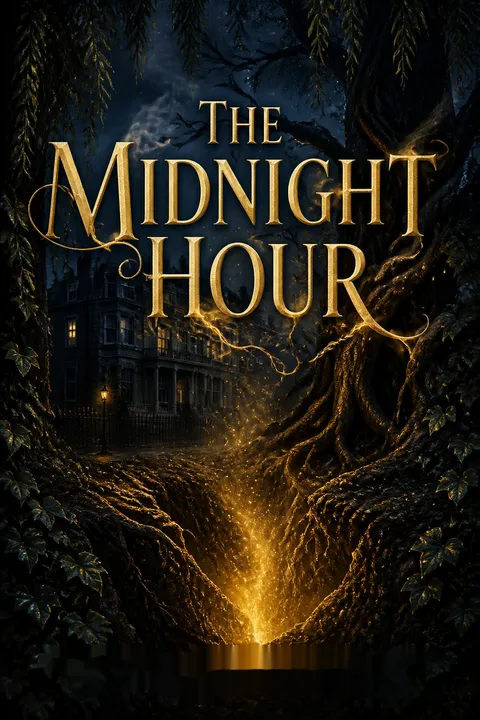


Plot Summary
The Basement Warning
By 2019, Maggie Parker has made a quiet life in Paris as a novelist, far from the Notting Hill house where her mother vanished. On the anniversary of that disappearance, an old acquaintance calls with news that the house’s new owner has permission to excavate its garden.
The call sends Maggie’s attention back to a secret she has kept from her younger brother, Kit, and from nearly everyone else. She cannot tell how much lies beneath the patio, only that digging could expose it. Her manuscript stalls, and she abandons the safety of distance, travelling to England to watch the work and protect Kit from whatever the builders uncover.
The Pink Door
In 1998, after her father Damian’s death, Maggie resents her mother, Dee Dee, for moving the family from Surrey to Notting Hill. The move is driven by money trouble and Dee Dee’s renewed modelling and television work, but Maggie feels stranded in a noisy city and retreats into books.
Her six-year-old brother Kit, lively and difficult to contain, is the one person she must look after. One evening Dee Dee dresses for an unexplained outing, leaves Kit in Maggie’s care, and walks away without looking back. By morning she has not returned. Searching the house, Maggie finds unpaid bills and a hidden envelope of cash, but no explanation for her mother’s absence.
Wolf on Powis Square
When Kit skateboards into the path of a reversing van, a young antiques worker pulls him clear. He calls himself Wolf, and the rescue begins an unlikely friendship: he repairs Kit’s board, gives him a tiny toy car, and takes the siblings to his uncle Gav’s cluttered shop on Golborne Road.
Maggie, who has barely explored the neighbourhood, finds herself drawn to Wolf’s attention and to the way he treats Kit as a person rather than a nuisance. As Dee Dee remains missing, Wolf listens while Maggie describes the family’s debts and her fear that authorities might separate her from Kit. He urges her to think of herself as capable, and the two fall into an intense first love.
Cooper at the Door
A thin man who calls himself Cooper begins appearing near the house, watching Maggie and pressing for Dee Dee. He gives Kit a football and exploits the boy’s trust to get inside. In the garden, Cooper reveals that he has been extorting money from Dee Dee and threatens to expose a family secret. Wolf arrives and orders him out; Cooper insults Wolf’s imprisoned father, then attacks him.
Wolf punches Cooper, who collapses beside the unfinished hole in the patio. Believing he has killed him, Wolf calls Gav, his uncle, for help. Gav tells the teenagers to leave and avoid the police. Maggie takes Kit, their passports, and cash, then flees with him to Paris, while Wolf stays behind.
Paris Holds Its Breath
In Paris, Maggie discovers that her aunt Cora is Kit’s birth mother, a truth the family concealed after Cora’s addiction left her unable to raise a child. Cora admits Cooper may be Kit’s biological father, but Maggie promises not to tell Kit.
Dee Dee eventually arrives, having gone to the empty Old Rectory in a state of exhaustion and confusion. She explains that Cooper’s blackmail, money problems, grief, and deteriorating health overwhelmed her; doctors later find an inoperable brain tumour.
The family settles at the Old Rectory, where Dee Dee spends her final months with Maggie, Kit, and Cora. Maggie and Wolf briefly reconnect, then separate to avoid implicating one another. After Dee Dee dies, Maggie buries her own story inside fiction.
Marco’s Familiar House
Back in 2019, Maggie visits the renovated Notting Hill house and recognizes Marco, Dee Dee’s old hairdresser friend, now its owner. He bought it because it reminded him of Dee Dee, but the basement work is already underway. Maggie cannot make herself enter. In a café, Marco tells her that he still cares about the family and connects her with Dee Dee’s former friends, Suki and Clemence.
They explain that Cora had refused to pass on their messages to Maggie and Kit for years, believing contact would upset them. Their reunion gives Maggie new witnesses to her mother’s past, but their conversation is interrupted when Marco calls: the excavation has uncovered what appear to be human remains.
Roy’s Missing Pieces
While Maggie returns to London, Kit searches for Wolf through his antiques business and an anonymous online customer, Roy Smith, who has been following his posts for months. Roy arranges to meet, says he knew Wolf and Gav, and claims Wolf once threatened his uncle during a violent argument. He also returns Kit’s lost childhood peg doll, Little Me, which earns his trust.
Kit follows a name supplied by Suki and locates Wolf, now Will Derry, a discreet adviser at a prestigious auction house. Maggie meets Will and tells him the excavation has found remains. Believing they may be Cooper’s, Will decides he must face the consequences of the old fight. Neither knows that Cooper survived.
The Man Called Roy
At dinner, Roy tells Kit that he may be his biological father, claiming an old relationship with Cora and insisting he recognized Kit from childhood. He also shows Kit a newspaper report about human remains at the Parker house and nudges him toward suspecting Wolf.
Maggie arrives and recognizes Roy as Cooper, the man she believed Wolf had killed. Kit learns that his customer has deceived him, while Maggie realizes the supposed corpse is still alive.
They hurry toward the auction house to warn Will, but police officers are already taking him away. Will tells them the authorities believe the remains are Gav’s. Kit and Maggie now understand that the discovery may expose a different death, and that Cooper has deliberately pointed suspicion at Wolf.
The Skeleton Puppet
Kit visits Cooper’s flat hoping to learn what happened to Gav, secretly recording their conversation on his phone. Cooper describes Wolf’s fight with Gav and the garden hole, then speaks as if explaining his own crime: after recovering from Wolf’s punch, he found Gav trying to help, killed him, and buried him beneath the patio. Cooper takes Kit’s phone and attacks him, knocking out a tooth.
Kit fights back and reaches the door, where Marco arrives with Cora and Maggie. A rare skeleton puppet from Gav’s shop, which Cooper kept among his antiques, helps Kit connect the stories and remember the shop clearly. Marco tells Kit that Cooper is not his father. The recording and the puppet’s provenance give police evidence against Cooper.
A Different Beginning
Cooper is convicted after his recorded confession and the puppet’s history link him to Gav’s murder. A DNA test establishes that Kit and Maggie share Damian as their father, while Cora is Kit’s birth mother. Kit begins rebuilding his relationship with Cora, though he refuses to call her his mother; Maggie, hurt by Cora’s concealment, needs more time.
Will is free, but he and Maggie have spent decades apart under the weight of the death they believed they caused. At a gathering in Notting Hill, Maggie tentatively agrees to consider Christmas at the Old Rectory. Then Will accompanies her to Paris. Under falling snow, they choose to begin again, while Maggie returns to the story she had finally dared to write.
Analysis
The novel makes concealment feel like a form of care before showing its cost. Maggie withholds the story of the 1998 flight because she wants to protect Kit; Cora withholds family history because she fears losing him; Dee Dee hides her distress because she wants to preserve the image of a capable mother. Each silence begins as an attempt to contain harm, yet each leaves another person alone with a distorted account of their life. The mystery’s suspense comes from that distortion: Maggie believes Wolf killed Cooper, Kit suspects that his childhood memories are unreliable, and Cooper exploits both gaps to redirect suspicion.
Objects offer a counterweight to unreliable memory. A peg doll, an antique puppet, a business card, and the newly excavated remains carry histories their owners cannot simply edit. Their physical persistence complicates the characters’ wish to curate the past. Kit’s work restoring antiques parallels his effort to assemble an identity, but the book resists the fantasy that repair means returning something to an untouched state. Family relationships also remain marked by their damage, even when affection survives it.
The sisters’ and siblings’ bonds are not secured by biological certainty alone. Kit’s adoption gives him a loving home, while the eventual revelation of his parentage makes the family history more tangled, not less. What matters is the difficult work of telling the truth and staying present afterward. Maggie’s return to writing follows the same movement: she cannot make art while forcing her own life into a safe, edited version. The ending offers no erasure of grief or betrayal. Instead, it imagines a future built from acknowledged history, imperfect forgiveness, and chosen acts of care.
Review Summary
The Midnight Hour receives mixed reviews, averaging 4.05/5 stars. Many readers praise the beautifully written, atmospheric mystery set in 1990s Notting Hill. The dual timeline narrative and complex characters are highlights for some. However, others find the pacing slow, especially in the beginning. The story explores family secrets, first love, and the impact of a mother's disappearance. While some reviewers found the plot engaging and surprising, others felt disconnected from the characters or found the writing style challenging.
Characters
Maggie Parker
The guarded storytellerMaggie is Dee Dee’s daughter and Kit’s fiercely protective older sister. At seventeen, she is bookish, insecure, and grieving her father while resisting the fashionable city her mother chose. Her instinct is to manage danger by staying quiet and carrying more than she can safely hold. As an adult in Paris, she has built a life through writing and distance, but the return of the past exposes how much of that life rests on an untold story. Maggie’s intelligence helps her notice patterns, yet it also tempts her to control other people’s truths. Her growth lies in learning that care cannot mean deciding what another person is allowed to know.
Kit Parker
The searching antiques dealerKit is Maggie’s younger brother, adopted by Dee Dee and Damian as a baby. As a child he is impulsive, funny, curious, and unusually attentive to objects and the people who welcome him. As an adult, he runs an antiques business and still measures himself against the vivid memory of Wolf, who helped him feel at home in London. Kit’s charm can conceal a deep uncertainty about belonging, and his reluctance to investigate his origins is partly self-protection. He wants family to be something chosen and remembered, not a claim imposed by biology. His searches for Wolf and for his own history force him to decide what kind of connection he can accept.
Will Derry, called Wolf
The repair-minded first loveWolf is a young antiques worker and amateur boxer when he rescues Kit from a van in Notting Hill. His practical skill, irreverent humour, and patient attention make him a natural ally to both siblings. He comes from a harsher world than Maggie’s, with a father in prison and a mother he lost young, but he refuses to be defined by that inheritance. Wolf encourages Maggie to imagine a life beyond grief and treats Kit’s curiosity as a strength. His attachment to Gav, his uncle and employer, complicates his ambition to build a future of his own. His later professional discretion reflects both his skill with valuable objects and his desire to leave an old life undisturbed.
Dee Dee Parker
The glamorous, private motherDee Dee is Maggie and Kit’s mother, a former model whose renewed public career makes her appear confident and composed. At home she is affectionate, stylish, and devoted to her children, yet she keeps financial and emotional burdens from them. Her public ease is not proof of private stability; she is grieving Damian and trying to hold together a household under pressure. Dee Dee’s identity as a mother coexists with a past and an inner life her daughter cannot fully see. She is neither a flawless caretaker nor a simple runaway, and the gap between her public image and private strain shapes Maggie’s lifelong questions.
Cora
The fiercely independent auntCora is Dee Dee’s younger sister, a translator with a difficult past and a deep attachment to the Old Rectory. Her blunt humour, practical competence, and care for animals make her seem more comfortable repairing a roof or feeding a visitor than discussing hurt. She loves Maggie and Kit, but her protective instincts can become controlling, especially when she fears rejection or believes that silence will spare someone pain. Cora’s history with her sister is shaped by old jealousy, addiction, and unresolved family loyalties. She is capable of both generous care and serious mistakes, which makes reconciliation with her less a return to innocence than an effort to live honestly with what happened.
Cooper, later using Roy Smith
The manipulative intruderCooper is a watchful, persistent man who enters the Parker family’s orbit when Maggie is still a teenager. He understands how to exploit uncertainty, using familiarity, gifts, and carefully chosen claims to make others question their own memories. He presents himself differently to different people, including Kit, whom he approaches decades later through an antiques account. His motives combine grievance, need, and self-interest; he wants both access to people and control over the story they tell about him. Cooper’s ease with deception makes him dangerous, but his longing for connection is also real, even when he expresses it in possessive and coercive ways.
Gav Jones
The volatile antiques mentorGav is Wolf’s uncle and the owner of the rambling Golborne Road antiques shop where Wolf works. Abrasive with customers and protective of his stock, he has a rough manner that can conceal affection for his nephew and a particular fondness for Kit. Gav teaches through objects, letting the younger boy handle old furniture and curiosities. His volatile relationship with Wolf reflects both familial loyalty and the pressure of a young man trying to outgrow the person who gave him a start.
Marco
The loyal hairdresserMarco is Dee Dee’s longtime hairdresser and friend, a warm, observant presence in her Notting Hill circle. He remembers the Parker family with tenderness and takes practical action when Dee Dee disappears. Years later, he owns the family’s old house and remains attentive to Maggie and Kit. His ability to connect people makes him a bridge between the family’s lost London life and its present.
Clemence
The steady family friendClemence is one of Dee Dee’s closest friends, a generous café owner who offers food and shelter without making care feel like a debt. Her steadiness contrasts with the family’s secrecy and volatility. She tries to preserve relationships across old fractures, often softening conflict without pretending it does not exist.
Suki
The sharp-eyed confidanteSuki is a fierce, stylish friend from Dee Dee’s younger years and a vintage-clothes dealer. She is candid, protective, and quick to recognize when someone is being exploited. Her loyalty to Maggie and Kit survives decades of separation, though her bluntness can make difficult truths feel even sharper.
Damian Parker
The absent family anchorDamian is Maggie’s father and Kit’s adoptive father, a successful advertising executive who gave the family a settled life in Surrey. Maggie remembers him as loving and dependable, particularly in his delight in Kit. His early death leaves the family grieving and financially exposed, while the private choices he made continue to shape the siblings’ understanding of their origins.
Mason
The former live-in carerMason is a young New Zealander hired to help care for Kit. His presence offers the family practical support, but his closeness to Dee Dee becomes another uncertainty Maggie must navigate.
Plot Devices
The patio hole and basement dig
The past made physicalIn 1998, a builder leaves a deep hole in the Parkers’ garden after attempting to repair a pipe. It becomes the immediate setting for the fight that drives Maggie and Kit from London. Decades later, the new owner’s basement excavation reopens that ground and brings the buried crime into the present. The hole links the two timelines through a concrete place, turning a neglected domestic repair into both an escape route and a future source of evidence.
Little Me and the puppet
Objects restore memoryKit’s tiny sailor peg doll, which he loses as a child, carries his sense of belonging and returns in adulthood through Roy. The skeleton puppet from Gav’s shop likewise holds a vivid trace of Wolf’s world. When Kit recognizes the puppet in Cooper’s flat, an uncertain childhood memory becomes a clue. The novel uses antiques not merely as atmosphere, but as objects that preserve provenance, trigger recognition, and sometimes expose the difference between a story someone tells and the history an object can verify.
The split timeline
Memory revises the pastThe narrative moves between Maggie’s adolescence in 1998 and her return to London in 2019, allowing present fears to lead into the memories that explain them. Kit’s adult perspective adds a second account of what childhood left unclear. Each timeline corrects the other: what Maggie once understood as a settled tragedy proves incomplete, while familiar objects and places reveal how much both siblings have forgotten or been told to conceal.
Roy’s false identity
Trust becomes a trapRoy contacts Kit through his antiques business, presenting himself as a potential customer with a shared interest in old objects. His use of a different name and his apparent knowledge of Wolf make Kit lower his guard. By returning Little Me, he turns an emotional keepsake into a way of gaining access and credibility. The device echoes the family’s history of hidden identities and withheld origins, while making Kit’s desire to find Wolf vulnerable to manipulation.
Download PDF
Download EPUB
.epub digital book format is ideal for reading ebooks on phones, tablets, and e-readers.








