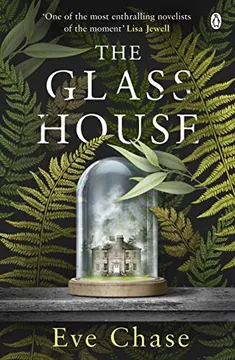


Plot Summary
Prologue
A brief newspaper report dated August 1971 announces that a body has been found in the woods around Foxcote Manor, a decaying country house recently occupied by the Harrington family after a fire in London.
The death is being treated as suspicious, but the victim and circumstances remain unnamed. The report makes the estate a crime scene before the reader knows the family whose summer there will end in violence.
The clipping offers a public record stripped of the private lives that produced it. Its cautious wording turns a family’s grief, desire, and concealment into local gossip, while the unnamed corpse creates a gap the novel repeatedly invites its characters to fill with fear. The setting is introduced not as a refuge from the city but as a place where the forest can hide evidence and where the Harringtons’ polished reputation may be tested. The prologue also establishes a tension between official accounts and lived memory: the newspaper can report a death, but not the secrets that made it possible.
Rita Enters Foxcote
In August 1971, twenty-year-old Rita drives Jeannie Harrington and her children to Foxcote Manor after a fire damages their London home. She had imagined a warm city household, but now Walter Harrington has ordered her to report privately on his grieving wife’s moods and care of the children. Rita accepted because she has nowhere else to go and cannot bear to abandon Hera and Teddy.
The baby Jeannie lost is never discussed, though Rita has secretly retrieved its tiny clothes and rattle from beneath the marital bed. At Foxcote, the housekeeper Marge warns Rita about the forest and its dangers, while Jeannie’s distress deepens after she learns an unnamed man has called for her.
Rita’s employment is also an attachment strategy. Having lost her parents and recently her grandmother, she mistakes the Harrington household for the secure family she has always wanted, even when Walter turns her into an informant. Her tenderness toward Hera and Teddy is genuine, but it does not erase the power imbalance that makes her economically vulnerable. Jeannie’s hidden baby things expose the family’s central contradiction: grief is present everywhere, yet Walter has declared it unspeakable. Foxcote intensifies that contradiction. Its isolation offers shelter from London’s scrutiny while also making private danger harder to see or escape.
Sylvie Leaves Home
In the present, forty-six-year-old Sylvie moves into a small London apartment after ending her long marriage to Steve, whose infidelity and inattentiveness have worn down their life together. Their daughter Annie resents the years of family concealment and goes to stay with her grandmother in Devon. Then the grandmother falls from a cliff during a walk with Annie and enters a coma.
Sylvie and Annie return to one another in the hospital’s shadow, but neither can say plainly what frightens her most: Annie feels responsible for the accident, while Sylvie fears losing the woman who has guarded their family history. A terrarium appears at the hospital, its miniature house stirring an unease Sylvie cannot yet explain.
Sylvie’s separation is not simply a marital plotline; it removes the structure she has used to avoid examining herself. Her mother’s accident makes that avoidance costly, because the family historian is suddenly unable to answer questions. Annie’s anger shows how protective silence can become an inheritance: what a parent calls shielding, a child may experience as exclusion. The terrarium works as a material disturbance, making a private past visible in miniature before Sylvie knows what she is looking at. The coma suspends the usual exchange between mother and daughter, forcing Sylvie to confront how much of their intimacy depends on truths neither has voiced.
Annie Keeps the Baby
Annie’s pregnancy by Elliot, a young man she met online, turns Sylvie’s unsettled summer into a crisis. Elliot’s mother, Helen, calls to pressure Annie toward an abortion and offers money, prompting Annie to leave the apartment and switch off her phone.
When Sylvie finds her in Devon, Annie says she intends to have the baby and continue toward Cambridge, even if Elliot does not stay with her. Sylvie is frightened by the scale of the choice, but she recognizes that Annie must make it herself.
Their conversations also uncover Annie’s growing curiosity about the Harrington family, whose glass company connected her to Elliot. She found old papers marked for the summer of 1971 among her grandmother’s belongings, and refuses to let Sylvie dismiss them.
Annie’s decision exposes the difference between support and control. Sylvie wants to protect her daughter from a life-changing burden, but her instincts repeat the family pattern of managing distress by deciding what another person can bear to know. Annie’s insistence on bodily autonomy challenges that pattern, even as her plans carry genuine risks. Helen’s offer of money treats pregnancy as a problem that can be resolved through resources, revealing how class privilege can disguise coercion as practical help. Annie’s interest in the 1971 papers is not a diversion from her present; it is her attempt to claim a family history that has shaped her without her consent.
The Baby in the Woods
A year earlier, thirteen-year-old Hera remembers the night her mother gave birth in London. Her father, Walter, insists afterward that she forget what she saw, and Hera’s memory of the newborn becomes a blank. At Foxcote, her resentment toward her grieving parents and her fear of being unwanted have nowhere to go.
One evening she follows an unfamiliar infant’s cry and discovers a baby on a tree stump, with a small bag of supplies and a note asking someone to care for her. Hera carries the child to the stream and tries to feed her, then brings her back to Rita. Jeannie takes the infant in, calls her Baby Forest, and refuses Rita’s pleas to contact a doctor or the police.
Hera’s discovery answers an emotional need before it answers a practical one. She has long imagined a sister who might make her feel chosen, and the abandoned infant offers her a chance to become the protective older sibling she never got to be. That desire is loving, but it also clouds her judgment: she hides the note and treats the baby as a private gift. Jeannie’s response is similarly double-edged. Caring for the infant draws her back toward her children, yet her refusal to involve authorities turns compassion into an illegal secret. The scene makes the novel’s central question concrete: when care seems urgent, who gets to decide what is safe and right?
A Secret Takes Root
Rita argues that the infant needs medical attention and someone must be searching for her, but Jeannie keeps postponing a call to the authorities. Marge, who knows the surrounding families and the habits of the forest, urges them to keep the child until summer’s end and promises to conceal the arrangement.
Rita lies to Walter about Jeannie’s condition and leaves the baby out of her reports. Don Armstrong, Walter’s old friend and Jeannie’s lover, arrives at Foxcote, bringing renewed energy to Jeannie and unease to Hera.
Meanwhile Robbie Rigby, a local carpenter and forester, teaches Rita the trees and offers her a gentler intimacy. The infant binds the household together, but the secrecy, Don’s presence, and Rita’s divided loyalties make that fragile comfort increasingly dangerous.
The secret functions as both refuge and trap. Baby Forest gives Jeannie a reason to re-enter family life, and she, Hera, and Teddy experience a brief domestic warmth that has been absent since the earlier loss. But each person understands the child differently: a replacement, a sister, a vulnerable stranger, or a responsibility. Marge’s help makes concealment appear manageable, while Rita’s lies turn her care into complicity. Robbie offers Rita a contrasting relation to the forest, one based on attention rather than fear. The household is not simply rescued by the baby; it becomes more exposed, because every new attachment raises the cost of revealing the truth.
The Forest Has Witnesses
In Devon, Sylvie opens her mother’s 1971 folder and finds two kinds of newspaper clipping: one about an abandoned baby and another about a suspicious death at Foxcote Manor. The Harrington name unsettles her, especially after Annie traces Elliot’s work connection to Harrington Glass.
Mother and daughter travel to the Forest of Dean, where Sylvie records woodland sounds for the hospital and recognizes how strongly the landscape draws her.
In Hawkswell, an elderly Marge recognizes Annie’s resemblance to a young woman called Jo, who once became pregnant and left the area. Marge refuses to explain further. Sylvie returns to London with more questions, while Annie’s pregnancy and the family’s hidden history begin to look like parts of the same story.
The clippings change Sylvie’s origin story from a sentimental family anecdote into an historical event with witnesses and consequences. Her trip to the forest is therefore both an attempt to help her mother and a first bodily encounter with the place she has spent her life avoiding. Annie’s resemblance to Jo gives the past a living face, unsettling the idea that family history can remain safely abstract. Marge’s partial recognition is especially destabilizing: she holds information but controls its release, just as older generations have done. The forest becomes an archive that cannot be read like paper; its meaning emerges through local memory, bodily reaction, and imperfect testimony.
Hera Names the Fire
At Foxcote, Hera’s anger flares after she sees Don strike Jeannie and later finds him trying to persuade her mother to leave the family. Don also smashes Rita’s terrarium, the small glass world she uses to steady herself.
When Rita confronts Hera about a fire she has started in her bedroom, Hera admits that she once singed a curtain in London while sneaking food; she believes the smouldering lamp caused the fire that drove the family from their home. Rita responds without condemnation, then shares that she survived the car crash that killed her parents.
Hera finally tells Rita what she remembers from the birth: the baby had a facial opening and was still moving when the midwife carried her away. Rita now knows the family’s official story may be false.
The confession links two forms of injury that the adults have tried to contain through silence. Hera’s fire-setting is not presented as simple malice; it is an attempt to feel something when grief and shame have numbed her. Rita’s willingness to listen changes the meaning of confession from accusation to contact. In return, her account of the crash models disclosure without demanding that Hera immediately become well. The birth memory is more consequential still. By telling it, Hera challenges Walter’s version of events and Jeannie’s presumed loss, but she also gives Rita a truth she cannot verify. Trust grows here through the willingness to hold uncertainty together.
Don Dies in the Woods
Don’s cruelty escalates after he destroys the terrarium and tries to exert control over Hera. Later, Hera takes a shotgun into the woods with Teddy; when she sees movement, she fires, believing she has shot a deer. That same evening Rita goes to Robbie’s cottage, where she tells him about her parents’ deaths and the injury that left her unable to have children.
Returning to Foxcote with Hera, Rita steps on Don’s body. Hera assumes her shot killed him. Jeannie arrives and collapses beside the dead man, while Rita refuses to help her bury him and invent a story. Before they can decide what to do, lights and voices approach through the trees. The police question the household, and Jeannie claims responsibility to protect Hera.
The death forces each character to act under conditions of incomplete knowledge. Hera’s guilt is immediate because she fired the gun, while Rita’s refusal to help conceal the body marks a break from the obedience Walter has demanded. Jeannie’s false confession appears as maternal protection, but it also preserves the family’s dependence on lies. Rita’s night with Robbie briefly opens an alternative future, making the return to violence especially brutal. The scene refuses the comfort of a clean moral ledger: a child has fired a weapon, an adult has died, and every witness is implicated differently. The approaching authorities make private loyalty answerable to public consequence.
Rita Is Cut Off
After days of police questioning, Walter arrives and takes control of the aftermath. The baby is removed by social services, and Rita is blamed for the household’s secrets while Walter denies her any future contact with the children. He sends her away from Foxcote and uses legal threats to keep her silent. Separated from Robbie, Rita returns to London alone, carrying the baby’s clothes and the wooden mobile he made.
She later finds a little girl with a cleft palate who fits the clues surrounding Jeannie’s newborn. Rita and Robbie adopt her as Caroline, then adopt the abandoned infant, Sylvie, and build a family in Devon. Their life is shaped by love, but also by the fear that Walter’s influence could take their daughters away.
Rita’s departure reveals the cost of her fantasy that service could secure belonging. Walter can dismiss her because affection does not alter the employment hierarchy, and legal power lets him turn her silence into a condition of survival. Yet she does not leave empty-handed in the emotional sense: the mobile, clothes, and knowledge of the children become a fragile continuity. Her and Robbie’s later family is created through care rather than blood, but fear still shapes how openly they tell its story. The novel treats chosen family as real and sustaining, not as a cure for secrecy. Love can make a home, while silence can still distort it.
The Harringtons Reappear
In London, Helen Latham visits Sylvie after learning that her mother is Rita Murphy. Sylvie recognizes Helen from the old family photographs and realizes she is Hera, the girl who found her in the forest. Helen admits she changed her name and built a new life after the Harrington scandal. She takes Sylvie to Walter, who explains that he and Marge arranged for Marge to leave Jo’s baby at Foxcote, hoping an infant might help Jeannie recover.
Jo remained nearby and later alerted police about Don’s death. Walter also admits that Jeannie’s newborn daughter had survived with a cleft palate, but he told the family she died; that child became Caroline, adopted by Rita and Robbie. The two adoption stories, long kept apart, meet in one room.
The revelation does not replace Sylvie’s adopted life with a supposedly more authentic biological identity. Instead, it exposes how several adults shaped the children’s destinies through secrecy, class power, and the conviction that they knew what was best. Walter’s scheme treated Jo’s baby as a remedy for Jeannie and treated the surviving infant as an unbearable problem. Marge’s role complicates the same pattern: she could arrange care, conceal evidence, and alter lives while remaining unseen. Sylvie’s encounter with Helen makes history relational rather than abstract. The past is no longer a story about an abandoned child alone; it is a network of women and girls whose choices were constrained by adult decisions.
Marge’s Gun Is Found
Helen, newly aware of how her lies have damaged Annie and Elliot, visits Annie and offers a tentative apology; Annie accepts only a small beginning. Soon police tell Helen that Marge has handed herself in after a carer found a weapon and ammunition hidden in her loft. Investigators believe they match the evidence from Don’s killing and expect to bring charges.
At the same time, Rita wakes from her coma, slowly recovering her memory. Helen learns that Jeannie had taken the blame because she believed Hera had fired the fatal shot, and that she endured treatment at The Lawns rather than expose her daughter. Sylvie can finally hear the truth from Helen, while the family begins to reconnect without pretending that the harm never happened.
The arrest gives the murder a material answer, though it cannot undo the years built around a false confession. The hidden weapon turns Marge’s long-standing proximity to the family into evidence, not merely local color. Helen’s account of Jeannie’s sacrifice reframes Hera’s guilt, while Rita’s return to consciousness offers the family a living witness at the moment the past becomes speakable. Yet repair remains incremental: Annie accepts Helen’s kindness without instantly trusting her, and Sylvie still has to decide what to do with the knowledge of Jo. The section resists the fantasy of one revelation healing everything. Truth changes the terms of relationship; it does not erase consequence.
The Forest Holds Them
Ten months later, the family returns to the forest to scatter Walter’s ashes. Annie and Elliot arrive with their baby, Poppy, and plan to move to Cambridge so Annie can study. Helen, Edie, Caroline, Teddy, and the recovering Rita gather around them, carrying affection and old grievances into the same clearing.
Rita steps away from the scattering rather than pretend to mourn Walter. She offers to help Sylvie search for Jo, but Sylvie says the family who raised her is hers, even as she remains open to learning more. Then Sylvie invites Rita into Teddy’s Porsche for a drive beyond the trees. Rita accepts, and mother and daughter leave the forest together, no longer bound to its silence.
The ending makes belonging a practice rather than a verdict. Sylvie can acknowledge Jo without surrendering the reality of Rita and Robbie’s care, and Annie can begin a family without being forced into the same choices her elders made. Poppy’s presence gives the gathering a future, but the novel does not use a baby to erase the past; the adults still carry grief, culpability, and incomplete knowledge. Rita’s refusal to mourn Walter is a modest assertion of emotional honesty. Her drive with Sylvie reverses the old image of the forest as a place that traps or abandons people. They leave by choice, together, with the road open ahead.
Analysis
The Glass House builds its mystery around a distinction between care and control. Characters repeatedly make decisions in the name of protecting someone: Walter hides the truth about his daughter and manages his wife’s life; Marge intervenes in Jo’s pregnancy; Rita conceals the foundling to keep her safe; Sylvie avoids her own adoption story to spare her daughter. These actions are not morally identical, but each shows how benevolence can become coercive when one person claims the right to decide what another can know. The novel’s alternating timelines make that pattern generational. The adults’ silences do not end with them; they shape Hera, Sylvie, and Annie’s expectations of family and truth.
The forest offers a counter-image to the Harrington household. Foxcote is an enclosed domestic world whose inhabitants try to control appearances, while the woods are visibly tangled, interdependent, and resistant to neat explanations. Robbie’s knowledge of the forest teaches Rita to see that decay and life belong to the same system. That insight also informs the ending: old damage remains, but it need not dictate every future choice. The terrarium makes the contrast intimate. Its glass walls create a manageable world, yet its plants still depend on conditions beyond the keeper’s complete control.
Adoption in the novel is neither a lesser form of kinship nor an automatic resolution of abandonment. Sylvie’s life is shaped by both the woman who gave birth to her and the people who raised her. Caroline’s history reveals another child whose survival was hidden by shame and status. The closing family gathering allows these histories to coexist without forcing biological origin to outrank daily love. The novel’s deepest claim is therefore not that truth repairs the past, but that truthful relationships give people more freedom in the present. Its characters cannot reverse what was concealed or lost. They can choose not to repeat the same concealment with the next generation.
Review Summary
The Glass House received mostly positive reviews, praised for its atmospheric writing, compelling characters, and intriguing family secrets. Readers enjoyed the dual timeline narrative and the Gothic elements centered around Foxcote Manor. Some found the pacing slow and predictable, while others were captivated by the mystery and emotional depth. The author's talent for creating vivid settings and complex relationships was frequently highlighted. Many reviewers compared it favorably to Chase's previous works and recommended it to fans of family dramas and mysteries.
People Also Read



Characters
Rita Murphy
The devoted nannyA tall, warm-hearted young nanny whose cheerfulness conceals the loneliness of a childhood shaped by loss. Rita wants to belong to the Harrington family, but her position as an employee leaves her exposed to Walter’s demands and Jeannie’s changing needs. She notices the small signs others dismiss, from a child’s fear to a hidden keepsake, and cares for children with an instinctive, practical tenderness. Her terrarium offers her a private landscape she can tend when the world feels too large. Rita’s central conflict is how to remain loyal without surrendering her judgment, especially when affection pulls her into dangerous family secrets.
Sylvie Broom
The guarded daughterA London make-up artist, wife, and mother who has learned to smooth over painful truths, first as a daughter and later as a parent. Sylvie values independence but has built much of her life around keeping family life intact, even when that means avoiding difficult questions. Her separation from Steve and her mother’s accident unsettle the habits that have kept her emotionally protected. She is observant, self-deprecating, and capable of deep tenderness, though she often confuses protecting someone with withholding information. Her changing relationship with Annie forces her to consider what honesty might offer as well as what it might cost.
Hera Harrington
The watchful eldest childJeannie and Walter’s adolescent daughter is clever, keenly observant, and painfully aware of how often adults ask her to accept incomplete explanations. Hera feels out of place beside her beautiful mother and struggles with grief, body image, and the fear that affection can be withdrawn. Her sarcasm protects a strong need for attention and safety. She is drawn to Rita because Rita notices her without trying to correct her first. The forest gives Hera room to explore and also magnifies the danger of acting on feelings she does not yet know how to name.
Jeannie Harrington
The grieving motherElegant and socially polished, Jeannie is also a woman whose grief and illness have disrupted her ability to live as the mother she wants to be. She longs for freedom from the restrictive marriage and public expectations surrounding the Harrington household, yet remains deeply attached to Hera and Teddy. Her attention moves between care, withdrawal, and an urgent search for comfort. Jeannie’s vulnerability is easy for others to interpret as weakness or instability, which gives Walter and the household staff power over her. Her story asks what happens when a woman’s distress is treated as a problem to manage rather than a reality to understand.
Walter Harrington
The controlling patriarchA wealthy glass-company executive who values order, reputation, and control. Walter presents himself as a practical husband and father, but his preference for tidy explanations leaves little room for other people’s grief or autonomy. He expects domestic staff to protect the household and keep him informed, while he makes consequential decisions without sharing their full context. His reserve can look like composure, yet it often functions as a way to avoid emotional accountability. Walter’s power comes not only from money but from his ability to make his version of events seem official.
Annie Broom
The determined young motherSylvie and Steve’s eighteen-year-old daughter is bright, academically ambitious, and accustomed to a closely managed life. As she faces pregnancy, she refuses to let fear or other people’s expectations make the decision for her. Annie is perceptive about her mother’s evasions and can be blunt when she feels excluded, but her anger is bound up with a desire for real closeness. Her relationship with Elliot and her plans for university test whether independence must mean isolation. Annie’s strength lies in treating her future as something she can reshape, even when she cannot control every consequence.
Helen Latham
The guarded motherElliot’s mother is polished, wealthy, and accustomed to managing uncertainty through planning and money. Her vigilance over her son can appear protective, but it also limits his independence and complicates his relationship with Annie. Helen is emotionally contained and uncomfortable with vulnerability, relying on appearance and control to maintain distance from painful history. Beneath that reserve is a woman shaped by a family crisis she has never fully resolved. Her role in the present story brings the consequences of the Harrington past into contact with a younger generation.
Don Armstrong
The magnetic family friendWalter’s old friend is a wealthy, restless traveler whose stories and charm make him exciting company. Don enjoys admiration and moves easily through spaces where others feel constrained, but his self-confidence shades into entitlement. His closeness to Jeannie destabilizes the Harrington marriage, and his presence unsettles Hera and Rita for different reasons. Don’s appetite for adventure does not make him perceptive about other people’s limits. The distance between his public charisma and private conduct gives the household a dangerous new center of gravity.
Robbie Rigby
The patient woodsmanA local carpenter and forester who knows the Forest of Dean as a living place rather than a threatening blur. Robbie is quiet, skilled with his hands, and generous with what he knows, offering Rita a way to understand the landscape piece by piece. He treats her with a directness she rarely encounters, paying attention without making her feel like a spectacle. His work and presence suggest a life built from patience and repair. Robbie’s connection with Rita offers her an alternative to the household she has mistaken for her only source of belonging.
Marge Grieves
The local housekeeperA blunt, capable housekeeper who has spent years working in country homes and knows the village’s private histories. Marge takes pride in managing alone after her husband’s death and has little patience for outsiders who assume official systems understand local life. She can be practical and protective, but her certainty makes her willing to decide what is best for others without asking them. Her knowledge of the Harringtons and the forest gives her influence that the family underestimates. Marge’s rough manner conceals a more complicated relationship with the people she claims to help.
Elliot
Annie’s young partnerA young man from a wealthy family, Elliot meets Annie during the summer and becomes involved with her before either has worked out what they want from adult life. He is attracted to Annie but also susceptible to his mother’s pressure and his own fear of being tied down. His awkwardness and concern make him more than a simple absent boyfriend, though he does not initially offer Annie the security she needs. His choices become part of a wider struggle over whether family responsibility can be negotiated rather than imposed.
Caroline
Sylvie’s steady sisterSylvie’s older sister lives in America with her husband and children. Blonde, warm, and forthright, Caroline brings humor and practical comfort when Sylvie is overwhelmed by their mother’s accident. The sisters share old rituals that let them express closeness without discussing the painful parts of their childhood. Caroline loves her family fiercely and feels the pull between caring for her mother and returning to her own household. She serves as Sylvie’s confidante, but her instinct to avoid the past also reflects the family’s shared habit of silence.
Edie
The restless auntJeannie’s sister-in-law is an independent journalist who travels for work and refuses conventional expectations of marriage and domestic life. As a younger woman, she represents to Hera a form of adulthood not organized around a husband or social approval. Edie can be distracted and blunt, but she is generous with the children and offers a vivid alternative to their parents’ guarded household. Her affection is often expressed through action rather than sentiment.
Teddy Harrington
The trusting younger brotherJeannie and Walter’s young son is affectionate, energetic, and trusting of the adults around him. Teddy takes the world literally and brings levity to the tense Harrington household, though he also feels the strain of his mother’s absence and the arrival of a new baby. His closeness with Hera gives the siblings a small refuge from adult conflict. Teddy’s need for reassurance is easy to overlook because he is so eager to please.
Steve Broom
Sylvie’s estranged husbandAnnie’s father and Sylvie’s long-time husband, Steve is familiar, affectionate, and unreliable in ways Sylvie has spent years trying to discount. His infidelity and assumptions about what is best for the family contribute to the marriage’s collapse. He remains a loving father, which makes separation less simple than a clean break. Steve represents the comfort of a life that has become too narrow for Sylvie, as well as the difficulty of disentangling love from habit.
Jo
The young local motherA young woman from the Forest of Dean who faces pregnancy with few resources and little control over the choices adults around her make. She remains largely outside the central household, but her circumstances shape the lives of the children at the story’s center. Jo’s absence is not evidence that she feels nothing; it reflects how easily a vulnerable person can be turned into a rumor rather than heard directly.
Fingers Jonson
The forest lonerA tall, pale local man whom village gossip casts as an unsettling figure in the woods. Fingers lives on the margins of the community and is connected to Marge in a way that outsiders do not immediately understand. His presence gives the forest a human witness, but his quietness makes it difficult to know what he has seen or remembers.
Plot Devices
The 1971 newspaper clippings
The archive that disturbsThe clippings establish a suspicious death and an abandoned baby before the reader knows how the events connect. In the present, Sylvie finds the papers among her mother’s belongings and uses them to question the story she grew up with. Their omissions matter as much as their facts: they record headlines, names, and dates, but cannot explain why the adults involved stayed silent. The folder turns private memory into a historical investigation and gives Annie a reason to press her mother for answers.
The terrarium and mobile
Small worlds rememberRita’s terrarium is a landscape she can tend and control, a quiet counterweight to the sprawling forest and unstable household. Robbie’s handmade wooden mobile carries that forest into the nursery and later links families separated by time. Both objects pass between characters as signs of care, memory, and what survives damage. The terrarium’s destruction becomes an act of violence against Rita’s private refuge, while its later recreation offers a tangible gesture of recognition. These objects make emotional inheritance visible without reducing it to bloodline.
The Forest of Dean
A place that concealsThe forest shelters Foxcote Manor, hides paths and abandoned places, and makes it possible for characters to vanish from one another’s sight. Its dense ecology mirrors the layered family history: nothing exists alone, and decay feeds new growth. For Rita, it first represents danger rooted in childhood trauma; Robbie teaches her to read its species and rhythms. For Sylvie, it is both birthplace and unknown past. The forest’s repeated appearances bind the timelines together while keeping the central mystery physically grounded in one landscape.
The hidden gun
A false trail to guiltThe shotgun makes Hera believe she is responsible for Don’s death after she fires into the woods, and the boot print on Don’s face further complicates what the police suspect. The weapon’s disappearance leaves the household vulnerable to competing explanations, while the later discovery of a gun and ammunition in Marge’s loft gives investigators evidence that reaches back to the original case. The gun is not only a murder clue; it exposes how guilt can attach itself to the person who fears she is capable of violence, whether or not she caused the death.
The silenced family story
Memory under pressureSeveral characters inherit accounts that are incomplete or deliberately shaped: Hera is told to forget what she saw at the birth, Sylvie grows up with a softened foundling story, and the adults protect themselves by withholding information. These gaps are not simple failures of memory. They are ways of controlling grief, reputation, and belonging, and they produce different consequences for each generation. As old documents, recovered memories, and witness accounts accumulate, the family must decide whether the truth can be faced without destroying the relationships built around its absence.
Download PDF
Download EPUB
.epub digital book format is ideal for reading ebooks on phones, tablets, and e-readers.








