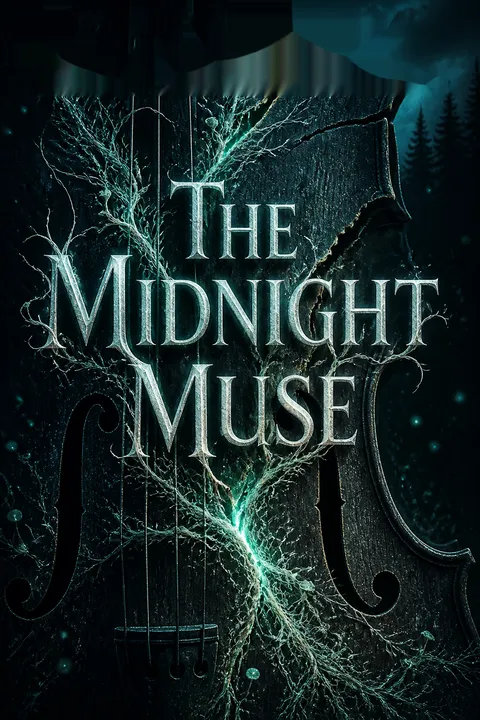


Plot Summary
The Singer Who Vanished
Harlow Sorenson meets Brynn Werner in kindergarten and grows up beside her, first admiring her piano compositions, then joining her in Queen Carrion, the metal band Brynn leads as its singer and songwriter. Harlow drums; her brother Thorn plays guitar, and other musicians join them as Brynn’s songs attract a devoted following.
Brynn calls sudden bursts of inspiration visits from her muse, but each creative high can leave her sleepless and then despondent. The band’s song Midnight Ritual precedes a terrifying blackout at the Wonder Room, where a crowd crush kills a teenager. Years later, while trying to finish the album The Orchid, Brynn insists on a solo trip to Oregon’s Umpqua National Forest. She never comes back.
The friendship begins as an intimate creative partnership, but its emotional balance is already uneven: Brynn makes the music, while Harlow learns to measure her own worth through loyalty and accompaniment. The muse gives Brynn a language for inspiration that is both empowering and destabilizing, linking art to forces she cannot fully control. The Wonder Room tragedy makes that private belief public, attaching danger to the band before the forest trip begins. Brynn’s disappearance therefore threatens more than a friendship. It removes the person who supplied the group’s shared identity and leaves Harlow unable to separate devotion from responsibility.
Back to Trail Creek
A year after Brynn vanishes, Harlow persuades the remaining band to stay at an isolated cabin near the Umpqua search area. Wendy Mann, the cellist, drives, privately intending to leave Queen Carrion and pursue studio work in Los Angeles.
Rhys Beavin, the ambitious lead guitarist, brings his fiancée Jacqueline, while bassist Louella Diaz and Thorn come along despite doubts about Harlow’s search. The cabin proves moldy, remote, and cut off from phone service.
When Wendy uncovers a trapdoor, Harlow descends into the cellar and finds stairs leading to a concrete tunnel. A voice answers her call from its darkness, sounding, for an instant, like Brynn. Harlow climbs back up with no explanation, but the cabin has become more than a place to sleep.
The trip assembles people who share a band but no longer share a purpose. Harlow treats the cabin as a chance to continue searching; Wendy sees it as a last obligation before leaving; Rhys sees the weekend as a route toward replacing Brynn. The trapdoor makes those buried disagreements literal, opening onto a passage beneath the cabin that seems to answer Harlow’s grief. Her hearing of Brynn is not proof, but it shifts the group’s problem from whether to move on to whether the missing singer can still reach them. The forest has begun to make their private conflicts feel physically present.
The Forest Sings Back
Over dinner, Rhys proposes that Jacqueline take Brynn’s place and help finish The Orchid. Harlow rejects the idea, and Wendy refuses to decide while everyone is drinking and high on mushroom chocolate. Around the bonfire, Jacqueline retells the album’s story as if it were her own, angering Harlow.
Lou shares a grim tale about a hiker who mutilated himself in these woods, then spots a white deer with no eyes. Later, Rhys wanders away after losing the argument. The others hear a familiar Queen Carrion song coming from the trees, complete with Brynn’s voice and scream. Harlow suspects Rhys is staging a prank, but Wendy doubts it. The song stops, leaving the group unable to agree on what they heard.
The replacement proposal exposes the band’s deeper fracture: Rhys wants a future built from the existing catalog, while Harlow treats the songs as inseparable from Brynn. Jacqueline’s imitation of The Orchid makes the dispute personal, because she is not merely offering a new voice; she is stepping into the creative identity Harlow is trying to preserve. The forest song unsettles that argument by seeming to restore Brynn’s voice without restoring Brynn herself. Each listener reaches for a different explanation, revealing how fear attaches to existing guilt, ambition, and grief rather than arriving as a neutral event.
Masks Beside the Creek
The next morning, Harlow leads a search along the creek. The band finds animal bones and a stone circle with a burned candle, evidence that someone has performed a ritual nearby. Two figures in gas masks watch them from the water; when Harlow challenges them, one raises a gun, and the band retreats to the cabin.
Later, Harlow finds Brynn’s songwriting notebook and papers about the Wonder Room. Wendy recalls that Brynn had repeatedly tried to recreate the blackout there, while Lou notices a lyric that connects the song Midnight Ritual to the notebook’s references to low places.
Harlow concludes that Brynn came to the forest looking for one. The discovery gives her search a direction, even as the armed strangers make the woods more dangerous.
The clues turn Harlow’s search from an emotional compulsion into an investigation. The ritual circle, notebook, and Wonder Room references suggest that Brynn was pursuing a pattern, but none independently proves a supernatural cause. The gas-mask figures complicate the mystery by adding human danger to the unexplained voice and eyeless deer. Wendy’s skepticism and Lou’s openness keep competing interpretations alive, while Harlow’s recognition of a possible destination makes her less willing to leave. The scene shows how evidence can intensify commitment without producing certainty: every clue promises an answer and simultaneously increases the risk of pursuing it.
Rhys Comes Back Changed
Rhys returns from the woods pale, filthy, and feverish, then vomits a black substance during dinner. He claims Brynn is with him before crawling through the trapdoor and into the tunnel. Jacqueline follows and finds him eating white growth from a crack in the concrete wall. That night, Brynn’s voice sings outside while Rhys recites the same lyrics in time with it.
His flesh darkens and splits; an eye bulges out on white filaments, and his body begins to unravel. The others retreat inside and bar the doors. Wendy notices that old guest-book entries describe singing and a pale presence in the woods, suggesting previous visitors encountered the same force. Harlow names the destination Brynn had sought: a low place.
Rhys’s deterioration transforms the band’s argument about replacing Brynn into a question of bodily survival. The growth is not simply an external attacker: it appears to use sound, speech, and the tunnel’s contaminated wall to alter him from within. Jacqueline’s effort to care for Rhys collides with her growing revulsion, while Harlow’s certainty that Brynn may be near makes her slow to accept that the singer’s voice could be part of the threat. The guest book widens the event beyond the band, implying a recurring pattern of people encountering the presence at Trail Creek.
The Cabin Takes Them
Harlow collects a sample of the white growth in a bottle and tests it with her blood and a spider. The organism absorbs both, then forms a crude imitation of the spider. Wendy tries to seize the bottle, and it shatters during their struggle. The growth spreads through the cabin, and a small replica of the spider drops into Wendy’s mouth.
As she panics, she falls from the loft and breaks her neck; the fungus consumes her body and builds a copy of her from its threads. Harlow and Thorn burn that copy in the woodstove, then escape through the side door with Lou and Jacqueline. Outside, pale versions of Rhys, Wendy, and Brynn bar the path. Thorn is touched by a drifting filament, and Harlow leaves with the others.
The broken bottle marks a crucial shift from cautious observation to uncontrolled exposure. Harlow’s experiment reveals that the organism learns through consumption, but the group cannot contain what it has learned. Wendy’s death also turns the familiar cabin into an extension of the organism, erasing the distinction between shelter and source of danger. Thorn’s imitation of Wendy tempts him with the return of someone he loves, while Harlow’s flight forces her to choose survival over the brother who has repeatedly protected her. That choice reactivates the childhood guilt she carries about the fire that scarred him.
Below the Sod Roof
While Lou and Jacqueline run through the woods, Harlow tries to fight the pale figures and Thorn cuts the infected material from his blind eye with broken glass. He shelters in Wendy’s car as the others find a door built into a grassy mound. Inside, they meet Audrey and Victor, who claim they can guide them to a road.
Their phones are missing, the radio is unplugged, and Harlow finds gas masks like those worn by the armed figures. Jacqueline confronts Audrey, who produces a gun and forces the women into an elevator descending beneath the bunker. Lou recognizes the facility as the rumored Volker Institute. They are locked inside a containment room on its observation level, surrounded by records of the Institute’s abandoned research.
The bunker offers apparent refuge, then reveals itself as another instrument of confinement. Audrey and Victor’s hospitality depends on controlling the visitors’ information, movement, and access to communication. The hidden elevator makes the wilderness’s apparent emptiness deceptive: a research complex lies beneath the surface, organized around observation and containment. For Lou, who has long been willing to entertain supernatural explanations, the Institute gives her beliefs material form. For Jacqueline, the missing phones and gun confirm that trust is a liability. Their different temperaments now serve the same purpose: finding a way out.
The Institute’s Trap
Records reveal the Institute’s levels, including an incinerator and a cryogenic store. When Victor brings food, Lou tries to persuade him to help, but he admits he cannot defy Audrey. Jacqueline breaks his fingers to force open the containment room, and the three women escape with his key card.
Lou explores the lower levels and Audrey shoots her in the leg; Harlow and Jacqueline find her and haul her to the surface. Victor then claims he will guide them to the road, but leads them back to the bunker.
Audrey has a camera watching the group and binds all three women to trees, intending to observe what happens after dark. Victor admits the Institute’s work has made him curious about the organism’s ability to absorb consciousness, yet he still leaves them exposed.
The Institute’s language of scientific procedure masks a repeated ethical choice: people are treated as research material whenever their safety conflicts with discovery. Victor’s fascination with the organism echoes Brynn’s attraction to her muse, but his partial remorse does not prevent him from betraying the women. Jacqueline’s violence secures an escape, though it cannot make the Institute’s knowledge safe or useful. Lou’s wound turns movement into a shared burden and reduces the group’s options. By returning them to the forest, Victor and Audrey convert observation into a sentence, making the researchers complicit in the danger they claim to study.
Brynn’s Last Secret
At night, a fungal copy of Brynn rises near the bound women. It reaches Lou’s bullet wound, consumes her, and severs her ropes. Lou uses a lighter to help Harlow escape, sacrificing herself as the growth closes over her.
Jacqueline and Harlow flee, but Audrey finds the organism’s pale fruiting bodies and allows its spores to cover her. Jacqueline admits that she followed Brynn into the forest and cut her throat, hoping to replace her in Queen Carrion.
Brynn had gone there to summon the muse that had haunted her since childhood; the entity was already reaching through music and the low place. As Jacqueline turns back toward the changing Audrey, Harlow runs, finally understanding that the thing wearing Brynn’s face is made from what it has consumed.
The revelation makes the book’s central metaphor brutally material: the muse does not merely inspire Brynn but answers her, and the answer consumes the person who sought it. Jacqueline’s confession reframes her ambition as both imitation and violence; she wanted Brynn’s place, then helped create the conditions for a more literal replacement. Lou’s final act gives Harlow the chance to escape, complicating the idea that survival is simply self-preservation. The organism’s copies are not clean resurrections. They preserve recognizable features while erasing individual boundaries, forcing the survivors to confront whether memory without autonomy can still count as a person.
One Eye Survives
Harlow returns to the Institute, retrieves the abandoned phones, and uses a key card to reach the underground passage leading back to Trail Creek Cabin. In the tunnel, a voice made from Brynn’s and Rhys’s songs tries to draw her closer, but she runs past it. At the cabin, she finds Thorn alive in Wendy’s car.
He explains that after the fungus entered his blind eye, he cut the eye out with glass and hid from the copies through the night. Harlow bandages his face, and the siblings walk until a passing couple gives them a ride to a hospital. Afterward, Harlow is admitted to psychiatric care, where withdrawal, guilt, and intrusive visions make her question what happened. Thorn survives surgery and begins investigating the Institute.
Harlow’s return through the tunnel is a deliberate passage through the place she has spent the story trying to avoid. She does not defeat the voice; she refuses to follow it. Finding Thorn alive alters the meaning of their separation, allowing the siblings to reunite after each believed the other lost. Yet physical escape does not restore a stable account of events. Harlow’s hospitalization offers care while also placing her experiences under suspicion, echoing the book’s uncertainty about perception. Her self-harm and visions sit between trauma and supernatural threat, so recovery requires more than deciding which explanation is true.
A Song Becomes a Weapon
While Harlow recovers, Thorn visits and challenges the story she tells herself about being dangerous to everyone she loves. He also shares the Institute’s response to his warning: Escher Industries plans to secure the property and resume work, not expose what happened.
After Harlow leaves treatment, the siblings study Brynn’s notebooks and research fungal growth. Thorn connects the low hum accompanying the apparitions to infrasound, while Harlow suspects that sound frequencies can affect the organism’s growth.
She stops herself from drinking and returns to her drum kit, using rhythm to think instead of numb herself. The siblings decide to draw the presence to the Wonder Room, where Midnight Ritual once opened a passage, and prepare a high-frequency tone and fire.
The recovery scenes make responsibility more complicated than guilt. Thorn does not absolve Harlow of every choice, but he distinguishes an accident from the punishment she has imposed on herself for years. The Escher letter shows that institutional power responds to exposure by protecting its property, not its victims. Against that indifference, Harlow and Thorn recover their musical partnership as a form of practical knowledge. Drumming helps Harlow inhabit her body without alcohol, while the research turns sound from an artistic medium into a possible defense. Their plan risks repeating the original breach, but this time they choose the conditions and prepare to act together.
The Wonder Room Returns
Harlow takes a bartending job at the Wonder Room so she and Thorn can enter after closing. They set up a stripped-down performance of Midnight Ritual, recreating the song associated with the earlier blackout.
As the room darkens and the organism rises through cracks in the floor, it first takes Brynn’s shape, then shifts into Jacqueline’s. Thorn plays a high-frequency tone through the microphone, and the threads begin to unravel. Harlow throws a burning bottle onto the mass, reducing the visible form to charred material.
The siblings know the larger organism remains in the forest, but the attack has been stopped for now. They leave Queen Carrion behind and make music together as the Vile Hornets, while later accounts insist that the band’s real story remains unsolved.
The final performance revisits the site of the first public catastrophe, but reverses the band’s relation to its music. Midnight Ritual once opened a breach without the musicians understanding the cost; now Harlow and Thorn use deliberate preparation to draw the threat into a space where they can resist it. High frequency disrupts the organism’s imitation, while fire finishes the local manifestation. The ending refuses total victory: the forest network persists, and the dead cannot be restored. What changes is the siblings’ response. They carry grief forward through chosen collaboration rather than trying to resurrect the band that depended on Brynn.
Analysis
The Midnight Muse makes artistic inspiration frightening by refusing to treat it as purely private. Brynn’s songs begin as expressions of individual imagination, but the muse answers from beyond her understanding, turning creativity into a channel through which another intelligence can reach the world. The band’s structure gives this idea a human counterpart. Queen Carrion is a collective identity built from distinct musicians, yet disagreements over authorship, replacement, and success threaten to reduce collaboration to possession. Rhys wants control of the band’s future; Jacqueline wants recognition; Harlow wants Brynn restored. Each desire becomes dangerous when another person is treated as a means to complete it.
The fungal organism literalizes that danger. It incorporates what it consumes and can reproduce the outward signs of a person, challenging the assumption that memory, voice, or appearance guarantees continued selfhood. Its copies are compelling precisely because they offer grief what it wants: return without the uncertainty of mourning. But the promise of reunion comes at the cost of autonomy. The Institute repeats the same violation in the name of research, converting people into evidence and calling control discovery. Its cameras and protocols make exploitation look methodical rather than monstrous.
Harlow’s arc turns on a different distinction: responsibility is not identical to blame. She has spent years treating the childhood fire, Brynn’s disappearance, and her bandmates’ suffering as proof that she ruins what she loves. Thorn helps her recognize that self-punishment is not repair. Her eventual decision to face the organism does not erase her past or restore the dead; it lets her act with others instead of trying to undo loss alone. The novel’s ending remains deliberately incomplete. The siblings destroy one manifestation, not the forest’s network, and form a new musical partnership without pretending Queen Carrion can be recovered. Survival means accepting that grief persists, while refusing to let it dictate every future choice.
Review Summary
The Midnight Muse receives generally positive reviews, averaging 3.95/5. Readers consistently praise its atmospheric tension, creative body horror, and innovative "mycelium-metal" concept. The epistolary elements—news articles, journal entries, and documents—are widely appreciated. Common criticisms include pacing issues in the second half, an excessive number of POVs making character connection difficult, and an underwhelming or rushed ending. Many compare it favorably to films like The Thing and Cabin in the Woods, recommending it strongly to fans of nature horror and body horror.
Characters
Harlow Sorenson
Grief-driven drummerHarlow is Queen Carrion’s drummer and Brynn’s closest friend since childhood. She understands music through rhythm, physical effort, and repetition, while Brynn’s gift for composition has always seemed mysterious to her. Harlow is fiercely loyal, but that loyalty has hardened into a belief that she must prevent every loss by searching, drinking, or blaming herself. Her history with her brother Thorn is marked by the childhood fire that left him scarred, and she carries that event as proof that she is dangerous. Her prickliness often conceals tenderness; she is more comfortable acting than confessing what she feels. The novel’s central question follows her struggle to distinguish accountability from self-punishment.
Brynn Werner
The band’s haunted songwriterBrynn is Queen Carrion’s charismatic lead singer and primary songwriter. Clever, irreverent, and creatively driven, she can turn a melody into an entire album, but her periods of inspiration bring sleeplessness and emotional crashes. She describes the source of her music as a muse, treating inspiration as both a private companion and an authority she cannot ignore. Brynn’s closeness with Harlow gives the drummer a place in her life that no other bandmate shares, though their intimacy contains feelings Harlow struggles to name. Brynn values artistic control and resists the pressure to reshape the band for commercial success. Her ambition and receptivity make her compelling, but also difficult for others to reach.
Hawthorn Sorenson
Scarred, sardonic guitaristKnown as Thorn, Hawthorn is Harlow’s older brother and Queen Carrion’s rhythm guitarist. A childhood house fire left him with severe facial scarring and blindness in one eye; he has made his appearance part of his identity rather than allowing others to define it for him. His gravelly humor and cigarettes help him deflect discomfort, but he is attentive to Harlow and often tries to keep her from acting on impulse. Thorn and Harlow share a history of making music together, as well as unresolved pain about their family and the fire. He wants connection, especially with Wendy, but tends to protect himself through irony and by waiting for others to make the first move.
Wendy Mann
Practical cellist at crossroadsWendy brings classical cello training to Queen Carrion, giving the metal band a sound its other musicians could not create. She is observant, cautious, and practical, often the person who notices logistical risks before the others do. Those habits can make her seem emotionally guarded, but they also reflect a real fear of drifting through life without security or direction. Wendy is drawn to Thorn, though their intermittent relationship frustrates her desire for a simpler, more dependable future. She wants to pursue studio work and has begun imagining a life beyond the band. Her conflict is not between caring and indifference, but between loyalty to her friends and the need to choose a future of her own.
Louella Diaz
Occult-minded bassistLou is Queen Carrion’s bassist, a musician whose attention stays on the music more than the performance surrounding it. She practices witchcraft and approaches ritual as a way to focus intention, seek calm, or open herself to possibilities she cannot explain. Her curiosity makes her willing to take seriously what Wendy dismisses, but she is not simply credulous: she watches, remembers, and tries to connect what she sees. Lou’s gentle manner often makes her a mediator among the bandmates, though her openness can lead her to give others the benefit of the doubt too readily. Her relationship with Brynn includes a shared interest in the boundaries between music, ritual, and the unseen.
Rhys Beavin
Ambitious lead guitaristRhys is Queen Carrion’s lead guitarist and Jacqueline’s fiancé. He wants the band to gain professional success and believes collaboration should give him a greater role in songwriting. Brynn’s control of the music leaves him feeling sidelined, and his frustration often turns into arrogance or anger. He is talented and persuasive, but he tends to mistake confidence for authority and treats people as pieces in a plan for the band’s future. His history with Harlow includes antagonism, while his attraction to Brynn complicates his relationship with Jacqueline. Rhys embodies the pressure to turn a fragile artistic community into a marketable enterprise.
Jacqueline Price
Aspirant outside the bandJacqueline is Rhys’s fiancée, a younger woman who has spent much of her life feeling excluded from the circles she wants to enter. She studies Queen Carrion’s songs closely and wants to be admired as a performer, especially by Rhys. Her self-presentation is deliberate: she watches how people respond and adjusts herself to gain affection or influence. This makes her difficult for Harlow to trust, though Jacqueline’s desire for recognition is not merely vanity. She wants a place where she can matter without constantly performing likability. Her relationship with the band is shaped by both sincere musical ambition and the insecurity of being treated as an intruder.
Audrey
Relentless Institute seekerAudrey leads the effort to locate the abandoned Volker Institute, driven by a private connection to its history and a powerful need to understand what it contains. She is guarded, resourceful, and practiced at controlling what other people know. Her determination can resemble courage, but it also narrows her capacity to recognize other people’s boundaries and safety. Audrey treats discovery as a justification for risks that others have not agreed to take. Her presence reveals how the desire to solve a mystery can become its own form of possession, especially when the investigator believes the knowledge belongs to them.
Victor
Botanist in over his headVictor is a botanist who joins Audrey in searching for the Volker Institute. He is fascinated by unusual plant life and by the scientific possibilities the facility may hold. Unlike Audrey, he shows visible hesitation when their research places other people in danger, but he repeatedly allows his fascination and dependence on her to override that discomfort. Victor’s conflict exposes the gap between recognizing that an action is wrong and accepting the cost of refusing to participate. He is neither a confident villain nor an innocent bystander; his weakness lies in continuing to cooperate after he understands the stakes.
Caspian Benedetti
Band’s backstage managerKnown to the band as Casper, Caspian manages Queen Carrion and works to secure opportunities for the musicians. He is practical, persistent, and increasingly frustrated by Harlow’s drinking and Brynn’s refusal to complete the album on a schedule. His concerns are rooted in the band’s precarious finances, but his push for progress also reflects the industry’s demand that creativity be made predictable. Casper operates mostly behind the scenes, trying to keep the group functioning while its members argue over who controls its future.
Sinda Brown
Harlow’s blunt roommateSinda shares a room with Harlow during her stay in psychiatric care. Direct and unsentimental, she recognizes the misery of alcohol withdrawal without pretending that recovery is quick or comfortable. Her plainspoken presence gives Harlow a human connection outside the band and family history.
Doctor Merriweather
Treating psychiatristDoctor Merriweather treats Harlow after the events in the woods. He tries to understand her actions through trauma, childhood history, and alcohol use, but his clinical framework cannot encompass everything she believes happened. His role highlights the difference between offering care and being able to verify a patient’s account.
Murphy Dunning
Victim of the concert crushMurphy is the teenager killed during the panic at the Wonder Room. Though he appears only through the event’s consequences, his death shadows the band’s reputation and shapes Wendy’s guilt about performing there.
Harlow’s mother
Distrustful parentHarlow’s mother responds to the childhood fire with lasting fear and suspicion, often treating Harlow as a potential source of disaster. Her inability to offer reassurance helps explain why Harlow later carries guilt as if it were proof of character.
Harlow’s father
Easygoing fatherHarlow’s father gives her a warmer, less guarded home life and encourages her music, including by letting her practice drums. His trust contrasts sharply with her mother’s vigilance, making the family’s split feel like two different versions of childhood.
Plot Devices
Low Places
Seams between worldsBrynn’s notes use low places to describe unusual points where the world seems to touch another layer of reality. The term connects the cabin tunnel, the Wonder Room blackout, and the Volker Institute’s interest in anomalous sites. It gives Harlow a practical lead in her search, while leaving open whether the concept is a scientific model, a supernatural truth, or both. The idea also provides the story’s spatial logic: the danger does not simply travel through the forest but reaches through weak places where the boundaries between worlds seem thin.
Queen Carrion’s Music
Sound opens the wayThe band’s songs carry information between Brynn and the presence she calls her muse. Midnight Ritual is especially important because its notes bring the Wonder Room close to the Underneath and later draw the organism into the venue. Music is not just atmosphere or a clue: the story makes sound an active force that can invite, communicate with, and interfere with the entity. Research into low-frequency sound also gives Harlow and Thorn a way to turn musical knowledge against it.
The Mycelial Mimic
Consumption becomes imitationThe organism grows as a network of fine fungal threads, enters living bodies, and builds new forms from what it consumes. Its copies can reproduce a person’s appearance, movements, voice, and fragments of memory, making grief a powerful lure. Harlow’s bottled sample demonstrates that it reacts to blood and learns from prey, while later revelations suggest that consumption incorporates more than physical material. The mimic turns the question of survival into a question of identity: the dead may persist as part of a collective intelligence, but not as independent people.
Documents Between Chapters
Evidence revises the storyNews reports, guest-book entries, research specimens, songwriting notes, interviews, and institutional protocols interrupt the main narrative. Each document offers a different account of the band or the forest, and some are mistaken, incomplete, or shaped by the writer’s agenda. Together they let readers assemble a history that no single character possesses: the Wonder Room tragedy, earlier encounters at Trail Creek, the Institute’s experiments, and Brynn’s understanding of her muse. The fragments also create a found-document quality without making any one record fully authoritative.
The Hidden Cameras
Observation becomes complicityCameras concealed in the cabin’s deer mount and smoke detector reveal that the Institute’s researchers have been monitoring guests drawn to Trail Creek. The recordings are not neutral evidence: Audrey and Victor use visitors as unwitting subjects, watching their reactions to the organism rather than warning them. The cameras link the cabin’s apparently ordinary rental to the underground facility and make surveillance part of the horror. They also echo Harlow’s fear of being watched, turning a private sense of unease into a deliberate human practice.
Download PDF
Download EPUB
.epub digital book format is ideal for reading ebooks on phones, tablets, and e-readers.








