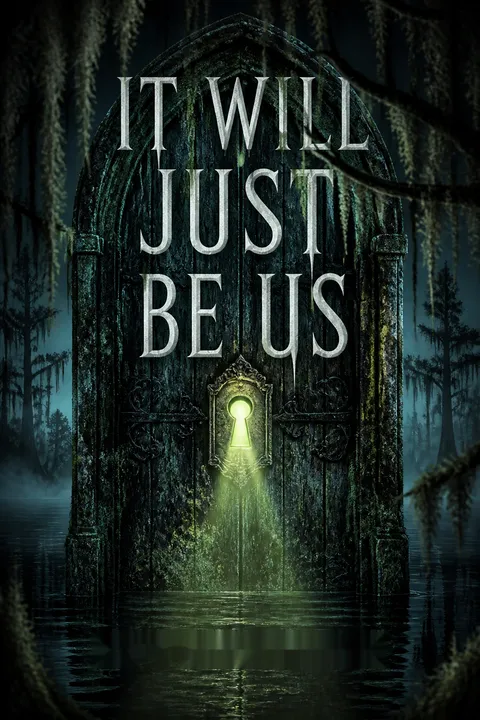


Plot Summary
Elizabeth Comes Through the Rain
The late-night bell unsettles Samantha Wakefield, who lives with her mother, Agnes, in a maze-like Virginia mansion beside the Great Dismal Swamp. The visitor is her pregnant sister Elizabeth, carrying two bags and fleeing her husband, Donovan, after he rejected the pregnancy and urged her to end it. Agnes welcomes Elizabeth home, while Sam is wary of the upheaval.
Their strained closeness has old roots: Sam once lived with Elizabeth and Donovan, but after Elizabeth drove away during a quarrel, Sam was mugged on the roadside. Later, Sam mistook Donovan for an intruder and struck him with a candle, so Elizabeth sent her home. Now, apologetic and frightened, Elizabeth asks to stay. She names her unborn son Julian.
The homecoming places the sisters’ bond inside a family system already shaped by abandonment. Elizabeth arrives needing care, but Sam remembers being left alone, and neither can speak plainly about the wound. Agnes’s welcome offers shelter without resolving her history of emotional absence. The looming baby intensifies the imbalance: Elizabeth expects shared excitement, while Sam’s own past pregnancy and choice to end it remain private. The house becomes a refuge from the outside world, but also a container where old grievances and present obligations cannot easily be escaped.
The Boy Calls Her Auntie
Wakefield Manor replays its past in visible and audible fragments, and Sam has learned to watch its rooms for clues. One night she sees an unknown boy methodically pluck a wounded bird, break its wings, and stamp on it. Later, his older, faceless image waits outside her bedroom with a knife, scratches the door, and identifies her as his aunt.
Sam dreams of a child forcing his way out of her own body, then sees a crawling figure enter the locked third-floor room. At Elizabeth’s ultrasound, the grainy image of Julian makes Sam recognize the boy she has glimpsed. Elizabeth sees only a healthy baby and dismisses Sam’s warning. Sam is left with a prediction she cannot prove and a sister who will not hear it.
Sam’s fear is not simply superstition: the house offers evidence that feels concrete while withholding the context needed to interpret it. Her archaeological instinct turns each image into a clue, yet the clues arrive out of sequence and invite premature certainty. Elizabeth’s refusal is psychologically understandable, since accepting Sam’s vision would make pregnancy itself threatening. The sisters repeat an old pattern: Sam retreats into observation, Elizabeth rejects what she cannot control. The child is already being imagined as either a beloved son or a future danger, before he can act at all.
Clementine Returns from Water
In the history Sam has assembled from the house’s echoes, Jonah leads his wife Clementine and their daughter Meriday from slavery into a hidden swamp settlement. They find refuge among maroons and a Cherokee community, where Meriday gradually feels at home.
One night Clementine follows floating foxfire into the marsh. Jonah sees a terrifying figure only in the water’s reflection before Clementine is dragged beneath the surface. Hours later, she climbs back out through an underwater opening, changed and cold, claiming an entity sent her back.
She speaks of escaping the limits of ordinary life through death, then kills the Cherokee chief and takes Meriday. Jonah and Wind Walker pursue them, free the girl, and flee through the swamp until they reach Wakefield Manor.
The historical strand gives the supernatural horror a human history of captivity and threatened autonomy. Clementine’s desire for freedom grows from a life in which her body and choices belonged to others, but the entity offers escape by erasing the living self. Her return does not undo oppression; it transforms liberation into a new coercion aimed at her daughter. Meriday’s rescue depends on Jonah and Wind Walker acting together, yet her arrival at the Wakefields does not guarantee safety. The swamp holds both refuge and danger, refusing any simple division between freedom and peril.
Foxfire Leads Sam Out
After a storm knocks out the power, Agnes reads Sam’s tarot cards and sees confusion, a dangerous man, and a coming transformation. In the flooded basement, Sam encounters a young Meriday warning that Clementine is near. She follows the girl into the rain and sees Clementine approach across the yard, where an earlier echo shows August Wakefield shooting her without effect.
Clementine looks directly at Sam, though the house’s visions should not be able to see their witness. A pair of flames then draws Sam into the swamp. Roots catch her boot and pull her into deep water, but Agnes reaches her and hauls her back to shore. Sam returns shaken, carrying no proof, while the strange flames disappear into the storm.
The tarot reading gives Sam a vocabulary for dread, but not a reliable map. Its symbols sharpen her attention and encourage her to treat intuition as evidence, a habit the house repeatedly rewards and punishes. Clementine’s direct gaze breaks the usual distance between observer and memory, suggesting that Sam is not merely studying the past. Her decision to follow the flames also echoes the historical characters’ attraction to the swamp. Agnes’s rescue is a rare act of immediate protection, yet it does not explain what Sam saw or why the dead woman could see her.
Constance Falls Beneath the Maple
As Sam watches children from different eras playing in the yard, she sees Constance Wakefield, a girl from the nineteenth century, examine an arrowhead offered by a faceless boy. The boy is Julian, though he has not yet been born. He drives the stone into Constance’s throat, then strikes her head with another rock while she tries to crawl away.
The two vanish, leaving Sam unsure whether the house has shown a true event or a nightmare. She digs beneath the maple and uncovers a young girl’s skeleton, its skull fractured around one eye. The bones confirm Constance’s murder. Sam now knows Julian’s future can reach into the past, and begins to wonder whether anything she does can prevent the violence she has seen.
The murder turns Sam’s visions into a material problem: she can verify the past by excavating its remains, but verification does not give her power over it. Julian’s time-crossing violence also disrupts the comforting idea that generations remain sealed from one another. Sam’s work as an archaeologist depends on treating bones as evidence, yet Constance is not an artifact to her; she is someone Sam watched alive. This tension exposes the limits of detached study. The more Sam learns, the less she can separate interpretation from responsibility.
The Key Opens the Room
Trying to summon Julian, Sam performs Agnes’s mirror-and-candle ritual in the basement. The face in the glass proves to be her own, but a memory shows Agnes hiding a bronze key beneath a jewelry box. Sam retrieves it, unlocks the forbidden third-floor room, and finds a notebook written by her deaf father.
Its pages describe a growing chamber, a reality-breaking void he calls the Zero, and reflections that seem to conceal something vast. The later entries show him watching himself hang from a ceiling beam again and again, unable to stop the vision. Sam closes the notebook with the key still in hand, understanding that the locked room is tied to her father’s last days, though she does not yet know why Agnes hid its entrance.
The key converts family secrecy into a physical object Sam can carry, while the notebook reveals how little possession of evidence guarantees understanding. Her father’s account resembles Sam’s own method of collecting fragments, but it also shows observation turning into fixation. The Zero gives a name to what the house makes difficult to perceive: absence that behaves like a presence. By entering the room, Sam repeats her father’s movement toward the unknown, believing knowledge might provide control. Instead, the discovery makes inherited fear more intimate and harder to dismiss.
A Visitor Meets the Dead
A young architecture enthusiast named Nathaniel visits Wakefield Manor under the pretense of religious outreach, hoping to photograph the house. Agnes keeps him inside and lets him witness the ghost of their ancestor Harriet suffer the seizure that killed her.
When Harriet vanishes through Nathaniel’s body, he bolts from the mansion. Soon after, Elizabeth screams from her room, bleeding heavily. Sam and Agnes rush her to the hospital, where doctors test her for a dangerous pregnancy complication.
The bleeding stops, and the staff report that Elizabeth and Julian are healthy. On the drive home, Agnes finally tells Sam that her father died by hanging in the locked room. Afterward, Agnes repeatedly watched the house replay his suicide, until she hid the key to keep her daughters out.
The sequence moves from theatrical haunting to a crisis whose stakes are bodily and immediate. Nathaniel’s skepticism collapses when the house makes death visible, while Elizabeth’s bleeding forces Sam to confront the possibility of losing her sister and the child she fears. The hospital offers reassurance but no explanation, preserving the novel’s unease between what medicine can establish and what the house seems to know. Agnes’s confession recasts the locked room as a site of grief rather than mere family eccentricity. Her silence protected her daughters from an image, but it also left Sam to inherit its mystery.
Julian Hunts His Aunt
After Agnes’s confession, Sam sees twelve-year-old Julian outside the manor and flees when he starts counting through a game of hide-and-seek. The house rearranges itself in darkness as he searches its rooms.
In the laundry closet, he finds Sam and strikes her with a pool cue, leaving painful bruises. She flashes Nathaniel’s camera and throws a cue ball at him; it passes through his body and breaks the window, and Julian disappears. Sam tells Agnes that the boy will kill children, but her mother refuses to dwell on a future that has not arrived.
Still frightened, Sam returns to the locked room and witnesses August Wakefield imprisoning Jonah and Meriday there. The vision reveals how danger in this house has long worn the face of family authority.
The pursuit makes Sam’s fear physically consequential even though Julian belongs to another time. The blows leave her with a question the house cannot settle: if an echo can injure her, where is the boundary between memory and event? Agnes’s refusal to act repeats her earlier withdrawal, intensifying Sam’s sense that protection must come from herself. The ancestral imprisonment complicates that impulse. The room is not only a supernatural breach; it is also a human instrument of domination, used by one family member to confine another.
Meriday’s Bloodline Emerges
Sam watches August keep Jonah chained in the locked room while Meriday is made to care for him. Over time, August and Meriday become close under conditions of coercion, and Meriday gives birth to Lucius, who later belongs to Sam’s family line.
Sam recognizes that the manor’s history and Julian’s future are joined by generations of buried violence. Her father’s final journal pages show him watching his own suicide and wondering whether he is compelled to repeat it or choosing it.
Sam considers whether Julian must be killed before birth, then recoils from the thought. The evidence has given her ancestry, not a solution: she can trace the harm through the family, but she cannot tell whether Julian is its cause, its consequence, or something the house has made of both.
The genealogical revelation makes inheritance more than a metaphor: the family’s present is literally connected to a history of enslavement, confinement, and forced intimacy. Sam’s archaeological reconstruction exposes the violence hidden beneath the respectable continuity of a surname. Yet the father’s journal denies her an easy model of causation. His repeated vision may have driven his choice, or simply witnessed it. Sam’s question about killing Julian arises from a desire to stop inherited harm, but it risks repeating the very logic of control that shaped the family’s past.
Donovan Reenters the Manor
Agnes summons Donovan, and Elizabeth allows him to stay at Wakefield Manor without agreeing to return to their home. He is courteous at first, helps Sam assemble the crib, and speaks as if he wants to repair the marriage. Yet the house unsettles him: he wanders its shifting corridors, accuses Sam of misleading him, and burns her palm with a cigarette when she challenges him.
Sam sees the boy she has feared in Julian’s temper and facial outline, now echoed in Donovan. Convinced that the father may shape the son, she becomes determined to remove Donovan from the house. Her attempt to break the mirrors begins as a protective ritual, but it will soon turn the household against her.
Donovan’s return exploits the difference between reconciliation and safety. His practical help can look like care, while his demand for control resurfaces as soon as he feels challenged. Sam interprets his resemblance to Julian as a causal explanation, a way to make an incomprehensible future manageable. That reading gives her a target, but the novel has already shown that family violence predates him. Smashing mirrors is both an effort to seal a supernatural breach and an attempt to erase the reflections through which Sam fears the future may enter.
Snow Seals the Wakefields In
Sam breaks the manor’s mirrors, but the next morning the family argues over who caused the damage. A blizzard then buries the cars, cuts the power, and blocks every route out. As Agnes and Sam try to leave with Elizabeth, Elizabeth admits that Donovan hit her during one of their arguments. They return inside, but Donovan smashes Elizabeth’s phone when he suspects she may call for help.
Agnes strikes him with an empty wine bottle, and Sam ties him to a chair. Elizabeth’s contractions begin before they can reach a hospital. The family is trapped together, with Donovan restrained, Agnes preparing to deliver the baby, and Sam forced to decide whether the locked room’s danger is still preferable to what waits elsewhere in the house.
The storm turns the manor’s isolation from a chosen refuge into a trap. Elizabeth’s disclosure revises the apparent marital quarrel: her departure was not an overreaction but an attempt to escape escalating physical harm. Agnes finally intervenes, though her response arrives only after Donovan destroys Elizabeth’s means of contacting the outside world. The women’s improvised restraint protects them temporarily, but it cannot make the house safe or the labor wait. Sam’s recurring belief that a closed door offers protection now becomes a desperate practical calculation.
The Zero Opens at Birth
With Donovan searching the manor, Sam takes Elizabeth and Agnes into the locked room, where Agnes delivers Julian by candlelight. The baby is born with his umbilical cord around his neck but cries once Agnes frees it.
Donovan breaks through the door and struggles with Elizabeth for the child. Then Sam sees her father appear in the room’s cracked mirror; he strikes it, reopening the dark Zero described in his journal. Donovan approaches the widening breach while holding Julian, and Sam snatches the newborn from his arms.
She runs through the shifting house as Donovan follows, carrying a child she has feared for months but now cannot abandon. The birth does not resolve her visions. It makes their consequences immediate and gives Sam one chance to act.
Birth concentrates the novel’s central conflict in a single vulnerable body: Julian is at once a loved infant and the future Sam believes she has seen. The room’s ghosts and the opened Zero place family history beside the present without explaining how to separate them. Sam’s choice to take the baby from Donovan is protective, but it also makes her responsible for a child she is not prepared to raise. The scene refuses the fantasy that insight produces clean decisions. Sam acts from care and terror together, and the consequences unfold before she can know which motive will prevail.
The Swamp Takes Julian Back
Sam escapes through flooded tunnels beneath the manor with Julian in her arms, while Donovan pursues her through the dark. A hidden exit deposits them in the frozen swamp. Donovan catches up, but when he follows Sam across thin river ice, it breaks beneath him and he disappears into the water. Sam keeps walking until Julian goes silent and she realizes he has frozen to death.
Near a bonfire beside the impossible shack, Clementine appears and takes the child. She lowers him into the river, where the reflected Swamp Witch shows her unearthly face. Julian sinks, then rises alive and crying. Sam loses toes and part of a finger to the cold, and returns to the manor at dawn with the baby. She does not know what Clementine has changed in him.
The escape reverses the family’s earlier movement from swamp to manor: Sam flees the house only to enter the older power that has shaped its history. Donovan’s disappearance offers no reassuring victory, and Julian’s death makes Sam confront the limit of her ability to protect him. Clementine’s intervention restores life but not innocence or certainty. The child returns through the same water that transformed Clementine, leaving survival inseparable from an unknowable cost. Sam reaches home with what she wanted to save, but the rescue cannot restore the family as it was.
Epilogue
Years later, Sam admits that Elizabeth did not survive the night. She and Agnes raise Julian, but he harms animals and grows increasingly dangerous. Agnes eventually moves to a retirement home, leaving Sam alone with him in the manor. Sam cannot escape the house, and Julian keeps her captive, repeating the injuries she once feared from the faceless boy.
She comes to understand that Clementine’s act in the swamp returned Julian without something essential. Sam also recognizes the old woman with Xs over her eyes as a possible future version of herself. Her final reckoning is not that Donovan made Julian monstrous, but that her own attempts to protect the family helped lead them to this room and this fate.
The epilogue makes the ending circular rather than conclusive. Sam’s narration has been an effort to organize the past into a story, yet the final revelation places her inside the very image she once treated as an inexplicable ghost. Her failure is not presented as simple blame: the choices she names were made under fear, incomplete knowledge, and genuine care. Still, the retrospective structure makes responsibility unavoidable. The rescue of Julian did not restore what he lost, and the hope that love could repair him becomes another painful story Sam can no longer tell herself.
Analysis
The novel treats haunting as an argument about what a family remembers and what it tries to bury. Wakefield Manor keeps the past physically present, but its echoes do not arrive as a stable archive. Sam’s training encourages her to assemble fragments into a coherent account; the house rewards that impulse with real discoveries, then undermines it by making memory, prediction, and current experience overlap. Her narration is therefore both investigative and vulnerable. She wants to distinguish evidence from fear, yet the method she trusts cannot reliably sort the house’s different times.
The historical strand sharpens this problem by placing the Wakefields’ supernatural inheritance beside the history of enslavement. Clementine’s desire for self-possession is understandable, but the power she encounters turns freedom into another demand imposed on her daughter. Meriday’s life then passes through the Wakefield household, where protection and confinement coexist. The family’s later identity cannot be separated from these older relations of power, even when its members do not know the story. Archaeology becomes an ethical practice as well as a plot mechanism: recovering the past means confronting whose suffering was hidden inside the family record.
Sam’s central mistake is not that she cares too much, nor that she acts without reason. It is that she repeatedly treats an incomplete pattern as a dependable causal explanation. She believes the unborn Julian is already fixed as a monster, then looks to Donovan as the source of that future. The final revelation refuses that convenient answer. Julian survives through an intervention that may also alter him, while Sam’s attempts to protect the family help bring everyone into the room and the crisis she fears. The story does not claim that every outcome was avoidable. It asks instead how responsibility works when people act under partial knowledge, and whether love can repair harm when the past has already become part of the present.
Review Summary
It Will Just Be Us receives mostly positive reviews, praised for its atmospheric gothic horror and haunting imagery. Readers appreciate the unique take on haunted houses, complex family dynamics, and creepy faceless ghost boy. Many compare it favorably to Shirley Jackson's works. The writing style divides opinion, with some finding it beautifully descriptive while others feel it's overly purple. The slow-burn pacing and shocking ending are frequently highlighted. Overall, it's recommended for fans of atmospheric horror and gothic fiction.
People Also Read





Characters
Samantha Wakefield
The house’s wary witnessSam is an archaeologist and adjunct teacher who has spent much of her life learning the geography and history of Wakefield Manor. Small, observant, and uneasy around other people, she turns objects and memories into evidence, hoping that careful interpretation can make frightening events manageable. Her silence is both a refuge and a defense; she often withholds what she knows until fear forces her to act. Her sister’s need for attention can irritate her, but Sam’s private loyalty runs deeper than her resentment. The house’s overlapping eras suit her fascination with the past, while also testing her belief that understanding a pattern gives her control over it.
Elizabeth Wakefield
The forceful older sisterElizabeth is Sam’s older sister, expressive and socially confident where Sam is cautious and withdrawn. She has a quick temper, a gift for filling silence, and a habit of expecting her family to share her feelings on her terms. Their childhood was affectionate as well as competitive, leaving Sam with memories of both protection and cruelty. As an adult, Elizabeth wants a stable family life and prepares seriously for motherhood, even when her marriage becomes uncertain. Her apparent certainty often conceals fear or hurt. She and Sam can wound one another with familiar ease, but their shared history also gives them a language and intimacy neither has with anyone else.
Agnes Wakefield
The grieving housekeeperAgnes is Sam and Elizabeth’s mother, a former obstetrician whose life has narrowed around Wakefield Manor and its memories. She reads tarot, notices shifts in the house’s atmosphere, and treats its strange history as part of ordinary life. Her care is genuine but inconsistent: she can be warm and perceptive, then retreat behind wine, ritual, or emotional distance when her daughters need her. Grief has shaped her habits without making her incapable of action. Agnes wants to keep her family safe, yet often protects them through silence and avoidance. Her complicated mixture of intuition and denial makes her both a source of guidance and a reminder that knowing danger does not guarantee confronting it.
Donovan Hill
The unsettled husbandDonovan is Elizabeth’s husband and the father of her expected child. A programmer who can work remotely, he is used to order, practical solutions, and having his competence recognized. He can be companionable and even helpful, which makes his sharp temper harder for Sam to read. His relationship with Elizabeth moves between tenderness, bickering, and strained attempts at reconciliation. He is wary of Wakefield Manor and its shifting rooms, but his discomfort often comes out as irritation rather than vulnerability. Donovan wants a place in his child’s life and believes he knows what a functioning family should look like, though his certainty can crowd out other people’s needs.
Julian
The unborn center of fearJulian is Elizabeth and Donovan’s expected son, whose arrival becomes the focus of Sam’s visions and the family’s competing hopes. Before he is born, Sam encounters images of him at different ages and interprets them as warnings. Elizabeth sees a child to love and prepare for, while Agnes treats his coming as a chance for the family to gather around something new. Julian therefore exists first as a contested idea: a baby, a source of fear, and a future no one can verify. The distance between those imagined versions raises the question of how much a person is shaped by inheritance, environment, and the stories others tell about them.
Clementine
A mother drawn to freedomClementine is Meriday’s mother and Jonah’s wife, living in a maroon community in the Great Dismal Swamp after escaping enslavement. She has endured the threat of having her body and choices controlled by others, and she longs for a freedom that cannot be taken away. Her connection to the swamp’s supernatural power gives her an unusual understanding of time and death. She loves her daughter, but her idea of protection is shaped by experiences that make ordinary life seem like another form of captivity. Clementine’s story brings the novel’s ghostly history into contact with the Wakefields’ present.
Jonah
A father seeking refugeJonah is Clementine’s husband and Meriday’s father. He risks the journey from enslavement to the swamp because he wants his family together and beyond the reach of their former captors. Practical and devoted, he relies on courage and community rather than supernatural explanations. When events turn against his family, his choices are driven by the need to keep Meriday alive. Jonah’s account gives Sam access to the maroons’ history, though his story reaches her through the house’s fractured and imperfect echoes.
Meriday
A daughter between worldsMeriday is Clementine and Jonah’s daughter, a child who grows up among the hidden communities of the swamp. She is curious and adaptable, finding companionship and a sense of home in a landscape her parents know is dangerous. Her family’s struggle places her between different forms of power, from the world they escaped to the Wakefield household that shelters them. The house preserves fragments of her life, making her one of the bridges between Sam’s present and the manor’s past.
August Wakefield
The rigid family heirAugust is the son of Everett Wakefield and Constance’s brother. Raised in a Quaker household near the swamp, he is stern, religious, and convinced that danger must be controlled through obedience. He helps his family’s efforts around the swamp but fears the place and resents those who challenge his authority. His relationship with Constance reveals a harsher side beneath his moral certainty. August’s choices form part of the family history Sam tries to reconstruct from the manor’s memories.
Constance Wakefield
The adventurous daughterConstance is August’s younger sister, raised in the Wakefield household during the nineteenth century. She is curious about the swamp and impatient with rules that keep her from exploring it. Her concern for her sick mother leads her to seek a remedy in the very place her brother fears. The house shows her as a vivid child with a strong will, distinct from the careful, restrained Sam who later watches her memories.
Wind Walker
The Cherokee guideWind Walker is a Cherokee man connected to the community living alongside the maroons. He understands the swamp’s terrain and can track people through its difficult ground. His knowledge makes him a guide and protector when Jonah’s family faces danger. Wind Walker also recognizes that the swamp’s supernatural presence cannot be treated as harmless, giving the historical strand a perspective beyond the Wakefields’ own family lore.
Samantha’s father
The silent archivistSam’s father is deaf and shares a private language of signs with her. He values order and tidiness, and his quiet companionship gives Sam an early model of communication that does not depend on speech. His notebooks reveal a mind trying to record experiences that resist ordinary explanation. To Sam, he remains both an intimate parent and a person whose inner life she only partly understood.
Mad Catherine
The manor’s builderMad Catherine is a nineteenth-century Wakefield remembered for directing the construction of the family mansion. Her ambition and insistence on expanding the house leave it with a bewildering plan of corridors and rooms. The family legend associates her with the manor’s most disturbing architectural changes and with a violent episode that made the Wakefields notorious. Catherine’s story helps explain why the house feels less like a home than a structure that has learned to grow.
The Swamp Witch
The reflection’s inhabitantThe Swamp Witch belongs to the stories told about the Great Dismal Swamp, where a floating light is said to lure travelers into danger. Her true appearance is glimpsed in water rather than directly, making reflection a necessary but frightening way to perceive her. Different communities understand her differently: a threat, a source of power, or a possible route beyond ordinary time. The legend gives the swamp a presence that the Wakefield family cannot fully contain.
Frances Wakefield
The dying ancestorFrances is Everett Wakefield’s wife and the mother of Constance and August. Sam encounters her in the manor’s memories as a frail woman suffering from tuberculosis. Her illness shapes the household and helps explain why Constance seeks help from the swamp.
Everett Wakefield
The Quaker patriarchEverett is the father of Constance and August and a Quaker who supports the family’s efforts to assist people escaping enslavement. His household offers shelter near the swamp, though his children interpret its dangers and their responsibilities differently.
Nathaniel
The skeptical visitorNathaniel is an architecture enthusiast who visits Wakefield Manor hoping to photograph its unusual design. His religious outreach is largely an excuse to get inside. He arrives skeptical of ghosts, making his encounter with the house a brief test of how quickly certainty can fail.
Lucius
A child in the family recordLucius is a child whose place in the manor’s ancestral history connects the swamp-era storyline to later generations of Wakefields. His presence reminds Sam that family identity can be preserved through hidden histories as well as names and records.
Harriet
The remembered great-grandmotherHarriet is Sam and Elizabeth’s great-grandmother, encountered as an echo moving through the house. Her presence demonstrates that the manor preserves ordinary domestic gestures as well as moments of crisis, and that its memories can intrude on people who do not believe in them.
Plot Devices
Wakefield Manor
Memory-house archiveThe ancestral mansion beside the Great Dismal Swamp stores impressions of the people who have lived and died there. Rooms can shift into earlier arrangements, while figures, sounds, and events recur without following a dependable chronology. Sam treats the manor as an archaeological site, recording its appearances and trying to connect them into a history. Its memories sometimes reveal verifiable details, such as Constance’s buried remains, but they can also confuse the present with the future. The house is both refuge and threat: it shelters the Wakefields from the outside world while making their family history impossible to leave behind.
The locked room and Zero
A breach in realityThe sealed third-floor room gathers several strands of the story: Sam’s childhood fear, her father’s final writings, Jonah’s imprisonment, and the birth of Julian. Inside, space and perception become unstable. Her father’s notebook describes a void he calls the Zero, associated with mirrors and a tear in ordinary reality. The room does not simply contain a secret; its shifting dimensions make it difficult to tell whether the observer is seeing a memory, an event, or an opening into somewhere else. The key offers access, but not mastery. Each entry gives Sam more information while drawing her further into the family’s unresolved history.
Foxfire and the Swamp Witch
A lure across timeFloating flames guide characters toward the swamp’s supernatural force. In the historical strand, Clementine follows the lights and returns changed after being pulled beneath the water. Sam later follows similar flames and encounters the dead in ways that blur the distinction between the manor’s echoes and the present. The Witch is associated with reflections, especially the water’s surface, where her true form can be glimpsed. The device joins local warning stories to the novel’s larger questions about time and identity. It promises revelation, but following it repeatedly puts characters in danger.
Mirrors
Unstable double visionMirrors in the novel do more than reflect the people standing before them. Sam sees figures and forms at their edges, while her father’s journal suggests that reflections may expose something hidden behind ordinary reality. The mirror ritual she performs in the basement does not summon the person she expects, and her father’s later appearance in the locked room is connected to a fractured mirror. Sam smashes the household mirrors in an effort to close whatever may be using them as a passage. Their repeated failure to provide a stable image parallels her uncertainty about whether her own interpretations are reliable.
Archaeological artifacts
Evidence with missing contextSam collects objects from the swamp and manor, including arrowheads, a gunflint, and fragments of pottery. She sees them as possible keys to recovering lives otherwise erased from history. Her professional habit of documenting an object’s setting becomes a model for how she reads the house: every vision needs context, and every clue must be placed beside others. Yet the novel repeatedly withholds that context or supplies it too late. An arrowhead becomes part of a murder, a buried skeleton confirms a vision, and a hidden key opens a family secret. Objects clarify events without guaranteeing that Sam understands their causes.
Download PDF
Download EPUB
.epub digital book format is ideal for reading ebooks on phones, tablets, and e-readers.








