

Plot Summary
Ashraf at the Ledge
During a blizzard crossing the Khusk mountains, twelve-year-old Nazafareen chases her little sister Ashraf after their puppy bolts from the trail. She finds Ashraf beside a cliff, but the girl’s black eyes and borrowed voice reveal that a wight has taken her. Their uncle arrives and pulls Nazafareen from the creature’s attack.
When the ledge breaks, Ashraf hangs over the abyss, briefly sounding like herself as she begs for help. Nazafareen reaches for her, but Ashraf grabs her hair and the uncle’s knife strikes the possessed girl. Her body falls into the darkness. With no remains to bury and no certainty that her sister is truly gone, Nazafareen carries guilt alongside the memory of the wight’s face.
The opening binds Nazafareen’s later vocation to an unbearable moral ambiguity: she survives because an adult intervenes, yet she experiences the killing as a failure to save her sister. The wight’s mimicry turns affection into a weapon, making recognition itself unreliable. Nazafareen’s guilt is therefore not simply grief; it is the mind’s attempt to invent a choice where terror and confusion left almost none. Her pursuit of justice begins as a way to make that helpless moment mean something.
Scarlet Across the Mountains
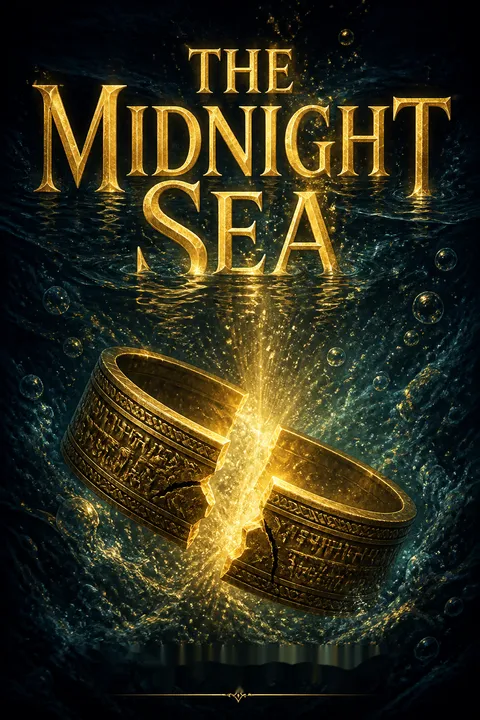
A year later, scarlet-clad Water Dogs arrive at the Four-Legs camp, recruiting gifted youths to fight the undead Druj. Their offer of silver cannot persuade Nazafareen’s cautious brother Kian, but the promise of hunting wights reaches the anger she has fed since Ashraf vanished. She volunteers and discovers that a gold cuff lets her feel another person’s pain: the young Water Dog Ilyas’s injured leg.
The magus confirms her rare gift and explains that she will eventually bond with a daēva, a powerful being the empire enslaves to fight the Druj. Nazafareen leaves her family for Tel Khalujah, where Ilyas trains her and she meets his daēva, Tommas. For the first time, the supposed monster looks more kind than the people who fear him.
Nazafareen’s enlistment converts private mourning into public service, but the conversion is not yet healing. She chooses the Water Dogs because their violence appears to offer a clear answer to the wight’s violation. The cuff’s first lesson complicates that simplicity: power is transmitted through felt vulnerability. Tommas’s ordinary kindness then challenges the categories she was taught to trust, preparing her to distinguish a person from the political story told about their kind.
Tijah's Stolen Future
As Nazafareen grows into palace life, she escapes kitchen contempt by taking work in the stables with Tommas. His easy friendship gives her a first, cautious view of daēvas as individuals. A new novice, Tijah, soon becomes her closest ally. Tijah has fled her wealthy father’s plan to marry her to a powerful man who already abused one of her sisters.
When Tijah resisted, her father had her beaten and used her bond to Myrri to hurt them both. She escaped with Myrri and her father’s ceremonial scimitar, then joined the Water Dogs to become a fighter rather than property. Her history gives Nazafareen a companion who understands how family authority can disguise coercion, even beneath comfort and respectable custom.
Tijah’s story enlarges the book’s concern with bondage beyond the daēva cuffs. Her father’s wealth and status do not make his control less violent; they make it socially legible as protection and marriage. Tijah’s flight is an act of self-authorship, but she does not mistake escape for safety. By choosing the Water Dogs, she claims a weapon and a public identity, while remaining alert to the empire’s own forms of ownership.
The Cuff Between Them
At seventeen, Nazafareen is bonded to Darius, a solemn young daēva with a withered left arm and immense elemental power. The cuff floods her with his emotions, including a grief so deep she cannot tell whose it is. At first, she resents the intrusion and keeps a tight hold on his power.
Darius teaches her to let a small measure pass through the bond, sharpening her reflexes in training. Their partnership remains awkward, but practice and shared stories slowly soften their defenses.
Darius’s nightly water blessing becomes a familiar presence, and Nazafareen’s nightmares of Ashraf ease. The bond gives her company she never requested, while making trust a practical necessity: she must release control without knowing exactly what her partner will do.
The bond makes intimacy involuntary before either character can choose it, so their emotional development cannot be separated from questions of consent. Nazafareen’s instinct to control Darius resembles the institution that has already restricted him, even though she does not initially see the resemblance. Training offers a less coercive model: power works best when she permits cooperation. Their growing closeness begins not with confession, but with repeated acts of calibrated trust.
Ash Shiyda's Empty Houses
On their first encounter with the Druj, Nazafareen’s patrol finds the village of Ash Shiyda deserted, its meals still on the tables. A starving woman hiding beneath a bed proves to be a wight.
Nazafareen attacks with such fury that she beheads it while still gripping Darius’s power, leaving him unable to fight the liches entering the house. When he forces her to release the bond, his air magic tears the shadow-creatures apart, but the effort injures him.
Nearby, Ilyas and Tommas kill a revenant by trusting each other’s timing, though Tommas’s horse Abraxas is mortally wounded. The survivors learn that Queen Neblis’s forces have taken the villagers as slaves. Nazafareen sees that vengeance can make her repeat the helplessness she means to avenge.
Ash Shiyda turns Nazafareen’s hatred into a tactical liability. She can strike at the wight, but her refusal to share power leaves Darius unable to answer the larger danger. The scene distinguishes courage from effective action without diminishing her grief. Tommas and Ilyas offer a contrasting partnership built on precise mutual reliance, while Abraxas’s death makes the cost of victory intimate rather than abstract. The missing villagers reveal that the undead threat is organized, not incidental.
The Prison Without Maps
During a holiday gathering, the Water Dogs learn that six ancient daēvas have escaped Gorgon-e Gaz, a hidden fortress where the empire confines those who remember life before the cuffs. Their human guards helped them escape, and the fugitives have killed fourteen people. Ilyas leads Nazafareen, Tijah, Darius, Tommas, and Myrri west to recapture them.
Darius tracks the party across the mountains, while Nazafareen guides the others through the passes she crossed as a child. The trail points toward the Barbican, the fortress where the empire’s gold cuffs are made. At the same time, Bactrian necromancers offer an alliance to seize a fugitive named Victor. Ilyas refuses, but the pursuit now threatens more than a prison break.
The escape exposes a structural weakness in the empire’s confidence: the cuffs restrain daēvas only while human partners continue to uphold the system. The guards’ cooperation makes disobedience contagious, not supernatural. Nazafareen’s knowledge of the mountains also changes her role from raw recruit to indispensable guide, while the pursuit forces her to see the landscape of her childhood as contested ground. Victor’s name and the necromancers’ interest signal that the fugitives are entangled in a much older conflict.
The Storm Takes Tommas
At the Barbican, Nazafareen realizes that two Purified have forged papers to steal the holy fire, which can break the bonds. Ilyas keeps that discovery secret and drives the Water Dogs after the fugitives. Their daēvas create a vast sandstorm, then enter it to find a battle between the escapees and the necromancers. Tommas dies after a wight stabs him, leaving Ilyas shattered.
The surviving fugitive Victor returns and demands the stolen fire. Darius holds him back, but Victor reveals that he is Darius’s father and that he sought to free the daēvas. The claim breaks Darius’s concentration, and Victor escapes into the storm. Nazafareen conceals the truth from Ilyas, who turns his grief and fear into a plan to blame Darius.
The Barbican revelation recasts the cuff from an unquestioned bond into an engineered instrument of control, while Tommas’s death makes the cost of that control painfully personal. Ilyas cannot mourn openly without confronting the love and dependence he has denied, so grief hardens into suspicion. Victor’s revelation destabilizes Darius at precisely the moment he is expected to prove loyalty. The conflict is now not simply between empire and enemy, but between inherited allegiance and the evidence of lived experience.
A Verdict Already Chosen
Ilyas brings the survivors to Persepolae and accuses Darius of conspiring with Victor to steal the holy fire. At the trial, he presents Victor’s claim of paternity as proof, while omitting Darius’s injuries and his repeated defense of the empire. Nazafareen argues that Darius fought the Druj and tried to hold Victor, but the King accepts Ilyas’s account and sentences Darius to the flames.
Nazafareen is imprisoned as his bonded. The Purified who could have confirmed their innocence dies in his cell before testifying. Ilyas visits Nazafareen and offers a way to save herself by renouncing Darius. She refuses, recognizing that his accusation is less a search for truth than an attempt to force the world back into the order he needs.
The trial is staged as a legal proceeding but functions as a ritual of political self-protection. Ilyas converts ambiguous evidence into certainty, and the court accepts his certainty because it preserves imperial authority. Nazafareen’s testimony matters less than her bond, which should make her a witness to Darius’s character but instead becomes grounds for suspicion. Her refusal marks a moral break: she will no longer purchase safety by repeating the state’s account of who deserves to be human.
The Wrist in the Cell
The Numerators try to make Nazafareen use the cuff to torture Darius into confessing, threatening her clan if she refuses. She will not help them. Ilyas then visits her cell, grieving Tommas and insisting that Darius is a demon who corrupted her. When Nazafareen names Ilyas’s buried love for Tommas, his grief turns violent.
He cuts off her cuff-bearing hand, breaking her bond to Darius and leaving her isolated in the dungeon. The Numerators cauterize the wound while Ilyas watches. As fever and pain blur the days, Nazafareen loses any sense of Darius’s location or survival. Delilah, the King’s bonded, finally enters her cell and offers an escape, but only if Nazafareen promises to take Darius with her.
Ilyas’s violence literalizes the logic of the cuff: when a relationship threatens his worldview, he tries to sever the body that sustains it. His grief is real, but he converts it into an argument for control, treating Nazafareen’s love as contamination rather than choice. The amputation also strips her of the identity through which she served the empire. Delilah’s offer introduces a different form of obligation, one grounded in care and a promise rather than ownership.
Delilah's Hidden Door
Delilah distracts the Immortals guarding Darius’s cell by claiming the palace is under attack. One soldier helps remove the cuff Ilyas has used to control him, and Nazafareen fastens it to her injured wrist, restoring her bond with Darius. He blasts open the cell, then carries her through secret passages built into the palace and into an aqueduct beneath the baths.
They emerge beyond the walls and flee north on foot. Nazafareen’s wound worsens, and fever leaves her near death as imperial riders close in. Darius refuses to abandon her, but cannot safely draw enough power to outrun them. Victor appears in the forest and carries Nazafareen away, forcing Darius to follow if he wants her to survive.
The escape reverses the prison’s arrangement of bodies: a bonded woman chooses to restore connection, while a guard chooses to help rather than obey. Yet the reunion is not a simple return to safety. Nazafareen’s damaged body and Darius’s exhaustion make dependence unavoidable, and their flight tests care under conditions where neither can fully control the outcome. Victor’s rescue complicates the emotional picture further: the man Darius distrusts becomes the person who keeps Nazafareen alive.
Victor's Unfinished History
Victor brings Nazafareen and Darius to Karon Komai, where the smuggler Kayan Zaaykar hides fugitives in his home. Victor heals the infected wound on Nazafareen’s stump but cannot restore her hand. While she recovers, he explains that he and the daēvas once lived free, and that Zarathustra designed the cuffs as a partnership for war.
Xeros seized the invention and made it a one-way bond, then forced Victor to capture other daēvas. The empire’s claim that daēvas were born maimed is false. Kayan identifies himself as a member of the Followers, a secret movement that believes Zarathustra survived and opposes the enslavement. The Amestris is due to take them toward Eskander’s army, but Darius and Victor remain divided.
Victor’s history does not erase the violence he committed, but it changes the frame through which that violence is understood. The empire’s founding story has concealed a political choice by presenting coercion as divine necessity. Nazafareen’s faith therefore survives only by separating its ethical core from its institutions. The secret Followers embody that distinction: dissent has persisted inside the empire, though secrecy has made it difficult to turn moral knowledge into collective action.
Blood at Karon Komai
Before the Amestris arrives, Ilyas tracks the fugitives to Kayan’s manor and captures Nazafareen, Darius, and Victor. He makes Darius duel Victor, threatening Nazafareen to force a killing. Darius disarms his father, but Victor refuses to finish him. Ilyas punishes Victor through the cuff and orders Darius to strike.
Tijah, who has waited for her opening, drives her scimitar through Ilyas while Myrri blocks the other soldiers. Nazafareen takes Victor’s cuff and bonds him alongside Darius. When an Immortal reaches for her, she enters the nexus and reverses the flow of his blood, stopping the attack. She spares the surviving soldiers, removes Ilyas’s cuff, and boards the Amestris with her companions as the ship approaches.
The climax makes coercion visible in successive forms: Ilyas uses a hostage, a duel, and the cuff to compel obedience. Darius’s refusal to kill Victor breaks the script Ilyas has imposed, while Tijah’s intervention turns patience into decisive resistance. Nazafareen’s contact with the nexus is not mastery achieved through domination; she accesses it by releasing the self-protective grip that has defined her training. Her choice to spare the soldiers distinguishes liberation from revenge.
Alexander's Four-Week Deadline
At sea, Nazafareen throws Ilyas’s now-empty cuff into the water, letting go of the last physical claim of the old bond. The Amestris reaches Eskander’s camp at Sestos, where the young king explains that he will attack Persepolae with Greek fire if the Immortals keep the gates closed. Victor and the free daēva Lysandros volunteer to infiltrate Bactria and recover the stolen holy fire.
Darius, Nazafareen, Tijah, and Myrri instead offer to search Karnopolis for Zarathustra, whom the Followers believe is imprisoned there. Eskander gives them four weeks. If they fail, he will march on the capital, where Darius’s mother remains captive and thousands of bonded soldiers stand in the path of war.
The ending resolves Nazafareen’s immediate escape but refuses the comfort of a clean victory. Her discarded cuff marks an ethical departure, while her retained bond with Darius and Victor carries new responsibilities into the next conflict. Eskander’s deadline forces liberation to confront consequences at scale: an attack on the empire could free some and kill many others. The competing missions also preserve uncertainty about whether truth, military force, or the stolen technology can dismantle the system fastest.
Epilogue
In Bactria, the necromancer Balthazar delivers the stolen holy fire to Queen Neblis, having failed to capture Victor. Neblis learns from her captive Purified, Mahvar, that Zarathustra may still be imprisoned in Karnopolis.
She orders Balthazar to bring the Prophet to her alive. The fire that could break the daēva bonds is now in the hands of the queen who commands the undead, while the secret of the empire’s founding waits behind the walls of the city Nazafareen’s party plans to enter.
The epilogue shifts the center of danger from the fugitives to the forces gathering around them. Neblis does not merely possess a weapon; she learns that the person who understands its creation may still be reachable. Balthazar’s fear of his queen reveals that the Antimagi’s apparent power rests on their own submission to her. The final image links political domination across opposing sides: the empire enslaves daēvas, while Neblis bends captives and servants to her will.
Analysis
The novel’s central political question is not whether power exists, but who gets to describe its use as legitimate. The empire calls the cuffs a sacred defense against evil, yet their function includes bodily injury, emotional coercion, and the permanent appropriation of daēva labor. By making the bond intimate, the story prevents this system from remaining a distant political abstraction. Nazafareen feels the consequences inside her own body, first as empathy, later as the loss of her hand and the recovery of connection.
Her character arc is a gradual education in the limits of vengeance. She begins by turning Ashraf’s death into a reason to kill Druj, hoping a clear enemy will quiet guilt. Each encounter complicates that division: the wight is monstrous, but daēvas who are labelled Druj can show tenderness, faith, and restraint. Her growing capacity to question the empire does not mean she stops believing in goodness. Instead, she separates ethical principles from institutions that have claimed exclusive authority to define them.
The novel also presents control as a response to fear. Nazafareen grips Darius’s power because she fears betrayal; Ilyas polices his feelings because he fears what love implies; the King preserves a system because he fears losing the empire. Those strategies offer temporary certainty but exact escalating costs. By contrast, cooperation requires acknowledging another person’s agency, even when the outcome cannot be guaranteed. Nazafareen’s access to the nexus follows the same logic: she reaches it not by tightening her hold, but by loosening the boundaries that make power seem like possession.
The ending refuses a simple victory because emancipation itself creates a political crisis. The stolen fire could free thousands, but armies, rulers, and the undead all have plans for it. The unresolved mission asks whether a corrupt order can be dismantled without reproducing its violence, and whether truth can persuade people who have built their identities around the old story.
Review Summary
Characters
Nazafareen
The mountain-born Water DogNazafareen is a blunt, impulsive young woman from the Four-Legs clan, shaped by a childhood in which family, animals, and the dangerous mountain routes were her whole world. Her sister Ashraf’s disappearance gives her anger a target, and she joins the Water Dogs believing that service and vengeance can be made the same thing. She is brave but not naturally disciplined; when frightened, she grips too tightly, whether a weapon, a belief, or her daēva’s power. Her instinctive compassion repeatedly complicates her obedience to authority. Nazafareen’s strength lies less in fearlessness than in her willingness to revise what she believes when people’s actions contradict the stories she has inherited.
Darius
The devout daēvaDarius is a powerful daēva raised by the magi and trained to serve as a Water Dog. His withered arm and cuff mark him as different, while his devotion to the Way of the Flame reflects both sincere belief and the discipline imposed on him from childhood. He is private, observant, and often dryly funny, but he has learned to treat pain as ordinary and his own nature as suspect. Nazafareen’s openness unsettles him because she does not fit neatly into the role of master or enemy. Darius wants to choose goodness for himself, not merely perform obedience, yet he struggles to imagine an identity beyond the institution that formed him.
Ilyas
The scarlet-clad captainIlyas is a young Water Dog captain, the satrap’s son and the child of a foreign mother. His competence, discipline, and religious seriousness make him an effective mentor to Nazafareen, but his place in the palace has taught him to guard his standing. He is strict with Tommas and often difficult to read, shifting between warmth and distance. Ilyas believes duty can protect people from chaos, yet his loyalty to institutions is bound up with a private struggle he has never resolved. He sees himself as responsible for those under his command, a belief that can become care or control depending on what he fears losing.
Tijah
The runaway swordswomanTijah is a wealthy young woman from Al Miraj who joins the Water Dogs with her daēva, Myrri. Stylish, sharp-tongued, and fiercely competitive, she uses humor to keep others from seeing how much she has endured. Her father’s plans for her future taught her that comfort can conceal a cage, and her escape made independence more important than approval. Tijah’s loyalty to Nazafareen is direct rather than sentimental: she challenges her friend, protects her, and expects her to stand on her own. Her scimitar is both a practical weapon and a reminder that she claimed for herself a life others had tried to arrange.
Tommas
The gentle sea-born daēvaTommas is Ilyas’s daēva, a gifted fighter and horseman with a twisted foot. Easygoing and patient, he welcomes Nazafareen when the palace servants treat her as an outsider. He carves small keepsakes, cares deeply for animals, and remembers the sea where he grew up. His quiet decency offers Nazafareen an early counterexample to the claim that daēvas are inherently wicked. Tommas also understands Ilyas’s temperament with a generosity that can look like endless patience.
Myrri
Tijah's silent partnerMyrri is Tijah’s daēva, a skilled fighter who cannot speak because she lacks a tongue. She communicates through precise hand signs and shares an unusually close understanding with Tijah. Her dreamy, distant manner can seem like passivity, but she is attentive and capable of forceful action. Myrri’s bond with Tijah is a partnership built on mutual knowledge, not merely the formal power relation represented by their cuffs.
Victor
The ancient escaped daēvaVictor is one of the oldest daēvas, formidable in combat and difficult to intimidate. His long captivity has made him proud, suspicious, and hungry for change, while his confidence can read as arrogance even when he is trying to protect others. Victor remembers a past the empire has rewritten, and his knowledge makes him a dangerous witness to official history. He is not a gentle mentor, but he recognizes the cost of submission and believes that daēvas should decide what they are willing to fight for.
Ashraf
Nazafareen's younger sisterAshraf is Nazafareen’s younger sister, stubborn, affectionate, and devoted to the puppy their father gave her. She follows her older sister closely and shares the familiar teasing and tenderness of family life. Ashraf’s importance comes from how Nazafareen remembers her: as a real child with habits and loyalties, not simply as the source of a tragedy.
Delilah
The King's bonded daēvaDelilah is the King’s daēva, a perceptive woman whose unusual eyes and careful reserve make her hard to read. She has spent years navigating a court where her body is controlled by political power. Delilah watches closely, conceals what she knows, and acts only when the risk is worth taking. Her connection to the palace gives her access to its hidden routes and its private fractures.
Artaxeros II
The imperial kingArtaxeros II rules the empire from Persepolae and embodies the authority that binds the satrapies together. His court is rich, hierarchical, and dependent on daēva soldiers. He expects obedience and treats the preservation of imperial order as a matter of survival. His judgments reveal how a ruler’s personal interests and the state’s claims can become difficult to separate.
Queen Neblis
The Bactrian necromancer queenNeblis rules Bactria and commands the undead Druj and the necromancers who serve her. She is ancient, powerful, and difficult to define, even to those who work for her. Her interest in daēvas is personal as well as strategic, and she exerts influence through fear, desire, and control of the dead. The empire presents her as the source of evil, but the conflict around her is more complicated than its official history admits.
Kayan Zaaykar
The smuggler and dissenterKayan Zaaykar is a wealthy merchant, shipowner, and member of the secret Followers of the Prophet. He uses his resources to shelter fugitives and move them beyond imperial borders. Warm, practical, and politically committed, he understands that resistance requires safe houses, ships, and trusted networks as much as brave speeches. His hospitality gives the fugitives a chance to recover and choose their next step.
Eskander
The conquering young kingEskander, also called Alexander, is the young king of Macydon and the empire’s most serious western rival. He is ambitious, disciplined, and more interested in decisive action than prolonged diplomacy. His army has crossed the Hellespont, and his promise to shelter escaped daēvas gives his campaign a cause beyond conquest. He can show respect to allies while remaining willing to destroy a city that blocks his advance.
Zarathustra
The missing prophetZarathustra is the Prophet whose teachings shape the empire’s religious life. He is credited with revealing the cuff-making process that helped unite the kingdom against the Druj. His legacy is invoked by magi, rulers, and the secret Followers, though they disagree sharply about what he intended.
Balthazar
Neblis's trusted AntimagusBalthazar is an experienced necromancer who serves Queen Neblis and carries out dangerous missions for her. He is competent, wary, and devoted to his queen, but he understands that her favor can be as unsettling as her anger. His knowledge of the old empire makes him a useful agent in the struggle over the holy fire.
The Uncle
The clan's rescuerNazafareen’s uncle is a strong, practical member of the Four-Legs clan. He reaches the mountain ledge during Ashraf’s possession and tries to protect the children. His intervention leaves Nazafareen with a painful memory whose meaning she cannot settle.
Plot Devices
The gold cuffs
Bond, channel, controlGold cuffs link a gifted human Water Dog to a daēva, allowing the human to feel the daēva’s emotions and permit access to elemental power. They are also instruments of domination: the bonded human can restrain or punish the daēva, and the state uses the pair as a military unit. Their visible marks and the infirmities associated with bonding turn the body into a record of political ownership. The Barbican’s holy fire can break the bond, a secret that transforms the cuffs from permanent restraints into a technology with a hidden vulnerability.
The nexus
Power through surrenderThe nexus is the underlying connection among matter, living beings, and the elements. Daēvas can touch it by quieting their ordinary sense of identity, then shape air, earth, or water through will. Their magic carries a bodily cost, so an elemental attack can injure its user. Nazafareen first experiences the nexus indirectly through her cuff, then begins to access it herself when she stops trying to seize power as an object. The concept ties magical ability to perception and surrender rather than simple force.
The holy fire
Key to the bondThe blue, seemingly fuel-less fire is guarded at the Barbican, where the empire forges daēva cuffs. The state presents the technology as sacred and keeps its full function secret. The fire can also break a bond, making it the central prize in the fugitives’ escape and the looming war. Its theft places the power to free enslaved daēvas in the hands of Queen Neblis, while the resistance must seek either the fire itself or the Prophet who understands its making.
Necromantic collars
Captives become weaponsThe Antimagi chain human captives to their own wrists and draw power through those lives. The captives become blank and depleted, while the necromancers gain strength and can create new undead when a linked person dies. The device makes the cost of necromancy visible: its power is not abstract, but extracted from coerced human bodies. Nazafareen’s refusal to kill the captives prevents the Water Dogs from treating the enslaved as disposable obstacles, even when doing so would seem tactically convenient.
The Fourth Element Series

Download PDF
Download EPUB
.epub digital book format is ideal for reading ebooks on phones, tablets, and e-readers.








