

Plot Summary
Salt Plain's Empty Village
Tijah, a former Water Dog, is leading five daēva children across the Great Salt Plain toward Gorgon-e Gaz, where they hope to find their imprisoned parents. She is also carrying the guilt of losing Myrri, her sister and bonded companion. When an apparently deserted village offers the group water, she risks a night there.
A boy, Abid, slips away to rescue a kitten just as an army of the Undead marches through. Tijah hides while the liches, revenants, and wights pass, then kills a lone necromancer with help from Anu and Abid. The Druj surround the village, so she has the children summon a dust storm and leads them east on foot, abandoning their horse and supplies.
Tijah's grief initially makes death seem like a destination she can choose, but the children keep turning that private wish into a practical responsibility. The village tests a leadership style built on vigilance: she must frighten the children enough to keep them alive, then praise them when their quick thinking saves her. Abid's kitten matters because it draws him into danger, yet it also gives the children something small and living to protect amid mass death. Tijah's first real victory is not killing the necromancer. It is choosing to leave the village with survivors rather than pursue revenge alone.
Ashes Beneath the Khusk
Hunger and cold drive Tijah, Anu, and Abid toward the Khusk Range, where they find a gorge filled with the dead from a battle. A wounded Hand of the Father, one of the empire's agents, admits that the king's soldiers came to seize Nazafareen's relatives and killed them after finding them. Tijah refuses the man's plea for water or mercy.
At Tel Khalujah, the city where she once served, she finds the gates broken and the streets burned. A former magus named Cyrus follows her into the woods, and she captures him. He says he is going to Gorgon-e Gaz to free a daēva he once betrayed, and offers knowledge of the prison in exchange for traveling with them.
The destroyed gorge and city dismantle Tijah's remaining belief that imperial authority might protect ordinary people. The Numerator's confession makes the threat political as well as supernatural: human institutions have been committing their own massacres while the Druj devastate the countryside. Tijah's refusal to kill the wounded man is not mercy, since she deliberately leaves him suffering; it is a refusal to make his comfort more important than the dead he helped condemn. Cyrus complicates that hard judgment. His shame gives Tijah a potential ally, but his withheld explanation means trust remains a bargain rather than a gift.
The Bond Goes Silent
While Tijah crosses the plain, Nazafareen rides through the Dominion, a twilight country between worlds, with Darius, his mother Delilah, and the ancient daēva Lysandros. The Dominion blocks elemental magic and silences Nazafareen's bond with Darius, leaving her frightened by the sudden absence of their shared feelings.
She is ill, but hides the severity of it because she fears Darius will make her turn back. Lysandros explains that Neblis's House-Behind-the-Veil lies beyond the mountains, where they hope to rescue Victor, Darius's father.
Nazafareen's rare fire magic can repel other magic, but she cannot control it and knows Neblis expects her to come. When the landscape loops them back to a strange gate, winged abbadax attack and carry Darius and Lysandros away.
The Dominion strips away the magical intimacy that has helped Nazafareen and Darius understand one another, exposing the insecurity beneath their devotion. She interprets concealment as protection, while Darius reads it as distance; without the bond, neither can quietly correct the other's fear. Her fire power offers an apparent advantage but behaves less like a tool than an appetite, so every plan depends on a capacity she distrusts. The shifting landscape makes that uncertainty physical: familiar routes return to the same gate, and their attempt to control the journey ends with Darius taken from her.
The Antimagus Hesitates
At Neblis's fortress, her favored necromancer Balthazar guards Victor, who is chained near a brazier that could burn him to death. Balthazar questions Victor about Nazafareen's power, then secretly eases his torment and brings water. He also visits the imprisoned Prophet Zarathustra, whom he rescued from Karnopolis, hoping to learn how to forge cuffs that would bind two daēvas.
Zarathustra refuses to give Neblis that knowledge. Balthazar's rival Molon grows angry at his restraint and begins following visions from the creature Farrumohr, who urges him to seize power. Meanwhile, Neblis reveals that she wants Nazafareen for a larger design and plans to use her to break the wards protecting the Moon Lands.
Balthazar's conduct is divided between roles he believes are fixed: Neblis's servant, Victor's interrogator, and a man who still recognizes suffering. His small mercies do not erase his participation in torture, but they expose the moral choice he keeps claiming not to possess. Zarathustra's refusal forces the question into the open: knowledge is not neutral when it will extend enslavement. Molon's ambition shows the same coercive system reproducing itself through abuse, with visions offering him the promise of recognition. Neblis treats Nazafareen's power as a key, but Balthazar's hesitation hints that people cannot be reduced so easily to their usefulness.
The Clan Chooses War
On the approach to Gorgon-e Gaz, Cyrus leads Tijah and the children to the surviving members of the Four-Legs Clan, who have hidden in a mountain cavern. The clan's young Kian is Nazafareen's brother; its leader, Samahe, is her mother. Samahe's husband and other relatives were killed by the king's agents, and she has already lost a daughter to the Druj.
Although some clanspeople want to flee, Samahe argues that the Undead will eventually find them wherever they hide. Tijah proposes bringing down a weakened section of the mountain onto the besieging army, using Abid's earth power. Anu will help control the air, while Cyrus explains how the prison's guards can be persuaded to release the daēvas' power.
Samahe's decision turns a group of fugitives into a community willing to defend itself, but the alliance is built on shared losses rather than abstract loyalty. Tijah recognizes that the clan's grief resembles her own, yet Samahe challenges her belief that dying in battle is the same as honoring the dead. The plan gives the children agency without pretending they are invulnerable: Abid's power has limits, and Anu's skill must be coordinated with others. Cyrus contributes institutional knowledge to a resistance against the very institution he once served. Their cooperation is uneasy, but each person's expertise becomes necessary.
Gorgon-e Gaz Breaks
As the clan rides toward the besieged fortress, its first arrow alerts the Druj to their presence. Abid brings down a landslide, burying many Undead, but the survivors emerge from the rubble and keep attacking. Tijah and the Four-Legs fighters cut their way toward the prison while a second wave crashes over the beach. Pegah uses water magic to pull Tijah from the sea.
On shore, two necromancers attack the exhausted Water Dog, and Cyrus kills them before they can finish her. Achaemenes and the children reach the fortress, break through the rubble, and free the surviving daēvas. When Tijah's wounds prove fatal, Achaemenes uses spare cuffs to bond her and channel healing power into her. She wakes furious that he has made the choice for her.
The rescue succeeds through several kinds of cooperation, but the victory is not clean: the avalanche fails to end the battle, the sea nearly kills Tijah, and healing requires Achaemenes to bind her without consent. His choice preserves her life while repeating the coercive structure the characters have spent the story resisting. Tijah's anger is therefore ethically grounded, not merely a symptom of grief. The freed daēvas also inherit a practical problem: many still depend on hostile human guards to access their power. Breaking the prison walls is only the first stage of liberation.
A Gate Opens Wrong
Separated from Darius, Nazafareen follows a child through the Dominion's marshes and discovers that the child is Ashraf, her dead younger sister. Ashraf warns her that Neblis is searching for her and leads her to a sealed gate beside Darius's discarded boot. Believing he is trapped beyond it, Nazafareen unleashes her fire magic.
The gate opens, but the force breaks a much larger ward and leaves her mind blank. Neblis reaches her with Culach, her twin brother, and an army of Avas Valkirin from the Moon Lands. Neblis claims Nazafareen is an innocent victim of Darius and tells her that he cut off her hand. She accepts the story, rejects Darius, and follows Neblis toward the Sun Lands.
The trap succeeds by joining a true vulnerability to a false explanation: Nazafareen really has been injured and used, but Neblis redirects that pain toward the person who loves her. Ashraf's return briefly lets Nazafareen meet grief as grief, rather than converting it into vengeance against the Undead. The gate turns that vulnerability into catastrophe because her strongest emotion releases more power than she can govern. Losing memory leaves her open to a story that explains every visible wound while removing the context that would let her test it. The breach also transforms a private rescue attempt into an invasion route.
The House Comes Down
With the Dominion's wards broken, Zarathustra's destructive magic returns. Molon, guided by Farrumohr, has been torturing Victor, but Delilah reaches the chamber with Shepherds of the Dominion and carries her husband away. The hounds kill Molon. Balthazar and Zarathustra escape their cell, and Zarathustra uses his forbidden power to collapse Neblis's House-Behind-the-Veil.
At the Cold Sea, Neblis catches up and tries to drown Balthazar, but the Shepherds seize her and herd her onto a black ship. Zarathustra chooses to sail onward toward the next world; Balthazar stays behind with his talisman of long life and a promise not to return to the Dominion alive. He is free to choose his next allegiance.
Balthazar's turning point is not a sudden purification but a change in what he will do when loyalty and conscience finally conflict. Confessing his crimes to Zarathustra gives him no way to undo them; it gives him a witness who can distinguish remorse from self-excuse. The Prophet's power destroys the fortress that had protected Neblis, but the institution's collapse does not itself settle the moral accounts. Neblis's removal by the Shepherds is containment, not a triumphant execution. Balthazar's survival is deliberately less satisfying than absolution: he must live with memory and spend his remaining freedom on choices he once denied making.
Sunlight Drives Back Ghūls
After the prison is liberated, Tijah's group reaches Alexander's camp beside the lake where Neblis's hidden house is believed to lie. Nazafareen, Darius, and Lysandros are missing, and Alexander has no way to reach them. That night, the lake sends ghūls into camp; the spirits feed on soldiers and take on their victims' forms. Iron delays them, while fire from the catapults cannot stop the assault.
Achaemenes and Tijah search through the chaos for the children, as Alexander and Hephaestion try to rally the survivors. Mithre gathers the daēvas and leads them in a song that calls wind and clears the clouds. Sunlight falls on the lake, forcing the ghūls back into its waters, though Alexander's army has suffered devastating losses.
The battle establishes that the creatures emerging from the lake are not simply another army Neblis can command. They belong to a deeper, unstable ecology of the Dominion, and conventional military force cannot hold them back. The daēvas' communal song succeeds where individual displays of power fail, making shared attention a weapon. It also counters the prison's history: the very beings once denied control over their magic now choose together how to use it. The reprieve costs lives, including the safety of Alexander's position, so survival comes not as triumph but as a moment in which the survivors can recognize a new threat.
Samahe Falls at the Lake
Before the survivors can regroup, Avas Valkirin soldiers emerge from the lake under Culach's command. Nazafareen stands beside him, pale and unrecognizing, still convinced that Darius is her enemy. Samahe runs toward her daughter, but an archer kills her before they can meet.
Culach demands that Nazafareen extinguish the ring of fire protecting the camp. She draws the flames into herself, leaving Alexander's exhausted survivors exposed. The soldiers begin their assault, and Darius appears from the water, alive after escaping the House.
The Avas Valkirin seize him before he can reach Nazafareen. His face and the returning sensations through their cuff break through the false story Neblis planted, and Nazafareen recognizes him just as the fighting closes around them.
Samahe's death makes the cost of Nazafareen's manipulated loyalty immediate and irreparable. Her mother is not merely a casualty of a larger war; she is the person who crossed the camp hoping to restore their relationship. The returned sensations of the cuff interrupt Neblis's account with embodied evidence, but recognition arrives too late to prevent the attack. Culach's command also shows how easily the Breaker's ability can be weaponized when she is deprived of memory and choice. The scene forces Nazafareen to act without the comfort of full understanding: she must decide whether to trust the renewed bond over the narrative that has shaped her entire recent world.
The Breaker Remembers
Culach begins to succumb to the ancient shadow Farrumohr, which reaches for Nazafareen through him. She answers with the fire inside her, burning the creature loose and setting nearby Avas Valkirin soldiers alight. The effort nearly destroys her; black marks spread beneath her skin as the power consumes her.
Darius, Tijah, and Lysandros reach her while the Dominion's Shepherds attack the invading army. Lysandros realizes the Moon gate is the only way to stop the fire from killing her. Darius carries Nazafareen through it, leaving the battlefield behind. The invasion is broken, but the open gates and the damage to the Dominion remain unresolved, and nobody knows what has happened to Culach.
Nazafareen's recovery of identity does not make her power safe or her actions consequence-free. She chooses to defend Darius and the survivors, but the same force that breaks Farrumohr threatens to consume her. Her capacity to resist control therefore depends not on denying her destructive potential but on directing it toward a specific danger. The rescue is a relational act: Darius carries her when her own power has made her unable to continue. Yet the battle ends with uncertainty rather than a neat restoration. The gate network has been damaged, and defeating one immediate threat cannot restore the boundaries between the living world and the Dominion.
A Home Without Fire
Nazafareen wakes in the Moon Lands, the home of the Avas Danai, with Victor nearby and Darius recovering from his injuries. The fire magic that poisoned her is absent there, and Darius's withered arm has healed. Their cuffs no longer hold their bond, so he can remove them both. Nazafareen remembers little of her life in the Sun Lands and cannot safely return, because her power would kill her there.
Rather than press her to recover memories she does not have, Darius stays beside her and offers to help her learn the language and customs of his people. She cannot recall loving him, but she feels drawn to him and chooses the possibility of knowing him again without relying on the bond.
The ending gives the lovers a genuine change in conditions, not a return to the relationship they had before. Their bond has been both intimacy and a magical structure with the capacity to control, so its disappearance removes a source of involuntary knowledge as well as connection. Nazafareen's missing memories prevent her from simply resuming her former self, and Darius responds by treating her present choice as more important than their shared past. The Moon Lands offer refuge, but the price is permanent separation from the Sun Lands. Safety and freedom are therefore real, but neither means a return to the life they lost.
The Gates Become Their Road
Tijah survives the battle with a new cuff joining her to Achaemenes, and at first she resents the bond as another decision made for her. His healing lets her travel, while time with him and the children gradually makes their cooperation less brittle.
Cyrus reunites with Cassandane, and the records from Gorgon-e Gaz help several children find their parents, though Anu's father is too damaged to recognize her. Alexander keeps the holy fire and sends out a proclamation supporting daēva freedom.
Lysandros leaves to search for children still held in captivity. Tijah, Anu, and Achaemenes sail with Cyrus and Cassandane to investigate the remaining gates and hunt the ghūls that escaped the Dominion. Tijah chooses the dangerous work despite knowing it may take a lifetime.
Tijah's ending does not erase the grief that began her journey; it changes what she is willing to build around it. Her bond with Achaemenes begins as an unwanted repetition of captivity, and her anger remains justified, but practical interdependence gives them a way to act together without pretending that consent no longer matters. Anu's place beside Tijah matters too: the child who once kept herself apart has acquired a chosen family beyond the one the empire assigned her. The remaining gates turn victory into a long obligation. Tijah chooses that task because doing something for the living is now more compelling than making death her only form of reunion.
Epilogue
The Dominion settles into silence after the breach, but Farrumohr has survived. Wounded by Nazafareen's Breaking magic, the ancient creature retreats to the bottom of his well while the Shepherds patrol the gates and the abbadax return to their nests. The broken House-Behind-the-Veil begins to disappear beneath vines and flowers.
Farrumohr dreams of the living body he briefly inhabited and longs to cross into the Sun Lands, but for now he can only sleep. The danger has been checked, not erased: restless dead still gather at the gates, and the old spirit's desire to escape remains.
The epilogue refuses to make the defeat of Neblis equivalent to the defeat of the Dominion's deeper forces. Farrumohr's injury limits him, but his longing survives, as do the gates that let the dead and living trespass into one another's worlds. The image of flowers covering the ruined House offers renewal without pretending that destruction has been repaired. This ending also recasts the setting as an active power rather than a neutral afterlife: the Dominion has its own children, rules, and cycles. Its quiet is temporary, and the protagonists' victory has opened a wider responsibility.
Analysis
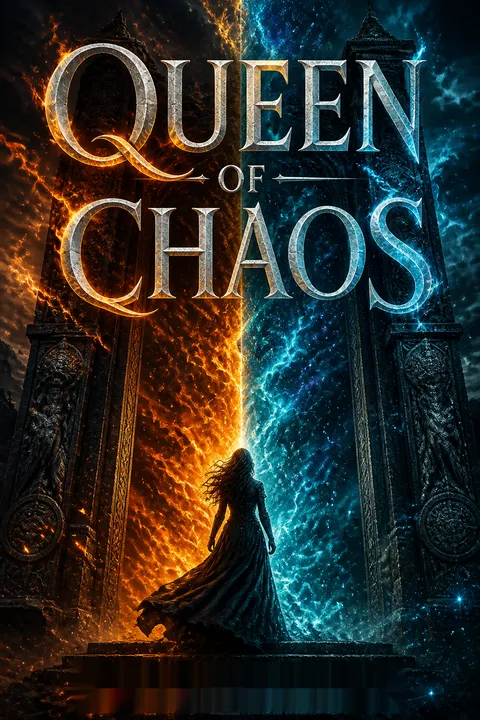
Queen of Chaos makes the struggle over magic inseparable from the struggle over who gets to choose. The cuffs are not merely fantasy machinery; they embody a political order in which one class controls another person's capacities and then calls that arrangement protection. Nazafareen's Breaking power appears to offer a clean answer, yet the novel refuses to make liberation effortless. Her power is fueled by emotion, can injure her, and can be turned against her through deception. Its ethical value depends on judgment and consent, not simply on being stronger than the old system.
The book's parallel journeys test different responses to loss. Tijah begins by imagining revenge as the only remaining purpose, but the children, Samahe, and the Four-Legs Clan repeatedly make survival a shared task. Her bond with Achaemenes remains troubling because his lifesaving choice also repeats the logic of control; the story leaves that discomfort visible rather than declaring gratitude mandatory. Balthazar's arc makes a related argument about responsibility. His childhood suffering helps explain his service to Neblis, but it does not excuse what he does. Confession matters because it restores his capacity to choose, not because it erases the victims. The ending is both romantic resolution and structural opening. Nazafareen and Darius find safety in a world where their bond can fall away, so their renewed closeness must rest on present choice rather than magical certainty. Tijah accepts another journey because the gates remain dangerous and the dead are still crossing into the living world. Neblis's defeat and the collapse of her house therefore do not restore a stable world. They expose a larger one, where freedom means taking responsibility for boundaries, histories, and powers that no single victory can permanently control.
Review Summary
People Also Read

Characters
Tijah
Grieving desert scoutA former Water Dog from Al Miraj, Tijah is a capable tracker and fighter who has learned to survive by anticipating danger. She carries the loss of her sister and bonded companion, Myrri, as both grief and a demand for justice. Her bluntness can protect children from false hope, but it can also make tenderness feel like a liability. Tijah mistrusts authority because she has seen the empire abandon villages and slaughter families, yet she still accepts responsibility for people who have little power of their own. Her toughness is not an absence of feeling. It is the form she gives feeling when she believes someone must keep moving.
Nazafareen
Human with forbidden fireNazafareen is a Water Dog who has spent much of her life enforcing a system that taught her to fear daēvas. Her relationship with Darius has unsettled those lessons and made her question who gets to define purity, loyalty, and evil. She is brave and compassionate, but her rare power to break magic responds dangerously to emotion, especially rage. Her missing arm and the cuffs she wears mark a life shaped by violence and magical control. Nazafareen's central struggle is not simply mastering a weapon; it is learning to distinguish her own choices from the roles imposed on her by rulers, priests, and people who claim to protect her.
Darius
Daēva warrior and loverDarius is a powerful daēva and former Water Dog partner to Nazafareen. He is disciplined, physically formidable, and deeply loyal, but his upbringing under the magi has left him uncertain whether his kind are inherently dangerous. The old religious symbols he keeps close represent both the faith that was used to shame him and the moral values he has chosen to preserve. Darius's instinct is to protect people he loves, sometimes by making decisions for them, which can reproduce the control he hates. His bond with Nazafareen gives him intimacy and belonging, while forcing him to confront what it means to be good without anyone else governing his power.
Achaemenes
Calm daēva healerAchaemenes is an older adolescent daēva who guides a group of children across the Salt Plain toward their imprisoned parents. His calm demeanor gives the children stability, though it can be mistaken for indifference. He understands that power can injure its wielder and tries to teach the younger daēvas restraint without denying their independence. His unusual ability to heal reflects a patient, observant approach to magic: he studies how bodies work rather than treating strength as the only measure of usefulness. Achaemenes is protective and self-sacrificing, but his willingness to act without permission creates a difficult tension between saving someone and respecting their right to choose.
Neblis
Queen of the UndeadNeblis is an ancient daēva queen who rules Bactria and commands necromancers, Undead armies, and the winged abbadax. She presents herself as a defender of her people, whose history includes persecution and enslavement, but her protection is inseparable from domination. Neblis can be charming and tender when it serves her purposes, then brutally violent when reality contradicts the story she has built for herself. Her political ambition grows from an old wound and a desire to secure a homeland for daēvas, yet she treats other people's freedom as expendable. She is most dangerous when she makes coercion sound like rescue.
Balthazar
Neblis's favored AntimagusBalthazar is a long-serving necromancer whose education, intelligence, and polished manners sit beside a record of terrible violence. He once wanted to command elemental magic and accepted Neblis's promises because they seemed to offer power beyond the limits imposed on him. His tenderness toward prisoners and servants reveals a conscience he has tried to bury, not a clean escape from responsibility. Balthazar's loyalty is entwined with desire, dependency, and fear of returning to the powerless child he once was. His character turns on the difficult distinction between being shaped by coercion and choosing to perpetuate it.
Lysandros
Wry ancient daēvaLysandros is an ancient, unbonded daēva with a dry wit, a talent for improvisation, and a history that reaches beyond the human empire. He allies himself with Alexander and risks himself for people whose politics and personalities often irritate him. His apparent detachment conceals deep loyalties, especially to his old companion Victor, and a growing sense of responsibility toward daēvas still in captivity. Lysandros is more perceptive than his teasing manner suggests, but he sometimes uses humor to avoid admitting how much he cares. His memories connect present conflicts to an older history of clan rivalry, forbidden travel, and choices made before the empire existed.
Victor
Darius's imprisoned fatherVictor is an exceptionally strong daēva and a veteran of the first war against Neblis. His size and confidence can make him seem invulnerable, but his past includes choices whose consequences reach his wife, his son, and the wider daēva community. Victor is proud, fiercely protective, and capable of accepting pain for people he loves. He also tends to keep difficult truths to himself, believing he can manage the damage alone. His relationship with Darius is complicated by separation, inherited expectations, and the question of whether one generation can escape the compromises made by another.
Delilah
Warrior and Darius's motherDelilah is a formidable daēva warrior and Darius's mother, whose severe bearing conceals an enduring capacity for love. Years of enslavement and loss have made her wary of humans and suspicious of anyone who binds her son. She is direct, proud, and unwilling to let sentiment distract her from a practical danger. Delilah's relationship with Victor is central to her sense of family, while her bond with Darius expresses a fierce maternal protectiveness that can shade into control. She is not easily softened, but she recognizes courage when she sees it and respects people who act rather than merely promise.
Zarathustra
Imprisoned Prophet and alchemistZarathustra is the Prophet who created the first daēva cuffs and founded the Way of the Flame. Age and captivity have clouded his memory, but his curiosity and moral clarity remain. He believes magic takes its meaning from the choices of the person wielding it, a view that puts him at odds with both rigid religious doctrine and the desire to use power without limits. His patience with Balthazar does not erase the harm Balthazar has done; instead, he offers the possibility of accountability without reducing a person to their worst acts. Zarathustra's humility contrasts with the authority attached to his title.
Cyrus
Shamed former magusCyrus is a former magus of Tel Khalujah who joins Tijah's group while pursuing a chance to free the daēva he once loved. He carries guilt for having helped enforce the empire's doctrine, despite knowing that its treatment of daēvas was wrong. His knowledge of Gorgon-e Gaz makes him valuable, but his evasiveness leaves Tijah wary. Cyrus is educated and often didactic, yet his history shows that religious certainty did not prevent him from acting out of love or recognizing injustice. He is trying to turn remorse into useful action rather than asking others to absolve him.
Anu
Defiant daēva childAnu is a brilliant, withdrawn daēva girl who often seems hostile because she expects other children and adults to reject her first. She is perceptive, quick to learn, and powerful with air, but she dislikes being treated as fragile or as a problem to manage. Tijah's dry humor gives Anu a way to approach trust without having to explain herself. She is fiercely attached to the few people she considers her own and expresses affection through loyalty, bluntness, and stubborn presence. Anu's guardedness is not a lack of feeling; it is a defense built by years of isolation.
Samahe
Four-Legs clan matriarchSamahe is Nazafareen's mother and a respected leader among the Four-Legs Clan. She is practical, politically astute, and unwilling to confuse fear with wisdom. Her family's grief has not made her passive; she understands that retreat can only postpone danger when an enemy is determined to erase a people. Samahe's authority comes from reading others accurately and speaking plainly, not from force. She sees some of her own impulsiveness in Nazafareen and can criticize her daughter while remaining fiercely proud of her. Her care for Tijah is generous but never sentimental.
Ashraf
Nazafareen's lost sisterAshraf is Nazafareen's younger sister, remembered as an affectionate, mischievous child who loved animals and tested the patience of her older siblings. Her absence has shaped Nazafareen's grief and her decision to become a Water Dog. In the Dominion, Ashraf's presence is tied to the mysteries of the dead and to the memories Nazafareen has tried to keep buried. She represents a family life Nazafareen lost before she had the words to understand what had happened.
Alexander
Young Macedonian kingAlexander is the young king of Macydon, leading an army into the former empire while trying to build a more just political order. He is ambitious and charismatic, but he listens to people who have firsthand knowledge of the suffering his campaigns intersect with. His willingness to outlaw daēva slavery distinguishes his rule from the empire's old system, though proclamations cannot undo the harm already done. Alexander balances affection for his companions with the burdens of command, and his decisions show the difference between winning a battle and governing what survives it.
Culach
Neblis's twin and war leaderCulach is Neblis's twin brother and a commanding figure among the Avas Valkirin. He is physically imposing, quick to anger, and committed to the cause his sister presents as the restoration of daēva power. His contempt for humans is sharpened by a long history of conflict between the clans. Culach's presence raises the stakes beyond Neblis's personal designs: he can turn old grievances into a military campaign, and his authority makes it difficult for individual soldiers to question where that campaign leads.
Molon
Cruel Antimagus rivalMolon is a necromancer raised within Neblis's violent system after being taken from his family as a child. He interprets cruelty as strength and resents Balthazar's favored position, while craving a power and intimacy he has never received freely. His sadism is real, but the scars and conditioning behind it reveal how Neblis's regime manufactures the brutality it later rewards. Molon is vulnerable to Farrumohr's visions because they promise him recognition, not because he understands their cost.
Cassandane
Daēva and Cyrus's companionCassandane is a daēva held for decades at Gorgon-e Gaz and the companion of Cyrus. She is sturdy, frank, and unafraid to speak about the compromises that bind people together. Her relationship with Cyrus is rooted in loyalty and shared history rather than simple control, which complicates the assumption that every bond is only domination. Cassandane is a capable fighter who has endured imprisonment without losing her judgment or her wit.
Myrri
Tijah's silent sisterMyrri was Tijah's sister and bonded companion, a mute woman who communicated through signs they developed together as children. Her gentleness and humor remain vivid in Tijah's memories, especially when Tijah teaches the children their old hand signals. Myrri's absence fuels Tijah's anger, but her remembered care also challenges the belief that grief must lead only to revenge. She is the measure of intimacy Tijah fears she has lost.
Mithre
Voice of the Old OnesMithre is an ancient daēva from Gorgon-e Gaz with a feline gaze, a fighter's strength, and a surprisingly beautiful singing voice. He speaks for the freed prisoners and carries memories of the abuses they endured. Mithre is cautious about humans who claim to be allies, but he is willing to cooperate when a shared threat leaves no other choice. His leadership combines practical judgment with a connection to the old traditions of his people.
Abid
Young earth shaperAbid is a six-year-old daēva boy whose strength lies in earth magic. He is playful, impulsive, and still young enough to fix his attention on a rescued kitten while danger passes nearby. Tijah's stern lessons teach him that power has physical costs, but they do not strip away his warmth. Abid's willingness to help makes him important to the group's survival, while his age reminds the adults that children should not have to become soldiers.
Kian
Nazafareen's surviving brotherKian is Nazafareen's older brother and a member of the Four-Legs Clan. He carries guilt over the losses his family has endured and feels responsible for the people who remain. Though he can be cautious about risking the clan, he recognizes when retreat will only leave others exposed. His grief is expressed less through speeches than through the tasks he takes on, including searching for companions after battle.
Pegah
Resourceful daēva girlPegah is one of the older daēva children traveling with Tijah. She often takes charge of the younger ones, sorting supplies and keeping them organized. Her confidence can make her seem dismissive, but in a crisis she uses water magic to help others and accepts responsibility for what happens.
Hephaestion
Alexander's steadfast companionHephaestion is Alexander's childhood friend and closest military companion. Taller and less publicly magnetic than the king, he is a steady presence in camp and takes action when danger overwhelms command. His loyalty is practical as well as personal.
Farrumohr
Ancient spirit of the DominionFarrumohr is an ancient being native to the Dominion, able to inhabit human flesh and manipulate the fears of others through visions and whispers. Neblis treats him as a counselor, while the Shepherds regard him as a dangerous corruption of the natural order. His precise origins remain uncertain, and his desire to reach the living world gives his influence a persistent menace.
Plot Devices
The daēva cuffs
Bond and controlGold cuffs link a human and a daēva, allowing the human to regulate the daēva's elemental power. The bond can also transmit emotion and physical sensation, making it a source of intimacy as well as coercion. Cuffs can be broken by the holy fire, transferred to another person with the necessary gift, or rendered ineffective where their magic does not function. Their use exposes the difference between chosen mutual reliance and a system that assigns one person control over another. The cuffs shape Darius and Nazafareen's relationship, Tijah's anger at Achaemenes, and the political question of whether daēvas can be free while their power remains bound.
The fourth element
Break magic itselfNazafareen's rare fire magic, also called negatory magic, can disrupt talismans and counter other forms of magic. Unlike elemental power drawn through the Nexus, it exists within the person who wields it and responds intensely to emotion. Its force can break cuffs and wards, but using it risks physical harm and loss of control. The same power that makes Nazafareen essential to stopping Neblis also makes her vulnerable to anyone who can provoke or manipulate her. Fire is therefore both a tool of liberation and a danger that cannot be separated from the user's choices.
The Dominion gates
Cross between worldsLiquid doorways connect the living world to the Dominion and, through it, to the Moon Lands. Some gates are permanent, while talismans can create temporary passages. The Dominion distorts distance, suppresses ordinary elemental magic, and contains its own dangerous inhabitants. When Nazafareen's fire breaks a ward around a gate, the damage reaches far beyond the opening she intended to free. The gates drive the rescue mission, allow Neblis's forces to invade, and leave the boundaries between worlds dangerously unstable.
The faravahar
Carry faith and memoryThe faravahar is a symbol of the Prophet and the Way of the Flame, worn by Darius as a reminder of both his upbringing and the beliefs he has chosen to retain. He gives it to Nazafareen before the attack in the Dominion, making it an intimate token as well as a religious emblem. When Neblis uses the symbol to discredit him, its meaning is twisted into evidence of betrayal. The object illustrates how a symbol can be used to sustain personal identity or manipulated to control someone else's understanding of the past.
Shepherds and ghūls
Police the living and deadShepherds are hounds of the Dominion that guide restless spirits toward the Cold Sea and attack Antimagi. Ghūls are dead who have returned through the gates and feed on living bodies, taking on the appearance of their victims. The Shepherds can restrain dangers the human armies cannot defeat, while the ghūls exploit the breakdown of the Dominion's wards. Together they show that the world beyond death has rules and inhabitants of its own, not merely resources for Neblis to command.
The Fourth Element Series

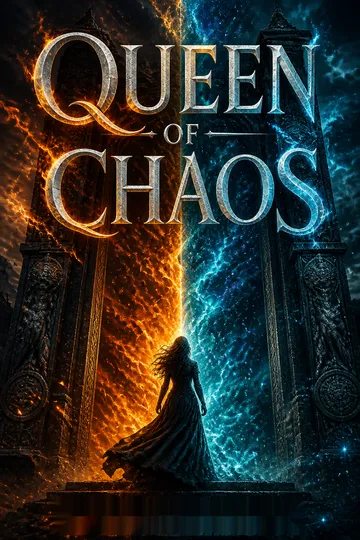
Download PDF
Download EPUB
.epub digital book format is ideal for reading ebooks on phones, tablets, and e-readers.








