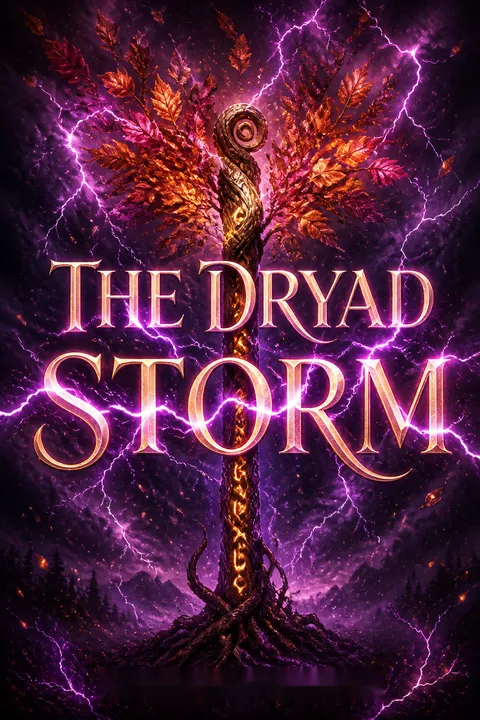


Plot Summary
Prologue
Two days before Xishlon, Mage forces descend on Cyme, destroying the city and feeding its forests to Shadowfire. Alder Xanthos, a Dryad warrior, tries to save her eagle kindred Azion, but Commander Damion Bane kills the bird as Alder is dragged through a portal to the East.
There she learns the attack has razed her Forest and left her power nearly dead. Reading the surviving trees, Alder discovers that Elloren has become a Forest-aligned Dryad Witch. A wounded Saffron Eagle approaches her, and Alder accepts the bird and the Vo Forest as her new kindreds. The trees restore her magic and mark her as their Guardian.
The opening makes ecological destruction intimate before it makes it strategic. Alder does not first experience the Shadow as an abstract threat to kingdoms, but as Azion’s death and the loss of the Forest that sustains her identity and power. Her reluctant new bond does not erase that grief; it gives grief a direction. The prophecy reading also unsettles the labels that have organized the war, suggesting that the figure called Black Witch may no longer be the enemy the world expects. The prologue establishes a central tension: survival requires new alliances, but any alliance begins among people already carrying wounds inflicted by one another.
Gareth Finds His Tide
On Xishlon night, half-Selkie Mage Gareth Keeler meets Marina, the Selkie he loves, in the waters near Noilaan. Their bond has left him aching for the ocean he cannot inhabit, until Marina suggests they try a saltwater mangrove root and the Selkie words for magic. The experiment releases a stream of his trapped water power.
They choose to mate, and Gareth gains gills and the ability to breathe underwater. Their celebration ends when the purple moon turns gray and a wall of Shadow sea advances toward Noilaan. Gareth raises a waterspout as a battle signal, now able to fight beside Marina rather than watch from the shore.
Gareth’s magic has been physically present but socially and culturally unusable: he belongs neither wholly to the Mage world nor to the sea he longs for. The mangrove does not simply supply a weapon; it offers a model of belonging through roots that live between land and water. His mating with Marina turns intimacy into a change in material capacity, but also makes the bond politically consequential as the Shadow sea arrives. Their connection matters because it allows Gareth to act within a world that previously treated his mixed nature as a deficiency.
Gwynn Leaves Valgard
At a Valgard rally, Styvian Mage Gwynnifer Croft Sykes sees Gardnerian men mutilate two Urisk girls by cutting the points from their ears. She helps the children, but her parents and fastmate Geoffrey side with the Magedom and have her imprisoned for questioning its doctrine.
Gwynn pretends to repent, then joins the Resistance and helps the girls escape with Mage rebel Mavrik Glass. When soldiers discover her runes, Mavrik destroys the armory and nearby buildings to clear their route. They reach the Sublands with Bloom’ilya and Ee’vee, pursued by pyrr-demons. Gwynn has burned her family home and crossed beyond any easy return to her former life.
Gwynn’s break begins with a concrete contradiction between doctrine and what she sees done to children. Her family’s response shows how ideology can preserve itself through intimacy: the people she trusts interpret her moral perception as corruption and punish her for it. Her escape is not a clean liberation. Destroying the armory also destroys her home, forcing her to confront the cost of resistance before she has a replacement community. The children make the choice immediate and personal; Gwynn cannot return to a protected belief system without abandoning people it has taught her to disregard.
Sparrow Escapes the Hive
Mage Tilor abducts Urisk seamstress Sparrow Trillium through a Shadow portal and imprisons her in a Spine cavern filled with corrupted creatures and chained non-Mage slaves. When Tilor attacks, former Amaz Queen’s Guard Valasca Xanthrir bursts in, kills him with a stolen rune blade, and frees Sparrow.
Valasca’s hidden Varg magic and skill with Mage wands let them resist Commander Fallon Bane, whose ice traps them in the cavern. Valasca breaks through the stone floor and leads Sparrow into the Sublands, but Fallon pursues them through the tunnels. The two women escape the immediate cell, not the war, and join the wider Resistance carrying their own losses and urgent ties to the East.
Sparrow’s captivity exposes the Magedom’s hierarchy in physical form: non-Mages are not merely excluded but converted into chained labor and disposable bodies. Valasca survives because she can read the enemy’s tools across systems, disguising a stolen blade’s power until the moment it matters. Their alliance is forged under pressure, not trust in institutions. Sparrow’s refusal to become only a victim and Valasca’s tactical ingenuity make a small but meaningful counterforce to a military machine designed to render both women powerless.
The Wand Calls Bearers
In the Sublands, Gwynn recognizes Wynter Eirllyn as the Icaral carrying the Verdyllion, a Wand of Power she once helped hide. When Shadow-corrupted storm spiders attack, Wynter uses the Wand to form runes from Gwynn and Mavrik’s combined knowledge.
Contact between the Wand and their hands opens Gwynn’s sealed light magic; with Mavrik’s four elemental affinities, the two create a defense strong enough to reach a portal. Later, they use Issani twinning runes to fuse their power and reinforce the Subland shield, accepting a permanent bond to survive Vogel’s attack. The Verdyllion marks them as Dryad’khin and reveals that their Mage magic is rooted in the Forest.
The Verdyllion changes the meaning of ability: Gwynn’s light is not weak, but blocked by a system that has misnamed and constrained her. Her power becomes effective in relationship, first through Mavrik’s complementary affinities and then through collective spellcraft. Yet their magical compatibility does not remove their ethical choices; the dangerous, permanent twinning spell is undertaken because an external threat leaves no safe option. The revelation that Mage power comes from trees also reframes Gardnerian identity as a severed relationship with nature, not an independent source of authority.
The Sea Takes Its Stand
Marina’s new bond to Gareth draws her into the mangroves, where she and Gareth encounter a vision of III and the Verdyllion. The Forest links Marina to its mangroves and ocean kindreds, giving her a way to channel their light into a protective dome. When Noilaan’s runes fail and Shadow creatures destroy Vu Trin ships, Gareth’s Storm Whale kindreds arrive and help drive the Shadow sea back.
Marina’s brother Storm Tide lands with an Ocean army, convinced the land peoples caused the corruption. Marina and Gareth persuade neither side easily, but the whales reveal the larger danger: Vogel is targeting the Vo River’s northern source, seeking to spread Shadow through the East’s waterways.
Marina’s new capacity turns her into a bridge in a literal magical sense: she can carry the ocean’s light through trees and bring land and water into one defense. That power cannot immediately overcome inherited distrust. Her brother’s accusations are grounded in real environmental devastation caused by Mage armies, which makes his hostility understandable even as it serves Vogel’s strategy. The Storm Whales offer a mythic image of ecological memory returning at the point of crisis, but the chapter insists that symbols alone do not unite people; persuasion and shared action remain necessary.
Alder Reads the Forest
In the East, Queen Freyja Zyrr tries to secure a homeland for the Amaz while resisting the Noi Conclave’s demands to send them back West. Her reunion with Kelt leader Clive Soren offers a possible alliance, though their love conflicts with Amaz politics and Freyja’s new duties.
Meanwhile, Alder uses her forest-empathy to locate Elloren and learns from the trees that Elloren has escaped Vogel’s control and become a Dryad Witch. The prophecy still points toward a conflict between the Black Witch and Yvan, but the Forest’s loyalties have shifted. Alder also senses Vogel targeting land, water, and sky, and understands that isolated peoples cannot meet the coming assault alone.
The political conflict is not a pause between magical battles; it is one of the mechanisms that makes those battles winnable or fatal. Freyja must negotiate belonging while her people are refugees, and her private relationship with Clive tests the separation her society relies on. Alder’s reading destabilizes prophecy as a fixed script: the trees retain the prediction but alter their allegiance. Her insight gives the resistance information, not instant trust, showing how knowledge can reveal a necessary coalition without dissolving the histories that make people fear it.
Elloren Reaches III
After a long portal lag, Elloren emerges in the Northern Forest and reunites with Yvan beneath III. The Dryads initially attack because the Forest senses Vogel’s stolen Wyvernfire in Yvan and mistakes him for its enemy. When Yvan places his hands on III, the Tree absorbs him, breaking their bond while it reads his nature.
He returns transformed, fluent in Dryadin and marked by III, carrying a Nightwood Pine cone from the Zhilaan Forest. He plants it, and his fire germinates the seedling instead of destroying it. III has linked him to a Forest that needs fire, allowing Elloren and the Dryads to see his power as regenerative as well as dangerous.
Yvan’s test is not whether he can suppress his fire, but whether he can use it in a relationship that gives it purpose and limits. The seedling makes that answer visible: fire can be an agent of renewal when the Forest’s needs shape its use. Elloren’s defense of him also rejects the prophecy’s demand that love be sacrificed to inherited categories. The Tree’s judgment is neither sentimental nor automatic; it separates Yvan’s own nature from power Vogel stole and corrupted, creating a new basis for alliance.
The Forest Is Burned
Vogel sends Shadow storm bands against the Northern Forest, and the Dryads link their branches with Elloren, Yvan, and the arriving allies to build a vast shield. The storm overwhelms it, burning most of the Forest and stripping the Dryads of their power. Elloren is dragged beyond the barrier and confronted by Vogel, who binds her and rejects her transformation.
She uses the living branch she kept hidden, calls on the Dyoi and Zhilaan Forests in Dryadin, and breaks free with a cyclone of purple wind. Her attack forces Vogel back, but the Forest is largely destroyed. Her allies evacuate the weakened Dryads and flee east, carrying the Verdyllion’s location and the surviving Forest’s last chance.
The shield’s failure makes the cost of fighting visible in bodies, habitat, and magical capacity. Protection is not a clean victory; the Forest’s defense saves a remnant while its larger community is destroyed. Elloren’s escape depends on accepting a new source of authority, the living branch and Forest connection, rather than reaching for the Mage spells she once knew. Yet her power remains contingent on living ecosystems. Vogel can grow stronger by destroying what she needs, making ecological survival a tactical condition rather than a distant moral concern.
The East Refuses Unity
As the survivors reach the Dyoi Forest, Vang Troi’s Vu Trin, Amaz, and Lasair allies still demand Elloren’s surrender. Elloren refuses silence and argues that Vogel will defeat them separately. When Vogel’s Shadow enters the fasting marks of Sage and Thierren, the Forest pulls both into trees and breaks his control.
The surviving animals gather around Elloren, while Alder reports that the Dryads’ people have escaped into the Sublands. Vang Troi agrees to hear the Forest out, followed by reluctant allies.
Some join the trees; others, including Soleiya, remain hostile. When the East’s own forces later unleash a storm to seize the Zonor’s power, the storm destroys the river and much of the Dyoi Forest, proving how division can undo the very defenses built against Vogel.
This section makes the book’s central argument costly rather than easy: a shared threat does not automatically produce solidarity. Elloren must ask former enemies to trust a Forest they have not experienced, while the Forest must also choose to welcome people who have harmed it. The storm attack reveals a crucial distinction between unity and mere coordination. The Vu Trin act together militarily, but their attempt to overpower nature repeats the logic that made Vogel’s destruction possible. The failure is ecological and political at once.
The Vo Defies Death
While the wider war unfolds, Asrai Tierney Calix and geomancer Or’myr Syll’vir defend the Vo from a V’yexwraith sent to poison its headwaters. Tierney joins her river power with Or’myr’s geomancy and the Death Fae Viger’s magic, helping throw the demon out of the water while Or’myr’s purple lightning and Xishlon moons destroy its attackers.
Viger’s kiss has bound Tierney to him and opened a dangerous Deathkin connection among all three men. Tierney later learns that Viger fears a coming Reckoning and may have to dissolve himself into Nature to delay it. Despite their longing and incompatibilities, she and Or’myr keep working together to protect the Vo.
The Vo storyline links intimacy to systems of balance without making desire a simple solution. Tierney’s bonds expose her to the power and risk of other people, while the river provides a shared object of care that prevents jealousy from becoming the whole story. Viger’s Death is not equivalent to Vogel’s destruction: it belongs to natural cycles and can sustain renewal, but a damaged Balance threatens to turn that necessary force into catastrophe. The characters’ willingness to protect the river even at personal cost makes the ecological stakes emotionally legible.
The East Unravels
The Vu Trin Conclave rejects the Dryad’khin warning and releases a storm band meant to seize the Zonor’s power. The band destroys the river’s protection, the Dyoi Forest, and the East’s wider Natural Matrix. Yvan and the others shelter on a mountain as Death Fae dissolve into Nature to delay a full Reckoning.
With their allies’ powers nearly spent, Hizar’drile and Gethindrile arrive after recognizing that the Dryad’khin were right. They carry the survivors through the unbalanced weather to the Zhilaan Forest, the East’s last great living refuge. There the Forest restores the weakened Mages and Dryads, and Valasca returns with Ni Vin, bringing the geomancy and support needed to defend it.
The catastrophe is not caused by ignorance alone. The Conclave receives warnings and still chooses control over cooperation, because its leaders trust the familiar instruments of military power more than ecological knowledge. The result is not just a lost battlefield but the destruction of the system on which their own power depends. The Deathkin’s sacrifice complicates any easy opposition between life and death: they spend themselves to buy the living time. The survivors’ arrival at Zhilaan is therefore refuge earned through loss, not a reset that restores what was taken.
A New Alliance Takes Root
At the Zhilaan Forest, the Dryad’khin rebuild their strength and prepare to fight before autumn’s power fades. Yvan and Elloren choose to complete their Wyvern mating bond, linking their fire more fully to the Forest. Ariel resists nilantyr addiction with help from her horde and transforms into a dragon, while Raz’zor’s persistence brings grieving Dryad Oaklyyn into the horde.
More survivors arrive, including Valasca and Ni Vin, and the Forest marks former outsiders as its allies. The group plans to reach the Verdyllion and use seven lines of light to counter the Shadow Wand. Their brief unity is tested when a new storm raised by the East’s own forces threatens the remaining forests.
The Zhilaan’s welcome redraws the boundary of kinship: Mage, Lasair, Smaragdalfar, and Dryad can become part of one Forest community without erasing their histories. Personal transformations are tied to collective repair. Ariel’s recovery is not achieved by willpower in isolation, but through a horde that remains present when she struggles. Oaklyyn’s grief likewise becomes bearable only after Raz’zor refuses to leave her alone. Yet the coming storm warns that chosen community cannot guarantee safety; it gives people a reason and a structure to keep fighting.
Vogel Was the Icaral
Vogel captures Elloren and reveals himself as an Icaral, insisting that she belongs to the Magedom’s prophecy. He binds her to Fallon with a Shadow twinning spell, intending to drain Elloren’s Forest power into the woman he believes should be his Black Witch. When the connection begins siphoning her magic, Elloren draws on Yvan’s Icaral fire through their Wyvernbond and burns through her restraints.
She regains the Zhilaan’s power, attacks Vogel with living branches, and returns to her allies. The revelation overturns the expected prophecy: Elloren is the true Black Witch, while Vogel is the prophesied Icaral. Her escape sets up the final battle as a conflict over who controls prophecy and power.
Vogel’s revelation exposes the violence hidden inside his theology: he treats other people’s bodies and powers as instruments that belong to his ordained story. Elloren’s response is not to accept the prophecy’s assigned roles, but to use the bond he sought to sever as a channel for resistance. Her power grows through connection, while Vogel’s grows through extraction. That contrast turns the prophecy from a fixed destiny into a contest over whether relationships will be chosen or imposed.
The Verdyllion Breaks the Shadow
As Vogel’s forces converge, Elloren and Yvan fight the V’yexwraith, which absorbs their magic and threatens the allies behind them. Wynter arrives with the Verdyllion, and Sparrow’s geomancy helps her resist the Wand’s pull. Elloren, Yvan, Gwynn, Mavrik, Sage, Rivyr’el, Marina, and Wynter link their powers through seven lines of light, with Elloren’s unborn child completing the circuit.
The Verdyllion overtakes the Shadow Wand’s network and offers every fasted Mage and Zalyn’or-bound Alfsigr a choice to join the Forest. The released Shadow moons fall, but Sparrow redirects them into a fissure, and the V’yexwraith collapses. Vogel is dead; the former Mages and Alfsigr awaken freed, while the Shadow Wand remains dangerous but contained.
The climax resolves the book’s central conflict through an alternative to domination. The Wand does not win by being stronger in isolation; seven distinct sources of light, history, empathy, and Forest connection make its power possible. The unborn child matters as a new line of life, but the circuit remains collective rather than hereditary: no single savior can complete it alone. Sparrow’s role extends that principle, as her reclaimed geomancy gives the group a way to redirect the moons after the Shadow is broken. Victory removes Vogel, not the consequences of what he destroyed.
IV Begins the Repair
With the Magedom’s control broken, the Dryad’khin turn to refugees, disease, and damaged land. Wrenfir uses Norfure tincture to treat children with the Red Grippe, while Effrey and Olilly help free the imprisoned Sublands and bring divided communities back together. The former border wall falls, allowing people to seek shelter and aid across it.
The Verdyllion is planted in Voloi, where it grows into IV and sends protective power through the surviving East. Or’myr and Tierney reunite and renew their love, while other couples and families begin rebuilding their lives. The healing is slow, and the Shadow still scars much of the continent, but the people begin rewilding it together.
The aftermath refuses a triumphant shortcut. Destroying the instrument of conquest does not feed refugees, cure illness, or restore ecosystems; people must perform that work through care, medicine, planting, and political repair. The fallen border is a material answer to the book’s repeated walls, yet it also creates new obligations among those who now share space. IV’s growth gives that labor a center without promising instant restoration. The characters have won room to choose a future, not a guarantee that they will use it well.
Epilogue
Thirteen years later, Valen, the boy rescued from Gardneria, has grown into a young man with powerful Mage fire. On his Change Day, a surviving Mage relative urges him to claim his place as the next Great Mage and restore the Magedom. Valen refuses the inheritance of division.
Surrounded by the Ulrich family and the Dryad’khin who raised him, he chooses the Lupine Change and prepares to become Fern’s mate. His decision turns the book’s last question from whether the old order can return to whether a child raised among former enemies can choose a different bond, one rooted in family, the Forest, and freely given love.
Valen’s future makes the ending’s hope specific rather than absolute. He has not escaped the history that shaped him: Mage power, bereavement, and the possibility of being recruited into the old hierarchy remain part of his life. What changes is the community around him and the freedom to choose what his inheritance means. His refusal of the title of Great Mage does not erase his power; it places that power within a chosen family and a shared ecological duty. The epilogue therefore measures repair across generations, while leaving the work of rebuilding open.
Analysis
The novel makes ecology the material ground of politics. Magic comes from the Forest, water, soil, air, and living communities, so destroying habitat is not metaphorical damage: it weakens people, breaks protections, and turns military victory into a threat to everyone’s survival. The Magedom’s central error is therefore also a political one. It treats power as something to extract and centralize, while the Dryad’khin discover that power can grow through shared, living connections.
That contrast does not make unity simple. The book gives each faction reasons to distrust the others: Gardnerian violence, Amaz resistance to men, Alfsigr imprisonment of the Smaragdalfar, and the East’s own exclusionary politics. The Conclave’s storm attack shows that even an army opposing Vogel can repeat the same destructive logic. The story asks whether solidarity can become more than a temporary military arrangement, especially when the histories behind division remain real.
Elloren’s transformation gives that question personal form. She is pushed toward the role of Black Witch, then learns that the title does not dictate whom she must become. Her choices matter, as do the choices of Gwynn, Mavrik, Wynter, Sparrow, and the others who reject inherited identities without denying the harm their communities caused. Love is important, but it is not presented as a private cure for public violence. It becomes powerful when it creates obligation: to protect children, treat disease, restore rivers, and refuse coercive bonds.
The ending offers victory without pretending that the damage is undone. Vogel dies, the Wand is contained, and people once trained to fear each other begin rebuilding together. Yet much of the continent remains scarred, the Deathkin’s sacrifice carries a cost, and the Shadow Wand still represents the return of fracture. The epilogue’s Valen makes the final hope credible: inheritance can shape a child without owning his future. Repair begins when people choose what their power will serve.
Review Summary
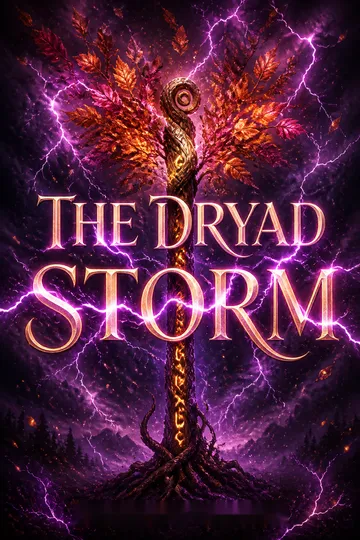
The reviews for The Dryad Storm are largely negative, with many readers expressing disappointment in the final installment of the series. Common criticisms include excessive new characters and storylines, repetitive writing, and a shift away from the main plot. Some readers felt the book was overly long and struggled to finish it. While a few positive reviews remain, the majority found the conclusion unsatisfying, citing issues with character development, pacing, and resolution of major plot points.
People Also Read



Characters
Elloren Guryev
The Forest's reluctant witchElloren begins as a young Mage whose heritage and power have been shaped by other people’s expectations. Her bond with Yvan and her encounters with the Forest force her to question the prophecy that defines her as a weapon. She is observant, often morally uncertain, and willing to revise her beliefs when evidence contradicts them. Her strongest instinct is to protect people who are being treated as expendable, although her inherited fear and grief can make trust difficult. The story’s central question follows her changing relation to power: whether it will isolate and dominate, or become part of a network of care.
Yvan Guryev
The fire-bound IcaralYvan is a Lasair and Wyvern power empath who has spent much of his life treated as a danger because of his nature and the prophecy surrounding him. He is controlled in manner but intensely protective, and his attraction to Elloren forces him to confront the possibility that closeness need not mean surrendering his identity. His fire can destroy, yet he longs to use it to heal and defend. His struggle is not simply to become stronger, but to decide what his strength serves when nearly every faction wants to claim or fear it.
Alder Xanthos
The orphaned Forest guardianAlder is a Dryad warrior with a fierce bond to trees and animal kindreds. She has lived as an outsider among the Amaz and understands the loneliness of belonging to more than one lineage. Her empathy lets her read what forests experience, including damage that other characters might miss. Grief makes her blunt and sometimes unwilling to trust, but her instinct is to protect life, even when her own people are divided over whom to admit into their circle. She represents the practical demands of guardianship: listen to the living world, then act on what it says.
Gwynnifer Croft Sykes
The rebel Light MageGwynnifer is raised inside Gardneria’s strict Styvian culture and once accepts its rules as moral truth. Her encounter with violence against Urisk children breaks that certainty. She is highly intelligent, with a remarkable memory for spells and languages, but has been taught to distrust her own power. Her alliance with Mavrik pushes her toward intellectual and emotional independence. Gwynnifer’s central conflict is the painful gap between what she was trained to believe and what she can no longer ignore.
Mavrik Glass
The renegade wandmasterMavrik is a former Gardnerian wandmaster who turns against the Magedom after witnessing its violence firsthand. He is strategic, skeptical, and accustomed to carrying guilt for his past cooperation. His broad command of Mage and runic systems makes him valuable to the Resistance, but his deeper importance is his refusal to treat power as proof of moral superiority. With Gwynnifer, he finds both a magical complement and someone able to understand the compromises that shaped him.
Wynter Eirllyn
The Icaral Wand-bearerWynter is an Alfsigr Icaral and runic sorceress who carries the Verdyllion. She is empathic, disciplined, and often underestimated because she does not announce her strength. Her connection to the Wand makes her a point of convergence for people who have been taught to fear one another. Wynter’s care for her brother Cael and her bond with Ariel reveal a tenderness that coexists with her formidable resolve. She approaches power as something to understand and direct responsibly, not simply possess.
Gareth Keeler
The sea-bound MageGareth is a half-Selkie Mage whose mixed heritage has left him feeling excluded from both land and ocean. His friendship with Marina gives him a way to understand that his difference can be a bridge rather than a defect. He is loyal, sensitive to tides, and willing to take risks for people who have not always welcomed him. His story connects the land war to the vulnerable waters that sustain both Selkies and the Eastern Realm.
Marina Song Spinner
The ocean's living bridgeMarina is a Selkie linguist, diplomat, and musician whose deep attachment to the ocean shapes her sense of home. She is compassionate but not passive: she challenges her brother when his fear turns into hostility toward land peoples. Her bond with Gareth opens new ways to connect ocean and Forest power. Marina’s role is to translate between worlds without pretending their histories are harmless or interchangeable.
Tierney Calix
The Asrai river guardianTierney is an Asrai Fae whose bond to the Vo River is as intimate as family. Quick-tempered, curious, and emotionally direct, she is unsettled by the cultural rules that have shaped her relationships and by the Deathkin power awakening within her. Her care for river life gives her a clear sense of what is at stake when water is poisoned. Tierney’s challenge is to remain herself while accepting that her identity and loyalties may be larger than the categories she inherited.
Or’myr Syll’vir
The purple geomancerOr’myr is an Urisk geomancer and scientist, clever with runes and happiest among books, stones, and carefully prepared tea. His wit can hide how private and emotionally earnest he is. He is deeply loyal to his friends and drawn to the solid, domestic comforts he builds for himself, even while serving in a dangerous military world. His geomancy gives the river’s defense a practical anchor, while his curiosity helps him recognize that knowledge and affection need not be opposing forces.
Viger Maul
The feared DeathkinViger is a primordial Death Fae, solitary and unnerving to nearly everyone he meets. His power is bound to decay and the cycles that allow new life to grow, though others often mistake that role for cruelty. He hides vulnerability behind menace, having learned that fear can keep people from getting close enough to reject him. His presence forces the others to face a difficult distinction: natural death can preserve balance, while Shadow seeks only consumption.
Sparrow Trillium
The Urisk seamstressSparrow is a practical, observant Urisk woman who makes a life through sewing and care for the people around her. Her society restricts women’s access to geomancy, but she is drawn to the stones associated with her class and refuses to treat curiosity as a crime. Her love for Thierren and her bond with Effrey give her reasons to fight beyond her own survival. Sparrow’s quiet craftfulness sits beside a fierce capacity to act when others are in danger.
Valasca Xanthrir
The Amaz rune-warriorValasca is a former head of the Amaz Queen’s Guard, a skilled fighter and runic sorceress with a dry, defiant sense of humor. She survives by reading danger quickly and using an enemy’s tools against it. Her loyalties are intense, especially toward the people she loves, but she can work with allies whose customs differ sharply from her own. Valasca’s pragmatism makes her a reliable rescuer and a sharp judge of whether someone’s actions match their claims.
Freyja Zyrr
The young Amaz queenFreyja inherits leadership amid the destruction of Amazakaraan and the displacement of her people. She is young but politically alert, carrying private desires that conflict with the expectations placed on an Amaz queen. Her relationship with Clive forces her to consider alliances across gender and cultural divisions without dismissing the history that made Amaz separation necessary. Freyja’s challenge is to lead her people toward safety while resisting those who would turn protection into another form of exclusion.
Vang Troi
The strategic Vu Trin commanderVang Troi is a disciplined military commander who understands both the usefulness and limits of force. She must manage a fractured coalition of Noi, Amaz, Kelt, Lasair, and Forest allies while facing political opposition at home. Vang is willing to revise her judgments when new evidence challenges them, but she does not mistake hope for a plan. Her leadership is most effective when she makes room for others’ knowledge instead of assuming the army already understands the whole conflict.
Soleiya Guryev
Yvan’s grieving motherSoleiya is a respected Lasair Fae and veteran of the Resistance, carrying the grief of losing her husband to the previous Black Witch. Her hatred of Elloren is sharpened by that history and by fear for Yvan. She is fiercely protective, courageous, and capable of speaking with force even when her certainty is challenged. Soleiya’s loyalty to her son coexists with the painful task of reconsidering whom she has treated as an enemy.
Ariel Haven
The winged fighterAriel is an Icaral with a history of captivity and a difficult struggle against nilantyr addiction. She is sharp-tongued, fiercely independent, and intensely loyal to Wynter and her horde. Her anger is not a mask for weakness but one of the ways she survives a world that has repeatedly tried to control her body. Ariel’s story centers on whether trust and companionship can offer support without demanding that she become less formidable.
Trystan Gardner
Elloren’s steadfast brotherTrystan is Elloren’s younger brother, a Mage whose care for others often appears as calm competence. He is drawn to Vothendrile and to the weather-working traditions of Zhilaan, even as family and political loyalties complicate those connections. Trystan’s capacity for commitment is paired with a strong sense of fairness. He repeatedly tries to keep people communicating when fear and inherited prejudice threaten to turn disagreement into violence.
Wrenfir Harrow
The embittered healerWrenfir is a Mage apothecary with spider tattoos, sharp opinions, and a long history of loss. He cares for animals and sick people, but grief makes him suspicious of hopeful claims and impatient with those who underestimate danger. His connection to Hazel brings him into direct contact with the death and renewal he fears. Wrenfir’s work matters because he responds to suffering in practical ways, even while he doubts whether such care can repair the scale of damage around him.
Valen Ulrich
The rescued Mage childValen is a powerful Mage child who loses his mother amid the collapse of Gardneria. He is taken in by Diana and Rafe Ulrich, whose family offers him safety without pretending his fear and anger will vanish quickly. He is curious, energetic, and drawn to fire, animals, and the people willing to teach him. His story gives the book’s final pages a younger perspective on inheritance and the possibility of belonging beyond the Magedom.
Plot Devices
The Verdyllion
A wand of shared lightThe Verdyllion is a living Wand-Stylus linked to III, the Great Tree. It can create and amplify runes, reveal connections among people, and draw on several magical traditions when wielded by its Bearers. Its greatest strength depends on collective light power rather than one person’s mastery. The Wand’s visions guide different characters toward one another, while its ability to interact with the Shadow Wand makes it central to the final conflict. It also carries a moral test: its power can be used to connect people, but it cannot force them to choose connection.
The Shadow Wand
A network of stolen powerThe Shadow Wand siphons elemental energy from forests, rivers, storms, and living beings, converting what it takes into Void power. Its expanding network can bind Mage fastlines and Alfsigr Zalyn’or marks, letting its wielder influence those connected to it. It grows stronger through destruction and conflict, which makes political fracture materially useful to the Magedom. The Wand’s ability to manifest as the V’yexwraith gives that parasitic system a physical threat. Its danger is not limited to whoever holds it; the Wand can keep seeking new hosts and fresh divisions.
The Forest Matrix
Nature’s shared power networkTree roots connect the Forests, aquifers, and surrounding living systems in a continent-wide magical network. Mages draw power from trees even when their culture denies that relationship, while Dryad’khin can link directly to the Forest and share its energy. Destroying enough trees weakens the magic of entire regions; linking roots can amplify it. The network also carries memory and visions, letting trees reveal histories and danger across great distances. Its strength depends on living connections, making it both a source of power and a vulnerable ecological system.
Bonds and Twinning
Power through chosen connectionThe book’s bonds connect people’s bodies, magic, and senses in different ways. Selkie mating can grant new abilities; Yvan and Elloren’s Wyvernbond lets fire pass between them; Viger’s Deathbond links fear and dreams; and Gwynn and Mavrik’s Issani twinning fuses their magical lines. These bonds can strengthen, transform, or endanger their participants, especially when imposed through coercive spells. They make intimacy a source of power while keeping consent and consequence in view. A bond is not automatically good because it is strong; its meaning depends on how it is formed and used.
Portals and Lag
Escape with a priceRunic and Dryad portals move people across enormous distances, making escape and rapid alliance possible. Many portals carry a dangerous lag, so travelers can arrive days after the moment they left, while pursuers may reach their destination first. Portal access is also a military resource: groups sabotage routes, redirect portals, and use runes to speed or shield passage. The Verdyllion can help reveal paths and alter portal use, but no portal removes the danger of travel or guarantees that allies will arrive together.
FAQ
Synopsis & Basic Details
What is The Dryad Storm about?
- A World Unraveling: The Dryad Storm plunges Erthia into a desperate struggle for survival as Marcus Vogel, wielding the Shadow Wand, unleashes devastating Shadowfire, corrupting land, water, and magic, pushing the planet towards an ecological collapse known as the Reckoning. The narrative follows Elloren Gardner Grey, now a Dryad Witch, and Yvan Guryev, the Icaral of Prophecy, as they unite diverse factions—Dryads, Mages, Fae, Selkies, Urisk, and more—to form a Dryad'khin army.
- Unity Against Division: The core conflict revolves around overcoming ancient prejudices and cultural divides, as the newly allied forces, guided by the Verdyllion (Wand of Myth), seek to restore the Natural Matrix and defeat the Shadow, which thrives on fracture and hate. The story explores themes of environmental responsibility, the redefinition of prophecy, and the transformative power of love and connection in the face of seemingly insurmountable odds.
- A Fight for Life: From the burning forests of the West to the besieged rivers of the East, characters like Gwynnifer Sykes, Mavrik Glass, Alder Xanthos, Gareth Keeler, Marina, Or'myr Syll'vir, Tierney Calix, Hazel, and Wrenfir navigate profound personal losses and psychological challenges, ultimately choosing to fight for a future where all life, regardless of lineage or magic, can thrive in balance.
Why should I read The Dryad Storm?
- Emotional Depth Explored: Readers should delve into The Dryad Storm for its raw emotional honesty, particularly in depicting grief, trauma, and the arduous journey of healing. The novel doesn't shy away from the psychological toll of war and loss, offering a deeply human core to its fantastical elements, making characters' struggles and triumphs profoundly resonant.
- Subversive Prophecy & Identity: The book masterfully subverts traditional fantasy tropes, especially the "Black Witch" and "Icaral" prophecy, challenging readers to question preconceived notions of good and evil. It offers a fresh perspective on identity, showing how characters transcend their inherited labels and forge new destinies through choice and alliance, providing a rich interpretive debate.
- Ecological & Social Relevance: Beyond its magical battles, The Dryad Storm serves as a powerful allegory for contemporary environmental and social issues, emphasizing the critical importance of ecological balance, interspecies cooperation, and overcoming systemic prejudice. Its intricate world-building and diverse magical systems are woven into a compelling narrative that champions unity and collective action.
What is the background of The Dryad Storm?
- Fractured Magical Systems: The world of Erthia is characterized by diverse magical systems (Mage, Dryad, Fae, Urisk, Selkie, etc.), each with unique affinities and often rigid, conflicting traditions. This inherent magical and cultural division is a key background element, exploited by the Shadow to sow discord and destruction.
- Ancient Religious Conflicts: Deep-seated religious dogma, particularly the Gardnerian "Ancient One" faith and the Noi "Vo'lon" faith, has historically fueled prejudice and war between peoples, leading to cycles of oppression and environmental neglect. The novel's setting is steeped in the aftermath of these conflicts, with characters grappling with inherited hatreds and the legacy of past atrocities.
- Ecological Interconnectedness: Erthia's natural world operates as a "Natural Matrix," where forests, rivers, oceans, and even weather patterns are deeply interconnected. The Magedom's systematic destruction of forests and pollution of waters directly destabilizes this matrix, leading to catastrophic environmental consequences like the "Reckoning," a natural defense mechanism that threatens all life.
What are the most memorable quotes in The Dryad Storm?
- "We stand together as one, or we fall together with all of Erthia.": This quote, spoken by Gareth Keeler in Chapter Seven, encapsulates the novel's central theme of unity in the face of existential threat. It highlights the dire stakes of the conflict and the necessity of transcending historical divisions for collective survival, resonating with the broader message of interconnectedness.
- "The power of religion. Able to make us deny even the most glaringly obvious of truths.": Mavrik Glass's cynical observation in Chapter Ten, reflecting on the Mages' denial of their Dryad lineage, cuts to the heart of the book's critique of dogma and blind faith. It underscores the psychological complexities of inherited beliefs and the difficulty of confronting uncomfortable truths, a key element in the characters' journeys of self-discovery.
- "Your fears are beautiful, Tierney Calix. They always have been.": Viger Maul's poignant admission to Tierney in Chapter Four of Part Two, revealed in a dream, offers a profound insight into the nature of fear and vulnerability. This quote challenges conventional notions of strength, suggesting that acknowledging and embracing one's deepest fears can be a source of unexpected connection and even love, a subtle yet powerful emotional analysis.
What writing style, narrative choices, and literary techniques does Laurie Forest use?
- Immersive Sensory Detail: Forest employs rich, visceral sensory descriptions, particularly of magic, environment, and emotional states, to immerse the reader deeply into the characters' experiences. Phrases like "firestorm kiss," "acrid tang of unnatural smoke," and "soul-shearing cry" create a palpable sense of the world's beauty and its brutal unraveling, enhancing the emotional analysis.
- Multiple Third-Person Perspectives: The narrative frequently shifts between various third-person limited perspectives, offering a kaleidoscopic view of the unfolding events and allowing for deep psychological insight into a wide array of characters. This choice highlights the interconnectedness of individual struggles within the larger conflict, reinforcing themes of unity and diverse experiences.
- Symbolic Language & Foreshadowing: Forest weaves intricate symbolism and subtle foreshadowing throughout the text, often through recurring motifs like colors, animals, and natural phenomena. For instance, the constant "tingling" or "sizzling" of magic often precedes significant character transformations or plot developments, while the changing hues of skin and eyes symbolize deeper shifts in identity and allegiance, inviting deeper interpretive debate.
Hidden Details & Subtle Connections
What are some minor details that add significant meaning?
- The Sanjire Root's Dual Purpose: Initially presented as a holiday pay item for Gareth in Chapter One of Prelude, the Sanjire root later becomes a key element in amplifying Gareth and Marina's love-bonded power during their Xishlon ritual. This seemingly minor detail subtly foreshadows the idea that natural elements, often overlooked or used for mundane purposes, hold deeper, transformative magical potential when aligned with intention and love, connecting to themes of hidden power and natural magic.
- The Watchers' Shifting Allegiance: The translucent Watcher birds, initially associated with the Gardnerian "Ancient One" and often depicted on Mage flags, are later seen perched on the shoulders of Fae and Dryad'khin, and even appear in the dreams of characters like Gwynnifer and Wynter. This subtle shift in their appearance and presence implies that these "messenger birds" are not bound by human religious dogma but align with truth and the "Natural Matrix," challenging the reader's initial interpretation of their symbolism and hinting at a universal spiritual force.
- The Significance of Cropped Ears: The brutal act of cropping Urisk children's ears, detailed in Gwynnifer's backstory in Chapter Two of Prelude, is a seemingly minor act of cruelty that profoundly impacts her and later becomes a symbol of the Magedom's barbarity. The subsequent healing and transformation of characters' ears into "pointed" Dryad Fae ears (e.g., Elloren, Mavrik, Gwynn) subtly signifies their rejection of Mage oppression and their embrace of a new, integrated identity aligned with the Natural World, adding a layer of symbolic meaning to physical trauma.
What are some subtle foreshadowing and callbacks?
- Vogel's Experimentation on Alder: In the Prologue, Vogel is described as "experimenting on her," siphoning Alder's power as her Forest burns. This subtly foreshadows his later, more widespread use of the Shadow Wand to parasitize elemental magic from the entire Natural Matrix, turning it into Void power. It's a callback to the initial act of aggression that sets the stage for the global conflict, highlighting Vogel's consistent methodology.
- The "Unbroken" Motif: The recurring epithet "Unbroken" (e.g., Naga the Unbroken, Raz'zor the Unbroken, Elloren the Unbroken) subtly foreshadows the resilience and transformative power of characters who defy conventional expectations and overcome immense trauma. It's a callback to their individual struggles against literal and metaphorical chains, hinting at their capacity to break cycles of history and emerge stronger, embodying the novel's theme of enduring spirit.
- The "Garden" Metaphor for Intimacy: Or'myr's and Tierney's humorous yet poignant discussions about "the garden" and "gathering many flowers" (Chapter Ten of Part Two) subtly foreshadow the broader cultural shift towards diverse forms of love and intimacy in the post-war Eastern Realm. This is a callback to the rigid, restrictive Gardnerian views on relationships, highlighting the liberation and healing that comes from embracing different expressions of love and connection, a key aspect of the "Xishlon Renaissance."
What are some unexpected character connections?
- Wrenfir and Hazel's Mating Bond: The unexpected romantic and magical bond between Wrenfir, a Mage apothecary, and Hazel, a Deathkin Dryad, is a subtle yet profound connection. Their shared trauma and Wrenfir's initial jadedness give way to a deep love, culminating in Hazel's sacrifice to hold off the Reckoning. This relationship highlights the novel's theme that love can bridge the most seemingly incompatible differences, even between life and death, and offers a fresh perspective on the nature of Deathkin.
- Or'myr and Tierney's Dream-Shared Intimacy: The revelation that Or'myr and Tierney's Xishlon kiss created a bond allowing them to share dreams, including intimate ones, is an unexpected and complex connection. This magical linkage, initially a source of mortification and conflict due to their incompatible physical magic, ultimately deepens their emotional bond and allows them to understand each other's deepest fears and desires, subverting traditional romantic tropes and emphasizing psychological intimacy.
- Valasca's Hidden Love for Ni Vin: The deep, long-standing love between Valasca, the fierce Amaz warrior, and Ni Vin, the stoic Vu Trin sorceress, is an unexpected connection that challenges the Amaz's traditional separation from men and other cultures. Their reunion and Valasca's open declaration of love, despite Ni Vin's past trauma from the Black Witch, highlight the power of love to transcend historical animosity and personal pain, offering a nuanced view of Amaz identity.
Who are the most significant supporting characters?
- Commander Ung Li: As the Wyvernguard commander, Ung Li initially represents the rigid, xenophobic elements of Noi society, but her eventual alliance with the Dryad'khin and her defiance of the Vo Conclave mark her as a pivotal figure in the East's transformation. Her journey highlights the internal struggle within established powers to adapt to new realities and prioritize collective survival over traditional dogma.
- Priest Wyn Juun: This elderly Noi priest, initially a symbol of traditional Vo'lon faith, becomes a crucial bridge between the old ways and the new Dryad'khin alliance. His compassion for the sick refugees and his willingness to embrace the Forest's teachings, despite his Conclave's opposition, demonstrate the potential for spiritual leaders to guide their people towards unity and healing, offering a nuanced view of religious faith.
- Hizar'drile and Gethindrile Xanthile: Vothe's father and brother, these Zhilon'ile Wyvern-shifters initially embody the Zhilaan military's fierce independence and distrust of outsiders, even their own kin who align differently. Their eventual, dramatic realization of the ecological stakes and their subsequent alliance with the Dryad'khin army underscore the novel's theme that even the most entrenched divisions can be overcome when faced with an existential threat, highlighting the power of familial bonds and shared purpose.
Psychological, Emotional, & Relational Analysis
What are some unspoken motivations of the characters?
- Vogel's Desire for Purification: Beyond mere power, Vogel's unspoken motivation is a twisted form of "purification" for himself and Erthia, believing his Icaral nature to be a "Fae corruption" that can only be purged by consuming elemental magic and dominating others. His desire to "purify and transform" Elloren into a "pure and righteously submissive vessel" reveals a deep-seated self-loathing projected onto the world, driving his destructive zealotry.
- Gwynnifer's Quest for Redemption: Gwynnifer's fierce rebellion against the Magedom is driven by an unspoken, profound need for redemption after her complicity in the system and her betrayal of Sage. Her willingness to sacrifice everything, including her family and former life, is motivated by a desperate desire to atone for her past ignorance and contribute to a just cause, revealing a deep psychological complexity.
- Yvan's Longing for Belonging: Despite his prophesied role as the "Icaral demon," Yvan's unspoken motivation is a deep longing for acceptance and belonging, particularly evident in his connection to the fire-loving Zhilaan Forest. His initial reluctance to embrace his full power stems from a fear of destruction, but his bond with Elloren and the Forest allows him to redefine his identity and find a place where his "fire" can be a source of life and protection, not just devastation.
What psychological complexities do the characters exhibit?
- Elloren's Guilt and Self-Doubt: Elloren grapples with immense psychological complexity, particularly her guilt over Lukas's death and her past actions under Vogel's thrall. Her internal struggle to accept her "Black Witch" identity, even as she redefines it, showcases the profound impact of trauma and the difficulty of self-forgiveness, making her journey a deep emotional analysis of overcoming inherited burdens.
- Wrenfir's Jaded Grief and Hope: Wrenfir exhibits a complex psychological state of jaded grief, stemming from the loss of his loved ones and the perceived futility of fighting the Shadow. His initial cynicism and anger are a defense mechanism against further heartbreak, but his love for Hazel and his commitment to healing others reveal a hidden wellspring of hope and compassion, highlighting the intricate interplay of despair and resilience.
- Oaklyyn's Traumatic Rigidity: Oaklyyn's fierce adherence to traditional Dryad ways and her initial hatred of non-Dryad'kin stem from deep-seated trauma and grief over the destruction of her Forest and kindred. Her psychological complexity lies in her struggle to reconcile her rigid beliefs with the new reality of universal threat, eventually leading to a painful but transformative acceptance of broader alliances, showcasing the psychological impact of loss on identity.
What are the major emotional turning points?
- Alder's Re-rooting in the Vo Forest: A major emotional turning point for Alder occurs in the Prologue when, utterly devastated by the destruction of her Caledonian Forest and Azion, she is called by the purple Vo Forest to become its Guardian. This moment of profound grief transforming into renewed purpose, symbolized by her skin regaining its green hue and her bond with Fireling, marks her shift from victim to defiant protector, a powerful emotional analysis of resilience.
- Gwynnifer and Mavrik's Sealing: The decision by Gwynnifer and Mavrik to "Seal" their twinned magic through physical intimacy (Chapter Two of Part Two) is a pivotal emotional turning point. It represents their radical break from Gardnerian religious and cultural norms, transforming their forced fastings into a freely chosen bond of love and power. This act, fraught with personal and magical risk, symbolizes their complete surrender to their true selves and their alliance against the Magedom, highlighting the emotional liberation found in defiance.
- Ariel's Confrontation with Nilantyr: Ariel's struggle against the nilantyr berries, orchestrated by Vogel (Chapter Fifteen of Part Four), is a critical emotional turning point. Her ability to resist the addictive drug by drawing on the collective strength of her horde and her love for them marks her complete reclamation of agency and identity as an "Unbroken Dragon." This moment of fierce self-mastery, overcoming past trauma, is a powerful emotional analysis of healing through communal support.
How do relationship dynamics evolve?
- Elloren and Yvan: From Prophecy to Partnership: Their relationship evolves from a fated, often adversarial dynamic (Icaral vs. Black Witch) to a deep, Wyvernbonded partnership. Initially driven by external forces and mutual suspicion, their bond transforms through shared trauma, vulnerability, and a conscious choice to defy prophecy, culminating in a fully consummated mating that amplifies their power and redefines their roles as "Forest'khin" leaders.
- The Dryads: From Isolation to Inclusion: The Dryads' relationship dynamics shift dramatically from a fiercely isolationist stance, rooted in ancient grievances and a distrust of non-Tree'kin, to one of reluctant then full inclusion. Figures like Sylvan and Yulan, initially wary, embrace alliances with Mages, Fae, and other groups, driven by the existential threat to the Natural World. Oaklyyn's journey from hatred to acceptance, particularly with Raz'zor and Hazel, exemplifies this profound evolution, highlighting the healing of historical fracture.
- The East's Factions: From Conflict to Coalition: The relationship dynamics among the Eastern Realm's diverse factions (Noi, Zhilaan, Amaz, Kelt, Lupine, Selkie, Urisk, Lasair, etc.) evolve from deep-seated mistrust and infighting to a fragile but powerful coalition. Characters like Vang Troi, Freyja Zyrr, Soleiya Guryev, and Iris Morgaine, initially bound by their own cultural and personal agendas, learn to set aside differences and unite against the common Shadow enemy, demonstrating the arduous but necessary path to collective action.
Interpretation & Debate
Which parts of the story remain ambiguous or open-ended?
- The Fate of the Shadow Wand: While the Shadow Wand is encased in stone and guarded, its "strangely silent" and "dormant" state (Chapter Seven of Part Four) leaves its ultimate fate ambiguous. The text explicitly states it "can't be destroyed" and "will remain ever-waiting," implying a perpetual threat that could re-emerge if division and hate resurface. This open-endedness invites interpretive debate about the enduring nature of evil and the continuous need for vigilance.
- The Fullness of the Reckoning: Hazel and other Deathkin dissolve into Nature to "hold
The Black Witch Chronicles Series
About the Author
Other books by Laurie Forest
Download PDF
Download EPUB
.epub digital book format is ideal for reading ebooks on phones, tablets, and e-readers.








