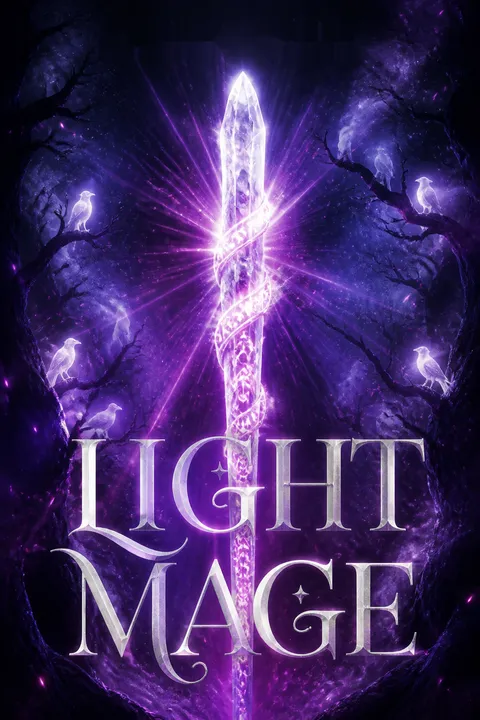


Plot Summary
Prologue
After a difficult birth, Sagellyn Gaffney demands to hold the child the Vu Trin healers have wrapped away from her. His glowing eyes and struggling black wings confirm what they fear: he is an Icaral, a figure tied to a prophecy of war.
Beside her, the White Wand stirs with light. Sage has carried it through years of danger without understanding its purpose, but as she looks at her son, its message begins to resolve.
The opening places motherhood beside political prophecy before the reader knows how Sage arrived there. The healers’ fear makes the child appear dangerous before he can act, while Sage’s insistence on holding him rejects the conversion of a person into a weapon. The Wand’s response suggests that its meaning depends not only on magical power but on relationship and recognition. By beginning at a moment of intimate care surrounded by military anxiety, the prologue makes the novel’s central conflict immediate: whether inherited stories will determine what people are allowed to become.
The Girl Who Sees Color
Six years before the prologue, nearly thirteen-year-old Sage discovers in her father’s Mage Council ledger that she is Gardneria’s only Light Mage with rune-sorcery potential. Her affinity pulls her toward vivid colors and wands, but her strict household teaches that women should not wield magic.
Her father, Warren, decides she must be wandfasted to Tobias Vasillis, a powerful Mage, and arranges future matches for her younger sisters, Retta and Clover, with Tobias’s brothers.
Sage accepts the decision because she wants her father and stepmother, Eliss, to be proud of her, and believes the family will remain together. Clover’s dream of a tree seeking Sage and warning of demons offers an unsettling counterpoint to the orderly future the adults have planned.
Sage’s first conflict is not simply magical suppression. Her need for parental approval makes restriction feel like affection, so obedience becomes a strategy for securing belonging. The betrothal system extends that bargain to her sisters, turning family continuity into something controlled by men and institutions. Her attraction to color functions as an early form of perception that exceeds the household’s authorized categories. Clover’s dream matters because it gives a child’s imaginative language access to dangers Sage has been trained to dismiss. The scene plants the novel’s key psychological tension: the cost of trusting a system because it is also the source of home.
A Binding Made in Fear
At Valgard Cathedral, Sage discovers that Draven Peltin resents her because Draven wants Tobias. During the ceremony, Draven resists being fasted to Granthyn Emory, but her parents and the priests force the binding; after she flees, her father strikes her and drags her back. Sage watches the adults treat that violence as a private correction, then stands beside Tobias as the spell marks both their hands.
She reads his handsome confidence as promise and mistakes the ceremony’s authority for proof they belong together. Afterward, Gwynnifer Croft, the strange, sharp-eyed girl Sage will stay with, says the White Wand seeks Sage and asks her to protect it. Sage cannot yet know how literal that warning will become.
The ceremony teaches Sage to misread coercion as sacred order. Draven’s visible distress should challenge the institution’s claim that a binding is benevolent, but Sage explains it away because the adults she trusts do the same. Tobias’s appearance and status further encourage projection: Sage fills his silence with the future she has been promised. The contrast between the forced binding and Gwynnifer’s alarming prophecy introduces two competing authorities, institutional ritual and intuitive knowledge. Sage does not yet have the experience to judge either, so her decision to trust the Wand begins as a child’s mixture of curiosity, longing, and obedience to a friend.
The Wand Leaves Valgard
Gwynnifer gives Sage a real White Wand taken from her father’s armory, along with rune stones and copied grimoires meant to shield it. When two Council envoys arrive asking about a powerful white wand, Sage hides the weapon while Gwynnifer’s father unknowingly helps the searchers inspect decoys. At dawn, Sage recognizes one envoy in the street and sees his eyes flare red.
She panics, forces her parents to stop their carriage, and watches the envoys pursue them after it leaves. Back in remote Halfix, she secretly studies Gwynn’s books, buries protective runes, and waits for the Wand to guide her. Nothing happens. Years of silence persuade Sage that she and Gwynn imagined the danger, though she keeps the Wand hidden.
The Wand’s silence creates a long interval in which fear can be reclassified as embarrassment. Sage responds to danger by making herself more devout and more secretive, combining rebellion with the habits of a dutiful daughter. This contradiction is psychologically credible: she can preserve the forbidden object while explaining away the experience that made it matter. The decoy wands also establish that appearances can be manipulated, a principle that later applies to identities, racial categories, and political accounts of history. Her isolation protects the Wand, but it also leaves her without mentors who could help her distinguish magical evidence from wishful thinking.
Verpax Opens Its Gates
Five years later, Sage arrives at Verpax University expecting to meet Tobias before their sealing. She reunites with Gwynnifer and Geoffrey, whose easy affection shows her how intimacy can grow through choice and familiarity.
Across the street, Sage becomes fascinated by a red-haired Keltic smith’s apprentice, Ciaran, whose gaze sparks unfamiliar runes in her vision. Then she sees Tobias walking with Draven. He ignores Sage and openly favors Draven, while Gwynn admits she knew about their attachment and concealed it.
Before Sage can absorb the betrayal, the flamboyant Alfsigr rune-sorcerer Rivyr’el ensnares her attention with his eyes and stylus. The inn’s Mage guards interrupt him, and Rivyr leaves Sage with a protective ward she does not understand.
Verpax confronts Sage with evidence that the life she expected has been taking shape without her. Gwynn and Geoffrey model mutual attachment, while Tobias and Draven expose the gap between a binding and a relationship. Sage’s shock is sharpened by her upbringing, which denied her ordinary knowledge of intimacy but demanded that she trust a stranger as a husband. Her response to Ciaran and Rivyr is also bodily before it is intellectual: color, magic, and attraction register before she has a framework for interpreting them. The city becomes a crowded lesson in how little of the world her sheltered education prepared her to read.
The Fastmate’s Violence
At dinner, Sage follows Gwynn’s misguided advice and touches Tobias’s thigh to win his attention. He responds with flirtation, then leads her away from the public streets into an underground University passage.
There, Tobias forces himself on her, restrains her with magic when she resists, and strikes her when she fights back. Sage escapes after knocking his wand away. Tobias’s father dismisses her account because the binding marks have not changed, and claims she provoked his son.
Sage’s parents accept that version, while Eliss condemns her instead of protecting her. Sage leaves the inn rather than return to Tobias. Alone in the city, threatened by a pursuing stranger, she reaches a bridge and nearly falls into the gorge before Ciaran pulls her back.
The assault exposes how institutions can convert a victim’s self-defense into evidence against her. Sage’s family judges the event through the binding’s formal rules, not the bruises on her body or the fear in her account. Their response compounds the assault by making belonging conditional on silence and submission. Her desperate attempt to attract Tobias is not consent to what follows; it is an action shaped by a culture that has denied her both information and agency. At the bridge, the choice is no longer between a safe home and an unsafe world. Ciaran’s intervention gives Sage time to imagine survival beyond the family that refuses to hear her.
A Refuge Behind Runes
Ciaran and Wyla, an armed Issani woman, realize Sage has been attacked by her fastmate and hide her in the heavily warded rooms behind an Ishkartan smithery. Wyla marks Sage with a detection rune so she can see the Mage Council’s tracking spells, then disguises her in foreign clothing and removes her Gardnerian garments.
The spells sweep the woods and strike the smithery’s wards, which hold. Inside, Za’ya, a green-scaled Smaragdalfar woman, comforts Sage, while her son Na’bee offers her a rune and kindness. His ordinary gentleness unsettles the stories Sage has been taught about his people. Zeymir, the smithery’s Ishkart owner, agrees to shelter her despite the danger to his household.
Safety here is collective work rather than a promise made by a single authority. Wyla reads Sage’s injuries and acts; Ciaran offers shelter; Zeymir accepts risk; Za’ya and Na’bee provide care. Each person’s action contradicts the racial stereotypes Sage has absorbed, but the change is not instantaneous. Her new clothes and the discarded Gardnerian dress mark a physical break from the identity that once guaranteed her place. Yet she remains frightened and dependent, which prevents the escape from becoming a simple triumph. The scene depicts refuge as a practice of trust built through specific gestures, not as an abstract alternative to oppression.
A Home Among Outcasts
As Sage recovers in the smithery household, Rivyr returns and explains that his Alfsigr pendant, the Zalyn’or, suppresses desire and rebellion; he was cast out for refusing to wear it. Sage learns that Ciaran is part of a Resistance working against the enslavement of Smaragdalfar miners, including children.
Rivyr mocks the cause and insults Za’ya, but his affection for Na’bee reveals a softer loyalty beneath his bravado. Za’ya insists there is a future worth fighting for. During the next night’s search, Sage wakes terrified; Ciaran comforts her, and they kiss. The intimacy is tender but dangerous, since Sage remains magically bound to Tobias. Wyla gives Sage a rune-blade and tells her to learn to defend herself.
The household’s disagreements keep its solidarity from seeming effortless. Rivyr’s refusal of the Zalyn’or makes visible the psychological cost of enforced calm, while his mockery protects him from the vulnerability of commitment. Za’ya understands that rebellion is more than costume or attitude because her people’s freedom has material stakes. Sage’s attraction to Ciaran develops alongside her recognition of those stakes, but the binding still governs her body. The distinction between love and legal possession becomes increasingly concrete. Wyla’s gift of a blade offers Sage a different model of care: not only soothing her after harm, but preparing her to resist its recurrence.
The Raid at the Smithy
The Mage Council search intensifies, and Sage sees her father and Tobias arrive with guards at the smithery. They assault the household while searching for her, striking Na’bee and Zeymir and frightening Za’ya.
Ciaran smuggles Sage out through the rear door and into a wagon carrying Smaragdalfar refugees, mostly children escaping the Alfsigr-controlled mines. A refugee woman distrusts Sage, but an older healer and a little girl with a cloth doll steady her through the journey.
At a forest hideout, Sage sees the children’s scars and hunger, then learns that Ciaran’s group is carrying them east toward safety. The discovery turns Sage’s private escape into part of a larger rescue, and makes the cost of her people’s version of order undeniable.
The raid makes the political violence Sage had previously encountered as doctrine bodily and immediate. Her family’s authority does not merely reject her testimony; it reaches into the home of those who shelter her and harms a child. The refugee wagon then widens her moral attention. Sage has to face people who have good reason to fear her, because her Gardnerian identity connects her to the power driving them from their homes. The old woman’s kindness is significant precisely because it is not owed. By accepting care from people she has been taught to despise, Sage begins to understand that solidarity must be earned through action.
Rivyr Changes His Colors
At the hideout, Rivyr arrives with a wand and a grimoire of elemental spells for Sage. When he sees the terrified refugees recoil from his Alfsigr appearance, he understands the danger his presence creates. He cuts off his decorated hair and asks Sage to glamour him as an Elfhollen, so he can escort the children without drawing Alfsigr attention.
Sage struggles until the White Wand helps her change his appearance. Her first success also turns her own skin, hair, and eyes vivid purple, a sign that her magic has taken hold. With Za’ya’s approval, Sage disguises the refugees, including Na’bee, to improve their chances of surviving the journey. Rivyr pledges himself to Za’ya’s cause, and the caravan leaves while Sage stays behind with Ciaran.
Sage’s first deliberate use of magic joins self-discovery to service. The purple transformation is not merely a visual flourish: she cannot yet separate what she can change in others from what her own affinity has changed in her. The disguises improve the refugees’ immediate chances while troubling Za’ya’s long-term aim of a world where Smaragdalfar need not hide. That tension prevents protective magic from being mistaken for liberation itself. Rivyr’s decision to surrender his ornaments and status is a concrete change in conduct, not a declaration alone. Sage sees how an outcast can turn shame and privilege into responsibility.
The Royal Mask Falls
After Sage and Ciaran settle into the Resistance caves, two pyrr demons track her beyond the wards and demand the white wand. Ciaran fights them with green varg blades, weapons said to be wieldable only by Smaragdalfar, and survives their fire. When Sage reveals that the wand is the legendary White Wand, he recognizes that the Shadow Wand must also be active.
She then presses him about his language, fireproof body, and rune-chain tattoos. Ciaran removes the glamour that has concealed his identity: he is Ra’Ven Za’Nor, the last surviving heir of the Smaragdalfar royal line. He explains that his parents died protecting him and that he has been building weapons to free his people. The Wand’s hunters now threaten more than Sage alone.
The reveal reorganizes earlier details rather than replacing them. Ciaran’s fluency, wards, resilience, and grief acquire a political history, while his concealment becomes a survival strategy rather than a deception for personal gain. Sage’s reaction is shaped by the trust he has already earned through restraint and care. The White Wand’s myth also shifts from childhood legend to an active force in a war spanning several peoples. Importantly, Ra’Ven’s royal identity does not erase his work as a smith and organizer. The narrative frames leadership as labor performed under threat, not simply as an inherited title.
Fastlines in the Fire
Sage trains with the White Wand, learning to change color, camouflage herself, and strike stone with light. She and Ra’Ven grow close, but the fastlines still bind her to Tobias. Sage weakens them with Light Strike, then destroys them and takes sanjire root, believing it will prevent pregnancy. She and Ra’Ven choose each other freely.
Soon her hands burn, red fastlines reappear, and fire surges through her until she collapses. Vu Trin healer Sang Loi discovers that Sage is pregnant and that the child carries wyvern blood, not demonic corruption. The Light Strike magic had suppressed the sanjire root. Sang’s diagnosis brings relief and new danger: the child may be the prophesied Icaral, whom the shadow forces are hunting.
Sage’s attempt to break the fast is both a refusal of ownership and a dangerous experiment performed without access to full knowledge. The failed contraception is not a moral punishment; it follows from a specific magical interaction that her education never prepared her to anticipate. Her body becomes the site where institutional control, desire, and inherited power collide. Sang’s distinction between a child with wyvern blood and the demon described by Gardnerian doctrine challenges the labels that have made fear seem natural. The prophecy still threatens to turn the unborn child into a symbol, so Sage’s insistence on seeing a child rather than a weapon becomes central.
A Child of Prophecy
Sage is taken to an Amaz military outpost because the Amaz will shelter her and her child, though they will not admit Ra’Ven. The Wand’s power and the pregnancy become known across the realms, and Sage spends months feverish as fire magic develops beside her Light Mage affinity. Sang and the Vu Trin soldiers care for her, while Watchers appear in her visions.
When Sage’s son is born, she names him Fyn’ir, meaning freedom, and recognizes his wings without accepting the claim that they make him evil. The White Wand clarifies its next purpose: it must go to Elloren Gardner, a young woman Sage knows from Halfix. Vu Trin commanders hesitate to trust the Black Witch’s granddaughter, and their vote initially favors waiting.
The birth is framed by separation: Ra’Ven is absent, the military fears the child, and Sage’s own body has become unfamiliar through fever and emerging fire magic. Naming the baby Fyn’ir asserts a future not contained by the prophecy’s language of combat. The Wand’s choice of Elloren complicates the idea that inherited identity determines moral destiny. The soldiers’ hesitation is understandable because the Black Witch harmed their people, yet their decision also risks ignoring a warning that Sage has lived through. The conflict is not between faith and reason so much as between competing forms of evidence, memory, prophecy, and political trauma.
Sang Opens a Portal
The Vu Trin vote leaves Sage without permission to deliver the White Wand to Elloren. Sang Loi changes course after the Watchers appear and confirm the danger in her own vision. Before dawn, she helps Sage disguise Fyn’ir with Ra’Ven’s rune-chains and the emotion-dampening Zalyn’or, then leads them past the outpost barrier.
Using a charged casting stone, Sang opens a portal to the forest near Halfix, a shorter journey than the distant Noi lands the stone cannot reach. She gives Sage a horse and directions toward the estate. The escape depends on both women’s judgment: Sang risks disobeying her command structure, while Sage accepts that she must first protect her son and the Wand before she can rescue her sisters.
Sang’s decision shows how ethical responsibility can require breaking with an institution without dismissing the institution’s reasons. She does not simply trust Sage because they are close; the Watchers provide evidence that changes her assessment. The portal converts a distant political problem into a reachable, dangerous mission. Fyn’ir’s disguise is protective but also unsettling, since the Zalyn’or calms him by suppressing his feelings. Sage carries the cost of that choice even as it enables escape. Her priorities now extend across several responsibilities, her child, the Wand, and the sisters left behind, with no guarantee that any can be secured without risk.
Elloren Takes the Wand
Sage reaches Halfix and finds Retta and Clover locked behind iron bars, with Clover bruised after resisting their father. She cuts through the bars with Light Strike and gets both sisters into the woods. Before leaving, she finds Elloren Gardner and gives her the White Wand; Elloren doubts Sage’s account but accepts the weapon after seeing the Watchers.
Sage warns her to keep it secret. Tu Jyn and another Vu Trin sorceress then join Sage, and Sage refuses to leave her sisters behind. With the sisters mounted and Fyn’ir hidden beneath her cloak, Sage rides toward Amaz lands, carrying both the family she has rescued and the uncertain future she has chosen.
The resolution does not restore Sage to her old home. She returns only long enough to remove her sisters from confinement and transfer the Wand to its chosen bearer. Elloren’s partial skepticism preserves the gap between Sage’s knowledge and the world’s readiness to believe her. The transfer is therefore an act of trust rather than a completed alliance. Sage’s final departure gathers the novel’s competing meanings of family: biological kinship, chosen community, and political solidarity. She leaves with her sisters and son, but not with certainty or safety. Her changed identity rests less on a label than on the choices she now makes.
Analysis
Light Mage begins with a girl who confuses obedience with safety because the people who control her future also provide her home. Sage’s arranged fast to Tobias makes this confusion concrete: a ritual called sacred does not guarantee care, consent, or even protection. When Tobias assaults her and her family believes his account, the damage is not only physical. Sage loses the language and social standing that might have made her testimony count.
Her escape does not replace one perfect community with another. The smithery household has conflicts, secrets, and political risks, but its members demonstrate care through action: Wyla protects Sage, Za’ya welcomes her, Zeymir shelters her, and Ciaran respects boundaries. Their conduct forces Sage to revise the racial and religious categories through which she has been taught to see them. The book treats prejudice as learned perception, not a single mistaken opinion; changing it requires repeated encounters with people who contradict the lesson.
Color gives this inner change an external form. Sage has been trained to suppress her attraction to forbidden hues, just as she has been trained to suppress her agency. Learning magic turns color from a sign of corruption into a source of skill and connection. Yet the disguises she creates for refugees reveal the limits of individual power: concealment can save lives now, but it cannot by itself end the system that makes concealment necessary.
The novel also refuses to let prophecy settle the moral questions. Sage’s child may be tied to a coming conflict, but she insists on meeting him first as her son. The Wand’s choice of Elloren complicates inherited guilt, while the Vu Trin’s hesitation shows that historical injury cannot be set aside simply because a prophecy demands it. Sage’s final movement is therefore not a clean victory. She carries her child and sisters toward refuge, gives the Wand to someone who may not yet understand it, and accepts responsibility without certainty. Freedom begins not as purity or escape from every obligation, but as the capacity to choose what one will protect.
Review Summary
Light Mage is highly praised by readers for its compelling story, character development, and world-building. Many appreciate Sage's journey from oppression to empowerment, finding it emotionally engaging and thought-provoking. The novella is seen as an essential addition to The Black Witch Chronicles, providing valuable backstory and expanding the series' universe. Readers commend Forest's handling of sensitive topics and her ability to create relatable characters. While some found the pacing quick, most enjoyed the romance and magical elements. Overall, it's considered a must-read for fans of the series.
People Also Read










Characters
Sagellyn Gaffney
The forbidden-color visionarySage is a Gardnerian Light Mage raised to prize obedience, religious purity, and her family’s approval. Her fascination with vivid colors and wands gives her a private life of perception that her community cannot accommodate. She is not initially a confident rebel; she wants to be a good daughter and believes the adults around her know what is best. That desire makes her vulnerable to a binding imposed in childhood and to the narratives that excuse its harms. Sage’s defining strength is her capacity to revise what she believes when evidence contradicts it. Her attention gradually widens from protecting herself to recognizing the people and children harmed by the political order she once trusted.
Ciaran
The guarded Keltic smithCiaran is a quiet, capable smith whose reserve conceals deep grief and a fierce commitment to people in danger. He treats Sage with care after her assault, offering shelter without demanding trust or affection in return. His physical strength and unusual magical ability make him formidable, but his defining quality is restraint: he listens, respects boundaries, and lets Sage make difficult choices for herself. He is part of a political resistance and carries a personal history that makes him wary of loss. His relationship with Sage grows through shared danger and honest recognition, not the instant authority of a binding.
Tobias Vasillis
The coercive fastmateTobias is a high-ranking young Gardnerian Mage whose family status and physical confidence make him seem like an ideal match to a sheltered child. Sage has spent years imagining a loving future with him, though they have barely met. His sense of entitlement is reinforced by a culture that treats a binding as permission and a woman’s protest as misconduct. Tobias is important not because he represents every Gardnerian man, but because his private violence is protected by public respectability. His role exposes the danger of confusing social legitimacy with moral character.
Gwynnifer Croft
The dream-guided friendGwynnifer is an imaginative, perceptive Gardnerian girl who studies forbidden histories and takes her dreams seriously. Her exuberant stories initially make Sage unsure whether to trust her, yet her curiosity sees possibilities that the adults around them dismiss. She offers Sage access to the Wand and a friendship based on shared wonder, though she sometimes withholds difficult information to spare Sage pain. Gwynnifer’s unusual childhood freedom contrasts with Sage’s strict upbringing, and her relationship with Geoffrey models affection that develops through companionship. She remains shaped by Gardnerian beliefs, which complicates the limits of what she can understand.
Ra’Ven Za’Nor
The hidden resistance heirRa’Ven is a determined leader and weapons-maker committed to freeing the Smaragdalfar from Alfsigr rule. He lives under a protective glamour and carries the grief of losing his family, which gives his political work an intimate urgency. He is disciplined and physically brave, but not invulnerable; his nightmares and his fear of further loss reveal the emotional cost of his mission. With Sage, he offers patience and mutual respect rather than control. His vision of freedom includes the right to choose one’s identity, relationships, and community, even when that ideal is difficult to defend in wartime.
Wyla
The armed protectorWyla is an Issani fighter and skilled rune-sorceress who recognizes the danger Sage faces and acts before caution can become abandonment. Her bluntness can sound harsh, but it comes from experience with exploitation and a fierce understanding of what happens when vulnerable women are left unprotected. She helps disguise Sage, teaches her to prepare for danger, and presses her to become capable of fighting back. Wyla’s weaponry and command of a room are balanced by her loyalty to the smithery household and the Resistance.
Za’ya
The steadfast resistance motherZa’ya is a Smaragdalfar woman who escaped captivity and now helps organize resistance to the system that imprisoned her people. She combines religious conviction with practical care, welcoming Sage while continuing to challenge her assumptions. Her tenderness toward Na’bee coexists with a clear-eyed understanding of danger, and she insists that refuge should lead toward a future in which her people need not disguise themselves. Za’ya’s patience is not passivity. She argues, strategizes, and holds others accountable, including friends whose bravado obscures their responsibility.
Zeymir Nyvor
The refuge-building smithZeymir is an Ishkart smith and rune-sorcerer who turns his workshop into a shelter, a weapons source, and a point of connection for the Resistance. At first he worries that hiding Sage will endanger everyone under his roof, but he weighs that risk against the harm she would face if returned. His steadiness is expressed through practical acts: protecting his household, helping refugees move, and caring for Na’bee. He represents a form of authority based on responsibility rather than command.
Rivyr’el Talonir
The flamboyant rebelRivyr is an Alfsigr rune-sorcerer who rejects the prescribed calm and conformity of his people. He uses humor, color, flirtation, and provocation as armor, often wounding allies while trying to avoid appearing vulnerable. His affection for Na’bee and his response to the refugees reveal capacities his performance hides. Rivyr is privileged compared with the people he later chooses to protect, and the story asks whether he will turn that privilege into service. His relationship with Za’ya is marked by real disagreement as well as lasting loyalty.
Na’bee
The kind young rune-makerNa’bee is Za’ya and Zeymir’s young son, a curious child with an early gift for combining different runic systems. He approaches Sage with compassion when she is grieving, offering to draw a rune rather than asking her to explain herself. His trust and straightforward kindness unsettle Sage’s inherited fear of Smaragdalfar. Na’bee is cherished by the adults around him, but he also lives close to the danger that shapes their resistance. His childhood makes the consequences of political oppression impossible to reduce to abstract policy.
Sang Loi
The compassionate healerSang Loi is an elderly Vu Trin healer and rune-sorceress whose calm judgment supports Sage through illness, childbirth, and political danger. She combines practical medical knowledge with religious insight, but she does not treat prophecy as a substitute for care. Sang recognizes the difference between Sage’s child and the demonic figure Gardnerian stories have taught people to fear. Her choices are shaped by responsibility to her people and by compassion for a frightened young mother. She listens, assesses evidence, and is willing to take a personal risk when she believes the danger is real.
Retta
The gentle younger sisterRetta is one of Sage’s younger half-sisters, quiet and tender-hearted, with a strong attachment to the family Sage once believed she could protect by obeying. She clings to familiar comforts when adults frighten her, but she is capable of making a difficult choice when Sage returns for her. Her relationship with Sage gives the story an emotional anchor beyond romance or prophecy. Retta represents the vulnerable future Sage fears her sisters will inherit if no one challenges the family’s arrangements.
Clover
The fierce little seerClover is Sage’s youngest sister, imaginative and more openly defiant than Retta. As a child, she describes a dream of a tree and the White Wand seeking Sage, though Sage dismisses the warning. Clover’s stories reveal how truth can arrive in forms adults label childish or improper. She resists being separated from Sage and refuses to accept her family’s decisions quietly. Her attachment to Sage is affectionate but also brave, and it gives Sage a reason to return when she has every reason to stay hidden.
Warren Gaffney
The powerful Gardnerian fatherWarren is Sage’s father, a Mage Council figure whose authority shapes his household and his daughters’ futures. He values status, religious conformity, and strategic marriages, and he expects his children to accept decisions made in their name. His power is not only personal; it is backed by institutions that treat his judgments as legitimate. Through Warren, the story shows how a parent’s authority can become inseparable from political control, particularly when daughters are denied the knowledge and freedom needed to challenge it.
Eliss Gaffney
The grieving stepmotherEliss is Sage’s stepmother, a strict Gardnerian whose devotion to her household’s faith is entwined with grief from the Realm War. She has moments of tenderness toward Sage and the younger girls, but her fear of outsiders hardens into certainty that condemns whole peoples. When Sage needs her protection, Eliss chooses the community’s judgment over her stepdaughter’s account. Her character illustrates how trauma can explain a person’s rigidity without making the harm it causes harmless.
Draven Peltin
The displaced rivalDraven is a Gardnerian girl who wants Tobias and resents Sage’s arranged match to him. At the ceremony, she visibly resists the binding imposed on her, but the adults dismiss her distress and force her into it. Her experience echoes Sage’s in a different form, though their rivalry initially keeps them from recognizing their shared lack of choice. Draven’s brief role exposes the harm built into the custom before Sage understands that she is also caught in it.
Geoffrey Sykes
Gwynn’s devoted fastmateGeoffrey is Gwynnifer’s fastmate and an energetic young man who grows from an awkward, adventurous boy into a warm and openly affectionate partner. His friendship with Gwynn began in childhood, and their ease together gives Sage a glimpse of a relationship built through time and companionship. Geoffrey works as an apprentice cartwright and remains loyal to Gwynn’s unconventional interests. Their closeness contrasts with Sage’s distant, formal arrangement with Tobias.
Elloren Gardner
The unexpected Wand bearerElloren is Sage’s neighbor in Halfix and the granddaughter of the Black Witch, a legacy that gives her symbolic importance before she has any confidence in herself. She is sheltered and initially dismisses Sage’s account of the White Wand as impossible, yet she accepts the weapon when Sage insists it is needed. Her cautious response reflects the beliefs and limited experience that shape her. Elloren’s role in Sage’s story is brief but consequential: she is someone the Wand chooses despite the history attached to her family.
To’yir
The veteran refugee escortTo’yir is an elderly Smaragdalfar rune-sorceress who repeatedly helps children escape from the mines. Her ragged appearance hides formidable skill, and her calm presence steadies the refugees when danger approaches. She evaluates Sage carefully rather than trusting her automatically, but accepts the practical value of Sage’s magic when it can help children survive. To’yir embodies experience shaped by repeated rescue work and an unsentimental understanding of what the journey demands.
Chi Nam
The senior Vu Trin sorceressChi Nam is a powerful Vu Trin rune-sorceress whose judgment carries weight among the soldiers and healers around her. She considers Sage’s request to transfer the Wand in light of the danger posed by the Black Witch’s legacy and the approaching shadow forces. Her caution is rooted in her people’s history, not simple hostility. Chi Nam represents the difficult responsibility of deciding whether a prophecy should outweigh a community’s memories of past violence.
Tu Jyn
The resolute Vu Trin commanderTu Jyn is a Vu Trin military leader who helps protect Sage and later joins her return to Halfix. She is disciplined, clear-eyed about danger, and willing to help Sage bring her sisters rather than demand that she choose between family and survival. Her practical courage gives Sage an ally within a military organization that does not always agree about what should be done.
Kol
The quiet Elfhollen escortKol is a large, steady Elfhollen man who helps transport refugees and Resistance supplies. He handles frightened children gently and supports the group’s dangerous work without seeking attention. His presence broadens Sage’s experience of the peoples her upbringing has taught her to fear, while his quiet competence makes him a reliable part of the rescue network.
Plot Devices
The White Wand
A power seeking its bearerThe Wand is a legendary source of power hidden in a military armory and passed to Sage by Gwynnifer. It draws on Sage’s Light Mage abilities, helps her learn spells, and attracts hunters connected to the Shadow Wand. Its stories differ among cultures, but the object connects those accounts through a shared history of resisting demonic forces. By the end, it directs Sage to give it to Elloren Gardner, shifting the struggle from Sage’s survival toward the person the Wand has chosen next.
Wandfasting
A binding disguised as destinyWandfasting marks two Gardnerians with matching magical lines and is treated as a sacred, lifelong bond. The custom shapes Sage’s future before she is old enough to choose, and the adults around her use its authority to dismiss her objections and defend Tobias. When Sage later uses magic to remove the lines, the binding returns with painful force. The device makes an abstract system of control visible on the body, while its consequences show how institutional legitimacy can outlast personal consent.
Light Mage Affinity
Magic that reads and reshapes colorSage’s rare Light Mage ability draws her toward colors and allows her to work rune-sorcery. At first she represses it because Gardnerian teaching treats most vivid colors as corrupt and denies women the right to wield wands. With the White Wand and a grimoire, she learns to glamour objects and people, camouflage herself, and use Light Strike. Her power gives her access to multiple runic traditions, but its interaction with other magic can have unintended effects, including the failure of the sanjire root she takes to prevent pregnancy.
Runic Wards and Glamours
Protection through concealmentCharacters use runes to hide rooms, detect tracking spells, strengthen barriers, and disguise people. Wards allow the smithery household and the Resistance to shelter Sage and move refugees, while color glamours change Sage’s appearance and help conceal endangered Smaragdalfar children. These protections are temporary and demanding rather than absolute. The same device that saves lives can also obscure identity or force people to hide who they are, keeping the tension between immediate safety and lasting freedom visible.
The Watchers and Prophecy
Warnings that resist certaintyWhite birds called Watchers appear around moments of danger and change, while seers across the realms interpret visions of the Black Witch, the Shadow Wand, and an Icaral child. These signs help Sage understand why she must protect the Wand and her son, but they also risk reducing living people to predetermined roles. Sage’s resistance to calling Fyn’ir a weapon complicates the prophecy’s authority. The visions offer direction, not an excuse to stop making moral choices.
The Black Witch Chronicles Series




About the Author
Other books by Laurie Forest
Download PDF
Download EPUB
.epub digital book format is ideal for reading ebooks on phones, tablets, and e-readers.








