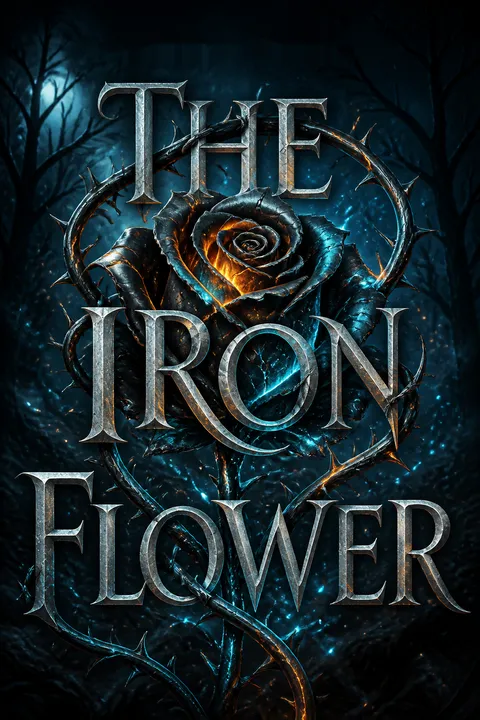


Plot Summary
Prologue
Elloren Gardner, a young apothecary student who resembles her infamous grandmother, hurries through the snow to find Yvan, the Keltic student she loves. Instead, she discovers him comforting Iris, who fears the coming iron tests will expose her as Fae. Yvan turns toward Elloren and seems to sense her feelings; humiliated, she flees.
Kitchen mistress Fernyllia steadies her with a hard truth: Elloren cannot choose her ancestry, but she can choose what she does with it. Her own losses have made her a quiet member of the Resistance, and she urges Elloren to keep her mind free and help change the world.
The opening binds Elloren’s private humiliation to the larger machinery of persecution. Her jealousy of Iris is real, but Fernyllia’s account of Gardnerian violence forces Elloren to measure personal pain against the people her society has harmed. The advice is not a call to deny emotion. It redirects emotion into responsibility. Elloren’s resemblance to her grandmother makes identity feel imposed before she has acted; Fernyllia counters that inheritance does not settle moral choice. This establishes the novel’s central pressure: Elloren must decide whether she will repeat the history written into her appearance, or use her position to resist it.
The Resistance Takes Root
Professor Jules Kristian and Vice Chancellor Lucretia Quillen bring Elloren into the Verpacian Resistance, which moves refugees east while Gardnerian laws tighten. Hydreenas hunt hidden Fae, iron testing threatens Selkies, and council rules force young Gardnerians toward early wandfasting.
Elloren helps make medicine for refugees and warns the group that Lukas Grey, the newly appointed commander at the rebuilt Fourth Division base, will detect sabotage.
Her connection to him might protect the Resistance, though she distrusts his loyalties and feels an unsettling pull toward his Snow Oak pendant. Meanwhile, the Resistance prepares routes for her friends and family, and Elloren begins to understand that staying close to Lukas may be useful, even as it risks making her complicit.
Elloren’s first political choices are acts of compromised intimacy. She is not joining a cleanly separate opposition; she is asked to use access to a powerful Gardnerian commander while wearing the regime’s symbols and living among its beneficiaries. This makes resistance a problem of proximity, not just courage. Her discomfort with the white armband shows that she understands how appearances protect one person while endangering another. The Resistance also gives her skills a public consequence: apothecary knowledge becomes survival infrastructure. Her sense of power remains uncertain, so she begins by offering judgment, practical labor, and a relationship she cannot fully control.
A Dance Under Ironflowers
At the University’s Yule Dance, Elloren arrives with Lupine friend Jarod and wears a brilliant Ironflower gown that draws every Gardnerian eye. The display enrages the Bane family, but it also gives her a chance to observe how forced wandfastings keep incompatible couples together. Her brother Rafe openly dances with Diana Ulrich, daughter of a Lupine alpha, provoking Gardnerian soldiers before the pair escape.
Jarod tries to help Aislinn Greer flee her arranged match, but she returns to Randall under pressure from her father. Lukas dances with Elloren and warns that Rafe may be drafted if war with the Lupines comes. Across the hall, Yvan watches her, then leaves with Iris, deepening the lovers’ confusion.
The dance turns a ritual of social obedience into a crowded demonstration of its costs. The couples are not merely mismatched; the institution makes desire legible as a threat to family authority and state policy. Elloren’s gown lets her occupy that public stage without surrendering her anger, while Rafe and Diana’s defiance makes the consequences immediate. Jarod’s failed attempt to help Aislinn exposes a different kind of coercion: affection cannot by itself undo the dependence that binds someone to family. Yvan’s distance and Lukas’s attentions further complicate Elloren’s emotional life, showing how political alliances and romantic choices are already entangled.
The Kelpie Names Her
After the dance, Tierney arrives at the hidden dragon’s clearing in tears, followed by her Kelpie, a horse-shaped creature made of black water. The Kelpie lunges at Elloren, and Yvan and Trystan drive it back with fire. Yvan’s eyes flash gold, revealing the force he has tried to conceal. Tierney explains that Gardnerian border guards have killed Fae with iron and that more of her Kelpies have died.
The creature also believes Elloren carries the Black Witch’s power. Trystan returns Elloren’s strange white wand, which no longer works for him, while her affinity lines begin to stir. At the Yule celebration, Andras learns that his son Konnor is alive among the Lupines, giving him a chance at the family his Amaz upbringing denied him.
The attack makes prophecy intimate and bodily: Elloren is not simply told that others fear her blood, she is nearly injured by a creature that reads that blood as danger. Yvan’s protective fire complicates his emotional reserve, while Trystan’s return of the wand suggests that power may not follow ordinary measures of magical ability. Andras’s reunion with his son provides a contrasting response to inherited culture. His longing is not abstract rebellion; it is the desire to know a child and form a family. Together these developments shift the group from debating injustice to discovering that its members may be changed by the same forces they are resisting.
The Ulrichs Meet Rafe
Gunther Ulrich arrives at Founder’s Day with his wife, children, and guard, and Diana introduces him to Rafe, her Gardnerian partner. Rafe offers the alpha a freshly hunted turkey and recites Lupine lineage, turning a dangerous meeting into a cautious exchange of respect.
When Gunther sees Elloren’s resemblance to Carnissa Gardner, he does not pretend the past is harmless, but he allows that her conduct may differ from her grandmother’s. The family gathering also sharpens Jarod’s grief over Aislinn’s forced return to Randall.
His mother discovers his feelings and reacts with fear, while Jarod condemns the same coercive mating customs that keep Aislinn trapped. He leaves the hall isolated, unable to reconcile love with the history separating their peoples.
This encounter tests whether a person can be judged apart from the history attached to their face. Gunther does not absolve Elloren or forget the harm her family represents; he grants her time to demonstrate who she is. That distinction offers a fragile alternative to inherited guilt and inherited innocence. Rafe’s meeting with the Ulrichs is similarly political: his willingness to learn their customs does not erase the danger of his pursuit, but gives Diana’s family evidence beyond his ancestry. Jarod and Aislinn’s conflict shows the limit of personal goodwill. A relationship may cross a boundary emotionally while law, family authority, and collective memory still hold the people apart.
Andras Finds His Son
At the University, Ferrin Sandulf, the Lupine beta, recognizes Andras Volya as the man who fathered his wife Soraya’s young son, Konnor. Sorcha Xanthippe had left the child with the Lupines, and Andras had not known he existed. Holding Konnor, Andras breaks down, then learns that the Lupines will accept him as family.
His mother, Professor Volya, rejects the idea because she sees Lupine customs as hostile to Amaz beliefs. Andras nevertheless chooses to join the pack after completing his work with the horses. The discovery also unsettles Tierney, who has become close to Andras but cannot share his hope of belonging in Lupine society. His departure exposes how refuge can save one person while widening another person’s loneliness.
Andras’s reunion makes kinship an ethical choice rather than a simple fact of biology. Konnor’s existence gives him a possible future, but the recognition arrives through a culture that his mother considers a betrayal. Andras must therefore distinguish love for his mother from obedience to the beliefs that have kept him isolated. His choice is not a rejection of her care; he asks her to come with him. Tierney’s response matters because the same refuge cannot answer everyone’s needs. Belonging is not a universal destination, and solidarity becomes more demanding when friends choose different homes and different definitions of freedom.
The Mob Crops Olilly
As anti-non-Gardnerian rhetoric spreads through Verpax, Elloren and Tierney encounter a mob burning shops and attacking people in the streets. They find Bleddyn beaten and bring her to the University kitchens under Elloren’s cloak. Then Rafe returns carrying Olilly, a young Urisk kitchen worker whose ears have been cut and hair shorn.
Yvan heals Bleddyn’s injuries, while Fernyllia and the others comfort Olilly and hide her from authorities who would deport her. Jules and Lucretia give the women false identity papers instead of promising justice the councils will not provide. Elloren also learns that the attackers are military apprentices. Diana tracks them, but waits for political permission before retaliating.
The mob’s violence makes prejudice tangible through the bodies it marks. Olilly’s injury is not incidental brutality; it is a public attempt to make Urisk identity visible as shame. Elloren’s cloak reverses that logic by concealing the signs the attackers used to target her. Yet the Resistance cannot simply report the crime, because legal protection would expose Olilly to deportation. The false papers are a narrow form of care that accepts the limits of the present while resisting its consequences. Elloren’s anger wants punishment, but the episode teaches her that action has to account for who will bear the retaliation.
Gareth Finds His Kin
Marina gradually learns to speak Common Tongue by forming words underwater, then tells Elloren that her younger sister and other Selkies remain captive. When Gareth Keeler, Elloren’s childhood friend and a mariner, arrives, Marina recognizes something in his scent and insists he is Selkie kin.
Gareth admits he can navigate without instruments, hold his breath underwater for an hour, and sense the sea wherever he is. He has never understood why water feels like home. He promises to help Marina find her sister and recover the Selkie skins, even though he cannot live beneath the sea himself. His discovery gives the rescue effort a guide who can be trusted by people who fear most men.
Gareth’s identity emerges through recognition rather than records or official ancestry. Marina reads traits he has hidden even from himself, giving the scene a relational model of knowledge that contrasts with the state’s demand for iron tests and purity categories. His abilities are meaningful precisely because they do not make him fully at home: he can sense and endure the ocean, but cannot live in it. That partial belonging allows him to understand Marina without claiming her experience as his own. His decision to help turns discovery into responsibility, and the search for Selkie skins now has a person who can approach captives without repeating the violence they fear.
Vogel Raises the Reaping
In a separate glimpse of Valgard, Gardnerian apprentice Gwynn Croft watches High Mage Marcus Vogel rally a crowd around the coming Reaping Times. Vogel presents Fallon Bane as the likely Black Witch and the infant Fyn’ir as an enemy to be destroyed. Gwynn recognizes the baby as the child of her former friend Sage Gaffney, whom she once helped escape with a mysterious wand.
When Vogel displays a dark wand, Gwynn sees smoke-horned figures around him and remembers that the stolen object is the Shadow Wand, not an ordinary weapon. Her childhood belief in the White Wand returns with frightening force. The revelation shows that Vogel’s political crusade may be strengthened by forces his followers cannot see.
Gwynn’s viewpoint exposes how authoritarian certainty is manufactured from selective memory. Vogel invokes remembered Gardnerian suffering to justify present violence, and the crowd’s emotional identification makes his claims feel self-evident. Gwynn is not immune to that appeal; she shares the history and loves her fastmate, yet her private knowledge interrupts the public narrative. The Shadow Wand turns religious language into a material problem: the symbol of evil is not merely propaganda if a supernatural force is actually operating through it. Her recognition also links the political campaign to the White Wand’s hidden history, widening the conflict beyond the councils’ visible struggle for territory.
Yvan Takes Elloren East
Elloren and Yvan cross the Southern Spine to reach Keltania without using Gardnerian border checkpoints. In Lyndon, Yvan’s friend Clive Soren rejects their appeal to divert the Keltic Resistance toward Selkie captives, arguing that Gardnerian forces threaten his own people. He finally directs them to ask the Amaz queen for help.
Yvan’s mother refuses to shelter Elloren because she resembles Carnissa Gardner, forcing the pair to spend the night at a poor inn. There, Yvan tells Elloren that Gardnerian soldiers killed the family of Sage’s Keltic partner, an officially sanctioned act of racial punishment. Their restrained closeness deepens, but the story makes clear that romance between them could endanger both their families.
The Keltania journey refuses the comforting idea that oppressed groups automatically unite. Clive condemns the Selkie trade yet prioritizes the imminent invasion of his own country, forcing Elloren to confront how scarcity narrows solidarity. Yvan’s mother enacts a different kind of historical memory: Elloren’s face recalls a dead husband and a devastated family, so friendship initially seems impossible. The inn scene brings Elloren and Yvan into physical intimacy while the killing of Sage’s partner’s family makes that intimacy politically dangerous. The romance becomes a measure of how racial law enters private life, shaping not just whom people may love but whom they dare to protect.
Sage Guards the Wand
On her first visit to Amaz lands, Elloren and her companions are mistaken for a threat and nearly attacked at the border. The Amaz fear she is the prophesied Black Witch, but let her petition Queen Alkaia. There, a Watcher leads Elloren beyond her guarded lodging to Sage Gaffney, now a confident young mother sheltering her infant son, Fyn’ir.
Sage returns the White Wand and explains that she has become a Light Mage, while warning that shadow forces are searching for the Wand. She marks Elloren with runes that shield her from barriers and demonic detection. Sage’s reunion with Elloren restores an old friendship, but their conversation also confirms that Fyn’ir is being treated as a weapon by both sides.
Sage’s transformation is a counterexample to the fate her upbringing prescribed. She has escaped forced fasting and built a life in which her power, motherhood, and religious uncertainty coexist. The reunion also makes protection materially specific: the runes on Elloren’s skin are not symbols alone, but tools that may let her move through guarded spaces and evade hostile searches. The White Wand links personal memory to a larger contest, yet Sage’s warning resists turning the baby into a destined instrument. Her concern is psychological as well as physical: Fyn’ir needs to be seen as a child before anyone decides what his existence means.
One Hundred Two Selkies
Queen Alkaia first refuses to send soldiers against Gardneria, arguing that rescuing Selkies without recovering their skins would leave them powerless and vulnerable. Gareth, Yvan, Rafe, and Trystan investigate the taverns where Selkies are abused. They find Marina’s sister and learn that two captives have already destroyed their skins and cannot be restored.
Gareth locates Marina’s own skin buried near the groundskeeper’s cottage. Once reunited with it, Marina regains her strength and transforms into a seal. The Amaz then raid the taverns after the full moon, recover the skins, and rescue more than a hundred Selkies. Marina leaves for the ocean with her sister, while Elloren watches her friend return home.
Queen Alkaia’s refusal initially sounds like indifference, but it forces the rescue plan to confront the captives’ dependence on their skins. Extraction alone would be a dramatic gesture without a durable future. The men’s investigations expose a further moral failure: even supposed allies participate in or tolerate the trade. Gareth’s discovery of Marina’s skin changes the campaign from testimony to a feasible operation, while Marina’s transformation restores agency to the person whose fate began the search. Her departure gives the rescue a genuine resolution, but also makes clear that freeing someone is not the same as keeping them close.
Amnesty Before the Ashes
As Gardnerian rule expands in Verpacia, Diana persuades her father, Gunther Ulrich, to grant refuge to Fae, Icarals, and the families who have hidden them, without requiring them to become Lupines. The offer gives Tierney, Yvan, and other threatened people a possible route east. Soon afterward, Gardnerian forces annihilate both Lupine packs, including Diana and Jarod’s family.
Brendan escapes with Konnor and brings the news to the University. Diana collapses into grief, then is captured with Jarod by Gardnerian and Vu Trin troops who claim joint custody. Rafe and Trystan are arrested after Rafe attacks a soldier who mocks Diana. The promised refuge now exists, but its intended beneficiaries are scattered and endangered.
The amnesty briefly shifts political imagination from assimilation to protection: the refugees can enter a new community without surrendering their identities. That achievement makes the massacre especially devastating, because the possibility of refuge is met with a deliberate attempt to destroy the people who might offer it. Diana’s grief is not only personal loss; she has inherited responsibility for a pack whose social world has been erased. The competing claim of custody reduces her and Jarod to strategic assets. Rafe’s assault expresses loyalty, but also places him within the state’s reach, showing how grief-driven action can become both morally legible and tactically costly.
Fernyllia’s Last Diversion
To prevent Gardnerian troops from taking the Lupines and refugees, Elloren and Tierney combine Ironflower essence with elemental magic to make a poison that suppresses magic and leaves its victims unconscious. Their plan depends on the Resistance’s knowledge of the kitchens.
Fernyllia volunteers to administer it, refusing evacuation because her age and health make the journey impossible. The drugged soldiers and scholars cannot stop the Vu Trin, Elfhollen, and Resistance members from escaping with Rafe, Trystan, the Lupines, and many refugees.
Fernyllia is executed for the poisoning, while Elloren and Tierney pretend to have been poisoned themselves. Elloren is left behind, sick and interrogated, as the people she helped escape vanish east.
The poison is a striking answer to the imbalance of force: Elloren and Tierney do not overpower the military but exploit its dependence on routine meals and confidence in magical detection. Their technical knowledge becomes a form of political leverage. Fernyllia’s decision gives the plan its moral weight. She does not mistake sacrifice for victory; she chooses the future of her granddaughter and the kitchen workers over her own survival. Elloren’s performance of illness lets others escape, but her deception also strands her among the people responsible for Fernyllia’s death. Resistance here succeeds operationally while exacting a personal cost that cannot be called clean.
The Marfoir Take Ariel
After the Alfsigr declare Icarals outlawed, two Marfoir assassins enter the woods hunting Wynter. Ariel switches clothes with her friend and deliberately draws the assassins toward herself, letting Tierney carry Wynter toward Amaz protection. The Marfoir capture Ariel and deliver her to a Valgard prison, where she is drugged with nilantyr and badly injured.
Yvan returns to help Elloren, who disguises herself as Aunt Vyvian while he takes the appearance of a Gardnerian guard. They enter the prison, free Ariel and a terrified Icaral child, then face a suspicious lieutenant at the gates. Naga arrives in a storm of fire and lifts the group out, carrying them toward the Amaz before the prison guards can stop them.
Ariel’s choice is the inverse of the social story imposed on her. Once treated as dangerous and disposable, she chooses to spend her own safety protecting someone else. The disguise makes her sacrifice physical: she takes Wynter’s visible identity so the assassins will follow the wrong body. Elloren and Yvan later turn Gardnerian authority into camouflage, using the regime’s expectations to reach the prisoners. Their escape depends on cooperation across several kinds of power, including Naga’s return. Yet rescue arrives after Ariel has been severely harmed, keeping heroism from becoming a guarantee of uncomplicated survival.
Naga Carries Ariel East
Naga lands in Amaz territory with Elloren, Yvan, Ariel, and the freed child, provoking an armed response until Valasca and Queen Alkaia recognize Elloren. Amaz healers examine Ariel, but the nilantyr has damaged her beyond their ability to restore. Naga chooses to carry Ariel east, where she hopes to find other winged beings, and Queen Alkaia gives her a rune-axe to accompany the journey.
The Amaz accept Wynter and the rescued child, while Yvan is escorted out of their lands because men are forbidden there. At the border, he and Elloren grieve together and finally admit their love. Their first kiss binds Yvan to her through his dragon nature, though they still face separation and danger.
The rescue does not erase the harm that preceded it. Ariel’s fate exposes the limit of individual courage when institutions have spent years drugging and injuring a child. Naga’s decision to seek a community beyond the Amaz gives Ariel a destination shaped by kinship rather than imprisonment, while the rune-axe offers a form of recognition the Gardnerians denied her. The Amaz’ protection remains conditional: Wynter and the child can stay, but Yvan must leave. His bond with Elloren begins in grief, making love neither escape nor cure, but a commitment formed while both understand the cost of being connected.
Vyvian Forces the Fasting
After Naga’s departure, Elloren and Yvan return to the North Tower. The next morning, Aunt Vyvian arrives and says Uncle Edwin is gravely ill. She takes Elloren to a military outpost, where Edwin lies injured and weak, then demands his consent to a fasting. Edwin refuses and dies before he can explain why he had hidden Elloren’s abilities.
Vyvian uses the guardianship rules to force Elloren into a sealed wandfasting with Lukas. Lukas claims he is trying to protect her from a worse match, but Elloren experiences the ceremony as coercion and vows to hate him. Back at the tower, she tries to provoke Yvan into breaking the bond; he refuses, insisting their intimacy must not be driven by revenge.
The fasting ceremony converts familial protection into a coercive legal weapon. Vyvian isolates Elloren by removing Edwin, then uses the guardian’s consent rule to make a decision whose consequences are meant to last beyond the crisis. Lukas’s motives remain morally mixed: he believes he is preventing a more brutal match, but his participation still helps the system claim Elloren’s body. Edwin’s death leaves Elloren without the person who once shielded her from knowledge as well as danger. Yvan’s refusal to break the bond through sex is an act of care because he recognizes that her grief is seeking relief, not freely choosing intimacy.
The Prophecy Reverses
After days of grief, a Watcher leads Elloren to Yvan at a lake. He reveals opalescent wings and confesses that he is an Icaral, the son of the Icaral Carnissa Gardner killed. Elloren realizes the grandmother she resembles killed Yvan’s father. When she tests a spell with a branch instead of a wand, the blocked magic surges through her and sets a forest ablaze.
Yvan identifies her as the Black Witch, while they recognize themselves as the two figures in the feared prophecy. They travel to the Vu Trin Resistance, where Commander Kam Vin confirms she suspected Elloren’s power and orders separate training for the pair. Yvan goes east under guard; Elloren takes the White Wand and agrees to train.
The revelation rearranges the story’s moral geometry. Elloren and Yvan are not simply representatives of opposing peoples; each embodies the role the other’s community has been taught to fear. The decisive evidence is action: a spell that once failed now ignites the forest, while Yvan’s wings reveal the concealed history behind his strength. Yet the prophecy does not dictate their choices. They have already loved, protected, and trusted each other across its supposed boundary. The Resistance’s decision to separate them is strategically understandable but emotionally costly, repeating the novel’s recurring tension between personal attachment and collective survival.
Epilogue
Elloren rides with Commander Vin and a Vu Trin party toward a rune-portal whose destination she does not know. She carries the White Wand, bears the fasting marks forced on her, and thinks of the people scattered across the Realms, including Yvan, now sent east to train apart from her.
As she enters the portal, she resolves to return and confront Vogel. The ending is not a victory over Gardnerian rule but a departure into preparation: Elloren accepts that she must learn to wield the power she once believed she lacked.
The portal closes the book by turning escape into a deliberate beginning. Elloren has not undone the annexation, restored the dead, or broken the fasting imposed on her. Instead, she carries those injuries forward as reasons to train. The White Wand remains a promise rather than a solved weapon, and her resolve is more important than any new mastery she has gained. Her departure also reverses the opening image of a young woman trapped by inherited identity: she still bears that history, but now moves toward it consciously. The novel ends with agency under constraint, not certainty of success.
Analysis
The Iron Flower treats political violence as a system that recruits ordinary habits, not merely as the work of a single villain. Flags, school rules, clothing codes, iron tests, assigned fastmates, and religious stories teach people who counts as human and whose suffering may be ignored. The laws matter because they reach kitchens, bedrooms, classrooms, and family visits. Elloren’s awakening therefore cannot be reduced to discovering that she has power. Her first consequential acts are acts of attention: she listens to Marina, notices the harm done to Olilly, makes medicine, and questions the stories that taught her to fear Icarals.
The novel’s repeated cross-cultural encounters resist a simple moral division between good outsiders and bad Gardnerians. Clive supports justice but prioritizes Keltania. The Amaz shelter refugees while maintaining harsh rules about men. Yvan’s mother cannot separate Elloren from the ancestor who killed her husband. These contradictions do not make oppression equivalent on every side; they show how trauma and institutional self-protection can reproduce exclusion even among people resisting conquest. The story asks readers to distinguish understanding a motive from excusing its consequences.
Its romances also function as political arguments. Elloren and Yvan are drawn together across inherited hostility, but their love cannot remove the dangers created by law, secrecy, and military power. Lukas offers protection through the same hierarchy that threatens her, making his affection inseparable from the question of complicity. Forced fasting makes bodily autonomy a literal site of state control, while Yvan’s refusal to exploit Elloren’s grief marks consent as more than desire.
Finally, magic is not a clean metaphor for moral worth. Elloren’s power awakens alongside a frightening legacy, and the White Wand does not make ethical decisions for her. Her challenge is to learn without becoming the weapon others expect. The ending offers neither victory nor reconciliation, only a choice to train and return. Hope here is not confidence that goodness will prevail. It is the work of building alliances before fear makes every person into an enemy.
Review Summary
The Iron Flower receives mostly positive reviews, with readers praising its complex world-building, character development, and themes of prejudice and resistance. Many found it an improvement over the first book, with engaging plot twists and emotional impact. Some critics noted pacing issues and an overemphasis on romance. The book's exploration of racism and social injustice was generally well-received, though a few readers found it heavy-handed. Overall, fans eagerly anticipate the next installment in the series.
People Also Read


Characters
Elloren Gardner
Defiant apothecary studentElloren is the granddaughter of the feared Carnissa Gardner, and her resemblance to that ancestor shapes how strangers judge her before she speaks. She studies apothecary skills and begins the story believing she has almost no magical ability. Her instinct is to care for people through practical work: medicine, food, shelter, and attention to those others dismiss. She is also emotionally candid, jealous, frightened, and capable of misjudgment, which keeps her moral growth human rather than saintly. As she encounters the consequences of Gardnerian rule, she becomes less willing to treat inherited loyalties as obligations. Her central drive is to protect people without becoming an instrument of the power she opposes.
Yvan Guriel
Guarded Keltic firebrandYvan is a Keltic University student whose quiet reserve hides extraordinary strength, healing ability, and a fierce instinct to defend others. He works in the kitchens and helps refugees, but keeps much of his background private because exposure could endanger his family. His feelings for Elloren are complicated by her ancestry and by the political danger attached to their closeness. Yvan tries to control both his emotions and his power, sometimes withdrawing when intimacy becomes frightening. He is not indifferent to suffering, but his firsthand knowledge of Gardnerian violence makes trust difficult. Beneath his caution is a young man who longs for ordinary work, rest, and a place where he can belong.
Lukas Grey
Commanding earth-mage suitorLukas commands the Gardnerian Fourth Division base and pursues Elloren with confidence, sensuality, and a belief that power is the only reliable protection in a hostile world. His affinity with Elloren makes their connection unusually intense, but he is not easily persuaded to abandon the institution that gives him authority. He values strength, military competence, and honest exchanges, even when his bluntness wounds others. His interest in Elloren mixes desire, strategic calculation, and a wish to be understood without pretending to romantic ideals he distrusts. Lukas’s defining tension is between his ability to recognize injustice and his reluctance to risk the power that lets him survive it.
Tierney Calix
Glamoured water-mage friendTierney is Elloren’s sharp-witted friend and fellow apothecary student, carrying hidden Fae identity beneath a Gardnerian glamour. She is practical, combative, and distrustful of easy promises, often using sarcasm to keep fear at a manageable distance. Her water magic grows difficult to control under stress, and her Kelpies connect her to a world her disguise conceals. Tierney’s commitment to refugees is matched by a strong attachment to her family and her own sense of self. She is not merely the group’s magical asset: she plans, argues, calculates, and insists that helping one endangered person should not mean abandoning the rest.
Rafe Gardner
Fearless eldest Gardner brotherRafe is Elloren’s eldest brother, an accomplished tracker whose humor and apparent ease often conceal fierce loyalty. He rejects the narrow expectations placed on Gardnerian men, particularly when those expectations threaten his relationship with Diana. His fearlessness can look like recklessness, especially when he acts before considering the political consequences, but it also makes him willing to meet people his society labels enemies. Rafe’s bond with his siblings is protective without being controlling; he treats them as people capable of making their own choices. His sense of justice is personal and immediate, rooted in the people before him rather than in abstract claims of bloodline or purity.
Trystan Gardner
Measured prodigy and brotherTrystan is Elloren’s younger brother, a highly talented Mage and weapons student who masks strong feeling behind a composed manner. He is observant, disciplined, and unusually good at remaining calm when others are trying to provoke him. His affection for Elloren and Rafe shows in practical acts of protection, while his skill gives the family an important defensive resource. Trystan also questions whether the identity offered to him by Gardnerian institutions is the one he wants. He is more than the quiet counterweight to Rafe: his self-control is a form of agency in a society that expects obedience, and his loyalty does not require him to accept its ideology.
Diana Ulrich
Predatory Lupine heirDiana is the daughter of Lupine alpha Gunther Ulrich and one of Elloren’s closest friends. Direct, physically fearless, and often impatient with diplomacy, she trusts her instincts and has little tolerance for people who threaten those she loves. Her relationship with Rafe crosses a political boundary, but she does not treat affection as weakness. Diana’s confidence is rooted in a culture that values strength in women, although her bluntness can make delicate negotiations harder. She brings formidable loyalty to the group and offers Elloren a lived example of social rules different from Gardneria’s. Beneath her ferocity is a capacity to comfort others and to act for a community larger than herself.
Sage Gaffney
Gentle childhood friendSage is Elloren’s childhood neighbor, raised in a strict Gardnerian household and accustomed to measuring herself against rules she did not choose. Her gentleness should not be mistaken for passivity: she has a strong capacity for learning, care, and reconsidering what her family taught her. Her relationship with Elloren reaches back to their childhood, giving their reunion emotional force amid political upheaval. Sage is also a mother trying to protect her child from people who see him as a threat or symbol. Her presence challenges the assumption that obedience is the same as goodness, and that a person’s assigned role is the only life available.
Ariel Haven
Wounded winged scholarAriel is an Icaral student with black wings, a fierce temper, and a history of confinement and forced drug use. She often meets kindness with suspicion because institutions have taught her that vulnerability invites control. Her animal-care studies and attachment to her raven and chickens reveal a gentler attention beneath her defensive aggression. Ariel’s connection with Wynter is profound, but she does not need to become agreeable to deserve care. She is funny, difficult, resourceful, and deeply wounded. Her presence forces Elloren to confront how the Gardnerians turn a child’s difference into a reason for imprisonment, then blame the child for the effects of that abuse.
Wynter Eirllyn
Empathic Elfin artistWynter is an Elfin student whose quietness and artistic attention make her unusually perceptive about other people’s feelings. She communicates through carefully made images, and her empathic nature can make ordinary contact overwhelming. Her relationship with Ariel is grounded in patience rather than an expectation that pain should disappear quickly. Wynter is devoted to her people and to her art, so rejection by her own community cuts especially deep. She represents a kind of strength that is neither martial nor loud: observation, fidelity, and the effort to remain compassionate when institutions declare someone unworthy of belonging.
Marina
Rescued Selkie musicianMarina is a Selkie Elloren helps free from captivity. Without her skin, she is weakened and initially struggles to communicate in the languages of land. Her musical ear helps her learn speech, and her growing confidence allows her to become an advocate for other Selkies. Marina is wary of men because of what she has endured, but she is capable of forming trust through repeated acts of care. Her story emphasizes that communication is a shared effort: others must learn how to listen rather than treating unfamiliar speech as proof that she has nothing to say. She is both a vulnerable refugee and a determined person with her own goals.
Andras Volya
Amaz-born horse healerAndras is the University’s equine physician, a skilled and steady presence who can calm frightened animals and people alike. Raised by his Amaz mother, he has grown up between cultures and carries the loneliness of being treated as an exception in both. He is thoughtful about tradition, but does not accept that custom alone makes an arrangement fair. His interest in horses is part profession and part refuge, giving him a practical way to care for others. Andras’s friendship with Elloren and the Resistance places him among people who question the rules that once defined his place in the world.
Jules Kristian
Subversive history professorJules is Elloren’s history teacher and a leader in the Verpacian Resistance. Disheveled, curious, and strategically patient, he uses scholarship as a practical tool rather than a retreat from politics. He helps arrange refugee routes, false documents, and contacts while encouraging Elloren to study history from more than one perspective. His humor softens his manner, but he understands how quickly knowledge can become dangerous under authoritarian rule. Jules treats Elloren as a student capable of judgment, not simply as a symbol of her family.
Lucretia Quillen
Strategic resistance leaderLucretia is a Gardnerian vice chancellor who works with Jules to organize the Verpacian Resistance. Elegant and controlled, she knows how to navigate official power without trusting it. She sees Elloren’s connection to Lukas as a possible political opening, while warning her not to mistake access for safety. Lucretia’s calm is not passivity; it is a practiced way of keeping decisions possible under pressure. Her close partnership with Jules is built on shared work and mutual respect, even when neither is comfortable making private feeling explicit.
Fernyllia
Urisk kitchen matriarchFernyllia runs the University kitchens and quietly supports refugee families, including her granddaughter Fern. She has endured Gardnerian conquest, forced labor, and the loss of family, yet continues to make food and shelter into forms of care. Her kindness is not softness without judgment; she knows when Elloren needs consolation and when she needs to stop feeling sorry for herself. Fernyllia’s practical experience gives the younger Resistance members a longer view of the struggle and a reason to measure plans by the lives they can preserve.
Jarod Ulrich
Lupine tracker and scholarJarod is Diana’s brother, a Lupine with heightened senses and a strong interest in the people around him. He can detect attraction and emotional tension, which gives him insight but can also make other people feel exposed. His feelings for Aislinn conflict with the political and religious barriers between their families. Jarod’s compassion is sometimes overwhelmed by anger when he sees someone he cares about being mistreated. He is an important bridge between Elloren’s circle and the Lupines, but he does not pretend that affection alone can dissolve centuries of grievance.
Valasca
Amaz confidante and protectorValasca is an Amaz woman who first appears as a capable, plainspoken companion to Elloren. She loves animals, reads widely, and has a gift for becoming a trusted keeper of other people’s secrets. Her humor makes difficult conversations easier, but she is also troubled by customs that deny people freedom or belonging. Valasca’s friendship with Elloren grows through frank exchanges about love, culture, and power. She is willing to question her own society without pretending that the answer is simple.
Aunt Vyvian
Elegant coercive auntVyvian Damon is Elloren’s aunt, a powerful Mage Council member who believes family honor and Gardnerian order must be protected through discipline. She is attentive to appearances and uses gifts, money, and social connections to influence the younger Gardners. Her affection, when it appears, is inseparable from expectation: she wants Elloren to fulfill a role that will strengthen the family. Vyvian’s polished manners make her pressure difficult to challenge, because coercion often arrives disguised as care, duty, or an offer of security.
Marcus Vogel
Zealous Gardnerian high mageVogel leads the Gardnerian Magedom with a religious program that defines outsiders as threats and conquest as purification. He understands the power of public spectacle, from flags and speeches to the rituals that make political violence appear sacred. His appeal rests on turning remembered suffering into permission to inflict new suffering. Vogel is not simply a military opponent; he offers followers a total explanation of the world in which doubt becomes treason and cruelty becomes virtue.
Alcippe
Scarred Amaz warriorAlcippe is a formidable member of the Amaz Queen’s Guard, marked by runes and shaped by a violent childhood. She is fiercely protective of the people she considers hers and views men with deep suspicion. Her severity is not random; it grows from what she has seen women endure. Alcippe’s presence challenges Elloren’s instinct to judge character from appearance, while also showing that sympathy does not automatically make someone safe or easy to persuade.
Gareth Keeler
Silver-haired mariner friendGareth is Elloren’s childhood friend and a maritime apprentice whose unusual instincts have long set him apart. Warm, loyal, and direct, he makes people feel safe enough to speak plainly. His connection to the ocean gives him a natural rapport with Marina, and he is willing to enter dangerous situations to help her people. Gareth’s kindness is not naïveté; he sees what the Selkie trade is doing and chooses not to look away.
Naga
Captive military dragonNaga is an unbroken military dragon whom Elloren and her friends find injured and held by Gardnerian forces. She is intelligent, proud, and wary of anyone who treats dragons as equipment. Her bond with those who care for her depends on respect rather than ownership. Naga’s presence makes the violence of captivity visible beyond human societies, while her strength reminds the group that those labelled weapons may have loyalties and choices of their own.
Aislinn Greer
Trapped Gardnerian studentAislinn is Elloren’s friend, a Gardnerian student whose family has chosen a fastmate for her. She is drawn to Jarod but fears the cost of openly defying her father. Her situation exposes how young women can be constrained through family dependence as well as law. Aislinn is not simply indecisive: she understands that leaving may mean losing her family and the life she has known, and she struggles to decide what freedom is worth.
Plot Devices
The White Wand
Dormant source of hopeA strange wand Sage once gives Elloren, which does not behave like an ordinary Mage weapon. It draws the attention of Watchers and responds to Elloren in ways that challenge the belief that she is powerless. Sage uses runes to protect Elloren and insists that the Wand has chosen her despite the dangerous ancestry she carries. The Wand’s significance becomes clearer as Elloren’s magic awakens, but it remains a responsibility rather than a simple solution. It links multiple cultures’ beliefs about hope and resistance while raising the question of whether a powerful object serves its bearer, or asks something of them.
Affinity Lines
Magic made relationalGardnerian elemental magic flows through individual lines associated with earth, fire, water, air, and light. The lines can be strengthened by objects such as the Snow Oak pendant and can respond to another person’s affinities. Elloren gradually senses more lines than she can consciously use, while her connection to both Lukas and Yvan makes magic feel intimate as well as dangerous. The system gives emotional states physical consequences: attraction can intensify power, and fear or anger can make it difficult to control. It also creates a contrast between learned wand use and forms of power that exist beyond official Mage rankings.
Glamours and Rune-Stones
Identity concealed or freedGlamours disguise the appearances of Fae who would otherwise be exposed to iron testing, capture, or death. The concealment protects people, but it can also trap them in a false body and separate them from their abilities. Amaz rune-sorceresses develop ways to remove and store layered glamours in rune-stones, making disguise a transferable tool rather than an unchangeable condition. Elloren and Yvan also rely on a temporary glamour to enter the Valgard prison under Gardnerian identities. The device repeatedly asks whether a hidden appearance protects a person, erases them, or becomes necessary for survival.
Ironflower Essence
A flower becomes resistanceIronflowers are a sacred Gardnerian symbol associated with the prophetess Galliana, but the flower’s essence also has practical magical uses. Elloren and Tierney learn to combine the essence with elemental magic to create a poison that suppresses magic and escapes ordinary detection. Their knowledge of chemistry lets the Resistance disable a much larger force without matching it in open combat. The flower therefore carries competing meanings: state religion, inherited history, and a resource that can be repurposed against authoritarian power. Its blue glow also becomes a visible reminder that familiar symbols can be used for purposes their official owners did not intend.
The Prophecy
Fear turns people into weaponsSeers across the Realms have foretold a Black Witch and an Icaral whose powers will shape the coming conflict. Gardnerians, Amaz, and Vu Trin interpret the prophecy differently, but each side risks treating the people involved as weapons rather than individuals. The prophecy fuels the hunt for Sage’s son and the fear directed at Elloren, while also shaping decisions about how the pair should be protected. Its force comes less from certainty about the future than from the political actions taken in its name. The story leaves open whether destiny predicts events or whether belief in destiny helps create them.
The Black Witch Chronicles Series

About the Author
Other books by Laurie Forest
Download PDF
Download EPUB
.epub digital book format is ideal for reading ebooks on phones, tablets, and e-readers.








