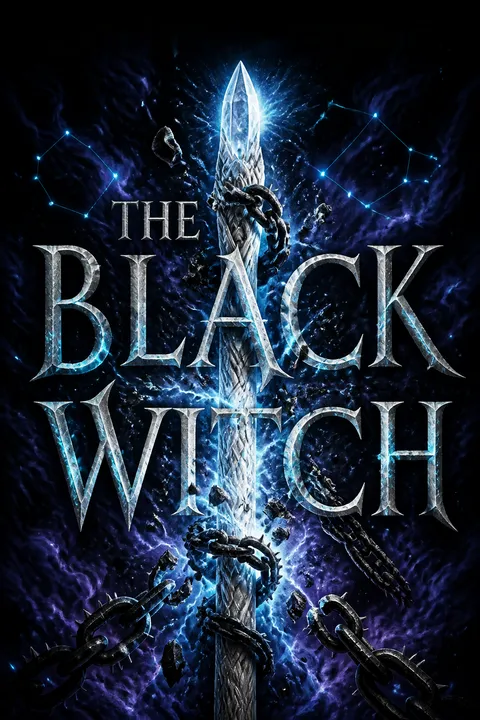


Plot Summary
Prologue
When Elloren is three, her uncle Edwin takes her into the woods and guides her through a spell meant to light a candle. Power surges up through her, the forest catches fire, and Edwin carries her to safety.
Years later, when the memory returns in nightmares, he tells her she dreamed it during a storm. Trusting the only parent she remembers, Elloren accepts his explanation and avoids the wild places. The buried memory leaves her with a missing piece of her own history before she ever reaches adulthood.
The childhood scene plants a mystery inside an intimate act of care. Edwin’s fear, his trembling hand, and his later cover story suggest that protection can also become concealment. Elloren’s trust is not foolish: she is a child who depends on the one adult who raised her. But the fire links her to a power she has been taught to believe she lacks, making her lifelong self-understanding rest on a carefully maintained omission.
Halfix Opens Its Gate
At seventeen, Elloren Gardner lives quietly with Uncle Edwin and her brothers, Rafe and Trystan, in remote Halfix. Her Council aunt, Vyvian Damon, arrives determined to arrange a wandfasting for Elloren, the customary bond that secures a young woman to a husband. Edwin refuses to let his niece’s future be decided so early.
He sends her instead to Verpax University to study apothecary science, the trade Elloren has wanted for years. She will earn her tuition through kitchen work, a choice that shocks Vyvian. Elloren overhears the argument and learns she will travel with her aunt before continuing to University. Her chance at an independent education begins inside a family dispute about who gets to choose her life.
The disagreement is more than a clash between a protective uncle and a controlling aunt. Edwin offers Elloren a rare interval in which education can precede marriage, while Vyvian treats marriage as both protection and social placement. Elloren has little experience challenging either authority, so the University initially feels like a gift rather than a contested freedom. The scene also establishes that her future is already political: her famous ancestry makes relatives and Council members regard her as a resource to manage.
Sage’s White Wand
Before Elloren leaves Halfix, a white Watcher bird draws her to Sage Gaffney, the neighbor who vanished after beginning University. Sage is gaunt, bears lash wounds from breaking her wandfasting, and carries a concealed infant. She says the child is not her Gardnerian fastmate’s, but a Kelt’s, and gives Elloren a pale wand she identifies as the legendary White Wand.
Sage insists the Council wants her baby, an Icaral, and flees toward the wilderness with him. Aunt Vyvian soon confirms that officials intend to seize the child and remove his wings. Elloren hides the wand and conceals Sage’s escape. Her first act at University age is to protect a secret she does not yet understand.
Sage’s return overturns the comforting story that obedience guarantees safety. Her injuries make wandfasting’s violence visible, while her child exposes how state religion turns difference into a reason for custody and mutilation. Elloren still believes Vyvian’s account of the infant, but she has seen enough to lie for Sage. The White Wand becomes an object of divided allegiance: it may be myth, theft, or a summons, yet Elloren accepts its burden before she has the knowledge to interpret it.
Valgard’s Caged Selkie
On the journey to Valgard, Elloren sees a silver-haired, gilled woman locked in a shop cage, reaching toward the carriage for help. Vyvian describes Selkies as dangerous seals made controllable by stolen skins, then dismisses the captive as an animal kept for amusement.
The encounter unsettles Elloren, but the capital’s luxury soon tempts her with a different life. Vyvian clothes and coaches her for a gathering of Gardnerian elites, where Elloren’s resemblance to her dead grandmother, Carnissa, draws immediate attention.
Priest Marcus Vogel studies her with unnerving familiarity, while the powerful young mage Fallon Bane treats her as a rival. Elloren enters society eager for approval, unaware that her face has made her a symbol others already fear or claim.
The Selkie scene gives Elloren an early test of perception: Vyvian supplies an explanatory story that makes captivity seem sensible, while the woman’s frightened gaze resists that account. Elloren does not yet reject her aunt’s worldview, but the image persists. At the gathering, admiration for her appearance repeats the same reduction in a more flattering form. People see Carnissa before they see Elloren, turning beauty and ancestry into instruments of social control.
The Prophecy Finds Her
At the gathering, Elloren’s nervous violin performance improves when soldier Lukas Grey accompanies her on piano. He kisses her, senses hidden power in her, and asks to test her with a wand. The next morning, outside Valgard’s cathedral, wingless Icarals attack Elloren and call her the Black Witch. Lukas kills one attacker and helps capture another; a third escapes.
He explains that the Icarals tracked her through Edwin’s thoughts and came looking for her before she left Halfix. The attack confirms the prophecy of a future Black Witch facing a powerful Icaral, though Elloren believes she has no magic. Shaken and grateful, she accepts Lukas’s protection and begins to suspect that Edwin hid more than a childhood memory.
The attack makes inherited identity physically dangerous. Elloren is not targeted for anything she has done, but for what attackers read in her blood and face. Lukas’s rescue strengthens her trust in him even as his certainty about her power unsettles her. Her new dependence on him contrasts with Edwin’s quieter protection: one prepares her through force and urgency, the other withheld information. Elloren cannot yet distinguish care from control, a confusion the political crisis will repeatedly exploit.
Level One, North Tower
At Verpax’s entrance, Gardnerian commander Lachlan Grey and allied guards seize control of Elloren’s arrival, suspecting she may be a weapon. In an armory test, a spell sends painful power through her but fails to light its candle, so Lachlan classifies her as a Level One mage.
Her brothers are delayed, and she is assigned to the isolated North Tower with Ariel Haven and Wynter Eirllyn, both winged Icarals. That night Ariel threatens her through a door, leaving it carved with abuse. Elloren also faces hostility in the kitchen, where Kelt Iris and Urisk Bleddyn beat and threaten her, then deny it. The University’s promised refuge becomes a place where her name offers no protection.
The test supplies a misleadingly simple label for an experience that is anything but simple. Elloren feels power, yet the institution records only failure, making her vulnerability legible to everyone around her. The University’s integration policies do not erase hierarchy; they place antagonistic groups together without repairing the conditions that made them distrust one another. Elloren’s first response is fear and reliance on Gardnerian status, but the kitchen’s coordinated denial shows that privilege cannot guarantee safety when others see her as an agent of the regime.
Power Becomes a Threat
After Elloren tells Lukas about the attacks, he accompanies her to the kitchen and coerces Iris and Bleddyn by threatening their families, while warning Kitchen Mistress Fernyllia that her granddaughter Fern could be sent to forced labor.
His tactics stop the immediate harassment, but Fern’s frightened sobbing leaves Elloren ashamed of the protection she accepted. Lukas also teaches her to confront Ariel rather than hide. Elloren threatens Ariel with expulsion, and Ariel yields enough space for her to move into the room.
Soon after, Ariel’s beloved chicken is killed and displayed on their door. Elloren had asked Lukas to drive Ariel out, but she refuses to report Ariel after the attack that follows, beginning to see cruelty behind the Icaral’s menace.
Lukas’s intervention works by reproducing the structure of the threat: he protects Elloren through the same coercive power that frightens Fern and her family. Elloren’s shame marks a shift from asking whether a tactic succeeds to asking whom it harms. The dead chicken makes that question immediate. Ariel’s aggression remains real, but her attachment to the bird complicates the convenient category of monster. Elloren’s refusal to use the assault as a pretext for imprisonment is a small but consequential break from inherited judgment.
History Loses Its Halo
Keltic professor Jules Kristian gives Elloren accounts that contradict her Gardnerian textbooks. He describes the founding Mage, Styvius Gardner, as a conqueror who slaughtered Keltic villages, and Carnissa as a liberator who later pursued expansion and racial purification.
Elloren also learns that Urisk labor on the Fae Islands resembles slavery, despite Priest Simitri’s assurances that it is benevolent work. She returns to wearing her plain Halfix clothes rather than silk made through exploitation.
Meanwhile, Aislinn Greer and Lupine Jarod Ulrich exchange poems and grow close despite their communities’ hostility, while Elloren’s brother Trystan confides that he is attracted to men and fears Gardnerian punishment. Family, faith, and history no longer fit the official categories Elloren inherited.
Kristian does not replace one unquestionable history with another; he gives Elloren conflicting sources and makes uncertainty part of education. That method matters because her childhood schooling trained her to treat moral certainty as proof of racial virtue. Choosing simpler clothes turns new knowledge into material practice, while Trystan’s confidence asks whether Elloren’s growing skepticism can extend to someone she loves. Aislinn and Jarod’s tentative intimacy offers another test: whether affection can make inherited prejudice harder to maintain.
Ariel’s Grief Breaks Through
Ariel’s chicken is killed after Elloren lets Lukas arrange a cruel provocation to drive her out. Ariel attacks Elloren in grief, and Wynter’s touch reveals her terror of being returned to the asylum where she was caged as a small child and drugged into dependence.
Elloren tells the University staff she simply fell, forfeiting the chance to have Ariel removed. She secretly obtains another chicken and brings it to Ariel, then stays beside her while Wynter sings.
Their relationship remains painful, but the room changes: Wynter’s art goes on the walls, the residents share warmth and books, and Ariel’s care for injured birds becomes visible. Elloren has not erased the harm between them, but she stops treating punishment as the only available answer.
The chicken is not merely a pet; it is Ariel’s surviving bond with a world that has repeatedly caged and medicated her. Elloren’s retaliatory choice repeats that history in miniature, and Ariel’s assault makes the cost impossible to ignore. By lying to protect Ariel, Elloren accepts responsibility without demanding forgiveness. The room’s transformation through Wynter’s art is practical as well as symbolic: shared shelter becomes possible only after Elloren allows the Icarals to appear as artists, caregivers, and wounded people rather than as a single feared category.
A Household of Outcasts
With help from Yvan Guriel, a Keltic physician apprentice, Elloren frees the caged Selkie from the University groundskeeper, who has beaten and chained her. Diana Ulrich nearly kills the man, but Rafe persuades her that retaliation could endanger the Selkie and her pack. The group hides the woman in the North Tower, where Wynter’s singing and Elloren’s violin help calm her; they name her Marina and learn that she needs her stolen seal skin to recover her strength.
Cael Eirllyn and his companion join the effort, as do Andras Volya and Yvan. Rafe and Diana admit their growing love, while Aislinn and Jarod struggle with their own attraction across a cultural boundary. The tower becomes a refuge built from people each society has cast aside.
Rescuing Marina turns Elloren’s private discomfort into a collective risk. The allies disagree about justice: Diana wants immediate punishment, while Rafe weighs how authorities will exploit a killing to justify further persecution. Their restraint is not indifference; it is strategic care for someone with little legal protection. Naming Marina restores a personhood that the trade has erased. The growing circle also changes intimacy from a private temptation into a political fact, as cross-cultural relationships make the borders between supposed enemies harder to defend.
Vogel Takes the Council
Elloren and Tierney examine Council records and find Marcus Vogel repeatedly seeking executions, compulsory wandfasting, racial testing, and harsher control of Selkies and other non-Gardnerians.
Vogel wins the High Mage referendum, and the Verpacian Council soon follows with restrictions that will force Icaral scholars to leave after the academic year. Tierney reveals that she and her brother are full-blooded Asrai Fae, hidden beneath a glamour by the Gardnerian family that raised them.
Vogel’s new law will require iron tests of families at wandfastings, exposing them and their protectors. Elloren reads a suppressed account of the Pyrran Isles and learns what happened to captured Fae there. The danger is no longer a prediction: her friends’ homes, bodies, and futures are at stake.
Vogel’s election converts prejudice from custom into administrative machinery. Marriage, education, migration, and bodily inspection become linked tools for producing racial conformity. Tierney’s glamour exposes the paradox at the center of purity politics: the state claims to detect fixed identities even as survival depends on disguising them. The suppressed prison account gives institutional policy a human scale, especially through its treatment of children. Elloren’s response moves beyond personal discomfort; she now has evidence that neutrality would leave identifiable people to be hunted.
The Dragon in Chains
Yvan finally shows Elloren the Gardnerian military base where a caged, unbroken dragon named Naga is being tortured. He wants to free her, but the Elfin steel cage seems impossible to break. After Elloren rescues Marina, the allies gather to plan a route to safety for the Selkie and the threatened Icarals and Fae.
Aislinn steals her father’s restricted Black Grimoire, which contains military spells; Trystan tests its methods against Elfin steel. He discovers the metal can be shattered if frozen first, giving the group a workable method. Elloren’s contact with Trystan intensifies his spell, an unexplained sign that the power she failed to demonstrate may still be present. The plan now has a tool, a target, and consequences.
Naga’s cage joins the novel’s separate forms of confinement: the Selkie’s stolen skin, Ariel’s institutional captivity, and Tierney’s glamour. Yvan’s private grief becomes a shared political project, while Aislinn risks her family’s trust by taking the grimoire. The solution depends on cooperation rather than a single champion: Trystan’s knowledge, the wand, and Elloren’s unexplained amplification each matter. The group has not mastered its power, but it has learned enough to act before delay becomes another form of surrender.
Fallon Bleeds on the Field
Before the dragon raid, Fallon Bane tracks Elloren to the North Tower and freezes the building’s base, suspecting that Elloren is sheltering a Snake Elf and other fugitives. Elloren keeps Fallon away from the hidden residents, but Fallon’s search runes make her a beacon. Ishkart assassins and small pit dragons attack, aiming to kill Fallon, whom they believe is the prophesied Black Witch.
Fallon raises an ice shield, kills the attackers, and survives a knife wound to her side. Her guards carry her away after she identifies Elloren’s lodging as the place she intends to investigate. The attack prompts Vogel to close borders and intensify searches. With Marina, Icarals, and Fae still hidden, the allies can no longer wait for a safer moment.
The failed assassination sharpens the distinction between Elloren’s resemblance to a Black Witch and Fallon’s actual power. Fallon is both antagonist and target, capable of lethal defense while still threatening Elloren’s household. Her wounded suspicion has immediate political consequences: the regime uses the attack to justify tighter controls. Elloren’s priority during the confrontation is not personal victory but keeping the hidden residents undiscovered. That choice confirms how far her loyalties have shifted, even before she openly names herself a rebel.
The Cages Shatter
With most soldiers away at Vogel’s celebration and Damion Bane newly appointed to command the base, the allies enter the Fourth Division grounds. They find Naga more badly injured, but Trystan freezes her Elfin steel cage and uses the White Wand to break its bars.
The spell’s force also shatters cages across the base, releasing 123 dragons trained to attack intruders and return to their master. The group fights through the chaos; Diana and the others kill several dragons, while Yvan protects Elloren.
A dragon tears open Elloren’s leg, and Yvan’s healing power keeps her alive. When another beast charges, Elloren touches Trystan and magnifies his spell, which pierces it and blasts apart the base’s mountain buildings. Tierney’s conjured snowfall hides the survivors’ trail.
The climax begins as a rescue and expands into an uncontrolled rupture of the military system that made dragons weapons. The mass release is not a clean victory: the creatures turn on people, allies are wounded, and the base is destroyed through a spell Elloren does not understand. Her role is neither absent nor fully conscious; she amplifies another person’s power at the moment it is needed. The scene turns the prologue’s buried energy into consequential action, while Yvan’s healing confirms that his Keltic identity conceals extraordinary abilities.
The Resistance Says Welcome
The survivors hide in a cave, where Yvan heals Elloren’s wounds and the group tends Naga. Elloren recognizes that destroying the base has made them fugitives, and Yvan still refuses to explain fully what he is.
Back at Verpax, wanted notices identify those involved in the attack and name Lukas Grey as the new commander searching for them. Elloren and Tierney seek help for Tierney’s family from Professor Kristian. Vice Chancellor Lucretia Quillen arrives, reveals that she and Kristian helped hide 256 Fae children during the war, and confirms that a network has protected survivors in secret.
Though she knows the group’s likely role in the dragon escape, Quillen provides them an alibi and welcomes Elloren into the Resistance. The novel ends with refuge beginning to become organized rebellion.
The ending offers protection without pretending that danger has passed. Elloren’s group has made itself visible through an act of sabotage, Lukas is returning as an investigator, and Yvan’s identity remains unresolved. Quillen’s revelation changes the meaning of the University: beneath its compromised institutions, a clandestine network has been preserving lives. Elloren’s welcome into that network completes her movement from sheltered heir to chosen participant. She does not yet know how to wield her power, but she has chosen whom it should serve.
Analysis
The novel makes Elloren’s education a sequence of confrontations between inherited explanations and observed consequences. At first, she accepts that Icarals are evil, Selkies are animals, Urisk labor is benevolent, and her family’s history is righteous. Each belief is challenged by a specific encounter: a caged woman reaching from a shop window, Fern fearing deportation, Ariel grieving a bird, and Kristian’s account of the Pyrran Isles. The book’s central psychological movement is not a sudden conversion but the painful erosion of certainty. Elloren often repeats the very harm she is learning to recognize. She lets Lukas threaten kitchen workers, retaliates against Ariel, and initially reads unfamiliar behavior as proof of danger. Her growth depends on taking responsibility for those choices rather than claiming that good intentions make them harmless.
The novel also links private arrangements to state power. Wandfasting controls marriage and reproduction; iron testing turns ancestry into a border checkpoint; religious teaching makes political violence appear sacred. Vyvian’s intimate pressure on Elloren and Vogel’s public program differ in scale, but both assume that women’s futures and marginalized bodies may be organized for the good of the Gardnerian order. Elloren’s refusal to fast is therefore not only romantic hesitation. It preserves time in which she can discover what she believes and whom she will stand beside.
The story complicates resistance by refusing to make its allies morally seamless. Lukas protects through coercion. Diana’s anger can become lethal. Elloren’s revenge destroys something Ariel loves. Even the dragon rescue produces death and a ruined military base. These consequences matter: opposing domination does not automatically free a person from its habits. The closing invitation from Quillen and Kristian offers a network, not a solution. Elloren has found people who can help, but she remains hunted, uncertain of her power, and emotionally divided. The ending’s hope rests on collective action, imperfectly learned, rather than on prophecy alone.
Review Summary
The Black Witch has generated significant controversy, with some readers praising its exploration of prejudice and character growth, while others condemn it for racist and offensive content. Supporters argue the book effectively portrays the challenges of overcoming ingrained biases, while critics claim it perpetuates harmful stereotypes. Many reviewers emphasize the importance of reading the book before forming an opinion. The novel's world-building and character development receive praise, though some find the pacing slow. Despite the polarizing reception, numerous readers express eagerness for the sequel.
People Also Read




Characters
Elloren Gardner
The reluctant heirElloren is a bookish, observant young Gardnerian raised in isolation by her uncle. She wants to become an apothecary and make a life beyond the legend of Carnissa, her grandmother, but her resemblance to the Black Witch makes others assign her a role before they know her. Accustomed to trusting family and religious authority, she initially mistakes confidence for truth and status for safety. Her skill with plants, wood, and music gives her ways of noticing what official accounts overlook. Elloren is not naturally fearless; she hesitates, misjudges, and often acts from shame or anger. What distinguishes her is a growing willingness to revise those judgments when another person’s suffering contradicts what she has been taught.
Yvan Guriel
The guarded physicianYvan is a Keltic medical student whose hostility toward Elloren is shaped by the violence her family represents to him. He is intelligent, disciplined, and deeply protective of people with little power, though he hides compassion beneath a severe manner. His medical studies reflect a wish to heal rather than reproduce the military violence around him. He is especially attentive to animals and to the hidden costs of Gardnerian expansion. Yvan’s reserve is not simple aloofness: he has learned that knowledge about his past and abilities can endanger others. His connection with Elloren grows through acts of protection and shared risk, complicated by their inherited histories and his guardedness.
Vyvian Damon
The polished power brokerVyvian is Elloren’s aunt, a rare woman on the Mage Council and the daughter of Carnissa Gardner. Elegant, politically skilled, and attentive to status, she understands how quickly a woman’s future can be narrowed by social rules. She presents her efforts to arrange Elloren’s wandfasting as protection, but her care is entangled with ambition and family reputation. Vyvian is an effective reader of institutions and knows how to use wealth, access, and pressure. Her polished manner makes coercion look like benevolence, which helps explain why Elloren initially longs for her approval. She represents a version of Gardnerian power that can be socially gracious while supporting policies that endanger outsiders.
Lukas Grey
The dangerous protectorLukas is a powerful Gardnerian soldier, son of the High Commander, and one of the most formidable young men Elloren meets. His charm and musical sensitivity coexist with an instinct for command and an impatience with vulnerability. He protects Elloren during an attack and believes she must become dangerous to survive, but he often treats people as pieces in a contest of power. His pursuit of Elloren is sincere enough to unsettle her, yet his forcefulness makes intimacy difficult to separate from control. Lukas’s worldview has been shaped by military hierarchy, where protection commonly means dominance. He is drawn to Elloren’s hidden capacity, though he does not always recognize how his own methods reproduce the violence he opposes.
Rafe Gardner
The watchful older brotherRafe is Elloren’s eldest brother, a gifted hunter and tracker whose humor often disguises a sharp understanding of danger. He is protective without being as controlling as Vyvian, and he prefers to judge people by their actions rather than their category. His practical intelligence appears in moments when emotional impulses could endanger others, especially during the effort to protect Marina. Rafe’s independence from Gardnerian convention makes him a natural bridge between Elloren and the people she is learning to trust. He is loyal to his siblings, but does not assume loyalty requires them to share one identity or future.
Trystan Gardner
The quiet weapons mageTrystan, Elloren’s younger brother, is a talented Level Five Mage and a gifted student of weapons magic. Thoughtful, restrained, and more comfortable with books than social ceremony, he notices complexities others overlook. His devotion to his siblings is steady, though his private feelings place him at odds with Gardnerian expectations. Trystan fears what the Council would do if it knew whom he is attracted to, and he understands that concealment is a matter of safety rather than embarrassment. His intellectual patience becomes crucial whenever the group faces a magical problem, but his deeper strength lies in remaining compassionate while surrounded by a culture that calls difference dangerous.
Aislinn Greer
The careful archivistAislinn is a conservative Gardnerian scholar who loves books, poetry, and archival work. She has been taught to trust her family’s choices, including the fastmate selected for her, and she initially accepts strict judgments about other races. Her curiosity is more expansive than her upbringing allows, however, and friendship gives her room to examine that gap. Aislinn’s affection for Jarod forces her to confront what she wants against what her family expects. She is cautious rather than rebellious by temperament, which makes each risk she takes meaningful. Her scholarly access and quiet resolve prove that courage can appear as a borrowed book, a discreet note, or a decision not to look away.
Fallon Bane
The ice-wielding rivalFallon is a brilliant Level Five Gardnerian Mage, military apprentice, and daughter of a powerful commander. Her talent earns her deference, while her entitlement teaches her that rules often bend around her. She uses magic to humiliate and intimidate Elloren, whom she sees as a threat to her ambitions and her claim on Lukas. Fallon is not merely vain: she has been raised in a culture that treats power as proof of worth and expects her to embody its future. Her confidence is real, but it is joined to insecurity about status and inheritance. She is an unsettling mirror for Elloren, showing what the Black Witch legacy might mean when power serves domination.
Diana Ulrich
The blunt Lupine allyDiana is a strong, outspoken Lupine who speaks plainly about her people’s customs and has little patience for Gardnerian etiquette. Her confidence can look like arrogance, but it is rooted in a society that prizes physical strength, mutual attraction, and loyalty to the pack. Diana is quick to defend the vulnerable and quick to anger at cruelty; Rafe helps her consider consequences beyond immediate retaliation. Her friendship with Elloren grows through practical solidarity, even when their habits and assumptions collide. Diana’s bluntness exposes how much of what Elloren calls normal is simply local custom.
Jarod Ulrich
The poetic LupineJarod is Diana’s twin brother, a thoughtful Lupine whose gentleness contradicts the stories Gardnerians tell about his people. He is well read, attentive to others’ discomfort, and careful not to force closeness. His growing bond with Aislinn is grounded in poetry and shared intellectual curiosity, not the predatory behavior her society predicts. Jarod’s loyalty to his family and his respect for Aislinn pull in different directions when their relationship becomes serious. He offers Elloren a living counterexample to racial caricature, while his patience makes clear that kindness does not require him to deny the political risks surrounding him.
Ariel Haven
The wounded bird keeperAriel is a winged Icaral with a sharp tongue, ragged wings, and a reputation for frightening outbursts. Her hostility is partly defensive, shaped by childhood confinement, rejection, and dependence on a sedative that blunts painful memories. Around birds, she becomes careful and skilled, revealing a tenderness that she rarely risks showing to people. Ariel distrusts Elloren, whose ancestry and Gardnerian clothing remind her of those who have harmed her. Her bond with Wynter is a source of stability, and her care for animals gives her a purpose beyond the role of threat imposed on her.
Wynter Eirllyn
The watchful artistWynter is an Elfin Icaral and gifted artist whose quietness is often mistaken for passivity. She creates sculptures and tapestries, especially images of the white Watchers, despite her religious community’s belief that her kind are impure. As an Empath, she experiences other people’s memories and pain through touch, a gift that makes intimacy both powerful and exhausting. Wynter’s devotion to Ariel is patient and protective, and she gradually finds room to share her art beyond the hidden corners where she expects it to belong. Her presence challenges the idea that silence means emptiness.
Tierney Calix
The hidden water workerTierney is Elloren’s crooked-backed apothecary partner, an expert worker who initially guards herself with sarcasm. She is devoted to medicinal craft and quietly carries a history she has been forced to conceal. Her resentment of Fallon grows from personal injury as well as a keen awareness of how power can dictate whom society considers desirable or disposable. Tierney’s hidden abilities and family loyalties make political change especially dangerous for her. She does not trust easily, but practical cooperation with Elloren becomes the beginning of a friendship grounded in shared risk rather than sentiment.
Sage Gaffney
The fugitive neighborSage is a once-respected Gardnerian scholar who disappears after being wandfasted young and sent to University. When she reappears, she is frightened, injured, and determined to protect her child. Her actions challenge the image of the obedient, fortunate Gardnerian woman: she has been harmed by the system that claimed to protect her. Sage trusts Elloren with a dangerous object and a secret because she recognizes her as someone who may still choose compassion. Her story gives Elloren an early glimpse of the consequences of enforced marriage and religious punishment.
Marina
The captive SelkieMarina is a Selkie whose stolen skin leaves her physically weakened and trapped in human form. After captivity and repeated abuse, she is initially too frightened to speak or trust those who rescue her. Music, warmth, and the patience of Elloren, Wynter, and Diana help her regain a measure of safety. Marina communicates through movement, expression, and unfamiliar sounds, requiring those around her to listen without assuming they understand. Her presence reveals how a society can disguise exploitation as the management of dangerous animals.
Jules Kristian
The inconvenient historianJules Kristian is a Keltic professor whose untidy office and unvarnished teaching contrast with the polished official histories Elloren has studied. He does not offer an easy replacement doctrine; he gives her multiple accounts and urges her to question what each one serves. His knowledge of suppressed history makes him valuable to students endangered by the political order. Kristian is wary of Elloren’s family legacy, but he recognizes her willingness to learn and tells difficult truths without pretending they are painless.
Edwin Gardner
The protective violin makerEdwin is Elloren’s uncle and guardian, a gentle violin maker who raised her and her brothers after their parents died. He dislikes violence and resists the family hierarchy that gives men control over women’s lives. His desire to shelter Elloren comes from love, but his secrecy leaves her unprepared for dangers he understands better than he admits. Edwin teaches her practical crafts and encourages an apothecary future, offering a more humane model of Gardnerian life than the Council provides.
Marcus Vogel
The zealous Council priestMarcus Vogel is a Level Five Mage and priest whose public authority rests on religious certainty and promises to restore Gardnerian dominance. He interprets prophecy as a mandate for expansion and presents executions, compulsory wandfasting, and racial testing as defenses of the faith. His controlled manner makes his radicalism more dangerous: he can turn fear into policy while appearing composed and devout. To Elloren, his presence feels threatening before she can explain why, a bodily warning that precedes her understanding of his political program.
Lucretia Quillen
The guarded Vice ChancellorLucretia Quillen is Verpax University’s Vice Chancellor, a precise and formidable Gardnerian administrator. Her cool manner initially gives Elloren little reason to trust her, and her decisions often appear to align with the political forces surrounding the school. Beneath that reserve, she understands the value of secrecy and the moral cost of official history. Quillen navigates institutions carefully, aware that openly opposing power can expose the people she wants to protect.
Andras Volya
The rune-marked horse healerAndras is an Amaz man, son of Professor Astrid Volya, raised outside the women-only society that shaped his mother. He is disciplined, strong, and deeply attentive to animals, especially horses. Andras lives with the tension between his mother’s religious traditions and his own experience of being an unwanted exception within them. He respects action more than declarations and is drawn to efforts that oppose the caging of wild creatures. His presence gives the group practical strength and a perspective shaped by a culture unlike Elloren’s.
Kam Vin
The wary Vu Trin commanderKam Vin is a Vu Trin military commander charged with guarding the Verpacian border. She is alert to the danger Elloren may represent and carries the inherited memory of violence committed by Carnissa’s forces. Her caution is rooted in history, not simple hostility: she fears what another Black Witch could do to her people. Kam insists that prophecy should not be allowed to make them careless, even as she distrusts the girl at its center.
Fernyllia Hawthorne
The watchful Kitchen MistressFernyllia runs the University kitchen and cares for her young granddaughter, Fern. She is cautious around Elloren because Gardnerian authority has made ordinary kindness risky, yet she recognizes effort and remorse when she sees them. Her guarded hospitality gives Elloren a glimpse of the people who labor beneath the University’s polished surface. Fernyllia’s first concern is keeping her family safe, a practical response to a world where work papers and status can determine whether a child is allowed to stay.
Fern
The hidden kitchen childFern is Fernyllia’s young granddaughter, a curious child who blows bubbles, climbs trees, and plays games shaped by the dangers around her. Her presence in the kitchen is precarious because she lacks legal papers. Fern’s uncomplicated affection for Yvan and her cautious questions to Elloren expose how children absorb political fear through play and adult warnings.
Plot Devices
The Black Witch Prophecy
A future used as a weaponThe prophecy predicts a powerful male Icaral and a new Black Witch whose confrontation will determine Erthia’s future. Gardnerians and their enemies treat it as a map of inevitable events, even though they disagree about who the prophesied figures are and what should be done to them. Fallon’s strength makes her a plausible candidate, while Elloren’s ancestry and appearance draw attention despite her failed wand test. The prophecy accelerates surveillance, violence, and political mobilization. Its most important effect is not certainty about the future, but the way fear of that future gives institutions permission to act before anyone knows the truth.
The White Wand
A hidden inheritanceSage gives Elloren a pale wand she identifies as the legendary White Wand, then escapes with her infant son. Elloren hides it in her travel trunk and later pillow, unsure whether it is a stolen wand or an object of prophecy. During testing, it produces an unexpectedly forceful spell, and at the climax Elloren’s contact helps intensify Trystan’s magic. The wand links Elloren’s suppressed childhood power to the possibility of resistance, but the novel does not settle its full identity or limits.
Wandfasting
Marriage as social controlGardnerian wandfasting magically binds a couple, often selected by their families while still young. Its marks are treated as signs of virtue and belonging, while breaking the bond can bring physical punishment and Banishment. Vyvian uses the threat of an unfasted future to pressure Elloren toward Lukas, and Vogel seeks to make fasting compulsory by a fixed age. Through Sage and Aislinn, the practice is shown as both a private relationship and a public institution that regulates women’s choices, sexuality, and reproduction.
Official History
A story that licenses ruleGardnerian religious teaching divides the world into pure First Children and evil outsiders, presenting conquest as liberation and occupation as benevolence. Kristian’s counter-histories, the hidden Pyrran account, and Elloren’s direct encounters with exploited workers and caged creatures expose the selectivity of that story. The competing accounts do not make every alternative source automatically objective; instead, they teach Elloren to ask who benefits from a version of the past. History becomes a plot device because changing what she believes changes whom she is willing to protect.
The Dragon Cages
Weapons built from captivityGardnerian military dragons are revealed as powerful beings whose capacity to shift has been bound and whose cages are made from nearly unbreakable Elfin steel. Yvan’s attachment to Naga gives the group a reason to investigate the base, while Aislinn’s stolen military grimoire and Trystan’s freezing spell provide a way to break the bars. Elloren’s latent power magnifies that spell, freeing dragons across the base and triggering the destructive climax. The cages embody the conversion of living beings into instruments of state power.
FAQ
Synopsis & Basic Details
What is The Black Witch about?
- A Journey of Unlearning: The Black Witch follows Elloren Gardner, granddaughter of a legendary Mage, as she navigates a world steeped in prejudice and magical hierarchy. Believed to be powerless, Elloren is sent to Verpax University, a melting pot of diverse races, where her sheltered worldview is shattered by the realities of systemic oppression and the discovery of her own complex heritage.
- Confronting a Dark Legacy: The narrative delves into Elloren's struggle to reconcile her family's revered past with the brutal truths of Gardnerian history, which is built on conquest and the subjugation of other races. She grapples with the expectations tied to her grandmother's powerful, yet violent, legacy as "The Black Witch," while forming unlikely alliances with those her society has taught her to hate.
- Rising to Resistance: As a zealous new High Mage rises to power, threatening war and purges, Elloren finds herself at the heart of a burgeoning resistance movement. She must choose between conforming to her society's oppressive norms or risking everything to fight for justice and protect her newfound friends, ultimately discovering her own strength and purpose beyond the confines of her inherited destiny.
Why should I read The Black Witch?
- Deep Dive into Prejudice: The novel offers a profound exploration of prejudice, racism, and systemic oppression, forcing readers to confront uncomfortable truths about how societies construct "otherness" and justify cruelty. It's a powerful narrative for understanding the insidious nature of inherited hate and the courage required to dismantle it.
- Complex Moral Landscape: Readers will appreciate the nuanced moral dilemmas presented, where characters are rarely purely good or evil, but products of their environments and histories. Elloren's journey of unlearning and her struggle to define her own moral compass in a world of blurred lines provides rich ground for reflection and discussion.
- Rich World-Building & Character Arcs: Beyond its thematic depth, the book boasts intricate world-building with diverse races, unique magic systems, and a compelling cast of characters. Elloren's transformative arc, from naive and sheltered to empathetic and rebellious, is particularly engaging, offering a satisfying journey of self-discovery and empowerment.
What is the background of The Black Witch?
- A History of Conquest and Myth: The world of The Black Witch is shaped by a long history of inter-racial warfare, with the Gardnerians, led by powerful Mages like Elloren's grandmother, having risen to dominance through brutal conquest. This history is enshrined in their holy text, The Book of the Ancients, which paints Gardnerians as "First Children" and other races as "Evil Ones," justifying their oppression.
- Political and Social Hierarchy: Gardnerian society is rigidly hierarchical, valuing magical power and "pure" bloodlines above all else. Women are largely subservient, expected to be wandfasted young, while non-Gardnerian races like Kelts, Urisk, Elves, and Icarals face varying degrees of marginalization, enslavement, or outright persecution. The Mage Council, a powerful governing body, enforces these norms.
- Verpax University as a Crossroads: The story is primarily set at Verpax University, a unique institution in the neutral country of Verpacia. While ostensibly a place of learning and integration for all races, it serves as a microcosm of the wider world's conflicts, prejudices, and political tensions, making it a dangerous yet transformative environment for Elloren.
What are the most memorable quotes in The Black Witch?
- "Dominate, or be dominated. Those are your choices.": Lukas Grey's stark philosophy, delivered to Elloren, encapsulates the brutal power dynamics of their world and the difficult choices characters face. This quote highlights the central theme of survival and the moral compromises demanded by a society built on oppression.
- "Real education doesn't make your life easy. It complicates things and makes everything messy and disturbing. But the alternative, Elloren Gardner, is to live your life based on injustice and lies.": Professor Kristian's profound statement to Elloren defines the core of her journey. It underscores the novel's exploration of truth, critical thinking, and the painful but necessary process of unlearning ingrained prejudices.
- "I'm beginning to think it's all hogwash anyway... All this stuff about Evil Ones. But that doesn't change the fact that everyone else seems to believe it.": Elloren's internal reflection to Trystan marks a pivotal moment in her ideological shift. This quote reveals her growing disillusionment with Gardnerian dogma and her dawning understanding of how deeply entrenched prejudice is, even when its foundations are false.
What writing style, narrative choices, and literary techniques does Laurie Forest use?
- First-Person Limited Perspective: The novel is told entirely from Elloren's perspective, immersing readers directly into her internal struggles, evolving perceptions, and emotional reactions. This narrative choice effectively highlights her journey of unlearning and allows for a gradual unveiling of the world's harsh realities as she experiences them.
- Symbolism and Imagery: Forest heavily employs symbolism, particularly with natural elements like trees, colors (black, white, green), and animals (dragons, wolves, seals, birds). The recurring imagery of "blackness" (Elloren's hair, Gardnerian garb, the Black Witch legacy) contrasts with "whiteness" (the White Wand, Elves, Watchers), creating a visual language that underscores themes of good, evil, purity, and corruption.
- Foreshadowing and Dramatic Irony: Subtle hints and seemingly minor details often foreshadow major plot developments or character revelations, building suspense and rewarding attentive readers. Dramatic irony is frequently used, especially in Elloren's initial naivety about her society's true nature, allowing readers to grasp truths before she does, intensifying the impact of her eventual realizations.
Hidden Details & Subtle Connections
What are some minor details that add significant meaning?
- The Significance of Wood: Elloren's innate connection to wood, her ability to "feel" a tree's history and essence, is a subtle but crucial detail. This "nature fixation" (Chapter 1) is initially dismissed as a strange quirk or a sign of "Fae blood" by her uncle, but it foreshadows her deeper, untamed magical affinity, distinct from traditional wand magic, and links her to the ancient, natural world rather than rigid Gardnerian structures.
- The Urisk Child's Bubble Wand: Little Fern's bubble wand, made by Yvan (Chapter 5, Chapter 18), is a small, poignant detail. It symbolizes Yvan's hidden kindness and his connection to the marginalized, contrasting sharply with the Gardnerian perception of Urisk as "savages." This simple toy highlights the innocence of children and the arbitrary nature of prejudice, revealing Yvan's true character long before his full identity is known.
- Fallon's Rune-Marked Uniform: The sudden appearance of glowing runes on Fallon's uniform during the assassin attack (Chapter 21) is a blink-and-you-miss-it detail. It reveals that her clothing was secretly "rune-marked with search runes" by the military, allowing her to be tracked. This detail subtly exposes the Mage Council's pervasive surveillance and control, even over their own powerful Mages, hinting at a deeper, more insidious level of manipulation within Gardnerian society.
What are some subtle foreshadowing and callbacks?
- The Prologue's Fire Dream: Elloren's childhood memory of fire shooting from a stick and engulfing the forest (Prologue) is a powerful piece of foreshadowing. Initially dismissed as a dream, it hints at her latent, destructive fire magic and the traumatic origin of her suppressed powers, directly linking to her later discovery of her affinity for fire and her role in the dragon escape.
- Gareth's "Less-Than-Pure Blood": Gareth's silver-highlighted black hair (Chapter 1) is noted as a sign of "less-than-pure blood," leading to teasing. This detail subtly foreshadows the later revelation of widespread Fae blood among Gardnerians, including Elloren herself, and the arbitrary nature of racial purity claims, setting up the theme of hidden heritage and the dangers of "iron-testing."
- The Watchers' Silent Guidance: The recurring appearances of the white "Watcher" birds (Chapter 2, 4, 5, 10, 18, 21, 23, 26) are consistently subtle. They appear at pivotal moments, often when Elloren is in danger or needs to discover a truth, guiding her to Sage, to the Selkie, and even to Yvan's cottage. Their silent presence acts as a mystical, benevolent force, hinting at a deeper, unseen order at play, contrasting with the overt magical displays of Mages.
What are some unexpected character connections?
- Professor Hawkkyn and Professor Kristian's Friendship: The revelation that the Snake Elf Professor Hawkkyn and the Keltic Professor Kristian are "good friends" (Chapter 6, Part 2) is unexpected given the historical animosity between their races. This connection subtly highlights the existence of inter-racial solidarity and intellectual exchange beneath the surface of societal prejudice, offering a quiet counter-narrative to the dominant themes of conflict.
- Vice Chancellor Quillen's Hidden Role: Vice Chancellor Lucretia Quillen, initially appearing as a stern enforcer of University rules, is unexpectedly revealed to be a key figure in the Resistance, having hidden "two hundred and fifty-six" Fae children during the war (Chapter 25, Part 2). Her adopted Sylphan Fae daughter, Zephyr, and her brother Fain, who keeps "pit dragons" as companions, further deepen her unexpected connection to the marginalized and the Resistance, subverting her initial portrayal.
- Ariel's Nilantyr Addiction: The discovery that Ariel's aggressive behavior stems from a forced nilantyr addiction, administered during her childhood imprisonment in the Valgard asylum (Chapter 23, Part 2), creates an unexpected layer of empathy for her. This detail transforms her from a "demonic" antagonist into a victim of Gardnerian cruelty, forging a deeper, more complex connection with Elloren and challenging Elloren's initial judgment.
Who are the most significant supporting characters?
- Uncle Edwin: Elloren's adoptive uncle, Edwin, is a quiet, violin-making Gardnerian who raised Elloren and her brothers. His "dangerously naive" (Chapter 14) nature and aversion to violence, coupled with his secret teaching of violin-making to Elloren (forbidden for women), subtly shape Elloren's early moral compass and her later questioning of Gardnerian norms. His illness becomes a catalyst for Elloren's forced independence and her aunt's manipulative interventions.
- Priest Simitri: Elloren's History and Botanicals professor, Priest Simitri, initially appears as a kind, paternal figure who reveres Elloren's grandmother. However, his unwavering support for Vogel and his biased teaching of Gardnerian history (Chapter 13, Chapter 26, Part 2) serve as a crucial foil to Professor Kristian's teachings, highlighting the pervasive nature of propaganda and the difficulty of discerning truth within a dominant narrative.
- Olilly: The shy, lavender-skinned Urisk kitchen worker, Olilly, is a minor character whose vulnerability and fear of Gardnerians (Chapter 19, Chapter 27, Part 2) serve as a stark reminder of the systemic oppression faced by her people. Her quiet act of kindness in offering Elloren salve for her burn (Chapter 1, Part 3) and her later rescue by Yvan underscore the themes of empathy and inter-racial solidarity.
Psychological, Emotional, & Relational Analysis
What are some unspoken motivations of the characters?
- Aunt Vyvian's Legacy Obsession: Aunt Vyvian's relentless drive to see Elloren wandfasted to Lukas Grey and groomed for a position on the Mage Council (Chapter 1, 2, 13) is not solely for Elloren's benefit. Her unspoken motivation is to reclaim the "Black Witch" legacy for her own family line, believing that such power "rightfully belongs in our line" (Chapter 6). This reveals a deep-seated ambition and a desire to control the narrative of her powerful mother's heritage, projecting her own unfulfilled desires onto Elloren.
- Lukas Grey's Strategic Courtship: Lukas's immediate and persistent pursuit of Elloren, despite her initial rejection and lack of magic, is driven by more than simple attraction. His unspoken motivation is strategic: to secure a powerful alliance with the granddaughter of the Black Witch, a figure of immense symbolic importance, especially as Vogel rises to power (Chapter 12, 14). His candor about his lack of religious belief (Chapter 8) suggests a pragmatic, rather than ideological, approach to power, making his interest in Elloren a calculated move for influence.
- Yvan Guriel's Protective Instincts: Yvan's initial hostility towards Elloren, followed by his gradual softening and fierce protectiveness (Chapter 5, 8, 21, 27, Part 2), is rooted in a deep, unspoken trauma. His father was killed by Carnissa Gardner (Chapter 15, Part 2), making Elloren's resemblance a painful trigger. His motivation to protect her, despite his personal history, stems from his inherent sense of justice and his recognition of her true character, revealing a profound capacity for empathy that transcends inherited hatred.
What psychological complexities do the characters exhibit?
- Elloren's Internalized Prejudice and Cognitive Dissonance: Elloren exhibits significant psychological complexity as she grapples with the cognitive dissonance between her ingrained Gardnerian beliefs and the harsh realities she witnesses. Her initial fear of Icarals and Kelts, even after experiencing their kindness, shows how deeply internalized prejudice can be. Her struggle to reconcile her love for her family with the atrocities committed in their name (Chapter 26, Part 2) highlights the psychological toll of confronting one's own complicity and the painful process of moral awakening.
- Ariel's Trauma-Induced Aggression and Vulnerability: Ariel's character is a complex study of trauma. Her aggressive, hostile outbursts and destructive tendencies (Chapter 6, 10, 18) are revealed to be a coping mechanism for the profound abuse and nilantyr addiction she suffered as a child (Chapter 23, Part 2). Beneath her rage lies a deep vulnerability, particularly evident in her tender care for animals and her dependence on Wynter, showcasing the psychological scars of systemic cruelty and the desperate need for connection.
- Tierney's Glamoured Identity and Fear of Exposure: Tierney's "crooked back" and "unpleasant appearance" (Chapter 15) are physical manifestations of a Fae glamour designed to protect her from persecution. Her psychological complexity lies in the constant fear of exposure and the shame associated with her true identity (Chapter 20, Part 2). Her sardonic humor and guarded nature are defense mechanisms, revealing the immense psychological burden of living a hidden life and the profound impact of societal prejudice on self-perception.
What are the major emotional turning points?
- The Selkie's Screaming Plea: Elloren's encounter with the caged Selkie in Valgard (Chapter 5) is a major emotional turning point. The Selkie's "wild terror" and "earsplitting croak" for help deeply disturb Elloren, planting the first seeds of doubt about her aunt's casual cruelty and the righteousness of Gardnerian society. This moment marks the beginning of Elloren's empathy for the "other" and foreshadows her later acts of defiance.
- Ariel's Kindred's Death: The brutal killing of Ariel's chicken, her "kindred," orchestrated by Lukas (Chapter 21, Part 2), is a devastating emotional turning point for Elloren. Witnessing Ariel's raw grief and Wynter's empathic pain forces Elloren to confront the true cost of her desire for revenge and the moral compromises she's willing to make. This event shatters her trust in Lukas and solidifies her commitment to protecting the marginalized, regardless of their race.
- Yvan's Healing of Fern: Yvan's miraculous healing of little Fern's broken leg (Chapter 18, Part 3) is a powerful emotional turning point, particularly for Elloren. It reveals Yvan's hidden Fae nature and his profound capacity for compassion, directly contradicting Gardnerian propaganda about Kelts and Fae. This act of healing, witnessed by Elloren, deepens her trust in Yvan and reinforces her growing belief in the inherent goodness of those deemed "evil."
How do relationship dynamics evolve?
- Elloren and Aunt Vyvian: From Admiration to Defiance: Elloren's relationship with Aunt Vyvian evolves from initial admiration and a longing for maternal guidance (Chapter 2) to growing suspicion and outright defiance. Vyvian's manipulative tactics, her threats regarding Elloren's future, and her casual cruelty towards other races (Chapter 13, Chapter 10, Part 3) gradually erode Elloren's respect, culminating in Elloren's rejection of Vyvian's plans and her embrace of the Resistance.
- Elloren and Yvan: From Hostility to Deep Connection: The dynamic between Elloren and Yvan undergoes a profound transformation, starting with mutual hostility and prejudice (Chapter 5, 12). Their shared experiences in the kitchen, Yvan's unexpected defense of Elloren (Chapter 1, Part 3), and Elloren's growing understanding of his hidden kindness gradually break down barriers. Their relationship evolves into a deep, unspoken connection, marked by mutual respect, trust, and a burgeoning romantic tension that defies societal norms (Chapter 15, Part 3).
- Elloren and Her Roommates: From Fear to Found Family: Elloren's relationships with Ariel, Wynter, and Diana transform from initial fear and animosity to a complex, supportive "found family" dynamic. Her initial terror of Ariel and Wynter (Chapter 5, 6) gives way to empathy as she learns their stories. Diana's arrival, initially disruptive, solidifies the group's bond, creating a haven of mutual protection and understanding in the North Tower, where they collectively defy societal expectations and prejudices (Chapter 7, 11, Part 3).
Interpretation & Debate
Which parts of the story remain ambiguous or open-ended?
- The White Wand's True Nature and Elloren's Power: While the white wand is established as powerful and responsive to Elloren, its full capabilities and its connection to the ancient "White Wand of legend" remain somewhat ambiguous. Elloren's own magical potential, though sensed by Lukas and hinted at by her connection to wood, is never fully realized or explained by the end of the book. This leaves readers to ponder the extent of her latent power and how it might manifest in future installments, fueling The Black Witch analysis and Elloren Gardner power explained discussions.
- The Fate of Sage's Icaral Baby: The ultimate fate of Sage Gaffney's Icaral baby, the "Icaral of Prophecy," is left unresolved. While the Gardnerians are actively hunting for him, and the prophecy foretells a clash with the Black Witch, the baby's whereabouts and future role in the unfolding conflict remain open-ended. This ambiguity creates suspense and allows for reader speculation about the prophecy's true meaning and the baby's potential for good or evil, a key point for The Black Witch prophecy explained searches.
- The Long-Term Impact of the Resistance: The novel concludes with the Resistance gaining momentum and forming unexpected alliances, but the ultimate success or failure of their efforts against the powerful Gardnerian Mage Council and Marcus Vogel remains uncertain. The "revolution's dawn" is just beginning, leaving the future of Erthia and the fate of its diverse peoples open to interpretation, inviting readers to debate the efficacy and long-term consequences of their rebellion.
What are some debatable, controversial scenes or moments in The Black Witch?
- Lukas's Orchestration of Ariel's Kindred's Death: Lukas's deliberate killing of Ariel's chicken, her "kindred," to provoke Ariel into attacking Elloren (Chapter 21, Part 2) is a highly controversial moment. While intended to help Elloren escape her lodging situation, it is a cruel and manipulative act that raises questions about Lukas's morality and the "ends justify the means" philosophy. This scene sparks debate about whether Elloren's complicity in the act is forgivable and the ethical boundaries of resistance.
- The Portrayal of Gardnerian Religious Beliefs: The depiction of Gardnerian religious
The Black Witch Chronicles Series
About the Author
Other books by Laurie Forest
Download PDF
Download EPUB
.epub digital book format is ideal for reading ebooks on phones, tablets, and e-readers.








