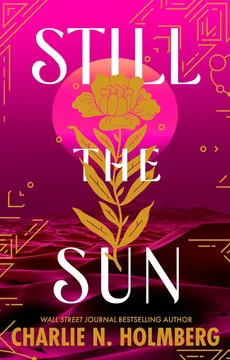


Plot Summary
A Stranger at the Door
Pell earns her place in Emgarden by digging graves, wells, and furrows, while salvaging ancient metal that most villagers would rather melt down. At Entisa’s funeral, she comforts her grieving friend Salki and takes Casnia, Salki’s dependent, to the alehouse. Later, a stranger named Moseus appears at Pell’s home during the mist.
He knows her name and calls her an engineer, then asks her to repair the machines inside the supposedly sealed tower. Pell accepts the chance to study intact ancient technology. Inside, she meets Heartwood, Moseus’s guarded companion, and sees the first enormous, broken machine. Moseus promises scrap metal for success, but demands secrecy and mist-bound visits.
Pell’s practical work is also her way of belonging: she makes herself useful where death, thirst, and food shortages threaten everyone. The tower offers a different kind of usefulness, one that could improve the village rather than merely keep it alive. Moseus’s rules complicate that promise from the start. His secrecy turns engineering into a private contract, while Pell’s willingness to accept reveals how strongly she craves both knowledge and the sense that something in her unfinished life might finally fit.
Scrap Becomes a Promise
Pell studies the first machine, then rigs a turning handle to make it move. Its gears grind and produce a brief tone, enough to earn the promised scrap metal. She gives the metal to blacksmith Arthen, who uses it to make tools and begins building Pell’s water-carrying rover. Meanwhile, a farmer gives Pell an intact circular artifact.
By tracking its shadow, Pell realizes it is a sundial, evidence that the sun once moved across the sky. Strange flashes interrupt her work: machine parts scattered across the floor, a cut hand, and hands tending the wound. At home, a spill exposes a hidden compartment containing a small, oddly assembled device marked with the symbol Pell designed for her own inventions.
The first repair links private curiosity to public benefit: Pell’s bargain feeds Arthen’s forge and makes a useful invention possible. But the visions and hidden device unsettle the neat distinction between ancient technology and Pell’s own work. Her personal mark suggests a connection she cannot remember, while the sundial quietly challenges the village’s assumptions about time and the world. Knowledge arrives not as a clean explanation but as a set of material clues that Pell must test with the same patience she brings to a stubborn mechanism.
The Garden Beyond Mist
When Casnia disappears after an argument, Pell joins the search and climbs the tower to scan the surrounding desert. Heartwood offers to search too, even though his keepers have insisted on remaining unseen. Salki and Pell eventually find Casnia outside Emgarden, distressed and repeating that something is empty.
Afterward, Pell follows Heartwood into a hidden canyon, where she discovers a carefully tended garden and a warm spring. Heartwood pulls her from the deep water when she slips in. He allows her to stay but asks her to protect the garden’s location. Pell notices that his health improves there, and later sees mist rising from the mountains to the distant sound of a faint mechanical tone.
The rescue establishes that Pell’s loyalty is not limited to machines: she searches because Casnia’s safety matters to Salki and to the fragile village. Heartwood’s unexpected help makes his secrecy less simple, and the garden gives Pell a glimpse of care that is patient rather than utilitarian. Its abundance also sharpens the contrast with Emgarden’s scarcity. The mist’s tone hints that the landscape itself may be engineered, while Heartwood’s recovery suggests his private refuge is not merely beautiful. It is part of how he survives.
The Fist in Steel
Pell discovers a fist-shaped dent in one of the broken machine’s struts, then confronts Heartwood. He admits that he broke the machine because its work took Pell away from him, but refuses to explain further. After he leaves, Pell finds a missing gear tucked into a tree in his garden. She installs it in the second machine, which shifts aside to reveal a concealed lift.
The lift carries Pell to a complete fourth machine, and the moving structure exposes a fifth level behind a curtain of silvery liquid. Across the machinery, Pell finds the symbol she invented for herself. She concludes that the five machines connect into one vast device, and that her strange flashes may show events beyond her present understanding.
The dent converts suspicion into evidence, but Heartwood’s confession makes the evidence emotionally harder to interpret: he acted from attachment, not simple sabotage. The hidden gear then turns the tower into a puzzle with Pell’s own marks embedded in it. Her engineering skill opens doors, yet every discovery increases her dependence on memories she cannot trust. The machines are not only objects to repair; they have become an external structure for reconstructing a self that feels incomplete.
Gods in the Garden
Pell’s visions help her rebuild the third machine, and she sees that Heartwood bears raised, tree-like markings across his back. In the garden, he finally tells her that he and Moseus are gods, and that he came to Tampere searching for his sister, Ether, who is trapped beyond the amaranthine wall. The tower may open a way to her.
Heartwood also explains that he has lost much of his strength on this world. As Pell explores the fifth machine, she sees landscapes reflected in his green eyes and recognizes that the tower’s linked mechanisms were designed to work together. Her fascination with the work now carries a personal cost: every repair draws her closer to Heartwood’s grief and to the history he withholds.
Heartwood’s revelation recasts his reserve as the behavior of someone stranded between duty and grief. His diminished power complicates the usual fantasy equation of divinity with control: he has status, but not the freedom or strength to act as he wishes. Pell, meanwhile, has to decide whether extraordinary claims deserve trust when she has no framework for testing them. Her choice to keep working is not naïveté so much as a commitment to the concrete evidence before her: a hidden lift, linked machines, and a wall that might be breached.
A Love Misremembered
Memories surface in fragments: Pell and Heartwood once argued over the machines, shared a kiss, and built a close bond. She asks him whether they loved each other, and his response confirms what the vision suggested. Heartwood also says she betrayed him and Moseus by taking machine parts, though Pell cannot remember doing so.
She reveals the handmade light device hidden beneath her floor, but Heartwood does not recognize it as tower machinery. A dream then leaves Pell afraid that Moseus may have caused her memory loss. She writes a detailed account of what she remembers and hides it at home, determined to preserve the truth if her mind fails again.
Pell’s recovered affection does not erase the accusation; it makes the uncertainty more intimate. She has to hold two incompatible accounts of herself at once, one that remembers devotion and another that may have harmed the people she loves. Writing becomes a form of self-witness, a way to resist both magical interference and the temptation to accept a convenient explanation. The scene also shifts romance away from simple recognition: Pell and Heartwood must confront the possibility that love survives an injury without automatically resolving its consequences.
Entisa’s Buried Key
Pell’s suspicion of Moseus deepens, but her urgent work continues. The door concealed behind the second machine has an indentation matching Salki’s brooch, yet the brooch proves to be a copy. Salki remembers that her mother, Entisa, wore the original necklace into the grave. Pell and Salki reopen the burial, retrieve the pendant, and rebury Entisa before the mist lifts.
At the tower, the original key triggers the hidden door, revealing a chamber dominated by a rose-colored crystal made from the same substance as the great wall. The keepers recognize its importance. Pell proposes using the glowing emilies as power, and Moseus agrees to test her idea. When the machine activates, the tower shudders and its upper mechanism turns.
The key is recovered through a morally costly act: Pell and Salki disturb a beloved woman’s grave because the present danger may outweigh the sanctity of burial. Their shared labor makes the theft of the pendant a communal decision rather than Pell’s private trespass. The crystal connects the tower to the wall in a literal way, converting an abstract barrier into a component that can be studied. Yet the machine’s sudden activation changes the stakes faster than understanding can catch up. A working device is not necessarily a safe one.
Casnia Restores the Past
After the tower activates and locks Pell outside, she remembers seeing Moseus drain the life from Ramdinee, the baker who died suddenly a year earlier. Casnia presses a hand to Pell’s forehead, restoring the memories that Moseus had stolen. Pell recalls that she and Emgarden’s people were ancient builders, and that she designed the tower to immobilize the World Serpent and imprison Ruin, a devouring god.
Casnia was Ether, Heartwood’s sister, and created the amaranthine wall at terrible personal cost. Ruin survived by taking Moseus’s form and draining the gods and villagers of power and memory. Pell had hidden a critical gear and a light-making device to prevent Ruin from using the machine, then forgot why.
Casnia’s touch makes memory a shared resource rather than a private possession: the person most often treated as dependent becomes the one who can restore the community’s history. Pell’s past explains her technical instincts, but it does not free her from responsibility. She designed the prison, concealed part of it, and helped create the conditions that now threaten everyone. The revelation complicates the idea of a clean heroic origin. What matters is not that Pell once knew what to do, but whether she can use that knowledge without repeating the old catastrophe.
The Tower Turns Against Them
With night approaching, Pell warns Emgarden that Ruin will regain its full strength and asks the villagers to help break into the tower. Arthen builds a light projectile, and Pell converts her water rover into a vehicle for reaching a distant mist machine.
She redirects its pressurized pipe and fires a stone-filled section at the tower, opening a breach. Inside, the villagers find Heartwood chained beneath the silvery barrier and poisoned with a plant from his garden.
Pell and Maglon free him, but Ruin kills Maglon on the tower roof. Pell’s emily-powered light weakens Ruin only briefly. As Heartwood fights him, Pell dismantles the silvery barrier, then pulls Ruin into its collected pool and holds him under until the Devourer’s strength collapses.
The villagers’ return to the tower is a reversal of their earlier suspicion that Pell’s salvage work wastes scarce resources. The rover and forge tools become instruments of collective survival, and practical craft replaces the individual heroics Pell cannot manage alone. The cost remains real: Maglon dies, and Pell must turn the tower’s protective substance into a weapon by placing herself inside the danger. Her final act is not a technical fix but a physical refusal to let go, matching the stubborn persistence that has defined her quieter work all along.
Stars Return to Tampere
Pell wakes after Ruin’s destruction coughing up the silvery liquid that nearly killed her. Heartwood, burned and weakened, has pulled her from the pool; he has given up his remaining godhood to help contain Ruin in a new crystal prison. The tower’s lights must stay on, so the villagers begin guarding the chamber.
Outside, the World Serpent leaves Tampere, the ground settles, and night returns for the first time in generations. Pell recognizes the stars above Emgarden. Casnia remains unconscious, and Maglon’s death leaves the village grieving, but Heartwood asks Pell to take him to his sister. She promises to help summon the surviving gods, build a beacon, and eventually find a way through the wall to the city their people left behind.
The ending restores ordinary time without pretending that restoration means repair. Stars and night return, but the prison is temporary, Casnia may not wake, Maglon is gone, and Heartwood has surrendered the power that once defined him. Pell’s promise to build a beacon extends the story’s central ethic: survival depends on making and maintaining things together. Her future with Heartwood is therefore neither a retreat from public responsibility nor a reward after danger. It is a partnership formed in the knowledge that the work continues.
Analysis
Still the Sun makes engineering its central metaphor without reducing it to cleverness. Pell’s work has consequences beyond discovery: a repaired windlass can ease labor, a rover can carry water, and a hidden gear can expose a passage. The story insists that knowledge becomes ethical when it changes how people live, and that technical skill alone cannot determine what should be built or activated. Pell’s inventions repeatedly require judgment, cooperation, and attention to costs.
Memory gives the novel a second machinery. Pell’s visions arrive as partial evidence, and her account of herself changes as each fragment finds its place. The reader experiences the same instability: early facts remain true, but their meaning shifts. The handwritten record is an especially important counterweight to supernatural memory loss. It is not perfect knowledge, but an act of care by one version of Pell for another.
The romance between Pell and Heartwood develops inside this uncertainty. Affection does not excuse his withholding, and Pell’s lost past does not erase the harm of forgetting him. Their relationship becomes credible through the work of recognition: he must let her ask, and she must choose him again with incomplete knowledge. Their bond is therefore neither fate alone nor a clean restoration.
Finally, the return of night is both liberation and danger. The world recovers movement, stars, and a more complete sense of time, but the new prison can hold only temporarily. The ending refuses the fantasy that one sacrifice solves history. Pell and her companions inherit unfinished labor, diminished bodies, grief, and the possibility of rebuilding. Hope is not certainty here. It is the decision to keep making things together.
Review Summary
Reviews for Still the Sun are generally positive, averaging 3.97/5. Many readers praise Holmberg's imaginative worldbuilding, compelling mystery, and slow-burn romance. Common criticisms include a slow first half heavy with machine/engineering details, with the story's payoff concentrated in the final third. Fans of the author remain loyal despite mixed feelings, while newer readers occasionally struggle to connect with the protagonist, Pell, or visualize the world. Most agree the plot twists and final revelations make the journey worthwhile.
People Also Read





Characters
Pell
Emgarden’s stubborn engineerPell is a small, strong, practical woman whose work ranges from digging graves and wells to studying broken ancient machines. She is inventive but not detached: she measures her worth by whether she can make life easier for people such as Salki and Casnia. Scarcity has taught her to defend every piece of metal, while her curiosity keeps pushing her toward risks she cannot fully understand. Pell dislikes public displays of grief and often uses work to control difficult feelings. Her bluntness can become impatience, especially when others obstruct her projects, yet she is generous with time and effort. She is driven by the sense that something in her life is incomplete, and by the belief that patient, practical labor can close the gap.
Heartwood
The guarded tower keeperHeartwood is Moseus’s companion, a tall, pale man with green eyes and elaborate braids. He is physically imposing, but his emotional life is difficult to conceal: grief, frustration, and tenderness often show through the reserve he tries to maintain. His care for a secluded garden reveals a patient, attentive side that contrasts with his forbidding manner in the tower. He is wary of outsiders and protective of the work, but Pell’s presence unsettles those defenses. Their connection develops through shared labor, clashes, and acts of trust rather than easy agreement. Heartwood’s defining tension is between a demanding mission and a longing for closeness, a conflict that makes his silences as consequential as his actions.
Moseus
The measured keeperMoseus recruits Pell to repair the tower and sets strict limits on what she may share or investigate. He presents himself as a peacekeeper, controlled in speech and devoted to meditation, and seems to regard privacy as a form of protection. His physical frailty and urgency suggest that the mission weighs heavily on him, though he reveals little about its full nature. Moseus values order and restraint, but his reluctance to explain the machines forces Pell to work without essential context.
Salki
Pell’s steadfast friendSalki is a hardworking farmer and Pell’s closest friend. She is devoted to her mother, Entisa, and to Casnia, whom she cares for as family. Her grief does not make her helpless; she returns to the fields because usefulness gives her structure, even when she needs companionship more than she admits. Salki supports Pell’s ingenuity while understanding the practical costs of sacrificing farming tools. Her patience and loyalty create a moral anchor for Pell, who often acts first and only later recognizes the strain her choices place on others.
Casnia
The color-minded artistCasnia is an adult with a childlike way of communicating, cared for by Salki and warmly included by Pell. She draws people and places in vivid, idiosyncratic colors, often noticing details others overlook. Her speech can be brief or difficult to interpret, but her drawings and gestures carry meaning of their own. Casnia is sensitive to disruption and can become distressed when overwhelmed. The community’s tendency to protect her can obscure her agency; her unusual perception is not simply a limitation, and her art gives her a distinct way to participate in the world around her.
Arthen
Emgarden’s blacksmithArthen is the village blacksmith, a practical craftsman who must weigh every scrap of metal against urgent needs for farm tools. He and Pell argue over the value of preserving ancient artifacts, but he respects ownership and repeatedly helps her turn ideas into working objects. His humor and persistence soften his gruffness. Arthen is proud of his forge and impatient with unfinished projects, yet Pell’s confidence in him draws out his generosity and technical ingenuity.
Maglon
The alehouse’s steady heartMaglon runs Emgarden’s alehouse, where villagers gather to mourn, argue, and rest. He is sociable without being careless, protective of confidences, and quick to stop disputes from becoming cruelty. His quiet fairness makes him a stabilizing presence in a community where everyone knows everyone else’s troubles. Maglon offers Pell a place to belong beyond the workshop and fields, and his instinct is to help without demanding that gratitude be performed.
Amlynn
The village doctorAmlynn is Emgarden’s doctor, attentive to both bodily danger and the anxieties people try to hide. She watches Casnia when Salki needs help and treats Pell’s injuries without fuss. Practical and observant, Amlynn knows how much the village depends on fragile tools and shared labor. She does not need to understand every mystery before responding to the person in front of her.
Entisa
Salki’s beloved motherEntisa is Salki’s mother, a kind, quiet elder who supported Pell’s interest in ancient machines. Her death opens the story’s first grief and leaves behind objects whose significance Pell has not yet understood.
Ramdinee
The absent bakerRamdinee was a baker and builder, remembered for her kindness and for believing in Pell’s inventions. Her sudden death left a practical and emotional absence in Emgarden, especially for Salki and Pell.
Frantess
The impatient farmerFrantess is a farmer who argues that scarce metal should be turned into tools people need immediately. Her clashes with Pell express a genuine community dilemma: preserving old technology may promise a better future, while crops must be tended today.
Balfid
A village farmerBalfid is one of Emgarden’s farmers and a familiar presence at the alehouse and in the fields. His practical outlook reflects the village’s dependence on labor, water, and reliable tools.
Gethnen
A field handGethnen is a farmer in Emgarden who helps with the search for Casnia and the work of the fields. Like the other villagers, he must balance curiosity about ancient finds with the immediate demands of survival.
Ruin
The devouring powerRuin is a destructive figure in the world’s religious lore, associated with consumption and the danger of unchecked power. The possibility that such a force might affect ordinary life gives the villagers’ myths a practical edge. Ruin’s presence is linked to the story’s questions about what must be contained, what can be sacrificed, and whether destruction can ever be balanced by creation.
Plot Devices
The tower engine
A five-part prisonThe tower houses five enormous mechanisms linked into a single machine. Pell first encounters them as broken artifacts, then discovers hidden passages, a lift, and connections between the levels. The machinery ultimately links to a crystal chamber and affects the movement of the world itself. Its layered structure makes the tower a physical mystery that Pell can solve through observation and repair, while its original purpose binds engineering to the ancient conflict at the heart of the story.
Emilies and the sundial
Nature marks hidden timeEmilies are glowing flowers whose deep roots make them useful for cordage and, as Pell discovers, a source of power. A recovered sundial suggests that the sun once moved, contradicting Emgarden’s settled sense of time. Together, these clues connect the village’s strange landscape to the ancient mechanisms and give Pell practical tools for understanding how the tower can be activated.
Pell’s broken memories
Clues across lost livesPell experiences vivid fragments that seem to show injuries, machine configurations, and moments with Heartwood. They first appear like fatigue or madness, but later help her repair mechanisms and recover experiences erased from her mind. Her own maker’s mark, a handwritten record, and Casnia’s distinctive way of communicating provide different kinds of evidence. The device turns memory into a mystery Pell must test rather than simply trust.
Amaranthine and acetic silver
Barriers become weaponsAmaranthine is a rose-colored, nearly indestructible substance used in the wall and in the tower’s hidden crystal chamber. Acetic silver forms a liquid-like barrier around the upper machine and can injure divine beings. Both substances first appear as baffling parts of the setting, then become central to access, containment, and Pell’s final attempt to stop Ruin. Their properties force Pell to turn objects designed to hide or protect into tools for action.
About the Author


Download PDF
Download EPUB
.epub digital book format is ideal for reading ebooks on phones, tablets, and e-readers.








