

Plot Summary
The Stone Turns Cold
Enna Rydar lives on the edge of Fendell with her father, Anchal, whose mind was damaged when he entered the monster realm to steal a protective charm for her. The Telling Stone on Enna's wrist warns her when mystings approach, and she prepares their house with plants and salts that repel them.
When a gobler breaks through the wards and grabs for the stone, Anchal's old swordsmanship briefly returns: he kills it before it can reach Enna. The creature leaves a dark mark on her arm, however, and the charm warns that another gobler is near. Enna understands that her carefully contained life has changed. The danger has found her home, and its interest in the charm remains unexplained.
The opening makes protection inseparable from inheritance. Anchal's sacrifice has kept Enna alive, but it has also tied her to the object that brought danger to their door. His sudden clarity during the attack gives their relationship a sharp emotional edge: the father who needs her care is also the person who can still defend her. Enna's habit of recording mysting lore offers a second kind of defense, knowledge in a village that dismisses her warnings. The gobler's mark makes the threat personal and enduring, while the charm's mysterious value turns a private safeguard into the story's central liability.
Gold Instead of a Kiss
With another gobler approaching and Anchal unwilling to abandon the family graves, Enna chooses a dangerous alternative to flight. She draws a summoning circle in the wildwood and calls a creature she cannot identify. The narval names himself Maekallus and agrees to hunt the gobler, but demands a kiss as payment.
Enna's grandmother's notes warn that narvals can take souls through a willing kiss, so Enna refuses and offers her father's war medals instead. Maekallus accepts the gold, sealing their bargain with matching cuts across their palms. Enna expects a straightforward exchange: a monster removed, a payment made. The cut, however, will not heal, and the gobler threat is not a single creature she can safely dismiss.
Enna's bargain shows both her courage and the limits of her expertise. She can recognize the danger in Maekallus's demand, but she believes that a careful substitute payment will keep the encounter transactional. Her decision is not recklessness for its own sake. She has a vulnerable father, no hired swordsman, and little time. The gold medals also carry Anchal's history into a new conflict, making the family sacrifice part of the price. Maekallus's easy acceptance unsettles the expected rules of exchange. The cut binds their promise physically before Enna understands what a supernatural contract can make of either party.
A Bargain Bites Back
Maekallus finds and kills one gobler, but its companion attacks him with a blade made from a creature's tusk. The weapon drives a binding spell into his chest, fastening him to the mortal realm, where the world begins to corrupt his body. Enna finds him reduced to a bubbling, blackened mass and learns that the bargain's unfinished mark is spreading across her own hand.
Maekallus claims she will die if he does, and she believes him. Before returning to the wildwood, Enna asks Tennith Lovess, the kind farmhand she admires, to give her first kiss. Then she kisses Maekallus to save him from the corruption. He heals, but takes a living fragment of her soul, and the binding remains.
The story turns intimacy into a practical but morally loaded act. Enna's kiss with Tennith is a choice she makes for herself, a small bid for a life beyond caregiving and fear. Her kiss with Maekallus has a different pressure: she acts from compassion and from the conviction that her survival is tied to his. The distinction matters because both experiences become entangled in what a kiss can mean. Maekallus's body is restored while Enna is left diminished, and the incomplete binding ensures that rescue does not equal resolution. The scene establishes the novel's central asymmetry: she can give something that he can take, but neither fully understands the cost.
Caisgard's Closed Shelves
Enna tries herbs, silver, and Anchal's enchanted sword against the binding, but nothing can cut the red thread anchoring Maekallus. As Maekallus weakens again, she travels with Tennith to Caisgard's vast library, searching for a remedy and briefly meeting scholar Jerred, who is intrigued by her knowledge of a vuldor. The library offers no useful account of the binding or its knife.
Back home, Enna finally asks Anchal what he knows. His damaged memory yields a spell and the shape of a descent circle, the method he used to enter the monster realm years ago. The memory gives Enna a new avenue to test, but not a cure. She returns to Maekallus with knowledge no scholar could provide and no guarantee it will work.
The library sequence contrasts institutional knowledge with lived experience. Enna's observations impress Jerred, yet the collection cannot answer the specific question that threatens her life. Her expertise is real but socially unsupported, and the scene makes clear that access to books alone cannot repair that imbalance. Anchal's fragmented recollection supplies what the library lacks, turning his damaged mind into an imperfect archive of dangerous firsthand knowledge. Enna must draw on both forms of learning without treating either as complete. The spell is useful because it opens a possibility, not because it grants mastery. Her dependence on her father's memories also deepens the emotional cost of keeping him uninformed.
The Stone Commands
Enna's attempts to use summoning circles bring several mystings into the wildwood, and Maekallus fights them when they threaten him. Later, a pack of grinlers corners Enna, the same kind of creature that killed her mother. She calls for Maekallus, and he crosses the binding spell's limit to reach her, fighting the pack until Enna's will drives the attackers away.
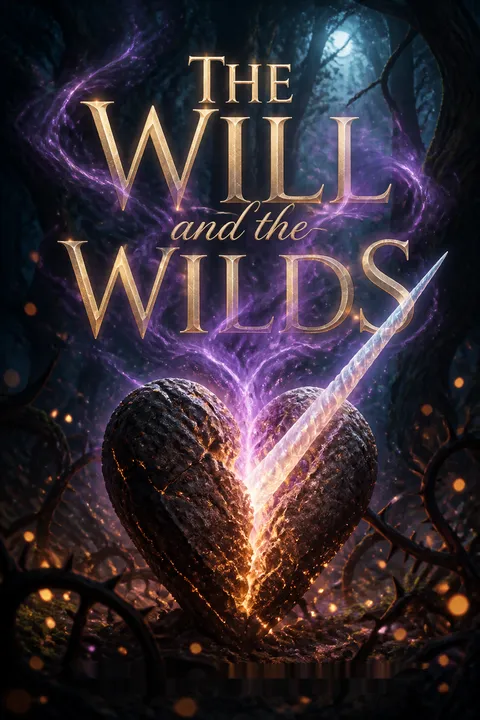
Maekallus realizes that her charm has compelled him, too. He identifies it as the Will Stone, once possessed by Scroud, a powerful orjan who used it to command an army. Anchal's stolen object was never merely an alarm. It can bend the will of living creatures, which explains both the goblers' pursuit and the strange obedience Enna has sometimes received.
The revelation changes the moral meaning of Enna's protection. The charm that seemed to give her information has also shaped other people's actions, sometimes without her awareness. Her instinctive command saves her from the grinlers, but the rescue does not feel like uncomplicated empowerment: the same force that protects can override another creature's agency. Maekallus is both the beneficiary and the evidence of that power. His return beyond the binding's limits also introduces a question that will govern their relationship: when he obeys Enna, is he choosing her, responding to her need, or being controlled? The Will Stone makes that uncertainty concrete.
Attaby Names the Cost
Enna and Maekallus leave his clearing to seek Attaby, a rooter who knows old magic. Attaby cannot break the binding, but explains that the gobler's tusk knife, its wielder's death, or mystium blood could undo it. He also recognizes that Enna has already given up about half her soul. The revelation turns her fatigue, lapses, and emotional numbness into measurable danger.
Maekallus's changing body and feelings suggest that her soul is altering him as well, but neither can say what it will make of him. They return without a solution. At home, Enna finds Anchal growing gravely ill, leaving her to care for her father while continuing to search for the knife and preserve enough of herself to survive.
Attaby gives Enna's private deterioration a language and a limit. Half a soul is not a metaphor for ordinary exhaustion; it is a concrete depletion with consequences for memory, sensation, and identity. Yet the diagnosis does not settle what a soul is or whether it can be restored. Maekallus's transformation complicates the apparent one-way transaction: the fragments are not simply food if they continue to affect his body and behavior. Anchal's illness then forces Enna to divide attention between two dependent lives, sharpening the conflict between duty and self-preservation. The rooter's knowledge is valuable precisely because it clarifies the stakes without removing uncertainty.
The Kiss at Home
As Anchal's illness worsens, Enna becomes exhausted and begins dreaming of the Deep, the red-lit monster realm. She calls for Maekallus, who comes to the house and listens as she admits her fear of losing her father and being left alone. He reveals that the fragments inside him carry memories and feelings he cannot explain.
Enna kisses him again, and another part of her soul passes to him, restoring his body while deepening her own emptiness. Maekallus holds her through the cold and her nightmares, then slips away before morning. He secretly erases the mark that bound their bargain, though Enna still believes her life depends on his survival. When she wakes, her hand is healed and Maekallus is gone.
The domestic setting makes the intimacy more consequential than their earlier exchanges. Maekallus is no longer only a creature needing rescue in the woods; he enters Enna's home, sees her caregiving labor, and shares the fear she cannot safely tell the village. His tenderness is real in its effects, but his hidden decision to sever the bargain preserves a profound imbalance of knowledge. Enna gives another piece of herself under a belief he knows to be false. The scene therefore holds care and exploitation together rather than allowing one to erase the other. His departure leaves her to interpret warmth and abandonment without the facts that would make either response straightforward.
The Bargain Was False
In the clearing, Maekallus tells Enna that the bargain never tied her life to his; he had let her believe his death would kill her so she would keep him alive. Enna confronts him for taking her soul under false pretenses, then uses the Will Stone to restrict his movement again. Back home, she tends Anchal as he slowly recovers.
Tennith visits, still seeking an explanation for her earlier kiss, and Enna accepts his offer to court her. Their next kiss is warm but leaves her feeling more alone, exposing how little of her attention is truly with him. The Will Stone warns that the female gobler has returned, and Enna follows its signal into the wildwood to find the object she was ordered to bring.
The betrayal is not simply that Maekallus lied. It is that he engineered Enna's continued consent by making her believe refusal would kill her. Her anger reasserts a boundary, and using the Will Stone to confine him reverses their usual power relation without repairing the harm. Tennith represents a possible ordinary future, but Enna's hollow response to his kiss shows that social suitability cannot manufacture emotional presence. Her choice to court him is neither a clean escape nor a romantic resolution. Meanwhile, the returning gobler interrupts the personal reckoning with the practical route to freedom, forcing Enna to act before trust can be restored.
Scroud Finds the Trail
Enna controls the female gobler and sends her back to the Deep to steal something belonging to Grapf, the gobler who used the tusk knife. The gobler returns with a vial of his phlegm, enough for Enna's copied scrying spell to reveal his path. It leads her and Maekallus toward a guarded portal ring, where mystings cross between realms.
There Enna sees Scroud, the Will Stone's former owner, and realizes the danger of exposing the charm. She wills him away before he can seize it, then listens as Maekallus scouts the encampment. Scroud's followers are searching the mortal world, and the portal is guarded. Enna decides to approach the gobler herself, since Maekallus's glowing binding thread would expose them.
Enna's use of the Will Stone becomes deliberate, not accidental. She directs the gobler's actions with precision, but her refusal to order its death shows that control has not made her indifferent to the controlled. The phlegm vial converts this morally uneasy act into a usable trail. At the portal, the private crisis widens into a political one: Scroud's pursuit is not merely about recovering property but restoring his capacity to command. Enna's choice to go alone is strategic, since the binding marks Maekallus visibly, yet it also places the physically depleted human in the most dangerous position. Her authority grows faster than her safety.
Grapf's Tusk Knife
Following the scrying trail, Enna finds Grapf and uses the Will Stone to make him drop the vuldor-tusk knife. She drives him away rather than ordering his death, then collapses from exhaustion with the weapon in her hand. Maekallus reaches her and uses the knife to cut the binding thread from his chest.
Free at last, he tells her that restoring her soul may require the Deep. He takes every remaining fragment from her in a kiss, leaving her empty, then carries her to the immortal waters. There he uses the Will Stone and the broken tip of his horn to pin her soul back into her body. Enna wakes in the mortal wildwood with her soul restored, but Maekallus is gone.
The climax concentrates the book's most difficult exchange: Enna achieves the freedom she has pursued, but the act that makes it possible temporarily strips her of selfhood. Maekallus's choice to take the entire soul is both the means of crossing into the Deep and a repetition of the original violation, though this time he intends to return what he takes. The immortal waters and horn give that intention a physical procedure rather than a sentimental promise. Enna's restored soul does not restore the relationship or erase what happened. She returns alive with the consequences intact, and Maekallus's disappearance leaves the moral meaning of his sacrifice unresolved.
Fendell's Last Warning
After Enna returns, Scroud leads dozens of mystings toward her house to reclaim the Will Stone. She warns Anchal and rings Fendell's bell, though many townspeople doubt her. When the army advances, Enna uses the stone to halt it and force the mystings back into the wildwood. The effort burns through her strength, and the Will Stone breaks into pieces in her hand.
Tennith watches from the villagers' defense, then withdraws from her, while the townspeople turn away from the woman who commanded monsters. Enna and Anchal leave their home and the graves on its land. With Jerred's help, they settle in Crake, where Enna begins rebuilding their life and tending a new garden.
Enna's most public act of protection produces a private exile. She saves Fendell from an army, but the villagers interpret the power that saved them as evidence that she is dangerous. The shattered stone makes that judgment costly in material terms as well as emotional ones: Enna loses the instrument that had safeguarded her and shaped her choices. Leaving the family graves also reverses the loyalty that once kept her in place. Jerred's practical help offers a fragile alternative to communal acceptance, while Tennith's withdrawal closes the future Enna briefly tried to choose. Safety is achieved, but belonging is not.
A Soul Given Back
Months later, Maekallus finds Enna in Crake, still a narval and unable to feel the soul she once gave him. Enna tells him she forgives him, then breaks down after he leaves. In her room, she pleads over the Will Stone's fragments, wishing she could forget him or bring him back. The pieces dissolve into her tears.
The next day, the horn embedded in her chest warms and draws her into the wildwood. Maekallus returns, bearing new markings from the melted stone: it has given him a soul. He apologizes without asking her to absolve him, and Enna chooses to take his hand. The horn still marks their difference, but she welcomes him into her world, and they meet again as changed equals.
The ending refuses the idea that forgiveness cancels injury. Enna's forgiveness comes before Maekallus's return, and he explicitly does not demand it as the price of appearing again. The broken stone's transformation also recasts the object that once controlled others: through Enna's grief, its remaining power becomes a soul rather than a command. Maekallus's new humanity is not a simple conversion into an ordinary man; the horn remains, and so does the history between them. Enna's final choice rests on acknowledging difference rather than denying it. Reconciliation becomes possible because neither character can return to the unaltered self who began the bargain.
Analysis
The novel makes knowledge and power uneasy companions. Enna's field book, gardens, and experiments give her real expertise, yet her society discounts her because she is a poor woman living beyond the town's protective center. The Will Stone compensates for that exclusion with overwhelming authority, but it does not offer the same thing as recognition: it makes others obey rather than understand. This distinction is clearest when Enna uses it to save herself and later to repel Scroud's army. Each success costs her trust, safety, or connection.
The soul exchanges turn romance into a problem of consent and consequence. Maekallus's kisses change him, but they also diminish Enna, and his lie about the bargain makes affection inseparable from coercion. The story does not excuse his deception simply because he changes. Enna's anger, withdrawal, and eventual forgiveness remain distinct acts. Reconciliation becomes credible only after Maekallus returns without demanding pardon and accepts that she can judge him.
The book also treats care as skilled labor. Enna tends Anchal's memory, illness, and daily needs while trying to preserve her own future. Her father once protected her through a dangerous theft; later, she protects him while facing a threat he cannot fully remember. Their roles shift without diminishing their mutual love. The final movement toward a new home does not erase grief or make the village fair. Instead, Enna's survival depends on building a life beyond the community that rejected her, while choosing a relationship that acknowledges rather than conceals their differences.
Review Summary
The Will and the Wilds receives mixed reviews averaging 3.91 stars. Many readers praise Holmberg's lyrical writing, well-developed characters, and the Beauty and the Beast retelling featuring Enna and the mysting Maekallus. Fans appreciate the forbidden romance, unique mystings mythology, and atmospheric world-building. However, critics note the fantasy elements feel underdeveloped, the antagonist Scroud lacks depth, and the pacing seems rushed. Several reviewers wanted more exploration of the Deep and mystical creatures. The romance dominates over world-building, making it feel more like romance with fantasy elements than vice versa.
People Also Read
Characters
Enna Rydar
Curious mysting naturalistEnna is a self-taught observer of mystings who keeps her grandmother's research in a handwritten field book. She longs to study at a college and publish work that people will take seriously, but poverty, gender restrictions, and responsibility for her father keep her close to home. Her care is practical: she grows protective herbs, tracks threats, and tends Anchal through his failing memory. Curiosity makes her brave, sometimes before she has enough knowledge to judge the risk. She is also attentive to the agency of others, even when she has power over them. Enna's central tension lies between wanting to understand the wildwood and wanting to keep the people she loves safe from it.
Maekallus
Reluctant soul-bearerMaekallus is a narval, a humanoid mysting with a long horn, hooved feet, and a trickster's ease with bargains. He approaches mortals as potential prey and treats emotion as a temporary sensation to consume, not a bond to honor. Enna's presence unsettles that distance because she studies him closely and refuses to behave as a frightened subject. His wit can disguise cruelty, but also reveals how long he has practiced surviving through manipulation. He is drawn to freedom and resents control, yet becomes increasingly entangled in the consequences of his own choices. His struggle is not simply to become gentler, but to decide what responsibility means when feeling is no longer fleeting.
Anchal Rydar
Broken-minded war veteranAnchal is Enna's father, a former swordsman who fought in the conflict between the mortal and monster realms. He entered the Deep to obtain a charm that could protect his infant daughter from mystings, but the realm damaged his memory. In Fendell he grows mushrooms and relies on Enna to guide him through daily routines. His confusion does not erase his devotion; he remembers danger in flashes and still has the instincts of a trained fighter. Anchal's relationship with Enna is reciprocal: she cares for him, while his earlier sacrifices made her life possible. He also carries knowledge that neither books nor village gossip can supply.
Tennith Lovess
Kind-hearted farm heirTennith is a young farmer who treats Enna and her father with more kindness than most of Fendell does. His attraction to Enna grows from familiarity and admiration, though he has little understanding of the private dangers shaping her decisions. He represents a possible conventional courtship and a life rooted in the village, but his decency does not grant him access to Enna's inner world. Tennith is patient rather than forceful, and his uncertainty around her reflects the limits of what he can know, not a lack of care.
Attaby
Rooter scholar and guideAttaby is an old rooter, a tree-like mysting who prefers the mortal forest and knows its magic better than Maekallus does. He is direct, curious, and not especially troubled by other people's discomfort when he investigates a spell. His familiarity with Enna's grandmother connects current events to an older history of human and mysting bargains. Attaby can name possible remedies and measure the danger of Enna's condition, but he cannot make the crisis disappear. He functions as a guide whose wisdom is valuable partly because he admits the limits of what he can do.
Scroud
Exiled mysting warlordScroud is an orjan of great power and the former owner of the Will Stone. In an earlier attempt to extend his authority into the mortal realm, he used the stone to command mystings and build an army. His ambitions make him a threat beyond Enna's household, while his long search for the lost object shows how much his power depends on possession and obedience. Scroud is less a personal rival to Enna than the political force behind the goblers' pursuit and the danger gathering around Fendell.
Jerred
Persistent field scholarJerred is a scholar Enna meets in the Caisgard library while he investigates supernatural tracks and remains. He is open to evidence that his colleague dismisses, and Enna's description of a vuldor earns his interest. Unlike the town's casual skeptics, Jerred treats her knowledge as potentially valuable even when she cannot name her source. His later practical assistance gives Enna and Anchal a foothold outside Fendell. He represents the possibility of intellectual recognition, but his help does not instantly undo the social barriers Enna has faced.
Grapf
Gobler with binding knifeGrapf is a gobler who carries a knife made from a vuldor tusk and works among Scroud's followers. His weapon can bind a mysting to the mortal realm, making him a central danger despite his limited presence. Unlike the goblers Enna first encounters, Grapf can understand her language and answer questions about his task.
Lunus Mather
Bitter village apothecaryLunus Mather is Fendell's apothecary and a failed student of the supernatural. He is suspicious of Enna's interests and treats her questions with condescension, yet points her toward the Caisgard library when she presses him for information. His limited help shows how knowledge can be both guarded and unevenly distributed.
Elefie Rydar
Lost mother, enduring legacyElefie is Enna's mother, remembered as a strong, beautiful woman who loved the wildwood. Grinlers killed her while she was pregnant, and Anchal rescued the unborn Enna from her body. Though absent from the present action, her death shapes Anchal's grief, Enna's caution, and the family's connection to the forest.
Enna's grandmother
Keeper of forbidden loreEnna's grandmother taught her to observe mystings and left behind a journal of descriptions, remedies, and theories. Her research gives Enna a framework when the village dismisses her warnings, though it cannot answer every question about the monster realm. She also dealt with mystings herself, leaving evidence that cautious cooperation is possible. Her influence persists through the field book Enna continues to revise.
Plot Devices
The Will Stone
Power that bends willsAnchal gives Enna a dark stone set in a silver bracelet, and she initially believes it only warns her when mystings are near. Maekallus identifies it as the Will Stone, once owned by Scroud and used to compel living creatures. Enna's unconscious commands explain why people and mystings sometimes act in ways she does not expect. She later uses it deliberately to control goblers, hide herself, and repel Scroud's army. The stone protects her while raising an ethical problem: its power can remove another being's freedom. Its breaking and later transformation resolve its role as more than a magical alarm.
The Vuldor-Tusk Knife
Binding spell's physical keyGrapf's knife is made from a vuldor tusk and carries mysting blood. When he stabs Maekallus, a red thread binds the narval to the mortal realm, where the realm's atmosphere gradually corrupts him. Ordinary silver and enchanted weapons cannot cut the thread. Attaby explains that the binding can be broken by the knife, Grapf's death, or mystium blood. Enna's search for an object belonging to Grapf gives her a way to locate him without venturing blindly into the monster realm. The knife's material, introduced as a strange weapon, becomes the practical solution to the central supernatural trap.
Soul Exchange
Intimacy with a costNarvals can take a human soul through a willing kiss. Maekallus initially seeks a kiss as payment, but Enna bargains with gold; after he is trapped and begins to perish, she kisses him to save his life. Each exchange transfers part of her soul and leaves her physically and emotionally depleted, while the fragments alter Maekallus's body and feelings. The exchange makes affection difficult to separate from survival, consent, and manipulation. Its rules also enable the journey into the Deep and the eventual return of Enna's soul. The device binds romantic closeness to a tangible consequence rather than treating it as a harmless symbol.
Herbal Wards
Homemade defense against mystingsEnna grows plants such as oon berry, lavender, and tusk nettle, and uses red salt to guard her home and blunt certain mysting marks. These defenses show the practical knowledge she has built from her grandmother's notes and her own observations. They are useful but imperfect: the first gobler crosses the barriers, and no herb can remove Maekallus's binding spell. Their limits prevent Enna's expertise from becoming an easy solution while still grounding the fantasy's magic in repeatable, concrete practices. The garden also embodies her wish to study the wildwood without surrendering to it.
Circles and Scrying
Doors, summons, and trailsEnna uses circles drawn with overlapping squares and an enclosing ring to summon mystings or test a descent between realms. Fire can activate a summoning circle, while blood makes a stronger offering. The scrying spell she copies in Caisgard needs an object connected to its target; a vial carrying Grapf's phlegm allows it to show his path. A portal ring later serves as a more permanent passage for multiple mystings. Each magical diagram solves a different problem, and their distinct rules keep Enna's investigation dependent on observation, preparation, and risk.
About the Author


Download PDF
Download EPUB
.epub digital book format is ideal for reading ebooks on phones, tablets, and e-readers.








