


Plot Summary
The Tower Turns to Ash
Rone and Sandis are fleeing the Lily Tower when Kazen summons Kolosos, a towering, bull-faced numen that tears the sanctuary apart. Sandis sees the monster’s vessel and recognizes Anon, her brother, missing for four years and presumed drowned. Before she can reach him, Kolosos advances.
Sandis summons Ireth, her fire horse, and blasts the demon long enough for Rone to carry her unconscious body into hiding. The attack destroys the tower and leaves Dresberg trembling. When Sandis wakes, she admits Anon was inside the monster, while Rone reports that Kolosos has vanished for now. Her brother is alive, but still in Kazen’s hands.
The attack makes private loss visible on a citywide scale: Sandis finds her brother, but only as the captive instrument of a catastrophe. Her first response is not strategic calculation but recognition, and that recognition briefly endangers both her and Rone. Rone’s decision to carry her away turns love into practical care, while her costly burst of fire shows that survival in this story is never cleanly separated from bodily risk. The tower’s destruction also removes the apparent safety of religious authority before Sandis has learned what that authority conceals.
A Whale for Bastien
In Kazen’s abandoned lair, Sandis works out that Kazen likely chose the Lily Tower for revenge against the church. Etchings of an astral sphere suggest that Kolosos has an opposing force, and Ireth’s pressure in her mind points her toward a hidden name. Sandis persuades Bastien, a fellow former vessel, to risk hosting a level-eight numen despite his clearance for only sevens.
After she binds him to herself with their blood, she summons Mahk, an enormous whale that fills the summoning room. The creature survives on dry land, and its blood allows Rone to mark Bastien for future use. Sandis’s discovery gives them a potential ally just as the city faces another attack.
The choice to bind Bastien turns friendship into a negotiated exposure to danger. Sandis has the knowledge to act, but not certainty that her interpretation is right; Bastien’s consent therefore matters as much as her occult skill. Mahk’s absurd mismatch with the cramped lair complicates the usual fantasy logic of power as immediate usefulness. The whale looks unwieldy, yet its presence broadens the group’s options. Sandis is beginning to lead through inference and trust rather than simply following Kazen’s commands.
The Cathedral Burns Again
Before Bastien can recover, Kolosos returns and attacks the cathedral. Sandis and Rone cross the rooftops toward Kazen, while soldiers’ gunfire fails to slow the monster. Sandis fires at Kazen but hits Kolosos instead, exposing their position and forcing them to flee a collapsing building.
When falling rubble traps their route, Sandis summons Ireth again; the blast clears the debris but leaves her unconscious and badly depleted. Rone carries her back to the lair, where she meets Jachim Franz, a scholar of Noscon history who witnessed her flare of power. Jachim’s fascination with the occult brings them to the attention of Dresberg’s rulers, who summon the group to help defend the city.
Sandis’s attempt to strike Kazen marks a shift from escape toward direct resistance, but the miss exposes the limits of courage without reliable knowledge. Her repeated summoning saves lives while making her body less dependable, so power becomes a resource with a visible cost. Jachim’s arrival brings a different kind of danger: he sees Sandis as evidence to investigate, not merely a person to protect. The authorities’ summons grows from that encounter, making their alliance with the fugitives a consequence of desperation rather than trust.
A God in the Diagrams
At the Degrata, Sandis, Rone, and Bastien meet Triumvir Var, the Angelic, General Istrude, and Oz, Bastien’s former master. The council learns that Kazen uses Rone’s amarinth, a device that grants its bearer a brief span of invulnerability, to bring Kolosos into the world. Sandis argues that the Celestial may be a numen too, pointing to the astral sphere she found in Kazen’s office.
The priests recoil, but the council authorizes an excavation where Rone first found his amarinth. In a flooded Noscon chamber, Jachim uncovers tablets and a broken gold loop. Sandis feels Ireth react to it, and Jachim suspects the inscriptions explain how amarinths are made.
The council scene places knowledge inside a contest over legitimacy. Sandis’s evidence threatens Celesian doctrine, while the government immediately translates the same evidence into military advantage. Rone’s account of the amarinth gives the artifact a practical history, but the broken prototype suggests a deeper cost behind its power. Jachim’s scholarship can illuminate the past, yet the council’s urgency risks turning discovery into another form of extraction. Each institution wants an answer, though none has yet asked what the answer might demand of a person.
The Door Opens Wrong
Jachim deciphers enough of the tablets to conclude that an amarinth is created at the instant a human and numen are joined, and that the same process may kill a numen. Sandis decides to become the offering needed to make one, believing it could help defeat Kolosos. Rone objects, but Bastien discovers her plan and wakes him before it is complete.
Rone bursts into the basement as Sandis begins the ritual; a flash of light opens a portal and pulls him away. The interrupted summoning leaves Sandis alive, but Jachim thinks Rone has been sent to the ethereal plane. Sandis refuses to try again until she knows whether she can bring him back.
The failed ritual exposes the conflict between Sandis’s self-sacrifice and Rone’s insistence that her survival has value beyond its usefulness to others. Bastien intervenes because he has learned that silence can enable disaster, even though his warning brings its own cost. The portal’s sudden appearance transforms a planned sacrifice into an unintended separation. Sandis is left alive but bereft, while Rone’s attempt to save her removes him from the world where his choices could have meaning. Rescue itself becomes a rupture.
Rone Beneath the Stars
Rone wakes on the star-glass expanse of the ethereal plane, pursued by a numen until Ireth guides him to safety. The fire horse reveals that Rone is the first living human he has encountered there and teaches him to draw water through the plane’s shifting boundary. Rone learns that the place has no ordinary food or drink, so survival requires him to reach into the mortal world without exhausting himself.
Meanwhile, Sandis recovers from her failed summoning and begins studying Noscon history with Jachim, hoping knowledge might lead her back to Rone. Their separation now has a physical rule: she cannot simply summon him home, and he must find a way to endure where he is.
Rone’s survival depends on accepting help from a being he once understood only as a weapon. Ireth’s lesson makes the ethereal plane less a mystical abstraction than a hostile environment with material needs. Sandis’s turn to history parallels Rone’s adaptation: both try to understand a system that has controlled them, but their methods differ. He learns through bodily experiment; she searches through records. The separation tests their bond without reducing either character to helpless longing, since each begins acting on the limited knowledge available.
Kaj’s Forgotten Crime
As Rone presses Ireth for answers, the fire horse explains that he was once human, one of the ancient Noscons who inhabited the land beneath modern Kolingrad. Kolosos was once Kaj, a sorcerer whose pursuit of immortality trapped his people in the ethereal plane and gradually changed them into numina.
Rone recognizes that Sandis’s instincts about the astral sphere were pointing toward a buried history, not merely a rival god. He learns that Kaj is still connected to the mortal world through the amarinth and its vessel. If Kaj succeeds in merging the planes, both worlds may be destroyed. Rone must find allies among the numina before Kaj’s next move.
The revelation recasts the numina from supernatural outsiders into people altered by an ancient human project. That history makes Kaj’s power more disturbing, not less: his monstrous form grew from a choice to evade mortality at any cost. Ireth’s memory is incomplete, showing how long captivity can erode identity. Rone, meanwhile, has to revise his moral categories. The beings he feared are possible allies, and the apparent god he might have trusted is implicated in a history of coercion.
Kazen Crushed by Kolosos
When Kolosos attacks again, Kazen struggles to command it. The monster finally breaks his control, crushes him, and continues its rampage without a summoner. Sandis and Bastien flee Oz’s planned assault to find Kuracean, the numen bound to Rist, who had been forced back into captivity.
Sandis summons Mahk and uses the whale’s bulk to pin Kuracean down, then speaks the release spell that returns Rist to human form. Mahk can fly and spray water, but its attack only briefly cools Kolosos before the monster wounds it and vanishes. Sandis brings the burned Bastien and exhausted Rist back to the authorities. Kazen is gone; the danger has become harder to control.
Kazen’s death removes the human antagonist but not the violence he set in motion. The scene refuses the comforting assumption that destroying a tyrant automatically restores order: Kolosos becomes more dangerous precisely because its control has broken. Sandis’s rescue of Rist also complicates her role as a leader. She risks Bastien’s body and Mahk’s strength to save someone who may not welcome her intervention. The result is survival without reconciliation, and victory without an intelligible end.
Gold Calls the City
Kolosos returns without Kazen and begins gathering gold, placing captured civilians on a glowing plate that strips away their resistance. The government answers by tightening its control over the remaining vessels and ordering citizens to keep working.
Sandis, Rist, and the injured Bastien decide to escape Triumvir Var’s house before they are used again. They set a small fire as a diversion, then follow the mindless gold collectors through the damaged districts.
Arnae Kurtz, Rone’s former fighting instructor, explains that the collectors are carrying gold toward the city’s compass points. Sandis realizes the monster is constructing pillars, though she does not yet know what they will do. The Riggers, led by Sherig, are organizing civilians where the government has failed.
Gold shifts from a symbol of wealth to a technology of control. Kolosos does not simply destroy the city; it reorganizes its people into tools for a purpose they cannot understand. The government’s response echoes that coercion by treating vessels and workers as resources. Sandis’s escape is therefore both tactical and ethical: she refuses to let the state claim ownership of her body, even while she knows the city needs help. Sherig’s local network offers a competing model of order built from mutual aid.
A Brother in the Ashes
Following the monster’s scorched path, Sandis and Rist search abandoned flats until they find Anon alive, starving and hidden in a burned-out building. Before they can escape, the amarinth begins to glow and Kolosos is summoned again. Rist pulls Sandis from the building, but she binds him to Kuracean so the numen can shield them.
Oz arrives with other vessels and summons Ireth into Sandis, allowing her to see Rone across the divide. Rone explains that Kolosos is building corresponding pillars in the ethereal plane and intends to merge the worlds. They agree to strike together the following night. Sandis now knows Anon is close, but the next battle may leave no chance to save him.
Finding Anon makes the central conflict intimate again, but reunion offers no easy relief: the brother Sandis sought is physically present and still caught inside the mechanism that threatens everyone. Her decision to bind Rist shows how far she has moved from treating control as a simple good or evil. She uses it under pressure, with his consent and for immediate protection. The brief contact with Rone restores shared purpose, yet it also sharpens the cost of the coming battle by making their separate fronts part of one plan.
The Numina Remember
Ireth guides Rone through memories that show how Kaj’s experiments created the amarinth and trapped the Noscons in the ethereal plane. Rone learns that his mortal touch can break the bonds joining numina into pillars, so he begins dismantling them while Ireth, Isepia, Drang, and other remembered spirits distract Kolosos.
The work is dangerous and leaves Rone burned, hungry, and exhausted, but it draws more numina to their side. They speak the name Hepingya, the figure Ireth believes may oppose Kaj. In Dresberg, Sandis and the survivors identify the same pillars and persuade the government to work with Sherig’s Riggers. Both groups prepare to attack at midnight, though they have no reliable way to coordinate once the battle begins.
Rone’s mortality, initially a liability in the ethereal plane, becomes the one quality that can disrupt Kaj’s constructions. The reversal is precise: the human body that cannot match a numen’s power can still touch and separate what spirits cannot. Meanwhile, the Riggers’ inclusion recognizes that survival depends on social knowledge as well as supernatural force. The two campaigns develop in parallel, joined by Sandis and Rone’s bond but separated by the worlds’ boundaries. Their cooperation is an act of trust without the comfort of direct communication.
The Angelic Pays the Price
Before the final assault, the Angelic summons Sandis to a church and reveals that he is bound to Hepingya, the Celestial of Celesian faith. He admits that the church concealed the truth about vessels and that the Angelic mantle has passed through generations by a deadly ritual.
Knowing Hepingya has fallen in the ethereal battle, he chooses to sacrifice himself so Sandis can form a new amarinth from the moment of their bond. Sandis accepts the task and receives the gold device, though its creation costs Rone’s father his life. Back in Dresberg, she joins the evacuation and the coalition of soldiers, vessels, and Riggers. She heads toward Kolosos carrying the power needed to reach it.
The Angelic’s confession turns religious authority from a distant institution into a relationship burdened by inherited secrecy. His admission does not erase the harm done to Sandis, but it gives her the truth she was denied and lets her judge what to do with it. His sacrifice differs from Sandis’s earlier impulse to die because he offers his choice openly and entrusts her with its consequences. The new amarinth is therefore both weapon and inheritance, carrying an ethical obligation rather than a promise of easy power.
Two Worlds Strike Back
At midnight, Kolosos descends at the Innerchord as soldiers and civilians fight its mind-controlled servants. Oz sends the surviving vessels against the monster, while Rone leads the numina against the growing epicenter in the ethereal plane. Their attacks barely slow Kaj. Rone finally pushes through the boundary between worlds, striking Kolosos from above.
From a rooftop, Sandis uses the Angelic’s amarinth to summon Ireth and dives through the monster’s mouth. Inside, she finds Anon beside the spent amarinth powering Kolosos. She tears its glowing core free, destroying the device. Kolosos splits apart and dissolves. Rone falls through the opening between planes and catches Sandis before she hits the ground.
The climax makes victory depend on complementary forms of access: Rone can cross the boundary because he is mortal, while Sandis can enter the monster because the amarinth sustains her bond with Ireth. Neither character can finish the task alone. Sandis’s entry into Kolosos’s body is also a stark reversal of her history as a vessel: she chooses the risk and directs the power herself. Extracting the core ends Kaj’s assault, but it also destroys the mechanism that has kept Anon trapped and places Sandis’s own body at the edge of collapse.
A Road Beyond Dresberg
The Noscons emerge as spirits after Kolosos falls, and Sandis recognizes Ireth among them. Anon is alive beneath the ash, though weakened by repeated summonings. Rone receives the Angelic’s amarinth and learns his father’s final message; Bastien chooses to remain in Dresberg and study with Jachim, while Rist sets out for Serrana alone.
Sandis, Rone, and Anon use their bonds to enter the now-quiet ethereal plane, cross the Fortitude Mountains, and emerge in Godobia. There they find Rone’s mother, Adalia, and begin a life beyond the siege. Dresberg is left to rebuild, and the siblings must recover from years of separation. The escape offers no erasure of loss, but it gives them room to live without masters.
The ending resolves the immediate danger without pretending that survival restores what was taken. Anon is alive but physically depleted, Dresberg is damaged, and Rist’s departure reflects grief that cannot be folded into the protagonists’ reunion. Bastien’s decision to stay gives him a future defined by learning rather than service. For Sandis and Rone, travel through the ethereal plane turns a former prison into a chosen route. Their homecoming is not a return to the past but a chance to build a life beyond its coercive structures.
Analysis
The novel’s central conflict is not simply between a city and a monster. It is between people who claim the right to use other lives and those trying to recover choice. Kazen treats vessels as instruments; the triumvirate repeatedly considers them military resources; even Sandis’s first instinct is to offer herself up if it might save everyone. The story distinguishes these forms of control by asking whether a person can refuse, understand the cost, and choose for themselves.
Its most important reversal is the discovery that the numina are not alien creatures but people transformed by Kaj’s attempt to escape death. This makes the supernatural conflict historical rather than absolute: the monster was once human, and the sacred order has grown around fragments of a catastrophe it concealed. Ireth’s damaged memory and the church’s guarded doctrine show how institutions inherit power while losing, or suppressing, the knowledge that might make that power answerable.
The paired journeys of Sandis and Rone dramatize different kinds of agency. Sandis must learn that survival is not selfish and that compassion does not require obedience. Rone’s mortal limitations, meanwhile, become useful because his touch can break bonds the numina cannot undo. Their partnership succeeds not because either can dominate the crisis, but because each can reach what the other cannot.
The ending offers escape rather than restoration. Dresberg remains damaged, the survivors carry lasting injuries, and Rist chooses a separate road. Yet the freed Noscons, Anon’s recovery, and Sandis and Rone’s departure suggest that a future can begin without pretending the past was repaired. The book’s hope is practical: people can inherit a broken world without inheriting its old arrangements of ownership.
Review Summary
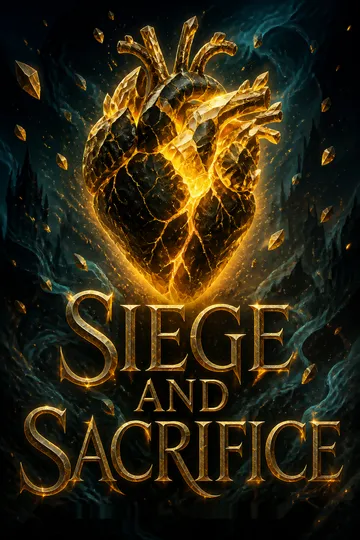
Siege and Sacrifice, the final book in Charlie N. Holmberg's Numina trilogy, receives mostly positive reviews with a 4.24 rating. Readers praise the fast-paced action, satisfying conclusion, and extensive world-building that explains the origin of the Numen. Many appreciate the character development, particularly Sandis and Rone's relationship, and the creative magic system. The lore and religious elements fascinate readers. Common criticisms include rushed pacing, wanting more from certain character perspectives, and occasional predictability. Several reviewers note this final installment is the best of the trilogy, with memorable supporting characters like Bastien providing comic relief through dad jokes.
People Also Read



Characters
Sandis Gwenwig
The unwilling vesselSandis is a young woman marked by Kazen to host the fire numen Ireth, whose power she can sometimes sense directly. Years of captivity have taught her to read danger quickly, but they have also left her wary of anyone who claims authority over her choices. Her loyalty to her missing brother Anon and her growing love for Rone pull her toward risks she would not take for herself. Sandis is perceptive, compassionate, and capable of decisive violence, yet she can mistake self-sacrifice for the only form of agency available. Her struggle is not simply to become powerful; it is to decide what her power serves and who gets to make that decision.
Rone Comf
The streetwise protectorRone is a former sewer worker and skilled fighter whose quick thinking often keeps Sandis and their companions alive. He distrusts Dresberg’s institutions, especially when they treat people as assets, and his suspicion comes from experience rather than abstract rebellion. His feelings for Sandis make him protective, sometimes to the point of trying to decide what risks she should take. Beneath his humor and bravado lies a son still affected by his estrangement from the Angelic, his father. Rone is resourceful in physical danger and slower to name emotional pain, but his loyalty makes him willing to enter situations he cannot control.
Bastien
The wary survivorBastien is a Godobian former slave and vessel with a gentle manner, nervous habits, and a keen capacity for thought. Tight spaces and sudden danger unsettle him, and his stutter grows more pronounced when he is frightened. Yet he is not passive: he notices when something is wrong, asks questions others avoid, and chooses to act even when afraid. His long hair and the marks on his back reflect a life in which other people have defined his body and purpose. Bastien wants knowledge and a self he can claim, not merely another master who treats him kindly.
Anon Gwenwig
Sandis’s missing brotherAnon is Sandis’s younger brother, separated from her while both were still young. Before he vanished, he wanted a better life for his family and was drawn to the promise of the Lily Tower. Sandis’s memories of him are bound to childhood and the fear that he had died alone, leaving her with little knowledge of the person he became. His connection to her is deeply loving but shaped by years of absence. Anon’s story asks how siblings can recognize one another after their lives have been changed in ways neither could witness.
Kazen Dalgar
The exiled grafterKazen is a former Celesian cleric turned grafter, a summoner who binds numina to mortal vessels. He is intelligent, disciplined, and skilled at exploiting both people and systems, but his grievance against the church has hardened into a desire to punish everyone connected to it. He treats vessels as instruments, even when he provides for their physical needs, and believes command can substitute for consent. His knowledge of the occult makes him formidable; his conviction that only his own interpretation matters makes him dangerous.
Ireth
Sandis’s fire numenIreth is a powerful fire numen bound to Sandis, appearing as a dark horse ringed with flame. Unlike many numina, he can communicate impressions to Sandis and responds to her with a recognizable caution and warmth. His knowledge of the ethereal plane and its inhabitants is incomplete, but he has preserved more of his memory than most. Ireth’s bond with Sandis is not a simple tool-and-user arrangement; it carries concern, patience, and a desire to be understood. He embodies the uncertainty at the heart of the occult: power can be intimate without being fully knowable.
Rist
The reluctant allyRist is a former vessel bound to Kuracean and a survivor of Kazen’s control. He is sharp-tongued, proud, and deeply wary of anyone offering help that might become another form of ownership. His grief over Kaili and resentment toward Sandis complicate their alliance, especially when her decisions carry risks for his body. Rist is not easily reassured, but he understands the cost of captivity and is capable of solidarity when the choice is his.
Jachim Franz
The Noscon scholarJachim is a historian and linguist from Ysben whose fascination with Noscon culture draws him dangerously close to Kolosos. He is excitable, socially clumsy, and sometimes more attentive to a discovery than to the people standing beside him. His scholarship helps the group interpret ancient inscriptions and understand the amarinth, though he is not always careful about the consequences of what he reveals. Jachim’s curiosity is sincere, but the story repeatedly tests whether knowledge can remain innocent when powerful institutions want to use it.
Oz
The pragmatic summonerOz is a grafter and Bastien’s former master, a man who considers himself practical rather than cruel. He manages several vessels and understands the risks of summoning, but still speaks in the language of assets and necessary sacrifice. His relationship with Bastien complicates any easy judgment: he has shown kindness, yet he held authority over Bastien’s freedom. Oz is resourceful in battle and capable of grief for the people he loses, though his instincts remain shaped by a hierarchy he rarely questions.
Adellion Comf
Rone’s distant fatherAdellion Comf is the Angelic, leader of the Celesian Church and Rone’s father. His office requires public authority and distance from his family, habits he has accepted more readily than Rone has. He is guarded, devout, and accustomed to deciding what others are permitted to know. Yet his restraint does not mean he feels nothing; his concern for the church and his son exists beneath a disciplined public manner. Adellion represents a generation whose religious and political duties have been built on secrets.
Sherig
The Riggers’ leaderSherig leads the Riggers, a street network that organizes food, shelter, and protection for people the government has neglected. She is blunt, commanding, and unwilling to confuse official status with moral authority. Her leadership is grounded in logistics and personal responsibility: she assigns people work, protects civilians, and expects others to act. Sherig gives Sandis a model of collective power that does not depend on a single ruler or magical bond.
Boladis Var
The calculating triumvirVar is one of Dresberg’s three rulers and the most forceful voice in the emergency council. He thinks in terms of military capacity, public order, and available resources, even when those resources are people whose consent is uncertain. His impatience comes partly from genuine fear for the city, but he is accustomed to having authority settle arguments. Var’s decisions reveal how quickly a government can reproduce the coercion it claims to resist.
Cleric Liddell
The shaken priestLiddell is an Angelic messenger priest whose faith is unsettled by the destruction of the Lily Tower and the revelations about the occult. He begins from loyalty to church doctrine, but grief and uncertainty make him listen more carefully to people he once would have condemned. His fear for the Angelic sits beside his growing doubt.
Tomm Esgar
Dresberg’s police chiefEsgar commands the city police and once failed to pursue reports of missing young people tied to Kazen. During the siege, he serves the triumvirate and tries to keep order, often treating vessels as risks to manage. His authority is practical, but Sandis’s experience exposes how official caution can become neglect.
Arnae Kurtz
Rone’s fighting mentorKurtz taught Rone seugrat and remains a capable fighter during the siege. He is direct, observant, and connected to the Riggers’ work among ordinary citizens. His presence gives Sandis practical help and links Rone’s former life on Dresberg’s streets to the wider resistance.
Isepia
The one-winged numenIsepia is a fierce, harpy-like numen who lives in the ethereal plane. She is guarded and suspicious, and her broken memories leave her uncertain about the people and history around her. Rone’s account of Kaj’s past gives her reason to join the resistance, though she remains an independent presence rather than a creature easily commanded.
Hepingya
The Celesian divine figureHepingya is the powerful being at the center of Celesian worship and of the church’s hidden history. The name carries enormous spiritual and political weight, though few people understand its nature or the limits of its power. Hepingya’s presence ties the city’s religious tradition to the ancient conflict beneath it.
Plot Devices
The amarinth
A minute of protectionThe amarinth is a gold, gyroscope-like artifact that grants its bearer a brief interval of invulnerability and helps Kazen summon Kolosos into the mortal world. Rone discovers the first device in the rubble of a sewer collapse, and its presence draws Jachim into research on the buried Noscon past. The broken prototype and the tablets beneath Dresberg reveal that the artifact is made through a dangerous union between a human and a numen. The amarinth turns questions of survival into questions of cost: who made it, whose life powers it, and who has the right to use it.
The gold brands
Bindings written on skinNoscon symbols tattooed onto a vessel’s back bind that person to a numen and allow a summoner to direct the creature through shared blood. The brands mark Sandis and other captives as both people and instruments, exposing them to social stigma while also giving them access to power. Removing or altering the marks can disrupt a bond, but the process does not erase the history attached to it. Gold links the brands to the amarinth and the city’s later pillars, showing that the same material can serve intimate control and large-scale magic.
The astral sphere
A map of hidden powersThe sphere etched inside Kazen’s cupboard arranges the names of numina and places the Celestial above Kolosos. Sandis studies its patterns after the attack on the Lily Tower and uses her bond with Ireth to identify a hidden name. The image gives the characters an early way to question religious doctrine, but it does not explain the full history behind the names. Its symbols connect Sandis’s intuition, Jachim’s scholarship, and the Noscon tablets discovered beneath the city.
The ethereal plane
A prison between worldsThe ethereal plane is the realm where the numina exist and where Rone is taken when a portal interrupts Sandis’s attempted ritual. It has no ordinary food or water, and its shifting landscape makes survival dependent on reaching through a boundary into the mortal world. The plane also holds traces of the ancient Noscon catastrophe and the beings Kaj transformed. What first appears to be an unreachable afterworld becomes a battlefield that can affect Dresberg, linking Rone’s survival to Sandis’s fight in the city.
Kolosos’s gold pillars
A bridge between worldsAfter Kazen loses control, Kolosos gathers gold and compels civilians to carry it to points around Dresberg. The monster shapes the metal into pillars both in the city and in the ethereal plane, building toward a merger of the two realms. The mindless collectors reveal that Kolosos’s campaign has changed from revenge into a coordinated magical project. The pillars give the divided protagonists a shared target: Rone can sever their bonds from the spirit side, while Sandis and the people of Dresberg must resist their construction on the mortal side.
Numina Trilogy Series
About the Author





Download PDF
Download EPUB
.epub digital book format is ideal for reading ebooks on phones, tablets, and e-readers.








