

Key Takeaways
Treat pleasure as your own pattern, not a test of normality.
There is no standard script. The book begins by rejecting the idea that women should want sex, become aroused, or orgasm in one prescribed way. Desire and pleasure vary between people and change across a lifetime. A sexual self-assessment is offered as a snapshot of current needs, not a grade or diagnosis.
The numbers are context. The book cites older US surveys in which about one-quarter of women had never experienced orgasm, more than half were not regularly orgasmic, and one in five reported multiple orgasms. These figures are not universal benchmarks. The practical question is whether a person feels satisfied, safe, and curious about her own experience.
What's valuable here is the move from comparison to self-observation. Sexual-health measures can reveal patterns, but turning them into targets risks creating a new performance test. Contemporary sex research also treats desire as context-dependent rather than a fixed trait: health, stress, relationship quality, and opportunity all matter. The book's survey figures are historical and should not be read as current prevalence estimates. Its more durable point is that frequency and orgasm count alone cannot tell whether someone's sex life is working for her.
Restore what daily life drains before calling low desire a defect.
Desire has conditions. The authors connect libido with energy, rest, health, emotional well-being, and relationship quality. Their Taoist model describes sexual energy as part of a wider life force, while the doctor's practical advice is to examine fatigue, stress, illness, medication, and daily demands before assuming something is wrong with a person.
Make room for pleasure. Sharon, a mother of two young children, recalled desire returning in an earlier setting. She identified trust, time away from responsibilities, feeling good in her body, and receiving massage as erotic supports. She then chose small steps, including arranging childcare and asking her husband for touch she wanted. The exercise turns vague longing into concrete needs and priorities.
This is a useful corrective to the idea that desire should arrive spontaneously, independent of circumstance. Stress research and the biopsychosocial model of health support looking at workload, mood, relationships, and physical state together. The book also highlights a gendered imbalance in caregiving, which can leave pleasure treated as an optional extra. Still, self-care cannot solve structural constraints by itself. Time, money, safety, and an equitable division of labor may need to change alongside individual habits.
Make trust and consent the ground rules for erotic experimentation.
Safety comes first. The book advises against sex that a person does not want and urges stopping when touch becomes painful, numb, or emotionally disconnected. For readers with sexual trauma, it recommends going slowly and seeking trusted support rather than treating exercises as a substitute for care. A partner's willingness to listen matters more than technical skill.
Explore without assuming. Fantasy and novelty can help some people access desire. One couple in the book cautiously brought a partner's fantasy into shared role play; the experience strengthened their sense of acceptance because they had established trust and commitment first. The authors distinguish imagining a scenario from acting on it. Neither fantasy nor novelty creates an obligation to do anything in real life.
The strongest principle is not that every fantasy should be enacted, but that curiosity can be discussed without being mistaken for a promise. This aligns with consent-based approaches that distinguish desire, negotiation, and action. Novelty can enliven attention, yet emotional safety is not a minor precondition: pressure, coercion, or fear can make an ostensibly adventurous practice harmful. The book's emphasis on patient requests and stopping when something feels wrong is more broadly useful than any particular erotic technique.
Check body, mind, medication, and relationship before blaming orgasm.
Orgasm has several dependencies. The book describes a broad sexual response involving desire, physical arousal, and orgasm, while recognizing that a person's experience may not follow that order neatly. It lists possible barriers including pain, illness, medication effects, anxiety, body shame, distraction, and conflict with a partner. A missed orgasm is not automatically evidence of dysfunction.
Notice the pattern. The physician-author describes orgasm as sensitive to the conditions around it: one patient found it easier when she felt supported and harder during relationship conflict. If a change is persistent or distressing, the book advises reviewing health and medications with a clinician rather than simply trying harder. Its medication information reflects the period when it was written and should not guide changes to treatment today.
This is a strong biopsychosocial account: the body is neither a machine that responds identically every time nor a mind detached from physiology. Stress can shift attention and bodily readiness, while some medicines and health conditions affect sexual response. A useful nuance is that relaxation is not the only route to arousal; some people enjoy intensity, uncertainty, or consensual power play. The relevant test is not whether a person is calm, but whether the conditions feel wanted, safe, and pleasurable.
Learn your pleasure map yourself, then show a willing partner.
Bodies differ in detail. The book guides readers to explore touch across the body and learn which locations, pressure, rhythm, and stimulation feel good. It discusses the clitoris, vulva, and vagina, including the G-spot and the anterior fornix erotic zone, an area near the cervix described as sensitive by some women. These areas are possibilities, not universal switches.
Self-knowledge travels well. One woman could orgasm with a vibrator but not with a new partner, despite having enjoyed different techniques with previous lovers. The authors suggest that she demonstrate what works rather than expecting a partner to guess. Solo exploration is presented as one route to pleasure and communication, not as a requirement or a replacement for partnered intimacy.
The practical insight is that sexual knowledge is learned through attention and feedback, not inferred from anatomy alone. This resembles skill acquisition in other domains: trying variations, noticing results, and communicating what works. The book's anatomical descriptions broaden attention beyond penetration, but its named vaginal zones should be approached cautiously. Researchers and clinicians do not agree that every person has a discrete, reliably identifiable G-spot. A map is an invitation to explore, not a test of whether a body is normal.
Train pelvic control through both contraction and deliberate release.
Strength is not constant clenching. The book focuses on the pubococcygeus, or PC, muscle, part of the pelvic floor around the vagina, urethra, and anus. It proposes learning to contract and relax the muscle, then using gentle rhythmic contractions during sexual activity if they feel pleasurable. The authors connect pelvic-floor awareness with arousal and orgasm.
Tension matters too. Some people have difficulty because the muscle is weak; others keep it contracted, which can make penetration painful or uncomfortable. The book therefore includes a relaxation exercise as well as strengthening. Its initial suggestion to briefly interrupt urination is only a way to identify the muscle, not a routine exercise. Persistent pain or difficulty relaxing warrants assessment by a qualified clinician.
The distinction between weakness and overactivity is important. Pelvic-floor health is not simply a matter of making muscles stronger; coordination, relaxation, and symptom context matter too. Modern pelvic-health physiotherapy can assess these patterns, especially when there is pain or difficulty with penetration. The book's simple exercises may build awareness, but they are not a diagnosis or a universal treatment. Repeatedly stopping urine midstream can interfere with normal voiding, so locating a muscle should not become a bathroom workout.
Use breath and attention to explore energy, not to prove hidden anatomy.
A Taoist practice of attention. The book calls life force chi and sexual energy jing chi. Its Inner Smile directs kind attention toward the body; Healing Sounds pair breathing and vocal sounds with emotional imagery; and the Microcosmic Orbit imagines energy moving along a circuit through the torso and spine. These practices are meant to cultivate calm, bodily awareness, and self-compassion.
Follow sensation, not dogma. The authors describe warmth, tingling, or pressure as possible experiences, while allowing that some readers may visualize rather than feel energy. They warn that the practices can feel overstimulating and recommend stopping or seeking help if troubling symptoms arise. The book's claims that chi circulates through specific channels or directly heals illness belong to its traditional framework, not established biomedical evidence.
What's compelling is the use of breath, imagery, and focused attention to make internal sensations easier to notice. These can be understood as forms of interoceptive practice, meaning attention to signals arising within the body, without requiring belief in a literal energy pathway. That distinction protects the exercise's reflective value while keeping medical claims in proportion. A meditation may support relaxation or self-regard, but it should not replace evaluation or treatment for illness, persistent pain, or distress.
Build multiple orgasms by pausing, redirecting arousal, and restarting gently.
More than one pattern is possible. The book describes a terminal orgasm as one after which desire drops and further stimulation is unwelcome. It presents multiple orgasms as an option for those who want them, not a higher grade of sex. Its suggested techniques include briefly pausing before orgasm, varying stimulation, using pelvic-floor contractions when comfortable, and restarting gently after an orgasm.
Arousal can be learned. The authors call the build-and-pause approach teasing: arousal rises, stimulation eases briefly, then resumes. Their Taoist Orgasmic Upward Draw adds a visualization of moving sexual energy through the body. These methods may help some readers explore sustained pleasure, but bodies differ. There is no required number of orgasms, and the exercise should not turn pleasure into a demanding sequence of steps.
The book treats orgasmic response as partly shaped by expectation and practice, a useful counter to fatalism. Attention, pacing, and learned associations can influence sexual experience. But a desire to stop after orgasm is also a valid response, not a failure of technique. The Taoist energy route offers a meaningful ritual for practitioners, yet claims that it preserves a measurable life force are not demonstrated here. The best measure is whether the chosen practice increases pleasure without creating pressure or discomfort.
Keep expanded pleasure and ejaculation optional, not new sexual scorecards.
Pleasure need not be counted. The book describes expanded orgasm as a longer or more diffuse experience that may involve the whole body, rather than a series of sharply defined peaks. It also discusses female ejaculation and presents an old Taoist idea of three gates, associated with stimulation around the clitoris, G-spot, and cervix. Neither experience is necessary for satisfying sex.
Evidence has limits. The authors cite a 1990 questionnaire in which 40 percent of professional women reported releasing fluid at orgasm. That self-report does not establish that every person can or should ejaculate, or that all fluid has the same source. The book itself warns against turning ejaculation into a new standard. Curiosity is reasonable; comparison is not a useful verdict on anyone's body.
The section's most important contribution is permission to broaden the definition of pleasure without replacing one narrow ideal with another. Sexual experiences can be intense, subtle, brief, or extended, and none is inherently superior. Female ejaculation remains difficult to study partly because definitions and methods vary, so a single survey cannot settle its prevalence or physiology. Readers can explore if interested, but clinical symptoms such as unexpected bleeding, pain, or urinary problems deserve medical attention rather than an assumed sexual explanation.
Treat pain, infections, and medication effects as health issues, not failures.
Sexuality changes with the body. The book discusses desire and comfort during pregnancy, nursing, menopause, and aging. Hormonal shifts, fatigue, vaginal dryness, illness, and medications can affect sexual response; a change in desire is not proof that someone has lost a sexual self. It encourages communication, self-exploration, and adapting intimacy rather than insisting on one form of sex.
Get care when needed. The final chapter covers urinary and vaginal infections, sexually transmitted infections, irritation, and genital pain. It encourages medical assessment for persistent symptoms and safer-sex practices with new partners. Because the book dates from 2005, its specific advice on drugs, supplements, hormones, and infection treatment may be outdated. Use a current qualified health professional for diagnosis and treatment, especially when symptoms persist or worsen.
The lifespan perspective resists treating youth, fertility, or penetration as prerequisites for sexual fulfillment. It also connects sexual health to ordinary clinical care, an important counterweight to the book's energetic language. The medical chapters contain useful prompts for discussing symptoms, but they are not a current clinical reference. Recommendations for hormones, supplements, and infections change as evidence develops. Pain, bleeding, recurrent infections, or medication concerns deserve individualized care, not spiritual interpretation or self-treatment alone.
Analysis
The book is best understood as a sex-positive self-help guide built around a Taoist practice system, with a physician's clinical perspective woven through personal stories and exercises. Its central argument is that women's pleasure is not a single response to be measured against a male template. It depends on bodily knowledge, emotional safety, health, attention, and the conditions of everyday life. The practical sequence moves from self-acceptance and desire, through communication and anatomy, to pelvic-floor awareness and meditative exercises, then considers multiple orgasms and sexual health across the lifespan.
Its strongest contribution is the integration of intimate self-knowledge with relational and social context. The stories about exhausted mothers, body criticism, trauma, and difficult communication make clear that sexual concerns are rarely just mechanical. The book also gives readers permission to explore without requiring a partner, orgasm, penetration, or ejaculation as proof of success. These emphases remain valuable even when its explanatory model is not accepted literally.
The key distinction for contemporary readers is between practice and mechanism. Breath, visualization, focused attention, gentle movement, and positive self-regard may help some people relax and notice sensation. The text's claims about chi moving through channels, transforming into spiritual energy, or producing broad medical benefits are traditional interpretations, not demonstrated physiological explanations. Some survey figures and medical recommendations are also dated, and named vaginal zones are not universal anatomical guarantees. In addition, the language sometimes treats women as a uniform biological category and assumes heterosexual partnership, although the book includes some queer experiences.
A careful reading therefore keeps the book's humane method and loosens its certainty. Treat the exercises as optional experiments, honor consent and bodily feedback, and seek qualified care for persistent pain, infection, or medication concerns. The most durable message is not that every woman can achieve a particular orgasmic state, but that pleasure deserves attention without shame, comparison, or coercion.
Review Summary
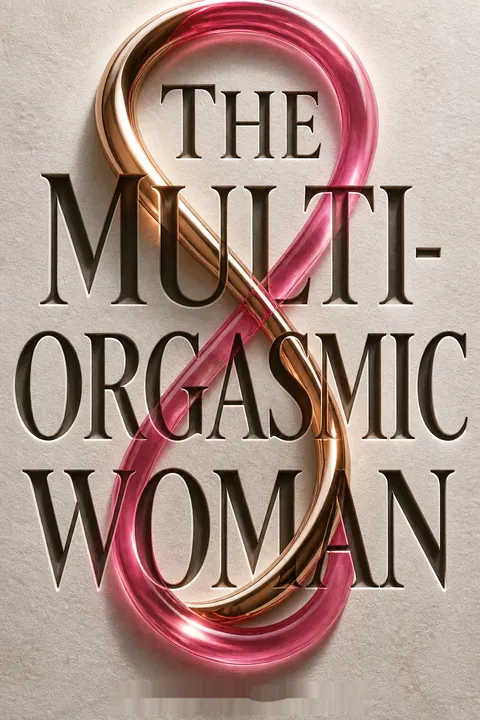
The Multi-Orgasmic Woman receives mostly positive reviews, with readers praising its Taoist approach to female sexuality and energy cultivation. Many find it informative, life-changing, and valuable for healing trauma. The book is commended for its practical exercises and emphasis on self-love. Some readers appreciate its holistic approach to vitality and pleasure, while others find it different from their expectations. A few critics note that it may be too basic for those already knowledgeable about sexuality or find the tone patronizing.
People Also Read








Glossary
Healing Love
Taoist sexual cultivationThe name the book gives to a system of Taoist sexual and meditative practices. It combines breath, attention, self-touch, emotional balancing, and imagined movement of sexual energy. The authors present it as a way to deepen pleasure and vitality. Its claims about energy channels and medical healing reflect a traditional framework, not established biomedical mechanisms.
chi
Taoist life forceA traditional Chinese concept described in the book as the force underlying life and movement. It is associated with breath, vitality, and bodily sensation, and is said to flow through channels in the body. The book sometimes translates chi as energy, while noting that it is not identical to the scientific meaning of energy.
jing chi
Sexual life energyThe book's term for sexual energy or desire within the Taoist model. It is presented as a particularly potent form of life force that can be cultivated through attention and sexual practice. The authors describe it as nourishing overall vitality when circulated through the body, a traditional interpretation rather than a measured biological substance.
Inner Smile
Compassion-focused visualizationA Taoist meditation in which a practitioner imagines a warm, loving image and directs that feeling toward parts of the body, especially the heart, abdomen, and sexual organs. The practice is intended to encourage self-acceptance and calm attention. It can be understood as guided imagery, without assuming that it transfers a literal energy.
Healing Sounds
Breath and emotion practiceA sequence of breathing, vocal sounds, posture, and visualization associated in Taoist teaching with major organs and emotions. For example, the practitioner imagines releasing an unwanted feeling while breathing in a positive quality. The book presents the sounds as a way to settle emotion and prepare for sexual-energy practices.
Microcosmic Orbit
Imagined energy circuitA Taoist meditation that guides attention along a circuit described as running up the back of the body and down the front. The tongue touching the palate is said to connect the two channels. Practitioners use breath, visualization, and bodily focus to circulate chi; the pathway is part of the traditional model, not an established anatomical channel.
Orgasmic Upward Draw
Sexual-energy visualizationA Healing Love technique in which a practitioner focuses on sexual arousal and imagines moving that energy from the pelvic area up the spine, through the head, and down the front of the body. The book suggests coordinating the practice with pelvic-floor contractions and breathing. It is offered as a way to expand pleasure and vitality, not a clinically verified energy transfer.
Ovarian Breathing
Ovary-focused meditationA Taoist practice that combines breast massage, attention to the ovaries, gentle pelvic-floor movement, breath, and visualization. The authors describe drawing energy from the ovaries through the body to support vitality and reproductive health. Their claims about regulating cycles or reducing menopausal symptoms should not be treated as established medical effects.
Jade Egg practice
Intravaginal pelvic exerciseA practice described in the book that uses a smooth stone egg inserted into the vagina while the practitioner learns to contract and move pelvic muscles. The authors associate it with vaginal awareness, strength, and sexual energy. Insertion practices require attention to hygiene, comfort, and medical circumstances, and are not necessary for sexual health or pleasure.
Soul Mating
Partnered energy meditationA partnered Healing Love exercise in which two people pause during arousal, focus on breath and bodily energy, and imagine exchanging energy through touch and the mouth. The practice is intended to deepen intimacy and spiritual connection. It depends on mutual consent and may be adapted or omitted by partners who do not find its imagery meaningful.
FAQ
What's The Multi-Orgasmic Woman about?
- Focus on Female Sexuality: The book delves into ancient Taoist sexual practices specifically designed for women, aiming to enhance their sexual pleasure and overall well-being.
- Empowerment Through Knowledge: It combines insights from Taoist traditions and modern medicine to help women understand and cultivate their sexual energy.
- Practical Techniques: The authors provide exercises and meditative practices to help women experience multiple orgasms and improve their sexual health.
Why should I read The Multi-Orgasmic Woman?
- Enhance Sexual Pleasure: The book offers techniques that can significantly increase a woman's capacity for pleasure and orgasm.
- Holistic Approach: It integrates physical and emotional aspects of sexuality, emphasizing sexual energy as a vital part of overall health.
- Empowerment and Self-Discovery: Readers are encouraged to explore their bodies and desires, leading to greater self-acceptance and confidence.
What are the key takeaways of The Multi-Orgasmic Woman?
- Understanding Sexual Energy: The book emphasizes sexual energy, or "jing chi," as a source of vitality and joy.
- Techniques for Orgasm: It provides a step-by-step guide to achieving multiple orgasms, including the Microcosmic Orbit and the Orgasmic Upward Draw.
- Emotional and Physical Balance: The authors stress the need for emotional balance and self-love to enhance sexual experiences.
What is the Microcosmic Orbit in The Multi-Orgasmic Woman?
- Energy Pathway: The Microcosmic Orbit is a Taoist concept that refers to the flow of chi through two main channels in the body.
- Circulation of Chi: Practicing the Microcosmic Orbit helps refine and distill sexual energy, improving health.
- Foundation for Orgasm: This practice is essential for circulating sexual energy, leading to more intense orgasms.
How can I cultivate my sexual energy according to The Multi-Orgasmic Woman?
- Belly Breathing Exercise: Practice Belly Breathing to relax and awaken sexual energy, foundational for further exercises.
- Inner Smile Technique: Visualize a smiling face and direct that loving energy to your sexual organs to enhance arousal.
- Regular Practice: Consistent practice helps build sexual energy, making it easier to access during intimate moments.
What is the Orgasmic Upward Draw, and how does it work?
- Harnessing Sexual Energy: The Orgasmic Upward Draw involves drawing sexual energy from the genitals up through the spine.
- Practice Method: It combines the use of the PC muscle and visualization to circulate energy, enhancing pleasure.
- Long-term Benefits: Regular practice can lead to increased sexual satisfaction and emotional balance.
How does The Multi-Orgasmic Woman address emotional health?
- Emotional Balance: The book discusses how emotional health is intertwined with sexual health, emphasizing balance for pleasure.
- Healing Sounds Practice: This practice helps release negative emotions associated with specific organs.
- Self-Nurture: Readers are encouraged to prioritize self-care and emotional nurturing to enhance sexual experiences.
What are some exercises included in The Multi-Orgasmic Woman?
- Belly Breathing: Focuses on deep abdominal breathing to relax and awaken sexual energy.
- Laughing Chi Kung: Uses laughter to stimulate chi and promote emotional well-being.
- The Inner Smile: A meditation that encourages self-love and directs positive energy to the heart and sexual organs.
What is the significance of the PC muscle in The Multi-Orgasmic Woman?
- Sexual Muscle: The PC muscle is crucial for enhancing sexual pleasure and the ability to orgasm.
- Strengthening Techniques: The book provides exercises to strengthen the PC muscle for more intense orgasms.
- Relaxation Importance: Emphasizes the need to relax the PC muscle to prevent discomfort and enhance pleasure.
How can I maintain sexual health throughout my life according to The Multi-Orgasmic Woman?
- Regular Practice: Engage in practices like the Microcosmic Orbit and Orgasmic Upward Draw to maintain sexual vitality.
- Healthy Lifestyle: A balanced diet, regular exercise, and stress management are crucial for sexual health.
- Open Communication: Maintain open communication with partners about desires and boundaries to enhance intimacy.
How can I share my orgasmic journey with my partner according to The Multi-Orgasmic Woman?
- Communication: Emphasizes the importance of open communication about desires and preferences.
- Show and Tell: Encourages women to demonstrate their pleasure techniques to partners.
- Focus on Pleasure: Suggests focusing on giving pleasure rather than solely on intercourse.
What are some common roadblocks to orgasm mentioned in The Multi-Orgasmic Woman?
- Arousal Issues: Problems with arousal can stem from health issues, medications, or emotional stress.
- Relationship Challenges: Difficulties in relationships can create barriers to intimacy and trust.
- Bodily Comfort: Lack of comfort with one’s body can hinder the ability to experience pleasure.
About the Author


Download PDF
Download EPUB
.epub digital book format is ideal for reading ebooks on phones, tablets, and e-readers.








