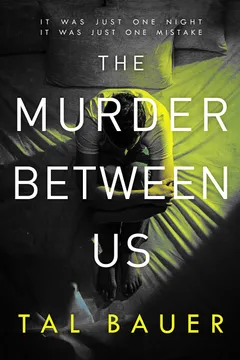


Plot Summary
A First Night in Vegas
At an FBI conference in Las Vegas, forty-year-old agent Noah Downing1 finally leaves his friends and goes alone to a casino bar. He has spent years pushing aside his attraction to men; tonight, he wants to find out what it means. After a waitress’s flirtation leaves him uneasy, a handsome stranger named Cole Kennedy2 approaches and makes the first encounter feel safe rather than staged.
Noah1 tells Cole2 he is still figuring himself out, and Cole2 takes him to a small jazz club, where their conversation turns into tentative touches and joined hands. At Cole’s2 hotel, Noah1 chooses to kiss him and stay. Their night together gives Noah1 an answer he had feared to ask for, and a glimpse of the life he has kept at a distance.
Noah’s first step is not simply sexual discovery. It is a break in the system of self-management he has built around duty, routine, and fear of exposure. His work gives him authority in the world, but it cannot tell him what he wants; he has to risk an unscripted encounter to know. Cole’s patience matters because it lets Noah choose without turning uncertainty into a test he must pass. The romance begins with permission, but also with projection: Noah has imagined a man like Cole for years and must eventually meet the actual person beneath the fantasy.
The Call From Iowa
After spending the night with Cole,2 Noah1 expects to meet him again. Instead, his phone floods with messages from Des Moines. He flies home and finds Boone County Sheriff Bart Olson9 beaten to death in his farmhouse and Bart’s daughter10 Jessie10 strangled in her bedroom.
The scene matches the work of the Coed Killer, a serial murderer who killed six accomplished college women before disappearing six years earlier. Noah1 helped hunt that killer and never accepted the failure to catch him.
A third deputy, Venneslund,8 tells Noah1 the case never truly stopped mattering, while Bart’s9 deputy Andy Garrett7 can barely look at the bodies. Noah1 calls his supervisor, confirms the old pattern has returned, and asks for the FBI Behavioral Analysis Unit to send a profiler.
The cut from Las Vegas to Iowa makes Noah’s private awakening collide with the job that has defined his public life. The crime scene does not merely interrupt a date; it returns him to the unresolved helplessness of the original investigation. Bart’s death also makes the case intimate to the local officers, whose professional composure cannot contain their grief. Noah’s decision to request a profiler shows a change in his approach: rather than treating help as an admission of past failure, he uses it as a tool. The case begins again because the killer has returned, but also because the old task force never stopped carrying its unfinished burden.
Cole Walks Into Work
The profiler arrives from Washington expecting a new assignment, not Noah.1 Cole2 learns that Noah1 is leading the task force and that he has been called in to help identify the Coed Killer.7
Neither man had shared his job during their night together, and Noah’s1 silence afterward now sits between them alongside the crime-scene photographs. Cole2 receives the original case files and learns that the killer leaves almost no forensic evidence. The task force also considers Kimberly Foster’s11 strangulation three months earlier, though her stalker gives that case a plausible alternative suspect.
Noah1 avoids discussing what happened in Vegas, while Cole2 keeps their private history out of the briefing. Their first reunion turns a cherished memory into a complication neither can leave behind.
The workplace reunion converts intimacy into a problem of boundaries. Both men have withheld ordinary biographical facts, not through calculated deception but because their first meeting was built as a temporary escape. Now their separate roles cannot be kept separate: Noah controls the investigation, while Cole’s analysis may shape it. Their silence protects them from embarrassment but also makes each interpret the other’s behavior alone. The case offers a shared language they can safely use, yet it cannot answer the personal question between them. Their attraction becomes more difficult precisely because they now see one another in consequential, everyday roles.
A Killer’s Quiet Routine
Cole2 and Noah1 inspect the Foster12 and Olson9 homes, both isolated houses where the killer entered without forcing a door. Cole2 reconstructs how Frank Foster12 may have surprised the murderer while checking on Kimberly,11 and how Bart Olson9 fought through the hallway after finding Jessie.10
He reads the absence of DNA, fingerprints, and sexual assault as evidence of a controlled killer whose central gratification is domination at the moment of death. The fathers’ brutal injuries suggest that interruptions unleash a separate fury.
Cole2 also notices how easily a stranger could blend into local life, including as someone people assume belongs there. At a press conference, Noah1 asks residents to report suspicious behavior and unexplained injuries, putting pressure on a killer who may be watching.
The investigation turns absence into evidence. The killer has left no usable biological trace, but his repeated choices still reveal an organizing psychology: isolation, surveillance, sudden force, and control over the victim’s final moments. Cole’s analysis is valuable because it treats the crime scene as behavior rather than as a blank space where evidence failed. Yet his interpretation remains provisional; it gives the task force a way to search, not certainty about identity. The public appeal extends that logic outward, asking a whole community to notice what routine makes invisible. In this story, normality is both the killer’s disguise and the investigators’ most important field of evidence.
Noah’s Other Life
While Noah1 and Cole2 are visiting the rural crime scenes, a call sends them racing to a Des Moines emergency room. Noah’s1 sixteen-year-old daughter, Katie,3 has been injured when a teenager rolled the car she was riding in.
She is frightened but has no serious fracture, and Noah1 holds her until her panic eases. Cole2 learns that Noah1 is divorced, that Katie3 has recently moved in with him, and that a difficult custody arrangement makes every choice feel consequential. When Noah1 calls his ex-wife, Lilly,6 the conversation leaves him visibly shaken.
Cole2 understands why Noah1 fears changing his life, but he also sees the tenderness with which Noah1 cares for Katie.3 The night closes with Cole2 recognizing that Noah’s1 heart is already committed to someone who needs him.
Katie’s accident reveals the stakes beneath Noah’s closeted life. His fear is not an abstract concern about reputation; he imagines that honesty could cost him the relationship he most values or destabilize a fragile custody arrangement. At the same time, the scene complicates the idea that self-denial is simply protective. Noah’s instinctive care for Katie is real, but his belief that he must hide every other part of himself risks turning protection into isolation. Cole’s new understanding does not erase the obstacles. It gives them names: fatherhood, divorce, geography, and a daughter who is old enough to notice more than Noah thinks.
The Message Never Sent
The next day, Noah1 shows Cole2 the unfinished message he drafted at the airport, when the Olson9 murders forced him home. He had wanted to apologize for missing their second date and ask to stay in touch, but shame convinced him to delete nothing and send nothing.
Noah1 admits that the night in Vegas mattered because of Cole,2 not only because it answered his questions about himself. Cole2 tells him he wanted to see Noah1 again too, and they cautiously agree to try. Their conversation is interrupted by news of a massacre at FBI supervisor John Hayes’s4 home.
John,4 his wife Melinda,17 their twin sons,18 and their daughter Molly13 are found dead, with Molly13 strangled and John4 brutally attacked. A lab call then links Jessie’s10 DNA evidence to Andy Garrett,7 turning the grieving deputy into the task force’s prime suspect.
The unsent message is a material record of Noah’s self-censorship: desire made legible, then withheld because he imagines himself as embarrassing and unworthy. By showing it, he risks letting Cole see not a confident romantic gesture but the fear behind it. Their mutual honesty briefly opens a path forward, only for the investigation to demonstrate how little control either man has over timing. The Hayes murders also intensify the story’s central collision between private attachment and public violence. John was Noah’s mentor and friend; the crime makes the cost of the case personal, while the DNA lead gives the task force a seemingly concrete target.
Garrett in the Crosshairs
The task force traces Andy Garrett’s7 fingerprints to John Hayes’s house and finds hundreds of calls from Garrett to Jessie Olson, who never called him back. Noah’s1 agents arrest Garrett7 after finding his bloodied trail near his burning truck.
In interrogation, Garrett7 insists that he and Jessie10 were secretly dating and that he visited her the night she died. He explains his fingerprints at John’s4 house by saying John4 had comforted him after Jessie’s10 death. His account sounds possible in pieces, but it cannot explain every piece of evidence, and he breaks down when Noah1 asks about earlier victims.
A background search reveals Garrett once attended the University of South Dakota, where a young woman was murdered before he transferred to Iowa State. He appears connected to the old killings, though the recent crimes remain unresolved.
Garrett’s apparent guilt offers the exhausted task force a tempting form of closure: a deputy close to the scenes, with a hidden relationship to Jessie and a record that places him near an earlier murder. But the evidence is not yet a complete explanation. His account alternates between plausible detail, grief, and explosive denial, making certainty psychologically attractive but methodologically dangerous. Noah’s questioning also exposes a distinctive problem in law enforcement investigations: trust can grant access, and a respected uniform can obscure the person inside it. The discovery of Garrett’s past reframes the case without resolving it. The task force has found a history, but not yet the full motive or the author of every recent killing.
Monica’s Hidden Connection
Records show that Garrett studied criminal justice at Iowa State during the original murders, but investigators initially find no direct tie to most of the victims. Then Jacob Moore5 discovers that Garrett helped organize a criminology seminar at the University of South Dakota, where he personally signed in Monica Venneslund.
The connection explains why Garrett7 transferred to Iowa State: he had followed Monica.19 Cole2 interprets the other early murders as part of an escalating fixation that eventually centered on her. The sequence also helps explain why Garrett’s7 killing pattern changed before he enlisted in the Marines.
Meanwhile, investigators find photographs of Jessie and Monica in Garrett’s home, but no murder weapon. When Garrett7 is pressed about Monica,19 his distress deepens, and his fragmentary response suggests that the past he tried to bury has returned.
The seminar attendance sheet is a small administrative trace with enormous interpretive weight. It turns a scatter of campus killings into a relational pattern: Garrett was not simply hunting a type of victim, but organizing his actions around a particular woman. Cole’s account of fixation explains how other victims could become substitutes within a fantasy, though it still cannot establish every detail of the crimes. The discovery also exposes how obsession can masquerade as intimacy in the perpetrator’s mind. Garrett’s claimed closeness to Jessie and his pursuit of Monica sit against the women’s own agency, which his fantasies erase. The case becomes less about a monster without a motive and more about a man who mistakes possession for connection.
The Fathers Were Targets
Reviewing the crime photographs alone, Cole2 notices that the first six victims were killed in secluded public places, while Kimberly,11 Jessie,10 and Molly13 were killed at home with their fathers nearby. He checks their fathers’ histories and finds that each had worked in law enforcement, including Frank Foster,12 once a St. Louis detective.
The newer murders are not simply a return of Garrett’s7 old pattern; someone has copied it to punish fathers who failed, or seemed to fail, at protecting daughters.
Before Cole2 can warn Noah,1 Jacob5 reports that Garrett7 has escaped custody after killing the officer guarding him. Cole2 races to Noah’s1 house, where Katie’s3 sobbing and a stranger’s voice tell him the new killer has already arrived. In the darkness, Cole2 recognizes Deputy Venneslund’s8 grief as the motive behind the attack.
Cole’s insight depends on changing the unit of analysis. The victims are not only the murdered young women; their fathers are part of the perpetrator’s intended audience. That shift reveals a second psychology hidden inside the first killer’s signature. The copied method has allowed vengeance to pass as recurrence, making pattern recognition both essential and dangerous. Garrett’s escape collapses the distance between analysis and immediate action: a case that seemed to be moving toward interrogation becomes a threat inside Noah’s home. Cole’s recognition of Venneslund comes from listening to the grief attached to Monica’s murder, not merely from matching forensic details. Empathy here is not softness; it is a way to see what the evidence has been made to conceal.
The Kitchen Rescue
Cole2 enters Noah’s1 kitchen and finds Venneslund8 holding Katie3 on a chair beneath a noose while Noah,1 shot and pinned to a wall by knives, watches helplessly. Venneslund8 explains that he has been punishing fathers for the failures he believes led to Monica’s19 murder. As he starts to push Katie’s3 chair away, Cole2 shoots him.
Cole2 holds Katie3 up while Noah1 tears his hands free from the knives and cuts her down. She is not breathing at first, but then gasps and clings to her father. Responding officers arrive moments later. Elsewhere, agents find Garrett7 dead in the clearing where he claimed to meet Jessie,10 with a photograph of them and an apology beside him. His death confirms that he was not the attacker in Noah’s1 home.
The climax forces the characters’ competing forms of care into one room. Venneslund turns fatherhood into an instrument of punishment, making Noah watch the terror he believes other fathers deserve. Cole’s single shot interrupts that script, but rescue still requires Noah to injure himself further to reach Katie. The scene refuses a simple division between protector and protected: Cole saves them, Noah frees his daughter, and Katie survives through a collective effort. Garrett’s death also prevents the investigation from collapsing into a single-villain explanation. Two men have used similar violence for different psychological ends, and the distinction matters because one man’s revenge has been built atop another’s crimes.
No More Hiding
At the hospital, doctors confirm that Katie3 has no lasting spinal or throat injury and that Noah’s1 wounds can heal, though his hand will need rehabilitation. Noah1 refuses to let Cole2 leave his side.
In front of colleagues and the watching community, he kisses Cole2 and makes clear that he wants a life with him. Cole2 promises to stand by both Noah1 and Katie.3 Noah’s1 ex-wife, Lilly,6 arrives to be with their daughter; she sees Cole’s2 role in the rescue and offers him a grateful welcome rather than turning the crisis into a custody battle.
Later, Noah1 rests beside Katie3 in her hospital bed while Cole2 stays close and holds his hand. When they sleep, Katie3 lays her hand on Cole’s2 head, a quiet sign that she is beginning to accept him as part of their circle.
Noah’s public affection is not a sudden cure for years of fear; it is a decision made after fear has shown him its limits. He has nearly lost Katie, but he does not respond by retreating into the closet or treating love as an extra risk. Instead, he includes Cole in the visible structure of his life. Lilly’s presence matters because she is both Noah’s former partner and Katie’s mother; her acceptance prevents the family’s reconfiguration from becoming a simple rivalry. Katie’s sleeping gesture offers no formal declaration, only bodily trust. The scene resolves the immediate crisis through care, while allowing emotional recovery to remain unfinished.
A Homeward Transfer
Cole2 must leave Des Moines for an emergency case in Boston, then returns for three weeks to help Noah1 and Katie3 recover. He attends their counseling visits, helps Noah1 through nightmares and arm rehabilitation, cooks meals, and works through Katie’s3 homework with her.
His demanding travel schedule repeatedly separates them, so he asks to transfer from the Behavioral Analysis Unit to the Des Moines office. Cole2 makes the choice knowing it may be permanent and that he is joining a life already built around Noah’s daughter.3
The transfer is approved, and he arrives at Noah’s1 office as the newest agent. Katie3 later greets him after school and throws herself into his arms. The three of them begin to build a shared routine, not just a private romance between visits.
Cole’s transfer makes commitment logistical. He does not prove love through a grand declaration alone; he changes where he works, how he spends his time, and what kind of professional life he is willing to pursue. Noah’s need for stability and Katie’s dependence on routine become part of Cole’s decision, rather than obstacles he expects them to overcome for him. The recovery period also resists the fantasy that intimacy erases trauma. Nightmares, counseling, rehabilitation, and ordinary meals all remain necessary. By choosing the less glamorous office, Cole shifts from being the expert who arrives to solve a case into someone accountable to the daily life that follows.
Epilogue
Three months later, Noah1 and Cole2 share a home life shaped by schoolwork, dinner, and Katie’s3 cheerleading schedule. They attend her football game together, then drive her and her friends to a late-night pizza stop. Katie3 calls them her dads without hesitation, while Noah1 and Cole2 hold hands across the table.
In the parking lot, Noah1 asks whether Cole2 could have imagined this life. Cole2 has already decided he wants it to last: a ring set with the birthstones of all three of them waits hidden in his sock drawer, and he has asked Lilly6 for her blessing. He has also chosen a matching necklace for Katie.3 The family is not formally sealed yet, but its future has become a plan.
The closing scene makes the novel’s romantic resolution visible through routine rather than spectacle. Noah’s earlier fear centered on whether desire would endanger his bond with Katie; now Katie names the family herself and participates in its public, ordinary rituals. Cole’s planned proposal extends that family structure beyond the couple, with all three birthstones included in the rings and Katie’s necklace. The gesture answers the book’s recurring question of who gets to belong without implying that trauma has vanished or that family is effortless. The ending’s optimism rests on chosen permanence: Cole has moved, Noah has stopped hiding, and Katie has made room for both.
Analysis
The novel places two forms of concealment beside each other. Noah1 hides his sexuality because he fears losing his daughter3 and the fragile custody arrangement that lets him raise her. The killers hide inside ordinary routines and trusted roles, using the social confidence granted to them as cover. These concealments are not morally equivalent, but their collision makes the story’s central question concrete: what does secrecy protect, and whom does it endanger?
Cole’s2 profiling process offers a counterpoint to Noah’s1 private self-doubt. He treats behavior as evidence, revising his theory when the scenes no longer fit. The crucial advance comes when he stops treating the women as the sole targets and sees their fathers as part of the intended audience. That change reveals how a familiar method can disguise a different motive. The two killers’ overlapping patterns expose the danger of turning an interpretation into certainty before the evidence supports it.
The romance is also an investigation into whether intimacy can survive unequal risk. Cole2 is already out and professionally secure; Noah1 has a daughter,3 a difficult divorce, and years of fear behind him. Their conflict is not solved by attraction. It requires Noah1 to stop deciding on Cole’s2 behalf, Cole2 to insist on having a voice, and both men to make room for Katie’s3 needs without making her responsible for Noah’s1 silence. Katie’s3 response matters because she does not merely approve of a romance; she asks her father to trust her with the truth.
The ending links emotional commitment to practical choices. Cole2 changes offices, accepts the limits and routines of family life, and imagines a future that includes Katie.3 Noah’s1 growth is not that he becomes fearless, but that he acts while still afraid. Against a plot where men turn grief and rejection into control over other lives, the novel defines love through consent, truthful participation, and care that does not erase another person’s agency.
Review Summary
Reviews for The Murder Between Us are largely positive, averaging 4.22/5. Readers praise the chemistry between FBI agents Noah and Cole, the gripping serial killer mystery, and Bauer's emotionally rich writing style. Many highlight Cole as a standout character and appreciate the inclusion of Noah's daughter, Katie. Common criticisms include Noah's frustrating hot-and-cold behavior, the romance feeling slightly rushed or insta-love, and some finding the mystery's resolution unbelievable. The audiobook narration received mixed feedback.
People Also Read




Characters
Noah Downing
The guarded father-agentNoah is an FBI agent in Des Moines and a devoted father navigating a recent custody change. He is disciplined, observant, and professionally capable, but years of concealing his attraction to men have left him unsure how to trust his own wants. His caution is not simple timidity: he fears that honesty could cost him his daughter3 or destabilize the life he has worked to hold together. The case draws on his history with the original Coed Killer7 investigation, while Cole2 challenges him to see that asking for help and choosing happiness are not forms of failure. Noah’s strongest instinct is to protect others, sometimes at the expense of imagining a life that includes himself.
Cole Kennedy
The incisive profilerCole is a forensic psychologist with the FBI’s Behavioral Analysis Unit, known for translating crime-scene details into possible motives and patterns. He is openly gay, confident in his work, and more emotionally perceptive than his teasing manner first suggests. Cole approaches Noah1 with patience because he understands that a first experience can carry more weight than the other person expects. His professional confidence does not make him invulnerable: Noah’s1 silence wounds him, and he must decide how much uncertainty he can tolerate. Cole’s care extends beyond romance into practical acts of support, but he also expects honesty and a voice in decisions that affect their future.
Katie Downing
Noah’s perceptive daughterKatie is Noah’s1 sixteen-year-old daughter, a cheerleader balancing school, friends, and the unsettled transition of living primarily with her father1. She is quick-witted, curious about criminal psychology, and alert to emotional shifts adults hope to conceal. Her loyalty to Noah1 is strong, but she wants to be trusted rather than treated as a reason he must deny himself. Katie’s humor and teenage impatience coexist with a sharp capacity for empathy. She understands that her father’s1 happiness matters, even as she needs reassurance that a new relationship will not push her out of his life.
John Hayes
Noah’s veteran supervisorJohn is the senior FBI agent overseeing the Des Moines office and Noah’s1 longtime mentor. Near retirement, he has earned the trust of local officers through steady leadership and a generous, paternal presence. He knows the region’s law-enforcement community and supports Noah’s1 judgment when the Coed Killer7 investigation reopens. John’s home life is closely tied to his work, and his pride in his family is evident to colleagues. He represents the kind of institutional leadership Noah1 hopes to provide: experienced without becoming distant, and willing to let a younger agent take responsibility.
Jacob Moore
The steadfast field partnerJacob is a towering FBI agent in the Des Moines office, an efficient investigator with a dry sense of humor and a strong loyalty to his colleagues. He helps Cole2 settle into the task force, works through boxes of records, and provides practical support as the investigation grows more demanding. Beneath his formidable size, Jacob is attentive to the people around him and grounded by his affection for Holly20 and her daughter, Brianna21. He can tease Noah1 without losing sight of the pressures Noah1 is carrying. His steadiness makes him an important counterweight to a team operating under grief and urgency.
Lilly Downing
Katie’s mother and Noah’s exLilly is Noah’s1 ex-wife and Katie’s3 mother, an assistant U.S. attorney in Omaha. Her relationship with Noah1 ended painfully, and the strain of their divorce shapes the family’s custody arrangements. Lilly is a committed parent whose first concern is Katie’s3 safety, even when she and Noah1 disagree about what is best. Her legal career and connection to federal law enforcement make her a formidable presence, but she is not defined only by conflict. She understands the practical and emotional responsibilities of raising a teenager and expects adults around Katie3 to take those responsibilities seriously.
Andy Garrett
The grieving county deputyAndy is a Boone County deputy who served under Sheriff Bart Olson9 and is among the first local officers at the farmhouse crime scene. He is visibly affected by the deaths and struggles to keep his emotions contained during the investigation. Garrett is familiar with the county and its law-enforcement community, making him part of the network Noah1 must work with as well as someone carrying personal grief. His intense reactions draw the attention of both Noah1 and Cole2, who know that sorrow can obscure judgment as easily as it can expose it.
Deputy Venneslund
A father inside the task forceVenneslund is a Boone County deputy and the father of Monica19, one of the women killed during the original series. He has continued working after a loss that damaged his marriage and left him carrying years of grief. Noah1 respects him as a capable officer and recognizes how much the old murders still shape his life. Venneslund’s presence gives the task force a direct connection to the families who have lived with the case long after the news moved on. He is reserved, controlled, and deeply protective of what remains of his family.
Bart Olson
The rural county sheriffBart is the Boone County sheriff and Jessie’s10 father, a former city law-enforcement officer who chose a quieter rural life. He is known for his commitment to his community and for stepping in when a deputy needs help. Bart’s pride in Jessie’s10 achievements is well known among the local officers, and his family is woven into the region’s social life. His choices reflect an older form of public service grounded in presence: he knows his neighbors, supports his staff, and takes his responsibilities personally.
Jessie Olson
The accomplished farm daughterJessie is Bart Olson’s9 daughter, an Iowa State student with strong ties to agriculture and a record of success in school and community activities. Her awards and local recognition show a young woman with plans of her own, not merely a name in a case file. Jessie’s closeness to her father9 is evident in how often he speaks proudly of her. The life she is building connects the rural community, the university, and the law-enforcement circle that surrounds her family.
Kimberly Foster
A college athlete and daughterKimberly is a sophomore at Faith Baptist Bible College and captain of its successful volleyball team. She is close to her father, Frank12, and has been trying to address unwanted attention from another student. Her athletic discipline and public accomplishments place her among the young women whose lives attract local recognition. Kimberly’s case complicates the investigation because a known stalker offers an apparent explanation, forcing Noah1 and Cole2 to distinguish a plausible suspect from the larger pattern.
Frank Foster
Kimberly’s protective fatherFrank is Kimberly’s11 father, a widower who works nights at a meat-processing plant and has organized much of his life around caring for his daughter. He is home sick when the investigation into Kimberly’s11 death begins, a detail that shapes the reconstruction of the crime. Frank’s past includes work in law enforcement, though that history is not immediately apparent to the task force. His relationship with Kimberly11 gives the case its intimate, domestic dimension.
Molly Hayes
John’s ambitious daughterMolly is John Hayes’s4 daughter, a University of Iowa student on a prelaw path and a summer paralegal. Her father is proud of her ambition, and she has plans that connect her education to public service. Molly’s academic success and family closeness place her within the pattern the investigators are trying to understand. She is a young adult with a developing professional identity, not simply an extension of her father’s career.
Special Agent Samuel Bray
The Omaha office chiefBray oversees the Omaha field office and becomes involved when the Des Moines investigation and its aftermath demand senior-level support. He knows Noah1 professionally and later considers Cole’s2 career request. Bray is pragmatic about assignments and staffing, but he also recognizes when a personal decision has been carefully considered. His role connects the small Des Moines office to the larger FBI structure.
Sheriff Clarke
The veteran county investigatorClarke is an experienced sheriff who joins the task force and helps investigate Garrett’s7 background. He brings local knowledge, a practical manner, and a willingness to follow records wherever they lead. His team uncovers an important piece of Garrett’s7 past, demonstrating how cooperation between local departments and the FBI can widen an investigation.
James
Noah’s academy friendJames is Noah’s1 former FBI Academy roommate and a friend from the annual conference. Married with three young daughters, he has the settled family life Noah1 quietly envies. He encourages Noah1 to take a chance on the night out, though he does not know exactly what Noah1 is seeking.
Melinda Hayes
John’s wife and motherMelinda is John Hayes’s4 wife and the mother of Molly13 and the twins18. She is part of the family life that colleagues encounter at John’s4 gatherings, where the office’s professional circle overlaps with domestic life.
Evan and Carter Hayes
The Hayes family twinsEvan and Carter are John4 and Melinda Hayes’s17 twin sons. One loves building with Lego and playing video games; the other is drawn to football. Their ordinary childhood interests make the family’s place in the investigation especially immediate to Noah1 and the task force.
Monica Venneslund
A victim from the first caseMonica is Deputy Venneslund’s8 daughter and one of the young women killed during the original Coed Killer7 investigation. Her death shaped her father’s8 life and remains central to his connection to the task force. The records of her university years also matter to investigators trying to reconstruct the old case.
Holly
Jacob’s partner and motherHolly is Jacob Moore’s5 partner and the mother of Brianna21. Jacob’s5 affection for their family is apparent in his plans around Brianna’s21 recital and his care for both of them. She anchors his life outside the task force.
Brianna
Holly’s young daughterBrianna is Holly’s20 young daughter, whose ballet recital gives Jacob5 a welcome reason to leave the office and return to family life. Her presence reveals Jacob’s5 gentle side beneath his imposing appearance.
Plot Devices
The Coed Killer’s signature
A pattern with a shadowThe original killer’s repeated choices include young, accomplished college women, strangulation, late-night attacks, and almost no forensic evidence. The pattern gives Noah1 and the task force a way to connect current crimes to six unsolved murders, while Cole2 studies what the scenes reveal about control and victim selection. Its apparent return creates the novel’s central investigative question. Because another offender later uses the same signature for a different purpose, the pattern is both a useful map and a trap for investigators who assume one familiar method must mean one familiar killer.
The unsent airport message
A confession held backAfter being recalled to Iowa, Noah1 drafts a message explaining that he cannot meet Cole2 again and admitting he wants to stay in touch. Shame stops him from sending it, leaving Cole2 to interpret the silence as rejection. The message later becomes a physical and emotional artifact Noah1 can show Cole2, allowing him to explain both the emergency and the fear that made him erase his own request. It turns an avoidable misunderstanding into the couple’s first honest conversation about what their night together meant.
The family crime scenes
Victimology expands to fathersThe newer murders occur in family homes, where a father is also attacked after his daughter is targeted. At first, the injuries seem like uncontrolled violence caused by interruption. Cole2 later compares the fathers’ histories and recognizes that their law-enforcement backgrounds connect the cases. This shift changes the question from who is killing accomplished young women to who wants their fathers to witness the loss. The domestic settings reveal that the murders are aimed at more than the immediate victims.
Garrett’s records
A hidden past surfacesCall logs, college records, photographs, a service history, and an old seminar attendance sheet gradually connect Andy Garrett7 to the original killings and to Monica Venneslund19. Each record appears ordinary on its own; together, they reconstruct a history Garrett7 had concealed. The evidence gives the task force a compelling suspect and explains the fixation behind the first series, but it cannot account for every recent attack. That gap prevents the investigative breakthrough from becoming a false resolution.
The three birthstones
A family made tangibleAfter Cole2 transfers to Des Moines, he prepares rings containing the birthstones of himself, Noah1, and Katie3, along with a matching necklace for Katie3. The objects are not presented as a completed proposal; they show that Cole2 imagines commitment as an inclusion of all three, rather than a romance that asks Noah1 to separate from his daughter3. The device answers the novel’s recurring question of whether love can join an existing family without displacing its original bonds.
Download PDF
Download EPUB
.epub digital book format is ideal for reading ebooks on phones, tablets, and e-readers.








