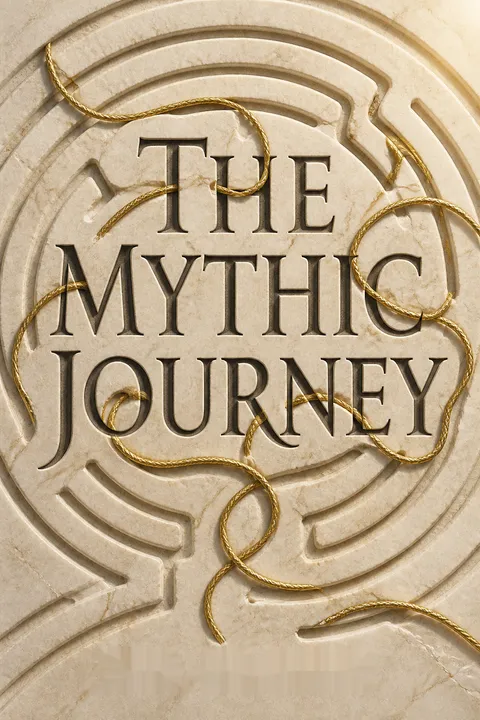


Key Takeaways
Use myths as mirrors for dilemmas, not manuals with one correct answer.
Stories hold contradictions. The book treats myths, fairy tales, and folklore as an old form of practical psychology. Rather than defining gods and heroes in a reference list, it follows a human life, from family and independence to love, work, suffering, and death. Each tale is told first, then read as a way to recognize emotional patterns in ordinary life.
Recognition can be relief. The stories do not promise easy fixes. Achilles cannot be made immortal by his mother, and Job receives no satisfying explanation for his losses. Their value is that they make familiar conflicts visible and show that people have wrestled with them across cultures and centuries. Myth can also hold opposing truths at once, where a simple argument might force a false choice.
What's powerful here is myth's use as a thinking tool rather than a source of proof. A story can let readers examine jealousy, grief, or ambition at a safe distance, then decide whether its pattern fits their lives. This resembles the use of case studies in ethics: the example does not settle the rule, but sharpens judgment. The method has limits. A vivid story can feel universally true even when it reflects a particular culture's values. Its strongest use is as an invitation to interpret, not a diagnosis.
Stop asking children to repair the lives their parents did not live.
Expectations can become a burden. Thetis tries to protect Achilles from mortality because she cannot bear his human limits. Hera rejects Hephaistos for his appearance, overlooking the inventive craft that eventually earns him a place among the gods. In both stories, a parent sees the child through a private ideal instead of meeting the person who is actually there.
Family conflicts can travel. Cain's anger at God turns against his brother after God favors Abel's offering. In the Houses of Thebes and Atreus, secrecy, rivalry, and revenge recur across generations until someone faces the damage. The book calls this inheritance psychological as well as biological: children receive ways of relating, not only genes. Awareness, honest communication, and apology can help interrupt the pattern.
This reading connects with family-systems thinking, which studies how one person's behavior can stabilize or intensify tensions across a household. The stories are especially useful in separating a child's worth from a parent's hopes: love need not depend on achievement, beauty, or loyalty to a family script. Still, inherited patterns are not destiny, and the book's language of family curses can make them sound inevitable. A more practical reading asks which repeated behaviors can be changed, and who has the power to change them.
Leaving home is not betrayal; it is the work of becoming distinct.
Independence brings grief. In the Eden story, Adam and Eve gain knowledge and are expelled from a protected garden. The book reads this as an image of leaving the security of childhood and accepting adult choices, work, and consequences. Separation can feel like shame or loss, even when it is necessary.
Protection can become confinement. Prince Siddhartha's father shields him from age, illness, and death in hopes of keeping him at court. After encountering these realities, Siddhartha leaves to pursue his own calling. In the Celtic tale, Peredur's mother hides him from the world after losing her husband and sons, but the young man still seeks the training and mentors needed to grow. Their stories suggest that loving parents must eventually make room for lives beyond their own plans.
Developmental psychology describes adolescence and emerging adulthood as periods of identity formation, when a person tests inherited values against lived experience. These myths give that process emotional depth: separation is not merely logistics, but a change in the relationship itself. The idea should not be turned into a demand that every young person leave or reject family. Independence can take many forms, and safety, disability, economics, or culture shape what is possible. The useful question is whether care supports a person's growth or quietly restricts it.
Build a calling from real gifts, then give success a larger purpose.
Talent needs practice and limits. Lugh gains entry to the Tuatha Dé Danann by showing that he can contribute across many crafts, not by sulking when told each role is already filled. Phaëthon, by contrast, demands to drive his father's sun-chariot before he has the skill to control it. His attempt to prove his divine parentage ends in catastrophe. The contrast is between demonstrated ability and borrowed status.
Achievement needs a next task. Vainamoinen first wants a talisman partly to win a bride, then discovers that recovering its fragments can help his own people. In an Arthurian tale, knights grow restless after peace removes their old purpose; the queen proposes service to the community as a new quest. Success can satisfy a goal without answering what the goal was for.
The myths distinguish aspiration from imitation. A person's vocation, as the book uses the term, is a meaningful task that involves the heart and takes some outward form; it need not be a prestigious job. This resonates with research on motivation that distinguishes personally endorsed goals from goals pursued mainly for approval. Yet the stories also caution against romanticizing a single, unmistakable calling. Many people find purpose through trial, changing circumstances, and ordinary obligations. Lugh's adaptability may be the more useful model than the fantasy of discovering one perfect role.
Make room for separateness before passion turns into possession.
Desire can conceal insecurity. Narcissus, raised without knowing his own reflection, depends on admiration but cannot truly see the people who love him. When he becomes captivated by his image in a pool, Echo's longing and his self-absorption end in mutual loss. In the story of Cybele and Attis, a mother-goddess demands exclusive devotion from her son; his attempt to form an independent life leads to self-destruction.
Commitment is not ownership. Zeus and Hera remain bound to each other despite constant infidelity and conflict, while Odysseus and Penelope endure a long separation through loyalty to their shared life. These very different marriages show that love involves tensions between freedom and commitment. The book's core warning is that trying to control another person can turn attachment into a struggle for power.
The myths illuminate a distinction familiar in attachment theory: closeness can offer security, but it becomes controlling when another person's independence feels intolerable. That framing makes the stories relevant beyond their gendered roles; possessiveness can occur in any partnership. The book also treats jealousy as deeply human, which is more nuanced than simply condemning it. But its presentation of Zeus and Hera risks making betrayal seem like a necessary price of passion. In real relationships, symbolic interpretation should not excuse deception or coercion.
Ask what hurts before judging what someone has done.
Compassion begins with attention. Young Parsifal reaches a castle where a wounded king suffers and a barren land reflects his sickness. Worried about appearing foolish, Parsifal says nothing and misses the questions that could bring healing. Years of wandering teach him to respond to the king's pain with genuine concern. He asks what is wrong and what the sacred Grail serves, and the king recovers.
Understanding changes judgment. The book reads the first question as an effort to learn another person's circumstances before condemning them. The second asks what a gift or power is for beyond personal benefit. Antigone's loyalty to her dead brother offers a related example: she defies a ruler's order because she believes justice and family duty outweigh public approval.
The Parsifal episode is a compact lesson in perspective-taking. Asking a person what is happening can reveal causes that an outside observer cannot infer, while asking what a resource serves shifts attention from possession to responsibility. Those habits fit contemporary approaches to conflict resolution, where listening and clarifying needs often matter more than winning an argument. A caution is necessary: understanding someone's pain does not erase accountability. Compassion is not acquittal; it is a fuller basis for deciding what response is fair.
Treat wealth and authority as obligations, not proof of superiority.
A gift can become a trap. King Midas asks for everything he touches to become gold, then cannot eat, drink, or touch his daughter without turning life into metal. Polycrates ignores warnings about unchecked fortune and mistakes a returned ring for proof that he is invulnerable. Both stories show how success can narrow judgment when a person measures life by what can be owned.
Power is tested by what it protects. Minos keeps a magnificent bull he had promised to sacrifice, and his breach of faith brings the Minotaur and years of harm to his kingdom. Solomon, by contrast, asks for wisdom to judge his people. When two women claim one child, he recognizes the mother by her willingness to surrender her claim rather than let the child be harmed.
These tales frame authority as a relationship with those affected by its use, a principle shared by modern ideas of stewardship and public service. Solomon's judgment is striking because it focuses on the vulnerable person at stake, not the ruler's prestige. The stories also resist a simplistic claim that money itself corrupts: Midas's trouble begins with an unexamined wish, while Minos's with a broken obligation. Still, mythic punishment can imply that every bad outcome is deserved. Real institutions also require checks, transparency, and shared accountability.
Do not mistake undeserved suffering for evidence of hidden guilt.
Pain does not always explain itself. Job loses his family, wealth, and health despite being described as just. His friends try to explain his suffering as punishment or a test, but their confident answers deepen his isolation. The story refuses to make suffering proof of wrongdoing. Chiron, a wise healer, is accidentally struck by a poisoned arrow and cannot cure his own wound; goodness does not exempt him from misfortune.
Grief has its own timing. Orpheus persuades the rulers of the dead to let Eurydice follow him back, on condition that he not turn around before reaching the living world. Doubt makes him look back, and he loses her again. The book reads the tale as a warning against trying to undo loss or force grief to end on command. Love can remain in memory even when the past cannot be restored.
The strongest insight is ethical: explanations offered too quickly can serve the comfort of observers more than the needs of the person in pain. Contemporary grief practice similarly recognizes that mourning varies between people and does not follow a reliable timetable. The myths also leave room for meaning without claiming that pain was deserved or beneficial. That distinction matters. Suffering may change a person, but it should not be prescribed as a lesson, and no interpretation can substitute for practical care or justice.
Accept the mortal boundary and spend less life bargaining against it.
Heroes cannot cancel human limits. After his friend Enkidu dies, Gilgamesh searches for a way to escape death. He finds a plant said to restore youth, but a serpent takes it while he rests. In the Maori tale, Maui tries to pass through the body of the death goddess and return through her mouth, but the birds laugh too soon and she kills him. Cleverness and courage cannot make mortality disappear.
Perspective can temper ambition. Plato's tale of Er imagines souls choosing new lives, while the Hindu story of Indra's ants places even a king of the gods within vast cycles of time. These stories offer different visions of what follows death, not proof of an afterlife. Their shared effect is to humble the desire for permanent status and turn attention back to how a life is lived.
Mortality stories can redirect attention from control toward presence, relationship, and the use of limited time. This is not the same as passivity: Gilgamesh's earlier courage matters, even though his quest for immortality fails. The balance is to challenge avoidable limits while recognizing those no amount of effort can remove. Afterlife myths should also be read carefully. They may console or provoke reflection, but they cannot settle empirical questions about what happens after death. Their durable contribution is ethical and existential rather than evidentiary.
Analysis
The book's central method is to treat myth as a portable language for psychological experience. Its life-stage structure gives the tales a cumulative shape: family teaches the first patterns of love and rivalry, separation tests whether identity can survive without approval, relationships expose the cost of possessiveness, and power reveals what a person's ambitions serve. Loss and death then challenge the fantasy that virtue, talent, or devotion can exempt anyone from human limits. The result is less a program of advice than a collection of interpretive lenses.
Its most persuasive move is to let stories preserve contradiction. A parent may love a child and still burden that child with impossible hopes. Passion can be real and still injure people. Suffering can change someone without being deserved. Myth makes these tensions memorable because it gives them characters, consequences, and images: a golden touch that prevents eating, a king too afraid to ask a compassionate question, a hero who cannot retrieve the dead. Such images invite reflection without requiring the reader to accept a single doctrine.
The method also carries risks. Psychological readings can make culturally specific stories appear to describe universal family structures, and the book sometimes treats gendered roles or divine punishment as if they translate cleanly into modern life. Mythic narrative is not clinical evidence, and a compelling parallel cannot establish the cause of an individual's behavior. The interpretive value is greatest when readers test a story against experience rather than treating it as diagnosis.
The book's lasting contribution is therefore a practice: use inherited stories to notice hidden motives, name recurring conflicts, and ask better questions. Myths do not remove uncertainty. They make it more bearable to examine, and sometimes more possible to act within it.
Review Summary
The Mythic Journey receives mostly positive reviews, averaging 3.89/5 stars. Readers appreciate its beautiful illustrations, diverse mythological stories, and psychological interpretations. Many find it insightful and therapeutic, praising its organization based on life stages. Some criticize it as overly simplified or lacking depth, while others consider it accessible for beginners. The book's unique approach of connecting ancient myths to modern life resonates with many readers, though some desire more in-depth analysis or clearer explanations of how myths relate to contemporary experiences.
People Also Read



Glossary
Family Curse
Inherited conflict across generationsIn Greek myth, a Family Curse is an offense against divine order whose consequences afflict a family line. The book interprets the pattern psychologically: unresolved conflicts, secrecy, and destructive habits can be passed from parents to children until someone recognizes and confronts them. It is a metaphor for repetition, not a claim that families are fated to repeat the past.
hubris
Pride that denies limitsHubris is excessive pride expressed as a refusal to recognize human limits or obligations to powers beyond oneself. In the book's readings, figures such as Phaëthon and Polycrates confuse achievement or good fortune with invulnerability. Their overreach invites consequences that expose the limits they had ignored.
vocation
A meaningful calling or taskVocation is an inner sense of being called to a meaningful task, expressed in the world. It may take the form of a profession, a creative practice, caring for a family, or another committed activity. The book distinguishes it from status or income alone: a vocation involves the heart and gives a person a sense of meaningful participation.
Grail
A symbol of deeper meaningIn the book's reading of the Parsifal story, the Grail represents spiritual meaning and a sense of connection with life beyond the self. Parsifal's failure to ask about it reflects his immaturity and self-consciousness; learning compassion allows him to understand what the vision asks of him. The Grail is presented as a symbol, not a literal answer to life's mysteries.
sampo
A talisman of prosperityIn the Finnish Kalevala story, the sampo is a magical object made by the smith Ilmarinen that brings prosperity to the land. Vainamoinen first pursues it as a means to win a bride, then seeks it for the well-being of his own people. Though the talisman is broken, its surviving fragments still provide some benefit.
Lethe
River of forgetfulnessIn Plato's myth of Er, Lethe is the river whose waters the souls drink before returning to earthly life. Drinking causes them to forget what they have experienced in the afterlife. The book uses the image within a larger story about death, rebirth, choice, and the obscured origins of present circumstances.
Music of the Spheres
Harmony of the cosmic orderIn Plato's myth of Er, the Music of the Spheres is the harmony created by eight Sirens, each sounding a note as the celestial circles move. The image links the motions of the heavens to an ordered cosmos. In the book, it helps convey the idea that human lives belong to a larger pattern, even when that pattern remains beyond full understanding.
Download PDF
Download EPUB
.epub digital book format is ideal for reading ebooks on phones, tablets, and e-readers.








