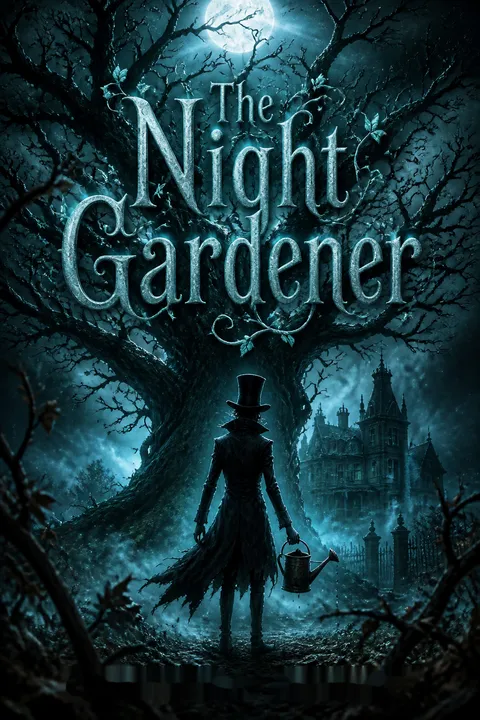


Plot Summary
Red Roads to Sourwoods
Molly McConnachie,1 fourteen, and her ten-year-old brother, Kip,2 have left Ireland with no parents and nowhere safe to stay. Hungry, exhausted, and traveling in a battered fish cart, they follow a job offer to the Windsor estate in England. Villagers warn them away from the sourwoods, but Molly1 cannot risk losing the only work that might keep the siblings together.
At a crossroads, the wandering storyteller Hester Kettle7 gives them directions in exchange for news about the Windsors.3 Across a decaying bridge, the children find a weed-choked mansion grown around a black, ancient tree. Kip2 notices movement behind a curtain. The place they need for shelter already seems to be watching them.
The journey begins as a practical act of survival, not a voluntary adventure. Molly has to turn fear into forward motion because every alternative threatens separation from Kip. Her cheerful inventions protect him, but they also establish a habit of replacing painful uncertainty with a story. The landscape reflects that unstable refuge: the bridge offers passage while visibly threatening collapse, and the manor promises shelter while appearing entangled with something hostile. Hester's bargain introduces storytelling as a currency, foreshadowing how stories will both help the children and tempt them to conceal what they know.
A Story Wins Shelter
Inside the mansion, Molly1 meets Penny Windsor,6 a lonely, curious girl who mistakes Kip2 for a beggar and immediately rummages through Molly's1 trunk. Molly captivates her with an invented island, turning Penny6 from an intruder into an ally.
Penny's mother,3 Constance,3 arrives and rejects the siblings, insisting she never wanted servants. Molly1 pleads for a chance to work, then describes the warm, orderly morning she wishes Constance could have. The story makes the neglected kitchen feel newly visible to its mistress, who relents and hires them.
The welcome comes with hard limits: Kip2 must sleep in the stables, and neither sibling may touch the tree. In the library, Molly1 spots a family portrait showing the Windsors3 healthier than they appear now.
Molly's story succeeds because it lets Constance experience a better life before demanding that she create one. This is not merely persuasion; it is a brief rehearsal of care, and it moves the mistress more effectively than accusation. Yet the employment arrangement exposes the limits of that kindness. Constance accepts labor from children in desperate need while keeping Kip apart from the household. Molly's gift for imagining comfort can open doors, but it cannot erase the power imbalance or make the house safe. The portrait adds a visual contradiction that resists the family's ordinary explanations.
Kip Defends Penny
Kip2 spends his first days working outdoors, where gardening lets him feel useful despite his twisted leg. Then he sees Alistair,5 Penny's older brother,5 bury her in a shallow pit and threaten her with earthworms. Kip2 charges in and fights Alistair5 until Molly1 pulls them apart. Though Kip2 struck first, Molly claims she witnessed the whole incident and says he was defending himself, hoping to protect their new jobs.
Constance3 sends Alistair5 away but gives no apology to Kip,2 then orders him to fill the hole. When Bertrand Windsor4 returns from town, his jokes and eagerness for approval meet Constance's3 coldness. Later, Molly1 overhears them arguing about debts and sees Bertrand4 take a key from his wife.3
Kip's intervention is both brave and complicated: he protects Penny by using the very violence Molly has often used to protect him. Molly's lie preserves their precarious employment, but Kip recognizes that a protective falsehood still asks him to accept someone else's version of events. That disagreement foreshadows the larger conflict between truth and the comfort of invented explanations. The Windsors' marriage offers a second version of the same pattern. Bertrand tries to charm his way past crisis, while Constance refuses the performance, leaving the children to sense the danger without being told its source.
The Hat in the Foyer
Molly1 secretly lets Kip2 sleep in her basement bedroom rather than leave him in the cold stables. He tells her that a tall, black-clad figure8 followed him through the fog, but she dismisses the sight as imagination. During the night, Molly1 wakes from a dream of her parents drowning and finds dead leaves and large muddy footprints beside her bed.
Following heavy footsteps upstairs, she discovers the front door open and the Windsor family3 moaning in their sleep. A violent gust scatters leaves through the hall, then leaves behind a battered black top hat. Molly1 carries it to Kip2 the next morning. Its shape matches what he saw, and the footprints cannot be explained away as wind. The night visitor8 is real.
The haunting becomes undeniable through material traces: mud, leaves, and a hat that can be handled. That evidence matters because Molly's instinct is to protect Kip from fear by dismissing it, even when the same strategy leaves her alone with danger. Her dream of her parents also links supernatural intrusion to private grief; the house does not invent the siblings' vulnerability, but it finds a way to enter it. The siblings begin this section divided by belief and end it with a shared fact, though they still do not know what the intruder wants.
Coins for the Creditors
Two city debt collectors, Fig10 and Stubbs,11 arrive at the manor demanding payment. Bertrand4 brings down a heavy sack, but the coins inside are small change, and the men threaten his family when he cannot settle the full debt. Molly lies to Constance about the visitors to hide Bertrand's4 humiliation.
She later sees him prepare to pawn household valuables, including Constance's3 wedding ring, but the ring appears on his wife's3 hand again soon afterward. The mismatched facts deepen Molly's1 suspicion of the locked green door. Bertrand4 has been taking money from somewhere inside the house, yet the household keeps losing ground: food is scarce, the marriage is strained, and the family grows paler and more exhausted.
The debt collectors make the household's private desperation visible as an external threat. Bertrand's debt is not an abstract failing: Fig and Stubbs turn it into physical intimidation, while the Windsor children witness their father's helplessness. Molly's cover story protects him from Constance's scrutiny, but it also places her inside the family's network of concealment. The ring's return suggests a mystery beyond ordinary pawning, and the locked room becomes more than a forbidden space. It is the apparent source of the family's resources, and perhaps the reason those resources never relieve their suffering.
Roots Under the Lawn
When Galileo12 disappears into the woods, Molly1 and Kip2 follow his hoofprints and discover pale flowers arranged in the darkness, though Kip2 has never seen them in daylight. Back at the manor, a figure in black8 tends the great tree, watering its roots and digging a trench. Kip2 later tests the ground by planting flowers near the trunk; each one withers when he looks away.
He finds old axes and blades swallowed by the bark, evidence that others have tried and failed to cut the tree down. In the trench, tiny roots move around his fingers and nearly bury him beneath dirt and leaves. Courage, his father's carved crutch, helps him climb free. The tree is alive, hungry, and dangerous.
Kip approaches the mystery through observation rather than Molly's imaginative improvisation. He tests the soil, notices the swallowed tools, and risks entering the trench because he wants evidence he can trust. That empirical curiosity nearly costs him his life, but it also reveals that the tree's influence is physical, not merely a product of local superstition. Courage, the crutch his father made, becomes a literal tool of survival. Kip's disability shapes how he moves through danger without defining his capacity to understand it or act decisively.
A Letter from the Tree
After Molly1 tells Penny6 that she and Kip2 may leave, Penny6 hides in the locked room at the top of the stairs, where a tree trunk fills one wall. Molly1 finds her beside a picture book showing the children in an adventure that resembles their lives.
When Penny6 leaves, seawater appears inside a hollow in the trunk. An envelope addressed to Molly1 rises to the surface. It contains a letter in her mother's handwriting, describing adventures at sea and promising that the parents will write again.
Molly1 is overwhelmed with relief and shows Kip2 the letter. Soon more arrive. She begins to believe the tree can grant wishes: Bertrand4 receives money, Constance3 receives rings, Penny6 receives books, Alistair5 receives sweets, and Molly1 receives what she longs for most.
The letter gives Molly exactly the hope she has been manufacturing for Kip, and its physical form makes the wish difficult to question. The tree does not offer comfort in general; it tailors its gifts to each person's private hunger. That precision makes the magic psychologically persuasive. A letter in a mother's hand carries more authority than a stranger's promise, especially to a child who cannot bear the alternative. Penny's illustrated books introduce a quieter version of the same mechanism: she is given stories in which she can be central, even as her real life offers little control.
Wishes Turn Against Them
The longer the Windsors3 stay, the worse they look. Constance's3 rings no longer fit her thinning fingers, and her cold skin makes Molly1 recoil. Alistair's5 sweets fill his room and change his body, though he admits they recall a time when his father4 took him to the candy shop. Doctor Crouch9 arrives to examine the family, dismissing Kip's2 disability and treating the mysterious illness as a chance to advance his reputation.
Hester7 tells Molly1 and Kip2 an old legend about a gardener8 who wished for endless life from a tree that granted desires at a cost. She asks Kip2 for his wishing button as payment. Afterward, Kip2 receives a small key made of roots, while Molly's1 hair and complexion continue to fade.
The gifts expose the difference between satisfying a craving and meeting a need. Alistair's sweets restore a childhood pleasure only in grotesquely excessive form, while Constance's rings preserve the memory of love as her body deteriorates. Doctor Crouch supplies a competing kind of wish: he wants recognition more than understanding, so he interprets illness as an opportunity. Hester's legend gives the children a framework for the tree without resolving their questions. Kip's key is especially unsettling because it arrives as a gift from the force they fear, making curiosity and danger difficult to separate.
The Wrong Catch
Molly1 persuades Doctor Crouch9 to help catch the night visitor8 by promising him a discovery worthy of scientific fame. With Kip's2 help, the doctor builds a net trap beneath the tree and rigs it to Galileo's12 wagon.
The approaching figure turns out to be Hester,7 sneaking in with garden shears to take a cutting. As the siblings question her, the Night Gardener8 appears. Crouch's9 camera fails to control the spirit,8 and the broken tree branch enrages it.
The doctor9 is crushed by a flying stable door, while Molly1 uses the camera's flash powder to drive the Gardener8 back long enough to free Hester.7 They escape across the bridge, where the spirit8 cannot follow. Mortally injured, Hester7 gives Molly1 and Kip2 an oilskin parcel before walking into the woods alone.
The trap exposes the limits of both scientific ambition and story-based confidence. Crouch treats the spirit as a specimen, but his equipment cannot protect anyone once the danger becomes personal. Hester, meanwhile, enters the woods not as a villain but as someone whose curiosity has outrun her caution. Her death follows from that choice, yet she does not regret witnessing the impossible. The bridge's boundary gives the children a temporary reprieve, not a solution. Their escape leaves them carrying both the costs of their own failed plan and Hester's final, unexplained gift.
The Story Molly Hid
After Hester7 dies at the crossroads, Molly1 and Kip2 burn her ruined pack and examine the parcel she left for later. Kip2 produces a tin of supposed healing balm that he received from the tree but has not used. He admits he wants to believe it could fix his leg, yet fears needing more and more.
Molly1 then tells him what happened during their Atlantic crossing: a storm sank the ship, and their parents put the children into the last lifeboat before staying behind. Molly invented the pirate story because she could not bear to tell Kip2 they were gone. The tree's letters revived that lie. Kip2 is hurt, but he understands that she was grieving too. He burns the balm, and the siblings decide to return to warn the Windsors.3
The truth changes the meaning of the letters without making Molly's earlier love for her parents false. Her lie began as protection, but it gradually became a place she could hide from her own bereavement. The tree exploits that refuge by turning longing into a reason to remain trapped. Kip's refusal to use the balm parallels his willingness to give up the fantasy of a healed body: he recognizes that a gift can become a dependency. Their reconciliation is not based on erasing the harm. It begins when Molly tells the truth and Kip chooses compassion without pretending the lie did not wound him.
A Lawn Full of Graves
Returning to the estate at dawn, Kip2 discovers black roots holding up the old bridge, which explains why the Night Gardener8 cannot cross beyond the tree's reach. Alistair5 confronts him, then throws Courage into the river after Kip2 warns him that the tree is harming his family. Kip2 leaves him with the truth about Constance's3 condition.
Inside the grounds, Molly1 shows Bertrand4 the hidden graves and the dead Doctor Crouch,9 and explains that each family member has a grave waiting. Bertrand4 finally recalls the night his mother helped him escape the manor as a boy while his parents stayed behind. Molly1 urges him to leave before the Gardener8 returns. Bertrand4 agrees to evacuate his family, though Constance3 is too weak to walk.
The graves turn a private suspicion into evidence the Windsors can no longer dismiss. Bertrand's childhood memory connects his family's current danger to the estate's older violence, but his first response is still to cling to the house and the resources it promises. Molly's appeal reframes escape as movement toward life rather than cowardice. Alistair's act of throwing away Courage is cruel, but Kip refuses to answer cruelty with hatred. He tells Alistair what his mother may lose, forcing the bully to confront consequences beyond his own grievance.
Creditors Block the Escape
The Windsors3 pack their belongings and prepare a wagon for Constance,3 who can barely move. Kip2 gathers oil, grease, and other flammable supplies, intending to destroy the bridge after the family crosses. Before they can depart, Fig10 and Stubbs11 return early, tie everyone up, and search the manor. Molly distracts them by pretending she knows where Bertrand's hidden fortune is kept.
She leads them to the locked room, steals Fig's10 knife, and lets the men enter. The sight of money spilling from the tree turns their greed into frantic celebration. Fig10 swings an axe at the hollow trunk. A pale arm reaches out and stops the blow, and the Night Gardener8 begins to emerge. Molly1 cuts herself free and locks the men inside.
The creditors are not simply a second danger arriving at the wrong moment. Their greed mirrors the family's dependence on the tree: both groups believe that one more payment or one more fortune will solve their fear. Molly uses that belief against Fig and Stubbs, converting their appetite into a means of escape. The axe strike marks a point of no return because it wounds the tree and summons the Gardener in full view. Molly's maneuver is clever but costly; it leaves the family facing a supernatural threat while the men remain trapped inside the room.
Brothers Against the Gardener
The Night Gardener8 breaks out of the room, and Alistair5 helps Kip2 reach the open ground. To slow the pursuer, Alistair5 breaks a branch growing through the house wall, causing the Gardener8 to recoil in pain. The boys flee across the lawn, using its small mounds as cover and throwing rocks to draw the spirit8 away from the others.
Kip2 has lost Courage, so Alistair5 bears much of his weight. The Gardener8 drives them into the dark woods by covering the moon with fog. Meanwhile, Molly1 gets Penny6 and the weakened Constance3 into the wagon. Bertrand4 pours oil over the tree's roots and prepares to ignite it, hoping to stop the force chasing his son5 and the boy2 who tried to save his family.
Alistair's change begins through responsibility rather than a sudden conversion of personality. He helps Kip because he recognizes his own role in taking away the crutch, then accepts danger to repair that harm. The children's game of hiding becomes a real survival strategy, making their earlier play an earned resource rather than a decorative memory. Meanwhile, Molly and Bertrand split their labor between escape and resistance. Their plan is imperfect, but it marks a shift from protecting private interests to risking themselves for people they once treated as dependents or burdens.
The Letters Become Fire
As Bertrand's4 fire consumes the manor, the tree repels the flames. Molly1 realizes that it accepts only the gifts it has given, so she carries the letters into the hollow and burns them there. The tree catches from within, and the Night Gardener8 crumbles as its power dies. In the woods, Kip2 sees the blaze and tackles the Gardener8 into the river, saving Alistair5 but nearly drowning himself.
Molly1 escapes the collapsing house with Bertrand's4 help. When Alistair5 brings Kip2 back, his body is limp. Molly tells a story about her brother, finally naming the love and guilt she had kept hidden. Kip2 coughs up water and breathes again. The siblings survive, and the tree's hold over the estate ends.
Molly defeats the tree by surrendering the object that has made her grief feel survivable. Burning the letters is not a rejection of her parents; it is a refusal to let a counterfeit promise govern the living. The ending also returns storytelling to its life-giving purpose. Molly's words cannot undo the shipwreck or guarantee Kip's survival, but they allow her to speak honestly at the edge of loss. Kip's rescue depends on courage and collective action, not a magical cure. The tree's destruction resolves the supernatural danger while leaving grief, disability, and memory intact.
A Road Beyond the Ruins
By morning, the house and tree have become ash, and birds and insects return to the island. Villagers bring food, clothes, and blankets for the surviving Windsors.3 Constance3 can stand again, and she thanks Molly1 for helping Bertrand4 become the husband she remembers. The family invites Molly1 and Kip2 to stay as relatives, but the siblings choose to find a home of their own.
Alistair5 gives Kip2 a newly made crutch, which Kip2 accepts. At the crossroads, Molly1 and Kip2 unwrap Hester's7 parcel and discover a map marked with a distant place. They set out with supplies from the Windsors3 and Galileo12 pulling the cart. Molly offers a new story for the road, this time without pretending that its imagined adventures are facts.
The ending restores ordinary life through specific acts: villagers share supplies, Constance stands, and Alistair replaces the crutch he destroyed. The Windsors' invitation offers belonging, but Molly and Kip decline because rescue does not require surrendering their independence. Hester's map turns her final gift into a direction rather than an instant wish; reaching a home will require travel, work, and exchange. Molly's storytelling remains essential, yet its meaning has changed. She can imagine dragons and distant destinations without using imagination to deny the losses that shaped the journey.
Analysis
The novel's central danger is not desire itself but the conversion of desire into a contract that cannot be examined. The tree offers each character something psychologically precise: Bertrand4 wants financial rescue, Constance3 wants to preserve the meaning of her marriage, Alistair5 wants the abundance he once denied himself, Penny6 wants stories, and Molly1 wants her parents back. Because each gift answers a real wound, the characters do not enter the manor as fools. They enter vulnerable, and the tree makes vulnerability profitable. Its horror lies in how convincingly it turns relief into dependence.
Molly's1 arc gives the book its clearest ethical argument. Her invented account of her parents begins as a child's attempt to protect Kip2 from unbearable news. When the tree supplies letters that seem to confirm the fiction, the lie becomes emotionally useful to Molly1 herself. She can keep Kip2 hopeful and avoid confronting her own loss. The eventual truth does not shame imagination; it distinguishes imagination from denial. Molly's final story about Kip2 cannot reverse danger, but it lets her speak honestly when she has no promise to offer. Storytelling becomes a form of presence rather than concealment.
The siblings' relationship also complicates the usual division between brave protector and dependent child. Molly1 has greater social power, but she sometimes mistakes protection for the right to decide what Kip2 should know. Kip's2 observations, labor, and choices repeatedly alter the course of events. His disability is neither a lesson to be cured nor a limit on his moral agency. Courage remains a tool, a crutch, a shared action, and finally a quality demonstrated by people who are frightened.
Around them, adult systems fail in distinct ways. Bertrand's4 debt and Crouch's9 ambition show how status and expertise can become self-serving; Constance's3 emotional withdrawal leaves her children lonely; the creditors10 exploit that weakness. The children's survival comes through cooperation, truthful recognition, and practical care. The ending offers no restored past. Instead, it gives the survivors a road, shared supplies, and the difficult freedom to build something new.
Review Summary
The Night Gardener is a creepy, atmospheric middle-grade novel that captivates readers with its gothic horror elements and compelling characters. Set in Victorian England, it follows Irish orphans Molly and Kip as they uncover dark secrets at the mysterious Windsor estate. While some found the pacing slow, most praised Auxier's masterful storytelling, exploring themes of greed, family, and the power of stories. The book's eerie atmosphere and moral lessons resonated with both young and adult readers, making it a memorable and thought-provoking read perfect for Halloween.
People Also Read
Characters
Molly McConnachie
Storytelling Irish sisterMolly is a fourteen-year-old Irish orphan who takes responsibility for her younger brother, Kip2, and uses quick thinking, hard work, and storytelling to secure their survival. She reads other people's needs with unusual skill, whether she is winning Penny's6 trust or calming a frightened adult. That talent has a shadow: when grief overwhelms her, Molly can use invention to avoid a truth she cannot yet bear. Her loyalty to Kip2 is fierce, but she sometimes treats protection as permission to decide what he can handle. She is resourceful rather than fearless, and her growth comes from learning that honest stories can help people face pain without disguising it.
Kip McConnachie
Resourceful younger brotherKip is ten, Irish, and born with a twisted left leg that makes walking difficult. He works steadily, notices details others overlook, and takes pride in tending plants and animals. His crutch, carved by his father and named Courage, represents both practical support and the family's care for him. Kip dislikes being treated as fragile or kept outside decisions, especially by Molly1, whose protectiveness can become a form of control. He is frightened by the manor's threats but willing to act when someone else is in danger. His directness and patient observation balance Molly's1 persuasive imagination, making the siblings strongest when they trust each other's different ways of seeing.
Constance Windsor
Guarded Windsor motherConstance is the elegant, severe mother of Penny6 and Alistair5, and the wife of Bertrand4. She insists on order and distance even while her neglected home reveals how little control she truly has over her circumstances. Her apparent coldness partly protects a history of lost status and strained affection, though it also hurts the children and servants who depend on her. Constance values the memories attached to small tokens of her marriage more than their material worth. She is proud, perceptive, and reluctant to admit vulnerability, yet the brief tenderness she shows Penny6 suggests that the stern household face is not the whole of her.
Bertrand Windsor
Anxious Windsor fatherBertrand is Constance's3 husband and the father of Alistair5 and Penny6. A nervous, stammering man who relies on jokes to soften uncomfortable silences, he wants to provide the comfortable life he believes his family deserves. His ambitions and financial decisions have left him vulnerable, and his need to repair his wife's3 disappointment makes him susceptible to easy promises. Beneath his evasions is a man who remembers love and family vividly, even when he struggles to act with confidence. Bertrand's comic manner should not obscure his fear or affection; he is someone whose desire to be a good provider can lead him to mistake money for care.
Alistair Windsor
Bitter Windsor sonAlistair is the older Windsor child, a boy Molly's1 age who bullies his younger sister6 and looks down on Kip2. He hoards sweets and uses mockery to establish control, especially in a household where his father's4 weakness and his mother's3 severity leave little room for honest affection. His cruelty is real, but so is the insecurity beneath it. He remembers being a child who tried to please his father4 and learned to regret wanting too little. Alistair often treats vulnerability as an invitation to attack, which makes trust difficult for others. His capacity for guilt and loyalty exists, though he rarely lets anyone see it.
Penny Windsor
Lonely Windsor daughterPenny is Constance3 and Bertrand's4 nearly seven-year-old daughter, curious, impulsive, and hungry for company. She wants Molly's stories because the manor offers few pleasures and her mother3 has grown distant since the family's move. Penny's playfulness can turn quickly into fear, particularly around illness and the strange nighttime presence8 she senses in the house. She is often treated as childish, but she notices emotional truths adults try to hide, including when Molly1 is preparing to leave. Her attachment to stories is not simply escapism; they give shape to a world in which she otherwise has little power.
Hester Kettle
Wandering story collectorHester is an elderly itinerant storyteller who travels with a jumble of objects, a hurdy-gurdy, and an appetite for unusual tales. She trades stories for food, lodging, and curiosities, treating narrative as both livelihood and a way of understanding people. Her jokes and theatrical manner conceal a wary intelligence, especially when she discusses the sourwoods. Hester recognizes Molly's storytelling talent and challenges her to consider the difference between an invention that helps and one that hides. Her ambition, curiosity, and self-reliance make her a vivid guide, though she is not immune to the very desires she warns others about.
The Night Gardener
Mysterious night visitorThe Night Gardener is a gaunt, black-clad figure who appears around Windsor Manor after dark, accompanied by wind, leaves, and muddy footprints. He tends the great tree with the care of a gardener performing familiar work, yet his presence leaves the household sick and terrified. His silent movements and unreadable face make him difficult to understand; he seems less like an ordinary intruder than a force bound to the uncanny landscape. The Night Gardener is frightening partly because he follows routines that resemble kindness, such as tending roots and entering rooms, while the consequences of his visits remain deeply threatening.
Doctor Ezekiel Crouch
Ambitious country physicianDoctor Crouch is a physician hired to examine the Windsor family3. He prizes empirical observation and professional recognition, but his confidence often slips into arrogance, particularly when speaking to Kip2 or Molly1. He dismisses explanations outside his scientific framework until the possibility of a remarkable discovery tempts him. His instruments and theories make him appear prepared for the unknown, though his ambition can overtake caution. Crouch represents the promise and limitation of expertise when curiosity is shaped more by prestige than by care for the people at risk.
Fig
Brutal debt collectorFig is the towering partner of Stubbs11, a city debt collector who uses his strength to intimidate the Windsor household3. He follows orders readily and treats property, money, and people as things to be seized. His imposing size contrasts with his reliance on Stubbs11 to set the terms of their threats. Fig's presence makes Bertrand's4 financial desperation immediate and dangerous.
Stubbs
Cunning debt collectorStubbs is the short, self-styled gentleman who leads the collection visits with threats, mock politeness, and a sharp eye for leverage. He understands that Bertrand's4 fear for his family can be more valuable than any object in the house. Stubbs uses charm as a weapon, making his menace harder to dismiss until it becomes physical.
Galileo
Stubborn family horseGalileo is the unreliable but beloved horse that pulls Molly1 and Kip's2 cart and helps them with their work. He is skittish around the manor and its tree, often resisting the children's attempts to lead him. His stubbornness sometimes causes trouble, but his instincts also register danger before the humans understand it. For Kip2, caring for Galileo connects daily work to the farm and family he misses.
Plot Devices
The wish tree
Desire with a priceThe ancient tree inside Windsor Manor appears to provide each person with a deeply desired gift. Bertrand4 receives money, Constance3 receives rings, Penny6 receives storybooks, Alistair5 receives sweets, Molly1 receives letters, and Kip2 is offered a remedy for his leg. These gifts make the tree difficult to reject because each one answers a private longing. Their benefits, however, draw the family deeper into the manor's danger rather than making them secure. The tree's gifts also function as a test of whether a person can distinguish comfort from need. The details of its true cost emerge gradually, so the device operates first as temptation and only later as a threat.
The saltwater letters
Grief made tangibleLetters written in the apparent hand of Molly1 and Kip's2 mother rise from seawater inside the tree's hollow. Their descriptions of travel and promises of future contact give the children a physical reason to believe their parents survived. Molly1 treasures them and reads them repeatedly, while the instructions to remain at the manor help bind her to the tree. The letters convert Molly's1 private grief into an ongoing plot choice: she must decide whether preserving them is worth the danger of staying. Their final use forces her to give up the false hope they provided in order to protect the living people around her.
Courage, Kip's crutch
Support made visibleKip's2 father carved his wooden crutch from a wych elm and named it Courage. It is a practical aid for a boy with a twisted leg, but it also carries the memory of his family and Kip's2 belief that courage can be something used rather than merely felt. Kip2 relies on it to work, travel, and escape the tree's roots. When Alistair5 throws it into the river, the loss becomes a concrete wound in their developing relationship. The replacement Alistair5 makes later signals an attempt to repair harm through action, not apology alone.
The moonlit garden
A refuge beyond reachFlowers bloom in the sourwoods only at night, creating a luminous garden at the edge of the estate. Kip2 discovers that the Night Gardener8 cannot enter this place, and the boundary gives the children a temporary refuge when he pursues them. The garden also preserves evidence of a life that preceded the tree: its ordered flowers suggest someone once planted and tended it. This makes the Gardener8 more than a faceless monster in the children's imagination. The garden's beauty does not remove danger, but it offers a place where the tree's power has limits.
Molly's storytelling
Imagination under pressureMolly1 invents stories to win work, comfort Penny6, encourage Kip2, and sometimes conceal painful facts. Her storytelling is a social skill grounded in close attention to what listeners need, which is why it can make an adult reconsider a decision or help a child endure fear. The same talent becomes dangerous when Molly1 uses invention to postpone truth, particularly about their parents. Hester's7 questions help Molly1 recognize that a story can help someone face the world, while a lie can help someone hide from it. At the climax, Molly's1 storytelling becomes an honest expression of love rather than an escape from grief.
FAQ
Synopsis & Basic Details
What is The Night Gardener about?
- Orphan siblings seek work: The story follows Molly and Kip, two Irish orphans, as they travel to England seeking work and a new home.
- Mysterious manor and family: They find employment at the Windsor estate, a decaying manor with a strange family and a sinister tree.
- Unraveling dark secrets: The siblings must navigate the manor's secrets, confront a mysterious night figure, and uncover the truth behind the tree's dark magic.
Why should I read The Night Gardener?
- Atmospheric and suspenseful: The book creates a chilling and suspenseful atmosphere with its gothic setting and mysterious events.
- Compelling characters: The story features well-developed characters, particularly Molly and Kip, whose courage and resilience are inspiring.
- Exploration of deeper themes: It delves into themes of family, loss, the nature of good and evil, and the power of stories, making it a thought-provoking read.
What is the background of The Night Gardener?
- Victorian England setting: The story is set in a remote part of England, likely during the Victorian era, with its class distinctions and superstitions.
- Irish Famine influence: The characters' origins as Irish orphans allude to the Great Famine, adding a layer of historical context and hardship.
- Gothic horror elements: The story incorporates elements of gothic horror, such as a decaying manor, a sinister tree, and a mysterious, haunting figure.
What are the most memorable quotes in The Night Gardener?
- "Not everything old and ugly is wicked.": This quote, spoken by Hester Kettle, challenges preconceived notions about appearances and morality.
- "You sleep soft, you sleep sound, You sleep the snow in Dublin town.": This lullaby, a recurring motif, evokes a sense of comfort and longing for home.
- "We're only askin' for a chance.": This plea from Molly highlights the desperation and vulnerability of the orphans, emphasizing their need for compassion.
What writing style, narrative choices, and literary techniques does Jonathan Auxier use?
- Folkloric and gothic tone: Auxier employs a folkloric tone with elements of gothic horror, creating a sense of unease and mystery.
- Third-person limited perspective: The narrative primarily follows Molly's perspective, allowing readers to experience the story through her eyes and emotions.
- Foreshadowing and symbolism: The author uses subtle foreshadowing and recurring symbols, such as the tree and the color black, to enhance the story's themes and atmosphere.
Hidden Details & Subtle Connections
What are some minor details that add significant meaning?
- The letters S, C, O, and P on the cart: These seemingly random letters, remnants of "ST. JONAH'S COD SHOPPE," foreshadow the siblings' journey and the idea of being "scooped" up by fate.
- The description of the sourwoods: The initial description of the sourwoods as a place of "lemon trees and lemon blossoms" is a false, comforting image created by Molly to mask her fear.
- The broken wheel on the fish cart: The broken wheel symbolizes the obstacles and challenges the siblings face on their journey, and their struggle to keep moving forward.
What are some subtle foreshadowing and callbacks?
- Hester Kettle's warning about the sourwoods: Her initial warnings about the sourwoods and its effect on people foreshadow the dark changes that occur in the Windsor family.
- Kip's description of the man in the fog: His early description of a tall figure in black with a tall black hat foreshadows the appearance of the Night Man.
- The mention of Master Windsor being sent away as a child: This detail foreshadows the dark history of the house and the family's connection to the tree.
What are some unexpected character connections?
- Hester Kettle and the Night Man: The connection between Hester and the Night Man is implied through her knowledge of the tree and her desire for a piece of it, suggesting a shared history or understanding.
- Molly and Constance Windsor: Despite their different social classes, Molly and Constance share a common experience of loss and a desire to protect their families, creating an unexpected bond.
- Kip and Alistair Windsor: Despite their initial animosity, Kip and Alistair form an unlikely alliance, highlighting the potential for change and redemption.
Who are the most significant supporting characters?
- Hester Kettle: As a storyteller, she provides crucial information about the history of the sourwoods and the Night Man, acting as a guide and a warning.
- Doctor Crouch: His skepticism and reliance on science highlight the conflict between reason and the supernatural, and his demise underscores the danger of the unknown.
- Alistair Windsor: His transformation from a selfish bully to a brave ally demonstrates the potential for change and the importance of empathy.
Psychological, Emotional, & Relational Analysis
What are some unspoken motivations of the characters?
- Molly's need to protect Kip: Her fierce protectiveness stems from a deep-seated fear of losing him, fueled by the loss of their parents.
- Constance's longing for the past: Her attachment to the ring and her stories about her past reveal a deep longing for a time before the tree's influence.
- Bertrand's desire for validation: His actions are driven by a need to prove himself to his wife and to escape the shame of his financial failures.
What psychological complexities do the characters exhibit?
- Molly's internal conflict: She struggles with the burden of responsibility, her desire to protect Kip, and her growing fear of the supernatural.
- Constance's emotional detachment: Her cold demeanor masks a deep-seated pain and a longing for a life she has lost.
- Bertrand's self-deception: He clings to the hope of the tree's magic, even as it destroys his family, revealing a deep-seated denial.
What are the major emotional turning points?
- Molly's discovery of the letters' origin: This revelation shatters her hope and forces her to confront the truth about her parents' fate.
- Kip's loss of Courage: The loss of his crutch symbolizes his vulnerability and his struggle to maintain hope in the face of despair.
- Constance's breakdown: Her emotional breakdown after seeing the ring on her finger reveals the depth of her pain and her longing for the past.
How do relationship dynamics evolve?
- Molly and Kip's bond strengthens: Their shared experiences and mutual reliance deepen their bond, transforming them from siblings to partners.
- Constance and Bertrand's relationship deteriorates: The couple's relationship is strained by the secrets and lies surrounding the tree, highlighting the destructive power of denial.
- Molly and Penny's friendship develops: Their bond is built on shared stories and a mutual desire for connection, offering a glimpse of hope amidst the darkness.
Interpretation & Debate
Which parts of the story remain ambiguous or open-ended?
- The true nature of the Night Man: The Night Man's origins and motivations remain ambiguous, leaving readers to ponder his connection to the tree and its power.
- The source of the tree's magic: The source of the tree's power and its ability to grant wishes is never fully explained, adding to the story's mystique.
- The fate of Molly and Kip: The ending leaves their future open-ended, suggesting that their journey is far from over and that they will continue to face challenges.
What are some debatable, controversial scenes or moments in The Night Gardener?
- Molly's deception about her parents: Her decision to lie to Kip about their parents' fate is a controversial moment, raising questions about the ethics of storytelling and the nature of truth.
- The use of the tree's magic: The characters' reliance on the tree's magic raises questions about the morality of seeking shortcuts and the consequences of unchecked desire.
- Doctor Crouch's death: His death, while a consequence of his own arrogance, raises questions about the nature of justice and the limits of human understanding.
The Night Gardener Ending Explained: How It Ends & What It Means
- The tree's destruction: Molly's sacrifice of the letters and the subsequent destruction of the tree symbolize the triumph of truth and courage over darkness.
- The Night Man's demise: The Night Man's death represents the end of the tree's influence and the liberation of the characters from its power.
- A new beginning: The ending offers a sense of hope and the promise of a new beginning for the Windsors and the siblings, who are now free to forge their own paths.
Download PDF
Download EPUB
.epub digital book format is ideal for reading ebooks on phones, tablets, and e-readers.








