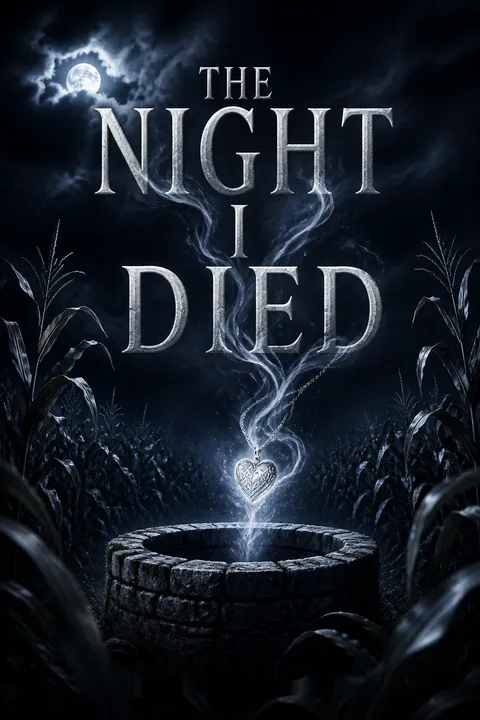


Plot Summary
A Call from Kansas
Los Angeles private investigator Olivia Welles has survived five clinical deaths, twenty-two surgeries, and the loss of her father and beloved dog. She has also spent her life avoiding Finney, Kansas, where a train wreck killed her mother and childhood best friend, Mazie Ray, and left Olivia with no memory of the accident. Then Bonnie Ray-Murphy, Mazie’s younger sister, calls from jail.
Three of Bonnie’s children are dead, and the town suspects her. Olivia has no reason to trust a woman accused of killing her own children, but Bonnie’s confusion and grief unsettle her certainty. When Bonnie asks her to check whether the youngest baby is alive, Olivia abandons her planned rest and heads back to the place she has spent years imagining.
The case begins as both a professional summons and an unfinished personal history. Olivia’s repeated surgeries have made death familiar as a medical event, but not as a settled experience: she cannot remember the accident that defined her. Bonnie’s plea binds the two women through shared survival before Olivia knows what that bond means. Olivia’s choice to go is not simple compassion. It is also a return to the blank space around her own identity, with the investigation offering a practical reason to approach what grief and her father’s warnings kept at a distance.
Three Children Lost
Five days before Olivia leaves California, Bonnie sits in her farmhouse nursing Calliope, the baby neighbors’ food and condolences cannot comfort. Her son Henry has been found dead in an old well, making him the third child she has lost.
The earlier deaths were explained as sudden infant death and a little girl wandering into a field during a heat wave. Now neighbors who once brought casseroles discuss Bonnie as a killer.
The accusation brings back the train wreck from her childhood: Bonnie remembers the collision, crawling from the overturned car, and following her injured mother across the fields before being found forty hours later. When police arrive, Bonnie submits to arrest. Conrad, her husband and the town marshal, emerges holding Calliope alive.
Bonnie’s point of view makes suspicion difficult to resolve. Her memory of childhood is vivid in some details and uncertain in others, while her account of the present slips between hours and days. That instability can suggest trauma, guilt, or both, but it cannot establish which. The town’s food is especially telling: neighbors offer care while privately turning their attention toward blame. The rescue of Calliope gives the scene a fragile reprieve, yet the repeated deaths make every act of protection feel belated. Bonnie is both a grieving mother and the focus of a pattern no one can ignore.
The Burning Rental
At the airport, Olivia meets Will LaFever, a journalist writing about the Murphy children. When the rental counter gives her a conspicuous vintage Cadillac instead of the compact she reserved, Will takes the compact and drives ahead. He has deliberately poured gasoline on its engine and set it alight, hoping the stunt will force Olivia to include him in her story.
She finds him safe beside the road, with his luggage already removed, and gives him a lift to Finney while quietly suspecting arson. Their uneasy partnership begins in the open Kansas landscape, where Will records details and Olivia studies his behavior. At the motel, they discover they are the only visitors staying there, and both are drawn toward the town’s unresolved history.
Will’s first important act is not reporting but manufacturing an event. His hunger to make a story distinctive has already blurred the boundary between observation and intervention. Olivia recognizes the manipulation, yet accepts the ride because curiosity and caution both point in the same direction. Their mismatched instincts create the partnership: he wants access and narrative momentum, while she wants evidence and control. The Cadillac, too conspicuous to hide her, becomes a useful disguise precisely because it announces her arrival. In a town where outsiders are watched, neither investigator can remain a neutral observer for long.
A Ghost in the Jail
Olivia visits Bonnie in jail and finds a woman whose soft manner sits uneasily beside the charge against her. Bonnie is relieved to learn Calliope is alive, asks Olivia to look after her dog Dorothy, and shows her a state-fair medallion like Olivia’s own. The object links them to the night of the train wreck, though Olivia remembers none of it.
Bonnie also wonders whether they survived when they should have died, a thought Olivia has privately carried for years. Afterward, Olivia visits the cemetery, where she finds Mazie’s grave, the graves of two Murphy children, and her own mother’s marker. The visit makes Finney’s losses tangible, but the old mortuary, where Olivia once lived, still waits for her to enter.
The jail meeting shifts Olivia from detached investigator to reluctant caretaker. She does not offer Bonnie absolution, but she responds to the practical needs that the town has left unanswered. The matching medallions work as physical evidence of a shared childhood, while their meaning remains unsettled. Olivia’s cemetery visit sharpens the difference between knowing facts and possessing memories: she can locate her mother’s grave and still feel no recognition of the life that preceded California. The case therefore expands beyond determining who killed the children. It becomes a test of whether Olivia can approach her past without treating its gaps as proof that it belongs to someone else.
The Mortuary’s Hidden Room
Will persuades Olivia to enter the abandoned mortuary where she lived as a child. The upstairs rooms have been stripped and vandalized, leaving no easy path back to memory. Below, they discover a bricked-up room containing embalming fluid and two gurneys. On them lie bloodstained dresses and red shoes worn by Olivia and Mazie on the night of the train wreck.
A matching medallion rests nearby. Olivia takes it, then suffers a severe headache and collapses outside, where Conrad Murphy catches her trespassing. He confirms Bonnie is due for release under supervision and admits the dog was sent to a shelter, adding that he hopes it was euthanized. Olivia leaves with the medallion and new reason to doubt Conrad’s account.
The hidden room turns the mortuary into an archive that Olivia’s father preserved but never explained. Its contents provide material proof of the accident while failing to unlock a single clear memory. That distinction matters: objects can confirm what happened to a body without restoring the person who inhabited it. Olivia’s decision to take the medallion is an emotional breach of the scene’s rules, not a considered investigative step. Conrad’s dismissive response to Dorothy intensifies the unease around him. He speaks as a grieving father, yet his hostility makes his authority feel less like protection than a barrier to scrutiny.
Dorothy’s Last Chance
Olivia searches several shelters for Dorothy, uncertain whether Conrad told the truth about where he took her. At a distant facility, she learns that a small dog labeled a biter is scheduled for euthanasia. Olivia finds the frightened animal hiding in the last kennel, calls her Dorothy, and watches her rush into her lap. She takes the dog despite the shelter’s unfinished paperwork.
With Dorothy beside her, Olivia visits Ava Ray, Bonnie’s mother, at the family farm. Ava welcomes her, explains that the earlier children died in separate accidents, and shows her Mazie’s untouched bedroom. A familiar music box and octopus pillow stir Olivia’s body with pain, not a clear recollection. Ava also leads her to the old well where Henry was found.
Dorothy’s rescue gives Olivia a concrete task at a moment when her own history remains inaccessible. The dog’s immediate response to her name contrasts with the uncertainty surrounding human memories: recognition is physical, direct, and difficult to talk away. Ava, meanwhile, makes hospitality part of the investigation. Her farm, business, and preserved bedroom present a functioning life built beside repeated loss. The scene is comforting until Olivia’s physical reaction to Mazie’s belongings suggests that the past is not simply absent. Her body reacts where her conscious memory cannot, making the familiar room both a refuge and a warning.
Imogene Goes Missing
Will questions Finney residents and learns that Imogene Griffin, a young woman who once babysat for Bonnie, thought the Murphy household had few rules and an overwhelmed mother. At a bar, Imogene tells Will she knows more about the family and the town’s strange history, but she withholds the rest. She does not appear for their next meeting.
Her mother soon reports her missing, and Will joins the search. He discovers Imogene’s body in the trunk of his rental car and is arrested by Conrad. Olivia argues that the scene must be preserved, calls her former colleague Coco Sandoval at the Kansas Bureau of Investigation, and brings in an outside forensic team. The town now has a second suspected murder, and Will is its most convenient suspect.
Imogene’s disappearance converts Will’s ambition into immediate danger. His choice to meet her alone and keep the meeting from Olivia leaves him isolated when her body turns up in his car. Yet the evidence is also conspicuously convenient: a reporter who has inserted himself into a murder story is found with the missing woman’s corpse. Olivia’s insistence on outside forensic work counters the town’s eagerness to settle the matter quickly. The scene exposes how easily local authority and public certainty can converge before evidence has been properly collected, especially when an outsider already appears careless and suspicious.
A Funeral Interrupted
The Kansas Bureau of Investigation secures a court order to take Henry’s body for a full autopsy, interrupting the funeral and angering the crowd. Imogene’s mother, Irene Griffin, arrives carrying a rifle and accuses Will of killing her daughter. Olivia tackles Irene before she can shoot him, but Irene slams Olivia’s head against the ground.
Will gets Olivia back to the motel, where he follows her assistant Ezra’s instructions and watches for signs of a stroke. Forensic timing and evidence of forced entry into the rental help clear Will, and he is released after three days. Olivia’s intervention has protected him, but her head injury and the town’s hostility make her return to the case more dangerous.
The funeral turns public grief into a volatile form of judgment. The crowd accepts the removal of the body only with outrage, then redirects that anger toward Will when Irene names him as a killer. Olivia’s physical intervention refuses the easy conclusion that the most visible suspect must be guilty. Her injury, however, complicates the image of her as self-sufficient: she must accept care from Will and Ezra at a moment when she is already postponing major surgery. The scene also shows how investigative procedure can feel like desecration to mourners, even when it is the only path to reliable answers.
The Name Beneath Olivia
After recovering enough to visit Ava again, Olivia brushes the older woman’s hair in Mazie’s room and notices their faces resemble one another. She remembers her father meeting a dark-haired woman years earlier and giving her a pink octopus for Olivia, then discarding it after the meeting.
Ava breaks down and admits Olivia is not Harold Welles’s biological daughter: after the wreck, Harold switched the injured girls’ identities so the badly injured child could receive his insurance and medical care. Olivia was raised as his daughter, while Mazie was buried under the wrong name. Then Coco reports antifreeze in Henry’s tissue and plans to exhume the other children. Before Olivia can act on the revelation, Bonnie escapes with Calliope.
The identity revelation does not arrive through a recovered memory but through a pattern of bodily resemblance, an old object, and Ava’s inability to maintain her story. The switch explains Olivia’s missing past while making her childhood feel newly unstable: the loving father she knew also withheld the truth that shaped her identity. The medical evidence changes the case at the same moment. Antifreeze in Henry’s body turns a chain of tragedies into a likely pattern of deliberate poisoning. Bonnie’s escape with Calliope then makes the investigation urgent in a new way, because the remaining child may be in danger from more than one adult.
The Marshal’s Secret
Ezra tells Olivia that Imogene’s forensic samples match Conrad, whose DNA was available through earlier police procedures. Olivia enters the mortuary and confronts him about a sexual relationship with the teenage babysitter and her death. Conrad tries to cuff her, but she disarms him and restrains him to a railing until state officers arrive.
He is arrested and later confesses to killing Imogene after she confronted him about his promises, abortions, and other underage partners. Before leaving town, Will joins Olivia in the Mazie Ray Days parade, where protesters throw pig waste at Ava. He then departs for the airport, expecting the case to be over. Olivia stays behind, not knowing that the public celebration will become a mass emergency.
Conrad’s arrest resolves the murder that first placed Will in danger, but it does not resolve the family’s larger violence. His position as marshal had allowed him to control scenes and shape what the town saw; the DNA and his confession finally place him under outside scrutiny. Olivia’s physical skill reverses the expected power relation in the mortuary, where Conrad had once confronted her as an officer. The parade offers a brittle return to ordinary civic life. Will leaves believing he has reached an ending, while Olivia remains tied to a town whose rituals of remembrance are about to expose another crime.
Poison in the Pie
At the town’s ice cream social, Ava’s pies run out as crowds gather for the festival. One woman becomes violently ill, then Olivia sees people collapsing along the street and recognizes symptoms consistent with antifreeze poisoning. She warns the remaining guests, orders volunteers to collect the food, and calls emergency services.
Ava is missing, Bonnie has escaped her supervision, and Calliope cannot be found. Olivia drives to the Ray farm, where Ava is loading belongings into a car and claims Bonnie is responsible for the poisoning. Ava says the baby may be in the old well. Olivia runs to check, but finds no child in the water. As she leans over the stones, Ava shoves her into the well.
The poisoned social turns the story’s recurring domestic symbols into public hazards. Pie, a product associated with Ava’s care for the town, becomes the delivery system for a mass attack. Olivia responds by coordinating strangers rather than pursuing a private theory, showing how her investigative discipline can become practical leadership under pressure. Ava’s attempt to blame Bonnie exploits the town’s existing suspicion, while her claim about the well exploits Olivia’s urgency to find the baby. The fall forces Olivia into the same landscape that has repeatedly swallowed children, but this time she enters it knowing someone deliberately put her there.
The Cornfield’s Cry
Olivia climbs out of the well and returns to the farm, where she finds Bonnie wandering with blood on her hands and Clara injured inside the house. Bonnie cannot clearly remember where she left Calliope, but insists the baby is hidden from Ava. Will returns to Finney after hearing about the poisonings and brings Dorothy with him.
The dog pulls Olivia into the cornfield and leads her to Calliope’s carrier. The baby is alive, and the blood on the handle is not hers. In parallel, Ava’s history comes into focus: she switched the girls after the wreck, killed her grandchildren to preserve the sympathy and status their deaths brought her, and poisoned the pies. She drives onto the same tracks and dies when a train strikes her car.
The rescue depends on attention to the living rather than certainty about the guilty. Bonnie’s fragmented behavior makes her difficult to trust, but her attempt to hide Calliope from Ava proves more important than her confusing account. Dorothy’s tracking instinct succeeds where human testimony has failed. Ava’s motive is chillingly social: she turns bereavement into a source of belonging, then keeps producing the loss that sustains it. Her death at the crossing that began Olivia’s life in Finney closes a physical circle without making the past simple. The rescued baby survives, but the adults’ stories remain morally divided.
A Life Reclaimed
Olivia returns to California and undergoes the risky surgery she had postponed. Beforehand, Harold’s letter arrives: he confirms the identity switch, expresses remorse, and warns her not to trust Ava or Bonnie.
Olivia wakes after doctors induce a coma to reduce swelling, with Ezra, Will, and Dorothy nearby. Later, during a call, Bonnie admits she followed Ava’s instructions and that Calliope had antifreeze in her system; a search finds poisoned breast milk, and Bonnie is jailed awaiting trial.
Calliope is placed with Maureen, Olivia’s stepmother, while Olivia begins the process of becoming her guardian. Months later, Olivia practices yoga with Will on Venice Beach and tries his pumpkin pie. She is still healing, but no longer treats her life as unreal.
The final resolution gives Olivia evidence without offering a clean moral inheritance. Harold’s letter confirms the history but also shows that love and deception coexisted in the same act. Bonnie’s confession makes the danger to Calliope concrete, though her motives remain entangled with coercion, jealousy, and her own capacity for harm. Olivia’s recovery is therefore not a return to the person she was before Kansas. It is a decision to keep living with uncertainty, to pursue guardianship despite her health, and to let Will and Ezra care for her. The shared pie is a modest sign of appetite returning, not a cure for what happened.
Analysis
The Night I Died treats memory as both shelter and liability. Olivia has been told that forgetting the train wreck spared her, yet that absence also lets other people define her past. The mortuary’s preserved clothing, the state-fair medallions, and the rooms kept intact in Mazie’s house offer evidence without delivering certainty. Her eventual identity revelation is therefore not a recovered memory but an ethical problem: Harold’s deception saved a child’s medical future while denying her the truth of her origins.
The novel also examines how small communities convert grief into social currency. Ava’s pies, employment, and memorial festival create belonging, but they also give her a public identity built around loss. The town’s affection for her and suspicion of Bonnie are not reliable measures of character. Both women can appear vulnerable; both can use that appearance to shape what others believe. The book’s strongest counterweight to rumor is procedure: Coco’s forensic work, the court-ordered autopsy, and evidence that can be retested beyond the authority of the local marshal.
Olivia’s investigation becomes meaningful when it expands from solving a case to protecting people who cannot protect themselves. She saves Will from a public accusation, intervenes for Calliope, and eventually considers becoming the child’s guardian despite her own uncertain health. These acts do not erase her grief or make her past whole. They show a more grounded form of survival: not escaping vulnerability, but choosing responsibility with full knowledge that it may hurt. The final shared pie matters because Olivia’s change is not a sudden cure. She discovers that something she expected to reject can become part of a life she chooses to keep living.
Review Summary
The Night I Died receives mixed reviews averaging 3.96 stars. Readers praise Frasier's atmospheric writing, unique plot twists, and compelling protagonists Olivia and Will, whose non-romantic partnership is refreshing. The Kansas setting is effectively creepy. Many appreciate the unexpected turns and fast pacing. However, critics cite slow starts, choppy dialogue, excessive mundane descriptions, predictable twists, plot holes, and an implausible premise requiring suspension of disbelief. Some found characters flat and robotic. The dog Dorothy is universally loved. Several reviewers hope for a series continuation.
People Also Read

Characters
Olivia Welles
The scarred investigatorOlivia is a thirty-eight-year-old private investigator and former homicide detective whose reconstructed body carries the cost of a childhood train wreck. She is observant, skeptical, and self-reliant, but grief over her father and dog has left her more vulnerable than she admits. Her habit of counting her own clinical deaths gives her a dry way to approach danger, though it cannot settle her uncertainty about the past. In Finney, she investigates Bonnie’s case while confronting the place she has spent years avoiding. Olivia’s instinct is to protect people before deciding whether she likes them, a quality that complicates her professional distance and gradually allows others to become more than cases.
Bonnie Ray-Murphy
The grieving motherBonnie is a young mother whose children’s deaths have made her the center of Finney’s suspicion. She has a learning disability and a fragile, wandering manner that can make her seem innocent or unsettling, depending on what the listener expects to see. Her memories of the childhood train wreck are vivid but not always dependable, and she often shifts attention away from painful subjects. Bonnie asks Olivia for help because she needs someone from the past to take her seriously. Her longing for her children and her difficulty managing ordinary responsibilities coexist, leaving others unsure whether to comfort her, protect her family, or investigate her.
Will LaFever
The hungry reporterWill is a journalist for the online publication Hard Times, drawn to a Kansas murder story partly by his ambition to produce a landmark piece. The son of a celebrated novelist, he has built much of his identity around escaping his father’s shadow, even when his choices reveal how badly he wants recognition. His charm and curiosity help him gather information, but his judgment falters when he tries to force events into a compelling narrative. Olivia’s skepticism pushes him to see the people behind the story, while his loyalty grows into a willingness to return when he believes she may be in danger.
Ava Ray
The town’s pie makerAva is Bonnie’s mother, a practical, warm-seeming woman who runs a successful pie business and employs local women. She has endured repeated family tragedy and remains deeply invested in the community that once kept her at its margins. Her hospitality is polished by habit: she feeds visitors, offers tours, and maintains the rooms and rituals that preserve her family’s history. Ava can be generous and emotionally perceptive, yet her strength also has a controlling edge. She understands what people need to hear and how belonging is built in a small town, making her influence over family and neighbors difficult to separate from genuine care.
Conrad Murphy
The local marshalConrad is Bonnie’s husband and Finney’s town marshal, a physically imposing man whose uniform gives him unusual authority in a community with few outside checks. He presents himself as a grieving father, exhausted by the deaths of his children and protective of the last surviving baby. His emotional reserve can look like steadiness, but his blunt anger toward Olivia and his control of local investigations make him hard to read. Conrad is shaped by the town’s insularity, where familiar relationships can shield people from scrutiny. His status as both family member and law officer places him at the center of the conflict between private grief and public accountability.
Ezra Tobias Rafael III
Olivia’s watchful assistantEzra works for Olivia and has rebuilt his life after addiction and homelessness. She helped find him in a Skid Row encampment after his mother went to prison, and he has since earned his GED, taken classes, and developed a gift for research and organization. He is affectionate, impulsive, and protective, often showing care by sending Olivia dog listings or checking her location. His concern can become intrusive, but it comes from a hard-won attachment to someone who gave him a second chance. Ezra’s growth echoes the book’s interest in whether people can become more than the worst period of their lives.
Imogene Griffin
The missing babysitterImogene is a young woman who once babysat for the Murphy family and works at Finney’s café. She has watched the household from close range and notices how little structure or support the children received. Her willingness to share concerns with Will suggests both courage and hesitation: she wants the truth known but understands the cost of challenging people with local power. Imogene’s perspective gives the investigation a view of the family that neither police reports nor grieving relatives can provide. She is also a reminder that young people in small communities may recognize troubling behavior long before they have the authority or confidence to intervene.
Mazie Ray
Olivia’s childhood friendMazie was Olivia’s closest friend before the train wreck that shaped both families. She loved octopuses, shared childhood games and rituals with Olivia, and remains present through her preserved bedroom, grave, and the town festival named in her memory. Because Olivia cannot recall their life together, Mazie is known to her through other people’s stories and the objects left behind. That distance makes her more than a lost friend: she represents the portion of Olivia’s childhood that was taken from her, and the question of whether a person can feel connected to memories she cannot consciously access.
Calliope Murphy
The surviving babyCalliope is Bonnie and Conrad’s youngest child and the only baby still alive when Olivia returns to Kansas. Too young to understand the adults’ history, she becomes the clearest measure of their actions: whether they can provide safety rather than merely claim to love her. Her care shifts between Bonnie, her grandmother, and others as the investigation unfolds. Calliope’s vulnerability gives Olivia a reason to keep acting even when the case threatens her health. She also links Olivia’s unresolved past to a possible future role in a child’s life.
Coco Sandoval
The KBI investigatorCoco is an investigator with the Kansas Bureau of Investigation and an old professional contact of Olivia’s. She brings outside expertise to a town where local authorities have handled the children’s deaths with limited forensic work. Practical and candid, she understands both the constraints of a stretched department and the need to preserve evidence before it disappears. Coco’s involvement gives Olivia a route to official action without turning her into the case’s authority. Their relationship is built on professional trust: Olivia can raise concerns, and Coco can decide what the law and evidence allow.
Irene Griffin
A mother demanding justiceIrene is Imogene’s mother, devastated by her daughter’s disappearance and death. Her grief makes her desperate for an answer, and the town’s readiness to blame Will gives that desperation a target. When she arrives at the funeral with a rifle, she acts on rage rather than evidence, endangering both Will and Olivia. Irene’s outburst shows how sincere pain can still produce injustice. She is not simply an antagonist to the investigation; she is a bereaved parent whose understandable need for action has been redirected by a community unwilling to wait for facts.
Dorothy
The rescued little dogDorothy is a small, frightened dog whom Olivia finds at a shelter moments before euthanasia. She responds strongly to her name, distrusts some people, and forms an immediate bond with Olivia. The dog gives Olivia a reason to practice care without demanding that grief disappear first. Dorothy also becomes an unexpectedly capable companion, moving through spaces and following scents that the human investigators miss. Her presence makes the story’s concern with loyalty concrete: she cannot explain what she has witnessed, but her behavior repeatedly points Olivia toward what matters.
Maureen
Olivia’s distant stepmotherMaureen is Harold Welles’s second wife and the stepmother Olivia struggled to connect with after her father remarried. Her efforts to welcome Olivia often felt too careful, leaving Olivia more conscious of being an outsider. Despite that strained history, Maureen remains open to contact and willing to discuss the family’s past. She represents a relationship Olivia may have dismissed as awkward rather than unkind. Her presence matters because Olivia’s idea of family has been shaped by loss, secrecy, and distance, not only by the people she remembers most clearly.
Harold Welles
Olivia’s devoted fatherHarold was a Kansas coroner and Olivia’s father, a stoic man who rarely spoke about the train wreck. After moving to California, he raised Olivia through years of reconstructive surgeries and tried to give her a life beyond the accident. His emotional distance later left Olivia wondering what she had done to lose his closeness. Harold’s choices are driven by grief and a desire to protect, but protection becomes entangled with silence. Even in memory, he is both a source of tenderness and a reminder that love can shape a person’s life while withholding the truth.
Florence Welles
Olivia’s remembered motherFlorence is Olivia’s mother, who dies after the train wreck and remains part of Olivia’s history through family stories and her grave in Finney. Her absence shapes Harold’s grief and the life Olivia remembers from California. Because Olivia has no clear memories of the accident, Florence is less a recalled presence than a missing foundation.
Mack Ray
Ava’s farmer husbandMack is Ava’s husband and Bonnie’s father, a farmer whose household reflects the conventional roles of rural life. Ava remembers him as a dependable provider but also as a man who left domestic and emotional labor largely to her. His place in the family history helps explain the pressures surrounding Ava, without making those pressures a justification for the harm that follows.
Plot Devices
The state-fair medallions
A token of shared historyThe cheap gold-colored medallions bought at the Kansas State Fair connect Olivia and Bonnie to the night of the train wreck. Olivia’s chain and the matching one Bonnie wears give them a shared object to touch when words fail. One medallion is found among the girls’ clothes in the mortuary, while the old burn scar on Bonnie’s cheek links the jewelry to her rescue from the field. The token first appears to confirm friendship and survival, then becomes part of the mystery surrounding who the girls were and what each remembers. Its role in the identity revelation is a spoiler.
The sealed mortuary room
A hidden physical recordThe abandoned Welles mortuary holds a bricked-up room beneath its damaged living quarters. Olivia and Will break into it and find embalming supplies, the bloodied clothes worn by Olivia and Mazie during the wreck, and a medallion. The room gives physical form to a history that Olivia’s father never explained, but it cannot supply the missing memories she hopes to recover. Later, Olivia returns to the gurney where her childhood body was placed and confronts Conrad there. The room links the accident, the identity question, and the present investigation. Its contents reveal major plot information.
The open hand-dug well
A recurring place of dangerThe old well on Ava’s farm is initially introduced as the place where Henry’s body was found. Ava explains that she had left it open for wildlife, though the family had now planned to fill it in. Later, Olivia is pushed into it while searching for Calliope and must climb the wet stone walls to escape. The well gathers the novel’s repeated failures of adult protection into one physical location: it is both a place where a child died and a trap from which Olivia must save herself. Its role in the climax is a spoiler.
Pie and antifreeze
Care turned into poisonAva’s pie business is a source of income, community standing, and the town’s familiar comfort. When the ice cream social serves contaminated pies, the same food associated with hospitality becomes the delivery method for a mass poisoning. Antifreeze also appears in the tissue of Henry and, later, the other Murphy children, connecting the public emergency to the family deaths. The substance gives investigators a testable clue where local suspicion and unreliable memories offer little certainty. Its use in the social and the children’s deaths is a spoiler.
Olivia’s repeated deaths
A measure of uncertain survivalOlivia keeps count of the times she has flatlined, making death part of her personal vocabulary rather than an abstract threat. Her medical history follows the train wreck through surgeries, metal implants, headaches, and a risky operation she repeatedly postpones. The count gives her a darkly comic way to manage fear, while her lack of memory of the original accident leaves her unsure what survival means beyond the medical record. The final surgery places that uncertainty at the center of her present life: she must accept the possibility of not waking in order to live with less danger.
Olivia Welles Series
Download PDF
Download EPUB
.epub digital book format is ideal for reading ebooks on phones, tablets, and e-readers.








