

Plot Summary
The Empty Yard
On a winter day in Bethelville, eight-year-old Kathy Stone plays in her yard while her mother, Claire, scrubs a burnt pan inside. A favorite mermaid doll lies face down on the grass, but Claire trusts the familiar pattern: Kathy is probably nearby. When she finally checks, the yard and house are empty.
Claire searches with neighbor Vera Miller, then calls her husband, Pete, as fear overtakes her. Neighbors and police spread through town, while Claire's ordinary delay becomes the detail she replays afterward. Kathy has not wandered to a friend's house. She has vanished from a place Claire believed she could keep safe by watching closely, and the search begins with no clear sign of force.
The disappearance grows out of a lapse so mundane that Claire cannot make it fit the scale of what follows. The pan and the mermaid doll become more than clues: they fix her guilt to a specific moment, as if perfect attention could have guaranteed safety. The lack of visible force also shapes the town's response. People search urgently, but uncertainty invites suspicion, and the absence of an answer begins to damage the relationships it cannot explain.
Shoes in Thirty-One Forest
The search continues after dark, with Melody Hart, Claire's friend and Robin's sister, combing the town while trying to keep her children calm. Four days after Kathy disappears, police find her muddy shoes in a derelict farmhouse off Route 31, deep in the woods locals call Thirty-One Forest.
The discovery gives investigators a location but no trail to the child. Rumors about the farmhouse multiply, and suspicion turns toward people close to the family because Kathy seems to have left without a struggle.
As months pass, the town's shared search becomes gossip and theories. Claire keeps looking, while Pete eventually accepts that Kathy may be dead and leaves for Indianapolis. Claire stays in Bethelville, unwilling to abandon the home her daughter might return to.
The shoes offer evidence without explanation, a cruel half-answer that makes the farmhouse a screen for the town's fears. With no body and no suspect, neighbors substitute stories for knowledge, and the family bears the cost of those stories. Claire's refusal to leave is not simple denial. The house preserves a place for Kathy, while Pete's departure reflects the opposite survival strategy: escaping reminders that have become impossible to live beside.
Found in the Rain
Fifteen months later, Kathy walks barefoot along a rain-soaked road, thin, injured, clutching a rag doll and unable to explain who she is. When a driver named Ian finds her, she panics at his approach, so he backs away and calls for help. Police identify her through the missing-person database and contact Claire.
She and Pete drive to Jasper, where Claire recognizes her daughter and folds her into an embrace; Kathy cries but cannot speak. Pete returns from Indianapolis to meet them. The reunion restores Kathy to her parents, not to her former life: she startles at noises, clings to Claire, and cannot tolerate questions about what happened. Claire asks Robin Hart, a child therapist, to help her daughter recover.
Kathy's return is a miracle with its own cost. Her body reaches home before her speech, confidence, and sense of safety do, making reunion an opening rather than a resolution. Ian's restraint matters: he helps by respecting the child's fear instead of demanding trust. Claire's immediate closeness contrasts with Pete's desire for answers, establishing two different responses to trauma that will complicate their efforts to care for Kathy.
The Playroom Door
Robin welcomes Kathy and Claire into a playroom where the child can choose what to touch and when to stop. Kathy buries her hands in sand, then calms herself by blowing bubbles after a motorcycle's engine sends her scrambling to Claire. At the art table, she paints a smiling man, marks his limbs in red, then spreads the color until the figure disappears.
She washes the paint from her hands and arranges a family of toys in the dollhouse, placing a grinning clown apart from the others. Robin notices the images but does not press for an explanation. Outside the clinic, she is struggling with insomnia, her father's death, a painful divorce from photographer Evan Moore, and her mother's relentless criticism.
The playroom gives Kathy something her captivity removed: control over sequence, proximity, and attention. Robin's careful reflections make each action legible without forcing it into a verbal account the child cannot provide. Yet the counselor's own life complicates her confidence. She is practiced at recognizing others' distress while treating her own exhaustion as manageable, a blind spot that later makes professional judgment and personal vulnerability collide.
A Pencil Turns Weapon
Claire brings Kathy to visit her former best friend Amy, Melody's daughter, hoping familiarity will help. Amy's younger brothers, Liam and Noah, barge into the bedroom, waving Kathy's frightening drawings and making monster games of them. When Noah jumps near her, Kathy stabs his leg with a sharp pencil.
Pete shouts and takes the pencil, and Kathy retreats from him, sleeping poorly and clinging to Claire again. In the next therapy session, she returns to the dollhouse. Robin watches her make the clown attack a farmer with a toy drill, then summon larger figures to crush the clown and bury the farmer. The play is deliberate, and Robin begins to suspect the girl is trying to show more than fear.
The stabbing is not a sudden turn toward cruelty; it is a frightened child's attempt to regain control when noise and movement overwhelm her. Pete's forceful response deepens the rupture between them, while Claire's protection risks becoming the only safety Kathy can imagine. In therapy, the farmer's burial gives violence a consequence the child can stage and contain. Robin's task is not to excuse the act, but to understand what the game makes visible.
The Clown's Murder Script
Kathy's dollhouse games grow more specific. She chains a girl figure to a table, drags a dancer from bed, stabs her, then hangs her from a tiny tree. Robin recognizes the sequence as resembling the murder of Haley Parks, a young influencer recently found in the forest.
She contacts Detective Nathaniel King, who is investigating another killing, and tells him what Kathy has shown without disclosing private session details beyond what Claire permits. In later play, the clown forces a suited figure into a container of filthy water. A woman is soon found drowned in a barrel, matching Kathy's scene. Investigators connect these images to other unsolved murders, including killings involving a drill and severed limbs.
Kathy's play becomes a form of evidence, but not a transparent transcript. Its power lies in precise actions and objects, while its ambiguity makes interpretation ethically risky. Robin must protect a child's therapeutic trust even as the possibility of further victims presses on her. King's attention shifts the games into a police investigation, where symbols that helped Kathy regain control can also expose her to renewed scrutiny.
A Map in the Shoebox
Kathy brings Robin a shoebox of small things she has made for the dollhouse: clothes, blankets, a flag, plastic pumpkins, and a paper basketball hoop. Robin and King realize the objects may represent what Kathy saw from a window, not just furnishings inside a room. A yellow curtain, a nearby stop sign, a fire hydrant, and a hoop hidden behind a tree form a pattern.
King and his partner search the likely streets in Jasper and find a house matching the view. Inside, they discover a locked child's room, horror films, a camera system, and journals tracking Kathy and Robin. The evidence points to Jonas Kahn, but he has already fled. A surveillance feed has shown him the police at his house.
The shoebox turns Kathy's painstaking craft into a map, translating an experience she cannot narrate into landmarks she can reproduce. The investigators succeed because they learn to read the objects relationally: not as a list of household possessions, but as a view from a trapped child's window. The discovery also reverses the feeling of safety. The same surveillance that helped Kahn monitor his targets alerts him that the authorities are closing in.
The House Behind Yellow Curtains
Kahn's journals show that he has been stalking Robin, Kathy, and other women. Before police can arrest him, he sees them searching his house and moves against Robin, abducting her during a walk with Menny. Her dog escapes and reaches Jimmie's Café, alerting the town that she is missing. Detective King and the sheriff trace Robin's phone to the park, then find evidence that she was carried away.
At Kahn's house, investigators discover a compilation of horror-film scenes, notebooks that script his stalking, and hair taken from earlier victims. A camera recording of one murder suggests someone else may have helped film it, though the person's identity remains unknown. King learns Kahn may be preparing another staged killing.
Kahn's home is both a crime scene and an extension of his imagination: he records people as material for scripts, then treats their lives as scenes he can control. The journals turn ordinary routines into a predator's schedule. Robin's abduction makes the investigative stakes immediate, while the possible second person in the murder footage widens the danger beyond one known offender.
The Bath Beneath the Ruins
Kahn takes Robin to the abandoned farmhouse where Kathy's shoes were found and binds her beside a rain-filled bathtub. He prepares a heated mixture of sodium hydroxide, intending to recreate a horror-film killing. Robin keeps him talking, works a broken tile against her restraints, and frees her hands. When he brings the pot close, she throws the caustic liquid onto him and escapes into the storm.
Kahn pursues her through the ruins, but Robin slashes his face with a broken bottle. King arrives and shoots Kahn before he can reach her. Later, investigators confirm that Kahn modeled his murders on horror films he watched with Kathy; his victims included Haley Parks, Gloria Basset, Cynthia Rodgers, and Mandy Ross.
Robin survives by turning attention into time. Her questions are not a bid to understand Kahn; they keep his focus away from the rope and give her a chance to act. The horror-film logic he imposed on victims becomes useless when she refuses the role of passive audience. Her escape is costly and embodied, with burns and injury, but it breaks the script he believed he controlled.
The Babysitter's Second Claim
After Robin's rescue, Claire and Pete leave Kathy with Ellie, the cheerful café worker who used to babysit her, while they try to repair their marriage. Kathy panics and disappears from the house. Robin finds her safe in the playroom, where the girl uses the dollhouse to show the woman figure taking the child away. Ellie arrives with a gun, intending to reclaim Kathy.
Robin keeps her talking until Kathy slips free and wounds Ellie's hand with a nail file. Ellie admits she took Kathy from the yard, brought her to Kahn, and left her there after the girl stopped speaking. She had planted the shoes at the farmhouse to misdirect police and had treated Kathy as her own daughter. Police arrive and arrest her.
The final revelation changes the meaning of Kathy's earliest clues. The shoes were not merely a trail left by an unknown predator; they were planted by someone the child knew and trusted. Ellie's self-image as a devoted mother lets her recast coercion as care, making her claim emotionally persuasive to herself and terrifying to Kathy. Robin's attention to the dollhouse, rather than Ellie's respectable public persona, allows the child to be believed.
Rooms for a New Life
With Ellie in prison and Kahn dead, Kathy returns to Robin's care and begins rebuilding ordinary routines. She catches up on schoolwork and later prepares to return to class, though her recovery remains uneven.
Claire sees a therapist and learns to endure time apart from her daughter; she and Pete accept that their marriage cannot return to what it was, and Pete settles in Indianapolis while remaining Kathy's father. Robin and King begin a relationship, while she faces her own trauma, insomnia, and painful history with her mother, Diana.
Jimmie struggles with Ellie's betrayal but continues visiting her in prison. At Robin's clinic, Kathy chooses to play at the nurse's station instead of returning to the dollhouse, a small choice that belongs to the present.
The ending does not equate safety with a return to the old family arrangement. Claire and Pete separate, Robin's relationship with King begins amid the demands of his work, and Kathy's progress remains gradual. The final choice of a new game matters because it signals flexibility rather than erasure: Kathy can turn toward something beyond the scenes that once dominated her play. Even the dollhouse changes meaning, from a container for testimony into one possible room among many.
Analysis
Please Tell Me treats trauma as a problem of narration before it treats it as a problem of memory. Kathy cannot tell adults what happened in words, but she can arrange a clown, a drill, a tiny bathtub, or a red smear. Those objects carry information because Robin gives them room to remain partly ambiguous. Her therapeutic skill is not simply decoding symbols. It is allowing Kathy to control the pace and form of what becomes visible.
That restraint sits uneasily beside the police investigation. The detectives need actionable facts, while Robin must protect the conditions that let Kathy communicate at all. The tension makes the playroom neither a magical truth machine nor a sanctuary untouched by the outside world. It is a place where evidence emerges through trust, and where adults can damage that trust by demanding immediate answers. Kathy's games matter precisely because they are not conventional testimony.
The novel also examines care as a claim that can conceal control. Claire's vigilance comes from real terror, Pete's insistence on routine from grief and helplessness, and Ellie casts possession as devoted motherhood. Their motives differ, but the story asks what care becomes when the cared-for person has no meaningful choice. Kathy's recovery depends on adults recognizing her choices, even when those choices are difficult to witness.
Robin's own story sharpens this question. She learned to anticipate her mother's moods and to earn approval through exhausting attention, then carried that pattern into adulthood. Her empathy is a strength, but it can also make her neglect her own needs. The romance with Nathaniel offers companionship, not a cure; the unresolved relationship with Diana likewise resists a tidy reconciliation. The ending's modest gestures, Kathy returning to school and choosing a new game, are credible because they do not erase what happened. They show a life becoming larger than the trauma without pretending it was never there.
Review Summary
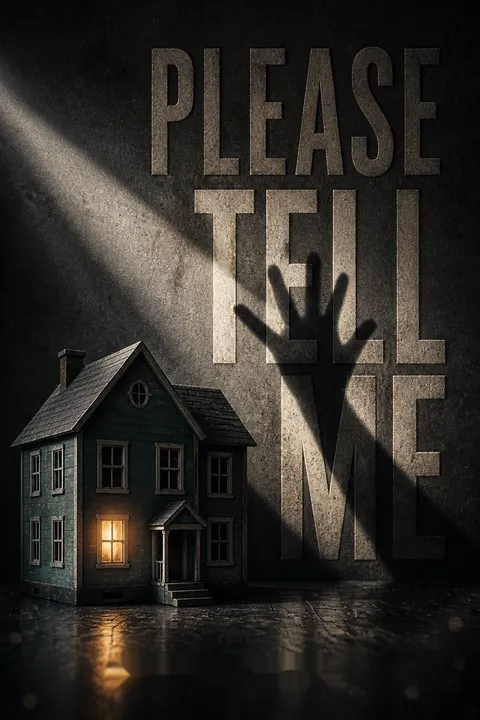
Please Tell Me is a psychological thriller about a kidnapped girl who escapes but won't speak. A child therapist uses play therapy to uncover disturbing details potentially related to unsolved murders. Reviews are mixed, with praise for the suspenseful plot and criticism of unnecessary subplots and COVID references. Some found it gripping and unpredictable, while others felt it dragged. The therapist protagonist received mixed reactions. Overall, readers appreciated the unique premise and twists, but opinions varied on pacing and character development.
People Also Read







Characters
Robin Hart
Trauma-wise child therapistRobin is a child therapist whose playroom gives young patients ways to express what they cannot yet put into words. She is observant, patient, and skilled at offering choices without taking control away from a child. In her private life, however, she often hides distress behind professional competence. Her father's death, divorce from Evan, insomnia, and a painful relationship with her mother leave her more vulnerable than she admits. Robin's work with Kathy tests the boundary between protecting a client's trust and responding to a possible crime. She is driven by care, but her growth depends on recognizing that understanding trauma in others does not automatically equip her to face her own.
Kathy Stone
Silent survivorKathy is a bright, imaginative child whose silence after a devastating experience hides a mind still actively interpreting the world. She communicates through drawings, toy arrangements, handmade miniatures, and repeated rituals, especially washing red paint from her hands. Her bond with her mother and her friendship with Amy matter deeply, but safety has become difficult to recognize when familiar people and places can also carry fear. In Robin's playroom, Kathy gradually experiments with choice and connection. Her courage is not a sudden return to her former self. It appears in small decisions, including when to trust, when to stop, and what to play next.
Claire Stone
A mother who keeps vigilClaire is Kathy's mother, a resourceful woman whose devotion becomes inseparable from vigilance after her daughter disappears. During the long absence, she keeps searching even when those around her urge her to accept the worst. Kathy's return brings relief, but Claire must learn that protecting her daughter cannot mean preventing every separation or controlling every trigger. She is often at odds with Pete about how much comfort Kathy needs, while still carrying the strain of their shared loss. Claire's development is a movement from solitary watchfulness toward accepting help, naming her own trauma, and building a life that can hold both fear and ordinary pleasure.
Pete Stone
A father's forward pushPete is Kathy's father and Claire's husband. He copes with the disappearance by trying to resume ordinary life, a strategy that eventually takes him to Indianapolis. After Kathy returns, he favors routine and forward movement, hoping school and familiar expectations will restore the daughter he remembers. His frustration with Kathy's therapy reflects grief as much as impatience: he wants a path that will make the past stop intruding. Pete's practical instinct can steady the family, but it also makes him underestimate how strongly Kathy reads tone, movement, and conflict between her parents.
Ellie
The town's bright newcomerEllie is Jimmie's niece, a cheerful café worker with a background in screenwriting and film. She is outspoken, quick to challenge convention, and eager to be treated as capable rather than dismissed as a young person. She also has a history in Bethelville that connects her to Kathy's family, and her return makes her part of the town's close-knit social world. Ellie seeks recognition and belonging, but her certainty about her own judgment can make her less attentive to how others experience her choices.
Jonas Kahn
A shadow behind the crimesJonas Kahn is a reclusive young man with an interest in cinematography and horror films. He watches people closely and treats ordinary behavior as material to record, organize, and reinterpret. His emotional life is governed by private fantasies rather than mutual relationships, leaving other people vulnerable to his need for control. The contrast between his careful notes and his grotesque ideas makes him difficult for those around him to read. In the investigation, his house and recordings reveal how thoroughly he has blurred the boundary between filmed violence and real human lives.
Nathaniel King
The detective who listensNathaniel is an Indianapolis homicide detective pursuing a murder that has received little public attention. He is persistent enough to follow a lead others dismiss, and he recognizes that Robin's account of Kathy's play may matter even though it is not conventional evidence. His partnership with Burke brings practical momentum to the investigation, while his personal history makes him more attentive to the protective force of family bonds than he first lets on. Nathaniel is committed to his work, sometimes at the expense of his private life. His relationship with Robin begins through danger and shared strain, then grows into a source of tenderness neither can treat as a simple escape.
Melody Hart
Robin's blunt older sisterMelody is Robin's older sister, a mother of four and one of Claire's most dependable friends. She is practical, funny, and often more willing than Robin to confront family conflict directly. Her daughter Amy was close to Kathy, so Melody understands the disappearance through both adult grief and a child's fear. She supports Robin through exhaustion and crisis, but she also challenges her sister when Robin's choices become entangled with their mother's demands. Melody's loyalty is real, though her own coping strategy often involves delaying difficult conversations.
Diana Hart
A mother who demands attentionDiana is Robin and Melody's mother, a former radio host who values admiration and closeness but often makes affection feel conditional. Since her husband's death, loneliness has sharpened her demands on her daughters. She can be charming and affectionate, especially when sharing gossip or memories, yet her criticism leaves Robin anxious to appease her. Diana's impact is not limited to overt conflict; it lies in the habits Robin formed to keep the household calm. Their relationship gives Robin a personal history of confusing love with responsibility for another person's emotional state.
Evan Moore
Robin's accomplished exEvan is Robin's ex-husband, a talented photographer whose career flourished during the pandemic. His ambition gives him a strong sense of purpose, but it often takes precedence over being present for Robin. He remains close to Pete and Claire, which brings him back into Robin's orbit even after their marriage ends. Evan's polished confidence can shade into self-importance, and he tends to interpret other people's lives through his own theories. Robin recognizes his talent without mistaking it for the care she needed from him.
Amy
Kathy's childhood best friendAmy is Melody and Fred's daughter and Kathy's former best friend. She has her own childhood fears about Kathy's disappearance, including nightmares and confusion about what adults tell her. When the girls meet again, Amy's ordinary chatter and familiar activities offer Kathy a bridge to her earlier life. Yet Amy is still a child, and she cannot always understand why Kathy no longer responds as she used to. Her affection is genuine, expressed through curiosity and invitations to play rather than through an adult's understanding of trauma.
Jimmie
The café's stubborn anchorJimmie owns the Bethelville café where Robin and Melody meet and where local news travels quickly. He is gruff, tradition-minded, and fond of teasing his niece Ellie, but beneath that manner he is loyal to the people who have grown up around his establishment. The café is a communal gathering place, making Jimmie an observer of the town's shifting grief and gossip. His affection for Ellie complicates his judgments about her, while his own stubbornness gives Robin a familiar, imperfect source of comfort.
Fred
Melody's steady husbandFred is Melody's husband and the father of their four children. He is Pete's friend and helps anchor the family routines around Amy, Liam, Noah, and Sheila. His practical presence contrasts with Melody's more volatile energy.
Menny
Robin's affectionate bulldogMenny is Robin's large, friendly American bulldog. His enthusiasm for people and toys brings humor into the clinic, though his size and instincts sometimes complicate tense moments. He is also a steady source of physical companionship for Robin.
Ian
The driver who finds KathyIan is the stranger who finds Kathy walking barefoot in the rain. He recognizes that she is frightened and gives her space rather than forcing her into his car. His decision to call for help begins the chain that returns Kathy to her parents.
Laura
A young therapy patientLaura is one of Robin's young patients, a girl who has struggled with fear and nightmares after Kathy's disappearance. In play therapy, she gives shape to how the event affected children across Bethelville and shows how safety can return gradually.
Beth
Laura's worried motherBeth is Laura's mother. She wants her daughter to recover without being overwhelmed by reminders of Kathy's disappearance and the wider anxieties of the pandemic. Her concern reflects the parents trying to protect children from dangers they cannot fully explain.
Frank Hart
Robin's protective late fatherFrank is Robin and Melody's father, whose death during the pandemic leaves a lasting absence in the family. He was an affectionate, reassuring presence for Robin, helping her feel anchored when her mother's moods made home unpredictable. His memory gives Robin a model of warmth that she continues to seek in adult relationships.
Detective Burke
King's investigative partnerBurke is Nathaniel King's partner on the homicide investigation. He assists with the search for Kahn, examines the evidence at the suspect's house, and helps turn King's hunches into concrete investigative steps.
Jeff Price
Bethelville's sheriffJeff Price is the Bethelville sheriff, coordinating local searches and police assistance when Kathy and later Robin go missing. He links the town's officers with King's wider investigation.
Plot Devices
The playroom and dollhouse
A child's private evidenceRobin's playroom lets Kathy communicate through toys and art without being pressed to speak. The dollhouse becomes a model of both captivity and remembered violence, while Robin's practice of reflecting what Kathy does helps the child remain in control. As the games become more specific, the toys also give investigators leads. Their meaning is never automatic: Robin must interpret carefully, and the book shows how the same scene can serve healing and investigation without making those aims identical.
The shoebox props
A window becomes a mapKathy's handmade miniatures and collected objects initially look like details for her dollhouse. Robin and Nathaniel notice that several correspond to features outside a house, including curtains, a basketball hoop, pumpkins, and street fixtures. Considered together, they recreate the view Kathy had from a window and direct police toward the place where she was held. The clue works because the objects are specific but incomplete, requiring collaboration between a therapist who knows Kathy's play and detectives who can test it against the town.
The horror-film compilation
Movies become murder templatesKahn's obsession with horror films supplies a pattern for his killings. Kathy's games preserve actions she saw on a screen or in captivity, while the detectives discover a compilation and records that connect imagined scenes to real victims. This device explains why the murders vary in method yet share a theatrical quality. It also exposes the danger of treating violence as entertainment without consequence: Kahn converts cinematic images into a private script and casts actual women as unwilling performers.
Red paint and washing
A ritual of regained controlKathy repeatedly spreads red paint across paper, then washes it from her hands and scrapes beneath her fingernails. The ritual lets her approach images of blood while choosing how much to touch, when to stop, and how to clean herself. Robin understands the repetition as a way of making an overwhelming memory more manageable, not as a clue to be decoded in isolation. When Robin joins the ritual, Kathy's trust becomes visible through shared action rather than speech.
The missing shoes
A false trail through the woodsKathy's shoes, found in the abandoned farmhouse, become the only physical clue from the initial disappearance. Their placement persuades police to focus on the woods and local suspects, while the town fills the gaps with rumors about what happened there. The clue is both useful and deceptive: it marks a location connected to Kathy's ordeal, but it does not reveal who brought her there or where she was held. Its eventual explanation recasts the original investigation and the town's confident theories.

Download PDF
Download EPUB
.epub digital book format is ideal for reading ebooks on phones, tablets, and e-readers.








