

Key Takeaways
Treat procrastination as anxiety relief, not evidence of laziness
Avoidance has a payoff. Fiore defines procrastination as a way of coping with anxiety about starting or finishing. Putting work aside brings immediate relief, which teaches the mind to repeat the escape, even though the task and its pressure remain. The delay is not proof of a defective character. It is a habit that has been rewarded by temporary calm.
Track the moment of escape. Clare, a capable employee afraid of criticism and unsure what her new job required, would leave intimidating projects for coffee breaks or casual conversation. A short log of the task, her thoughts, and what she did instead helped reveal the pattern beneath the label “lazy.” The practical question becomes not “What is wrong with me?” but “What feels threatening here, and what would make starting safer?”
This framing fits a basic principle of behavioral learning: an action that quickly reduces discomfort can become persistent, even when it creates longer-term costs. It also shifts the response from moral judgment to diagnosis, making it easier to experiment with a new behavior. The explanation is most useful when avoidance is tied to fear, ambiguity, or perfectionism. It should not become a blanket account of every delay: exhaustion, illness, competing responsibilities, or an unreasonable workload can also make postponement sensible. A useful diagnosis asks both what anxiety the delay relieves and whether the task itself needs renegotiation.
Separate your worth from the work before raising the stakes
Lower the imagined fall. Fiore illustrates performance anxiety with a simple board: walking across it on the ground is easy, but suspending it high above the pavement turns a basic task into a life-threatening test. The task has not changed. The imagined consequences of a mistake have. People often raise their own psychological board when they treat a project as proof of their intelligence, worth, or future.
Build a safety net. The book's alternative is to accept that mistakes and criticism may happen without making them verdicts on personal value. That can mean planning fallback options, asking for help, or reminding oneself that a disappointing result can be survived. Fiore also cites research suggesting that a broader sense of identity, spread across several roles and interests, can cushion stress in any one area.
The distinction between a result and a person's whole identity is a powerful antidote to perfectionism. It resembles a broader psychological idea: people often cope better when a setback does not define every part of who they are. The board image makes that hidden escalation easy to see. Still, a safety net is not merely positive self-talk. In workplaces where a mistake carries real financial or professional consequences, practical safeguards, feedback, and support matter too. The strongest version of Fiore's point combines self-compassion with realistic risk management, rather than pretending every failure is harmless.
Turn every coercive "have to" into a deliberate choice
Pressure invites resistance. Fiore argues that telling oneself “I have to” often carries a second message: “I do not want this, but someone is forcing me.” That inner argument can create resentment and delay. Betty, an administrator who dreaded preparing her company's annual report, repeatedly described it as an obligation and grew depleted as the deadline approached. Reframing the task as a choice helped her decide what part to begin and where to ask for assistance.
Choose, start, or decline. The point is not to pretend every task is enjoyable. It is to recognize the options: do the task, negotiate it, or accept the consequences of not doing it. Fiore's producer-oriented self-talk also redirects attention from finishing the whole project toward a start time and one manageable action. When a commitment is genuinely unwanted, a clear no can be more honest than a resentful yes followed by delay.
This resembles autonomy-supportive motivation: people tend to engage more willingly when they can see their own reasons for acting, rather than feeling controlled. The distinction between choosing and liking is especially useful. A person can dislike paperwork and still choose to complete it because the alternative is worse. But language cannot manufacture meaningful freedom where none exists. If a manager, caregiver, or institution controls the options, the real work may include setting boundaries or changing the conditions, not simply finding a more positive phrase.
Protect play so important work stops feeling like a life sentence
Deprivation breeds avoidance. Fiore's term “guilt-free play” means deliberately making room for recreation without treating it as stolen time. He argues that when work seems endless and leisure forbidden, a large project can feel like a threat to one's entire life. At Berkeley, he observed that graduate students who made steady progress on dissertations also protected exercise, friendships, and other enjoyable activities. Students who saw life as postponed until the dissertation was done often suffered more and took longer.
Pleasure can pull you forward. Jeff, a professor blocked on writing, joined a community theater production and discovered that he could commit substantial time to something he enjoyed. Afterward, he approached academic writing in shorter periods while keeping space for friends and exercise. The point is not that play magically completes work. It reduces the sense of deprivation and can restore energy, interest, and perspective.
This insight treats rest as part of the conditions for sustained effort, not a prize granted only after perfect performance. That is compatible with research on recovery, which links breaks and detachment from work with renewed attention and well-being. The theater story adds an important twist: pleasure can demonstrate that a person has time and commitment available, rather than simply consuming both. Yet the prescription has limits. Some people have little control over their schedules, and leisure can itself become another obligation. The goal is genuine restoration, not a new standard to feel guilty about failing.
Schedule life first, then earn credit for focused work
Make time visible. Fiore's “Unschedule” is a weekly calendar that begins with fixed commitments, sleep, meals, recreation, exercise, and social plans. It does not ask people to fill every blank with planned work. Instead, they record a work period after completing at least thirty uninterrupted minutes on a project, then take a break or shift to another activity. The calendar shows both the time actually available and the focused work already completed.
Count progress, not intentions. Fiore developed the method after learning that even prolific psychologist B. F. Skinner tracked time spent working. While completing his dissertation alongside a full-time job, Fiore says he averaged about fifteen focused hours of work a week and kept time for skiing, jogging, and friends. The Unschedule makes leisure legitimate, limits intimidating work blocks, and rewards starting with visible evidence of progress.
The Unschedule combines two useful design choices: it makes opportunity costs visible and gives progress an immediate record. This resembles behavioral self-monitoring, where recording an action can improve awareness and follow-through. Beginning with nonwork commitments also counters the fantasy that every open hour is available for productive labor. One caution is that tracking can become surveillance if every minute is treated as a performance score. Its value depends on keeping the measure narrow: protected time for important work, not a demand to optimize an entire life.
Convert worry into a plan for surviving the worst case
Finish the job of worrying. Fiore distinguishes useful preparation from repeatedly imagining disaster. His “work of worrying” turns a feared outcome into practical questions: What is the worst that could happen? How could it be handled? What alternatives exist? What can be done now to reduce the risk or improve the odds? The process aims to create a coping plan, not to guarantee that nothing will go wrong.
Prepare, then return to work. Judith, an accountant afraid of being fired, eventually considered what losing her job would mean and what options she could pursue. Facing that possibility made it less paralyzing and helped her decide what she wanted from her employer. The larger lesson is that confidence need not mean certainty of success. It can mean having enough support and alternatives to keep going if the outcome disappoints.
Contingency planning can turn vague threat into a problem with parts, which is often less overwhelming than an unbounded catastrophe. It also distinguishes confidence from certainty, a distinction relevant to decision-making under risk. The danger is that planning can become rumination in more respectable clothing. Replaying every possible failure without identifying a specific action simply feeds the same loop. A practical test is whether the exercise ends with a decision, a concrete precaution, or a deliberate choice to stop planning and begin.
Map big deadlines backward, then work only on today's step
Give the project dimensions. Fiore calls his planning technique a “reverse calendar”: begin with the final deadline, then work backward through intermediate reviews, drafts, decisions, and preparation until reaching today's starting point. This counters the feeling that a large project must be done all at once. It also creates room for learning, feedback, rest, and help from others.
Start with a workable piece. Joel, a lawyer who froze when assigned complicated cases, used this approach to see the research, depositions, delegation, and consultations ahead of him as separate tasks. Instead of searching endlessly for the one perfect first move, he could begin with a reasonable step and adjust as he learned more. A calendar cannot remove uncertainty, but it can reveal where time is tight and what can be simplified or shared.
Working backward is a familiar project-planning technique because it connects an outcome to the intermediate conditions required to reach it. Fiore adds a psychological benefit: the plan gives the mind somewhere to begin other than the imagined finish line. The method is strongest when milestones are revisable. A rigid schedule can create fresh pressure, especially when deadlines depend on other people or unknowns. Building in review points and slack turns the calendar from a promise of perfect control into a map for updating decisions.
Use a two-minute reset to make starting easier than waiting
Settle attention before acting. Fiore's focusing exercise is a brief routine built around slow breathing, noticing the support of the chair and floor, and bringing attention back to the present. The reader then chooses a clear start: when, where, and what to work on. The purpose is not to wait for a perfect mood, but to reduce enough tension to begin.
Let rough work exist. Fiore connects focused work with a temporary suspension of harsh self-judgment. Early drafts and sketches are allowed to be awkward; editing and organizing come after ideas have had room to emerge. Jacob, a contractor overwhelmed by customer demands and paperwork, used short focusing pauses to regain calm and choose the next task. Fiore presents the reset as something that can be practiced until it takes only a couple of minutes.
The exercise pairs attentional control with a concrete behavioral intention, a useful combination: calming down without specifying an action can become another form of postponement, while a clear task can be hard to approach when arousal is high. Contemporary neuroscience treats creativity as distributed across interacting brain networks, rather than a simple handoff between left and right hemispheres, so Fiore's brain-side explanation is dated. The practical core remains plausible: lower immediate distraction, suspend evaluation briefly, and make the next action explicit.
Treat setbacks as course corrections, not verdicts on ability
Expect the route to wander. Fiore recommends preparing for setbacks instead of treating them as evidence that a project or person is hopeless. He describes “planned setbacks” as deliberately noticing an old avoidance pattern, then using that moment to practice a different response. His example of the Apollo rocket's repeated course corrections illustrates the broader principle: progress can require many adjustments without abandoning the destination.
Keep returning to the task. Sarah, a chemist whose new boss criticized her sharply, recognized that resentment was pulling her back toward delay. She clarified what she needed from the job, set a period in which she would make her best effort, and considered leaving if the conditions did not improve. Fiore's “hardiness” model emphasizes commitment, some sense of control, and treating change as a challenge rather than a personal condemnation.
A setback can be informative without being deserved, and separating the event from the response preserves room for agency. That balance matters: blame often consumes attention that could go toward repair, while forced optimism can conceal unfair conditions. Sarah's decision is instructive because it includes both renewed effort and an exit option. Resilience should not mean tolerating every bad environment indefinitely. It is the capacity to adapt, recover, and make a fresh choice, including the choice to stop investing in a situation that cannot be improved.
Choose goals you can start, and define the next visible action
Make ambition workable. Fiore argues that a goal should describe an observable action, a deadline, and the time or resources it requires. “Get organized” leaves too much undecided; a specific commitment, such as making a defined set of calls by a stated time, gives the day a place to begin. Larger goals become manageable when divided into subgoals that can be scheduled and reviewed.
Release goals that only accuse. If a goal matters but cannot be started now, Fiore suggests revisiting it at a chosen future date or treating it as a wish rather than a current commitment. Otherwise it can remain an open loop that generates guilt without progress. He also recommends choosing the whole path, including tedious parts, rather than pretending only the enjoyable outcome counts. A goal is useful when the person is willing and able to invest in its real costs.
This approach distinguishes aspiration from commitment, a valuable distinction in goal-setting. Specific actions reduce ambiguity, while a deliberate review date prevents a postponed ambition from silently becoming a permanent source of self-reproach. It also respects limited capacity: not every attractive goal deserves a place in the present. The nuance is that a goal can be important even when its first step is not immediately available. The practical question is whether it has a credible future plan, or whether it is being kept alive mainly to punish the person who has not pursued it.
Lead procrastinators with choice, clear starts, and useful feedback
Pressure often backfires. Fiore applies his account of procrastination to managers, partners, and friends. Orders focused only on a final deadline can increase overwhelm, while criticism of a person's character can intensify fear and resistance. He recommends making priorities clear, inviting commitment where possible, defining an early deliverable such as a rough draft, and giving feedback that identifies what is working and what needs correction.
Stop playing parent. In Fiore's account of David and Karen, repeated reminders and criticism made their conflict over lateness worse. They made more progress when they stopped nagging, stated their own preferences directly, and let each person choose how to respond. A manager still needs to set standards and consequences, but can offer a clear starting point and timely feedback rather than relying on threats or vague demands.
The advice aligns with a well-established distinction in management: compliance can produce short-term obedience, while participation and clear expectations can support initiative. Fiore is right that the person applying pressure can become part of the problem, especially when feedback blurs errors with character. Yet empathy should not erase accountability. Teams and relationships need reliable agreements, and missed commitments can impose real costs on others. The useful combination is respectful language, specific standards, and transparent consequences, without turning every performance problem into a moral judgment.
Analysis
The book's central move is to replace a character diagnosis with a functional one. Procrastination is treated as an improvised form of emotional protection: it lowers anxiety now, but leaves the task, the deadline, and the self-criticism intact. That reframing makes the advice more coherent than a simple demand for discipline. Choice language, safety nets, brief work periods, scheduled play, and contingency planning all target some part of the same loop: threat creates avoidance, avoidance gives relief, and relief teaches the pattern to repeat.
The book is also unusually attentive to the social conditions around work. A manager who withholds praise, a partner who nags, or a family that treats ordinary mistakes as evidence of inadequacy can reinforce the very behavior they want to stop. Fiore's stories make procrastination relational, not merely a private failure of time management. The practical system then gives readers a way to experiment: observe a pattern, lower the perceived stakes, make a specific start, and record actual progress.
Its strongest tools are concrete and memorable. The Unschedule counters the fantasy of limitless time while legitimizing recreation. The reverse calendar turns a distant finish into intermediate commitments. The work of worrying asks anxiety to produce a plan rather than another catastrophe. Together, these methods emphasize action under imperfect conditions, not waiting for confidence to arrive first. Some explanations are more persuasive as metaphors than as settled science. The account of separate creative and logical brain hemispheres is oversimplified, and not all procrastination arises from perfectionism or fear. Structural overload, low energy, unclear authority, or competing needs can also explain delay. Even so, the method's practical value does not depend on every theory being exact. It offers a humane question with broad application: what makes this task feel unsafe or depriving, and what specific change would make a first step possible?
Review Summary
The Now Habit receives mostly positive reviews, with readers praising its insightful approach to understanding and overcoming procrastination. Many found the book's strategies practical and effective, particularly the "Unschedule" technique and focus on starting rather than finishing tasks. Readers appreciated the psychological perspective on procrastination as a defense mechanism. Some critics felt the advice was common sense or outdated, but overall, many reported improved productivity and reduced anxiety after applying the book's principles.
People Also Read








Glossary
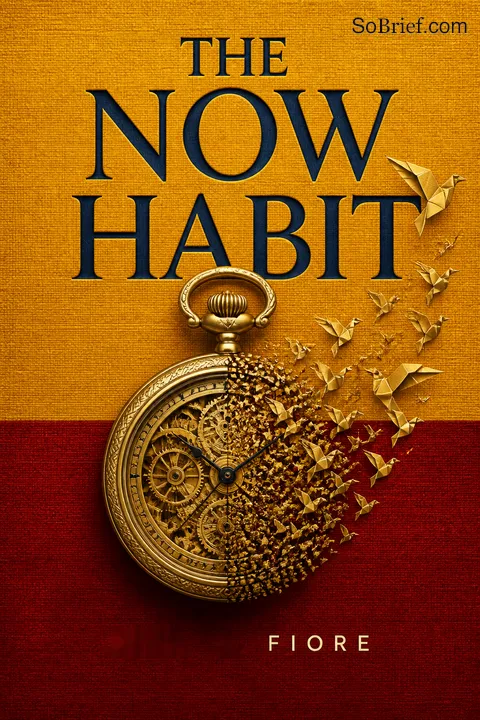
The Now Habit
A system for startingFiore's overall program for replacing procrastination with more effective work habits. It treats delay as a coping response to anxiety, then uses practical methods such as choice-oriented self-talk, protected recreation, brief periods of focused work, and planning for setbacks to make starting less threatening.
Unschedule
A play-first work calendarA weekly planning method that first records fixed commitments and chosen leisure, rather than filling the calendar with planned work. The user records project time only after completing at least thirty uninterrupted minutes, then takes a break or changes activities. It makes available time more realistic and progress more visible.
Reverse calendar
A deadline mapped backwardA planning technique that starts with the final deadline and works backward through the reviews, drafts, decisions, and preparation needed to meet it. The resulting intermediate dates make a large project easier to survey, identify, and begin, while revealing when delegation or extra time may be needed.
Work of worrying
Worry converted into preparationA structured way to turn anxiety about a possible failure into a coping plan. It examines the worst plausible outcome, how to manage it, what alternatives exist, what can reduce its likelihood, and what action could improve the chances of success. Its purpose is to end repetitive threat imagery with preparation.
Flow state
Focused, absorbed attentionA state of calm concentration in which a person is absorbed in a challenging activity, less distracted by surrounding concerns, and able to work with sustained attention. Fiore describes a brief focusing exercise using breathing and present-moment awareness to help people enter this mode before beginning a task.
Pull method
Motivation through desired rewardsFiore's contrast to motivation based on threats and pressure. The pull method makes work more approachable by connecting short periods of effort to meaningful goals, immediate rewards, and enjoyable activities. It aims to draw a person toward action rather than push them into compliance through fear.
Planned setbacks
Rehearsal for old patternsA deliberate exercise in which a person observes how familiar procrastination begins, including the thoughts and feelings that accompany it. Rather than treating a return to old behavior as total failure, the person uses the moment to practice a chosen alternative, such as a small start or a more supportive self-statement.
Hardiness
Commitment, control, and challengeA model associated in the book with psychologist Suzanne Kobasa. It describes three orientations linked to coping with stress: staying committed to activities, believing some influence over events is possible, and viewing change as a challenge to meet. Fiore applies these ideas to persistence and recovery during difficult projects.
Procrastination log
A record of avoidance patternsA short record of when a task was postponed, what the person was thinking or feeling, what they did instead, and how the avoidance affected them. The log helps identify recurring triggers and self-talk, so a person can choose a more useful response at the point where delay usually begins.
Self-complexity
Identity across distinct life rolesA concept associated with Patricia Linville's research, discussed by Fiore as the idea that a person's sense of self can include several distinct roles and areas of life. When one role suffers a setback, other valued areas may help buffer its effect on mood and self-esteem.
FAQ
What's "The Now Habit" about?
- Overview: "The Now Habit" by Neil A. Fiore is a strategic program designed to help individuals overcome procrastination and enjoy guilt-free play.
- Focus: The book emphasizes understanding the psychological aspects of procrastination and provides practical tools to increase productivity.
- Approach: It combines cognitive-behavioral techniques with insights into human motivation to help readers develop healthier work habits.
- Outcome: By following the strategies outlined, readers can expect to reduce anxiety, improve time management, and enhance their overall quality of life.
Why should I read "The Now Habit"?
- Procrastination Solutions: If you struggle with procrastination, this book offers actionable strategies to help you start and complete tasks more efficiently.
- Guilt-Free Play: It introduces the concept of guilt-free play, which can enhance productivity and work-life balance.
- Psychological Insights: The book provides a deeper understanding of the psychological reasons behind procrastination, helping you address the root causes.
- Practical Tools: With tools like the Unschedule and focusing exercises, the book equips you with methods to improve your work habits and reduce stress.
What are the key takeaways of "The Now Habit"?
- Procrastination as a Habit: Procrastination is a learned habit used to cope with anxiety about tasks, and it can be unlearned with the right strategies.
- The Unschedule: This is a unique scheduling tool that prioritizes guilt-free play and helps manage time more effectively.
- Positive Self-Talk: Changing negative self-talk to positive, empowering language can significantly reduce procrastination.
- Flow State: Achieving a flow state can enhance creativity and productivity, making work more enjoyable and less stressful.
How does "The Now Habit" define procrastination?
- Coping Mechanism: Procrastination is defined as a mechanism for coping with anxiety associated with starting or completing tasks.
- Fear-Based: It often stems from fears of failure, imperfection, and overwhelming expectations.
- Habitual Response: Procrastination is a habitual response to perceived threats to self-worth and can be changed with conscious effort.
- Not Laziness: The book emphasizes that procrastination is not due to laziness but is a complex psychological issue.
What is the Unschedule and how does it work?
- Reverse Scheduling: The Unschedule is a reverse scheduling tool that prioritizes leisure and play before work tasks.
- Time Awareness: It helps create a realistic view of available time by first scheduling non-work activities.
- Short Work Bursts: Encourages working in short, focused bursts of 30 minutes, followed by breaks or rewards.
- Motivation Boost: By ensuring time for play, it reduces the dread of work and increases motivation to start tasks.
How can "The Now Habit" help with work-life balance?
- Guilt-Free Play: The book emphasizes the importance of scheduling guilt-free play to recharge and maintain motivation.
- Structured Leisure: By structuring leisure time, it ensures that work does not encroach on personal life, promoting balance.
- Reduced Stress: Techniques like the Unschedule and focusing exercises help reduce work-related stress, improving overall well-being.
- Enhanced Productivity: By working more efficiently, you can achieve more in less time, freeing up time for personal activities.
What are the best quotes from "The Now Habit" and what do they mean?
- "Procrastination is a habit you develop to cope with anxiety about starting or completing a task." This quote highlights that procrastination is a learned behavior, not an inherent flaw.
- "The Now Habit frees you of shame and blame and moves you to a leadership perspective in your life." It suggests that the book empowers readers to take control of their actions and decisions.
- "You begin to live your life from choice—a leadership function of your higher, human brain and your new identity as a producer." This emphasizes the shift from being reactive to proactive, making conscious choices about work and play.
- "You don’t have to wait until you feel confident, motivated, or until you know it all; you start now and see what comes to you." Encourages taking action despite uncertainty, fostering growth and learning.
How does "The Now Habit" address fear of failure?
- Understanding Fear: The book explains that fear of failure often stems from perfectionism and self-criticism.
- Creating Safety: It suggests creating a psychological safety net to reduce the fear of making mistakes.
- Focus on Starting: Encourages focusing on starting tasks rather than finishing them perfectly, reducing pressure.
- Resilience Building: Teaches resilience by preparing for setbacks and learning to bounce back from failures.
What is the role of positive self-talk in "The Now Habit"?
- Language Shift: Positive self-talk involves changing "have to" and "should" statements to "choose to" and "will."
- Empowerment: This shift empowers individuals, reducing feelings of victimhood and increasing motivation.
- Task Focus: Positive self-talk helps focus on actionable steps rather than overwhelming goals.
- Self-Compassion: Encourages self-compassion and acceptance of imperfection, reducing anxiety and procrastination.
How can "The Now Habit" improve productivity?
- Structured Approach: The book provides a structured approach to time management with tools like the Unschedule.
- Flow State: Teaches techniques to enter a flow state, enhancing focus and creativity.
- Short Work Intervals: Recommends working in short, focused intervals to maintain energy and motivation.
- Reward System: Incorporates a reward system for completed tasks, reinforcing positive work habits.
What techniques does "The Now Habit" offer for overcoming procrastination?
- The Unschedule: A tool for scheduling play first, creating a realistic view of available work time.
- Focusing Exercise: A two-minute exercise to enter a flow state and enhance concentration.
- Positive Self-Talk: Replacing negative self-talk with empowering language to reduce anxiety.
- Work of Worrying: A method to address fears by planning for worst-case scenarios and creating safety nets.
How does "The Now Habit" suggest dealing with setbacks?
- Planned Setbacks: Encourages planning for setbacks to build resilience and learn from them.
- Resilience and Hardiness: Teaches resilience by focusing on solutions rather than problems.
- Mental Rehearsal: Uses mental rehearsal to prepare for challenges and visualize success.
- Effective Goal-Setting: Emphasizes setting realistic, actionable goals to maintain motivation and progress.
About the Author
Other books by Neil A. Fiore
Download PDF
Download EPUB
.epub digital book format is ideal for reading ebooks on phones, tablets, and e-readers.








