

Key Takeaways
Treat willpower as three skills: start, stop, and remember what matters.
Three competing abilities. McGonigal defines willpower as the capacity to begin a difficult task, resist an impulse, and stay connected to a meaningful goal. She calls these the “I will,” “I won’t,” and “I want” powers. A craving for a cookie and a plan to improve your health are not signs of a good self fighting a bad self. They are competing motives, both part of you.
Notice the choice forming. The case of Phineas Gage, whose personality changed after damage to his prefrontal cortex, illustrates how much self-control depends on brain systems that can be disrupted. Fatigue, distraction, and stress can temporarily weaken those systems. McGonigal recommends tracking choices without judgment and using brief breath-focused meditation to practice noticing distraction and returning attention to a chosen aim.
What's useful here is the move away from moral labels toward a model of competing functions. A person can be highly motivated to resist one impulse and still struggle to initiate a tedious task. Naming which capacity is failing makes the problem more diagnosable. The framework also leaves room for desire rather than treating appetite as an enemy. Its main limitation is that the three-part map is a teaching device, not a complete account of brain organization. Its value lies in helping people observe decisions, not in providing a literal neural diagram.
Calm your body before asking your brain to choose well.
Self-control has a body state. The fight-or-flight response prepares a person to act quickly against an outside danger. Resisting an internal impulse calls for something different: the “pause-and-plan response,” a calmer state that creates room to choose rather than react. The book links this state with heart rate variability, the normal variation in time between heartbeats. Higher variability is associated with greater capacity to manage stress and resist impulses.
Use simple resets. McGonigal suggests slowing breathing to about four to six breaths per minute for a short period. Exercise, adequate sleep, relaxation, and time outdoors can also support self-control. A five-minute walk in a green space is presented as a practical way to improve mood and focus, not as a substitute for medical care or treatment.
This account makes self-control less like a private contest of character and more like a capacity shaped by physiological conditions. That shift can reduce blame and direct attention to useful levers: sleep, movement, breathing, and recovery. It also highlights why a person may make poorer choices under sustained strain, even while caring deeply about a goal. The physiological language should not be mistaken for a promise that a breathing pattern will solve addiction or severe distress. It is best understood as one supportive tool within a wider strategy.
Put your hardest goal where your energy is, and train restraint gradually.
Willpower has peaks and costs. The book describes self-control as muscle-like: repeated effort can leave people feeling depleted, while manageable practice may build capacity. Students under exam pressure, for example, were more likely to abandon healthy routines and lose their temper. McGonigal advises placing important tasks at the time of day when personal focus is strongest, rather than expecting an exhausted evening self to do the hardest work.
Train without overloading. Small, regular challenges, such as monitoring spending or keeping a simple commitment, can provide practice in pausing before acting. Exercise also improved several self-regulation outcomes in a study described in the book, even though participants were not asked to change other habits. The broader lesson is to build capacity in sustainable increments and reduce unnecessary demands through better defaults and planning.
The muscle metaphor is memorable because it explains why self-control can vary across a day instead of behaving like a permanent personality trait. It also supports a useful scheduling principle: reserve high-demand attention for the work that matters most. The text itself complicates the metaphor, noting that fatigue can be partly a protective signal and that beliefs and motivation influence performance. That nuance matters. People should not dismiss genuine exhaustion as weakness, nor assume that every lapse proves their capacity is spent. Small experiments can reveal which explanation fits a particular situation.
Do not let yesterday's progress purchase today's sabotage.
Good behavior can grant false permission. “Moral licensing” is the tendency to feel entitled to indulge after doing, or even imagining, something virtuous. In one study described by McGonigal, 85 percent of successful dieters who were reminded of their progress chose chocolate over an apple, compared with 58 percent who were not reminded. Progress can satisfy the goal-seeking part of the mind, making an unmet desire more prominent.
Remember the purpose. A workout does not cancel the need to make other choices that support health, and planning a task is not the same as completing it. McGonigal suggests focusing on commitment rather than congratulating oneself on progress, and recalling why the goal matters when temptation appears. That reframes a good action as evidence of commitment, not a token that can be traded for a setback.
This section exposes a subtle accounting error: people treat effort as moral credit even when the original goal was practical, such as saving money or improving health. The same logic can affect workplaces and public initiatives, where a visible good deed may create complacency about less visible consequences. The proposed correction is not to withhold satisfaction from progress, but to keep the underlying objective in view. Progress remains motivating when it strengthens identity and commitment. It becomes risky when it is interpreted as proof that further effort is no longer needed.
Separate the urge to want from evidence that something satisfies you.
Wanting is not liking. The brain’s reward system releases dopamine in response to the promise of a reward, creating anticipation and motivation. It does not guarantee enjoyment or satisfaction. In the book’s account of early experiments, rats repeatedly pressed a lever that stimulated this system, sometimes neglecting food. The behavior looked pleasurable, but it reflected relentless wanting more than contentment.
Check the actual payoff. Advertising, food samples, novelty, discounts, and enticing smells can all intensify desire. McGonigal proposes paying close attention to what a tempting activity feels like before, during, and after doing it. Moviegoers in a cited experiment continued eating stale popcorn despite disliking its taste, apparently guided by expectation more than experience. The same observation can expose a gap between what a habit promises and what it delivers.
The distinction between wanting and liking helps explain why repeated consumption can coexist with disappointment. It is especially relevant in environments built around novelty, notifications, and limited-time offers, where attention is repeatedly pulled toward the next possible reward. Mindful observation can test whether a behavior produces pleasure, relief, or simply another round of wanting. Still, desire is not inherently deceptive: anticipation can energize useful work and meaningful pursuits. The practical question is not whether a desire is intense, but whether following it serves a valued aim and produces the experience it promised.
Replace shame after a lapse with curiosity and a next move.
Feeling bad can deepen the loop. Stress and negative emotions can push people toward familiar sources of quick relief, including food, alcohol, shopping, or procrastination. The “what-the-hell effect” describes how a lapse becomes an excuse to continue: after breaking a diet, a person may decide that the whole effort is ruined. In one study, dieters encouraged to forgive themselves after eating a doughnut ate about 28 grams of candy afterward, compared with nearly 70 grams among those not given that reassurance.
Make recovery concrete. Self-forgiveness is not pretending the lapse did not happen. It means recognizing the feeling, remembering that setbacks are human, and asking what a supportive friend would advise. McGonigal also warns against grand resolutions that provide an immediate rush of hope but no workable plan. Predicting likely obstacles and choosing a response in advance makes optimism more useful.
The distinction between compassion and excuse-making is central. Shame narrows attention toward escaping discomfort; curiosity makes it easier to examine what happened and take responsibility without turning one mistake into an identity. This resembles an error-correction process: identify the conditions that produced the lapse, adjust the plan, and resume the goal. That does not mean every pattern can be changed through self-talk alone. Persistent addiction, disordered eating, and depression may require professional support. Self-compassion is a way to stay engaged with change, not a replacement for appropriate care.
Make temptation wait, and stop assigning today's work to a heroic future self.
Distance cools the impulse. “Delay discounting” is the tendency to value a reward less as it moves further into the future. In a comparison described in the book, chimpanzees waited two minutes for six treats 72 percent of the time, while human students did so only 19 percent of the time. Immediate rewards can overwhelm a person's stated preference for a better later outcome. A ten-minute delay, paired with physical distance from temptation, can help restore perspective.
Commit before the moment. The book also notes that people often imagine a future self with more time and discipline than they have now. Precommitment means arranging choices in advance, such as removing a distraction or preparing a decision before hunger or craving sets in. Yet restraint is not always the answer: McGonigal describes hyperopia, or excessive deferral of pleasure, as another path to regret. Some people need to plan for enjoyment, not just deny it.
The future-self idea turns procrastination and impulsive spending into a problem of psychological distance. A future consequence matters more when it feels concrete and connected to the person making the choice now. Precommitment is powerful because it changes the choice architecture before desire peaks, rather than demanding a heroic refusal at the hardest moment. But the goal is not maximal restraint. The book's warning about excessive farsightedness is important: a life organized only around future utility can neglect present relationships, rest, and pleasure. Good planning protects both the future and the present.
Borrow self-control from people whose habits you want to make normal.
Behavior travels through relationships. McGonigal describes research in which the least-fit cadet in an Air Force squadron predicted changes in other cadets' fitness. In the Framingham network study she discusses, having a friend become obese was associated with a 171 percent increase in a person's own risk of obesity. Such findings suggest that habits, moods, and goals can spread through social ties, particularly among people who matter to one another.
Choose the norm around you. Social proof is the influence of what people believe others commonly do. A study of energy conservation found that information about neighbors' behavior affected electricity use more than appeals to environmental concern or savings. The same social influence can support change: find peers who practice the behavior you want, share a goal, or ask someone to check in. Public pride may help, but shaming people after failure can undermine effort.
The social account complicates the familiar image of self-control as an individual achievement. Friends can supply cues, norms, accountability, and a sense of belonging, all of which alter what feels easy or ordinary. This makes choosing a community an actionable part of behavior change, not a decorative source of encouragement. Social influence is not destiny, however. The association between network behavior and personal outcomes can have multiple causes, including shared environments and selection of similar friends. The strongest practical inference is modest: relationships shape behavior, so deliberately seek support that makes the desired choice more visible and acceptable.
Let cravings speak without letting them steer.
Suppression can revive a thought. In psychologist Daniel Wegner's white-bear experiments, people told not to think about a white bear often found the thought returning. McGonigal calls this ironic rebound: monitoring a forbidden thought keeps it mentally active, especially when someone is tired or stressed. In a chocolate study, women instructed to suppress thoughts about chocolate later ate nearly twice as much as women given other instructions.
Notice, allow, choose. Instead of arguing with a craving or demanding that it disappear, observe its thoughts and bodily sensations, then reconnect with the goal. “Surfing the urge” is a mindfulness technique in which a person experiences an urge as a changing wave without acting on it. In a smoking study, participants trained to use this approach smoked 37 percent fewer cigarettes by the seventh day than the comparison group.
Acceptance offers a useful distinction between having an impulse and obeying it. That distinction can reduce the extra struggle created by treating every unwanted thought as evidence of hidden intent or personal failure. The approach is not passive surrender: attention remains on the experience while behavior stays guided by the person's aim. It may be particularly useful when avoidance itself keeps a thought salient. The skill takes practice, and intense or dangerous urges may call for clinical help. Acceptance supports choice, but it does not guarantee that every urge will quickly fade.
Analysis
The book's most durable contribution is its portrayal of self-control as a changing relationship among attention, bodily state, desire, time, and social context. That is a richer model than the folk idea of willpower as a fixed quantity of moral toughness. Its central practical method is also distinctive: treat behavior as something to investigate. Notice the cue, the physical state, the story that grants permission, and the actual consequence. Then test a small intervention rather than relying on a sweeping vow.
Some claims need more caution than the book's confident narrative sometimes conveys. The muscle model of ego depletion has faced substantial replication problems, and later research has questioned whether a single, general resource is literally exhausted by acts of control. Glucose-based explanations are also more complicated than the image of a brain running out of fuel suggests. These concerns weaken a simple depletion account, but do not erase the everyday observation that fatigue, stress, competing tasks, and low motivation can impair decisions. The book is strongest when it treats fatigue as a context-sensitive warning rather than a precise fuel gauge.
The social findings also require careful interpretation. Similar behavior among friends may reflect influence, but also shared circumstances and the tendency to choose friends who resemble oneself. Likewise, the marshmallow test predicts later outcomes, yet a child's ability to wait can depend on whether adults and institutions have proved reliable. Delay is easier when the promised future reward is credible. That qualification deepens, rather than overturns, the book's advice to make future goals concrete and environments supportive.
The practical synthesis is therefore not to maximize restraint. It is to design conditions in which attention can return to chosen aims: sleep enough, reduce avoidable stress, make temptations less immediate, seek supportive norms, and recover from mistakes without spiraling into shame. Self-control becomes less mysterious when treated as a skill embedded in a body and a social world.
Review Summary
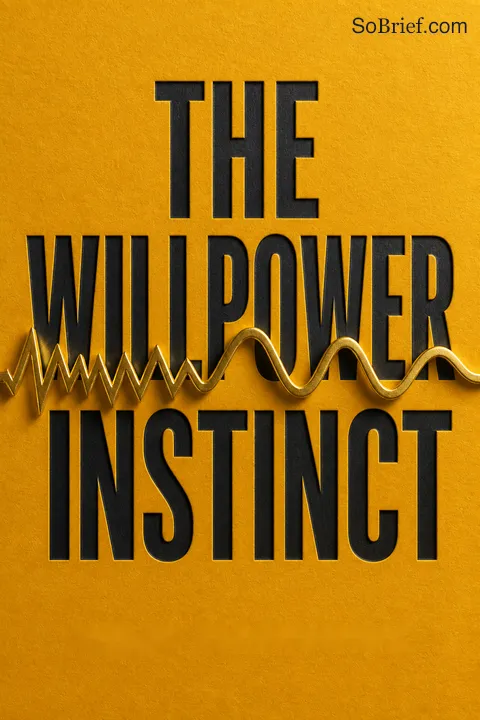
The Willpower Instinct receives mostly positive reviews for its scientific approach to understanding and improving willpower. Readers appreciate the practical tips, exercises, and insights into human psychology. Many find it helpful for addressing personal challenges and building better habits. The book is praised for its accessible writing style and focus on self-compassion. Some readers note the content can be repetitive or intuitive, but overall, it's considered a valuable resource for those seeking to enhance their self-control and achieve long-term goals.
People Also Read





Glossary
I will, I won't, and I want power
Three parts of self-controlMcGonigal's three-part description of willpower. “I will” is the capacity to begin or persist with a difficult task. “I won't” is the capacity to inhibit an impulse. “I want” is the ability to keep a deeper or longer-term goal in mind while immediate desires compete for attention.
pause-and-plan response
Calm response to inner conflictA bodily and mental response to recognizing an internal conflict, such as wanting a tempting reward while knowing it conflicts with a goal. Unlike fight-or-flight, it supports slowing down, calming the body, and directing resources toward reflective choice rather than immediate action.
heart rate variability
Variation between heartbeatsThe natural variation in time between successive heartbeats. In the book, it is used as a measure associated with the body's capacity to shift between activation and calming responses. Higher heart rate variability is linked with better stress regulation and self-control, though it is not presented as a direct measure of character.
moral licensing
Virtue used to justify indulgenceA tendency to feel that prior good behavior, or even the thought of doing something good, permits a later choice that conflicts with one's goals or values. A person may treat a healthy meal, a workout, or a generous intention as credit that makes an unrelated indulgence feel deserved.
goal liberation
Progress frees competing desiresThe process by which perceived progress toward a goal temporarily reduces the mind's focus on that goal. When the long-term aim feels sufficiently served, a competing desire for immediate gratification can become more influential, making progress itself a possible source of premature relaxation.
promise of reward
Anticipation that motivates pursuitThe motivating expectation that an object or activity will feel rewarding. The book distinguishes this anticipatory wanting, associated with dopamine activity, from the pleasure or satisfaction actually experienced. The promise can energize useful action, but it can also keep a person pursuing something that does not deliver the expected happiness.
delay discounting
Future rewards lose perceived valueThe tendency to value a reward less when it is delayed, even when the later reward is larger. A person may prefer a small immediate payoff over a more valuable future one, then reverse that preference when the immediate temptation is visible and available.
future-self continuity
Connection to one's future selfThe degree to which a person experiences their future self as the same person as their present self. Greater continuity is associated in the book with choices that benefit the future, including saving more. Making the future self more vivid can help present decisions account for later consequences.
what-the-hell effect
A lapse triggers further indulgenceA cycle in which a small lapse produces guilt or hopelessness, which then becomes a reason to continue the behavior. After deciding a diet, budget, or other commitment is already broken, a person may abandon restraint altogether. The book argues that shame sustains this spiral, while self-forgiveness can interrupt it.
ironic rebound
Suppressed thoughts return strongerThe tendency for an unwanted thought to become more prominent when someone tries to suppress it. Mental monitoring keeps checking whether the thought has returned, which can keep it active. The effect is more likely when attention is strained by stress, fatigue, or distraction.
surfing the urge
Experience an urge without obeyingA mindfulness technique for meeting a craving without suppressing it or acting on it. The person notices the urge's thoughts and bodily sensations, observes how they change, and remembers the goal. The urge is treated as a temporary experience rather than a command that must be followed.
social proof
Behavior guided by perceived normsThe influence of what a person believes others commonly do. People often use perceived group behavior as evidence about what is normal or appropriate, sometimes more strongly than stated values or rational appeals. Accurate norms can encourage desired actions, while false impressions of widespread misconduct can normalize it.
The Marshmallow Test
A study of delayed gratificationA study in which young children could take one treat immediately or wait for a larger reward. The book uses it to illustrate strategies for delaying gratification, especially turning attention away from the visible temptation. Later outcomes were associated with waiting, though the test should not be read as a pure measure of a child's character or potential.
FAQ
What's The Willpower Instinct about?
- Understanding Willpower: The book delves into the science of self-control, explaining how willpower functions as a biological instinct that can be trained and improved.
- Three Powers of Willpower: It introduces "I will," "I won't," and "I want" as the three essential components of self-control, each crucial for achieving goals and resisting temptations.
- Practical Strategies: Kelly McGonigal combines scientific research with practical exercises to help readers develop their willpower and overcome common challenges.
Why should I read The Willpower Instinct?
- Improve Self-Control: If you struggle with procrastination or maintaining healthy habits, the book offers strategies to enhance self-control and understand willpower mechanisms.
- Scientific Basis: Authored by a health psychologist, it integrates findings from psychology, neuroscience, and economics, providing a solid foundation for its strategies.
- Life-Changing Results: Many readers report significant improvements in their lives, describing the book as transformative in understanding and harnessing willpower.
What are the key takeaways of The Willpower Instinct?
- Willpower is Trainable: Willpower can be developed like a muscle through practice, leading to lasting improvements in various life aspects.
- Stress Impacts Willpower: Stress and negative emotions deplete willpower, making it harder to resist temptations, highlighting the need for effective stress management.
- Moral Licensing: Feeling good about past behaviors can lead to indulgence in unhealthy choices, a pattern that can be recognized and managed for better self-control.
What are the three powers of willpower defined in The Willpower Instinct?
- "I Will" Power: This involves committing to actions that align with your goals, even when they are difficult, emphasizing proactive steps toward achievement.
- "I Won't" Power: It involves resisting temptations and saying no to immediate desires that conflict with long-term goals, crucial for maintaining self-control.
- "I Want" Power: This focuses on remembering true desires and motivations, helping you stay connected to long-term goals and providing motivation for self-control.
How does stress affect willpower according to The Willpower Instinct?
- Increased Cravings: Stress triggers cravings for comfort foods and indulgences as the brain seeks relief from negative emotions, leading to poor choices.
- Physiological Response: Stress activates the brain's reward system, making temptations more appealing and overwhelming the ability to resist.
- Managing Stress: Effective stress-relief strategies, such as exercise and mindfulness, are emphasized to preserve willpower and maintain self-control.
What is the "pause-and-plan" response mentioned in The Willpower Instinct?
- Internal Conflict Recognition: This response is triggered when recognizing an internal conflict, helping you slow down and think before acting.
- Physiological Changes: It leads to changes that promote calmness and focus, contrasting with the fight-or-flight response, allowing for better self-control.
- Self-Monitoring: Involves self-monitoring to identify warning signs of impulsive behavior, enabling proactive steps to maintain self-control.
What is the "what-the-hell effect" in The Willpower Instinct?
- Cycle of Indulgence: Describes how a small lapse in self-control can lead to further indulgence, thinking, "What the hell, I've already messed up."
- Guilt and Regret: Often accompanied by guilt and shame, leading to more indulgence and reinforcing negative behaviors.
- Breaking the Cycle: Recognizing this effect can help avoid the trap by reframing your mindset and focusing on long-term goals.
How does The Willpower Instinct explain the role of stress in self-control?
- Stress Depletes Willpower: Stress drains self-control resources, making it harder to resist temptations and leading to willpower failures.
- Physiological Response: Activates the fight-or-flight response, impairing the prefrontal cortex responsible for self-control, making rational decisions difficult.
- Managing Stress: Emphasizes stress management techniques like exercise and mindfulness to maintain willpower and resist temptations.
What is the "ironic rebound" effect discussed in The Willpower Instinct?
- Definition: Occurs when trying to suppress a thought makes it more persistent, like trying not to think about a white bear.
- Cognitive Processes: Involves two brain systems: one controlling thoughts and another monitoring for unwanted thoughts, leading to increased focus on suppressed thoughts.
- Acceptance Strategy: Suggests accepting thoughts and feelings rather than suppressing them, reducing their power and helping regain control.
How can I apply the concepts from The Willpower Instinct to my daily life?
- Set Specific Goals: Identify a specific willpower challenge to tackle, such as eating healthier or managing stress, to apply strategies effectively.
- Practice Self-Monitoring: Track choices and behaviors related to your willpower challenge to identify patterns and triggers leading to failures.
- Use Willpower Experiments: Engage in practical exercises like meditation or tracking willpower choices to build self-control over time.
How does The Willpower Instinct address the concept of moral licensing?
- Definition: Moral licensing is when individuals feel justified in indulging after doing something good, leading to self-sabotaging behavior.
- Impact on Self-Control: Good deeds are viewed as credit for later indulgence, undermining long-term goals and leading to a cycle of indulgence.
- Awareness and Balance: Being aware of this tendency and finding balance in choices can help make consistent decisions aligned with goals.
What are the best quotes from The Willpower Instinct and what do they mean?
- "Feeling bad leads to giving in": Highlights how negative emotions can trigger indulgence, emphasizing the importance of managing emotions for self-control.
- "Self-compassion is a far better strategy than beating ourselves up": Stresses the value of treating oneself kindly in setbacks, fostering resilience and motivation.
- "Trying to suppress thoughts, emotions, and cravings backfires": Encourages accepting thoughts and feelings as a healthier approach to self-control, avoiding the pitfalls of suppression.
About the Author


Download PDF
Download EPUB
.epub digital book format is ideal for reading ebooks on phones, tablets, and e-readers.








