

Key Takeaways
Treat movement as a way to participate in life, not earn fitness
Movement is more than medicine. McGonigal begins with a fear she knows well: at twenty-two, she nearly fled an audition to teach exercise. Breathing through the anxiety and stepping inside helped launch a vocation, and taught her that movement could build courage, hope, and belonging, not just fitness. The book’s central claim is that moving matters because it is how people engage with the world and one another.
The benefits are broader than athleticism. Across the studies and stories, psychological and social gains appear among people with illness, disability, chronic pain, and even those receiving hospice care. The benefits attach to movement, not to achieving a particular body or fitness level. Exercise can support well-being, but the book does not present it as a replacement for medical or mental-health care.
What's striking is the shift from treating exercise as a health chore to treating it as a form of agency. That idea resonates with behavioral activation, a depression treatment that helps people re-enter meaningful activities rather than wait to feel motivated first. Movement can be one such activity, especially when it offers mastery or contact with others. Yet the invitation must remain genuinely broad: unsafe streets, inaccessible facilities, pain, cost, and fatigue can make movement difficult. A message about joy is most useful when it expands options instead of turning exercise into another test people can fail.
Stay with a personally challenging pace to unlock movement's persistence high
Effort can carry its own reward. The book calls the mood lift that can follow sustained effort a persistence high. It is not exclusive to running: hiking, cycling, swimming, dancing, and other activities can produce it. In one treadmill study, jogging raised runners’ endocannabinoid levels, while slow walking and an exhausting sprint did not. Endocannabinoids are signaling chemicals involved in mood, pain relief, and social connection. The useful clue is a steady, moderate challenge, not an elite pace.
The effort need not be grand. Julia, who lives with a progressive balance disorder, built a daily routine around a short walk and stairs in her apartment building. She found it challenging and enjoyable. The book suggests that roughly twenty minutes of personally demanding activity may be enough for some people, but neither a fixed distance nor a performance standard defines success.
The persistence high offers a better frame than the familiar promise of effortless euphoria: the reward is linked to doing something demanding enough to hold attention, but not so punishing that it becomes unsustainable. That resembles the idea of a manageable challenge in skill learning, where effort supports engagement when a task is neither trivial nor overwhelming. The evolutionary explanation is plausible, but not proven simply by a modern chemical response or a comparison with hunter-gatherers. The practical point is sturdier: intensity is personal, and enjoyment can follow effort without requiring pain or athletic credentials.
Give exercise six weeks to become pleasure before deciding you hate it
Enjoyment can be learned. Regular exercisers may feel restless or low when they stop, which helps explain why exercise is often compared with addiction. McGonigal argues that the analogy has limits: unlike drugs that can overwhelm the brain’s reward system, exercise appears to strengthen responsiveness to ordinary rewards. Research on new gym members found that a habit could take about six weeks to form, with four weekly sessions associated with establishing it. A separate training study found that enjoyment of high-intensity exercise increased across its first six weeks.
The right activity matters. Nora Haefele began with outdoor walking in her fifties, then tried timed races and eventually completed many half marathons. She found a welcoming format and a pace that worked for her. The point is not to force a disliked routine. Give a suitable activity enough repetition to reveal rewards that may not be obvious on day one.
This account treats motivation as something experience can reshape, rather than a fixed personality trait. In learning theory, repeated exposure can change what a person expects from an activity: initially awkward effort may acquire associations with competence, social contact, and anticipation. That makes early dislike a weak forecast of long-term preference. Still, six weeks is not a universal conversion timetable, and persistent pain or dread is valuable information, not a character flaw. The useful experiment is to vary the activity, setting, intensity, and social context before concluding that movement itself is not for a particular person.
Move in synchrony to turn exertion into trust and belonging
Shared rhythm changes the social experience. Sociologist Émile Durkheim used the term collective effervescence for the shared elation people can feel during ritual and group activity. McGonigal shows how synchronized movement can produce a bodily sense of unity, not merely the idea of being part of a group. In experiments led by psychologist Bronwyn Tarr, strangers who danced in time felt closer to one another and showed greater pain tolerance than people who danced without coordinating. A drug that blocked endorphins removed some of these effects.
Simple movement can be enough. Rowers moving together, people flowing through yoga poses, or strangers dancing to a shared beat can all experience this bond. On the day after the September 11 attacks, McGonigal’s familiar yoga class gave students a shared rhythm and a place to be together while shaken by events.
Synchrony provides a striking example of embodied social cognition: the brain uses coordinated sights and sensations to make other people feel more connected to the self. This helps explain why a group can feel close before its members know much about one another. The bond can support cooperation, but closeness is not the same as trustworthiness, and coordinated groups can also strengthen boundaries against outsiders. The most constructive use of synchrony pairs its quick social warmth with repeated, accountable interaction, so the feeling of unity has a chance to become dependable care.
Make movement useful to others, and fitness can become community
Purpose adds a social destination. GoodGym, a London organization, sends volunteer runners to help with local projects and visit isolated older adults. Participants might run to a community center to sort donations, pull weeds, or prepare meals. Older adults who receive visits serve as the runners’ coaches, giving them someone to visit and a reason to return. For Nykolette Wallace, joining the group turned a lonely weekly routine into friendships and a visible connection to her neighborhood.
Contribution deepens the reward. In an economic game described in the book, people who exercised before playing contributed more to a shared pool than when they played without exercising first. The broader lesson is that movement can join physical effort to cooperation. A workout can leave behind something useful, whether that is help for a neighbor, care for a shared space, or a stronger tie between people.
GoodGym illustrates how a well-designed activity can solve several problems at once: inactivity, isolation, and the desire to matter. In civic life, this resembles a third place, a recurring setting outside home and work where people meet and form local ties. The service component gives conversation an easy starting point and makes participation valuable even when fitness gains are modest. Such groups work best when tasks are accessible and newcomers do not have to prove their worth. Contribution should invite belonging, not become an unpaid fitness requirement imposed on people already carrying heavy responsibilities.
Use music to reinterpret effort, not merely drown it out
A beat recruits the body. Musicologists call the impulse to move with a beat groove. Listening can activate brain systems involved in planning and coordinating movement, even when the listener stays still. Music can also make exertion feel easier: in one test described in the book, patients exercising with upbeat music continued for about fifty seconds longer. At higher effort, however, music may do less to erase discomfort than to change what it means. A song associated with persistence can make burning muscles feel like evidence of determination.
Personal meaning makes a song powerful. Sports psychologist Costas Karageorghis looks for tracks that fit an athlete’s taste, memories, and movement. Music can also support rehabilitation. Miriam, who has Parkinson’s disease, found that singing and dancing helped her move with greater ease and confidence. The useful choice is not the universally perfect playlist, but sound that makes movement feel inviting or meaningful.
Music can be understood as a form of attentional and emotional scaffolding. It organizes timing, pulls attention outward, and supplies a narrative for sensations that might otherwise be interpreted as danger or failure. That combination helps explain why an effective song is often personal rather than merely fast. The same principle can apply beyond workouts, from rehabilitation to repetitive work. Still, music is not a universal aid: some people need environmental awareness, quiet, or different sensory conditions. A flexible approach treats sound as one tool for shaping experience, not a prerequisite for moving well.
Let physical challenges revise what your body says you can do
Movement supplies evidence about the self. Proprioception is the body’s sensing of its own position and movement through signals from muscles, joints, and other systems. McGonigal argues that these sensations help shape self-image: lifting, balancing, or moving with control can provide direct evidence of strength and capability. Katie Norris had long avoided carrying another person during training because she assumed her body could not do it. When she tried, she carried her husband across a beach and felt her old assumption lose its authority.
A goal makes progress visible. At DPI Adaptive Fitness, people with disabilities set demanding, meaningful objectives, such as building strength to transfer from a wheelchair into a car. Hope, in psychologist C. R. Snyder’s model, involves a goal, a pathway toward it, and confidence that the pathway can be pursued. Breaking a challenge into physical steps can make that hope tangible.
The link between bodily experience and self-belief is a strong example of embodied cognition: thinking is not detached from sensation, posture, and action. A completed lift or a first independent step can challenge a limiting story with unusually concrete evidence. This is not a claim that physical achievement fixes trauma or determines worth. Some goals remain unreachable, change with health, or need adaptation. The more humane standard is not a particular feat, but whether a person can choose a meaningful challenge, receive appropriate support, and recognize progress on their own terms.
Go outdoors when rumination traps attention inside your head
Nature can interrupt mental loops. Green exercise means physical activity in a natural setting. McGonigal describes how natural sounds, light, plants, and changing scenery can draw attention away from repetitive self-focused thought. In a Stanford study, people who walked for ninety minutes on a scenic trail reported less negative self-focus than people who walked beside a busy road. Their brain scans also showed less activity in an area associated with rumination and sadness.
The shift can feel immediate. Susan Heard began running outdoors after the death of her son. The changing weather, wildlife, and landscape helped her feel connected to the world and to memories of him. Green exercise does not erase grief or replace treatment. It can offer a different attentional setting, one with sensory details and scale beyond the worries occupying the mind.
The contrast between a natural trail and a busy road highlights that the setting is not decorative; it can help determine what receives attention. Environmental psychology describes the value of settings that engage attention gently, without demanding constant problem-solving. Nature can also provide a perspective larger than the self, a useful counterweight to rumination. Access matters, however. A nearby tree-lined street, garden, or small park may be more realistic than a wilderness trip, and people differ in whether outdoor settings feel safe. The principle is to find restorative contact with the living world, not a picturesque ideal.
Endure one step at a time, and let others carry part
Persistence is not solitary. During an ultramarathon on Antelope Island, exercise physiologist Shawn Bearden became so exhausted that minutes felt stretched and every step seemed impossible. Encouragement from other runners helped him keep going until the urge to stop passed. Athletes facing extreme events often narrow their focus to the next lap or step, draw on memories and music, and allow themselves to rest or cry. Their strategies echo ways people live through grief, illness, or depression.
Muscles also signal the brain. Myokines are proteins released by muscles during contraction that affect other parts of the body, including the brain. The book discusses research suggesting that some support brain health and stress resilience. These findings are promising, not a reason to imitate dangerous endurance events. Ordinary movement involves muscle contraction, and accepting help from a coach, friend, or fellow participant can be part of carrying on.
The chapter’s most useful correction is to the myth that resilience means self-sufficiency. Endurance stories show both the value of a narrow next step and the practical importance of aid stations, companions, and shared attention. That resembles crisis coping, where a distant future may feel impossible but a small immediate action remains available. The discussion of myokines adds a biological pathway, though the science is still developing and cannot guarantee protection from depression or adversity. The human lesson stands independently: persistence is safer and often more sustainable when support is treated as part of strength.
Analysis
The book’s central move is to replace the narrow question, “How does exercise improve health?” with a more human one: “What does movement make possible?” Its answer is not a single chemical mechanism. Movement can reward persistence, make social synchrony feel bodily real, give music a route into action, provide evidence against a limiting self-image, and draw attention into nature. These threads make the book less a workout manual than an account of how bodies help people participate in life.
Its narrative method matters. The research is carried through people whose movement serves different purposes: a stroke survivor rebuilding balance, a grieving mother finding the outdoors, an adaptive gym member pursuing the ability to drive, and runners who depend on one another during exhausting races. These stories prevent “exercise” from collapsing into a narrow image of athletic performance. They also show why the same activity can mean rehabilitation, celebration, service, or survival to different people.
The strongest synthesis is social. Even apparently individual benefits, such as reduced anxiety or greater confidence, often emerge in settings shaped by other people, music, shared goals, or natural surroundings. Movement is presented not as a solitary dose of discipline but as a way to enter relationships and environments that make effort rewarding. That view has practical implications: a welcoming group, an outdoor route, or a useful task may matter as much as the exercise prescription.
The scientific claims deserve differentiated confidence. Some evidence comes from controlled experiments, such as synchronized dancing; other claims draw on observational associations, animal studies, evolutionary interpretation, or small clinical samples. Those forms of evidence do not carry equal weight. The book is most persuasive when it presents mechanisms as plausible explanations and stories as illustrations, rather than as proof that exercise alone treats complex conditions. It also acknowledges that movement cannot substitute for professional care. Its practical invitation is therefore appropriately plural: find a form, pace, setting, and community that make movement meaningful, while respecting the limits imposed by health and circumstance.
Review Summary
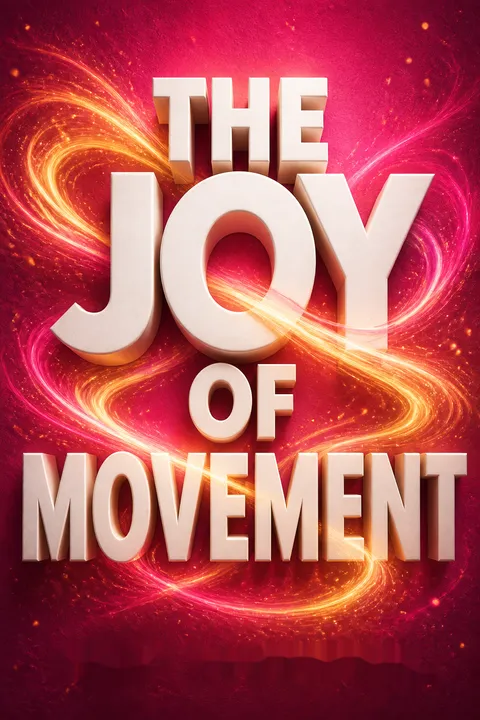
The Joy of Movement receives mixed reviews, with praise for its inspiring stories and scientific insights into the benefits of exercise. Many readers appreciate the book's emphasis on finding joy in movement and its positive effects on mental health and social connections. However, some criticize it for being repetitive, lacking depth, or overly focused on extreme athletes. The book's exploration of the psychological and neurological impacts of exercise resonates with many, while others find it too anecdotal or self-congratulatory. Overall, it seems to be most appreciated by those already passionate about fitness.
People Also Read






Glossary
persistence high
Effort-linked mood liftThe pleasurable, often calming or optimistic state that can arise after sustained physical effort. McGonigal uses the term to distinguish this experience from a reward exclusive to running. Moderate, continuous activity can trigger it, and the effort needed varies by person. The high is framed as a biological aid to persistence, not a performance prize.
endocannabinoids
Mood and pain signalsChemical messengers made by the body that act on cannabinoid receptors in the brain and elsewhere. In the book, they are linked to reduced anxiety, increased pain tolerance, improved mood, and social connection. Research discussed by McGonigal found that moderate exercise can raise their levels, helping explain some experiences commonly called a runner’s high.
collective effervescence
Shared ritual elationA term introduced by sociologist Émile Durkheim for the heightened energy and sense of connection people may experience when gathered in shared ritual, work, or celebration. McGonigal applies the idea to synchronized activity such as dancing, marching, and group exercise, where participants can feel connected to one another and to a larger whole.
muscular bonding
Bonds formed through shared movementHistorian William H. McNeill’s term for the social attachment and group solidarity that can develop through coordinated physical activity. Marching, dancing, or working in rhythm can create a sense of shared effort and purpose. The book describes this not only as friendship-building, but also as a source of unity that helps groups act together.
we-agency
Shared sense of group capabilityThe felt ability to act as part of a collective rather than only as an individual. McGonigal describes it as a sense of empowerment produced by joint action, especially synchronized movement. Marches and group athletic events can make participants feel that shared problems are more manageable because people are acting together.
groove
Impulse to move with musicThe urge to move in response to musical rhythm. The book describes groove as an early-emerging human tendency: music engages brain systems involved in movement planning and coordination, even when a listener remains still. Giving in to that impulse through dancing, clapping, or stepping can make music a source of pleasure and physical motivation.
proprioception
Sense of bodily positionThe perception of where the body and its parts are, based on signals from muscles, joints, tendons, and related systems. Proprioception helps coordinate movement without relying on vision. McGonigal also emphasizes its role in self-understanding: sensations of strength, balance, or control can inform a person’s sense of what they are capable of doing.
green exercise
Physical activity in natureExercise or other physical activity undertaken in a natural environment. The book associates green exercise with improved mood, reduced negative self-focused thought, and a stronger sense of connection to the surrounding world. Its benefits may begin quickly as natural sights and sounds draw attention outward, though it is not presented as a replacement for clinical treatment.
soft fascination
Gentle, outward attentionA state in which a person’s attention is engaged by natural surroundings without being intensely demanded. The changing patterns of light, plants, water, or wildlife can occupy the senses while leaving room for reflection. McGonigal describes this as one way time in nature may quiet inner verbal rumination and increase present-moment awareness.
biophilia
Human affinity for living natureBiologist E. O. Wilson’s term for the human tendency to seek connection with other forms of life and the natural world. McGonigal presents this affinity as rooted in human evolution and links it to feelings such as curiosity, awe, and contentment. Contact with nature can support well-being, purpose, and a sense of belonging beyond the individual self.
myokine
Muscle-released signaling proteinA protein produced by skeletal muscle and released into the bloodstream during muscular contraction. Myokines can affect tissues and organs beyond the muscles, including the brain. The book discusses research linking some myokines to brain-cell health, inflammation, motivation, and stress resilience. The evidence is developing, and the term does not imply that exercise guarantees a mental-health outcome.
pleasure gloss
Learned pleasure from exercise cuesA conditioned positive response to a sensation repeatedly associated with an enjoyable activity. A smell, sound, object, or place that was once neutral can become exciting when it reliably precedes exercise and its rewards. Examples in the book include the smell of a yoga mat or the sound of cycling shoes clicking into pedals.
National Study of Daily Experiences
Daily activity and mood studyA study that tracked more than two thousand adults, ages thirty-three to eighty-four, over eight days. Participants reported their daily activity, mood, and stressful events. As described in the book, stressful experiences took less of a toll on well-being on days when participants were physically active. The findings show an association in daily life, not proof that exercise removes stress.
FAQ
What's The Joy of Movement about?
- Exploration of Benefits: The Joy of Movement by Kelly McGonigal explores the psychological and social benefits of physical activity, emphasizing how it enhances happiness, fosters connections, and builds resilience.
- Scientific and Personal Insights: The book combines scientific research with personal anecdotes to explain how exercise influences brain chemistry and emotional well-being, discussing concepts like the "runner's high."
- Cultural Context: McGonigal reflects on the historical significance of movement in human culture, illustrating its role as a source of joy and community throughout history.
Why should I read The Joy of Movement?
- Empowering Perspective: The book offers a fresh perspective on exercise, framing it as a pathway to joy and connection rather than just a means to fitness.
- Practical Advice: McGonigal provides practical tips for incorporating more movement into daily life, making it accessible for readers of all fitness levels.
- Inspiring Stories: The author shares stories of individuals who have transformed their lives through movement, making the book relatable and motivating.
What are the key takeaways of The Joy of Movement?
- Movement Equals Happiness: Regular physical activity is linked to increased happiness, reduced anxiety, and a greater sense of purpose.
- Collective Joy: Engaging in physical activities with others fosters social connections and a sense of belonging, enhancing feelings of unity and community.
- Resilience Through Movement: Overcoming physical challenges can build resilience and self-confidence, translating to greater courage in everyday life.
How does The Joy of Movement define the relationship between exercise and happiness?
- Natural Antidepressant: Exercise triggers the release of endorphins and other neurochemicals that enhance mood and reduce anxiety.
- Connection to Nature: Engaging in physical activity outdoors, or "green exercise," can improve mental health and foster a greater sense of connection to the world.
- Social Interactions: Exercising in groups fosters social bonds, which are essential for emotional well-being and can amplify the joy derived from movement.
What is the "runner's high" as described in The Joy of Movement?
- Neurochemical Response: The "runner's high" is a euphoric feeling during prolonged physical activity, attributed to the release of endorphins and endocannabinoids.
- Evolutionary Perspective: McGonigal suggests this high may have evolutionary roots, encouraging early humans to engage in physical activity for survival.
- Broader Application: While commonly associated with running, the runner's high can be experienced through various forms of exercise, such as dancing and swimming.
What does McGonigal mean by "collective joy" in The Joy of Movement?
- Shared Experience: Collective joy arises when individuals move together in synchrony, fostering a sense of connection and belonging.
- Neurochemical Bonding: Synchronized movement releases endorphins, enhancing social bonding and trust among participants.
- Cultural Significance: Collective joy has been part of human culture throughout history, from tribal dances to modern fitness classes.
How does The Joy of Movement address the psychological benefits of exercise?
- Mood Enhancement: Regular physical activity can improve mood and reduce symptoms of anxiety and depression, sometimes as effectively as medication.
- Cognitive Benefits: Movement enhances cognitive function, including memory and focus, due to increased blood flow and neurotrophic factors.
- Resilience Building: Physical challenges foster resilience and a sense of accomplishment, translating to greater confidence in facing life's challenges.
What role does community play in The Joy of Movement?
- Fostering Social Bonds: Participating in group activities creates a sense of belonging and strengthens relationships, vital for emotional health.
- Collective Joy: Shared physical activities lead to collective joy, amplifying the benefits of exercise and improving overall well-being.
- Support Systems: Having a community to rely on during physical challenges provides motivation and encouragement, aiding in overcoming obstacles.
How does The Joy of Movement relate to overcoming personal challenges?
- Empowerment Through Movement: Movement serves as a metaphor for overcoming obstacles, empowering individuals to face challenges.
- Building Confidence: Physical challenges build self-confidence and resilience, with lessons applicable to other life areas.
- Community Support: Group activities provide social support, helping individuals navigate difficult times and fostering a sense of belonging.
What specific methods or advice does The Joy of Movement offer for incorporating movement into daily life?
- Set Achievable Goals: Establish concrete, meaningful goals related to physical activity to cultivate hope and motivation.
- Engage in Community Activities: Find or create groups focused on shared physical activities to enhance the experience and provide social support.
- Embrace Various Forms of Movement: Explore different types of physical activities to discover what brings joy and fulfillment.
What are the best quotes from The Joy of Movement and what do they mean?
- “The joy of movement is moving.”: Emphasizes that the act of moving itself is a source of joy, encouraging readers to embrace physical activity for its intrinsic rewards.
- “Movement has the power to bring us fully to what is most human about us.”: Highlights the role of movement in human connection and community, underscoring its importance beyond fitness.
- “If you are willing to move, your muscles will give you hope.”: Reflects the transformative power of movement in fostering resilience and optimism.
How can I apply the lessons from The Joy of Movement in my own life?
- Start Small and Build: Begin with manageable physical activities and gradually increase intensity or duration to foster a sense of accomplishment.
- Seek Out Community: Find local groups or classes that align with your interests to enhance motivation and provide social support.
- Focus on Joy and Connection: Choose activities that bring joy and foster connections with others, making movement a fulfilling part of daily life.
About the Author


Download PDF
Download EPUB
.epub digital book format is ideal for reading ebooks on phones, tablets, and e-readers.








