

Key Takeaways
Treat oil as a political revenue system, not merely a valuable export
Four features matter. Oil income is unusually large, comes from selling state-owned assets rather than taxing citizens, fluctuates with prices and production, and is easy to conceal. Governments often collect it through national oil companies, giving rulers direct control over exceptional profits while limiting the industry’s direct benefits to other businesses and workers.
The history changed the stakes. Before the 1970s, oil producers were not clearly more authoritarian or conflict-prone than comparable countries. Nationalizations and soaring prices transferred control and rents to governments, while making revenues much larger and less predictable. After 1980, oil-producing developing countries increasingly diverged from the rest in democracy, women’s economic opportunities, and conflict. The argument is not that geology dictates a country’s fate, but that oil revenue creates powerful political pressures.
The book’s central move is to treat revenue design as political structure. A resource’s effects depend not only on its market value, but on who owns it, who collects its returns, and who can inspect the accounts. That framing connects political economy to institutional design: a windfall can change the balance of power before it changes a country’s productive capacity. The historical timing strengthens the claim by challenging the idea of an eternal curse. Still, broad periods can hide important differences between countries, so the shift after the 1970s is best understood as a strong pattern, not a universal switch.
When oil replaces taxes, rulers face fewer demands for representation
Taxation creates a bargain. Citizens who pay taxes can demand a say in how public money is raised and spent. The book argues that people care about benefits as well as tax bills: they object when taxes rise without better services, or services shrink without lower taxes. This pressure can force rulers to become more accountable. Oil revenue weakens the bargain because governments can finance benefits without collecting comparable taxes from the public.
The fiscal difference is substantial. On average, oil-producing governments are about 45 percent larger relative to their economies than governments in non-oil states. Oil producers are also about 30 percent less reliant on taxes on goods and services. Subsidized fuel and other benefits can buy support, but they do not necessarily give citizens a clear view of what their government owes them.
This is a useful correction to the simplistic idea that taxation automatically produces democracy. The proposed mechanism is reciprocal accountability: citizens monitor the relationship between what they contribute and what they receive. That resembles a contract, not a one-way demand for low taxes. Oil can blur the contract because public benefits appear detached from citizens’ payments. The framework also clarifies why tax cuts alone are not a cure. If citizens cannot see the full budget, they may not know whether benefits are generous or merely a small return on enormous public wealth.
Expose oil contracts and budgets before secrecy becomes an autocrat's shield
Hidden revenue hides performance. Citizens can usually observe taxes and many public services, but they may not know the true value of oil income. Secret contracts, off-budget accounts, and national oil companies make it harder to assess whether rulers are managing the country’s resources well. The book finds that oil-backed autocracies tend to have less budget transparency and greater media restrictions than autocracies without oil.
The concealment can be enormous. Under Saddam Hussein, more than half of Iraq’s government spending passed through a national oil company whose budget was secret. In Russia, a petroleum boom helped the government expand its resources and popularity as political checks weakened. These examples show how opacity can protect incumbents from scrutiny and make promises to share revenue less credible to groups that might otherwise accept a political settlement.
Transparency matters here because it changes what citizens can know, not because information alone guarantees reform. Public accounts can help journalists, legislatures, and civic groups compare revenue with spending, turning an invisible windfall into a contestable political fact. This resembles the role of measurement in organizations: untracked resources are difficult to govern from the outside. But disclosure without independent audits, accessible data, and a free press can become paperwork theater. The stronger insight is that transparency is infrastructure for accountability, not a substitute for institutions capable of using it.
Protect women's routes into paid work from oil's boom-time squeeze
Oil can close a path to power. Petroleum projects employ relatively few local workers and often operate as economic enclaves, with limited links to nearby firms. Oil booms can also cause the Dutch Disease, a rise in costs and the exchange rate that makes manufacturing and agriculture less competitive. Export factories, including textiles and garments, have historically provided many first jobs for women. When they shrink, women may lose both paychecks and a route into public life.
The effect depends on available jobs. The book reports 14 percent fewer women in the formal labor force in oil states overall, and a 23 percent gap between oil and non-oil states in the Middle East and North Africa. Algeria’s oil-funded economy offered fewer openings than neighboring Morocco and Tunisia, whose export textile industries hired women. South Korea’s export manufacturing provides another example of paid work helping women organize and gain political influence.
The connection between employment and political voice is more concrete than explanations that attribute women’s status to culture alone. Work can provide income, networks, information, and a public role, each of which can support later collective action. The comparison among Algeria, Morocco, and Tunisia is particularly useful because shared regional features make economic structure easier to notice. The argument is conditional, however: oil does not automatically exclude women where service and government jobs are accessible. The policy question is therefore not simply how to grow, but which sectors create paid work and for whom.
Track where oil is extracted to predict who may fight over it
Oil creates local stakes. In low- and middle-income countries, oil producers were more than twice as likely as non-oil producers to experience civil war. The book distinguishes between separatist rebels seeking control of a resource-rich region and predatory groups that raise money through theft, kidnapping, or extortion. Because oil facilities are expensive to move and can generate large profits, companies may remain in insecure areas and become targets for armed groups.
Location helps distinguish causes. Countries producing oil only offshore had no elevated conflict risk in the book’s analysis, unlike those with onshore production. In Aceh, Indonesia, expectations of future gas revenue helped build support for independence. In southern Sudan, government actions to control newly discovered oil contributed to repression and renewed fighting. In Nigeria’s Niger Delta, militants used oil theft and threats against facilities to finance their activities.
The geographic distinction makes the account more precise than treating oil as a national jackpot that rebels simply want to capture. Local communities may bear environmental and social costs while seeing revenue flow elsewhere, and secrecy can make any proposed sharing arrangement hard to trust. The contrast between offshore and onshore production supports a mechanism tied to place and access. Yet oil is rarely the only cause of a conflict. Poverty, ethnic exclusion, state violence, and prior political organization shape whether resource grievances become armed movements.
Judge oil by its missing dividend, not by growth alone
Long-run growth was ordinary. Across 1960 to 2006, oil-producing countries did not grow more slowly per person than other countries overall. Their economies were far more volatile, however: growth fluctuated more, especially in developing oil states. A disastrous period from 1974 to 1989 was followed by faster growth in many oil producers from 1990 to 2006. The main economic failure is therefore a missed opportunity, not a uniform collapse.
Population changes the picture. Oil states grew faster in total economic output than in income per person. The book links part of that gap to fewer jobs for women, which can contribute to higher fertility and greater reliance on imported male labor. Oil revenues should have funded investment in infrastructure, education, and other lasting assets. Instead, volatility and rapid population growth often diluted the gains citizens might have received.
The distinction between a curse and a missed opportunity is analytically important. It avoids measuring resource success only by whether a country became poorer, and asks whether a large asset generated returns commensurate with its value. The focus on per-person outcomes also exposes how population growth can absorb otherwise impressive expansion. At the same time, national averages cannot reveal who received the gains or who bore the costs. Growth, child health, employment, and political rights are different outcomes, and no single indicator can stand in for the whole development story.
Design revenue rules around political incentives, not benevolent accountants
Saving is politically difficult. Countercyclical fiscal policy means saving some revenue during a boom and using it when income falls. The Hartwick rule adds a long-term requirement: replace depleted natural wealth with durable assets such as infrastructure, education, or financial savings. Yet governments often spend heavily when prices rise and struggle when they fall. Stabilization funds have frequently failed because politicians can change the rules, withdraw savings, or borrow against them.
The task is unusually demanding. Leaders may spend quickly if they fear losing office, voters may distrust savings they cannot monitor, and credit is often easiest to obtain during a boom rather than a downturn. The book warns against calling every poor result proof of unusually weak institutions. Oil governments face an unusually volatile and difficult management problem, so ordinary administrative capacity may not be enough. The historical guano boom in Peru shows that overspending on a temporary resource windfall predates modern petroleum.
This section shifts attention from moralizing about waste to the incentives that make restraint hard to sustain. A rule that asks leaders to accept immediate political costs for benefits that may arrive under someone else is structurally fragile. The same issue appears in climate policy and pension finance, where delayed rewards compete with present demands. That does not excuse poor governance, but it improves diagnosis. Funds and fiscal rules need credible oversight and political support, not merely sound accounting. The distinction between institutional weakness and task difficulty also cautions against judging governments without examining what they are being asked to manage.
Make transparency the first reform, then tailor how oil revenues flow
Start with the public ledger. The book recommends publishing contracts, company payments, government receipts, and expenditures, then subjecting the accounts to independent audits. Information should be accessible and understandable, and civic groups and a free press must be able to use it. Transparency cannot stop every misuse, but it can make hidden deals and unexplained spending harder to defend.
Other tools fit different constraints. Poor governments might extract more slowly or trade oil rights for specified public works, though barter deals need competitive bids and monitoring. Direct payments to citizens, local revenue sharing, partial privatization, and stabilization loans tied to oil prices are further options. Each has risks: local governments can be opaque too, and special funds can be captured. The right combination depends on administrative capacity, political checks, and the source of the revenue problem.
The reform menu is stronger than a universal prescription because countries differ in capacity, institutions, and regional tensions. Transparency is a sensible starting point because it supports evaluation of the other tools and can be relatively inexpensive to establish. Still, information is not self-enforcing. A disclosed payment does little if citizens cannot organize, courts cannot act, or auditors lack independence. The most practical test for any proposed mechanism is whether it changes incentives and preserves public oversight when oil prices rise, precisely when political pressure to spend is strongest.
Oil importers must trace the money their energy purchases send abroad
Demand helps create the windfall. Oil-importing countries cannot escape political consequences by finding new suppliers; drilling in poorer countries can spread the same risks to new places. Consumers and governments that buy petroleum send revenue to producing states, where opaque transactions may strengthen rulers or fuel conflict.
Make the supply chain visible. The book proposes that energy companies disclose where the oil they sell comes from and report payments made to producing governments. Importing states can also prohibit purchases of oil rights sold by insurgent groups, cutting off one source of war financing. Reducing petroleum consumption is another way to limit the scale of these transfers, although global demand and the slow shift to alternatives make that difficult.
This argument widens responsibility beyond producing states without pretending that importers control them. Supply-chain disclosure gives the public a way to connect ordinary energy use with the political institutions behind production. It also reframes transparency as an international market rule, not just a domestic governance preference. Consumer choice alone is unlikely to discipline opaque regimes when demand remains strong and buyers can be replaced. Mandatory reporting and coordinated standards are more systemic levers. The chapter’s strongest ethical point is that buyers should not treat revenue flows as politically neutral simply because the transaction is legal.
Analysis
Ross’s most durable contribution is to explain why a resource boom can alter political accountability even when it does not cause slower average growth. The mechanism begins with control over a concentrated, non-tax revenue stream. It then branches: secrecy weakens public monitoring, volatile income complicates budgeting, and an enclave-style industry provides few employment spillovers. These mechanisms reach beyond economics. They can shape regime survival, regional bargaining, women’s access to work, and the credibility of peace agreements. The book’s comparison of Algeria with Morocco and Tunisia, and its distinction between onshore and offshore production, make the broad thesis more discriminating than a simple resource curse slogan.
The account is also unusually self-correcting. Ross revisits earlier claims and rejects some familiar conclusions, especially the idea that oil necessarily produces low growth or uniformly weak institutions. That restraint matters because cross-country correlations can be distorted by how resource dependence is measured. His production-per-person measure is more defensible than oil exports divided by GDP, though it cannot eliminate every problem of investment selection, omitted variables, or causal direction. Observational evidence supports a pattern and plausible mechanisms, not a laboratory-level proof that every oil outcome has one cause.
A further implication is that policy should be evaluated by its political durability, not only its technical elegance. A savings fund can be financially sound and politically vulnerable; decentralization can reduce central control while reproducing opacity locally. Transparency is valuable partly because it lets citizens assess such tradeoffs, but disclosure alone cannot create organized constituencies or enforceable limits. The deepest practical lesson is therefore institutional: resource governance succeeds when people can see the flows, contest decisions, and impose costs on leaders who divert public wealth. Oil is neither a guaranteed blessing nor a fixed curse. It magnifies the political arrangements through which money is collected, distributed, and scrutinized.
Review Summary
The Oil Curse receives mostly positive reviews, with readers praising its comprehensive analysis of oil's impact on developing countries. Many appreciate the author's extensive research and data-driven approach. The book explores how oil wealth affects politics, economics, and social issues, including authoritarianism, economic instability, and gender inequality. Some readers find the content dry or repetitive, but most consider it informative and well-argued. Several reviewers note its relevance to understanding current global issues and recommend it for those interested in political economy and resource management.
People Also Read






Glossary
Dutch Disease
Resource boom squeezes tradable sectorsA process in which a boom in oil or another resource raises costs and the real exchange rate, making domestic manufacturing and agriculture less competitive. These sectors can lose both export markets and customers at home to imports. The book emphasizes that this contraction may have political and social costs beyond the immediate change in national income.
enclave effect
Few local economic spilloversThe tendency for oil projects to operate with limited connections to the rest of a country’s economy. Petroleum production uses substantial capital and relatively little labor, and often imports specialized equipment and expertise. It therefore creates fewer local jobs, skills, and supplier relationships than industries such as manufacturing might generate.
Beverly Hillbillies fallacy
Mistaking sudden wealth for institutional damageThe error of comparing a newly enriched country with richer peers whose institutions developed over a longer period, then attributing the gap in institutional quality to the resource windfall. The windfall may have raised income without making institutions worse. The comparison can make oil appear harmful when it has instead failed to produce an assumed institutional improvement.
fallacy of unobserved burdens
Ignoring the difficulty of the taskThe mistake of inferring weak institutions from a government’s poor performance without accounting for the burden it faces. Oil revenues are unusually volatile and difficult to manage, so an ordinary government may perform poorly at revenue stabilization even if its underlying capacity is not unusually weak. The metaphor is a worker slowed by a heavy load observers cannot see.
Hartwick rule
Replace depleted natural wealthA principle for managing exhaustible resources: invest resource revenues in other forms of capital so that a country can sustain or increase its wealth as its natural assets are depleted. Examples include physical infrastructure, education, and financial assets. Consuming all the proceeds without replacing the lost natural capital leaves future generations with fewer productive assets.
booty futures
Selling rights to hoped-for spoilsFinancing a rebellion or coup by selling investors future access to oil concessions that insurgents hope to control if they win. The rebels do not sell existing oil, but promise future extraction rights in exchange for money, weapons, or other support. The arrangement can help make a conflict possible by financing the effort to capture the resource.
obsolescing bargain
Investor leverage fades after investmentA shift in bargaining power that can occur after a company makes large, location-specific investments. Before spending, the company may negotiate favorable terms. Once wells, pipelines, and other assets are in place, leaving becomes costly, and the host government may gain leverage to renegotiate or seize control. The concept helps explain why oil nationalizations became more feasible.
oil income per capita
Production value divided by populationThe book’s measure of a country’s oil and gas production value per person. It counts both domestic and exported production, unlike export-dependence measures that divide exports by GDP. This helps avoid treating poorer countries as more oil-dependent merely because they consume less domestically or have smaller non-oil economies.
countercyclical fiscal policies
Save in booms, spend in downturnsGovernment budget policies that restrain spending or build savings when revenue is high, then use those reserves to sustain spending when revenue falls. For oil producers, the goal is to soften price-driven booms and busts and preserve money for future generations. Such policies are difficult to maintain because the political reward for spending often arrives immediately.
FAQ
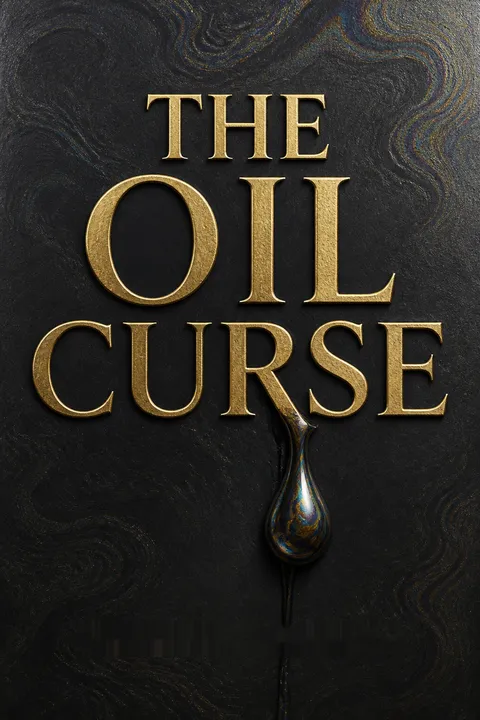
What's The Oil Curse about?
- Explores oil's paradoxical effects: The Oil Curse by Michael L. Ross examines how petroleum wealth can lead to negative political and economic outcomes in developing nations, a phenomenon known as the "resource curse."
- Focus on developing countries: The book highlights that while the world has become wealthier and more democratic since 1980, oil-rich nations have often stagnated or regressed in these areas.
- Analyzes various impacts: Ross discusses how oil wealth affects democracy, gender equality, civil conflict, and economic growth, providing a comprehensive view of the challenges faced by oil-producing nations.
Why should I read The Oil Curse?
- Understanding global dynamics: The book provides insights into the complex relationship between natural resources and governance, crucial for anyone interested in international relations or development studies.
- Relevance to current events: With ongoing discussions about oil politics and conflicts in regions like the Middle East, this book offers a timely analysis of how oil wealth shapes societal outcomes.
- Evidence-based analysis: Ross uses extensive data and case studies to support his arguments, making it a valuable resource for scholars and policymakers alike.
What are the key takeaways of The Oil Curse?
- Resource wealth can be harmful: The book argues that oil wealth often leads to authoritarianism, civil conflict, and economic mismanagement rather than prosperity and democracy.
- Impact on women: Ross highlights that oil wealth can perpetuate gender inequality by reducing women's economic opportunities, particularly in regions like the Middle East.
- Need for transparency: A significant takeaway is the importance of transparency in managing oil revenues to promote accountability and reduce corruption, which can help mitigate the resource curse.
What are the best quotes from The Oil Curse and what do they mean?
- “It is the devil’s excrement.”: This quote by Juan Pablo Pérez Alfonso encapsulates the idea that oil wealth can lead to detrimental effects on society, likening it to a curse rather than a blessing.
- “Good geology has led to bad politics.”: This phrase summarizes the book's central thesis that natural resource wealth, particularly oil, often results in poor governance and social strife.
- “The irony of oil wealth: those countries with the most urgent needs are also the least likely to benefit from their own geologic endowment.”: This quote reflects the paradox that oil-rich countries often experience more significant challenges than those without such resources.
How does oil wealth affect democracy according to The Oil Curse?
- Increased government spending: Oil revenues allow governments to increase spending without raising taxes, which can reduce the need for accountability to citizens and entrench authoritarian rule.
- Secrecy and lack of transparency: Governments in oil-rich countries often conceal their revenues, making it difficult for citizens to hold them accountable, which further undermines democratic processes.
- Statistical evidence: Ross provides data showing that oil-producing countries are less likely to transition to democracy, particularly after 1980, highlighting the negative correlation between oil wealth and democratic governance.
What is the "resource curse" as defined in The Oil Curse?
- Definition of the resource curse: The resource curse refers to the paradox where countries rich in natural resources, particularly oil, experience less economic growth, less democracy, and worse development outcomes than countries with fewer natural resources.
- Mechanisms of the curse: Ross explains that oil wealth can lead to corruption, authoritarianism, and civil conflict, as governments become less accountable to their citizens when they rely on resource revenues instead of taxes.
- Historical context: The book notes that before 1980, oil-producing countries did not exhibit these negative traits, suggesting that the resource curse is a relatively recent phenomenon linked to the rise of oil prices and nationalization.
How does oil production impact women's status in developing countries?
- Reduced economic opportunities: The book argues that oil wealth often leads to fewer jobs for women, as governments focus on oil revenues rather than diversifying the economy to create jobs in sectors that typically employ women.
- Patriarchal reinforcement: Ross highlights that oil wealth can perpetuate patriarchal structures, as governments may provide welfare benefits that reduce the economic necessity for women to work outside the home.
- Statistical analysis: The author provides data showing that oil-rich countries have lower female labor force participation and political representation compared to non-oil countries, emphasizing the negative impact of oil on gender equality.
What are the methods used in The Oil Curse to analyze the effects of oil?
- Quantitative analysis: Ross employs statistical methods to analyze data from 170 countries over 50 years, examining correlations between oil wealth and various political and economic outcomes.
- Case studies: The book includes qualitative case studies of specific countries to illustrate the broader trends and patterns identified in the quantitative analysis.
- Comparative approach: By comparing oil-producing countries with non-oil-producing countries, Ross highlights the unique challenges faced by nations reliant on petroleum wealth.
How does The Oil Curse suggest alleviating the oil curse?
- Promoting transparency: Ross emphasizes the need for greater transparency in how oil revenues are managed, which can help hold governments accountable and reduce corruption.
- Diversifying economies: The author advocates for policies that encourage economic diversification away from oil dependency, which can create more jobs and opportunities for citizens, particularly women.
- International cooperation: The book suggests that oil-importing countries also have a role to play in alleviating the oil curse by promoting fair trade practices and supporting governance reforms in oil-rich nations.
What role do foreign powers play in the oil curse, according to The Oil Curse?
- Historical interventions: The book discusses how foreign powers have historically intervened in oil-rich countries, often exacerbating local conflicts and undermining democratic processes.
- Exploitation by international oil companies: Ross notes that foreign oil companies have often exploited resources in developing countries, leading to wealth that benefits a small elite rather than the broader population.
- Changing dynamics: While foreign influence has been significant, the author argues that the primary drivers of the oil curse are internal factors, such as government policies and the management of oil revenues.
What are the economic implications of oil wealth discussed in The Oil Curse?
- Volatility of revenues: The book highlights that oil revenues are often volatile, which can create uncertainty and discourage private-sector investment, ultimately hindering economic growth.
- Dutch Disease: Ross explains the concept of Dutch Disease, where an influx of oil wealth can lead to a decline in other sectors, particularly manufacturing and agriculture, which can have long-term negative effects on the economy.
- Investment strategies: The author advocates for prudent investment strategies that prioritize sustainable development and countercyclical fiscal policies to manage the economic impacts of oil wealth effectively.
How does The Oil Curse relate to current global issues?
- Geopolitical implications: The book highlights how oil wealth influences global politics, including conflicts, foreign interventions, and international relations, making it relevant to contemporary geopolitical discussions.
- Environmental concerns: Ross addresses the environmental impacts of oil extraction and consumption, linking them to broader issues of sustainability and climate change.
- Future of oil: The author discusses the future of oil in a changing global landscape, considering the implications of renewable energy and shifting energy demands on oil-rich countries.
Download PDF
Download EPUB
.epub digital book format is ideal for reading ebooks on phones, tablets, and e-readers.








