

Key Takeaways
Treat oil dependence as a security problem before it becomes a crisis.
The supply line was strategic. In 1969, Britain was preparing to leave the Persian Gulf, a region central to Western energy supplies and military access. The Strait of Hormuz, only 21 miles wide at its narrowest point, made those supplies vulnerable to disruption. Meanwhile, U.S. oil production peaked in 1970 at 11.3 million barrels a day, and imports rose from 2.2 million barrels a day in 1967 to 6.2 million in 1973.
A proxy seemed practical. Nixon and Kissinger chose the Shah to protect the Gulf without sending American troops. The book argues that this decision joined oil policy to arms sales, Cold War strategy, and the fate of Iran’s monarchy. Officials treated a dependable supply as a security asset, while underestimating how dependence could also become a source of leverage and risk.
What's striking is how geography turns an economic input into a strategic vulnerability. A narrow passage can matter more than the size of an entire national arsenal if supply routes converge there. The same logic applies to contemporary energy grids, shipping lanes, and semiconductor supply chains: resilience depends not only on total supply, but on whether alternatives exist when a chokepoint fails. Yet treating a region mainly as a corridor can obscure the people and politics within it. Security planning becomes brittle when local societies are reduced to infrastructure.
Arm regional proxies only with limits you can actually enforce.
The limits came off. Before Nixon’s 1972 visit to Tehran, U.S. agencies warned that Iran’s economy and military could not readily absorb all the Shah wanted. After private talks, Nixon authorized sales of advanced weapons and increased U.S. technical support, while loosening earlier safeguards that connected purchases to Iran’s ability to pay and operate the equipment.
Influence reversed direction. Iranian arms orders rose from about $500 million in 1972 to $2.5 billion within a year. The Shah also gained American technicians, intelligence support, and a stronger regional position. Washington expected arms dependence to keep Tehran aligned. Instead, the scale of the commitment made it harder for U.S. officials to refuse later requests without risking their broader strategic relationship.
This is a classic principal-agent problem: a sponsor delegates power to a partner, then discovers the partner has its own objectives and better local information. More weapons do not automatically buy more obedience. They may increase the recipient's bargaining power, particularly when the sponsor has made the relationship central to its own security. The limiting question is not simply how much equipment an ally can use, but what conditions preserve a credible ability to say no. Without enforceable limits, assistance can become a commitment that constrains the giver more than the recipient.
Tie state budgets to one commodity, and price swings become political shocks.
Oil supported the state. Petroleum financed Iran’s development plans, military purchases, and much of its foreign exchange. The book uses the term oily legs for the Pahlavi monarchy’s reliance on oil income as a foundation of political stability. By 1977, oil supplied about 85 percent of Iran’s foreign exchange receipts.
A price change reached households. When oil sales fell, the government faced trouble meeting spending commitments, including programs and subsidies that helped keep social pressure in check. A state funded so heavily by one export cannot easily replace lost income. The danger was not only a smaller budget. It was the sudden choice between cutting domestic support, limiting military ambitions, or borrowing to maintain both.
The fiscal link matters because governments do more than collect and spend money: they build expectations about wages, services, subsidies, and national progress. When revenue falls suddenly, a budget crisis can become a legitimacy crisis. This is a useful distinction between temporary poverty and political exposure. A state may appear strong while commodity prices are high, yet have little capacity to absorb a shock. Still, dependence alone does not determine collapse. Institutions, savings, diversified production, and public trust all affect whether a revenue drop becomes politically destabilizing.
A sudden oil-price victory can destabilize buyers and sellers alike.
The 1973 surge was immense. After the Arab-Israeli war and embargo tightened the market, Persian Gulf producers raised the posted price of crude from $5.11 to $11.65 a barrel. Across the year, oil prices rose roughly 470 percent. The Shah had argued that higher prices were justified by the cost of imported goods and the expense of Iran’s military buildup.
The win carried a cost. Iran’s oil income multiplied, helping fund the Shah’s ambitions, but the higher energy bill strained consumer economies, intensified inflation, and increased financial pressure across the West. Lower demand then threatened the exporters’ revenues too. The book’s point is that a producer’s pricing power depends on buyers remaining able to purchase, not merely on the producer’s ability to name a price.
This is a feedback loop, not a simple transfer from buyers to sellers. A sharp price increase can enrich producers while shrinking demand, worsening inflation, and weakening the customers on whom future sales depend. The same pattern appears in other commodity booms: windfalls can encourage investment and spending that assume the boom will persist, while the price itself changes the conditions that sustain it. The Shah’s claim that a higher price corrected an unfair exchange had a real economic logic. The danger lay in treating that logic as a reason to ignore the wider system's capacity to adjust.
Do not confuse oil wealth with the capacity to absorb it.
The Big Push bet. The Shah embraced a development strategy called the Big Push: investing heavily in large projects and industries in hopes of rapidly transforming the economy. At Ramsar in 1974, he approved plans for annual growth of 25.9 percent and nearly doubled planned government spending, from about $35 billion to $69 billion.
Capacity was the constraint. Iran lacked enough trained workers, housing, transport, ports, and power infrastructure to convert the spending into productive growth. Cargo piled up at ports, projects stalled, and inflation rose. Government planners had warned that the economy could not absorb unlimited capital quickly. The Shah pursued the spending plan anyway, while expecting oil revenues to keep rising and finance the commitments.
The distinction between money and absorptive capacity is central to development economics. Capital does not automatically become roads, skills, or functioning factories. If projects compete for the same workers and infrastructure, spending can push prices up before productivity improves. The Big Push can be defensible when investment is coordinated and bottlenecks are addressed, but speed alone is not a strategy. The Shah's case also shows why impressive growth figures can mislead: aggregate output may rise while shortages, delays, and distributional grievances deepen beneath the headline.
Secret diplomacy creates obligations institutions cannot monitor or repair.
Personal promises shaped policy. Nixon and Kissinger handled important dealings with the Shah through private meetings and oral messages. These included arms commitments, oil discussions, covert cooperation, and military contingency planning. In several cases, the agencies expected to carry out the policy were not fully informed about what had been promised.
Confusion became structural. Nixon’s assurances on arms and oil left officials arguing over what the Shah believed he had been granted. Kissinger also gave different signals to the Shah’s representatives and to colleagues managing economic policy. With no clear, complete record, officials could not easily test costs, coordinate decisions, or correct misunderstandings. A relationship built on personal access became difficult to govern through ordinary institutions.
Back channels can be useful when formal processes are slow or politically exposed, but they create a commitment problem: each side may believe it secured an understanding that the other side never formally accepted. In complex organizations, documentation is not bureaucratic decoration. It is a tool for shared memory, accountability, and correction. This history also cautions against assuming that secrecy always improves flexibility. It may speed a decision in the moment, then leave later officials unable to distinguish a promise from an inference or a strategic wish.
Treat covert allies as people, not disposable instruments.
The Kurds were a bargaining tool. From 1972, the United States and Iran supported Kurdish fighters opposing Iraq, partly to weaken Baghdad and pressure its Soviet-backed government. The CIA spent about $16 million on the operation, and Kurdish leaders relied on American assurances that their cause would not be abandoned without warning.
The bargain ended abruptly. In 1975, the Shah reached an agreement with Iraq over border disputes and shut off support to the Kurds. Iraqi forces then attacked, and roughly 200,000 Kurdish refugees crossed into Iran. Kissinger knew the Shah intended to end the operation but did not warn the Kurdish leadership. The episode exposed the distance between using a group as a strategic instrument and accepting responsibility for its survival.
Covert action creates moral and strategic liabilities that outlast the operation itself. A partner that is encouraged to take risks may interpret support as a durable commitment, even when the sponsor sees it as temporary leverage. The resulting betrayal can damage future credibility with other local actors, not only the abandoned group. Strategic usefulness is real, but it should not erase agency or foreseeable consequences. A more disciplined policy would define exit conditions and communicate them clearly, especially when civilians face retaliation.
A swing producer can break a cartel by flooding its market.
Saudi Arabia changed the contest. At OPEC’s December 1976 meeting in Doha, most members backed a 10 percent price rise in January and a further 5 percent in July. Saudi Arabia and the United Arab Emirates instead chose a smaller increase and signaled that they would raise production. Saudi Arabia, the cartel’s largest producer, had the capacity to make that threat consequential.
Iran took the sharper hit. The two-tier price system and increased Saudi supply undercut demand for Iranian crude. In the first days of January 1977, Iranian production plunged by about 38 percent compared with the previous month. The Saudi move also gave Western consumers relief and reduced the Shah’s income for military and development plans. Price policy became a contest over who could endure lost revenue longest.
The episode shows why cartel power depends on cooperation among members, not just their combined reserves. A dominant producer can undermine collective pricing by accepting a smaller immediate return in exchange for market share and political influence. Yet the result was not a clean victory for consumers or an uncomplicated Saudi triumph. Flooding supply can depress prices for every producer and weaken the cartel’s ability to coordinate. The move also linked economic leverage to security relationships, demonstrating how commodity markets can become instruments of foreign policy.
Do not shut political channels just as oil wealth starts thinning.
The regime narrowed its own feedback. In 1975, the Shah replaced Iran’s competing political parties with a single party. Rather than creating a trusted channel for public concerns, the move deepened cynicism. That year, seminary students rioted in Qum, while economic problems included inflation, shortages, and a major fall in oil income.
Strain met fewer outlets. By 1977, blackouts, unemployment, crowded urban neighborhoods, and delays in development projects were visible signs of a system under pressure. The book does not claim that oil policy alone caused the 1979 revolution. It argues that fiscal shocks aggravated economic dislocation and weakened the regime, while repression and political exclusion made peaceful correction harder. The Shah’s oil revenues had financed modernization, but the political order did not adapt at the same pace.
Political feedback is a form of information infrastructure. Parties, public criticism, and local representation can reveal failures before they become crises. Suppressing those channels may make a government look orderly while making its decisions less informed. The Iranian case also resists a single-cause explanation: economic disruption interacted with coercion, religious opposition, social change, and the Shah’s personal rule. The strongest conclusion is not that lower oil income mechanically produces revolution, but that a rigid state has fewer ways to absorb economic and social shocks without violence.
Analysis
The book’s central achievement is to connect diplomatic decisions usually studied separately: Nixon’s effort to delegate Gulf security, the Shah’s drive to control oil revenue and acquire arms, the 1973 oil shock, and the eventual Saudi challenge to Iran’s pricing power. Its narrative makes the sequence legible through meetings, cables, diaries, and private disputes. That archival approach is especially effective at showing how personal commitments became policy without the scrutiny of a coherent process. The story is not simply that Washington empowered a loyal ally and was betrayed. The Shah pursued Iranian interests, while American officials repeatedly mistook dependence for control.
The argument is strongest when it treats fiscal vulnerability as an accelerant rather than a complete explanation for revolution. The 1977 price conflict damaged Iran’s revenues just as an ambitious spending plan, inflation, labor shortages, and urban dislocation were straining the country. Yet the book also supplies evidence that the monarchy faced deeper political problems: one-party rule, repression, weak institutions, and limited channels for dissent. Those forces matter because economic distress does not produce the same political outcome everywhere.
There is also a tension in the account. U.S. officials and the Shah both used strategic language to justify choices that benefited their own priorities, but the United States had greater power to shape the relationship and greater responsibility for its institutional failures. At the same time, retrospective documents cannot make every private motive certain. The strongest reading distinguishes documented decisions from inferred intentions, especially around covert plans and the Shah’s finances.
The enduring lesson is about coupled systems. Arms sales, oil prices, domestic legitimacy, and global credit were treated as separable issues, although each depended on the others. By 1976, a price decision made in OPEC could affect the Iranian budget, European political stability, and confidence in Western banks. The resulting policy trap was not inevitable. It was built through a succession of choices that rewarded short-term leverage while weakening the capacity to adapt.
Review Summary
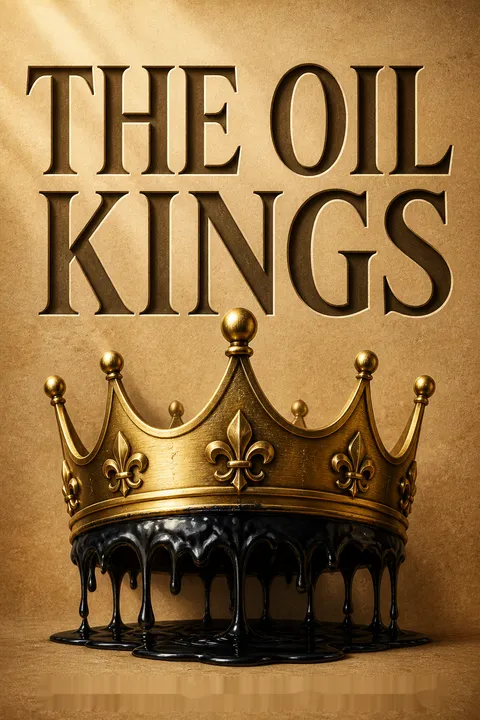
The Oil Kings is praised as a well-researched and captivating account of US-Iran-Saudi relations in the 1970s, focusing on oil politics and its impact on global power dynamics. Readers appreciate the book's insights into key figures like Nixon, Kissinger, and the Shah, as well as its exploration of complex economic and political issues. Some criticize the book's overwhelming detail and chronological jumps, while others find it enlightening about the era's geopolitical landscape. Overall, reviewers consider it a valuable resource for understanding Middle East politics and oil's role in shaping international relations.
Glossary
Nixon Doctrine
Delegated regional defenseA foreign-policy approach associated with President Richard Nixon that reduced reliance on large American troop deployments while encouraging allies to defend their own regions. The United States would supply arms and training. In the Persian Gulf, this approach elevated the Shah of Iran as a principal security partner after Britain announced its withdrawal.
Twitchell Doctrine
Arms tied to capacityA U.S. policy toward Iranian weapons purchases, named for General Hamilton Twitchell, that linked arms procurement to training and the ability to operate and maintain the equipment. It also gave Washington leverage through economic reviews. The policy was meant to prevent military spending from overwhelming Iran’s civilian development, but Nixon-era decisions eventually dismantled it.
Twin Pillars
Iran and Saudi security partnershipThe Nixon administration’s Gulf strategy that relied on Iran as the stronger military partner and Saudi Arabia as a supporting partner. The policy assumed the two monarchies could jointly protect regional stability and oil supplies. In practice, their rivalry and competing oil interests made the partnership unstable.
Big Push
Rapid industrial investmentA development strategy that concentrates large amounts of capital in major projects and industries to accelerate economic transformation. The Shah applied this approach to Iran’s oil windfall, approving exceptionally ambitious spending plans. Its success depended on the economy’s ability to absorb investment, including enough skilled workers, transport, housing, and infrastructure.
oily legs
Oil-funded regime stabilityA phrase used to describe the Pahlavi state’s dependence on oil revenues for political stability and government capacity. Petroleum income financed development, military purchases, and programs that helped manage social pressure. Because the revenue stream was concentrated in one commodity, sudden changes in oil sales could threaten both public spending and the regime’s legitimacy.
superclient
Overpowered dependent allyA term used in the book’s discussion of a U.S. policy analysis describing Iran’s position. The Shah was a client in the sense that Iran depended heavily on American arms, training, and support, yet his growing military power and independent ambitions gave him substantial leverage over Washington. The sponsor’s commitments could leave it constrained by the ally it had strengthened.
FAQ
What's The Oil Kings about?
- Focus on Oil Politics: The Oil Kings by Andrew Scott Cooper examines the complex relationships between the U.S., Iran, and Saudi Arabia, focusing on how oil politics influenced global power dynamics in the Middle East.
- Historical Context: The book covers key historical events, including the 1953 coup in Iran, the rise of the Shah, and the oil crises of the 1970s, illustrating their impact on international relations.
- Geopolitical Implications: It highlights the geopolitical consequences of oil dependency, showing how these nations navigated foreign policy amidst regional tensions.
Why should I read The Oil Kings?
- Insightful Analysis: Cooper provides a detailed analysis of the interplay between oil politics and national security, essential for understanding contemporary Middle Eastern geopolitics.
- Historical Lessons: The book offers lessons on the consequences of foreign intervention and the complexities of alliances, relevant for historians and policymakers.
- Engaging Narrative: Cooper's storytelling combines personal anecdotes with historical events, making the book both informative and engaging for readers interested in history and politics.
What are the key takeaways of The Oil Kings?
- Oil as a Weapon: The book illustrates how oil was used as a tool of economic warfare, particularly by Saudi Arabia against Iran, to influence regional stability.
- U.S. Dependency on Oil: It highlights the U.S.'s growing dependency on Middle Eastern oil and the implications for American foreign policy and military strategy.
- Complex Alliances: The narrative underscores the complexities of U.S.-Iran-Saudi relations, showing how personal relationships between leaders influenced broader geopolitical strategies.
What are the best quotes from The Oil Kings and what do they mean?
- “Why should I plant a tree whose bitter root will only serve to nourish poisoned fruit?”: This quote reflects the futility of actions that lead to negative outcomes, emphasizing the consequences of U.S. intervention in Iran.
- “The Shah is clearly the most important person in Iran.”: This statement underscores the Shah's pivotal role in U.S. foreign policy, illustrating how personal relationships shaped international dynamics.
- “Popeye is running out of cheap spinach.”: This metaphor highlights the impending energy crisis and the unsustainable nature of America's oil dependency, foreshadowing the challenges that lay ahead.
How did the U.S. support the Shah in Iran according to The Oil Kings?
- Military Aid: The U.S. provided extensive military support to the Shah, including advanced weaponry and training for Iranian forces, to bolster Iran as a regional ally.
- Economic Assistance: The book details how the U.S. facilitated economic growth in Iran through oil revenues, crucial for the Shah's modernization efforts.
- Political Backing: The U.S. consistently backed the Shah politically, viewing him as a bulwark against Soviet influence in the region, despite growing domestic unrest in Iran.
What role did oil play in U.S.-Iran relations as described in The Oil Kings?
- Economic Leverage: Oil served as a significant economic leverage point, with the U.S. relying on Iranian oil while supporting the Shah's ambitions to control oil prices.
- Geopolitical Strategy: The book illustrates how oil politics influenced U.S. foreign policy decisions, including military interventions and diplomatic negotiations in the Middle East.
- Crisis Catalyst: The oil crises of the 1970s acted as catalysts for changing U.S. perceptions of Iran, leading to a reevaluation of its strategic importance in the region.
How did Saudi Arabia use oil as a weapon against Iran?
- Market Manipulation: Saudi Arabia threatened to flood the oil market to drive prices down, aiming to destabilize Iran's economy and reduce its influence in the region.
- Economic Warfare: This tactic is described as a form of economic warfare, where the Saudis sought to weaken Iran without direct military confrontation.
- Political Messaging: By manipulating oil prices, Saudi Arabia sent a clear message to both Iran and the U.S. about its power and willingness to act against perceived threats.
What were the consequences of the 1979 Iranian Revolution as discussed in The Oil Kings?
- Shift in Power: The revolution marked a significant shift in power dynamics in the Middle East, leading to the rise of anti-American sentiment and the establishment of an Islamic Republic.
- Impact on U.S. Policy: The revolution forced the U.S. to reassess its foreign policy in the region, leading to a more cautious approach towards Iran and a focus on securing relationships with other Gulf states.
- Regional Instability: The aftermath of the revolution contributed to increased instability in the region, affecting U.S. interests and leading to conflicts that continue to resonate today.
How did Andrew Scott Cooper conduct research for The Oil Kings?
- Primary Sources: Cooper utilized declassified documents, including meeting notes, diaries, and correspondence from key figures involved in U.S.-Iran-Saudi relations.
- Interviews: The author conducted interviews with surviving officials and experts who had firsthand knowledge of the events and policies discussed in the book.
- Historical Analysis: Cooper combined these sources with historical analysis to provide a comprehensive view of the geopolitical landscape during the critical years of the 20th century.
What is the significance of the title The Oil Kings?
- Symbol of Power: The title refers to the influential leaders of oil-rich nations, particularly the Shah of Iran and King Faisal of Saudi Arabia, who wielded significant power in shaping global energy policies.
- Economic Control: It underscores the control these leaders had over oil resources, pivotal in determining the economic and political landscape of the Middle East.
- Geopolitical Implications: The title encapsulates the broader themes of the book, highlighting how oil wealth influenced international relations and the balance of power in the region.
How did Kissinger's policies influence U.S.-Iran relations in The Oil Kings?
- Support for the Shah: Kissinger’s unwavering support for the Shah, despite rising tensions over oil prices, illustrated a commitment to maintaining a strong ally in the region.
- Strategic Calculations: His policies often prioritized short-term stability over long-term consequences, leading to a complex web of alliances that would later unravel.
- Crisis Management: Kissinger’s approach to crisis management, particularly during the oil embargo, reflected a belief in the necessity of strong leadership, which he believed the Shah embodied.
How does The Oil Kings address the concept of the "Twitchell Doctrine"?
- Definition of the Doctrine: The Twitchell Doctrine refers to the U.S. policy of supporting authoritarian regimes in the Middle East to ensure oil supply security.
- Critique of the Doctrine: The book critiques the doctrine as shortsighted, arguing that it ignored the potential for backlash from oppressed populations.
- Long-term Consequences: Cooper emphasizes that the reliance on the Twitchell Doctrine created a cycle of dependency and resentment, contributing to instability and revolutions, as seen in Iran.
About the Author
Other books by Andrew Scott Cooper
Download PDF
Download EPUB
.epub digital book format is ideal for reading ebooks on phones, tablets, and e-readers.








