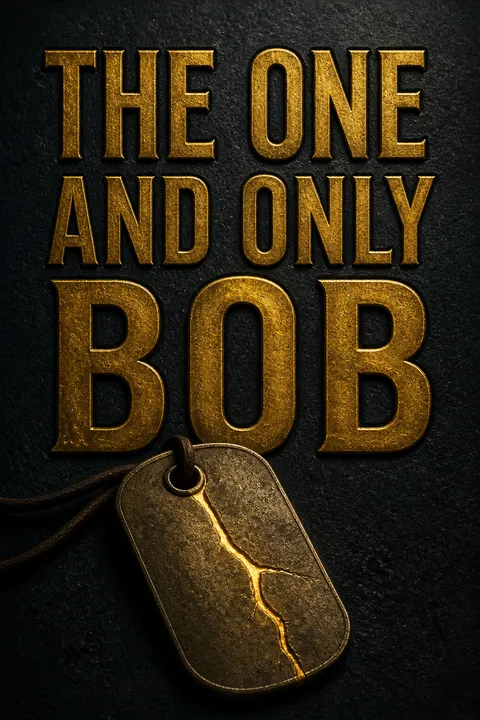


Plot Summary
The Box at Exit Eight
Before he becomes Bob,1 the undersized mutt1 is Rowdy,1 one of six puppies born to a stray dog named Reo. A truck carries the litter away and leaves them scattered in the cold. Rowdy1 survives an owl’s attack, follows the highway, and reaches a shopping mall where a hole in Ivan’s2 enclosure offers shelter.
He steals a banana from the sleeping gorilla,2 then curls up on Ivan’s2 belly. Ivan2 waits for him to wake. Rowdy1 remembers hearing one of his littermates4 cry after the box fell, but fear keeps him from going back. That choice will trouble him long after he has found a safer life.
Bob’s first bond is built from an unlikely exchange: a starving puppy risks approaching a powerful animal, and Ivan answers vulnerability with stillness rather than force. The scene establishes the story’s alternative model of safety. Protection does not depend on ownership or dominance; it begins when one creature makes room for another. The unanswered cry from the roadside is equally important. Bob’s later swagger rests partly on a buried failure, so the book seeds his central conflict before he understands it himself: survival kept him alive, but it did not free him from responsibility.
Two Homes, No Certainty
At the mall, Bob1 becomes Ivan’s2 closest companion and helps the gorilla2 endure years of confinement. Their friend Stella,10 an elderly circus elephant,10 dies after caring for Ruby,3 a young elephant3 she had taken under her wing. Ivan2 honors Stella10 by helping Ruby3 leave the mall, and the animals are moved to better-run homes.
Bob1 is adopted by Julia5 and her parents, George6 and Sara,7 and now visits Ivan2 and Ruby3 at Wildworld Zoological Park. He enjoys his bed, meals, and Julia’s5 attention, but resists training and refuses to enter a car. The animal shelter’s cries bring back his own abandonment, while his old rival Snickers8 and the squirrel Nutwit15 needle him about becoming soft.
Bob’s new life solves the immediate problem of hunger but not the psychological problem of trust. He can accept Julia’s care while insisting he needs no one, because dependence still feels like an invitation to be abandoned. The contrast between his freedom and Ivan’s protected enclosure complicates his ideas about captivity: walls can confine, yet they can also keep danger out. The shelter and Bob’s refusal of cars sharpen the point. His body remembers vulnerability even when his daily routines suggest he is safe, and his jokes let him control how much of that fear others can see.
The Sky Turns Green
As Hurricane Gus approaches, Julia’s family6 prepares their home, and George6 brings Julia5 and Bob1 to the park for a brief visit with Ivan2 and Ruby.3 Staff members review their flood plans after a tornado watch, but the storm arrives before Julia5 can take Bob1 home.
He sees the sky darken, loses his footing on the wall between the gorilla and elephant habitats, and falls into Ivan’s2 side just as George6 pulls Julia5 away. The tornado tears through the park. It lifts Bob1 over the trees and drops him in the giraffe habitat, where he lands beneath Stretch. The noise stops, leaving Bob1 alone, injured, and unsure whether his friends survived.
The disaster turns Bob’s familiar route into a landscape without reliable boundaries. The wall that usually separates Ivan from Ruby is no longer a stable feature, and Bob’s accidental fall makes him physically vulnerable before he has chosen to act bravely. The tornado also gives the book’s inner conflict an external shape: Bob is carried beyond his control, much as abandonment once carried him away from his litter. His immediate response is to howl rather than rescue anyone. The story refuses to make courage instantaneous; Bob must first confront the difference between the heroic identity he performs and the frightened animal he actually is.
A Park Without Walls
When the storm eases, Bob1 finds a family of aardvarks beneath the remains of a shed and pulls boards away so they can reach their den. He carries a lost baby sloth back to her mother, then enters the damaged wolf habitat and finds Kimu,9 a gray wolf9 who cannot locate Suzu.18 Kimu’s9 size and intensity frighten Bob,1 but Bob1 keeps searching for his own friends.
He follows the smell of gorillas past shattered paths and overturned trees to the wreckage of Gorilla World. Fences and walls have disappeared across the park, leaving residents from different habitats exposed to one another. From the ruins, Bob1 hears Ruby3 calling for help.
Bob’s first useful acts are small and concrete. He cannot repair the park or locate everyone at once, but he can uncover a den and reunite a baby sloth with her mother. These rescues move him from helpless witness to participant without pretending that fear has vanished. Kimu introduces a more difficult form of uncertainty: an animal who may be dangerous is also frightened and searching for someone he loves. The demolished barriers make the park’s protective order visible by its absence. They also force Bob to judge others by their immediate needs rather than by the categories that once kept them apart.
Ruby Builds a Sling
Ruby3 leads Bob1 to Kudzoo,12 a young gorilla12 sinking in the muddy moat. The elephant elders cannot safely reach the infant12 one at a time, so Ruby3 proposes joining their trunks into a cradle. The elephants lift Kudzoo12 from the mud and return her to the gorillas. Bob1 and Ruby3 then reach the collapsed gorilla building and spot Ivan’s2 hand beneath the debris.
Bob1 alerts the rescue workers, who pull away a heavy beam; Ivan2 finally sits up, dusty but alive, and begins eating a banana. As keepers assess the damage, Kimu9 bolts from the park and officers fire after him. A report of the flooding animal shelter reaches Bob,1 along with a bark he cannot forget.
Ruby’s plan makes the rescue a genuinely collective achievement. She sees a practical possibility the adults have missed, and the elephants’ coordinated strength turns her idea into a bridge between habitats. Bob contributes by finding Ivan and drawing human rescuers to the buried gorilla, a role that asks him to trust both his nose and other people. Ivan’s survival offers relief without erasing the cost of the storm; Kimu’s escape immediately restores uncertainty. The familiar bark then shifts the story from public catastrophe to private history. Amid many cries for help, Bob recognizes one sound that makes him choose where to go next.
The Bark He Remembered
Bob1 slips away from the park despite Sara’s7 plan to keep him safe. The remembered bark pulls him toward the animal shelter, while his thoughts return to the highway where he once searched for the littermate he heard crying.4 He eventually stopped, relieved to escape the danger and ashamed of that relief. Floodwater now covers the shelter floor.
A worker catches Bob1 with a control pole and places him in an upper cage beside Snickers.8 When staff bring in another dog, Bob1 recognizes the battered stray as Boss,4 the fierce older puppy from his litter.4 Boss4 has survived by wandering alone and having repeated litters. She explains that her latest surviving puppy13 is stranded in a small car near the creek.
Recognition arrives through sound and scent before Bob can prepare a story about what he will do. The remembered bark collapses years of avoidance into a present obligation, while the shelter’s rising water makes delay dangerous. Boss’s condition also challenges Bob’s comforting belief that his own survival proves he was tougher or more deserving. He has had Ivan and Julia; Boss has had neither. Her account does not ask for pity, which makes the disparity harder for Bob to dismiss. Their reunion turns the old cry from an abstract source of guilt into a living relationship that can still answer him.
A Towel and Forgiveness
As the shelter fills, Boss4 tells Bob1 she cannot spend her life blaming humans for what happened to her. Bob1 admits that he heard her after the litter was abandoned and did not go back, convinced he should have found a way to save her. Boss4 tells him he was a helpless puppy too, then asks him to stop punishing himself for surviving.
Their reconciliation is interrupted when officials order the shelter evacuated. Staff load animals into a police car, but there is no room for everyone. The remaining dogs and cats stack bowls, towels, and toys inside their cages to gain height as the water rises. Snickers,8 usually Bob’s1 sniping rival, backs his effort to keep the group organized.
Boss offers forgiveness without turning it into a claim that the abandonment was harmless. Her distinction is psychological rather than legal: Bob’s guilt gives him the illusion that he could have controlled events that were beyond a puppy’s power. The rising flood prevents this insight from becoming a comfortable speech. Bob must use the time they have to help other animals, even though he cannot guarantee rescue. Snickers’s support also weakens the simple roles Bob assigns to those around him. Under pressure, the rival becomes an ally, and responsibility shifts from proving toughness to helping a frightened group act together.
Ivan Crosses the Flood
The water reaches the cages, and part of the shelter roof breaks open. Ivan2 and Ruby3 arrive after tracking Bob’s scent, then carry the trapped animals through the flood to a nearby doughnut shop that has opened its doors. Bob1 learns that Julia5 and George6 are safe, but Boss4 cannot stop thinking about the puppy13 she left in the car near the creek.
She first agrees to stay, weakened by her injuries and convinced the puppy13 must be gone. Bob1 recognizes that waiting would repeat the choice he regrets. He offers to go in her place, then leaves Ivan2 and Ruby3 with the rescued animals and sets out alone. The storm still has roads under water and the bridge is reported collapsed.
The rescue at the shelter turns care into physical labor. Ivan’s strength and Ruby’s persistence succeed where the staff’s limited space and transport cannot, but the evacuation is incomplete until Bob confronts Boss’s unresolved loss. His decision to go is not a sudden conversion into a fearless hero. He knows the route is dangerous and has just been carried through a disaster; he acts because the familiar pattern of retreat has become harder to bear than the risk. The sequence also gives community a practical meaning: help can arrive from outside the institution, yet one creature must still choose to keep looking.
The Puppy on the Car
Bob1 finds the small car caught near the ruined bridge, with Boss’s puppy13 waiting on its roof. He crosses a swaying pedestrian bridge, nearly falls, and then sees the car break free into the creek. Bob1 jumps after it, grabs the puppy13 by the scruff, and fights the current until Kimu9 pulls them onto land.
The wolf9 initially takes the unconscious puppy13 in his jaws. Bob,1 exhausted and outmatched, clamps onto Kimu9 to stop him from carrying the pup13 away. Kimu9 releases them, howls, and runs into the storm. Bob1 revives the puppy13 and gives him the name Rowdy.13 With both of them injured, Bob1 carries Rowdy13 to shelter and waits for human rescuers.
The climax gives Bob no clean heroic pose. He nearly turns back on the bridge, jumps only when the car begins to move, and survives because Kimu intervenes. The rescue therefore dismantles the fantasy that courage means mastering danger alone. Kimu’s decision is especially significant because the wolf has been introduced as a possible predator and has himself been shot at; his action cannot be reduced to tameness or obedience. Bob’s grip on Kimu is desperate, not powerful, but it protects the puppy long enough for Kimu to choose restraint. Trust emerges here as a risky act between beings who cannot fully understand one another.
A Bark at the Door
Julia5 finds Bob1 and Rowdy13 after the storm, and Bob1 returns to his family without a clicker or a treat to coax him. Three weeks later, most of the park animals are back in temporary habitats, but Kimu9 and Suzu18 remain missing. The shelter animals have found homes; Boss4 has disappeared before Bob1 can show her the safety he wanted her to know.
Rowdy13 now lives with Bob1 and is learning to walk on a leash. Bob1 still hears the shelter animals and thinks of Boss,4 but he is trying to forgive himself rather than hide behind his old rule of looking out only for himself. Snickers8 visits and showers him with affection. Then a bark from the porch draws Julia5 to the door.
The ending provides a homecoming but not a complete restoration. Rowdy’s presence gives Bob a daily responsibility, while Boss’s absence preserves the painful limit of what love can repair. Kimu and Suzu’s uncertain whereabouts similarly keep the storm’s consequences from being neatly sealed away. Bob’s changed relationship to care appears in ordinary choices: he shares food, accepts affection, and listens when the shelter’s animals call. The final bark leaves its source unidentified, making the closing moment an invitation rather than a solved riddle. Bob no longer needs certainty before he responds; the sound itself is enough to bring him to the door.
Analysis
The novel builds its argument through a dog who distrusts dependence1 but is continually kept alive by relationships he did not plan to need. Bob’s1 streetwise persona is both comic and protective: it helps him claim control over a childhood in which he had very little. His guilt about the cry on the highway exposes the cost of that strategy. He has treated fear as proof that he failed, even though he was a helpless puppy with no power to change what happened. Boss’s4 forgiveness does not erase the original harm or excuse the humans who caused it. Instead, it allows Bob1 to stop confusing self-punishment with responsibility.
The storm makes these questions physical. Floods and torn enclosures erase the boundaries that normally organize the park, and the resulting rescues depend on different strengths working together. Ruby3 devises a sling, the elephants3 form it, Bob1 locates Ivan,2 human crews clear wreckage, and Ivan2 later carries shelter animals through the water. No single kind of courage is sufficient. Kimu’s9 help further unsettles the distinction between danger and care: he is a wolf,9 not a domesticated ally, yet he chooses to protect a vulnerable puppy.13
The book also treats human responsibility without making every person either savior or threat. Bob1 remembers abandonment, but he sees Julia’s family6 prepare for danger, shelter workers risk themselves, and strangers make room for animals at a doughnut shop. His growing trust is therefore earned through observed actions, not a sudden change of heart. The final unresolved bark preserves this ethic. Bob1 cannot know who needs him before he responds, but he has learned that answering is different from surrendering his independence. Love becomes not a guarantee against loss, but a reason to move toward another creature despite the risk.
Review Summary
The One and Only Bob receives an overall rating of 4.23/5. Many readers praise its humor, heart, and themes of friendship, forgiveness, and courage. Danny DeVito's audiobook narration is frequently highlighted as a standout feature. Most fans of the first book enjoy returning to familiar characters, though some feel it lacks the emotional depth of The One and Only Ivan. Common criticisms include a slow start, a preachy tone, and difficulty standing alone without the first book.
People Also Read


Characters
Bob
The wary streetwise muttA small, sharp-nosed mixed-breed dog, Bob survives by wit, appetite, and a swagger that conceals old fear. Years on the street taught him to treat dependence as a danger, even after he finds friendship with Ivan2 and a home with Julia’s family6. He is observant about animal behavior and human moods, but his confidence often fails when he must act without a plan. Bob’s comic irreverence is not merely a performance; it is also a way to keep painful memories at a manageable distance. His story asks what courage means for someone who is frightened, imperfect, and still willing to return when another creature needs help.
Ivan
The patient gorilla artistIvan is a powerful silverback with an artist’s attention to small details and a temperament shaped by patience. His long confinement at a shopping mall has taught him to distinguish what he can change from what he must endure, though that acceptance does not make his friendships less deep. He treats Bob1 as a companion rather than a curiosity, and his steadiness gives the younger dog a model of loyalty without possessiveness. At Wildworld, Ivan is part of a gorilla community and remains close to Ruby3, whose future he helped secure. His calm manner can frustrate Bob1 in urgent moments, but it is also a source of dependable strength.
Ruby
The brave young elephantRuby is a young elephant whose playful energy and quick imagination make her more capable than adults sometimes assume. Her difficult early life has not erased her appetite for riddles, jokes, and close companionship. She is deeply attached to Bob1 and Ivan2, yet she also belongs to a wider herd that protects and teaches her. Ruby notices practical possibilities others overlook, and her confidence grows when adults take her ideas seriously. She combines youthful impulsiveness with a genuine instinct for cooperation, making her a lively counterweight to Bob’s1 suspicion and Ivan’s2 deliberation.
Boss
The guarded stray survivorBoss is a tough, weathered stray whose independence has been built through years without reliable care. She is practical, unsentimental, and accustomed to treating hardship as ordinary rather than exceptional. Her bluntness contrasts with Bob’s1 comic bravado, but both use self-reliance to protect themselves from disappointment. Boss does not romanticize survival or assume that affection will make the world safe. She is also capable of a generosity that Bob1 finds difficult to understand: she can release resentment without pretending that harm never happened. Her presence challenges his assumptions about strength, luck, and what a survivor owes the past.
Julia
Bob’s observant young personJulia is Bob’s1 young human companion, an artist who understands that his stubbornness is more than bad manners. She gives him a home and routine while allowing their relationship to remain playful and affectionate. Julia trains and walks him, though Bob1 resists both instruction and car travel. Her attention to animals extends beyond her own dog, and her visits to Ivan2 and Ruby3 help preserve the friendships Bob1 depends on. Julia can be firm when danger demands it, but she also recognizes how much Bob’s1 presence matters to others. Their bond gives Bob1 security without requiring him to stop being unruly.
George
The steady park groundskeeperGeorge is Julia’s father6 and the groundskeeper at Wildworld. His knowledge of the park’s land and habitats makes him a practical presence during ordinary visits and storm preparations. He worries about his family and takes emergency planning seriously, especially after earlier flooding. Bob1 notices George’s quiet tenderness and shares his sleepless kitchen visits, where food and company ease the night. George’s care is expressed more through preparation and dependable work than speeches.
Sara
The protective motherSara is Julia’s mother7 and George’s wife7. She prepares the household for the hurricane and watches over Bob1 as part of the family. Her concern for Julia5 and George6 during the storm makes her fear visible, while her willingness to comfort Bob1 respects his place in the household. Sara’s care is practical and tactile, though she knows Bob1 is not always fond of being held.
Snickers
The pampered poodle rivalSnickers is a carefully groomed poodle with a taste for dramatic flair and a long-running rivalry with Bob1. Her polished appearance and privileged home make her an easy target for his teasing, but she is more perceptive and resilient than he admits. Beneath her vanity is a strong attachment to the animals around her and a willingness to act when circumstances turn frightening. Snickers enjoys attention and does not hide her feelings, which clashes neatly with Bob’s1 instinct to deflect affection through sarcasm.
Kimu
The watchful captive wolfKimu is a gray wolf raised in captivity, physically imposing and alert to the vulnerability of his position. He is wary of Bob1, whose small size and domestic life invite easy assumptions, but he also understands what it means to search for a missing companion. Kimu’s restraint does not make him tame or harmless. He remains a wild animal negotiating fear, instinct, and the possibility of acting beyond what others expect of him.
Stella
The elder elephant mentorStella is an elderly circus elephant who cared for Ruby3 during their years at the mall. Her patience and protectiveness leave a lasting mark on Ruby3 and Ivan2, who regard her as family. Stella represents a kind of care formed under harsh conditions: she cannot control the world around Ruby3, but she can give the young elephant companionship and a sense of belonging.
Kinyani
Ivan’s formidable companionKinyani is a strong, self-possessed gorilla who shares Ivan’s2 life at Wildworld. She is protective of her community and skeptical of Bob’s1 influence, partly because his irreverence can disrupt Ivan’s2 quiet habits. Her authority is grounded in close knowledge of the group, not mere force. Bob1 finds her intimidating, but he also recognizes the affection and loyalty beneath her sternness.
Kudzoo
The fearless gorilla youngsterKudzoo is a lively young gorilla, especially attached to Ivan2 and eager to turn every interaction into play. Her confidence and impatience reflect the security of growing up among attentive adults. She can be demanding, but her exuberance brings warmth to Ivan’s2 world and gives Bob1 another young friend to protect.
Rowdy
The stranded puppyRowdy is a very young puppy with no dependable understanding of the danger around him. He is curious and spirited even when frightened, and his vulnerability draws out a protective instinct in those who encounter him. His name carries a piece of the past while marking the beginning of a new bond.
Maya
The animal-care advocateMaya is a zoologist at Wildworld who helped secure better homes for the animals from the mall. She knows the park’s residents as individuals and coordinates with staff and emergency responders when danger arrives. Her commitment is compassionate but informed by practical experience; she understands both the risks of escaped animals and the need to protect them.
Nutwit
The sharp-tongued squirrelNutwit is a squirrel who lives near Bob’s1 home and delights in puncturing Bob’s1 tough-guy claims. His teasing reflects a real difference between life outdoors and Bob’s1 comfortable domestic routine, even when Nutwit exaggerates for effect.
Droolius
The mistreated backyard dogDroolius is a scarred dog Bob1 knew from the neighborhood, often left chained outside with inadequate care. Despite his treatment, he remains loyal to the human who neglects him. His example forces Bob1 to question whether forgiveness is an instinct, a choice, or a burden.
Akello
The elephant herd elderAkello is an older elephant who helps guide Ruby3 and the other females in the herd. She is decisive under pressure and protective of the young, though she does not always indulge Ruby’s3 wish to take risks.
Suzu
Kimu’s fellow wolfSuzu is a wolf at Wildworld who has experience living in the wild before captivity. Her history gives Kimu9 a perspective on hardship beyond the boundaries of the park.
Xena
The rubble-trained shepherdXena is a German shepherd trained to work around rubble. She understands that rescuers help most when they stay clear of the workers, and she offers Bob1 a calm, practiced example of service under pressure.
Officer Williams
The composed responderOfficer Williams coordinates public safety as the storm damages the park and surrounding neighborhoods. She weighs the danger posed by escaped animals against the need to protect them, trying to keep frightened people focused on practical decisions.
Plot Devices
Hurricane Gus
The storm that breaks boundariesHurricane Gus brings both a tornado and severe flooding, turning the park’s carefully divided habitats into one exposed, chaotic landscape. Its force separates Bob1 from Julia5, damages the gorilla and elephant areas, and creates new dangers for animals and people. The storm also drives the animal shelter toward evacuation, setting up Bob’s1 reunion with Boss4 and the search for her puppy13. Rather than serving as a single dramatic backdrop, the weather keeps changing the practical choices available to the characters. It makes rescue a matter of timing, cooperation, and physical endurance.
The remembered bark
A sound that reopens the pastBob’s1 exceptional hearing lets him recognize a bark amid the storm’s noise. That sound leads him away from the park and toward the flooded shelter, where he encounters a stray4 connected to the litter he lost. The bark also provides a sensory route into Bob’s1 memory of the highway and the choice he made as a frightened puppy. Because it is heard before its source is known, the sound creates both urgency and suspense. It turns Bob’s1 private guilt into a present decision: whether he will move toward the call this time.
Bob’s nose
A map made of scentBob’s1 extraordinary sense of smell lets him read fear, identify familiar animals, and navigate when debris and wind have destroyed ordinary landmarks. He follows the scent of gorillas to Ivan’s2 habitat, and Ivan2 and Ruby3 later use Bob’s1 trail to find him at the shelter. The storm sometimes overwhelms or disrupts this ability, so scent is useful without being infallible. It gives the animal narrator1 a distinct way of understanding the world: danger, memory, and affection arrive as physical information before they become conscious explanations.
Broken barriers
The park loses its divisionsThe tornado destroys walls, fences, and enclosures that ordinarily keep animals separated. Their loss forces species into unfamiliar spaces and exposes the limits of a system designed to keep each resident in a managed habitat. The damaged moat becomes an obstacle and then the setting for Ruby’s3 rescue plan, while Bob’s1 usual wall-top meeting place becomes unsafe. Broken barriers also sharpen the book’s questions about captivity and protection: an enclosure may restrict movement, but it can provide shelter, and an animal outside it may face dangers it cannot control.
The One and Only Series

About the Author
Other books by Katherine Applegate

Download PDF
Download EPUB
.epub digital book format is ideal for reading ebooks on phones, tablets, and e-readers.








