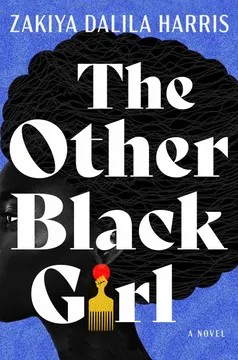


Plot Summary
Prologue
In December 1983, Kendra Rae Phillips3 boards a train out of New York with money hidden in her bag, a body consumed by a painful itch, and a public scandal closing in behind her. When the conductor recognizes her from the newspapers, she disguises herself with a bright smile and a false story.
She has just overheard her friend5 Diana Gordon5 discussing a hair treatment that was not supposed to burn. As the train carries Kendra3 north, she knows the escape cannot undo what she has done, or stop the itching. The flight begins as a mystery: why has a celebrated Black editor3 become a fugitive from her own life?
The opening turns a private bodily sensation into evidence that something has gone wrong. Kendra’s itching is neither explained nor merely metaphorical: it follows a public rupture and an overheard warning about a product applied to her hair. Her practiced smile protects her from the conductor, but also recalls the survival performance she learned from her grandmother. The train offers distance, not safety. By presenting Kendra as both recognizable public figure and frightened stranger, the prologue makes concealment the story’s first survival skill and plants a physical clue whose meaning will take decades to surface.
A Second Black Girl
At Wagner Books, Nella Rogers1 has spent two years as editorial assistant to the demanding Vera Parini,9 hoping for a promotion while trying to make the mostly white workplace take diversity seriously. Her closest confidante is Malaika,7 who helps her interpret the daily slights Nella1 tends to minimize.
When Nella1 smells familiar cocoa butter and sees Hazel-May McCall2 arrive for an interview, she is thrilled at the thought of another Black woman on the floor. Hazel2 is stylish, confident, and immediately warm with senior staff, while Nella1 is still trying to manage her own image and workload.
Once Hazel2 is hired to assist Maisy Glendower,17 Nella1 offers to guide her through Wagner’s unwritten rules. The welcome promises companionship, but it also awakens Nella’s1 fear that she has never quite belonged.
Nella’s excitement is not simply about friendship. At Wagner, another Black employee might make the workplace less isolating, but also distribute the burden of representing Blackness that Nella has carried alone. Her meticulous attention to manuscripts and office protocol shows how competence has become both craft and protective armor. Hazel’s ease with senior colleagues unsettles that defense before either woman has done anything openly hostile. Nella wants a peer, yet she also measures herself against Hazel almost immediately. The novel makes this contradiction consequential: solidarity is desired as relief, but scarcity makes it feel like competition before the two women have even learned each other’s habits.
Shartricia in the Room
Vera9 asks Nella1 to assess Needles and Pins, a novel by Wagner bestseller Colin Franklin.13 Nella1 objects to its Black character, Shartricia Daniels, whose poverty, addiction, speech, and family life read to her as a white writer’s pile of stereotypes rather than a person.
Hazel2 encourages Nella1 to raise the concern, so Nella1 finally does at a meeting with Colin13 and Vera.9 Colin13 takes the criticism as an accusation of racism, leaves the room, and returns visibly shaken.
Vera9 later pressures Nella1 to send him another apology, leaving their working relationship strained. At the end of a bad day, Nella1 finds an anonymous card on her desk telling her to leave Wagner immediately. She laughs it off, but keeps the card because it feels like evidence.
Nella’s critique tests whether her professional role includes judgment or only service. She has been asked for an opinion, yet the moment that opinion challenges a powerful author, the workplace treats candor as a personal offense. Colin’s defensiveness and Vera’s demand for another apology show how institutions can convert a discussion of representation into a problem of tone and etiquette. Nella’s decision to retain the threatening card is small but important: she does not yet trust her own interpretation, but she recognizes that a written threat should not simply disappear. Her doubt becomes the opening through which the thriller enters her ordinary office routine.
Kendra’s Vanishing Act
Decades earlier, Kendra Rae Phillips3 edits Diana Gordon’s5 Burning Heart, helping transform the novel into a national bestseller. At the celebratory party, Kendra3 resents the white gatekeepers who doubted the book and questions the industry’s assumptions about Black writers.
Diana5 urges her to enjoy their success and not let anger consume the occasion. Soon afterward, Kendra3 publicly condemns white writers in an interview, and the backlash threatens both women’s careers.
Diana5 receives a newspaper account of Kendra’s3 remarks just before a joint appearance in Vermont; the two friends speak by phone, but the breach has begun. Kendra3 eventually disappears from public life. Her flight from New York, glimpsed in the prologue, leaves Diana5 to become the visible author while Kendra3 becomes a name surrounded by rumors.
Kendra and Diana begin with genuine creative reciprocity: one writes a novel and the other helps it become more fully itself. Their success does not erase the unequal conditions under which they work. Kendra reads the party’s luxury as proof that white approval remains a gate, while Diana sees the same room as a hard-won opening. Neither response is reducible to simple courage or compromise. The rupture shows how friendship can be strained when people face different costs for access and visibility. Kendra’s disappearance then becomes more than a mystery about one editor; it leaves an absence that the publishing world can fill with its own convenient story.
Shani Loses Boston
Years later, Shani Edmonds4 works at Cooper’s magazine in Boston, where she is building a career writing about Black communities. After a work gathering, she confides to Eva, a colleague she believes she can trust, that the magazine’s white staff exploit Black stories while congratulating themselves for inclusion.
Eva passes the remarks to Shani’s4 editor. Shani4 is confronted at work, fired, and stripped of the article she had been preparing. A Harlem organizer named Lynn10 contacts her and introduces her to the Resistance, a group tracking Black women whose personalities seem to change as they move through white institutions.
Lynn10 calls these women OBGs and believes the changes are spreading. Shani4 moves to New York, takes a low-paid café job, and begins watching Eva, who is now using another name.2
Shani’s firing gives the Resistance its emotional logic before it gives it reliable proof. She has firsthand reason to distrust the workplace’s public language of inclusion, because a colleague turned private candor into professional evidence against her. Yet the group’s theory about OBGs remains something to investigate, not a fact Shani can independently verify. That distinction matters: her injury makes her perceptive, but also vulnerable to a framework that explains too much too quickly. Shani’s decision to join Lynn reflects both political commitment and the need to recover agency after being publicly humiliated. Her café job places her close to the person she suspects, but far from the career she lost.
The Notes Multiply
As Nella1 tries to repair things with Vera,9 Hazel2 gains access to work Nella1 once handled, including a manuscript Vera9 shares with her for a second opinion. Hazel’s2 praise earns the new assistant unusually long conversations with Vera,9 while Nella1 is left waiting outside.
Nella1 also finds a printed list of Black women’s names, dates, and cities near the printer, and later hears Richard Wagner6 speaking privately about someone named Kenny and a decision to deal with her.
A second anonymous note appears in Nella’s1 bag, urging her to leave and call a number. Nella1 calls and leaves a rambling message for the person behind it. By then, she is tracking pens, conversations, and missed opportunities, unable to tell whether Hazel2 is helping her or steering her.
The office’s ordinary procedures become instruments of uncertainty: who receives a manuscript, who gets a private meeting, whose name appears on a list. Nella has spent years interpreting these distinctions as routine management, but the notes make every omission feel potentially deliberate. Her investigation is weakened by the very habits that made her successful: she waits for more evidence, avoids alarming colleagues, and tries to remain agreeable. Hazel’s rapid access to Vera intensifies Nella’s suspicion while also exposing Nella’s hunger for recognition. The threat works because it attaches itself to a real professional fear. Nella cannot separate the possibility of physical danger from the possibility that she is simply being pushed out.
Hazel Takes the Mic
Hazel2 invites colleagues to a Young, Black ’n’ Lit reading at Curl Central, the hair salon owned by her boyfriend’s sister. Nella1 rearranges a long-awaited meeting with literary agent Lena Jordan so she can attend, partly because Richard6 is expected.
At the event, Hazel2 announces that Richard6 has donated ten thousand dollars and pledged support for more diverse hiring and a review of Wagner’s publishing record. The audience erupts, while Nella1 recognizes a public initiative that she once tried and failed to build inside the company.
Hazel2 also defends Needles and Pins at Wagner’s marketing meeting, saying its portrayal of Shartricia will connect with readers, and Nella1 is left exposed as the lone dissenter. In the crowd, Shani4 photographs Hazel2 and reports her identity to Kendra Rae.3
Hazel’s public success makes the conflict harder for Nella to name. The initiative is materially valuable: it promises money for young writers and changes to hiring. Yet its presentation also makes Hazel the face of work Nella has tried to advance without institutional support. This is not merely envy. Nella sees her own labor converted into a story of sudden benevolence, with Richard and Hazel in the foreground. Hazel’s defense of Colin further complicates the sense of sisterhood Nella hoped to find. Meanwhile, Shani’s photograph shifts the scene from workplace rivalry to surveillance. The same gathering functions as community celebration for one character and evidence-gathering for another.
The Warning Becomes Real
Kendra Rae3 meets Shani4 through Lynn’s10 Resistance and recognizes in her account the old Wagner story she has tried to bury. On October 20, Shani4 attempts to meet Nella1 and warn her that Hazel2 is not using her real name. Lynn10 discovers the plan, orders Shani4 to abandon her phone, and a woman pulls Shani4 into a waiting car. Nella1 sees the snatch from inside a restaurant but cannot follow.
A caller using Shani’s4 discarded phone later apologizes for the scene and sends Nella1 a photograph of Hazel2 in her earlier life, confirming that the name and appearance have changed. Two days later, Diana’s5 memories reveal that she and Richard6 enlisted Imani11 to make a hair treatment intended to soften Kendra’s3 anger and make her easier to manage.
The apparent kidnapping turns Nella’s private fear into an event she has witnessed, but it still does not tell her whom to trust. The caller’s proof confirms Hazel’s changing identity while withholding the structure behind it. The narrative’s return to Diana supplies a human origin for the scheme: the product begins as a supposedly helpful answer to racial exhaustion, not as an openly declared weapon. That rationale is precisely what makes the intervention sinister. Diana and Richard translate a systemic burden into a defect to be chemically corrected in an individual woman. Shani’s disappearance leaves Nella with evidence but no dependable guide, and Diana’s memory shows how a compromised act can become an enduring institution.
A File Under Hazel
At Hazel’s2 October hair party, Nella1 notices details that contradict Hazel’s2 stories about her family and friends. While Malaika7 distracts the others, Nella1 searches Hazel’s2 bedroom and finds a folder of photographs and notes about Black women in different cities.
The records include Kiara, Ebonee, and Camille,19 with observations about their speech, ambitions, and workplace behavior. Nella1 finds herself documented too, tracked since her first months at Wagner, along with a forecast for how long it might take her to change.
Richard’s6 handwriting appears throughout the file. A note beside Nella’s1 photograph records that more jars of hair product are being prepared for her. She also sees Kendra Rae’s3 photograph and learns that someone has kept a record of her for decades.
The folder converts Nella’s suspicions into a system with methods, categories, and a timetable. Its most disturbing feature is not simply that Richard has been watching her; it is that the notes reduce women to traits that can be managed, improved, or exploited. The language of professional assessment has become a private surveillance apparatus. Nella’s own photograph makes the threat intimate, while the records of other women show that she is not an isolated target. The discovery also reframes Hazel’s apparent generosity: hair care, mentorship, and access may all serve as channels of influence. Nella finally has evidence, but evidence does not yet give her a safe way to act.
The Meeting and the Offer
The morning after the hair party, Nella1 meets Jesse Watson12 at Wagner, hoping to win his confidence and perhaps the chance to edit his book. Jesse12 surprises her by proposing a lighthearted graphic novel inspired by Lethal Weapon, not the political project she expected.
His polished appearance and easy agreement with Hazel2 suggest that he, too, has changed. In the bathroom, Hazel2 confronts Nella1 for searching her room and explains that the hair products are social lubricants designed to dull the strain of racism and make Black women more accommodating at work.
Hazel2 admits she was once changed herself and insists Nella1 has already been partly affected. Nella1 resists, then says yes under Hazel’s2 pressure. Hazel2 realizes Nella1 has not been routinely using the product and tells her she must leave Wagner. Nella’s1 next choice remains unknown.
The confrontation makes the novel’s central temptation explicit: relief from relentless vigilance is offered in exchange for agency. Hazel is not presented as a simple villain; she has experienced the same exhaustion and sees adaptation as a way to gain time, status, and safety. But her solution turns survival into a private chemical bargain and recruits other women without informed consent. Nella’s momentary yes is therefore neither a clear conversion nor a clean refusal. It is a response made under physical pressure, workplace fear, and the promise of success she has pursued for years. The ending leaves her at the point where self-protection and self-erasure are difficult to distinguish.
Epilogue
By January 2019, Shani4 is working at Scope magazine and has drafted an exposé about the women she calls OBGs. She sends it to her editor, but the email bounces because the editor has left for another opportunity. Before Shani4 can find another route to publication, the magazine’s interim replacement arrives: Delilah Henson, a polished Black woman whose syrupy hair product and practiced friendliness recall Hazel.2
Delilah asks Shani4 to explain what it is really like at the magazine. The question offers intimacy, but Shani4 recognizes the pattern beginning again. Her investigation has not reached the public, and the next encounter is already at her desk.
The epilogue refuses the comfort of a solved conspiracy. Shani’s evidence is ready, but ordinary professional upheaval blocks its delivery; the mechanism of silence is not only coercion, but also timing, hierarchy, and an editor’s sudden departure. Delilah’s arrival reproduces Hazel’s approach, suggesting that the process is portable and can restart wherever a new workplace opens its doors. Shani now recognizes the familiar invitation to confide, yet recognition alone does not neutralize it. The final image turns the novel’s workplace into a relay: one woman leaves, another arrives, and the story’s pattern waits to be mistaken for a fresh beginning.
Analysis
The novel makes the publishing workplace a place where race is not only represented in books but managed through hiring, mentorship, access, and reputation. Nella1 knows that Shartricia is a caricature, yet the institution turns her objection into a question about her tone and Colin’s13 feelings. Later, the organization’s language of diversity appears to change, but the person who controls the institution still controls the terms of change. Hazel’s2 public work can benefit young writers while also helping Richard6 consolidate influence. This ambiguity keeps the conflict from reducing to a simple opposition between a good Black woman and a bad one.
The hair formula gives institutional pressure a literal mechanism. It does not invent ambition or compromise from nothing; it offers relief to people already exhausted by the demand to be alert, articulate, exemplary, and grateful. Hazel’s2 argument is powerful because it names a real cost: constant vigilance can consume a life. But the formula’s promise depends on suppressing the capacity to judge that cost. Its horror is therefore not that a woman wants success, but that a system can sell self-alteration as the only practical route toward it.
Nella’s1 uncertainty also matters. She has sometimes stayed silent, deferred to authority, and wanted the protection of being seen as exceptional. Hazel’s2 arrival exposes those compromises without making Nella’s1 past caution equivalent to Hazel’s2 coercion. Their conflict shows how scarcity can turn potential solidarity into rivalry, especially when the institution rewards one person for appearing useful and punishes another for speaking plainly.
The shifting viewpoints widen the story’s time scale. Kendra’s3 disappearance and Diana’s5 choices show that Wagner’s present tensions are not new problems but inherited arrangements. Shani’s4 reporting offers the possibility of public exposure, yet the epilogue places another polished newcomer at her desk before the evidence reaches readers. The novel ends without confirming whether Nella1 escapes or resists. That unresolved ending suits its central insight: recognition is not liberation. Seeing the machinery is only the beginning of deciding what to do while still inside it.
Review Summary
Reviews of The Other Black Girl are polarizing, averaging 3.35/5. Many praise its bold social commentary on racism, microaggressions, and tokenism in publishing, with comparisons to Get Out feeling apt for its slow-burn, sinister twist. Positive reviewers admire its originality and sharp cultural observations. However, critics cite significant pacing issues, with meaningful plot developments occurring only in the final 20-30 pages. Common complaints include an unsatisfying ending, excessive length, underdeveloped characters, and confusion over the book's intended audience, particularly regarding its portrayal of Black women.
People Also Read










Characters
Nella Rogers
The watchful assistantNella is a twenty-six-year-old editorial assistant at Wagner Books who wants to become an editor and has spent years learning how to be both capable and unobtrusive. Raised in a largely white Connecticut suburb, she is proud of her Black identity but often doubts whether she has enough cultural fluency to speak for herself. Her meticulous work gives her a sense of control, while her caution can keep her from acting on what she notices. She relies on her friend Malaika7 to help name the racial tensions she tends to soften. Nella’s central psychological conflict is not whether she understands injustice, but how much of her security, ambition, and emotional energy she can risk in order to confront it.
Hazel-May McCall
The magnetic new hireHazel-May is a confident, stylish assistant hired to work for editor Maisy Glendower17. She moves easily among colleagues, remembers personal details, and offers Nella1 warmth, professional guidance, and access to Black cultural spaces. Her Harlem roots and community work give her a strong public identity as a mentor and advocate for young writers. Hazel is highly adaptive, reading social situations quickly and presenting herself in ways that make others comfortable. That talent can look like generosity, ambition, or self-protection depending on the moment. Her presence unsettles Nella1 because Hazel appears to embody a version of Black professional success that is both more effortless and more socially welcomed.
Kendra Rae Phillips
The vanished editorKendra Rae is a gifted Black editor best remembered for helping shape Diana Gordon’s5 breakout novel, Burning Heart. She is perceptive, intellectually forceful, and unwilling to pretend that professional recognition has erased the racial limits of the publishing world. Her close friendship with Diana5 gives her a deep personal stake in their shared work, while her distrust of white gatekeepers comes from repeated experience rather than abstract ideology. Kendra’s story reaches across decades, connecting Wagner’s earlier history to Nella’s1 present. She is a figure of both creative influence and historical absence, a reminder that institutions often preserve the success of a book more readily than the difficult person who helped create it.
Shani Edmonds
The displaced reporterShani is a young Black journalist whose work focuses on communities overlooked by mainstream media. She is sharp, ambitious, and capable of irreverence, but the professional betrayal she experiences makes her wary of easy trust. Her move from Boston to New York forces her to rebuild her life through precarious work while she investigates a pattern that others might dismiss. Shani’s reporting instincts make her attentive to photographs, timelines, and conflicting accounts. At the same time, her anger at what happened to her can make the Resistance’s10 explanations feel especially compelling. She is driven by the conviction that telling the story matters, even when gathering proof places her in danger.
Diana Gordon
The celebrated novelistDiana is the author of Burning Heart, a Black literary success that begins her long public career. She is warm, funny, and socially skilled, with a talent for easing tension that can also make her avoid confronting its source. Her history with Kendra Rae3 is intimate and formative: their friendship predates the publishing world that later decides how their work should be received. Diana values achievement and understands the practical compromises that can protect a career. Her choices are shaped by affection, guilt, fear, and the desire to keep doors open. She represents the uneasy question of what a person may sacrifice to remain successful after a friend has paid the cost of speaking plainly.
Richard Wagner
The publishing patriarchRichard is the founder and editor in chief of Wagner Books, a powerful figure whose approval can redirect an employee’s career. He presents himself as cultured, attentive, and invested in literary opportunity, especially when speaking privately with ambitious younger staff. His authority rests not only on formal rank but on his ability to shape access, reputation, and institutional memory. Richard understands the language of progress and can use it to make decisions appear benevolent. His personal charm encourages employees to treat his attention as recognition, even when the larger structure remains opaque. He embodies the way gatekeeping can operate through favors, mentorship, and the quiet control of who gets to advance.
Malaika
Nella’s blunt confidanteMalaika is Nella’s1 closest friend, a bold and funny woman who works as an assistant to fitness entrepreneur Igor Ivanov. Raised in a Black community in Atlanta, she and Nella1 share cultural touchstones despite their different upbringings. Malaika is quick to recognize racial power dynamics and willing to say aloud what Nella1 hesitates to name. Her directness is a source of comfort, though she can also push Nella1 toward action before Nella1 feels ready. She values independence and has learned to weigh ideals against the practical costs of work and rent. Their friendship gives Nella1 a place to test her interpretations without having to translate every detail of her experience.
Owen
Nella’s supportive partnerOwen is Nella’s1 white boyfriend, a socially minded entrepreneur who works on a mentorship platform for teenagers. He listens to Nella’s1 accounts of racial tension and tries to support her, but his distance from her daily experience sometimes leaves him a step behind. He is affectionate, curious, and generally willing to examine his assumptions, though he can mistake his own occasional discomfort in minority spaces for an equivalent experience. His relationship with Nella1 is shaped by care and by the limits of empathy across different social positions.
Vera Parini
Nella’s demanding editorVera is an established Wagner editor known for handling difficult authors and ambitious books. She values competence and has treated Nella1 as a capable assistant, but her trust is conditional on the smooth functioning of her projects. Vera is pragmatic, socially polished, and often more responsive to workplace pressure than to the ethical questions beneath it. She can be kind in private and cutting when she feels inconvenienced. Her relationship with Nella1 shows how professional mentorship can offer genuine opportunity while still preserving the hierarchy that decides whose judgment counts.
Lynn Johnson
The Resistance organizerLynn leads the Resistance, a network of people tracking the changes they believe are affecting Black women in professional settings. She is disciplined, suspicious, and protective of the group’s secrecy, insisting on rules designed to limit exposure. Her caution comes from past losses and years of watching the phenomenon spread, but it can make her difficult for newer members to trust. Lynn treats information as a resource that must be rationed. Her methods place her in tension with Shani’s4 instinct to report what she sees and act before the evidence is complete.
Imani
The formula’s chemistImani is Diana’s5 longtime friend and a chemist whose work connects her scientific training with the needs of Black women navigating hostile workplaces. She is inventive and confident in her ability to develop practical solutions. Her friendship with Diana5 gives her access to a project that begins with an apparently compassionate aim. Imani’s story raises questions about the difference between helping someone endure a harmful environment and changing the person who is harmed by it.
Jesse Watson
The outspoken commentatorJesse is a popular Black activist and online commentator whose videos draw a large audience. Nella1 follows his work and hopes Wagner might publish him, seeing his voice as a way to make space for readers underserved by the industry. He is known for forceful political arguments and a willingness to challenge conventional language. When he steps back from social media, his next creative direction becomes uncertain. His presence connects Nella’s1 professional hopes to a public debate about who gets to shape contemporary Black narratives.
Colin Franklin
The fragile bestsellerColin is a successful white novelist whose books draw on current social crises and attract significant attention from Wagner. He is eager for approval and sensitive to criticism, particularly when it challenges his intentions as a writer. His desire to appear thoughtful does not guarantee that he understands the people he represents. Colin’s relationship with Nella1 exposes the power imbalance between an assistant asked for honest feedback and an author whose career gives his reaction institutional weight.
C. J.
The observant mail carrierC. J. works in Wagner’s mailroom and has built a warm, joking friendship with Nella1. He supports his sister and young niece while holding more than one job, a reality that gives him a different view of the company’s unequal treatment of staff. He is proud, hardworking, and alert to the ways people like him are expected to absorb extra burdens without complaint. His concern when Nella1 mentions the anonymous note gives her an early chance to treat the threat as serious.
Juanita Morejón
Curl Central’s ownerJuanita owns Curl Central, a Black hair-care shop that hosts the Young, Black ’n’ Lit reading. She is sociable, entrepreneurial, and eager to make the store a gathering place as well as a business. Her relationships with Hazel2 and her brother Manny link the salon to their wider circle. Juanita’s warmth makes the shop feel welcoming, while her enthusiasm for products and events reveals the commercial ambitions woven into that community space.
Elroy Simpson
Diana’s steady husbandElroy is Diana’s5 husband16, a practical and affectionate presence during the first turbulent period of her success. He recognizes when Diana5 is becoming absorbed by status and appearances, and he tries to bring her back to the person he knows. His family background and relationship with Diana’s5 more privileged circle give him a clear-eyed view of class and respectability. He offers support without pretending that he can resolve the conflict between Diana5 and Kendra3.
Maisy Glendower
Hazel’s senior editorMaisy is a long-established Wagner editor whose one major bestseller grants her unusual job security. She is energetic, socially fluent, and prone to long digressions, while her assistants face modest pay and frequent turnover. Her position illustrates the difference between those protected by institutional history and those expected to prove themselves repeatedly.
India
The overlooked receptionistIndia is Wagner’s longtime receptionist, known to Nella1 through daily greetings and compliments. She is usually cheerful and stylish, but her years of service have not brought the recognition she deserves. Her response to Hazel’s2 thoughtful birthday gift exposes how rarely the company’s attention reaches employees outside its editorial hierarchy.
Ebonee, Kiara, and Camille
The young writersEbonee, Kiara, and Camille are young Black women connected to Hazel’s2 literary and professional circle. They bring distinct ambitions, voices, and workplace histories, and their presence makes Hazel’s2 mentoring work appear to offer real access. Their names and records later matter to Nella’s1 investigation, but as individuals they also represent the varied lives that institutional notes flatten into a few traits.
Plot Devices
The hair formulas
A chemical bargainSmooth’d Out and Kink Free are hair products linked to a formula developed by Imani11. The substance is presented as a way to ease the stress Black women experience in white workplaces, making it possible to function without feeling every slight as acutely. In practice, it can dull resistance and make women more accommodating and ambitious within the institutions that exhaust them. Hazel2 distributes it through personal care and community networks, giving the intervention the appearance of generosity. The products bind physical sensation to the story’s central moral question: whether relief is help when it changes a person’s judgment and is offered without informed consent.
The anonymous notes
A warning without contextNella1 receives handwritten warnings at Wagner and later on a Starbucks napkin, each urging her to leave and directing her toward a phone number. The messages give her no name or explanation, so they make every workplace interaction newly suspect rather than clarifying the danger. When Nella1 calls, she leaves information that helps connect her situation to the people who know about Wagner’s past. The notes also create a practical dilemma: reporting them could protect her, but could expose her to the institution she fears. Their bluntness forces Nella1 to act before she understands who is trying to help her.
The dossier
Surveillance made personalThe folder in Hazel’s2 bedroom contains photographs, dates, locations, and written assessments of Black women across different cities. It tracks speech, work habits, ambitions, and perceived susceptibility to change. Nella’s1 own page proves that she has been watched since before Hazel2 arrived at Wagner, while Kendra Rae’s3 file shows the surveillance reaches back decades. The dossier transforms scattered oddities into an organized program. It functions as evidence for Nella1, but also as a portrait of bureaucratic thinking turned intimate: people become profiles to be predicted and managed.
The code switch
A mask with a costCode-switching begins as the familiar effort to adapt language, behavior, and presentation to different social settings. Nella1 uses it to survive Wagner without surrendering her identity, and Hazel2 invokes it as a strategy for navigating power. The story then pushes the idea into unsettling territory: outward adaptation is joined to a substance that can alter how a woman experiences the pressure itself. This shift makes the workplace mask both social and physical. It asks whether accommodation remains a choice when the institution rewards the performance and a chemical intervention helps suppress the pain that might otherwise challenge it.
Burning Heart
A buried institutional historyDiana Gordon’s5 bestseller connects the present-day Wagner office to Kendra Rae’s3 early career and to the friendship that shaped both women. The novel is a source of Nella’s1 ambition, a reminder that Black women have made transformative work together, and a public success that obscures the conflicts behind its production. Its history allows the plot to travel between generations without losing its central question: what happens to the Black woman who insists on naming the terms of her own success? The book’s prominence also gives Richard6 a lasting reason to manage the story of Kendra’s3 disappearance.
Download PDF
Download EPUB
.epub digital book format is ideal for reading ebooks on phones, tablets, and e-readers.








