

Key Takeaways
Treat baffling behavior as evidence of difficulty, not proof of defiance
Look beneath the behavior. Carol Kranowitz began asking why some preschoolers avoided the movement and music activities their classmates enjoyed. One child buzzed around the room, another copied movements incorrectly, and another seemed too tired to join in. Their teachers first felt frustrated, then learned to consider whether the children could manage the sensory demands, rather than simply choosing not to cooperate.
Sensory Processing Disorder (SPD) is the book’s umbrella term for difficulty taking in, organizing, and using sensory information in everyday life. It can affect movement, attention, learning, play, and relationships. The central question is not whether a child’s behavior is disruptive, but what makes ordinary participation so hard.
The shift from judging intent to investigating capacity changes the adult’s first move: from reprimand to observation. That does not mean every difficult act has a sensory explanation, or that children should face no limits. It means consequences alone may miss the obstacle. Asking what happened just before a child withdrew, lashed out, or stalled can reveal a practical need while preserving accountability for how the child affects others.
A child’s senses coordinate movement, attention, learning, and everyday independence
Sensation becomes action. Sensory processing is the nervous system’s ongoing work of receiving information, combining it, regulating its intensity, distinguishing its meaning, and organizing a response. The response creates new sensations, so the cycle continues. A child uses this process to do things as ordinary as stay balanced on a chair, follow a spoken direction, or handle a cup without spilling.
The book distinguishes familiar external senses, such as touch, sight, hearing, taste, and smell, from internal senses. These include proprioception, which signals body position and muscle movement; the vestibular sense, which detects movement, balance, and the head’s relation to gravity; and interoception, which registers internal states such as hunger and thirst. These systems work together, not in isolation.
This systems view helps explain why a difficulty that looks like poor attention may also disrupt posture, coordination, or confidence. A task is rarely just one task: following a classroom instruction may require hearing the words, filtering background noise, holding a stable position, and planning what to do. The model is most useful as a prompt to examine the whole situation, not as a reason to assume every academic or behavioral struggle begins in sensation.
Match the sensory response pattern before choosing what support to offer
Responses can differ sharply. Sensory Modulation Disorder (SMD) describes difficulty regulating the intensity of responses to sensation. Kranowitz groups common patterns as overresponsivity, underresponsivity, sensory craving, and fluctuating responses. A child bothered by sock seams may avoid touch; a child who barely notices movement may seem passive; another may seek constant spinning or pressure. One child can react differently to the same sensation in different settings or on different days.
The book calls intense fear of falling, tilting, or having the feet leave the ground gravitational insecurity. It contrasts this with children who seek unusually intense movement. These differences matter: a movement activity that settles one child could distress or overexcite another. Sensory patterns are clues for assessment, not do-it-yourself diagnoses.
The practical strength here is resisting the idea of one universal calming trick. The same behavior, such as constant motion, may reflect a search for input, difficulty staying organized, or something unrelated to sensory processing. Context matters: fatigue, predictability, and control can change a child’s response. A useful support begins with careful observation and the child’s signals, rather than adult assumptions about which sensations ought to feel pleasant.
Find whether the bottleneck is sensing, interpreting, or planning movement
Different difficulties need different explanations. Sensory Discrimination Disorder means trouble distinguishing sensations or understanding what they indicate. A child may misjudge where a limb is, how firmly to grip a pencil, or which sound a teacher made. Sensory-Based Motor Disorder refers to movement problems connected to sensory processing. The book describes postural difficulties and dyspraxia among its forms.
Praxis is the ability to conceive, organize, and carry out a coordinated action, especially an unfamiliar one. Tony, a boy who wants to join a swim team, struggles to orient himself on the pool ladder and coordinate strokes with breathing, despite knowing basic swimming. Such examples show why simply rehearsing a task may not solve its underlying difficulty. Vision and hearing problems can also require assessment in their own right.
This distinction protects children from being described as careless when the task itself is hard to organize. It also encourages more precise questions: Does the child notice the cue? Understand it? Plan the sequence? Carry it out? Those questions can guide useful accommodations and referrals. At the same time, a motor-planning explanation should be tested against other possibilities, including ordinary inexperience, physical conditions, or learning differences.
Look for recurring patterns that disrupt daily life, not isolated quirks
A checklist is a starting point. The book organizes signs across sensory responses, discrimination, movement, and associated behavior. A child might avoid messy play, miss social cues, tire quickly, or struggle with buttons. Kranowitz advises noticing how often a response occurs, how intense it is, how long it lasts, and whether it interferes with everyday participation.
The book also stresses overlap: symptoms associated with SPD can resemble or coexist with ADHD, learning disabilities, autism, anxiety, and other conditions. It cautions that many children with behavior problems do not have SPD, and that a sensory difficulty does not explain every challenge. A parent questionnaire can help identify patterns, but it cannot establish a diagnosis. The question is whether repeated difficulties meaningfully limit the child, not whether a trait seems unusual once.
This restraint is essential because a broad symptom list can make ordinary variation look pathological. The book’s own caveats help counter that risk: frequency, context, impairment, and alternative explanations matter. A child who dislikes a particular texture is not automatically disordered. The most informative sign is a persistent pattern that narrows participation or causes distress, especially when the pattern appears across observations rather than only in one adult’s interpretation.
Record both difficult moments and the conditions in which your child thrives
Collect useful evidence. Kranowitz recommends keeping dated notes about challenging situations and successful ones. Record what happened, where and when it occurred, what sensory or social demands were present, and how the child recovered. A parent might notice that dressing becomes difficult when clothes feel scratchy, while firm, predictable pressure helps the child settle. A teacher may observe different triggers at school.
This record helps caregivers see patterns they might otherwise miss and gives specialists concrete examples to consider. A screening is a brief check for possible developmental concerns; a full evaluation is individualized and may involve an occupational therapist and other relevant professionals. The book recommends asking specific questions about strengths, difficulties, settings, and likely causes, rather than relying on a single label or a quick impression.
Keeping track of successful conditions is as important as listing problems. It reveals not only what overwhelms a child, but what makes participation possible. That turns assessment into a search for usable supports, rather than a catalogue of deficits. Notes should remain observations, not conclusions: a pattern can help a professional investigate, but the person conducting the evaluation must consider development, health, and competing explanations.
Use meaningful, individualized activity instead of forced practice or sensory guesswork
Support should fit the child. The book presents occupational therapy using a sensory integration framework, or OT-SI, as its primary approach for SPD. It describes playful, purposeful activities that help a child engage with sensations while developing participation and motor skills. An occupational therapist might use an obstacle course, a swing, or hands-on materials, selected to suit the child’s needs rather than applied as a standard recipe.
A sensory diet is a planned schedule of activities designed around an individual’s sensory needs. Kranowitz advises families to develop one with a qualified therapist and to watch the child’s response. The book’s example of Johnny shows gradual gains: therapy and coordinated support helped him participate more, make friends, and try new activities. Progress is individual, and the book does not promise the same outcome for every child.
The emphasis on purposeful activity is compelling because it connects support to the child’s actual life: playing, dressing, learning, and joining others. Individualization is equally important. Sensory input is not automatically therapeutic, and a strategy that feels regulating to one child may be uncomfortable for another. The book’s best safeguard is collaboration with a trained professional, with the child’s comfort and functional goals guiding adjustments.
Make home and school predictable, adjustable places for participation
Change the surroundings, too. Kranowitz shows how the same child can manage well at home yet struggle at school, where noise, crowding, transitions, and unfamiliar routines create different demands. Families and teachers can compare observations and try practical adjustments: give advance notice before transitions, reduce distracting clutter or noise, offer movement breaks, provide clear instructions, and make space for a child who is distressed by jostling.
In Nicky’s story, a teacher helps by breaking assignments into manageable parts, choosing more usable materials, and recognizing his strengths. The parent’s role is to share what works, explain the child’s needs in concrete terms, and revisit the plan with each new teacher. These changes are not special treatment for its own sake; they make it more possible for the child to take part.
The environment is part of the problem-solving equation, not merely a backdrop. A child may appear more capable when adults reduce unnecessary barriers, which can be mistaken for inconsistency or selective effort. Small adjustments can also benefit classmates and teachers by making routines clearer. Still, accommodations should be reviewed for whether they improve access and learning, rather than becoming fixed rules that no longer fit.
Protect dignity while teaching skills, setting limits, and growing independence
Understanding and boundaries belong together. A child who struggles with dressing, coordination, or sensory discomfort may already feel incompetent. Kranowitz urges adults to notice strengths, acknowledge frustration, break challenges into manageable steps, and avoid shame or comparisons. In the morning story, Chip turns his shirt inside out to escape irritating tags. His solution deserves attention, even though pouring juice on his sister still requires a clear response.
The book distinguishes teaching from punishing: adults can empathize with distress while setting firm limits on unsafe or hurtful behavior. They can offer choices, help a child recover after an emotional storm, and encourage self-help skills without taking over every task. This approach aims to build competence and trust, not to excuse the child from learning how to live with others.
The important balance is to separate a child’s difficulty from the effects of the child’s actions. Sensory distress can explain why a moment escalates, but siblings and classmates still need protection, and the child still needs guidance. Dignity is not permissiveness. It means correcting behavior without turning a mistake into a verdict on character, then helping the child practice a safer and more workable response.
Analysis
The book’s most durable contribution is its interpretive method: treat behavior as information, connect it to the demands of a specific situation, and look for a route back to participation. Its stories make that method memorable by contrasting children who avoid, miss, or seek sensations, then showing how adults’ assumptions can intensify the difficulty. The movement from classroom observation to family and school action also preserves a useful narrative arc, rather than presenting sensory terminology as an abstract taxonomy.
The framework has limits. The revised edition dates to 2005, and its terminology reflects a field still working to define categories. Sensory Processing Disorder is not a standalone diagnosis in the DSM-5-TR, so the book should not be used as a diagnostic authority. Its lists span many common behaviors, and claims linking sensory processing to language, vision, sleep, food, and emotional outcomes vary in how firmly they are established. The text itself advises professional evaluation, but readers should distinguish descriptive examples from validated diagnostic criteria and treatment evidence.
That qualification does not erase the practical value. A family log of hard and successful moments can improve communication with clinicians and educators even when the eventual explanation is different from SPD. The book is strongest as a guide to attentive observation, respectful advocacy, and environmental problem-solving. It is less reliable when broad neurological explanations appear to account for many unrelated difficulties, or when therapeutic benefits are described without measured comparisons. Its humane principle remains valuable: identify the barrier before judging the child, and choose supports that increase real-world functioning while checking whether they help.
Review Summary
The Out-of-Sync Child receives mostly positive reviews, with readers praising its informative content on Sensory Processing Disorder (SPD). Many find it helpful for understanding children's behaviors and providing practical strategies. Parents and educators appreciate the book's insights into SPD symptoms and coping mechanisms. Some readers note that the text can be dense and overwhelming at times. Critics suggest the book could benefit from more practical tips and updated language. Overall, reviewers consider it a valuable resource for those dealing with SPD.
People Also Read



Glossary
Sensory Processing Disorder (SPD)
Difficulty using sensory informationKranowitz uses SPD as an umbrella term for difficulties in the way the nervous system takes in, organizes, and uses information from the body and environment. The book describes effects on movement, attention, learning, relationships, and everyday tasks. Its terminology reflects the period of publication and should not be treated as a current diagnostic manual.
Sensory Modulation Disorder
Difficulty regulating sensory responsesA category in the book’s classification of SPD, referring to difficulty regulating the intensity or duration of responses to sensory input. The described patterns include overresponsivity, underresponsivity, sensory craving, and variable responses. A child may show different patterns across sensations or situations, so the term describes a pattern to assess rather than a behavior-based diagnosis.
Sensory Discrimination Disorder
Difficulty distinguishing sensory informationA category describing difficulty distinguishing one sensory stimulus from another or understanding what a sensation means. A child may misjudge an object’s texture, the position of a body part, the force needed to hold something, or differences between sounds. These difficulties can interfere with safe responses, learning, and purposeful movement.
Sensory-Based Motor Disorder
Movement difficulty linked to sensory processingA category in the book’s framework for movement problems associated with inefficient sensory processing. It includes postural difficulties and dyspraxia. A child may struggle to maintain balance or posture, coordinate both sides of the body, or organize a sequence of movements. The term directs attention to underlying sensory-motor demands, not simply to a child’s performance.
Praxis
Planning and carrying out actionsPraxis is the capacity to conceive of an unfamiliar action, organize the body and sequence needed to perform it, and carry it out. The book presents it as depending on sensory processing as well as conscious thought. Difficulties can affect activities from getting dressed to learning a new movement game.
Sensory diet
Individualized schedule of sensory activitiesA planned program of activities intended to meet an individual child’s sensory needs and support regulation, attention, adaptability, and skill. The book recommends that a therapist develop the plan with the child’s caregivers. Activities, timing, and intensity should be adjusted to the child’s responses rather than copied as a universal routine.
Gravitational insecurity
Distress around falling or movementA term for unusually intense anxiety or distress when a child’s head position changes, the feet leave the ground, or the body moves through space. The book associates this pattern with difficulty processing vestibular information. It can lead a child to avoid climbing, swinging, or other movement experiences that peers may find enjoyable.
Four Levels of Sensory Integration
Developmental progression of sensory skillsA. Jean Ayres’s model, summarized in the book, describes functional development as building from basic sensory systems toward increasingly complex abilities. Early sensory experiences support body awareness, posture, and coordination; these support perceptual-motor abilities and, in turn, academic readiness, attention, and self-regulation. It is presented as a developmental framework, not a checklist for diagnosing a child.
FAQ
What's The Out-of-Sync Child about?
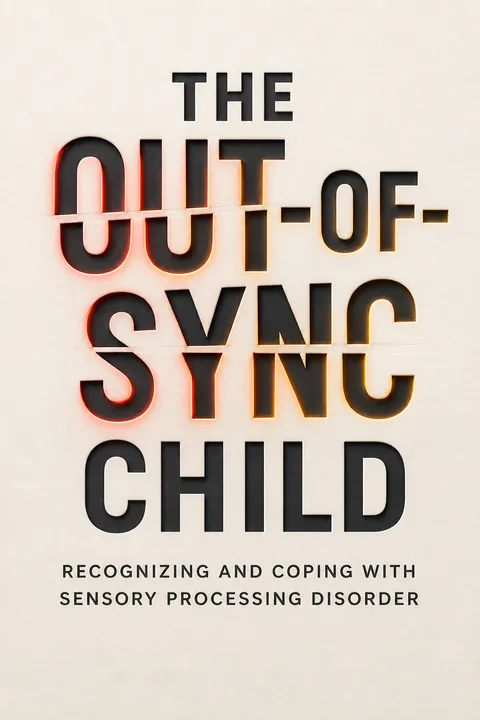
- Focus on SPD: The Out-of-Sync Child by Carol Stock Kranowitz explores Sensory Processing Disorder (SPD), a condition affecting how the brain processes sensory information.
- Guidance for Caregivers: It serves as a guide for parents, educators, and caregivers to recognize and manage SPD in children.
- Practical Tools: The book provides practical advice, checklists, and examples to help identify symptoms and promote healthy sensory integration.
Why should I read The Out-of-Sync Child?
- Empowerment for Parents: It helps parents understand their child's behavior, reducing feelings of guilt by explaining that issues may stem from SPD.
- Comprehensive Resource: The book combines scientific information with relatable anecdotes, making it accessible for non-professionals.
- Hope and Solutions: Kranowitz offers hope and actionable strategies for addressing sensory issues, encouraging appropriate interventions.
What are the key takeaways of The Out-of-Sync Child?
- Recognition of SPD: Understanding the signs and symptoms is crucial for early intervention, improving a child's development and quality of life.
- Types of SPD: The book categorizes SPD into Sensory Modulation Disorder, Sensory Discrimination Disorder, and Sensory-Based Motor Disorder.
- Sensory Diet Importance: Emphasizes a balanced "sensory diet" tailored to a child's needs to promote healthy integration and functioning.
How does The Out-of-Sync Child define Sensory Processing Disorder (SPD)?
- Neurological Condition: SPD is a neurological condition affecting how the brain processes sensory information, leading to overreaction or underreaction to stimuli.
- Impact on Daily Life: It can cause difficulties in everyday activities, resulting in frustration and low self-esteem for children and parents.
- Spectrum of Symptoms: SPD symptoms vary widely, with some children being hypersensitive and others seeking excessive sensory experiences.
How can I tell if my child has Sensory Processing Disorder?
- Recognizing Symptoms: The book provides checklists of symptoms like sensitivity to touch, coordination difficulties, and social interaction challenges.
- Behavioral Indicators: Signs include frequent meltdowns, avoidance of certain textures, and inconsistent sensory responses.
- Use of Questionnaires: Kranowitz includes sensory-motor history questionnaires to assess a child's sensory processing characteristics.
What is a "sensory diet" and how can it help my child?
- Definition of Sensory Diet: A sensory diet is a personalized plan of activities designed to provide the sensory input a child needs to stay regulated.
- Promoting Healthy Integration: Includes activities like swinging or using weighted blankets to help children process sensory information effectively.
- Tailored to Needs: Each child's sensory diet should be tailored to their specific preferences and needs for optimal effectiveness.
What strategies does The Out-of-Sync Child suggest for parents?
- Create a Supportive Environment: Minimize overwhelming stimuli at home by reducing noise and providing calming spaces.
- Engage in Sensory Activities: Encourage sensory-rich activities like water play and tactile games to develop sensory processing skills.
- Communicate Openly: Maintain open communication about sensory experiences to help children articulate their needs and feelings.
How can teachers support children with SPD according to The Out-of-Sync Child?
- Modify Classroom Environment: Create a sensory-friendly classroom by reducing distractions and providing comfortable seating.
- Implement Movement Breaks: Incorporate regular movement breaks to help children regulate energy levels and focus.
- Use Clear Instructions: Give clear, concise instructions and break tasks into smaller steps for better management.
What are the different types of Sensory Processing Disorder discussed in The Out-of-Sync Child?
- Sensory Modulation Disorder: Involves difficulties in regulating responses to sensory input, leading to overresponsivity or underresponsivity.
- Sensory Discrimination Disorder: Struggles to distinguish between sensory inputs, affecting interpretation and response.
- Sensory-Based Motor Disorder: Challenges with motor planning and coordination, impacting everyday tasks and physical activities.
How does The Out-of-Sync Child address the emotional aspects of SPD?
- Emotional Security: Discusses how SPD affects emotional regulation, leading to low self-esteem and relationship difficulties.
- Coping Strategies: Provides strategies for creating a supportive environment and encouraging open communication about feelings.
- Building Resilience: Helps children develop resilience and confidence by understanding SPD's impact on emotions.
What role do parents play in helping their child with SPD?
- Advocacy and Support: Encourage seeking evaluations and interventions from professionals who understand SPD.
- Creating a Sensory-Friendly Environment: Suggests modifying home and school environments to reduce overwhelming stimuli.
- Engaging in Sensory Activities: Emphasizes participating in sensory activities with children to explore and enjoy experiences safely.
What are the best quotes from The Out-of-Sync Child and what do they mean?
- “The problem is physical, not parental.”: Highlights that behavioral issues may be rooted in sensory processing difficulties, not parenting failures.
- “Hope is at hand.”: Conveys optimism that with understanding and interventions, children with SPD can thrive.
- “Sensory processing is the neurological procedure of organizing the information we take in from our bodies and the world around us.”: Underscores the complexity and importance of sensory processing in interacting with the environment.
About the Author
Other books by Carol Stock Kranowitz

Download PDF
Download EPUB
.epub digital book format is ideal for reading ebooks on phones, tablets, and e-readers.








