

Key Takeaways
Treat puzzling behavior as communication before treating it as a symptom.
Start with the person. Prizant’s central argument is that autism is a different way of being human, not an illness that makes a person’s actions meaningless. Rocking, refusing, repeating, or reaching for an object may reveal distress, communicate a need, or help someone cope. The useful first question is not how to stop the behavior, but what is happening for the person who is doing it.
Jesse’s story shows the stakes. At his former school, adults interpreted his distress as defiance and used restraint and isolation. His new team treated his actions as signs of fear and confusion. They added picture-based communication, choices, predictable schedules, and sensory supports. As he gained ways to express himself and feel safer, he became more comfortable at school and took on valued roles there.
This shift resembles a basic principle in clinical practice: observable behavior is evidence, not an explanation. A refusal can result from pain, overload, uncertainty, or a preference, and the response should depend on which is most plausible. The approach also guards against the fundamental attribution error, the tendency to explain someone’s actions by character while overlooking their circumstances. Its strongest form is curious without being romantic: not every action has an obvious communicative intent, and interpreting it requires testing hypotheses rather than declaring certainty. That discipline protects both dignity and practical problem-solving.
Change the conditions around a person before demanding more self-control.
Regulation shapes participation. Prizant uses emotional dysregulation to describe difficulty staying in a state where learning and interaction are manageable. Sensory sensitivity, language-processing demands, fatigue, pain, uncertainty, and chaotic surroundings can push that state off balance. A response adults call noncompliance may be an attempt to escape a situation the person cannot tolerate.
Small clues change the story. When preschoolers fled a cafeteria kitchen, the trigger was a sudden blast of steam and noise from an industrial dishwasher. Another child dropped to the ground because he heard a distant dog barking that his consultant had not noticed. In both cases, behavior that looked arbitrary made sense once the environment was understood. The practical task is to notice patterns, reduce avoidable stress, and provide coping tools rather than simply suppressing visible reactions.
The idea is close to co-regulation, the process by which another person’s calm, predictable presence helps someone manage a heightened state. It also fits environmental design: instead of asking an individual to withstand every stressor, remove unnecessary demands and make essential settings more navigable. That is not the same as eliminating all challenge. Avoidance can narrow a person’s world if it becomes the only response. The useful distinction is between accommodations that make participation possible and demands that overwhelm the person before learning can occur.
Listen for meaning in repeated words, not only in original sentences.
Echoes can do real work. Echolalia is the repetition of words or phrases heard from others, either immediately or after a delay. Prizant’s observations suggest it can communicate agreement, ask for reassurance, express a feeling, rehearse language, or help someone stay calm. In one study, he recorded 1,009 distinct echoes from five boys in ordinary settings and grouped their uses into seven functional categories.
Context supplies the key. A boy who kept saying a phrase about a splinter used it when frightened, connecting the words to a painful earlier experience. Another repeated a doctor’s instruction to say ah when he was trying to communicate that he felt ill. Adults can support language growth by simplifying speech, adding visual information, and accepting picture-based or speech-generating communication instead of requiring spoken answers.
This account usefully broadens the definition of communication beyond spontaneous, conventional sentences. In pragmatics, the study of language in context, meaning depends not only on words but on timing, situation, and what a listener knows about the speaker. Echolalia makes that especially visible. Still, a phrase should not be assigned a fixed meaning based on one past occurrence. Careful listeners combine context with observation, offer a response, and see whether it helps. That approach respects communication while avoiding the trap of treating every repetition as a code adults can decode with certainty.
Turn intense interests into bridges for learning, connection, and work.
Interest can open a door. Prizant prefers to view a child’s absorbing interests as enthusiasms rather than automatically as problems. A topic may offer enjoyment, predictability, or a reliable way into social contact. Clara Park’s daughter Jessy explored unusual subjects such as heaters and logos, then incorporated them into paintings. The family supported the interest instead of trying to replace it with a more conventional one.
A teacher made license plates useful. Eddie was disengaged by assigned reading, but fascinated by the plates in the school parking lot. His teacher helped him photograph cars, interview their owners, organize the information, and present it to classmates. The project brought reading, writing, research, and social interaction into a subject he cared about. When an interest creates a genuine boundary problem or risk, teach safer alternatives and explain when and where the topic fits.
This is an example of interest-based learning: motivation becomes the route into skills that would otherwise feel abstract or unrewarding. The approach also reframes a supposedly narrow fixation as a possible source of expertise and contribution. There is a crucial distinction between building on an interest and using it as leverage to compel compliance. A topic can support agency when the person chooses to engage; it can become controlling when adults turn every pleasure into a reward that must be earned. The most respectful design expands possibilities without making enjoyment conditional.
Build trust through predictability, choices, and control shared with the person.
Uncertainty can feel threatening. Prizant describes autism as involving serious challenges in trusting the body, the surrounding world, and other people. Derek became anxious when a familiar consultant visited in a different month than expected. A changed routine can unsettle someone not because change is inherently wrong, but because the person may not know what the change means or what will happen next.
Make the rules visible. Schedules, advance explanations, and genuine choices can make daily life more understandable. For Jesse, picture choices and a predictable plan gave him ways to communicate and influence his day. Shared control does not mean that a child decides everything. It means adults build some choice and self-direction into support, instead of assuming that obedience is proof of trust or progress.
Predictability is not merely a preference for sameness. It can reduce the mental effort required to interpret what is happening, leaving more capacity for learning and connection. Shared control also parallels supported decision-making, in which people receive help understanding options without having decisions made for them by default. The balance matters: routines can be useful scaffolding, but they can also become restrictive if adults treat every preference as unchangeable. Trust grows when preparation is paired with flexibility, and when the person can signal discomfort without being punished for it.
Read sudden reactions through emotional memory, not only the present moment.
The past can enter abruptly. Emotional memory is the lasting feeling attached to an experience, which can be triggered by a related word, place, person, sound, or sight. Bernie happily greeted a former teacher with a phrase from the time they practiced tying shoes, seeming to relive the shared activity. Julio, who had once endured a frightening medical procedure, panicked at a familiar-looking building near a stop sign.
Look for patterns before judging. A reaction that seems disproportionate may be connected to an earlier experience that the person cannot explain. Prizant advises acknowledging the distress, reducing avoidable triggers, and building safer or more positive experiences around situations that cannot be avoided. For example, parents made the bathroom more welcoming for a child whose painful digestive problems had made it frightening.
This perspective overlaps with trauma-informed care, which asks how prior frightening experiences shape present responses instead of treating distress as misconduct. It also cautions against relying on reassurance alone: telling someone that a situation is safe may not immediately change a body’s learned alarm response. Repeated, predictable experiences can help, but they should be paced and consent-sensitive. The concept is most useful as a possibility to investigate, not a diagnosis. A sudden reaction can also have a current cause, including pain or sensory overload, so the present still deserves careful attention.
Teach social rules explicitly without confusing conformity with understanding.
Social rules are often hidden. Many people learn conventions by watching others and inferring what is expected. For someone who does not readily pick up those cues, a cafeteria can feel like a process everyone else understands but no one has explained. Prizant describes students who interpreted language literally, missed unspoken expectations, or struggled to know when a conversation partner had lost interest.
Make expectations understandable. Use direct language, explain why a rule exists, check whether it was understood, and make exceptions clear. One student learned that raising a hand did not guarantee being called on, but that the teacher might choose someone else. Social support should not require eye contact or a polished imitation of typical behavior. Looking away may help someone listen; alternative signals, such as nodding or saying they are following, can prevent misunderstandings.
The distinction between social competence and social conformity is essential. Explicit instruction can give someone tools to navigate settings that otherwise penalize differences, much as learning a local convention helps a traveler. Yet a rule is not automatically fair because it is customary. Eye contact, conversational style, and politeness norms vary across cultures and individuals, and some expectations impose discomfort without improving mutual understanding. The better question is whether a strategy helps people communicate and participate, not whether it makes one person appear more ordinary to observers.
Choose helpers who notice the person, not merely follow a treatment plan.
Connection is part of competence. A parent in the book calls an intuitive ability to connect with a child the It Factor. Some helpers seem to understand how to approach a person almost immediately. Others are willing to learn from families and adapt. The least helpful insist on their own agenda, overlooking the individual’s signals and needs.
Attention beats credentials alone. Paul, a classroom aide, helped Denise stay settled by watching closely and giving her space, then moving nearer when she showed signs of distress. Prizant’s SCERTS Model organizes support around social communication, emotional regulation, and transactional support, meaning changes in the environment and in how other people interact. Plans can coordinate a team, but they need enough flexibility to respond to the person in front of them.
The It Factor points to relational skill that checklists and qualifications may fail to capture: noticing subtle signals, adjusting one’s presence, and earning trust. In education and health care, protocols are valuable because they preserve knowledge across people and settings. Their weakness appears when compliance with the protocol becomes more important than the person it is meant to serve. Strong practice therefore combines reliable structure with permission to revise a plan when observation shows it is not helping. Families’ knowledge can make that revision far more precise.
Let family expertise and community steady the long, uncertain journey.
Parents know details outsiders may miss. A parent often recognizes a small change in expression, a familiar phrase, or the moment a child needs a break. Prizant urges professionals to treat that knowledge as essential evidence, while offering expertise and resources in partnership. The Domingue family learned this painfully when a therapist’s demand that their son use words turned a clear request for juice into frustration and tears.
Support the caregivers, too. At Prizant’s annual retreat, parents share setbacks and breakthroughs with others who understand the daily demands. Community can reduce isolation and help families find perspective, practical ideas, and humor. Parents also need room to choose which battles to pursue and which advice fits their actual child. Intuition is valuable, but it works best alongside informed guidance, open communication, and attention to the child’s response.
This is a strong case for partnership rather than professional paternalism. Families have longitudinal knowledge, while clinicians and educators may contribute specialized tools and comparisons across cases. Neither kind of knowledge is complete on its own. Parent instincts can be distorted by exhaustion, fear, or conflicting advice, just as professional expertise can be distorted by routine or institutional pressure. Communities help by making those pressures discussable. The key is not to crown one party the ultimate authority, but to keep decisions revisable and grounded in the person’s welfare and preferences.
Measure progress by self-determination and a good life, not looking typical.
Development does not follow one timetable. Prizant rejects the idea that a child’s future can be decided by a simple label or an early snapshot. He describes people who gained abilities across childhood and adulthood, including communication, work, relationships, and independence. He also challenges recovery as the single measure of success: a person can have a full life without ceasing to meet diagnostic criteria.
Ask what matters to this person. The book places happiness, self-expression, self-esteem, relationships, and emotional regulation alongside academic or practical skills. Self-determination means having an increasing voice in one’s own life, even when substantial support remains necessary. Families may pursue different futures, from college to community belonging or meaningful work. The goal is not to erase difference, but to build the supports and opportunities that let a person participate and flourish on their own terms.
This outcome framework resembles the capabilities approach in ethics, which evaluates a life by the real opportunities a person has to choose and pursue valued activities, rather than by a single score or appearance. It helps resist the false choice between accepting a person and supporting growth. Acceptance need not mean abandoning communication, safety, or learning goals; intervention need not mean making a person seem typical. The hardest practical question is whose definition of a good life guides the plan. As a person’s ability to express preferences grows, that person’s own priorities should carry increasing weight.
Analysis
The book’s central move is interpretive: replace the deficit checklist with a disciplined effort to understand the person experiencing a behavior. That shift has practical consequences. If repeated speech is communication, suppressing it can remove a channel. If refusal signals sensory pain or uncertainty, punishment may intensify the condition that produced the refusal. If an absorbing interest offers a reliable route into engagement, it can become a resource for learning rather than an obstacle to normality.
The narrative method makes this argument vivid. Jesse’s transformation is not credited to a cure or a heroic technique. It follows a change in the adults’ assumptions, communication supports, predictability, and access to choices. The smaller stories reinforce the same principle from different angles: listen closely, test interpretations, and adapt the setting as well as the individual. This is a humane model of professional humility, but also a challenge to systems that reward visible compliance more readily than comfort, agency, or genuine participation.
A careful reading should preserve the book’s caution as well as its optimism. Reframing behavior as coping does not mean every behavior is harmless, fully understood, or best left untouched. Self-injury, danger, pain, and severe restriction can require urgent support. The author’s own approach points toward functional inquiry: discover what a behavior may accomplish, then offer safer or more effective ways to meet that need. Similarly, the family’s expertise deserves respect without turning parental intuition into infallibility. Collaborative interpretation is stronger than either professional certainty or unsupported guesswork.
The book is most persuasive when it treats autism as both a person’s way of experiencing the world and a relationship between that person and the demands around them. That framing shifts responsibility outward without denying real impairments. It also makes success more demanding than symptom reduction: support must improve communication, safety, belonging, and self-direction. The result is a useful ethic for education and care: understand before intervening, and judge intervention by whether the person gains a more workable and valued life.
Review Summary
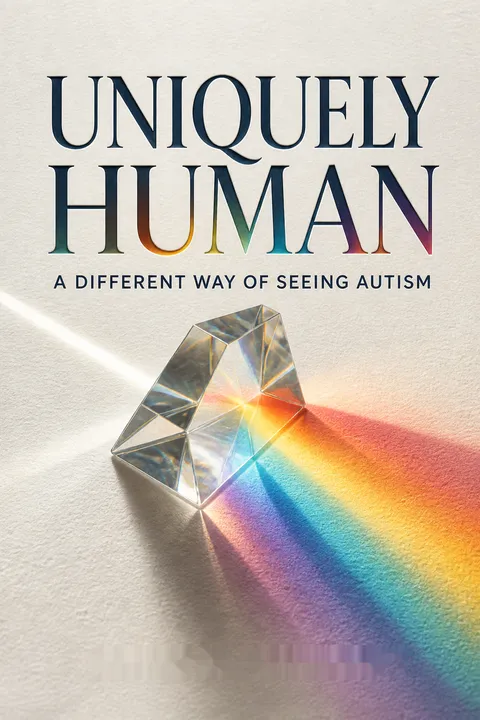
Uniquely Human receives mostly positive reviews for its humanistic approach to autism, emphasizing understanding and acceptance rather than trying to "fix" autistic behaviors. Readers appreciate Prizant's focus on seeing autism as a different way of being human and his practical advice for supporting autistic individuals. Some criticize the book for lacking autistic voices and perpetuating certain stereotypes. While many find it insightful and compassionate, a few readers felt it was repetitive or didn't provide enough practical tips. Overall, it's recommended for parents, educators, and professionals working with autistic individuals.
People Also Read




Glossary
Emotional dysregulation
Difficulty maintaining a manageable stateA state in which emotional or physiological arousal makes it harder to learn, communicate, or engage. In the book, sensory overload, uncertainty, pain, fatigue, and confusing interactions can contribute. Visible reactions such as rocking, withdrawal, or a meltdown may signal dysregulation and may also be attempts to cope with it.
Echolalia
Repeated language with possible purposeThe repetition of words, phrases, or sentences previously heard. It may happen immediately or after a delay. Prizant describes echolalia as potentially serving communicative and developmental functions, including requesting, affirming, expressing feelings, rehearsing language, and managing anxiety. Its meaning often becomes clearer when listeners consider context and the person’s history.
Delayed echolalia
Language repeated after a delayThe repetition of speech heard earlier, sometimes after hours, days, or longer. The phrase may appear unrelated to the current situation, yet can connect to a remembered event, feeling, or familiar script. Prizant argues that careful observation and knowledge of the person can reveal communicative or regulatory purposes that are not obvious from the words alone.
Emotional memory
Feelings attached to remembered eventsThe emotional quality associated with a person, place, object, or experience. A later cue, such as a word or building that resembles one from an earlier event, may bring back fear or comfort. In the book, these memories help explain why a reaction can seem sudden or unrelated to what is happening in the immediate moment.
Arousal bias
A tendency toward high or low arousalA pattern in which someone tends toward underarousal or overarousal, making it difficult to match their state to the demands of an activity. A person may be too agitated for a quiet task or too drowsy for an active one. The book recommends noticing the individual pattern and adjusting support and surroundings accordingly.
It Factor
Intuitive ability to connectA parent’s term for the capacity some people have to connect with a particular person with autism quickly and sensitively. Those with this quality notice the individual’s signals and help them feel at ease. Others may develop an It-like ability through openness and learning, while rigid helpers who ignore the person’s cues may worsen distress.
SCERTS Model
Coordinated communication and regulation supportAn educational and intervention model named for Social Communication, Emotional Regulation, and Transactional Support. Developed by Prizant and colleagues, it guides families, educators, and therapists in coordinating support. Its stated aims include strengthening social communication, supporting regulation, and adapting the environment and interactions so the individual can learn and participate.
Transactional Support
Adjustments by people and environmentsA SCERTS domain focused on the supports and changes made by other people and by the environment. Examples include visual schedules, communication systems, sensory accommodations, and predictable interactions. The purpose is to make social communication and emotional regulation more possible, rather than placing the entire burden of change on the person with autism.
Time and place strategy
Guidance on when interests fitA way to help someone understand that a strong interest can be welcome in some settings and less suitable in others. Adults can identify appropriate times, places, and conversation partners for sharing the topic, while explaining expectations clearly. It aims to develop social understanding without treating the interest itself as wrong.
Self-determination
Having a voice in one’s lifeThe ability to understand personal preferences and exert meaningful influence over decisions and daily life. In the book, self-determination can develop through choices, communication supports, and opportunities to contribute, even when a person needs extensive assistance. It differs from complete independence because support and personal agency can coexist.
FAQ
What's Uniquely Human: A Different Way of Seeing Autism about?
- Compassionate Understanding: The book offers a compassionate approach to understanding autism, viewing it as a different way of being human rather than a disorder.
- Human Experience: Barry M. Prizant emphasizes that behaviors associated with autism are responses to experiences, not deficits.
- Practical Guidance: It provides practical advice for supporting individuals with autism by focusing on their strengths and emotional needs.
Why should I read Uniquely Human by Barry M. Prizant?
- Expert Insights: Written by a leading expert with over forty years of experience, the book offers valuable insights into autism.
- Empowering Approach: It encourages shifting from trying to "fix" autism to understanding and supporting individuals, fostering inclusivity.
- Real-Life Examples: The book includes relatable stories and examples that illustrate its principles, making it applicable to everyday situations.
What are the key takeaways of Uniquely Human?
- Ask "Why?": Understanding the motivations behind behaviors is crucial, rather than labeling them as "autistic behaviors."
- Emotional Regulation: Many behaviors are coping strategies for managing anxiety and discomfort, highlighting the importance of emotional regulation.
- Value of Enthusiasms: Enthusiasms can be strengths, offering learning and social connection opportunities, rather than being dismissed as obsessions.
What are the best quotes from Uniquely Human and what do they mean?
- Behavior Context: "The behavior of people with autism isn’t random, deviant, or bizarre." This highlights the need to understand behaviors in context.
- Autism as Humanity: "Autism isn’t an illness. It’s a different way of being human." This emphasizes respecting autism as a valid human experience.
- Understanding First: "We need to work to understand them, and then change what we do." This reflects the book's message of starting with understanding.
What is the SCERTS Model mentioned in Uniquely Human?
- Framework for Support: The SCERTS Model focuses on Social Communication, Emotional Regulation, and Transactional Support for individuals with autism.
- Collaborative Approach: It involves collaboration among families, educators, and therapists to create supportive environments.
- Global Implementation: The model is used in schools across the U.S. and internationally, demonstrating its effectiveness.
How does Uniquely Human address the concept of emotional memory?
- Influence of Emotional Memory: Emotional memories can significantly impact behavior, often leading to strong reactions based on past experiences.
- Positive vs. Negative Memories: Creating positive emotional memories is crucial to counteract negative ones that trigger anxiety.
- Practical Strategies: Strategies include validating feelings and providing supportive environments to help cope with emotional memories.
What strategies does Uniquely Human suggest for supporting individuals with autism?
- Listen and Observe: Emphasizes listening and observing to understand needs and motivations better.
- Predictable Environments: Establishing routines can reduce anxiety and foster security.
- Encourage Communication: Advocates for using various communication methods to help individuals express their needs and feelings.
How does Uniquely Human redefine the concept of "behaviors" in autism?
- Behaviors as Communication: Behaviors are seen as forms of communication, expressing needs or discomfort.
- Understanding Motivations: Encourages asking "Why?" to uncover motivations, leading to compassionate understanding.
- Focus on Strengths: Reframes behaviors as coping strategies, promoting a strengths-based approach.
What role do "enthusiasms" play in the lives of individuals with autism according to Uniquely Human?
- Source of Joy: Enthusiasms provide joy, comfort, and predictability in an overwhelming world.
- Learning Opportunities: These interests can be tools for learning and social engagement.
- Respecting Interests: Advocates for nurturing enthusiasms, as they can lead to personal growth.
How does Uniquely Human suggest addressing fears in individuals with autism?
- Acknowledge Fears: Emphasizes acknowledging and validating fears rather than dismissing them.
- Provide Control: Suggests giving individuals control over their environments to reduce anxiety.
- Create Positive Experiences: Encourages creating positive experiences around feared situations to foster resilience.
How does Uniquely Human address teaching emotions to children with autism?
- Real-Time Labeling: Introduces emotional labels at the moment of experiencing a feeling to connect emotions to experiences.
- Avoiding Picture Recognition: Critiques teaching emotions through pictures, as it fails to convey emotional complexity.
- Dynamic Understanding: Emphasizes understanding emotions as dynamic, involving cognitive and physiological reactions.
What are some common misconceptions about autism discussed in Uniquely Human?
- Functioning Labels: Challenges the labels "high-functioning" and "low-functioning," which oversimplify individual experiences.
- Recovery Myths: Disputes the notion of "recovery" from autism, emphasizing fulfilling lives without conforming to neurotypical standards.
- Behavioral Misinterpretations: Highlights that behaviors often misinterpreted as noncompliance may stem from anxiety or sensory overload.
Download PDF
Download EPUB
.epub digital book format is ideal for reading ebooks on phones, tablets, and e-readers.








