

Key Takeaways
Assume a rich inner life even when speech gives you little evidence.
Behavior hides context. Higashida describes understanding questions but losing the words needed to answer, struggling to direct his body, and being misunderstood when his spoken words do not match his intentions. From the outside, these moments can look like indifference, confusion, or defiance. His account asks readers to pause before treating appearance as proof of what someone thinks or feels.
One voice, not every voice. Written when he was thirteen, the book offers a vivid account of one autistic person's experience, not a universal key to autism. Its central invitation is to make room for thoughts and feelings that a person's speech or behavior may not readily reveal.
What's striking is the book's challenge to a common shortcut: treating fluency as a measure of intelligence or emotional depth. Communication research distinguishes a person's capacity from the channel available to express it, and this distinction changes how observers interpret silence and unusual behavior. The needed caution is equally important: one person's testimony cannot tell readers what another person is experiencing. The most respectful response is neither disbelief nor automatic certainty, but curiosity paired with ways for that person to communicate.
Treat communication access as a basic route to personhood, not a bonus.
A route beyond speech. Higashida explains that he learned to communicate by pointing to letters on an alphabet grid, a table of characters that lets a person spell without speaking. His mother first supported his writing hand; he says he later became able to point to letters himself and also used a computer. The method gave him a way to share needs and thoughts that speech did not reliably carry.
Access needs trust. The book shows how much depends on having an effective communication channel. When another person helps transcribe, the helper's role matters: support should enable the communicator's own expression, not replace it. Different people may need different tools, and no single method should be presumed to work for everyone.
The broader lesson aligns with augmentative and alternative communication, which includes tools and strategies that supplement or replace speech. Access is not simply a device; it also involves time, training, and the communicator's control over what is conveyed. Where a helper is involved, careful attention to authorship and influence protects the person's agency. That scrutiny should be respectful, not a reason to withhold communication support. The ethical aim is to expand a person's voice while making clear whose message is being expressed.
Slow conversation down; a delayed answer may be a lost answer.
Words can disappear. Higashida says that a reply may vanish from his mind while he is waiting for his turn to speak. He describes repeating a question not necessarily because he failed to understand it, but because repetition helps him search for a relevant memory or enjoy familiar words. Echoing a question, then, may be part of processing rather than mockery or refusal.
Make room to respond. Rapid follow-up questions can add more language just as the person is trying to retrieve an answer. A useful adjustment is to ask one thing at a time, allow a pause, and offer a communication method the person can use reliably. When an answer seems unclear, checking its meaning is safer than assuming spoken words always express the intended message.
Conversation is often treated as a quick exchange, but turn-taking speed is a social convention, not proof of comprehension. Cognitive load offers a helpful lens: holding a question in mind, finding words, and coordinating speech can compete for attention. Reducing conversational pressure may make more information available rather than less. At the same time, pauses and repetition have different meanings for different people. The practical principle is to make room for clarification without turning every exchange into an interrogation.
Ask what repeated actions accomplish before calling them misbehavior.
Repetition can serve a purpose. Higashida describes repeated actions as sometimes driven by an impulse that feels difficult to control and sometimes calming or pleasurable. He suggests that a familiar action can soothe distress, while interrupting it can make him feel worse. He also describes jumping as a way to feel his body more clearly and release tension when strong feelings make movement difficult.
Look for the individual function. These explanations are his own, not a universal account of autistic behavior. Still, they offer a better starting question than simply asking how to stop an action: What happens before it, what does it seem to provide, and is anyone being harmed? The answers can help distinguish a harmless source of comfort from a behavior that needs safety support.
This approach echoes functional analysis in behavioral science: actions can be shaped by what precedes them and what follows, including sensory feedback, predictability, or relief from demands. Understanding function can make support more precise than punishment. The limit is that observers cannot reliably infer a behavior's purpose from appearance alone, and the same action may have different meanings for different people. Direct communication, careful observation, and attention to safety are stronger guides than a single theory about what a behavior signifies.
Treat sensory and motor differences as real constraints, not poor cooperation.
The same setting can feel different. Higashida writes that certain sounds can feel frightening, eye contact can interfere with attending to a speaker's voice, and details such as vivid colors or shapes can dominate what he sees. He also describes difficulty knowing where his limbs are or how to coordinate them. These experiences help explain why an ordinary task or busy environment may demand unusual effort.
Do not assume one explanation. He offers personal interpretations of pain, touch, clothing, and other sensory experiences, while acknowledging that some questions are hard for him to answer. His descriptions are useful prompts for asking what a person finds comfortable or difficult. They are not a clinical account of every autistic person's perception, and accommodations should respond to the individual rather than a stereotype.
The book's descriptions connect with research on sensory processing and motor coordination, fields that examine how people detect, prioritize, and act on information. They also challenge the idea that visible attention, such as eye contact, is the only reliable sign of listening. A useful distinction is between a task's objective simplicity and its experienced difficulty. Still, vivid first-person metaphors are not measurements, and sensory profiles vary. Their value lies in opening better questions, not settling them in advance.
Don't infer solitude from silence; many autistic people want company.
Isolation can follow misunderstanding. Higashida rejects the assumption that he prefers being alone. He says he wants to be with other people but worries that he is upsetting or inconveniencing them, and that communication difficulties make social situations hard. He also explains that he may not notice someone speaking until they first use his name. From the outside, missed cues and limited expression can be mistaken for disinterest.
Make connection easier to enter. In his account, being spoken to in a childish way is painful, not helpful. He asks to be treated according to his age and suggests getting his attention before beginning a conversation. These are specific preferences from one person, but they illustrate a broader practice: invite participation without assuming either incapacity or a wish to withdraw.
Social participation depends partly on the environment. If a person is repeatedly misunderstood, excluded, or addressed as younger than they are, apparent withdrawal may be an adaptation to an unrewarding situation. This is a useful corrective to interpreting every quiet moment as a fixed preference. The correction has limits, too: some autistic people genuinely enjoy solitude, just as some non-autistic people do. Inclusion means offering accessible opportunities and respecting a person's response, not insisting that sociability is the only healthy choice.
Customize predictability; a visual schedule can reassure or intensify rigidity.
Support is not one-size-fits-all. Higashida describes needing prompts to begin familiar actions, as though a cue switches the next step on. Yet he says visual schedules can make him anxious when plans change, because the displayed sequence becomes hard to set aside. He prefers being told about the day's plan in advance. For him, a tool commonly used to create predictability can also make a change feel more disruptive.
Test the support, not the stereotype. The book does not argue that visual aids are always unhelpful. Higashida says pictures can help explain how to perform a task, while fixed schedules may cause him stress. Ask the person which kind of cue helps, in what situation, and how changes should be communicated. Keep supports flexible enough to fit the person using them.
This is a useful reminder that a tool's effect depends on how it interacts with the person and context. Predictability can reduce uncertainty, but a highly salient plan may also raise the cost of deviation. Human-centered design starts with the user rather than a standard package of accommodations. The book's preference for advance verbal explanation is personal, not a general replacement for visual support. A collaborative trial, with the person able to signal what works, is a more defensible guide.
Meet panic with safety and presence, not scolding.
Distress may outlast its trigger. Higashida describes mistakes, unexpected experiences, or painful memories as capable of overwhelming him until he cries, shouts, or loses control. He asks people nearby to stay close, allow the distress to pass, and prevent harm to him or others. He also emphasizes that an observer may not know whether crying signals sadness, fear, or even being deeply moved.
Respond to the person in front of you. His account challenges the label of tantrum when it is used to dismiss distress as deliberate misbehavior. It does not mean every outburst has the same cause or that safety limits disappear. A calm, attentive response can avoid adding shame to an already difficult moment, while practical steps protect everyone involved.
The insight fits the broader idea of co-regulation: another person's calm presence can help make a stressful situation more manageable, especially when the distressed person cannot readily explain what is happening. It also encourages observers to separate the need for safety from moral judgment. Still, not every episode can be resolved by simply waiting nearby, and each person's preferences about touch, space, and assistance matter. Support works best when it is informed by that person's own communication and safety needs.
Respect the person, not a childlike stereotype or cure narrative.
Disability does not erase preference. Higashida objects to being treated as a toddler because he appears younger or communicates differently. He describes once wishing he could be normal, then questioning whether being autistic made him less deserving of self-acceptance. His account does not present autism as easy: he writes about frustration, dependence on support, and the pain of being unable to express himself.
Hold dignity and difficulty together. The book asks readers to treat autistic people as people with their own wishes, ambitions, and relationships, rather than defining them only by what they cannot do. Respect does not require denying hardship or assuming everyone feels the same about diagnosis or treatment. It means taking a person's stated preferences seriously and avoiding a presumption that their life would be better if they became someone else.
The distinction between accepting a person and minimizing disability is crucial. Self-acceptance can resist stigma, while practical support remains necessary to address barriers and distress. Treating someone according to their age also recognizes that communication differences do not cancel adult or adolescent dignity. The book's reflections on whether he would choose a cure belong to Higashida, not to autistic people as a group. Respectful care leaves room for differing views about identity, treatment, and what a good life looks like.
Use stories to hear emotions that conversation cannot carry.
A story makes feeling visible. In the closing tale, a boy named Shun dies suddenly and watches his parents grieve. He is offered the chance to return to them as a new child, but doing so means losing the memories that make him himself. His decision is shaped by concern for his mother's suffering. The imagined plot gives form to attachment, grief, fear, and the wish to comfort someone when direct speech is impossible.
Listen beyond fluency. Higashida says he wrote the story to help readers understand how painful it can be to be unable to communicate with loved ones. Its emotional detail counters the idea that limited conversational ability means limited empathy. A story cannot establish what every autistic person feels, but it can invite readers to recognize emotional complexity where everyday interaction may conceal it.
Narrative works differently from explanation: it lets readers inhabit a dilemma rather than merely receive a claim about emotion. Shun's imagined choice makes care legible through action and sacrifice, giving readers a route into feelings that the book says can be hard to express in conversation. That emotional force is valuable, but it should complement, not substitute for, listening to real people. A moving story can enlarge empathy; it cannot serve as evidence that every person's inner life follows the same pattern.
Analysis
The book's central achievement is interpretive. It asks readers to stop treating fluent speech, stillness, eye contact, or conventional play as reliable measures of understanding, attention, or feeling. Instead, Higashida offers a first-person account in which familiar behaviors acquire possible meanings: repeated questions can help retrieve a memory, movement can make the body feel more present, and withdrawal can follow fear of burdening others. The effect is not a clinical guide so much as a change in what observers consider possible.
Its form matters. The question-and-answer structure turns common judgments into invitations to examine assumptions, while the alphabet-grid account makes communication access part of the story rather than background detail. The closing fiction about Shun extends that argument emotionally, imagining a boy's continuing attachment to his grieving parents. Explanation and story work together: one supplies possible context, the other makes emotional life difficult to dismiss.
The book also requires careful reading. Higashida was thirteen when he wrote it, and he often presents his explanations as guesses or describes what is true for him. His account cannot stand for the range of autistic experience. Some people may welcome visual schedules, touch, or solitude; others may not. His observations about sensory experience and behavior are valuable testimony, but they are not a universal account of causes. Readers should distinguish a person's report of an experience from a general theory about autism.
The alphabet-grid method raises a related question about agency because another person may be involved in transcription or support. That makes attention to the communicator's control and authorship essential, without using uncertainty as an excuse to deny communication access. The durable contribution is a disciplined humility: do not confuse difficulty expressing a thought with absence of thought, and do not mistake a plausible explanation for the individual's own account. Offer ways to communicate, listen carefully, and let each person revise the interpretation.
Review Summary
The Reason I Jump received mixed reviews. Many readers found it insightful and touching, praising its unique perspective on autism. Some parents and educators felt it helped them better understand autistic individuals. However, skeptics questioned the authenticity of the writing, arguing that the language seemed too sophisticated for a 13-year-old with severe autism. Critics also noted the book's tendency to generalize about all autistic people. Despite these concerns, many readers still found value in the book's exploration of autism from a first-person perspective.
People Also Read
Glossary
Alphabet Grid
Letters for non-vocal communicationA table of letters that a person can point to in order to spell words without speaking. Higashida describes using a grid with support while learning, then pointing to letters to express sentences. The book presents it as one communication method that helped him share thoughts and intentions when spoken language was unreliable.
memory picture
A remembered situation or clueHigashida's term for a memory he searches for when trying to answer a question or understand what a speaker expects. He describes looking for a past experience similar to the current situation, then trying to retrieve what he said or did. It is his way of explaining a personal process, not a technical psychological term.
flashback memory
A memory replayed with its feelingsHigashida uses this phrase for a memory that returns as if the original event were happening again, bringing back the emotions associated with it. He describes memories as scattered rather than neatly ordered, so an upsetting recollection may arrive unexpectedly and cause intense distress. The term reflects his account of memory and emotion.
FAQ
What's "The Reason I Jump" about?
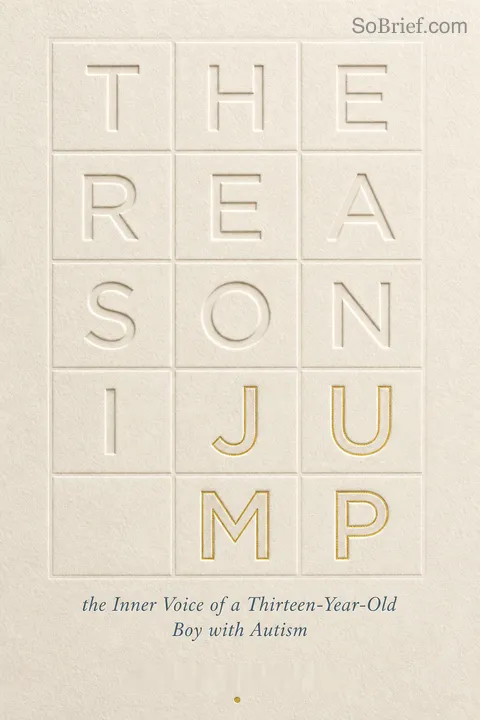
- Author's Perspective: "The Reason I Jump" is written by Naoki Higashida, a thirteen-year-old boy with autism, offering insights into the autistic mind.
- Communication Challenges: The book explores the difficulties faced by individuals with autism in expressing themselves and interacting with the world.
- Unique Format: It is structured as a series of questions and answers, providing direct responses to common queries about autism.
- Personal Experiences: Naoki shares his personal experiences and thoughts, aiming to foster understanding and empathy for those with autism.
Why should I read "The Reason I Jump"?
- Insightful Perspective: The book provides a rare, first-person perspective on autism, helping readers understand the condition from the inside.
- Empathy and Understanding: It encourages empathy and a deeper understanding of the challenges faced by individuals with autism.
- Practical Advice: Offers practical insights for parents, caregivers, and educators on how to better support those with autism.
- Inspiring Story: Naoki's journey of learning to communicate through an alphabet grid is both inspiring and enlightening.
What are the key takeaways of "The Reason I Jump"?
- Communication is Key: The importance of finding alternative communication methods for those who cannot speak.
- Understanding Autism: Autism is a complex condition with unique challenges, but individuals with autism have rich inner lives.
- Empathy and Patience: Patience and empathy are crucial in supporting individuals with autism.
- Value of Expression: The ability to express oneself is vital for personal growth and connection with others.
How does Naoki Higashida communicate in "The Reason I Jump"?
- Alphabet Grid Method: Naoki uses an alphabet grid to spell out words, allowing him to communicate non-verbally.
- Initial Challenges: Initially, he required assistance to point to letters, but over time, he gained independence.
- Expression of True Self: This method enabled Naoki to express his thoughts and feelings, which were otherwise trapped inside.
- Empowerment Through Communication: The ability to communicate gave Naoki a sense of empowerment and connection with others.
Why do people with autism repeat questions, according to Naoki Higashida?
- Memory Retrieval: Repeating questions helps Naoki retrieve memories and reinforce understanding.
- Enjoyment of Familiarity: Familiar questions and phrases provide comfort and enjoyment, similar to playing with sound and rhythm.
- Communication Practice: Repetition serves as a form of practice in communication, which is challenging for those with autism.
- Different Memory Structure: Naoki describes his memory as a pool of dots, requiring repeated questioning to connect them.
What are Naoki Higashida's thoughts on being 'normal'?
- Desire for Normalcy: Initially, Naoki wished to be 'normal' to ease the challenges of living with autism.
- Acceptance of Self: Over time, he learned to accept his autism as a part of who he is.
- Striving for Happiness: Naoki believes that striving for happiness is more important than conforming to societal norms.
- Unique Perspective: He values the unique perspective and experiences that come with being autistic.
Why do people with autism have difficulty with eye contact, according to Naoki Higashida?
- Uncomfortable Sensation: Making eye contact feels creepy and uncomfortable for Naoki.
- Focus on Voices: Instead of looking at eyes, Naoki focuses on listening to the other person's voice with all his senses.
- Misunderstanding of Eye Contact: People often assume eye contact equates to understanding, which is not the case for Naoki.
- Different Processing: Naoki's processing of visual and auditory information differs from neurotypical individuals.
What causes panic attacks and meltdowns in people with autism, according to Naoki Higashida?
- Complex Emotions: People with autism experience complex emotions, often misunderstood as childish behavior.
- Communication Struggles: The inability to express feelings can lead to frustration and panic.
- Helplessness: Feeling trapped in an unresponsive body contributes to panic attacks.
- Need for Support: During meltdowns, Naoki emphasizes the importance of gentle support and preventing self-harm.
What are Naoki Higashida's thoughts on autism itself?
- Outside Civilization: Naoki views people with autism as existing outside the norms of civilization.
- Unique Perspective: He believes autism offers a unique perspective that can remind humanity of what truly matters.
- Environmental Crisis: Naoki theorizes that autism may have arisen as a response to global crises.
- Hope for Understanding: He hopes that by understanding autism, society can learn valuable lessons.
What are the best quotes from "The Reason I Jump" and what do they mean?
- "When I’m jumping, it’s as if my feelings are going upwards to the sky." This quote illustrates how physical actions can help release emotions for those with autism.
- "We are more like travellers from the distant, distant past." Naoki uses this metaphor to describe the unique perspective of individuals with autism.
- "True compassion is about not bruising the other person’s self-respect." This emphasizes the importance of treating individuals with autism with dignity and respect.
- "The future is a thing we build." Naoki highlights the importance of hope and proactive efforts in shaping a better future.
How does Naoki Higashida describe his sensory experiences in "The Reason I Jump"?
- Different Sensory Processing: Naoki explains that his senses work differently, often leading to overwhelming experiences.
- Sensitivity to Light and Sound: He describes how unfiltered light and certain noises can be painful and disorienting.
- Comfort in Repetition: Repetitive actions and familiar stimuli provide comfort and stability.
- Connection with Nature: Naoki finds solace in nature, which offers a calming and grounding effect.
What is the significance of the title "The Reason I Jump"?
- Physical Expression: Jumping is a way for Naoki to physically express emotions and release tension.
- Connection to the Sky: Jumping makes him feel connected to the sky, symbolizing freedom and escape.
- Emotional Release: It helps him shake off the constraints of his body and feel lighter.
- Metaphor for Autism: The act of jumping serves as a metaphor for the unique ways individuals with autism express themselves.
Download PDF
Download EPUB
.epub digital book format is ideal for reading ebooks on phones, tablets, and e-readers.








