

Key Takeaways
Stay long enough for a place to become a calendar, not a view.
A retreat became a study. Henry Beston built a small cottage, the Fo’castle, on Cape Cod’s outer beach for occasional visits. In September, he planned to stay for two weeks. Instead, the changing coast held him there for a year. With no road to his house, he carried most supplies in a knapsack and lived close to the sea, dunes, and marshes.
Repetition revealed change. He watched birds arrive and depart, sand shift under wind and tide, and the sun move along the horizon. The beach was not simply scenery. It became a world whose patterns he could begin to recognize because he stayed through its seasons. Regular visits from Coast Guard surfmen kept his solitude from becoming complete.
What's striking is how time changes the object of attention. A visitor sees a wave; a person who returns daily starts to notice how tide, wind, and season alter it. That resembles field ecology, where repeated observations reveal patterns a snapshot cannot. Beston’s solitude is not a universal prescription, however. It depends on having a secure home, supplies, and nearby Coast Guard neighbors. The transferable lesson is not to imitate his isolation, but to return to a place often enough that its changes become legible.
Track the sun's return to recover the year nature actually lives.
The sun marks the year. Beston watches its rising and setting points shift along the horizon, and sees those movements register in the beach’s color, temperature, and wildlife. In autumn, migrating birds gather; in winter, insects disappear from the surface; in spring, fresh grass and returning birds signal renewal. These changes make time tangible rather than merely a sequence of dates on a calendar.
Season is an event. Beston calls the natural year a ritual: a recurring pattern of sunlight, tides, migration, dormancy, and return. Even when the beach seems empty in winter, he imagines insect life waiting in eggs beneath grass and sand. The cycle includes what cannot be seen as well as what appears in the open.
This attention connects naturally to phenology, the study of when seasonal events occur, such as flowering, migration, and leaf emergence. It also pushes against the idea that time is only a human schedule. Yet seasonal cycles are patterns, not guarantees: weather varies, and a changing climate can shift familiar timings. The value of Beston’s solar calendar is therefore not that nature repeats perfectly, but that careful observation gives people a way to notice when its rhythms change.
Meet animals as complete lives, not failed versions of humanity.
Other lives have their own terms. Watching shorebirds feed, Beston sees separate birds suddenly rise and wheel together as one flock, though he can identify no leader. He wonders how their movements coordinate, and rejects the assumption that animals are lesser humans. Their senses, needs, and ways of communicating may differ from ours in ways people cannot readily perceive.
Attention replaces ranking. The book moves between migrations, nesting, hunting, and survival without making human experience the measure of every event. A hawk catching a junco is part of the beach’s life, as are the smaller birds that evade it. Beston’s observations do not explain every animal behavior, but they ask readers to approach other species with humility rather than condescension.
Modern research on collective behavior shows that coordinated movement can arise from many individuals responding to nearby neighbors, without a single commander. That makes Beston’s question about flocking perceptive, even though his speculation about a shared mental force is not evidence of one. His larger ethical point survives the uncertainty: a creature need not resemble a person to possess a complete way of life. Respectful curiosity begins by describing what is seen before claiming to know what an animal experiences.
Use smell, sound, and touch to notice what vision misses.
A landscape is more than an image. Beston objects to treating the eye as nature’s only meaningful guide. He describes the cool, damp air near the surf, the sharper smell of heated sand, and seaweed warming on the upper beach. At night, the sound of the surf changes with wind and tide, while a person walking through phosphorescent water leaves brief points of light in the sand.
The body helps interpret. Touch, hearing, and smell tell him where he is and what conditions surround him. He argues that poetic understanding can work alongside scientific description: a careful account of a wave’s sounds or a beach’s scents reveals qualities a species list alone would miss. The observer is not outside the scene, but senses it from within.
This is a useful correction to screen-based and image-heavy habits of attention. Smell, in particular, can evoke vivid memories and distinctions that a photograph cannot preserve; sound can reveal activity outside the visual field. Multisensory observation also lowers the barrier to noticing nature, since it does not require identifying every plant or bird. Still, sensory impressions are personal and can mislead. Beston’s most persuasive method pairs vivid feeling with close description rather than treating feeling as proof.
Let the same coast teach beauty and danger together.
The beach is not a postcard. Beston describes delicate light, bird flights, and the beauty of stars, but also shipwrecks, drowning, and a winter storm that drove the ocean across the beach toward the dunes. During that storm, the Fo’castle trembled in the gale. A Coast Guard patrol vessel was lost, and nine men died. The coast’s drama includes real danger, not only sublime views.
Human courage belongs here too. Coast Guard surfmen patrolled the beach at night and rescued crews from wrecked vessels, sometimes in conditions that made launching a boat dangerous. Their work depended on local knowledge of surf and timing. Beston’s story therefore joins natural force to human cooperation: people cannot command the sea, but they can prepare, respond, and care for those in peril.
The surfmen offer a model of adaptation rather than conquest. Their skill comes from reading conditions and choosing when to act, a principle shared by disaster response and other forms of risk management. At the same time, the narrative resists turning catastrophe into a simple lesson about courage: the deaths remain losses, not scenery for human heroism. A fuller relationship with nature makes room for awe and vulnerability, while recognizing the practical systems communities need to face hazards.
Protect darkness; a lit night shrinks the universe to human scale.
Night changes the scale. On the outer beach, Beston watches stars rise over the ocean, hears waves without seeing them clearly, and notices animals moving across the sand. In thick fog, the Coast Guard’s lighthouse can disappear from view while the surf remains audible. These experiences make night feel like a distinct part of the natural world, not merely an inconvenient version of daytime.
Artificial light narrows attention. Beston argues that modern people often experience night only through illumination, and so miss its beauty and mystery. He describes the Milky Way spanning sea and land, and sees the dark sky as a reminder that human beings occupy only a small place in a much larger universe. Night can be disorienting, but it also restores a sense of proportion.
The case for darkness has a practical ecological dimension: artificial light can disrupt the behavior of wildlife, including animals that navigate, feed, or migrate at night. It also matters culturally, because a star-filled sky makes scale perceptible in a way urban brightness often prevents. Yet darkness is not equally safe or accessible for everyone. Protecting dark skies should not mean dismissing concerns about safety; thoughtful lighting can preserve visibility where needed while reducing unnecessary glare.
Read migration as one continuous life across distant landscapes.
The beach is a crossroads. In autumn, Beston watches shorebirds gather, feed, and depart, while northern sea ducks arrive to spend winter offshore. Monarch butterflies also pass through the dunes, moving generally south. These travelers connect the Cape to places far beyond it, including Arctic breeding grounds and warmer southern regions.
A local event has distant causes. Beston wonders how small land birds cross open water to reach Cape Cod and how alewives return from the sea to the ponds where they spawn. He cannot answer every question about their routes. That uncertainty enlarges the scene: the beach is not a sealed world, but a meeting point in journeys that link habitats and seasons. What happens in one place can matter to lives that range elsewhere.
This view anticipates the ecological idea of connectivity: species depend on linked habitats rather than isolated patches. A beach can serve as feeding ground, resting place, or passage, while other parts of the route remain out of sight. Beston’s proposed migration paths are sometimes conjectural, as he acknowledges. Today, tracking technologies can test such questions more directly. The enduring insight is to ask what a local landscape supports, and which distant places are joined to it by moving life.
Keep human convenience from turning shared habitat into a death trap.
Pollution reaches the birds. Beston describes crude oil residue dumped offshore by tankers. Sea ducks that land in it can have their feathers coated and lose the protection that keeps them warm; an oiled bird may also struggle to dive for food. He reports that beaches near Monomoy had recently been strewn with many dead sea birds after oil was released along their route.
The ocean carries consequences ashore. Beston’s beachcombing turns up objects cast away from ships, but the oil is not harmless flotsam. It enters the lives of animals that depend on the same waters used by people and industry. The episode challenges the comforting idea that waste disappears once it leaves human sight. A distant disposal decision can become an immediate threat to a bird in cold water.
The episode is an early, concrete account of an environmental externality: an activity can provide convenience or profit to some while shifting its costs onto other lives and places. It also shows why wildlife protection cannot stop at a shoreline when pollution moves through water. Beston’s report is an observation, not a complete estimate of the problem’s scale. That limit makes monitoring and policy important, rather than weakening the basic point that unseen disposal can produce visible harm.
Treat human life as part of Earth's ongoing creation, not its center.
The year ends where it began. Beston sleeps outside on the beach near the end of summer and wakes to see Orion rising above the ocean. The stars mark the return of autumn and close the year he spent observing the coast. In that moment, he understands the beach not as a finished scene but as creation still unfolding through sun, weather, migration, birth, and loss.
Nature shapes human meaning. Beston argues that dignity, beauty, and poetry arise from an awareness of the natural world. His year does not make human life insignificant; it places people within a larger reality that sustains them. He treats scientific knowledge and poetic attention as complementary ways of understanding, and asks readers to respect the earth as a condition of human flourishing.
This is the book’s strongest ethical claim: human meaning is relational, formed through dependence on a world that exceeds human purposes. That perspective resonates with environmental ethics, which asks what obligations follow from such dependence. It should not be mistaken for proof that nature is benevolent or morally instructive. The beach contains predation, exposure, and death. Beston’s more durable proposition is that human dignity can deepen when attention acknowledges both our belonging to nature and our limited power within it.
Analysis
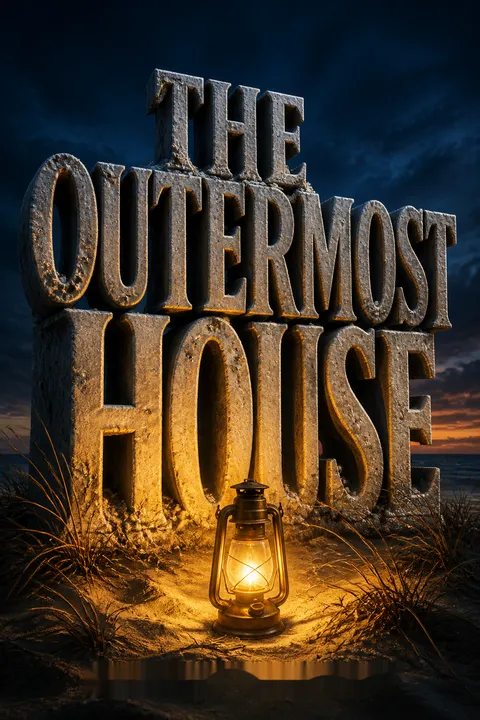
The Outermost House is a year-long memoir of attention, arranged around the turning seasons of Cape Cod’s exposed Atlantic shore. Its structure is not an argument followed by evidence so much as a sequence of encounters: migrating birds, changing surf, winter wrecks, spring movement, summer insects, and finally Orion returning to the horizon. The narrative’s cumulative effect is important. Each season revises the reader’s sense of what the beach is, until landscape becomes a living process rather than a static setting.
Beston’s distinctive method combines close sensory observation with lyrical interpretation. He listens to breakers as carefully as he watches them, and treats smell, touch, and bodily exposure as ways of knowing. His central insight is ethical as well as aesthetic: human beings are participants in a larger natural order, not its measure. Yet his language does not always distinguish observation from inference. Robert Finch’s introduction notes that Beston was a writer rather than a trained scientist, and that some of his natural-history claims are questionable. The book is therefore not a field guide or a reliable authority on every species behavior. Its value lies partly in making attention feel consequential.
The work also refuses a simple pastoral ideal. The coast is beautiful, but its storms kill sailors; its food webs include predation; and human activity brings oil into the birds’ habitat. Beston’s reverence does not erase danger. Instead, it asks readers to hold beauty, violence, and dependence together. That balance gives the book a modern environmental relevance: ecological care begins not only with data, but with the ability to perceive other lives and the systems they inhabit. Its limitation is that poetic reverence cannot by itself explain how to protect those systems. Its enduring achievement is to make indifference harder.
Review Summary
The Outermost House is a beloved nature writing classic, chronicling Henry Beston's year living on Cape Cod in the 1920s. Readers praise Beston's poetic prose and keen observations of the natural world, particularly his descriptions of birds, tides, and seasons. Many find the book meditative and transportive, offering a glimpse into a simpler time and deeper connection with nature. While some readers found parts slow or overly descriptive, most appreciate Beston's lyrical style and environmental insights. The book is considered influential in nature writing and Cape Cod conservation efforts.
People Also Read


Glossary
natural year
seasonal cycle of natureBeston’s term for a year experienced through natural rhythms rather than only through a calendar. It includes the sun’s changing path, seasonal weather, tides, migrations, dormancy, and renewal. In the book, observing these recurring events makes time feel embodied and shared with the nonhuman world.
surfmen
Coast Guard beach rescuersThe Coast Guard personnel who patrolled Cape Cod’s beaches and responded to ships in danger. Beston uses the local occupational term to emphasize their specialized knowledge of surf, weather, and beach conditions. Their duties included night patrols, signaling vessels, and rescuing crews with boats or breeches buoys.
Coston lights
red maritime signal flaresFlares carried by Coast Guard surfmen on patrol. When a surfman discovered a wreck or danger, burning one alerted the station and showed those aboard the vessel that help was coming. The signal was part of a larger rescue system involving patrols, telephones, boats, and line-throwing equipment.
life force
sustaining presence of lifeBeston’s name for the sense of vitality he felt while living among abundant natural life. He describes this as sustaining, much as physical forces sustain the world, but presents it as a personal and philosophical perception rather than a measurable scientific force. The idea reflects his belief that life is nourished by contact with other living things.
Download PDF
Download EPUB
.epub digital book format is ideal for reading ebooks on phones, tablets, and e-readers.








