

Key Takeaways
A better mindset makes the right move visible before anyone prescribes it
Mindset shapes action. The book defines mindset not as a private opinion about oneself, but as the way a person sees other people, circumstances, and responsibilities. That view shapes which actions seem possible. During a high-risk police raid, SWAT officer Bob Evans noticed frightened mothers and crying babies, then searched the kitchen for formula and prepared bottles. A few years earlier, such a response would have seemed absurd to his squad. After its leader, Chip Huth, changed how the team regarded the community, officers began noticing ways to help that no checklist had anticipated.
Results followed the shift. The squad went from two or three complaints a month to six years without a complaint, and in its first three years using the new approach it recovered more drugs and guns than in the previous decade.
What's striking is the difference between compliance and perception. A checklist can prompt a known action, but it cannot anticipate every human need in a volatile situation. The squad's story suggests that a shared orientation can expand what skilled people notice and do. This resembles a basic insight from cognitive science: attention is selective, and what people consider relevant shapes the options they see. The claim still needs care. A humane mindset does not replace training, lawful procedure, or safety protocols. It can improve judgment within those boundaries, not abolish them.
See the person behind the problem before deciding what the problem requires
People are not props. An outward mindset means noticing others as people with needs, aims, and constraints of their own. An inward mindset narrows attention to how others affect one's own plans. In that narrowed view, people become useful tools, barriers, or simply irrelevant. A healthcare team initially saw Ms. Tham, an elderly Vietnamese patient who could not communicate in English, as disruptive and considered sedating or discharging her. One colleague asked what the situation might feel like from the patient's side. The team then found familiar food, Vietnamese-speaking visitors, and translation help. Their practical response changed because their understanding changed.
The authors distinguish outwardness from mere niceness. A parent may enjoy an activity with a child and still miss the child's preferences, as a father discovered when his daughter explained that she disliked their routine basketball games.
This perspective makes empathy operational. Rather than treating perspective-taking as warm feeling, it asks what someone else's situation makes difficult and what that implies for action. That is useful in healthcare, management, and family life, where people often mistake their own intentions for the recipient's experience. The distinction also guards against performative kindness: a generous-seeming action can still serve the giver's preferences. Perspective-taking is not infallible, however. Asking people directly, where possible, is more reliable than assuming their needs from a distance.
Notice when blame is helping you excuse the choice you are making
Self-justification distorts perception. The book argues that people who ignore another person's needs often start assembling reasons why ignoring them is warranted. A colleague who withholds useful information may recall an old slight, focus on an irritating habit, or assume the person is unreliable. These explanations make self-interest feel principled, while encouraging a distorted picture of the other person.
Chris Wallace spent years blaming his late father for his disappointments and interpreting their history only through his own hurt. A young woman challenged him to consider that his father had burdens too. Chris did not deny his father's failures. He recognized instead that resentment had helped him avoid examining his own withdrawal and lack of curiosity. The change gave him a more truthful, less imprisoning account of their relationship.
The useful question here is not whether the other person has behaved badly. Often they have. It is whether that fact is being used to avoid seeing one's own choices. This resembles attribution bias: people tend to explain their own actions through circumstances and others' actions through character. The book's account is strongest when it invites accountability without requiring innocence from anyone. Its risk is that people may hear it as pressure to excuse harm. A fair application separates understanding another person's humanity from endorsing their conduct or abandoning boundaries.
Use SAM: notice others, adapt your work, and check the effect
Turn concern into a routine. The book calls its practical method the outward-mindset pattern, abbreviated as SAM. First, see the needs and challenges of people affected by your work. Next, adjust your efforts to help them succeed. Finally, measure whether your actions are making the intended difference.
At a power company, leaders mapped who depended on each stage of a lengthy capital-budgeting process. As planners explained their work and colleagues asked questions, they discovered that 80 to 90 percent of projects were known by mid-January, though the full plan was held until May. Sending known projects forward early let engineers begin sooner and cut months from the schedule. Hope Arising, a nonprofit delivering clean water in Ethiopia, also shifted from counting gallons delivered to tracking children's school attendance, a result residents said clean water would support.
SAM works because it links listening to revision and evaluation. Many service efforts stop at good intentions or activity counts. Asking whether recipients can now do what matters to them is a more demanding test. The budgeting example also shows that listening can uncover coordination failures, not merely emotional needs. This approach is compatible with iterative design: observe users, change the process, and test the result. The harder question is attribution. School attendance may depend on many factors beyond water access, so outcome measures need interpretation, not just collection.
Change your side of the relationship without waiting for permission
Do not make reciprocity a precondition. The book calls the first person's shift toward greater consideration the most important move, especially when both sides are waiting for the other to change. At Tubular Steel, company founder Jack Hauck began examining his own contribution to conflict rather than merely demanding change from his executives. His former chief of staff, Larry Heitz, eventually returned to help rebuild the business. Credit leader Al Klein also stopped treating sales as an adversary and redesigned his team's work to help sales succeed while controlling bad debt. The company grew from $30 million to more than $100 million and more than quadrupled profits in a shrinking market.
The principle is not passive accommodation. The authors argue that understanding others can support firm action when firmness is genuinely needed.
Unilateral change interrupts the familiar bargaining trap: each person waits for proof that the other deserves cooperation. In conflict resolution, one side's altered behavior can create new information and lower the cost of responding differently. The book's distinction between outwardness and softness matters here. Curiosity can coexist with boundaries, standards, and consequences. Still, the approach should not become a demand that harmed people endlessly absorb costs for the sake of harmony. The right question is whether a changed response is responsible and useful, not whether it guarantees reconciliation.
Give people a shared result that requires their contributions to connect
Make the work collective. A collective result is an outcome that matters to the whole group and cannot be achieved by isolated individuals. The book treats such a result as an anchor for collaboration: people can see how their work affects colleagues, customers, and the organization rather than optimizing only for their own department.
Louise Francesconi's executive team initially fought over where to cut costs after being ordered to reduce spending by $100 million. Once members considered who would be harmed by layoffs and learned more about one another's operations, they began offering help and sharing costs. One executive folded his division into a colleague's, saving $7 million. The team ultimately made the required cuts while improving the business. Their goal was no longer simply protecting their own territories; it became solving the company's problem together.
A shared outcome can act as a coordination device: it gives specialists a reason to exchange information and revise local priorities. This echoes systems thinking, where optimizing one component can damage the larger system. Yet a slogan is not a collective result. The result must be concrete enough to guide choices and broad enough to include affected stakeholders. It also needs safeguards against leaders using collective purpose to suppress dissent. Productive collaboration depends on surfacing disagreements about the goal, not merely demanding unity around it.
Let people plan the work they are expected to own
Responsibility needs agency. The authors criticize organizations that reserve thinking for leaders and assign everyone else only execution. This split gives leaders room to blame poor results on implementation and employees room to blame unrealistic plans. Both sides can avoid full accountability.
John and Sylvia Harris changed their family chores by inviting their children to decide together what needed doing, who would do it, and how to handle unfinished work. The children also asked to plan family activities, which made the conversation more balanced. In a healthcare facility, leader Dan Funk initially received no ideas from employees accustomed to top-down control. By working alongside them and allowing safe, useful suggestions to be tested, he discovered that an admissions director could bring in many new patients. She had abilities he had not recognized because he had not given her room to act.
Participation is not a ceremonial meeting where leaders collect ideas and keep all authority. It means giving people meaningful discretion, information, and responsibility, while keeping clear limits around safety and shared objectives. Research on autonomy at work broadly supports the value of agency for motivation, though autonomy without resources or competence can feel like abandonment. The stories point to a practical diagnostic: when people seem disengaged, consider whether the system has trained them to wait for instructions before concluding that they lack initiative.
Align incentives with the people your organization claims to serve
Systems teach priorities. Policies, metrics, and rewards can reinforce either outward or inward behavior, regardless of what leaders say. Landa Corporation required salespeople to close renewals by a deadline and at a specified contract value. Under pressure to satisfy that internal measure, account leader Tom Brakins approved extra discounts to meet the date, even though the delay was caused by the customer's approval process. The client later asked for him to be removed, and trust deteriorated.
Hope Arising offered a contrasting example. It stopped treating gallons of water delivered as the whole measure of success and asked what residents wanted the water to make possible. Their answer, more days of school for children, redirected attention toward the impact of the service. A metric is not neutral if it shifts attention away from the people who are supposed to benefit.
This is a strong application of principal-agent theory: workers respond to what an organization measures and rewards, sometimes in ways that undermine its stated purpose. A well-designed metric can focus effort, but no single measure captures the whole relationship. Internal performance indicators should be paired with evidence from customers, employees, or other affected groups. The book's examples also imply that metrics are cultural messages. A company that publicly praises customer care but penalizes employees for serving customers on the customer's timetable teaches its real priorities through consequences.
Make it safe to report red results before failure becomes unavoidable
Truth enables coordination. When Alan Mulally took over Ford, executives reported that every area was on track even as the company was losing billions of dollars. A weekly review asked leaders to show progress with color-coded charts. At first, no one wanted to reveal a problem because failure had historically put careers at risk. Mark Fields eventually reported a serious issue with a vehicle launch. Mulally thanked him for making the problem visible and asked who could help. That response changed the meeting's meaning: bad news became a shared problem to solve, rather than evidence against the person reporting it.
The team began exposing risks, offering help, and reviewing whether its responses worked. Ford later avoided the federal bailout taken by other American automakers.
The Ford story illustrates psychological safety in a concrete managerial practice: leaders respond to unwelcome information with help rather than punishment. Safety does not mean low standards. It makes it more possible to see problems early enough to act on them. A reporting ritual alone cannot create this trust; the leader's response supplies the evidence employees use to judge whether candor is safe. The account is compelling, though one company's turnaround cannot establish that mindset or a meeting format caused the outcome by itself. It does show how transparency can make coordinated repair possible.
Analysis
The book's central contribution is to relocate performance problems from the visible behavior alone to the way people interpret their obligations to one another. Its inward and outward mindsets are not personality types but ways of attending: one centers personal objectives, while the other includes the needs and aims of affected people. This distinction explains why identical skills can produce different results, and why a well-intended action can still miss its recipient.
The strongest parts of the argument connect individual perception to organizational design. The SWAT team, Ford, and Tubular Steel stories show a recurring sequence: attention broadens, people disclose more, colleagues adjust their work, and results become more coordinated. The SAM method translates that sequence into a repeatable practice. Equally important, the discussion of incentives recognizes that policies can undo the behaviors leaders exhort. A company cannot credibly demand customer focus while rewarding employees for ignoring customer realities.
The evidence is persuasive as illustration, not as proof of universal causation. The book relies primarily on organizational stories, and successful cases may be more visible than failed attempts. Its reported outcomes are entangled with leadership quality, resources, skills, and market conditions. Mindset should therefore be treated as one important lever, not a substitute for competent operations or fair structures.
A useful modern reading pairs the book's outward orientation with psychological safety and accountability. People need enough trust to disclose problems, and enough clarity to know what good performance requires. Neither alone is sufficient. Safety without standards can become avoidance; standards without safety can produce polished green charts hiding real risks. The book's practical challenge is to build settings where people can tell the truth, make decisions, and remain answerable for their impact on others. In that sense, its deepest claim is organizational as much as ethical: people see more of the system when they stop treating other people as scenery.
Review Summary
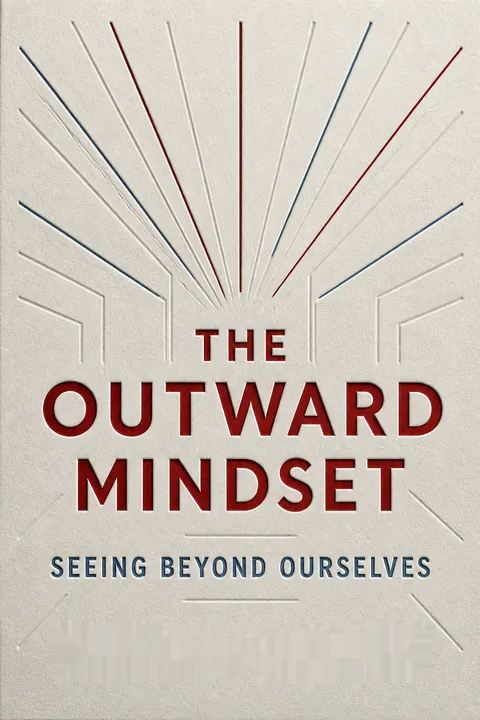
The Outward Mindset receives mixed reviews, with an overall rating of 4.02 out of 5. Many readers appreciate its focus on considering others' needs and objectives, finding it helpful for improving relationships and leadership skills. Some praise the book's simplicity and real-life examples, while others criticize it for being too basic or lacking depth. Critics argue that the concepts could have been conveyed more concisely. Despite its flaws, many readers find value in the book's message of adopting an outward-focused perspective to enhance personal and professional life.
People Also Read







Glossary
outward mindset
Others-inclusive way of seeingA way of seeing and engaging in which a person recognizes that others have their own needs, objectives, and challenges. This awareness shapes the person's choices and sense of responsibility. An outward mindset does not prescribe a fixed behavior; it helps people notice what a situation requires and adjust their work in light of its effects on others.
inward mindset
Self-focused way of seeingA way of seeing in which attention centers on one's own needs, aims, and difficulties, while other people's needs and objectives receive little consideration. Others may be treated as useful tools, obstacles, or irrelevant to one's plans. The book links this stance to self-justifying stories that make neglecting or resisting others feel reasonable.
outward-mindset pattern
Notice, adapt, assessA practical method for working with an outward mindset. It asks people to understand the needs and challenges of those affected by their work, adjust their efforts to help those people succeed, and assess whether the changes are having the intended impact. The book uses the acronym SAM for the pattern and presents it as a method for individuals, teams, and organizations.
collective result
Shared outcome requiring cooperationAn outcome that matters to a group and requires people to coordinate their contributions to achieve it. A collective result helps individuals understand how their responsibilities connect to those of colleagues, customers, and the organization. It can guide people toward shared priorities without requiring leaders to prescribe every action.
outwardly nice
Kindness without real attentionA style that appears generous or considerate because a person is doing things for others, but does not take those people's actual needs, aims, and challenges into account. The book describes it as a form of inward mindset: the giver may be following personal preferences while assuming the recipient will value them. Genuine outwardness depends on seeing and responding to the recipient's perspective.
FAQ
What's "The Outward Mindset" about?
- Core Concept: "The Outward Mindset" by The Arbinger Institute explores how shifting from a self-focused inward mindset to an others-focused outward mindset can transform personal and organizational effectiveness.
- Real-Life Examples: The book uses vivid, real-life stories to illustrate how adopting an outward mindset can lead to better collaboration, innovation, and results.
- Mindset Change: It emphasizes the importance of seeing beyond oneself to understand and address the needs and objectives of others, which can lead to significant improvements in relationships and performance.
- Practical Framework: The book provides a practical framework for individuals and organizations to implement mindset change and achieve sustainable success.
Why should I read "The Outward Mindset"?
- Transformational Impact: The book offers insights that can lead to profound personal and organizational transformation, making it a valuable read for anyone looking to improve their effectiveness.
- Applicable Across Contexts: Whether in business, community, or family settings, the principles of the outward mindset can be applied to enhance collaboration and results.
- Real-World Success Stories: It includes compelling stories of organizations and individuals who have successfully implemented these principles, providing inspiration and practical guidance.
- Actionable Steps: The book outlines clear steps and strategies for shifting to an outward mindset, making it a practical guide for change.
What are the key takeaways of "The Outward Mindset"?
- Mindset Drives Behavior: The book emphasizes that mindset, more than behavior, drives how we engage with others and achieve results.
- Outward vs. Inward Mindset: It distinguishes between an outward mindset, which focuses on others' needs and objectives, and an inward mindset, which is self-focused.
- Practical Framework: The SAM framework—See others, Adjust efforts, Measure impact—provides a step-by-step approach to adopting an outward mindset.
- Sustainable Change: By focusing on mindset change, individuals and organizations can achieve sustainable improvements in performance and relationships.
How does "The Outward Mindset" define an outward mindset?
- Others-Focused: An outward mindset involves being alive to and interested in the needs, objectives, and challenges of others.
- Seeing People as People: It means seeing others as people with their own needs and objectives, rather than as objects or obstacles.
- Collaborative Approach: Those with an outward mindset work collaboratively, adjusting their efforts to be more helpful to others.
- Accountability for Impact: It includes measuring and holding oneself accountable for the impact of one's work on others.
What is the SAM framework in "The Outward Mindset"?
- See Others: The first step involves understanding the needs, objectives, and challenges of those you interact with.
- Adjust Efforts: Based on what you see, adjust your actions to be more helpful and supportive to others.
- Measure Impact: Continuously assess the impact of your actions on others and make necessary adjustments to improve.
- Practical Application: This framework provides a practical approach to implementing and sustaining an outward mindset in various contexts.
How does "The Outward Mindset" suggest handling difficult relationships?
- Self-Reflection: The book encourages introspection to understand how one's own mindset may be contributing to the difficulty.
- Focus on Others: Shift focus from self-justification to understanding the needs and objectives of the other person.
- Adjust Behavior: Make adjustments in behavior to be more supportive and helpful, even if the other person does not change.
- Long-Term Commitment: Emphasizes the importance of maintaining an outward mindset consistently, regardless of immediate reciprocation.
What are some real-life examples from "The Outward Mindset"?
- Kansas City Police Department: The book describes how a SWAT team transformed its approach by adopting an outward mindset, leading to better community relations and reduced complaints.
- Ford Motor Company: Alan Mulally's leadership at Ford is highlighted as an example of using an outward mindset to turn around the company's performance.
- Healthcare Facilities: The book shares stories of healthcare organizations that improved patient care and employee engagement by focusing on others' needs.
- Debt Collection Agency: CFS2's approach to helping clients find jobs instead of just collecting debts illustrates the power of an outward mindset.
What are the best quotes from "The Outward Mindset" and what do they mean?
- "How much larger your life would be if your self could become smaller in it." This quote by G.K. Chesterton, featured in the book, encapsulates the idea that focusing less on oneself and more on others can lead to a more fulfilling and impactful life.
- "The most important move is for me to make the most important move." This emphasizes personal responsibility in adopting an outward mindset, regardless of others' actions.
- "An outward mindset is essential for empowering human potential and possibility." This highlights the transformative power of seeing and addressing the needs of others.
- "Leaders who serve others with an outward mindset encourage a culture of collaboration where everybody wins." This underscores the role of leadership in fostering an outward-mindset culture.
How does "The Outward Mindset" address organizational change?
- Focus on Mindset First: The book argues that successful organizational change begins with changing mindsets, not just behaviors or processes.
- Collective Goals: It emphasizes the importance of mobilizing around a collective goal that requires collaboration and shared responsibility.
- Empowering Employees: Organizations should empower employees to take full responsibility for their roles, including planning and execution.
- Rethinking Systems: It suggests rethinking organizational systems and processes to support and reinforce an outward mindset.
How can "The Outward Mindset" be applied in personal life?
- Family Dynamics: The book provides examples of how an outward mindset can improve family relationships by focusing on the needs and objectives of family members.
- Personal Accountability: Encourages individuals to take responsibility for their impact on others, leading to more harmonious and supportive relationships.
- Conflict Resolution: Offers strategies for resolving personal conflicts by understanding and addressing the needs of others.
- Continuous Improvement: Suggests regularly assessing one's impact on others and making adjustments to improve personal interactions.
What challenges might one face when adopting "The Outward Mindset"?
- Resistance to Change: Individuals and organizations may resist changing long-standing inward-focused habits and practices.
- Misunderstanding Outward Mindset: There may be misconceptions that an outward mindset means being soft or permissive, rather than being open and aware.
- Lack of Immediate Reciprocation: Adopting an outward mindset may not immediately change others' behaviors, requiring patience and persistence.
- Structural Impediments: Existing organizational systems and metrics may not support an outward mindset, necessitating systemic changes.
How does "The Outward Mindset" suggest measuring success?
- Impact on Others: Success is measured by the positive impact one's actions have on others, rather than just personal achievements or metrics.
- Continuous Feedback: Encourages regular feedback from those affected by one's actions to assess and improve impact.
- Alignment with Collective Goals: Success is also measured by how well individual and organizational efforts align with and contribute to collective goals.
- Adaptability and Growth: Emphasizes the importance of adapting efforts based on measured impact to foster continuous growth and improvement.
About the Author
Other books by The Arbinger Institute

Download PDF
Download EPUB
.epub digital book format is ideal for reading ebooks on phones, tablets, and e-readers.








