

Key Takeaways
Treat racialized distress as injury shaped by systems, not personal failure
Context changes the diagnosis. Gutiérrez argues that chronic racism and other forms of oppression can produce traumatic stress, alongside abuse, neglect, and violence at home. The term cultural legacy burdens describes harmful beliefs and pressures absorbed from society, such as the idea that a person of color must constantly prove their worth. These messages can influence family rules and a person’s own self-image, even when their origins are easy to miss.
Terrence makes this visible. A Black man in Washington, DC, he faces suspicion, racial slurs, and fear of police, while also carrying childhood abuse and the family belief that rest is laziness. His anxiety, migraines, and overwork are not evidence of personal weakness. The book asks readers to understand distress in its social and personal context, while recognizing that experiences differ across communities and identities.
What's valuable is the shift from asking what is wrong with a person to asking what conditions their nervous system has had to navigate. That framing resembles a public-health approach, where distress is understood in relation to exposure, resources, and safety, not only individual traits. It can reduce shame and make treatment more culturally responsive. At the same time, a social explanation should not become a diagnosis by itself. Similar symptoms can have different causes, and a clinician's assessment can help distinguish them.
Regulate your body before demanding clarity from your mind
Stress changes access to choice. The book describes the nervous system as shifting toward mobilization, such as fighting or fleeing, or toward shutdown, such as numbness and dissociation. In either state, a person may find it harder to think clearly or respond as they wish. Gutiérrez recommends learning to notice early bodily signals, including a racing heart, clenched muscles, or shallow breathing.
Use small, repeatable cues. A body scan, a longer exhale, or a few minutes of belly breathing can help someone settle in the present. The point is not to become comfortable with racism or to erase a genuine danger. It is to create enough room to identify what is happening and choose a response. Her sequence is simple: regulate, relate, then reason.
This sequence captures an important practical insight: reflection is much harder when the body is sounding an alarm. It also gives readers a nonmoral explanation for reactions they may otherwise label as weakness or overreaction. The book's emphasis on brief, accessible practices is useful because regulation need not require a retreat or special equipment. Still, calming techniques are not universally soothing. For some trauma survivors, attention to breath or internal sensations can increase distress, so choice, pacing, and external support matter.
Read coping behaviors as protectors, not proof that you are broken
Protection can look costly. Internal Family Systems, or IFS, is a therapeutic model that understands the mind as containing different parts with different roles. Gutiérrez describes managers as parts that try to prevent pain through control or perfectionism, firefighters as parts that react quickly to numb or interrupt pain, and exiled parts as vulnerable parts carrying painful experiences. The core Self is the compassionate inner capacity that can listen to these parts.
Ask what a behavior is doing. In Ale's story, dissociation helps a child mentally escape abuse she cannot stop. In adulthood, anger, overwork, people pleasing, and substance use can also function as attempts to manage distress. Seeing a protective purpose does not mean every behavior is harmless. It creates a way to address the need beneath it without condemning the person.
The parts framework can replace an all-or-nothing view of character with a more useful question: what threat is this behavior trying to manage? That can support self-understanding and more effective care, especially when shame has made honest reflection difficult. It also leaves room for responsibility. A behavior may have begun as protection and still harm other people now. Compassion is most powerful when paired with limits, repair, and a search for safer ways to meet the same need.
Replace shame's verdict with curiosity about the wound it guards
Shame turns events into identity. It says not merely that something went wrong, but that the person is defective or undeserving of love. Gutiérrez suggests that an inner critic can be a protective part, attempting to prevent rejection or further harm by policing behavior. This does not make its messages true. It helps explain why self-criticism can feel persistent, even when it causes suffering.
Witness rather than rush. The book invites readers to notice the younger parts of themselves that carry shame, ask what support was missing, and offer the care they needed at the time. Writing a letter to a younger self is one suggested exercise. The work should happen gradually, with breaks and support when memories feel overwhelming. The goal is not to force painful recall, but to meet present feelings with more compassion.
Curiosity interrupts the shame spiral because it replaces a global judgment with a specific inquiry: what happened, what was learned, and what protection is still needed? That approach can make self-compassion feel less like empty reassurance and more like accurate understanding. It also challenges the idea that healing requires a dramatic emotional breakthrough. For people with severe or ongoing trauma, self-guided memory work can be destabilizing. A gentle exercise is not a substitute for safety, trusted relationships, or professional care when those are needed.
Trace family patterns without confusing explanation with excuse
Learned responses travel through relationships. Intergenerational trauma describes how the effects of historical and family trauma can persist across generations through caregiving, learned behavior, social conditions, and, as the book discusses, possible biological pathways. Aiyana and her daughters illustrate a cycle: violence and neglect shape Aiyana's early ideas about love; her daughters witness violence at home; and one later enters abusive relationships. The pattern has a history, but it is not inevitable.
Attachment offers a map. The book describes secure attachment as care that is consistent, responsive, and respectful. Insecure strategies may include keeping distance, anxiously seeking reassurance, or alternating between longing for closeness and fearing it. These are adaptations, not fixed identities. Understanding a caregiver's own hardship can add context, while still naming harm and setting boundaries.
A family pattern becomes easier to interrupt when it is seen as learned rather than natural. This framing holds two truths together: caregivers may have been shaped by hardship, and children still deserve protection from harmful behavior. That balance is important because appeals to historical suffering can sometimes pressure survivors to forgive or remain close before they are ready. The book's emphasis on repair and boundaries points toward a more useful measure of change: not perfect caregiving, but greater safety, accountability, and responsiveness.
Reconnect with ancestral resources without forcing one definition of belonging
Inheritance includes strength as well as pain. Gutiérrez presents ancestral connection as a possible source of identity, comfort, intuition, and resilience, especially for people whose cultural practices were suppressed or whose family histories were disrupted by colonization and enslavement. The connection need not depend on complete genealogical knowledge. A person might begin with a ritual, a family story, time in nature, or a reflection on the qualities that helped earlier generations survive.
Make the practice your own. The book offers meditation, an altar, and culturally rooted practices such as a limpia, a ritual using an egg to symbolically carry away distress. These are invitations, not requirements. Some readers may feel unsure, disconnected, or angry toward their ancestors. Those feelings belong in the process too. No single spiritual practice can represent every culture or replace practical support.
The book resists a narrow model of healing in which the individual must recover alone. Ritual and ancestry can give grief a shared setting and connect personal identity to collective memory. That can be meaningful even when a practice is understood symbolically rather than literally. The essential safeguard is cultural specificity: traditions should not be flattened into interchangeable wellness tools. The author's invitation to adapt or decline practices matters, since belonging cannot be commanded, and some people find their most sustaining connection through chosen family or community.
Map racism's route from institutions into self-doubt
The pressure operates at several levels. Gutiérrez distinguishes systemic racism, the broad structure of unequal power; institutional racism, discriminatory policies and practices in places such as schools and workplaces; and interpersonal racism, including slurs, stereotyping, and microaggressions. These experiences can feed internalized racism, when oppressive messages become beliefs about one's own worth, appearance, or belonging.
The examples show how it lands. Camila absorbs colorist messages that praise lighter skin, while Enrique, a highly accomplished surgeon, still fears being exposed as a fraud. The book connects that self-doubt to environments that repeatedly question or undervalue people of color. Naming the source can make an experience easier to interpret. It does not mean every insecurity has one cause, or that every person has the same experience of racism.
This layered model is useful because it connects private self-doubt to the settings that repeatedly reinforce it. It also helps avoid treating an individual's coping strategy, such as code-switching, as a personal flaw when it may be a response to unequal risk. The model's strength is its movement across levels, from policy to everyday interaction to self-concept. Its challenge is analytical precision: naming a mechanism is not the same as proving why a particular event occurred. Both lived experience and careful attention to context matter.
Write a personal mission statement to reclaim choices from inherited scripts
Define yourself in your own language. The book's final empowerment step uses intentional action to help a person live according to their values, rather than automatically following messages absorbed from trauma or oppression. Gutiérrez suggests writing a true-to-self account beginning with statements of identity, values, relationships, and hopes. A personal mission statement can turn these reflections into a practical reminder of who someone wants to be.
Choice can be small and real. A person may choose when to speak, when to protect their energy, or how to respond after a microaggression. Some decisions, including code-switching or accepting an inequitable job, may be constrained by safety and finances. The goal is not to pretend those constraints do not exist. It is to notice the pressures shaping a decision and recover whatever agency is available.
A written mission statement can serve as a compact decision aid, especially when stress narrows attention to immediate threat. Its value lies less in inspirational language than in helping someone compare an available response with their own priorities. The book also avoids equating authenticity with unguarded disclosure: protective boundaries can be wise. This distinction matters in unequal environments, where the most values-aligned choice may be strategic silence, leaving a situation, or seeking support rather than confronting someone directly.
Let healing fuel collective action, not replace the fight against injustice
Personal care is not political surrender. The four-part approach moves from regulating the body, to treating shame with compassion, reconnecting with ancestral resources, and acting intentionally. Gutiérrez explicitly says these practices cannot end racism. Their purpose is to help people preserve a sense of self and connection while living within oppressive conditions.
Resilience is shared work. The book links individual healing to community care and structural change. Rest, supportive relationships, cultural practices, and activism can all contribute, though none removes the need to challenge unjust institutions. Its closing resilience map asks readers to identify what helps them return to the present, what values they want to act from, and who can support them. The central message is not to carry everything alone or mistake survival for justice.
This distinction protects the book's healing practices from being misread as tools for making people more tolerant of harm. Individual regulation can help preserve energy and strengthen connection, but it cannot redistribute power or make institutions fair. The model is strongest when personal practices sit alongside community resources and organized action. It is also important not to make healing another obligation imposed on people already carrying disproportionate burdens. Rest and participation should remain choices, not tests of resilience.
Analysis
The book's central contribution is its insistence that trauma cannot be understood only inside an individual. Gutiérrez links racialized environments, family relationships, bodily survival responses, and inherited beliefs, then offers practices intended to help readers regain self-trust and agency. Its strongest narrative move is to pair concepts with lives: Terrence shows how public racism and family history compound; Ale shows how abuse can make dissociation adaptive; Aiyana and her daughters show how relational patterns can recur. These stories make the framework concrete without claiming that every reader shares the same history.
The four-part approach is coherent because it moves from bodily awareness toward self-compassion, cultural connection, and intentional action. It also resists a common self-help error by stating that private healing does not dismantle oppressive systems. Its warmth and repeated invitations to pause support a trauma-sensitive pace, though the density of exercises could still be emotionally demanding. Readers facing ongoing danger, suicidality, or severe symptoms need safety and qualified support before undertaking intense reflection.
Some scientific claims deserve careful interpretation. Evidence on stress, health, and intergenerational effects is substantial, but epigenetic findings do not mean that a specific traumatic experience is simply inherited as a fixed biological destiny. Social conditions, caregiving, and material circumstances remain crucial pathways. The nervous-system and polyvagal language can be useful as an explanatory map, but it should not be mistaken for a complete account of brain function. Diagnostic systems also differ: ICD-11 recognizes complex PTSD as a distinct diagnosis, while DSM-5 does not list it as a separate diagnosis. These qualifications do not erase the book's main insight. They clarify that its framework is best used to generate compassionate questions, not to replace individualized clinical judgment or structural analysis.
Review Summary
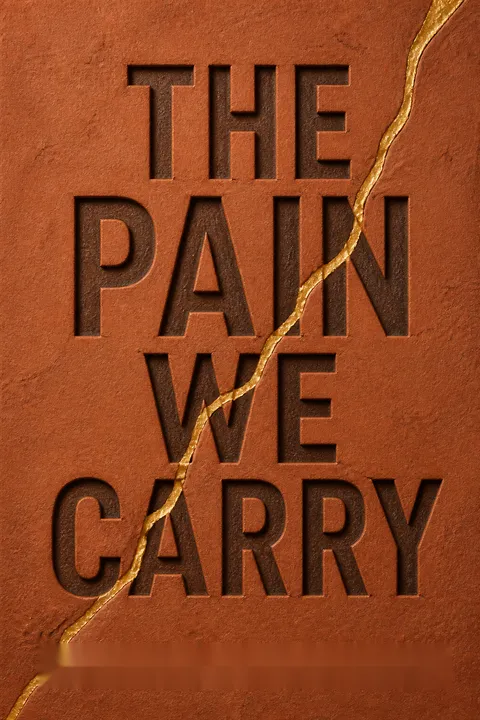
The Pain We Carry receives widespread praise for its compassionate, accessible approach to healing racial and intergenerational trauma for BIPOC readers. Reviewers highlight its practical exercises, journaling prompts, and meditations, along with its integration of IFS therapy, polyvagal theory, and ancestral healing. Many recommend it for both BIPOC individuals and clinicians working with diverse populations. Some critics note it can feel overly explanatory for those already familiar with therapeutic concepts, but most agree it is a valuable, transformative resource for navigating Complex PTSD rooted in racism.
People Also Read






Glossary
Cultural Empowerment Approach to Healing
Four-part healing frameworkGutiérrez's framework for healing from complex trauma shaped by racism, culture, and other forms of oppression. It organizes practices around bodily regulation, self-compassion, connection to ancestral wisdom, and intentional action. The approach aims to support personal and community resilience, while acknowledging that individual healing practices cannot by themselves end systemic injustice.
Cultural legacy burdens
Inherited oppressive messagesBeliefs and pressures absorbed from the larger culture, especially messages shaped by racism and other systems of oppression. They can influence self-worth, family expectations, and everyday choices, often without being recognized as social messages. Examples in the book include feeling compelled to prove one's value, hide parts of one's identity, or distrust rest.
Toxic stress
Prolonged threat without supportThe book uses this term for sustained exposure to adversity that keeps a person's body and mind responding to threat, especially when supportive relationships or safe conditions are absent. Examples include ongoing racism, violence, abuse, and severe insecurity. The concept helps explain why cumulative stress can affect emotional well-being and bodily health.
Complex posttraumatic stress disorder (CPTSD)
Response to prolonged traumaGutiérrez describes CPTSD as a response to repeated or ongoing traumatic experiences, including relational trauma, childhood abuse or neglect, and racialized oppression. It can involve survival responses such as fighting, fleeing, freezing, or shutting down, along with shame, intrusive memories, and difficulty trusting. The term is used in the book to validate complex suffering, not to diagnose a reader.
Internal Family Systems (IFS)
Parts-based therapy modelA therapeutic model that views the mind as containing parts with different protective or vulnerable roles, alongside a core Self capable of compassion and leadership. In the book, this framework helps readers approach behaviors with curiosity about the pain or danger they are trying to manage. It is presented as one way to understand inner experience, not as the only valid model.
Self
Core compassionate capacityIn the book's IFS framework, Self refers to a person's underlying capacity for qualities such as calmness, clarity, courage, curiosity, and compassion. It can listen to protective and vulnerable parts without being identical to them. Gutiérrez presents Self as a source of inner leadership that can help parts feel witnessed and supported.
Interoception
Sensing internal body cuesAwareness of signals arising within the body, such as hunger, tension, pain, temperature, or changes in breathing. Gutiérrez connects interoception with recognizing emotional and stress responses before they become overwhelming. Practices such as a body scan are intended to help a person notice and respond to these internal cues.
Neuroception
Unconscious safety scanningA term used in the book for the body's automatic detection of cues that may signal safety or danger, before conscious reasoning has fully taken place. The book uses this idea to explain why a familiar sound, setting, or interaction can trigger a survival response. It is distinct from consciously evaluating whether a situation is dangerous.
Attachment trauma
Wounding in close relationshipsA rupture in a person's felt safety and connection with caregivers or other essential relationships, often associated with abuse, neglect, inconsistent care, or exposure to violence. In the book, attachment trauma can shape expectations of love, trust, and boundaries, and can influence later relationships. The term also includes disruption of connection to land, community, and kin.
Forward-Facing Trauma Therapy
Values-focused trauma approachA trauma therapy approach cited by Gutiérrez that emphasizes facing trauma while rebuilding integrity, self-worth, and meaningful action. The book draws on it when encouraging readers to identify their values, write a personal mission statement, and decide how they want to respond in difficult situations. It is presented as an influence on the book's final empowerment step.
Limpia
Egg-based cleansing ritualA ritual found in traditions across Mexico, Mesoamerica, and the Caribbean, described in the book as a way to symbolically transfer distress into an egg that is then discarded. Gutiérrez presents it as one culturally rooted option for ritual and release, not as a substitute for medical or psychological care, and encourages respect for the traditions from which practices come.
Download PDF
Download EPUB
.epub digital book format is ideal for reading ebooks on phones, tablets, and e-readers.








