

Key Takeaways
Build your religion through practice, not by waiting for certainty
Begin with doing. Beckett’s central claim is that modern Paganism is chiefly orthopraxic, meaning practice and conduct matter more than agreement on a single set of beliefs. He spent eight years dabbling after discovering Paganism because assumptions absorbed from Christian and materialist culture still shaped how he understood it. His path gained depth through steady prayer, study, ritual, and time outdoors, not through finding a perfect doctrine.
Let practice inform belief. Beckett describes a reinforcing cycle: practice can open a person to experience, experience invites interpretation, and interpretation can deepen practice. This does not require pretending to be certain. He asks whether a religion helps people face life’s hard questions, act according to their values, and build relationships with the world around them.
This approach treats religion as a form of learning by doing. A practice is not merely an expression of prior belief; it trains attention, emotion, and conduct, much as musical rehearsal develops capacities that reading about music cannot. That makes the book unusually practical without reducing spirituality to technique. The cycle also needs safeguards: practice can strengthen an interpretation that is mistaken or harmful. Beckett’s emphasis on evidence, reflection, and ethical consequences matters because experience alone cannot certify its own explanation.
Test spiritual interpretations against science, history, tradition, and experience
Use more than intuition. Beckett distinguishes three sources for understanding the gods: inherited stories, observation of the natural world, and personal religious experience. He also recommends building a foundation in four areas: science, history, tradition, and spiritual practice. Science can correct claims about nature; history can challenge invented accounts of ancient religion; tradition offers accumulated guidance; and practice gives people experiences to interpret.
Keep categories clear. Beckett values myths for the insight they carry about identity and meaning, even when they are not literal history. He also rejects claims that science proves the gods or magic, arguing that spiritual and scientific questions require different standards of evidence. A personal experience may be real and powerful without proving that its first interpretation is correct.
The strength here is epistemic pluralism without the claim that every way of knowing does the same job. Scientific methods are powerful for testing claims about observable processes, while stories and rituals can organize meaning and memory. Confusion arises when symbolic insight is presented as empirical proof, or when empirical limits are used to dismiss all subjective experience. One further caution is that tradition can preserve wisdom, but it can also preserve error. Its authority grows when practitioners examine it rather than merely inherit it.
Choose the Pagan center that calls you without demanding one creed
Map the diversity. Beckett’s Big Tent of Paganism is an inclusive image for a movement with no single boundary or shared doctrine. He describes four centers that draw practitioners in different ways: reverence for nature, relationships with gods, personal development, and religious community. People may gather near one center or combine several, while still disagreeing about theology and ritual.
Treat the map as flexible. A nature-centered Pagan might focus on ecology and the sacredness of living systems. A deity-centered practitioner might build devotional relationships with particular gods. Others prioritize self-transformation or collective life. Beckett argues that a person need not embrace all four. Labels can help explain a path, but they should not override a person’s own identification or turn one tradition into the measure of all Paganism.
The model offers a useful alternative to defining a diverse religion by a checklist of beliefs. It lets people find affinity without pretending that every Pagan practice is interchangeable. This resembles a map of overlapping communities: common ground can support festivals, public advocacy, and mutual aid even when members disagree about the divine. The tradeoff is that an open tent can obscure real differences in history, authority, and cultural belonging. Inclusion works best when it means room for difference, not indifference to context.
Make reverence for nature visible in your habits and public choices
Turn awe into care. Beckett presents the Big Bang and evolution as stories that can shape a sacred understanding of human kinship with other life. If humans and other species share ancestry and depend on the same Earth, nature has value beyond its usefulness to people. The aim is not to rescue a planet that will outlast humanity, but to protect the conditions that sustain humans and other species.
Notice the behavior gap. In a survey of 800 self-identified Pagans discussed in the book, nature-related spiritual practice correlated with more political action and environmental learning, but not with more sustainable household choices. Pagans’ measured ecological footprints were statistically similar to the US average on several measures. Beckett therefore urges both everyday contact with nature and concrete changes in consumption and civic action.
The survey exposes an important gap between moral identity and daily behavior. Feeling connected to nature may motivate activism, yet housing, transportation, food systems, and income constrain household choices. Environmental psychology often finds that information and concern do not automatically become action; habits and available infrastructure matter too. Beckett’s call to align devotion with conduct is powerful, but individual virtue cannot substitute for political and economic change. The strongest application joins personal reductions with collective efforts to make lower-impact choices feasible.
Build reciprocal relationships with gods and ancestors, not a wish list
Approach divinity relationally. Beckett describes Pagan worship as honor, hospitality, and reciprocity, not submission or a transaction for favors. Gods have their own interests and agency, so a relationship may involve offerings, prayer, listening, and work in the world, as well as the freedom to refuse a request. A perceived divine message deserves reflection: compare it with what is known about the deity, consider ordinary explanations, and ask whether it challenges the listener rather than merely flattering them.
Remember a wider lineage. Beckett identifies ancestors known through family memory, ancestors whose names are lost, spiritual mentors, and ancient human and nonhuman predecessors. Honoring them can mean telling their stories, offering food, or repairing harms inherited from family and institutions. He does not claim certainty about an afterlife. Remembrance and responsibility still matter in this life.
Reciprocity shifts religion from private reassurance toward relationship and obligation. The same principle appears in social life: gifts create bonds, and trust depends on keeping commitments. Beckett’s insistence that gods are not personal service providers gives this view ethical seriousness, while his advice to test impressions protects personal sovereignty. A useful additional boundary is that an alleged divine instruction should never excuse harm or bypass consent. The book’s ancestral account also broadens kinship beyond genealogy, connecting memory to ecological responsibility.
Let regular spiritual practice carry your values into ordinary days
Build a repeatable rhythm. Beckett recommends practices that can be sustained in daily life: prayer, contemplative meditation, walking, devotional reading, journaling, offerings, and observing the sun and moon. Prayer is not mainly a request list. Gratitude can reveal dependence on others, devotion can focus attention on a deity’s qualities, and naming one’s deepest desires can clarify priorities. Walking outdoors and tracking seasonal change turn nature from an idea into a familiar presence.
Practice faithfulness. Beckett distinguishes faith as accepting unproven claims from faithfulness as keeping promises and showing up. A person can remain uncertain about what happens after death while still honoring ancestors, caring for the Earth, and fulfilling commitments. He suggests beginning with one appealing daily practice, keeping it consistently, and adding or changing practices as experience shows what is useful.
Ritual repetition supplies a structure for attention in a culture designed to fragment it. Writing can make patterns visible, seasonal observance can reconnect people to time and place, and prayer can rehearse values before difficult choices arrive. These practices work psychologically even for someone who interprets them non-theistically, while remaining religiously meaningful to others. The caution is that consistency can become mere compliance. Beckett’s emphasis on reflection and the real-world expression of values helps distinguish a living practice from a box-ticking routine.
Choose honest responsibility over impossible moral purity
Accept moral complexity. Beckett questions the idea that ethical life means causing no harm. Every living creature depends on other life, and choices about food, money, transportation, and energy involve tradeoffs. He urges mindful eating: learn where food comes from, recognize the lives behind it, and support more responsible production when possible. Guilt without attention or action tends to push people back toward denial.
Make commitments carefully. Religious obligations may be freely chosen, inherited through relationships, or requested by a community or deity. They deserve serious thought, but they are not unlimited: no one owes loyalty to abuse, and people may need to revise commitments. Beckett also applies honesty to cultural borrowing: credit sources, do not claim identities or expertise one has not earned, and learn from people whose traditions are being adapted.
This is a strong corrective to moral perfectionism, which can turn ethics into status competition and make meaningful change feel impossible. Moral psychology also suggests that people often defend their identity before examining the consequences of their choices. A more useful standard is transparent, revisable responsibility: identify harms, reduce them where possible, and stay open to correction. The same humility matters in cultural exchange. Curiosity is not entitlement, and good intentions do not erase unequal histories or the authority of communities to set boundaries.
Use magic to influence probabilities, never to deny hard limits
Align the parts of the work. Beckett’s working model of magic combines psychological change, appeals for help from spiritual beings, and influence on unseen forces. He connects magical work to true will, meaning a person’s deeper purpose rather than an immediate want. A spell should support, not replace, practical action. Magic may help someone face a fear or organize priorities, but it cannot make a person fly or stop a tornado.
Name the limit. Beckett separates hard limits imposed by physical reality, soft limits created by competing goals, and self-imposed limits rooted in fear or insecurity. Magic may help with the latter two, but not the first. He also treats failure as information: unclear aims, poor preparation, inner conflict, or opposition may all undermine a working. The task is to learn, adjust, and use ordinary tools too.
This account preserves magical practice while refusing the fantasy of unlimited personal control. Its most defensible practical effect may be to focus intention, strengthen commitment, and prompt action that would otherwise be postponed. That does not establish that spells alter external events through hidden forces, and the book acknowledges that such claims lack repeatable scientific proof. The distinction matters because magical confidence can motivate agency, but can also become victim-blaming when illness or hardship is treated as a failure of will. Clear limits keep the practice humane.
Build community around shared work, not perfect agreement
Let purpose organize the group. Beckett argues that most people eventually reach the limits of solitary practice and can benefit from fellowship, teaching, and accountability. A group need not agree on every belief to cooperate. It does need clarity about what it values and what it actually does. His model of group life gives priority to shared principles and mission, then to leadership, committed members, casual participants, visitors, and seekers.
Make ritual serve people. A ritual is a planned sequence that gives shape to a religious purpose, not a lecture dressed in ceremonial clothing. Beckett recommends preparation, rehearsal, clear directions, and a format suited to the size and needs of the gathering. Human guests deserve hospitality, accessibility, and enough guidance to participate. He also argues Pagans should make their traditions findable through public events and service, without pressuring others to convert.
The account connects spiritual ideals to organizational craft. Groups often fail not from theological disagreement alone, but from unclear expectations, invisible labor, poor welcome, or leaders who confuse authority with control. Explicit roles and a shared mission make cooperation more durable. Ritual design also benefits from the principles of participatory learning: people remember and interpret more when they can act, move, and use their senses. Still, a community should not be romanticized. Belonging must not require tolerating abuse, exclusion, or leaders who evade accountability.
Steady yourself before demanding a grand meaning from hardship
Respond before interpreting. Beckett’s Willow Pentagram is a five-part method for returning to one’s center after disruption. It begins by preventing further harm, allowing emotions without acting rashly, and facing the situation as it is. Next comes doing what the immediate problem requires, then reconnecting with the practices and commitments that orient a person. Reflection on possible meaning comes after stabilization, not before.
Keep the work human-sized. A missed bus, a lost job, and a death do not call for the same response, and not every painful event contains a lesson. Beckett warns against turning suffering into evidence that the universe is arranging a personal curriculum. Sometimes the task is practical repair, grief, or simply getting through the day. Spiritual practice can help restore direction, but it does not remove the need to act.
The sequence is psychologically sensible because acute distress narrows attention and encourages impulsive explanations. Stabilizing first creates room for better judgment; meaning-making can be valuable once it no longer has to soothe the immediate shock. This also resists a common spiritual error: treating every misfortune as deserved, chosen, or secretly beneficial. Some people do find growth in adversity, but that does not make the adversity necessary. The framework’s strength is its permission to act, feel, and reflect in that order, without forcing a consoling story.
Analysis
The book’s most distinctive contribution is its account of Paganism as a practice-built religion in a culture that tends to define religion as a set of propositions. Its narrative begins with Beckett’s own difficulty: attraction to nature and the gods did not immediately produce a coherent life. His inherited assumptions shaped what he could notice and how he interpreted it. The remedy is neither blind belief nor dismissive skepticism, but a disciplined combination of practice, experience, scholarship, and ethical examination.
That position is strongest when it treats experience as meaningful without claiming that personal experience settles metaphysical questions. Beckett’s insistence that science should not be misused as proof of magic is an important check on spiritual overreach. At the same time, a practice-belief-experience cycle can become self-confirming. The book’s appeals to historical learning, ordinary explanations, community discussion, and consequences for others are therefore not side notes. They are the conditions that keep experiential religion open to revision.
The ecological argument also gains force from an uncomfortable finding: nature spirituality does not automatically produce sustainable household behavior. This challenges the comforting idea that sincere identity guarantees consistent conduct. The book points toward a better standard, in which reverence becomes a source of motivation for both personal change and collective action, while acknowledging that individual choices operate inside economic and infrastructural constraints.
Finally, Beckett refuses to make solitary self-development the endpoint. Devotion, ritual, leadership, and community are valuable because they connect practitioners to responsibilities beyond themselves. His model is deliberately unfinished: contemporary Pagans inherit fragments, test practices, and leave material for others. That openness is a strength, though it demands mature institutions capable of preserving useful knowledge, challenging authority, and protecting people from exploitation. The path is not simply belief in nature or gods. It is a sustained effort to become answerable to them, to other people, and to the living world.
Review Summary
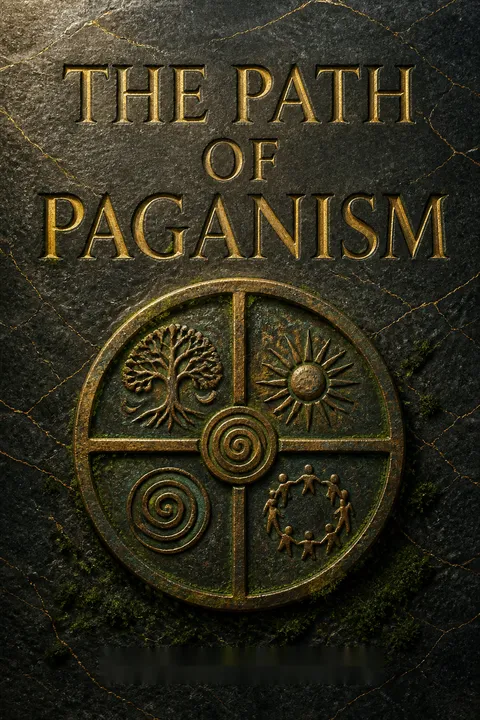
The Path of Paganism receives mostly positive reviews, with an average rating of 4.16 out of 5. Readers appreciate Beckett's inclusive approach, practical advice, and clear explanations of pagan concepts. Many find it helpful for both beginners and experienced practitioners. Some criticize the book for repetitiveness and a perceived bias towards group practice and polytheism. Despite these concerns, most reviewers recommend it as a valuable resource for understanding modern paganism, praising its thoughtful and thorough exploration of the subject.
Glossary
Orthopraxy
right practiceA religious emphasis on doing what is fitting or ethically right rather than requiring agreement on a fixed body of doctrine. Beckett uses the term to explain why Pagan practice can include people with different understandings of the gods, provided their conduct and commitments express the values of their path.
Organic religion
religion arising from experienceReligion that develops from recurring human experiences such as wonder in nature, birth, death, dreams, and encounters with what people understand as gods or spirits. Beliefs and practices grow as people interpret those experiences and share them. Beckett contrasts this living process with religious systems that prioritize enforcing inherited orthodoxy over facilitating present experience.
Big Tent of Paganism
inclusive Pagan umbrellaBeckett’s model for understanding contemporary Paganism as a broad, permeable community rather than a religion with one strict definition. It includes diverse traditions and approaches that may share some concerns, such as religious freedom, nature, or the gods, without sharing every belief. People can identify with the umbrella differently, and self-identification remains important.
Four Centers of Paganism
four Pagan orientationsA model that describes Pagan practice through four broad areas of emphasis: nature, deities, personal development, and community. Practitioners may focus on one area or combine several. The centers are not membership tests or mutually exclusive traditions; they help explain the range of interests found within the larger Pagan community.
Unverified Personal Gnosis
personal spiritual insightOften shortened to UPG, this is knowledge or insight a person believes comes through direct experience of a god, ancestor, or spirit, such as a dream, vision, ritual, or intuition. The label acknowledges that the experience may be genuine to the person while its interpretation is uncertain and cannot automatically serve as authority for others.
Shared Personal Gnosis
converging personal experiencesOften shortened to SPG, this describes spiritual insights reported independently by multiple people who find similarities in their experiences. In Beckett’s account, repeated shared impressions may become useful communal knowledge, though they do not become scientifically proven facts merely through agreement. The term helps practitioners discuss experience without treating one person’s account as universally binding.
Willow Pentagram
a method for regaining directionBeckett’s five-part approach for responding to disruption and returning to a sense of purpose. It combines restraint from impulsive harm, recognition of feelings, acceptance of present facts, practical response to immediate needs, and reconnection with one’s center. The willow image suggests flexibility under pressure while remaining rooted, rather than pretending that difficulty can be avoided.
Witch’s Pyramid
a template for magical workA magical planning method adapted from the Four Powers of the Sphinx. It guides a practitioner to clarify a real objective, commit to the effort it requires, accept the risks and changes success may bring, and allow the working time rather than constantly disturbing it. Beckett presents it as a way to combine intention with responsibility and action.
FAQ
What's The Path of Paganism about?
- Experience-Based Guide: The Path of Paganism by John Beckett is an experience-based guide to modern Pagan practice, focusing on personal experience over dogma.
- Four Parts Structure: The book is divided into four parts: Building a Foundation, Putting It Into Practice, Intermediate Practice, and Living at the Edge, guiding readers from basic to advanced practices.
- Focus on Relationships: It emphasizes relationships between practitioners and nature, the gods, and the community, encouraging a personal and meaningful spiritual practice.
Why should I read The Path of Paganism?
- Practical Insights: Offers practical insights and exercises for exploring or deepening Pagan practice, integrating spirituality into daily life.
- Personal Growth: Beckett shares his personal journey, making the content relatable and inspiring for readers navigating their own spiritual paths.
- Inclusive Approach: Embraces a wide range of Pagan beliefs and practices, fostering a sense of community and shared exploration.
What are the key takeaways of The Path of Paganism?
- Foundational Concepts: Understanding the significance of nature, the gods, and ancestors in Paganism, emphasizing their interconnectedness.
- Daily Spiritual Practice: Highlights the importance of daily practices like prayer, meditation, and rituals to maintain a divine connection.
- Living Authentically: Encourages challenging societal assumptions and living authentically, with spirituality as a guiding force.
What is the significance of nature in The Path of Paganism?
- Nature as Sacred: Beckett emphasizes that nature is sacred and should be revered, encouraging a deep connection with the natural world.
- Environmental Responsibility: Discusses the importance of environmental stewardship, urging action to protect the Earth.
- Daily Connection: Suggests daily practices like observing seasons and spending time outdoors to foster a spiritual relationship with nature.
How does The Path of Paganism address the concept of the gods?
- Polytheistic Understanding: Presents a polytheistic view, emphasizing the individuality and agency of the gods.
- Experiential Approach: Highlights the importance of personal experiences with the gods, which can be transformative.
- Worship and Devotion: Frames worship and devotion as acts of honoring the gods, fostering a reciprocal relationship.
What practices does The Path of Paganism recommend for daily spiritual life?
- Daily Spiritual Practice: Emphasizes incorporating practices like prayer, meditation, and rituals into daily life.
- Gratitude and Reflection: Encourages expressions of gratitude and reflection as essential components of spiritual practice.
- Nature Engagement: Recommends engaging with nature through practices like following the sun and moon or spending time outdoors.
How does The Path of Paganism define ethics in Pagan practice?
- Ethics as Action: Asserts that ethics in Paganism is about actions rather than beliefs, encouraging living out values.
- Interconnectedness: Emphasizes the interconnectedness of all beings, suggesting ethical behavior should consider the impact on others and the environment.
- Personal Responsibility: Encourages taking personal responsibility for actions and their consequences, promoting a proactive ethical stance.
What challenges does The Path of Paganism identify for modern Pagans?
- Materialism and Skepticism: Discusses challenges posed by a materialistic society that often dismisses spiritual experiences.
- Cultural Appropriation: Addresses complexities of cultural appropriation, urging respect for traditions while encouraging personal exploration.
- Navigating Doubt: Acknowledges doubt in spiritual journeys, encouraging embracing uncertainty as part of growth.
What is the Wheel of the Year in The Path of Paganism?
- Seasonal Celebrations: Consists of eight seasonal celebrations marking the agricultural cycle, including solstices and equinoxes.
- Personal Adaptation: Suggests creating personalized versions based on local seasonal changes for a more meaningful practice.
- Community Engagement: Provides opportunities for community engagement, fostering connections through shared rituals.
What are some spiritual practices suggested in The Path of Paganism?
- Daily Spiritual Practice: Recommends starting with enjoyable practices to encourage consistency and forming habits.
- Creating Altars: Discusses altars as mystical centers for honoring deities, ancestors, and nature spirits, encouraging personalization.
- Rituals and Offerings: Emphasizes the importance of rituals and offerings in connecting with the divine.
What does Beckett say about community in The Path of Paganism?
- Importance of Community: Highlights the importance of community in Pagan practices, encouraging supportive group creation.
- Diversity of Paths: Acknowledges diversity within the Pagan community, urging respect for different paths and practices.
- Group Rituals: Discusses the value of group rituals for collective energy and shared celebration.
What are the best quotes from The Path of Paganism and what do they mean?
- “Becoming Pagan means more than adopting a new set of books, tools, and holidays.”: Emphasizes that Paganism involves a fundamental shift in worldview and identity.
- “The primary focus of your Paganism should be on what you do, not wholly on what you believe.”: Highlights the importance of action in spiritual practice.
- “Purity is overrated.”: Suggests that an overemphasis on ethical purity can lead to arrogance, advocating for humility and compassion.
Download PDF
Download EPUB
.epub digital book format is ideal for reading ebooks on phones, tablets, and e-readers.








