


Plot Summary
Prologue
At sixteen, Four Archer is a mechanic’s apprentice in Cherry, Virginia, and an undefeated underground motorcycle racer. A race against a faster stranger turns dangerous when a gunman warns her not to win, then another steps into the road and forces her off course.
Four crashes hard, breaking her leg. The rival speeds away while the armed man approaches her in the dirt. Before he can fire, another racing engine roars toward them. Four loses consciousness without knowing who has arrived or why.
The opening binds Four’s greatest pleasure to her greatest danger. Racing gives her a rare sense of agency in a life shaped by her mother’s needs and other people’s decisions, but she treats risk as proof that she is alive rather than as a cost she might impose on others. The gun changes the race from a private test of nerve into a collision with organized violence. Ending on the sound of an approaching engine makes rescue uncertain and establishes the book’s central tension: Four’s appetite for freedom repeatedly carries her toward people who can hurt her.
Cherry's Last Summer
Four wakes in hospital with a broken leg and learns she will recover, though not soon enough to ride. Her mother, Rosalyn, arrives with Thomas McNamara, the wealthy hotel magnate she has been dating, while Four hides her resentment at their sudden closeness. A week later, federal agents question her about the Exiled, the gang marked by the X she saw at the race.
Thomas pays the damaged motorcycle’s owner and protects Four’s license, but Rosalyn is frightened by the agents’ warning that the gang may target her. She leaves Cherry with Thomas, who brings Four to Blackwood Keep, Connecticut. The move saves her from the immediate danger, but it also takes her from Gruff, the mechanic who raised her in all but name.
Four’s departure is presented as protection, but it also repeats the pattern that has shaped her life: adults decide what is safest, then expect her to adapt. Thomas acts generously and effectively, yet his money cannot make relocation feel like belonging. The loss of Gruff matters because he has offered Four a practical kind of care, teaching skills and giving her a place in the world without demanding emotional performance. Rosalyn’s fear is genuine, but Four experiences it as another reason her freedom must be curtailed. The move therefore begins both a thriller plot and a domestic struggle over who gets to define safety.
A Prince Takes Offense
Thomas’s enormous home comes with a surprise: his son Ever, Four’s age, has a bedroom connected to hers by a shared bathroom. Four sneaks into Ever’s immaculate room before they meet, curious about the absent boy, and later finds him eating the dinner she had left in the kitchen.
Ever insults Rosalyn and treats Four as an unwelcome charity case. She knees him and runs from the house, but gets lost walking toward the beach. At a bonfire, Drake offers a ride until Ever’s friend Vaughn Rees intervenes, then police officer Trip takes Four home.
Ever’s father has reported her missing. Back at the mansion, Ever follows her upstairs and makes clear he knows she has been in his room, turning their first night into a private contest of surveillance and defiance.
The first meeting strips away the comforting idea that wealth will make Four’s transition easy. Ever uses class contempt to defend a household he sees as already violated by his father’s new relationship. Four answers with physical force because she has learned that dignity is sometimes protected by action before anyone else will protect it. Her walk to the beach shows both independence and the danger of being alone in unfamiliar territory. The episode also establishes how power works in Blackwood Keep: Ever can command attention, but he is not simply a bully. His watchfulness suggests that Four’s arrival unsettles something he would rather keep controlled.
The Auction Burns
At Brynwood Academy, Four befriends Tyra Bradley, a scholarship student who recognizes what it means to live among the privileged without belonging to them. After Ever’s friends mock Four, she retaliates by spreading a cruel sexual rumor about him.
At his party, one of his friends puts an intimate photograph of Rosalyn on a screen and turns Four’s family into entertainment. Four smashes a bottle over the student’s head, then panics at the sight of Ever watching her. She steals Ever’s car and drives back to Cherry.
Thomas retrieves her, but Gruff tells her she cannot keep running from what frightens her. Rosalyn is devastated, so Four returns to Blackwood Keep. Days later, her mother sends her to a strict girls’ school in Europe, where Four spends a year cut off from home.
The party makes humiliation public and bodily: Four is not merely insulted, she is forced to watch her mother reduced to an image for other people’s amusement. Her violence is understandable as self-defense, but it also leaves her frightened by what she has done. Running to Cherry restores her connection to Gruff, yet his refusal to make escape permanent challenges the only coping strategy Four trusts. Her year away becomes another punishment imposed by adults, but it also deepens the cost of her return. The incident reveals the difference between refusing to submit and being free: Four can fight back, but she still has little control over the consequences.
One Year Exiled
At seventeen, Four returns to Blackwood Keep for senior year after a year at Natasha Madison’s School of Ladies. Ever’s cousin Jamie Buchanan has moved into the mansion, and Four quickly learns that he and Ever share a long, bitter history with Barbette Montgomery, known as Barbie, Ever’s girlfriend.
Tyra welcomes Four back, while the school still remembers Four’s assault on Daniel Kim. Jason Portland, brother of Olivia, the girl whose past with Ever ended in a crisis, also returns to Brynwood.
Ever’s old social dominance remains intact, but Four refuses to behave as if she owes him submission. Jamie needles both cousins, Barbie holds herself behind a polished mask, and Four finds herself drawn into rivalries whose history predates her arrival.
The return makes exile visible as a social condition, not just a year spent abroad. Four comes back with more resolve but not with the power to erase her reputation or the conflicts already embedded in the school. Jamie’s presence complicates the simple enemy-to-lover pattern by showing that Ever’s relationships are bound up with older loyalties and injuries. Barbie’s controlled image and Jason’s return indicate that the past has not been settled simply because people stopped discussing it. Four’s insistence on refusing a fixed role is courageous, but it also makes her a catalyst in a system that prefers everyone to know their rank.
The X Underneath
Four follows Ever after school and watches him change out of his uniform beside a hidden car. An X tattoo on his back matches the mark she saw on the riders who threatened her in Cherry. She trails him to an abandoned building in Queens and sees him among men bearing the same symbol. Ever catches her, corners her, and learns she knows what the mark means.
He warns that exposing him could destroy Rosalyn, then reveals that he persuaded Thomas to send Four to Europe. In return for her silence, he demands a bargain that gives him control over her choices. A later operation shows the danger of his double life: Ever helps extract a gang member from a botched robbery, while two others are presumed dead and Wren Harlan vows never to trust him.
The revelation collapses Four’s sense of distance between her old life and her new one. The gang she believed she had escaped is now inside the mansion, embodied by the boy who controls the school. Ever’s threat works because it identifies Four’s most vulnerable attachment: she fears Rosalyn’s collapse more than she fears punishment for herself. His bargain is therefore coercive, not romantic, even as attraction complicates Four’s judgment. The gang operation supplies a second measure of the danger: Ever can make choices that save one person while leaving others in grave peril. His polished identity is not a disguise he can casually remove.
Birthday Rules Break
At Ever’s birthday gathering, Four ignores his warning not to drink and becomes so intoxicated that he carries her home and removes her shoes and jeans before putting her to bed. The next morning, he makes her write an apology as punishment, but their argument turns into a struggle and then their first kiss.
Four stops him before they go further, wary of how quickly he can return to coldness. On her own birthday, Ever and Jamie take her to New York with Vaughn and Tyra, giving her a day of attention she has never expected from home.
Exiled member Wren recognizes Ever as Danny Boy and threatens him, but leaves without exposing him. Four realizes Ever’s gang identity is not just thrill-seeking, though she still does not know what he is pursuing.
The birthday scenes make intimacy a negotiation over power. Ever’s care for Four while she is drunk is real, but he frames affection as discipline, and she resists the assumption that desire gives him authority over her. Their kiss changes the emotional stakes without resolving the imbalance between them. The New York trip offers a rare experience of being celebrated for her own sake, while Wren’s recognition punctures its safety. Ever’s secrecy now has an external consequence, and Four’s attraction begins to coexist with a more serious fear that his choices could cost him his life.
Racing Without Permission
Four discovers she loves running on Brynwood’s track almost as much as riding, and learns Ever is the school’s fastest runner when he accepts a challenge to outrun an oncoming train. He beats his record, making Four see the recklessness beneath his perfect composure. Gruff sends Four his restored motorcycle, but Rosalyn and Thomas hesitate to let her ride it.
Ever argues that she is eighteen and eventually helps her pursue a legitimate racing license, including the paperwork she needs. Four adopts an abandoned puppy from her mechanics teacher and names him Jay D, insisting she can shoulder the work. Ever supplies food, equipment, and school-day care, while Four resists accepting help that might make her dependent on him.
Four’s racing dream shifts from illicit escape toward a future she can claim openly. The motorcycle is a gift from the person who first taught her to ride, so it links her past to a possible vocation rather than merely to danger. Her conflict with Rosalyn is also a struggle over adulthood: Four wants permission no longer to be the price of pursuing her own life. Ever’s practical support complicates his controlling behavior. He can enable Four’s independence, but his generosity risks becoming another form of leverage. Jay D gives Four a responsibility she chooses herself, a small but meaningful contrast with the burdens she has inherited.
Four Was Never a Name
In Ever’s private workroom, Four admires his detailed model of Brynwood and learns that he wants to become an architect, a passion tied to his absent mother. Their conversation opens the histories they usually conceal.
Four explains that Rosalyn developed schizophrenia after three miscarriages and named her daughter Four because grief made a conventional name unbearable. Four believes she has spent her life keeping her mother stable. Ever reveals that his mother left after a miscarriage and that he blames himself for driving her away.
Four also learns that he is seeking Nathaniel Fox, an Exiled founder, because Fox has his mother. She asks Ever to abandon the search rather than risk his life. He refuses, and she sees that his gang involvement is an attempt to recover family, not a hunt for excitement.
The confessions expose how each teenager has mistaken guilt for responsibility. Four has treated Rosalyn’s illness as a debt she must repay, while Ever interprets his mother’s departure as a verdict on his worth. Their parallel losses create recognition, but not equivalence: Four’s mother is present yet emotionally unreliable, while Ever’s is absent and possibly held by a violent man. The workroom matters because it gives Ever an identity beyond wealth and intimidation. His model is a patient act of construction, at odds with the destructive world he has entered. Four’s request asks him to choose safety over the possibility of recovering his mother, a choice he cannot yet make.
The Race Costs Everything
Four secretly accepts Mickey’s invitation to race at a junkyard, where she hopes to recover the rush she lost after leaving Cherry. Ever is at the same site on an Exiled job, ordered to ensure the gang’s chosen rider wins so he can get close to Nathaniel Fox. He recognizes Four on the track and abandons his plan.
After Four wins, armed men block her and Tyra’s car and threaten them for the prize money. Exiled members arrive in vehicles, shots are fired, and Ever gets Four out while Vaughn helps Tyra escape. In a hotel room, Ever finally tells Four that Fox has his mother. He says saving her cost him his one chance to reach Fox. Four understands that the mission was about family, not a taste for violence.
The race brings the book’s competing forms of freedom into direct contact. Four chooses the danger because speed is where she has felt most fully herself; Ever enters the same space because he believes it may lead to his mother. When the race turns into a robbery, neither person’s private motive can protect the other. Ever’s choice to rescue Four is decisive precisely because it costs him the opportunity he has organized his life around. His revelation does not erase the violence around them, but it changes its meaning. Four now knows that love may ask for a sacrifice she cannot make on Ever’s behalf.
A Ring as a Shield
Four and Ever spend the night together at the hotel, but the next morning Ever turns cold and describes the encounter as stress relief, leaving Four hurt and ashamed. Soon after, at dinner with the Montgomery family, Ever announces that he has asked Barbie to marry him. Jamie attacks him, knowing he loves Barbie, and Ever refuses to explain himself.
Four assumes Ever has chosen his girlfriend and begins dating Michael, a kind classmate who does not want to become part of a triangle. The engagement is not a romantic decision: Barbie’s father, Elliot, is in financial trouble and intends to marry her to a wealthy man who can rescue the family. Ever’s proposal buys her time, but Four does not know that when she sees the ring on Barbie’s hand.
The engagement turns an already unequal romance into a public injury. Ever’s coldness after their first night together makes Four doubt her own reading of intimacy; the proposal then seems to confirm that she was only a private diversion. His silence may be meant to protect Barbie, but it transfers the emotional cost to Four and intensifies the betrayal. Jamie’s anger adds a second wound, since Ever’s choice harms a cousin whose attachment to Barbie predates the current arrangement. The section asks whether protection can remain ethical when it depends on deceiving the person most affected by it.
The Corn Maze Truce
Four tries to move on with Michael, but Ever and his friends interfere with the date and make clear they do not want another boy near her. At a Halloween party, Four refuses Ever’s attempt to apologize, then follows the crowd into a corn maze. Jamie kisses her to provoke his cousin, and Ever finds them, furious and jealous.
The cousins fight over Four’s attention; Ever pulls her away and they have sex in the maze. Their desire is unmistakable, but Four still refuses to trust promises from a boy who is engaged. Ever insists the marriage will not happen, yet he cannot explain the bargain behind it. Their renewed closeness gives them a private truce, not a resolution.
The maze literalizes the couple’s emotional structure: attraction repeatedly pulls them together, while secrecy and wounded pride keep them from a clear path out. Ever’s possessiveness looks like devotion, but his interference with Michael also reproduces the control Four has resisted from the beginning. Jamie’s kiss is both a provocation and evidence of his unresolved love for Barbie, showing how the romantic triangle is entangled with old family loyalties. Their physical reunion cannot substitute for trust. Four accepts closeness while withholding belief, a boundary that reflects growth even when she remains vulnerable to Ever’s intensity.
Barbie Returns the Ring
At school, Barbie corners Four and admits that her father has been preparing to trade her marriage for financial security. Ever’s engagement was meant to shield her until she can escape his control, and Barbie says she and Ever have never been lovers. She removes the ring and leaves it with Four.
Four confronts the distance between what Ever did and what he was trying to protect, then visits him with the ring. She tells him she loves him and gives him her father’s ring as a promise that they belong to each other. Ever returns her affection and explains that his loyalty to Barbie was meant to keep her safe. Four agrees to help maintain the engagement’s appearance until Barbie can make her own choices.
Barbie’s confession reframes the engagement without making its damage disappear. Ever acted to protect a friend, but withholding the truth allowed Four to experience herself as disposable. Barbie’s removal of the ring is an act of agency: she refuses to let her father’s financial strategy define her future. Four’s return of her own father’s ring transforms inheritance into chosen commitment, a deliberate counter to the marriages and parent-child obligations that have governed the plot. Their agreement to keep the public fiction alive is still morally complicated, but it is now a shared decision rather than a secret imposed by Ever.
A Name of Her Own
Ever gives Four paperwork to change her name to Darren, the name his mother had chosen for the daughter she lost. Four accepts the name as an offering, not as a cure for her history, and they plan to file the petition together when she is ready. She continues pursuing a racing career and keeps Jay D, while Ever supports those choices instead of asking her to abandon them.
Four and Ever agree to keep his engagement to Barbie as a cover until Barbie can escape her father’s plans, with rules for how they will handle the pretense. Their relationship remains secret from the household, but Four now has a partner who knows her history and a future she is choosing for herself.
The proposed name change gives Four something her childhood withheld: a name offered with care and accepted by choice. Darren carries the memory of Ever’s lost sister, but the gesture does not erase Four’s own past or demand that she become someone else. That distinction is important. Her independence is shown through concrete commitments to racing and Jay D, not through rejection of intimacy. Ever’s support becomes meaningful when it helps her move toward a life outside his control. Their secrecy remains a compromise, especially around Barbie’s engagement, but Four now participates with clear boundaries and a voice of her own.
Epilogue
Four takes Ever to Gruff’s repair shop, where Gruff tests the polished rich boy by putting him to work on a motorcycle. Ever earns no easy approval, but he tells Gruff he hopes to make Four happy, and Gruff warns him to prove it.
Jamie invites Gruff to Thanksgiving at the McNamara home, bringing Four’s two worlds into the same room. Ever promises that whatever complications follow, he chooses their relationship, and Four makes the same choice. She has not abandoned racing or stopped worrying about Rosalyn, but she no longer has to face every future alone.
The final visit gives Four’s new relationship a practical test rather than a grand romantic spectacle. Gruff represents the history Ever cannot replace, so his willingness to work beside him matters more than a declaration of wealth or status. Jamie’s invitation also brings the family and friendship plotlines toward a shared table, even though their conflicts remain unresolved. Four and Ever’s commitment does not solve Rosalyn’s illness, Barbette’s danger, or Ever’s lost mother. It changes who bears those uncertainties with them. The ending values chosen alliance over rescue: Four keeps her ambitions, while Ever accepts that loving her means standing beside a life he does not own.
Analysis
The novel organizes desire around competing claims of protection. Four has spent her life protecting Rosalyn from collapse, while Ever tries to protect his mother, Barbette, and eventually Four through concealment and control. These acts are not equivalent: Four’s caretaking grows from dependence and fear, while Ever’s secrecy is amplified by money, social power, and access to violence. Yet both mistake responsibility for the right to decide what another person can bear. The romance becomes meaningful when that pattern is challenged, not when attraction simply overwhelms it.
Racing provides the book’s clearest image of agency. Four trusts her own body, judgment, and technical skill on a motorcycle, even when the risks are real. Her movement toward a legitimate career does not require her to become less reckless in spirit; it requires her to stop confusing danger with freedom. Ever’s train run mirrors that confusion. His speed is impressive, but the stunt exposes a young man who feels alive when he approaches annihilation. The two characters share an appetite for intensity, then gradually learn that intensity alone cannot sustain trust. Family grief also shapes identity. Rosalyn’s illness makes Four feel responsible for a mother who cannot reliably recognize her needs. Ever reads his mother’s absence as evidence of his own failure. Their mutual understanding is powerful because neither can fix the other’s history, though each can refuse to make that history the whole person. The proposed name change and Four’s inherited ring extend this idea: a name or heirloom can become damaging when imposed, but meaningful when freely accepted and reinterpreted.
The ending does not dissolve the threats around the couple. Barbette still needs freedom, Ever’s mother remains beyond reach, and Four’s relationship with Rosalyn remains painful. Instead, the story offers a more modest resolution: intimacy becomes a choice made with knowledge, boundaries, and shared responsibility. Love is not presented as rescue from the past. It is a commitment to stop using the past as an excuse to control the future.
Review Summary
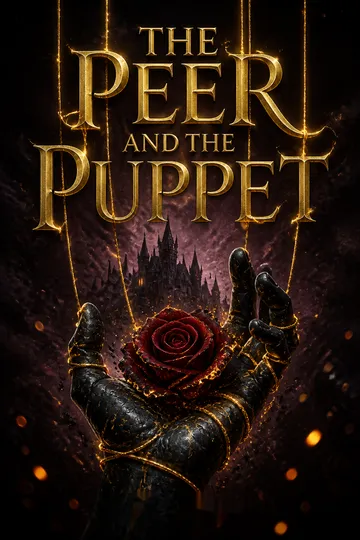
The Peer and the Puppet by B.B. Reid receives polarized reviews with an overall 4.04 rating. Fans praise the intense angst, enemies-to-lovers dynamic between Four and Ever, strong character development, and addictive pacing. Many compare it favorably to Paper Princess and Fallen Crest High series. Critics cite convoluted plotting, questionable character names, unanswered questions, problematic relationship dynamics including the hero's fake girlfriend, and YA characters behaving unrealistically mature. Common complaints include the abrupt ending, incomplete storylines, and concerns about content in later series books.
People Also Read



Characters
Four Archer
Restless mechanic-racerFour is a motorcycle mechanic and gifted street racer raised in a small Virginia town by a mother who keeps her emotionally at a distance. Self-reliant, irreverent, and physically brave, she trusts machines more readily than people because skill produces clearer consequences than affection does. She wants a legitimate racing career, but her ambitions collide with Rosalyn’s fears and the wealthy world she enters. Four often uses sarcasm and defiance to protect a softer need to be chosen without becoming responsible for another person’s survival. Her story tests whether intimacy can coexist with independence, and whether she can care for others without treating her own future as a betrayal.
Ever McNamara
Polished heir with shadowsEver is Thomas McNamara’s son, a wealthy Brynwood student whose composure gives him social authority and whose athletic talent draws admiration. He is controlling, observant, and difficult to read, relying on command where vulnerability would expose his grief. His interests are not limited to privilege: he builds architectural models and carries a deep attachment to his absent mother. Ever’s loyalty to family and friends can become self-sacrifice, but he often mistakes secrecy for protection and power for care. Four unsettles the role he has constructed for himself, forcing him to confront the difference between wanting to possess someone and learning how to stand beside her.
Rosalyn Archer
Romantic, fragile motherRosalyn is Four’s beautiful, romantic mother, accustomed to seeking emotional security through relationships. She lives with serious mental illness and depends on medication and stability, though she can be inconsistent in the attention she gives her daughter. Her love is real, but fear and unresolved grief often distort how she expresses it. Rosalyn’s relationship with Four is shaped by an unequal burden: the daughter learns to monitor the mother’s well-being before she can ask what she herself needs. She is not simply cruel or helpless. Her vulnerability explains some of her choices without making their effects on Four disappear.
Thomas McNamara
Wealthy, imperfect guardianThomas is a hotel magnate who falls in love with Rosalyn and brings her and Four into his Connecticut home. He is generous, measured, and more attentive than Four expects, using money and influence to solve immediate problems. Yet his wealth cannot substitute for the difficult work of knowing the girl now living under his roof, and his relationship with Ever is strained by old absences. Thomas wants to protect the people he loves, sometimes by managing circumstances before asking what they want. His role complicates Four’s suspicion of privilege: he offers genuine care, but must learn that care is not the same as deciding for someone.
Jameson Buchanan
Provocative loyal cousinJamie is Ever’s cousin, a Scottish-raised musician and habitual troublemaker who returns to Blackwood Keep after family upheaval. He uses flirtation, crude humor, and deliberate provocation to keep others from seeing how deeply he cares. His bond with Ever is full of rivalry, yet family loyalty repeatedly draws them back into each other’s orbit. Jamie also carries an old attachment to Barbette, which shapes his behavior toward Ever and makes him a volatile presence in Four’s life. He can be generous and perceptive, but often turns people into instruments of his own emotional battles before recognizing the harm he causes.
Barbette Montgomery
Poised girl under pressureBarbette, usually called Barbie, is Ever’s longtime girlfriend and the daughter of a socially ambitious family. Her polished appearance gives her the look of someone secure in her place, while her controlled manner conceals the pressure placed on her by her father. She is closely bound to Ever through friendship and shared history, but she also carries unresolved feelings for Jamie. Barbette’s reserve can read as coldness, though it is partly a strategy for surviving a household where appearance and status matter. Her choices are constrained by other people’s plans, and her character raises the question of how much agency can be reclaimed within a family that treats marriage as leverage.
Vaughn Rees
Powerful heir and friendVaughn is Ever’s best friend and the heir to another powerful Blackwood family. He is confident, competitive, and socially untouchable, but his relationship with his father leaves him wary of control disguised as care. His interest in Tyra brings out a more vulnerable side, though he initially struggles to be honest about what he can offer her. Vaughn’s loyalty to Ever is longstanding, and he often helps manage the dangers surrounding their circle. His bluntness can be protective or possessive, making him both an ally and a reminder that privileged boys can confuse protection with ownership.
Tyra Bradley
Scholarship student and friendTyra is a high-achieving scholarship student whose father coaches Brynwood’s football team. She studies constantly to keep her place at the academy and works at a coffee shop, leaving little room for the social life enjoyed by wealthy classmates. Her friendship with Four begins through mutual recognition of not quite belonging. Tyra is thoughtful and loyal, but her longing for Vaughn makes her vulnerable to the same uncertainty Four faces with Ever. She provides companionship without becoming a simple adviser, and her own romantic choices challenge Four to support a friend without controlling the outcome.
Gruff
Mechanic and surrogate fatherGruff, whose given name is Robert Russell, owns the repair shop where Four learned to work on motorcycles. His rough manner hides a steady generosity: he gave her a place to spend her afternoons, taught her to ride, and treated her as capable long before she could support herself. He does not indulge every impulse, and his refusal to help Four run away forces her to face difficult choices. Gruff offers a model of care built from skills, boundaries, and dependable presence rather than grand promises.
Mickey
Street-race bookmakerMickey organizes underground races and betting, relying on Four’s talent to attract wagers. He is charming when it suits him and pragmatic about the danger surrounding his business. Their relationship is transactional but not entirely without loyalty: he gives Four a place to race, yet his connections expose her to people she cannot safely trust. Mickey represents the uneasy overlap between Four’s genuine love of riding and the criminal economy that exploits it.
Wren Harlan
Suspicious gang enforcerWren is a young Exiled enforcer who grew up inside the gang and follows its hierarchy with wary discipline. He distrusts Ever’s polished manner and questions whether the newcomer belongs among people who have earned their standing through violence. Wren is observant, formidable, and not easily persuaded by charm. His suspicion creates pressure around Ever’s secret life, while his complicated sense of loyalty makes him more than a faceless threat.
Franklin Rees
Vaughn's formidable fatherFranklin is Vaughn’s father, a powerful man whose authority reaches beyond the respectable world of Blackwood Keep. He expects loyalty from his son and treats information as a resource to be controlled. His relationship with Vaughn is strained by the gap between paternal affection and the demands of the organization he leads. Franklin’s influence illustrates the adult power structures beneath the teenagers’ polished school lives.
Nathaniel Fox
Distant gang founderNathaniel Fox is one of the founders of the Exiled and a powerful figure at the far edge of Ever’s hidden life. Though he appears little in Four’s day-to-day world, the possibility of reaching him shapes Ever’s decisions and risk-taking. Fox represents a threat whose force comes partly from distance: other people act, lie, and endanger themselves in pursuit of what they believe he holds.
Olivia Portland
Girl from Ever's pastOlivia is Jason’s sister and a former Brynwood student whose history with Ever became a lasting source of gossip and pain. Her experience warns Four that the school’s romantic mythology around Ever can obscure real emotional consequences.
Jason Portland
Returning school rivalJason is Olivia’s brother and a former opponent of Ever who returns to Brynwood. He is ambitious and confrontational, with an interest in recruiting people away from Ever’s influence.
Michael
Gentle first-date prospectMichael is a considerate classmate who asks Four out and tries to approach her without assuming he owns her attention. His presence offers Four a chance to imagine romance outside the volatile orbit of Ever.
Dave
Mechanics teacherDave teaches auto mechanics at Brynwood and recognizes Four’s practical talent. He finds an abandoned puppy and gives Four the chance to care for it, connecting her interest in engines to her emerging responsibilities at school.
Jay D
Four's rescued puppyJay D is the small puppy Four adopts after her mechanics teacher finds him outside town. His need for food, training, and care gives Four a responsibility she chooses for herself.
Plot Devices
Motorcycle racing
Freedom at dangerous speedFor Four, racing is both a source of pleasure and a practical route toward the career she wants. Her skill gives her leverage in underground competitions, but the races connect her to gamblers, gang members, and people willing to use threats to control the outcome. Later, pursuing a legitimate license lets her imagine a future that does not depend on risking her life for cash. The motorcycle therefore tracks a change in her relationship to danger: riding remains central to who she is, but she begins to seek a path that does not require self-destruction.
The Exiled mark
A warning that follows FourThe red X appears first as vandalism in Cherry, then as the identifying mark on the racer who confronts Four. It gives her a visual clue linking the people who threaten her to the violence she encounters in Blackwood Keep. When she spots the same mark on Ever, the clue exposes his connection to a life he has carefully concealed. The X turns an abstract gang into a recurring presence, making a sign on skin and property carry consequences for Four’s safety, Ever’s secrecy, and the possibility of reaching his mother.
The puppet notes
Control disguised as flirtationEver leaves Four short written instructions framed as part of a private game. At first, the notes reinforce the power imbalance between them: he makes demands, and Four must decide whether defying him is worth the consequences he can impose. Their wording also allows Ever to express attention indirectly, especially when he struggles to apologize or speak openly. As their relationship changes, the notes become a measure of whether control is still the only language he knows. Their function is deliberately ambiguous, mixing play, threat, desire, and a growing need to negotiate rather than command.
Four's name
Identity turned into a choiceFour’s unusual name is a source of confusion at school and a private wound connected to her mother’s history. It makes her question whether she is recognized as a person or treated as a reminder of someone else’s grief. Ever’s suggested alternative, Darren, is tied to his own family loss and offers Four a name she can choose rather than inherit passively. The proposed legal change does not erase the past. It creates the possibility that identity can be shaped through consent, affection, and self-definition instead of being fixed by a parent’s pain.
Barbette's engagement
A public lie buys timeEver’s engagement to Barbette appears to confirm that he has chosen a future with his longtime girlfriend and has discarded Four. In reality, the announcement is connected to pressure from Barbette’s financially desperate father, who wants to use marriage to preserve the family’s wealth. The engagement functions as protection, but secrecy makes it look like betrayal to Four and deepens Ever’s habit of deciding what others should know. Once Barbette explains the arrangement and returns the ring, the couple must decide whether they can accept a public fiction without repeating the private dishonesty that hurt them.
When Rivals Play Series



About the Author
Other books by B.B. Reid








Download PDF
Download EPUB
.epub digital book format is ideal for reading ebooks on phones, tablets, and e-readers.








