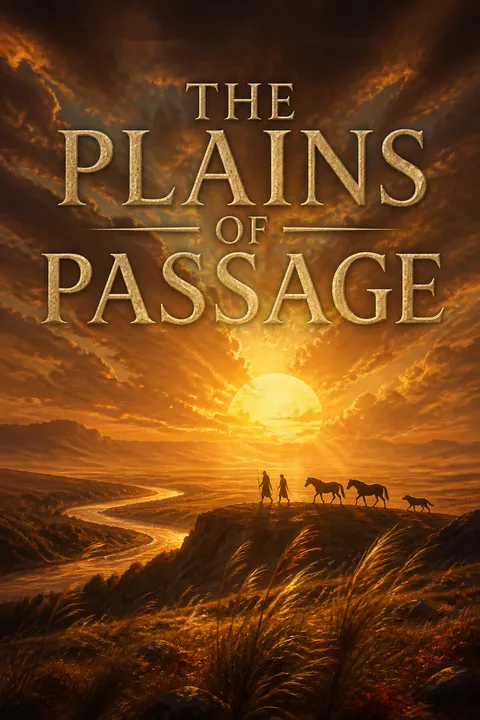


Plot Summary
Spears in the Dust
Ayla and Jondalar reach Feather Grass Camp through a storm of dust, with Wolf beside them and the horses under their control. Camp leader Rutan offers limited hospitality, but his sister Thurie distrusts the strangers and the masked shaman threatens them with spears, believing the travelers may be spirits.
Ayla calms Wolf and explains that she raised him and the horses from infancy. The people lower their weapons, then become fascinated when Wolf gently plays with their children. Ayla asks the Camp to carry a message to her former Mamutoi home. The encounter teaches her and Jondalar that their unusual companions may frighten strangers before curiosity gives way to trust.
The opening makes difference visible before it becomes an idea: the camp raises spears because horses and a wolf violate everything its people expect from animals. Ayla responds not by demanding belief, but by restraining Wolf and making his gentleness observable. Her practical patience opens a door that explanation alone could not. Jondalar, meanwhile, sees the social cost of their traveling life before Ayla does. Their companions are not only useful animals; they make every new welcome uncertain.
A Wolf Learns the River
On the next river crossing, Wolf freezes at the bank, frightened by the fast water. Jondalar urges Ayla to leave him to follow, but she turns back, enters the current, and coaxes him in herself. The horses struggle through the crossing, and all three animals reach the opposite shore with the humans.
Jondalar apologizes by insisting they stop, dry their clothes, and care for the animals rather than press on. Their affection deepens in the safety of the camp. Ayla also gathers sharp-smelling plants and tests them on a bone to keep Wolf from chewing their leather gear, showing how observation becomes practical invention in her hands.
The crossing exposes a difference in how the couple understands responsibility. Jondalar initially measures delay against distance; Ayla measures it against the bond she has accepted with Wolf. Her decision is not sentimental softness, since leaving a frightened animal in dangerous country could endanger him and the travelers alike. Jondalar’s apology matters because he changes his behavior, not merely his tone. The scene also establishes the novel’s recurring method: close attention to animal behavior and plants produces workable solutions.
The Mammoth's Answer
In tall grass beside the river, Ayla and Jondalar observe a mammoth herd and witness a dominant bull mate with a female that has resisted younger males. The sight moves them deeply, joining the animals’ life cycle to their own hopes for love and children. Soon they find an empty earthlodge that resembles the Lion Camp home Ayla has left behind.
She admits that she misses the Mamutoi, the Clan, and especially Durc, the son she left with Uba. Jondalar tells her he once feared his people would reject her for being raised by the Clan and for having a child by Broud. He now promises that he will choose her over any home that refuses her.
The mammoth encounter is both a natural event and an emotional mirror, but the story keeps the mirror concrete: Ayla watches a female choose, a bull arrive, and a herd respond. The empty lodge then turns longing into a decision about actual people and places. Jondalar’s confession reveals that his earlier hesitation came from fear of social rejection as well as concern for Ayla. His promise is a step toward partnership, though it cannot erase her knowledge that his people may still judge her.
The Valley Breaks Open
At an isolated green valley, Ayla dreams of Creb urging her to leave. When lightning and thunder strike, she insists that they pack immediately, despite Jondalar’s doubts. They ride uphill through rain and darkness, with the horses nearly bolting, and escape just as a flash flood tears through the valley.
From higher ground they watch water, mud, trees, and boulders churn through the campsite they have just abandoned. The flood destroys their tent’s supports, food, and equipment, leaving them soaked and shaken. They make a crude shelter in willow brush, then discover the valley is still filling because debris has blocked the river’s outlet.
Ayla’s dream does not supply a neat explanation; it gives urgency before the danger can be verified. Jondalar’s willingness to follow her despite uncertainty is a meaningful reversal of his earlier impatience. The flood makes their survival depend on rapid judgment rather than strength, and the ruined campsite converts that survival into material loss. The episode also distinguishes awe from safety: the landscape that sustained them can change into a destructive force within hours.
A Camp Rebuilt
After the flood, Ayla and Jondalar lose their meat keeper and poles but save their core supplies. They find an abandoned winter Camp, kill a white-spotted aurochs, and use Whinney to haul the carcass with a travois Ayla devised. They dry meat, shape a hide-covered bowl boat for crossing the swollen river, and replace damaged equipment.
When Jondalar breaks a spear, he joins its broken sections into a detachable point and shaft, creating a weapon easier to repair than a whole spear. Ayla also makes a lined meat basket from the aurochs stomach. Their brief refuge becomes a workshop where need turns both travelers’ skills into inventions.
The camp sequence resists treating technology as a single heroic breakthrough. Ayla’s travois, her improvised meat container, Jondalar’s boat frame, and his repairable spear arise from specific shortages and materials. Their solutions are collaborative, even when one person first sees the possibility. This matters psychologically: Jondalar’s practical intelligence is not diminished by Ayla’s knowledge of plants and animals, and her inventions do not require formal authority. Survival here is a shared craft, built from attention and repeated adjustment.
The River Takes Them
At the broad Great Mother River, Ayla and Jondalar load their gear into the bowl boat and tie the horses to it. The current swings the craft downstream, while the frightened horses and trailing poles repeatedly jerk it toward capsizing. When Racer and Whinney struggle, Ayla cuts their ropes and jumps into the water after them.
Wolf leaps out too. Jondalar is swept away in the boat, and Ayla reaches the far bank with both horses and Wolf, exhausted and afraid she has lost him. She follows the river and finds the boat, then sends Wolf upstream to track Jondalar. The wolf finds the man, and all four are reunited.
Ayla’s choice to cut the ropes is a decisive act of judgment under pressure. Keeping the group together has become more dangerous than accepting separation, so she abandons the plan rather than the animals. Jondalar’s isolation shifts the emotional center from fear of the river to fear of losing one another. Wolf’s tracking completes the reunion, but the episode also changes his status in Jondalar’s mind: he is no longer only an added responsibility.
Beran Sea's Last Shore
Near the delta of the Great Mother River, rain triggers an immense locust swarm that devours the new green growth and drives Ayla and Jondalar across the plains. From a hill they see the stripped landscape on one side and Beran Sea on the other. Ayla recognizes the sea beside the peninsula where she grew up and where Durc remains with the Clan.
She knows this is her last practical chance to seek him, but the Clan would see her as a returned spirit and she cannot know where he lives now. She turns west with Jondalar, choosing their shared future while mourning the son she will not see again.
The locusts make abundance temporary: the green landscape that seemed to promise easy survival disappears almost overnight. Against that sudden loss, Ayla’s decision about Durc is slower and more painful. She does not lack love for her son; she accepts that returning could frighten or harm him and that the Clan considers her dead. The choice is therefore not a simple preference for Jondalar over Durc. It is an acknowledgment that some relationships must be carried as memory rather than recovered.
An Island of Empty Fires
Traveling through the delta, Ayla and Jondalar find a Camp where food, tools, and a child’s toy have been abandoned in haste. Their horses and wolf appear to have frightened the inhabitants away. They leave food and a useful flint point rather than pursue the frightened people.
Later, a floating reed island seems to answer them with wolves that climb trees, and they retreat from the unfamiliar marsh. As they follow the river toward the Sharamudoi settlement, Ayla grows lonelier despite Jondalar’s company. They eventually meet Darvalo, a boy Jondalar knew on an earlier Journey, who welcomes them and leads them home.
The empty Camp turns the travelers’ strange companions into a social problem with consequences: people flee, leaving ordinary life unfinished. Ayla responds with gifts rather than treating their fear as an insult. The reed wolves deepen the uncertainty by making a familiar animal seem uncanny in an unfamiliar habitat. When Darvalo appears, the narrative offers more than a new guide. His recognition gives Jondalar a bridge back to a community, while Ayla’s longing for ordinary conversation becomes explicit.
Roshario's Broken Arm
Darvalo explains that Roshario, a respected Sharamudoi woman, fell and has lived for months with a badly set arm. Ayla examines her, warns that resetting the bone could cause severe harm, and lets Roshario choose the risk.
She uses a strong plant medicine to put her to sleep, then breaks and straightens the bone while Jondalar holds the arm steady. Roshario wakes to find it aligned and gradually regains movement. The Sharamudoi welcome Jondalar warmly and begin to trust Ayla, especially after Wolf gently befriends children, including Tholie’s daughter Shamio.
Ayla’s healing is not miraculous certainty. She explains the danger, asks for the patient’s consent, and accepts responsibility for a procedure whose outcome she cannot guarantee. Roshario’s decision matters as much as Ayla’s expertise. Her recovery also gives the community a way to revise its first judgment of the strangers: the woman with an unusual animal companion is also a skilled healer, and the wolf can be gentle with children.
A Clan Beneath the Anger
During a gathering, Ayla explains that the Clan raised her after an earthquake killed her birth family. Dolando, the Sharamudoi leader, erupts with hatred because he believes Clan people killed Doraldo, his son. Ayla describes how Others have forced Clan women and harmed their children, revealing that violence has run in both directions.
Jondalar and Markeno restrain Dolando, while Roshario reminds him that Ayla helped save her. Dolando later admits that he punished people without knowing the full circumstances and accepts Ayla. The community offers Ayla and Jondalar a permanent home and a cross-mating with Tholie and Markeno.
This confrontation complicates any easy division between victim and aggressor. Dolando’s grief is real, but it has been converted into collective hatred and retaliatory violence. Ayla does not defend every action of the Clan; she insists that a child cannot be blamed for the circumstances of birth and that people on both sides have suffered. Dolando’s change begins when he allows particular lives, especially Rydag’s, to challenge a category he had treated as absolute.
A Home They Refuse
The Sharamudoi offer Ayla and Jondalar a home, work, and a cross-mating that would make them family to Tholie and Markeno. Ayla is deeply tempted; the region resembles her childhood home, and the people have accepted her. Jondalar refuses because he still needs to return to the Zelandonii and tell his mother about Thonolan.
Roshario gives him a necklace made by Thonolan’s mate for Marthona, and Markeno gives him his brother’s spear-shaft tool. They depart with practical gifts and a new understanding: Jondalar can love the Sharamudoi yet still belong to another people.
The offered home is not a consolation prize; it is a credible life Ayla could have chosen. Jondalar’s refusal therefore costs both of them something. His reason about carrying news of his brother is true, but it also gives him a dignified way to express homesickness without rejecting the people who have welcomed him. Ayla’s acceptance is an act of partnership, not a disappearance of her own wishes. The necklace and tool let the Sharamudoi travel with them symbolically.
The Mountain Storm
The travelers climb away from the Great Mother River and cross high, forested ground toward the Sister River. Wolf disappears overnight, and Ayla refuses to leave until he returns. When he finally comes back, Jondalar admits that her bond with him matters, even if he still worries about the animal. A storm then drenches them as they descend.
They find an abandoned summer camp, patch its leaking roof with woven cattail leaves, dry their clothes, and replace ruined pack baskets with pack-saddle carriers that can stay on the horses during river crossings. The weather delay makes the approaching flood more dangerous, but their improvised shelter and carriers prepare them to continue.
Ayla’s refusal to leave without Wolf tests the partnership again, but this time Jondalar understands that the wolf is part of her family rather than an inconvenience. Their practical work in the abandoned camp shows that affection does not replace problem-solving; it motivates it. The baskets are redesigned because the old system failed in wet conditions. Their adaptation is also an answer to changing terrain: the tools that served them on the plains do not automatically work in the mountains.
The Sister's Current
At the swollen Sister River, Jondalar insists they cross before further rain makes it worse. They swim beside the horses, with ropes linking them to the boat and poles. The current and floating debris drag Ayla downstream, and cold water leaves her barely conscious when Whinney reaches shore.
Jondalar warms her in their tent, but Ayla makes him promise to search for Wolf, who vanished in the crossing. He finds the injured wolf beside the stranded boat, then uses a whistle to bring the horses and carries both companions back. Ayla recovers beside them, while Jondalar admits how close he came to losing her.
The crossing strips away the couple’s confidence in their equipment and their control. Their ropes, boat, and careful plan cannot master the Sister’s current; survival depends on choices made under pressure and on the animals’ endurance. Ayla’s insistence that Jondalar search for Wolf comes while she herself is in danger, revealing how deeply she experiences the animal as a son. Jondalar’s response turns obligation into attachment: he searches because she asks, and because Wolf matters to him too.
Whinney Vanishes in Smoke
Farther north, the travelers meet Jeren and other Hadumai hunters, who warn them against continuing toward dangerous territory. They press on. A herd of horses draws Whinney away, and armed hunters drive the animals toward a cliff. Ayla reaches Racer, but Jondalar is struck and taken captive while trying to stop the raid.
She finds blood, his discarded spear-thrower, and tracks leading toward a settlement. The horses are gone, and Wolf is still recovering from an earlier injury. Ayla packs only essentials, follows the trail with Wolf’s help, and enters a country where men are confined and women guard the camps.
The theft of Whinney converts the travelers’ unusual strength into vulnerability. Their bond with the horses makes them willing to intervene in a hunt, and that decision separates them: Ayla escapes with Racer, while Jondalar becomes a captive. The earlier warning from Jeren acquires force only after it has been ignored. Ayla now has to track not game but people, relying on the same observational discipline she developed as a hunter.
The Man on the Target
Jondalar discovers that Attaroa, leader of the S’Armunai, keeps men in a fenced Holding and rules through hunger, threats, and violence. He refuses her offer of coerced sexual access and is stripped and tied to a target post. Ayla arrives on horseback just as Attaroa prepares to spear him.
Her presence unsettles the camp, and Wolf bursts from hiding, attacks Attaroa, and kills her. Jondalar is freed; Ayla has saved his life. The people who had treated her as an impossible spirit now see her horses, her wolf, and her determination as forces capable of ending the headwoman’s rule.
The climax gathers the novel’s central tensions into one physical scene: control of bodies, fear of outsiders, and the difference between authority and coercion. Attaroa’s threat to Jondalar repeats the violence she has made ordinary, while Ayla’s return reverses his isolation. Wolf’s attack is not a supernatural command but the culmination of a bond established through care and shared danger. The rescue does not make Ayla omnipotent; it gives the community a moment in which its own silence can break.
The Holding Comes Down
After Attaroa’s death, the S’Armunai argue over what should happen to Epadoa, who carried out many of the headwoman’s orders. Ayla urges restitution rather than another cycle of violence, and S’Amodun helps the community settle on practical responsibility: Epadoa must care for Doban, the boy whose leg she helped dislocate.
The men leave the Holding, and Ayla and S’Armuna treat injuries and starvation. Jondalar teaches flint knapping and spear-thrower use; the community begins planning shared hunting and stores. Ayla’s care helps Madenia consider her First Rites again. Before leaving, Ayla gives Madenia a beautiful Sharamudoi outfit, and the Cave prepares a ceremony to heal its divisions.
The liberation is not complete when the fence opens. The community must decide whether to reproduce Attaroa’s logic through revenge or to assign concrete obligations that repair damage. Epadoa’s responsibility for Doban gives accountability a continuing form rather than a spectacle of punishment. Jondalar’s teaching and Ayla’s healing also address the material conditions that made coercion easier: hunger, weakness, and dependence. The planned ceremony cannot erase harm, but it creates a public beginning for shared life.
Across the Last Ice
After the S’Armunai ceremony and farewell, Ayla and Jondalar resume their westward journey. A blizzard delays them, and wolves damage the food they had cached, forcing them to abandon their bowl boat and carry only essentials. They cross the plateau glacier with burning stones to melt water, but a sudden thaw opens a crevasse beneath Ayla.
Jondalar hauls her out, and they reach the far side together. Beyond the ice, they find Dalanar’s people and continue to the Ninth Cave. Jondalar reunites with his mother, Marthona, and sister Folara; Ayla must introduce herself to the family and community whose acceptance she has feared throughout the journey.
The glacier is both a geographical obstacle and the final test of Jondalar’s long insistence on reaching home. Their careful provisions fail when wolves destroy the cache, so they must travel light and accept uncertainty. Ayla’s fall gives the crossing its immediate danger, while Jondalar’s rescue fulfills the mutual protection they have built through earlier crises. Arrival does not automatically resolve Ayla’s fear of rejection. The homecoming shifts the problem from surviving the landscape to being recognized within a community.
A Place at the Hearth
At the Ninth Cave, Marthona welcomes Jondalar home and meets Ayla, while Joharran and the others learn that she was raised by the Clan. Jondalar tells them about his journey and his brother; Ayla explains the Clan’s language and customs, including the signs that allowed Rydag to communicate.
The Zelandonii’s unease gives way as they see Ayla’s skill, honesty, and care for Jondalar. She and Jondalar are accepted as a couple, and their long passage ends not with certainty about every difference, but with a place among his people. Ayla has not recovered her lost past; she has made a future where her whole history can be known.
The homecoming resolves the opening question of whether Ayla can belong among Jondalar’s people, but it does not erase the prejudices that made that question urgent. Her acceptance grows through explanation and witnessed character, not through concealment of the Clan or her son. Jondalar’s return is also altered: he arrives as someone shaped by other communities, technologies, and forms of kinship. The hearth becomes a place of negotiation between histories, rather than a return to an unchanged home.
Analysis
The novel makes travel a sustained test of what people owe one another. Rivers, storms, hunger, and ice repeatedly expose the limits of individual control, but the characters survive through cooperation: Ayla reads plants and animal behavior, Jondalar invents and repairs tools, and both learn when a plan must be abandoned. Their bond becomes strongest not when they agree automatically, but when they explain fear, grief, and conflicting loyalties before misunderstanding can harden into distance.
Ayla’s central conflict is not simply finding a place to live. She must carry several histories that other people would rather flatten into one label: Clan-raised, Mamutoi-adopted, healer, mother, traveler, and beloved partner. The S’Armunai crisis intensifies this problem by showing how private injury can become public ideology. Attaroa’s past helps explain her rule, but does not excuse it; S’Armuna’s remorse likewise matters only when she acts to repair what she helped sustain. The community’s decision to assign Epadoa care for Doban shifts justice toward continuing responsibility rather than revenge.
The book also links knowledge to care. Ayla’s medical practice, animal training, and food gathering are not supernatural gifts, even when others interpret them that way. Jondalar’s spear-thrower and their shared travel inventions likewise emerge from attention to materials and circumstances. Yet the novel does not dismiss spiritual life. Totems, ceremonies, dreams, and the Great Mother give people ways to organize grief and obligation. Their value depends on whether they help people live together, not on whether every explanation is factually provable.
At the Ninth Cave, Ayla’s return does not restore the past she lost. It offers a possible home in which that past can be spoken and recognized. The ending’s hope is therefore practical and incomplete: belonging begins when a community can hear a history that unsettles its assumptions.
Review Summary
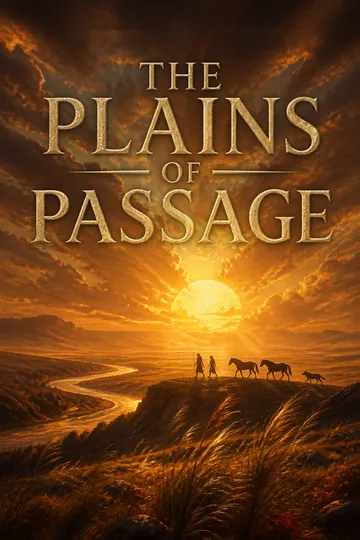
The Plains of Passage receives mixed reviews, averaging 3.86 stars. Readers appreciate Auel's extensive research on Ice Age geography, flora, and fauna, but criticize excessive repetition and lengthy descriptive passages. Many find the journey narrative slow, with minimal plot development as Ayla and Jondalar travel to his homeland. Common complaints include too many graphic sex scenes, repetitive mentions of physical descriptions, and Ayla's "Mary Sue" perfection. Reviewers note the S'Armunai storyline's problematic portrayal of women. Positive aspects include encounters with various tribes and Jondalar's character growth regarding the Clan people. Most agree the book feels bloated but remain invested in the series.
Characters
Ayla
Clan-raised healerAyla is a skilled hunter, healer, and close observer of animals and plants, raised by the Clan after losing her birth family. Her childhood taught her to read posture, gesture, and silence, and her unusually quick memory helps her learn the languages of the people she meets. She loves Jondalar, but she carries grief for the son she left behind and for the families she has lost. Her confidence comes from practical competence, though she still fears that her unusual background will make others reject her. She resists being reduced either to a foreign curiosity or to a supposed magical figure, preferring to show what she can do.
Jondalar
Zelandonii travelerJondalar is a tall, skilled flint knapper and experienced traveler returning to the people and family he left years earlier. He is protective, intelligent, and often anxious about danger, especially when Ayla’s safety is at stake. His charm makes him welcome in many communities, but his early fear that the Zelandonii will reject Ayla reveals how deeply he has absorbed their assumptions. He is also a practical inventor, developing tools and learning from the people he encounters. His bond with Ayla gradually becomes more candid and reciprocal as they learn to speak openly rather than guess at each other’s fears.
Wolf
Ayla's devoted companionAyla raised Wolf from a motherless pup, and he grew up among people rather than a wild pack. He is intelligent, playful with children, protective of Ayla, and still governed by the instincts of a predator. His behavior can unsettle strangers, and Ayla continually trains him to stay close and respond to commands. He also brings a kind of companionship that neither traveler can replace with human company. His loyalty is not presented as magic; it grows from care, familiarity, and the unusual life he has shared with Ayla and Jondalar.
Whinney
Ayla's first horseWhinney is the mare Ayla rescued and raised after losing her own mother. Years of shared solitude in Ayla’s valley created a close, trusting bond between them. Ayla guides her with posture, pressure, and a private vocabulary of sounds, while Whinney offers transport, steadiness, and familiar companionship. The mare is patient with the younger stallion and generally calmer than he is, though she remains a living animal with her own needs and choices.
Racer
Jondalar's young stallionRacer is Whinney’s son and Jondalar’s first horse to train. Young, spirited, and easily alarmed, he gradually learns to accept Jondalar as his rider and to trust his guidance. His bond with Whinney remains strong, and the two horses often steady each other. Racer’s training gives Jondalar a practical education in patience, while his speed and strength make the long journey possible.
Thonolan
Jondalar's absent brotherThonolan was Jondalar’s younger brother and a natural traveler who made friends easily. His memory shapes Jondalar’s return journey, especially his wish to tell their mother what happened during Thonolan’s life among the Sharamudoi. Through Jondalar’s recollections, Thonolan remains a vivid presence: adventurous, open to strangers, and deeply attached to the people he chose as family.
Durc
Ayla's distant sonDurc is Ayla’s son, born during her life with the Clan and raised by Uba after Ayla was forced to leave. Ayla’s love for him remains one of her deepest ties to the past. She thinks about his safety and future, but understands that returning could frighten him and disrupt the life he has built. His absence shapes the cost of the journey without defining all that Ayla becomes.
Mamut
Ayla's spiritual mentorMamut is the elder of the Lion Camp and a respected teacher of the Great Earth Mother’s traditions. He recognizes Ayla’s gifts and begins training her in the spiritual knowledge of the Mammoth Hearth. His guidance gives her a language for questions she already asks about birth, death, nature, and responsibility, though his instruction is cut short when she leaves with Jondalar.
Talut
Lion Camp's generous leaderTalut leads the Lion Camp with warmth, humor, and practical confidence. He takes Ayla seriously when others are wary of her animals and helps her find a place in the Mammoth Hearth. His generous welcome contrasts with communities that fear what they do not understand. Talut’s trust also gives Jondalar a reliable route map for the early part of the return journey.
Nezzie
Ayla's Mamutoi allyNezzie is a capable mother and practical healer within the Lion Camp. She helps care for Rydag and supports Ayla’s place among the Mamutoi. Her knowledge of food, materials, and childbirth complements Ayla’s own learning, while her example shows how a person can choose to nurture a child whom others treat as an outsider.
Ranec
The carver Ayla nearly choseRanec is a gifted ivory carver among the Mamutoi, confident, sociable, and accustomed to being noticed for his skill and unusual appearance. He sincerely loves Ayla and offers her a possible life among people who already know her. His presence reveals the difference between affection and the deeper attachment Ayla feels for Jondalar, while his artistry and generosity make him more than a romantic rival.
Tholie
Jondalar's Sharamudoi kinTholie is a direct, curious woman born among the Mamutoi and now living with the Sharamudoi. She is Markeno’s mate and the mother of Shamio. She welcomes Ayla’s knowledge and becomes her friend, while her own mixed heritage helps her understand the value of belonging to more than one community. Her offer of a shared future makes Jondalar’s decision to continue west especially painful.
Markeno
Sharamudoi boatmakerMarkeno is a skilled Ramudoi boatman and Tholie’s mate. He is warm toward Jondalar, whom he regards as kin through Thonolan, and gives him an object that belonged to his brother. Markeno’s work on boats and willingness to experiment with new tools reflect the Sharamudoi’s practical, river-centered culture.
Roshario
The injured Sharamudoi elderRoshario is a respected older woman and Dolando’s mate. After a fall leaves her arm badly set, she accepts the risk of Ayla’s treatment because remaining helpless and in pain is worse to her than trying. She is perceptive and emotionally generous, and her judgment helps the Sharamudoi reconsider Ayla’s background and Jondalar’s place among them.
Dolando
A leader burdened by griefDolando leads the land-dwelling Shamudoi with care for his people, though he is reserved and slow to reveal his feelings. His grief over his son makes him fiercely hostile to the Clan, whom he blames for the loss. He can listen and reconsider, but his hatred shows how private sorrow can become a public doctrine when a community does not question it.
Attaroa
The S'Armunai headwomanAttaroa is a forceful leader of the S’Armunai who rules through fear and commands a band of women hunters. Her history of mistreatment has hardened into a need to control others, especially men, and she treats her own authority as proof that her methods are justified. She is intelligent and capable, but her growing cruelty isolates her from the people whose welfare a leader should serve.
S'Armuna
The S'Armunai spiritual leaderS’Armuna is the One Who Serves the Mother among the S’Armunai. Once close to Marthona, Jondalar’s mother, she learned the traditions of the Zelandonii before returning to her own people. Her spiritual authority and knowledge of healing carry weight, but she has allowed political fear and past choices to narrow her actions. Ayla’s arrival forces her to examine what service to the Mother requires.
Epadoa
The Wolf Women's hunt leaderEpadoa leads Attaroa’s women hunters and is an accomplished tracker. She is tough, disciplined, and accustomed to obeying the headwoman, even when her orders cause harm. Her skill could serve the whole community, but her loyalty to Attaroa has kept her from questioning the damage done to its people.
Marthona
Jondalar's motherMarthona is a former leader of the Ninth Cave and the mother of Jondalar, Thonolan, and Folara. She is respected for her steadiness and judgment, having led her people through a difficult period before passing authority to her eldest son. Her earlier relationships and choices shaped Jondalar’s sense of home, responsibility, and kinship.
Joharran
Leader of the Ninth CaveJoharran is Jondalar’s older brother and the current leader of the Ninth Cave. He is responsible for his people and cautious when faced with unfamiliar circumstances. His formal welcome marks Jondalar’s return to family, while his response to Ayla becomes the first measure of whether the community can make room for the life and history she brings with her.
Folara
Jondalar's younger sisterFolara was a girl when Jondalar left and has grown into a young woman during his absence. She greets him with affection and helps bridge his return to the Ninth Cave. Her familiarity reminds him that the family he left behind has continued to change.
Dalanar
Jondalar's flintworking mentorDalanar is the skilled flint knapper who raised Jondalar as a son of his hearth and helped establish the Lanzadonii. He is practical, respected, and generous with his knowledge. His similarity to Jondalar is physical as well as temperamental, and his home offers a familiar community on the final stretch toward the Zelandonii.
Rydag
The child who found a voiceRydag is a weak, mixed-heritage child whom Nezzie adopts. Ayla teaches him the Clan’s sign language, allowing him to communicate with those who love him. His experience helps Jondalar understand that the Clan’s way of speaking is a language, not evidence of lesser intelligence.
Madenia
A young woman rebuilding trustMadenia is a young Losadunai woman whose traumatic experience has left her withdrawn and fearful of intimacy. Ayla’s support and the community’s care help her begin to imagine a future beyond that harm. Her story parallels Ayla’s past without making their experiences identical, and it becomes one reason the Cave seeks to restore safety and choice.
Guban
A Clan man with rankGuban is a respected man of the Clan, a hunter and leader whose broken leg threatens his standing and independence. His relationship with his second woman and his concern for his clan’s traditions show the responsibilities and obligations that shape Clan life. His encounter with Jondalar and Ayla exposes differences between the Clan and the Others without reducing either to a simple stereotype.
Plot Devices
The trained animals
Trust made visibleWhinney, Racer, and Wolf are not merely transport or protection. Ayla raises and trains them through familiarity, observation, and repetition, while Jondalar develops his own bond with Racer. Their presence repeatedly changes how strangers respond to the travelers, drawing fear, curiosity, and eventually affection. The animals also create practical complications: crossings become harder, hunting plans go awry, and the couple must account for their needs. Their behavior demonstrates that relationships between humans and animals can be learned rather than explained as supernatural power.
The medicine bag
Knowledge carried forwardAyla’s otter-skin medicine bag holds remedies and memories of Iza’s teaching. The herbs inside help her treat wounds, pain, bites, and the consequences of dangerous travel. It also links her adult identity to the woman who raised her, even as she learns the Mamutoi and Zelandonii understandings of healing and spirituality. The bag is a portable archive: knowledge that can be carried into unfamiliar places and used when no established healer is available.
The traveling inventions
Survival through adaptationThe spear-thrower, detachable spear point, travois, pack-saddle carriers, firestone, and hide-covered bowl boat arise from specific problems on the road. Jondalar and Ayla modify materials they find rather than relying on a single inherited solution. Each invention has a cost or limitation: the boat complicates mountain travel, the travois needs open ground, and the spear requires skill. Together they make the journey possible and express the couple’s shared habit of learning from failure.
The glacier crossing
A deadline made landscapeJondalar’s need to cross the plateau glacier before the spring thaw gives the journey its timetable. The ice is not a simple wall: cracks, weather, blizzards, and meltwater can change the route without warning. Burning stones and stored food are carried to make the crossing possible, while the horses and Wolf increase both the risk and the travelers’ determination. The glacier turns distance into a test of judgment, preparation, and mutual dependence.
Clan signs and totems
A second language of belongingAyla’s fluency in Clan gesture and her ability to read posture let her understand meanings that spoken words conceal. Her totem amulet and the signs associated with it give her a way to interpret identity, protection, and obligation. These practices help her communicate with Rydag and with Clan people, while her habit of reading unspoken signals also exposes tensions among the Others. The book treats these systems as learned, meaningful forms of communication rather than decorative superstition.
Earth's Children Series
About the Author
Other books by Jean M. Auel
Download PDF
Download EPUB
.epub digital book format is ideal for reading ebooks on phones, tablets, and e-readers.








