


Key Takeaways
Listen to posture and sensation, not only to the spoken story
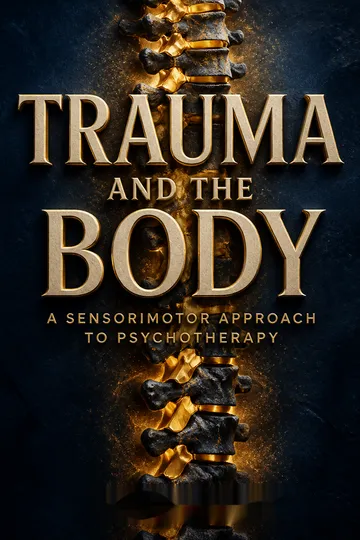
The body's record. Sensorimotor Psychotherapy treats posture, gesture, breathing, gaze, and movement as part of the story, not background decoration. These patterns can reveal how past danger or relationships shape present reactions, especially when a person cannot explain what is happening in words. The approach complements conversation by bringing bodily experience into the work of therapy.
A new action. Mark, abused by a neighbor as a child, later felt uncontrollable rage when men touched him in crowded kitchens. In therapy, attention to tension in his back and legs helped him discover impulses to turn away and run. Practicing those actions in a controlled setting helped him feel more capable of setting boundaries at work.
What's compelling is the shift from treating the body as a symptom to treating it as information. This resonates with embodied cognition, the view that thinking and feeling are shaped by bodily action, sensation, and context. But bodily signals are not a universal code: averted eyes, stillness, or closeness can mean different things across cultures and individuals. Their meaning must be explored with the person, not decoded by the therapist as if posture were a lie detector.
Test Western clinical assumptions against the client's cultural world
A limited baseline. Many influential psychological models were developed in Western settings and often emphasize individual autonomy, nuclear families, and independence. These can be useful perspectives, but they are not universal standards of healthy development. Attachment research, for example, has sometimes judged children against expectations shaped by one-to-one caregiver relationships, overlooking communities where caregiving is shared among relatives and older children.
Context changes meaning. Studies described in the book report well-adjusted children in communities where infants spend substantial time with caregivers beyond their birth mother. A therapist who assumes that close family bonds signal unhealthy dependence, or that a client's preference for collective decision-making shows a lack of maturity, risks mistaking cultural difference for pathology.
This argument connects clinical practice to a basic problem in research: a finding from one population can appear universal when the sample is narrow. Cross-cultural psychology asks whether a measure has the same meaning across settings before comparing results. That caution is especially important when diagnoses can influence access to care or family decisions. Cultural context cannot, however, answer every clinical question on its own. It should widen inquiry, not replace careful assessment of distress, safety, and the client's own goals.
Treat defensive patterns as adaptations before labeling them disorders
A response with a history. The book distinguishes explicit bias, which a person can recognize, from implicit bias, which can shape reactions without conscious intent. Both can contribute to everyday slights and unequal treatment. Such patterns also affect clinical judgment: the same behavior may be read as defiance, avoidance, or pathology when its cultural or social context is overlooked.
Notice the reflex. In a résumé study described in the text, employers were 50 percent more likely to respond to applications carrying white-sounding names, even though the employers had expressed interest in increasing workplace diversity. In therapy, the author recommends noticing bodily reactions and assumptions, learning about clients' social contexts, and acknowledging missteps rather than defending good intentions.
The example shows why personal sincerity is an unreliable measure of fairness: automatic judgments can contradict stated values. This aligns with research on dual-process cognition, in which quick associations can shape decisions before deliberate reasoning catches up. Awareness is necessary, but it is not a complete remedy. Institutions also need procedures that make unequal outcomes visible and correctable. In a therapy room, the practical test is not whether the therapist intended harm, but whether the client can name an impact and receive a responsive repair.
Match treatment to trauma, relational hurt, or both
Two kinds of injury. In this approach, trauma occurs when a person experiences a threat to safety that activates intense survival responses and dysregulated arousal. Relational stress comes from painful patterns such as repeated misattunement, rejection, or criticism, which may not involve immediate danger. The two often overlap, but they do not always call for the same emphasis in therapy.
Choose the entry point. Trauma treatment prioritizes bottom-up work with bodily sensation, movement, and arousal because insight alone may not settle an activated survival response. Relational injuries often call for both bodily exploration and top-down work with beliefs, emotions, and meaning. With Jamie, the therapist first helped regulate trauma-related reactions, then explored the belief that she did not deserve support after a painful childhood interaction.
The distinction offers a useful clinical decision aid: is the immediate task to reduce physiological overwhelm, or to understand and revise a relationship pattern? The answer can change within a session. This resembles learning theory, where changing an alarm response differs from revising expectations about other people. The distinction should remain flexible rather than become a rigid sorting system. Current oppression may keep danger present, while relational pain can itself become intensely destabilizing, so treatment must follow the person's actual state.
Regulate arousal before asking someone to revisit traumatic memory
Stay within capacity. The window of tolerance is the range of arousal in which a person can process experience without becoming overwhelmed or shutting down. Above it, hyperarousal can bring panic, tension, and alertness. Below it, hypoarousal can feel like numbness, collapse, or disconnection. A therapist helps the client notice these shifts and build resources, such as grounding, movement, or supportive contact.
Follow sensation. Sensorimotor sequencing means carefully noticing how a bodily sensation changes and settles over time. When Julie began trembling while recalling abuse, her therapist asked her to focus on the physical sensation rather than intensify the memory or emotion. As she tracked the changing sensations, the trembling eased. For people facing ongoing oppression or danger, the aim also includes building resources to recover after real-world triggers.
The emphasis on pacing is a strong corrective to the idea that more exposure automatically means more healing. Regulation can preserve the capacity to learn from difficult material rather than merely endure it. The concept of an optimal arousal range also has parallels in stress research, where high stress can impair attention and flexible reasoning. Yet a client's calm appearance does not guarantee safety or readiness. Therapists need to check the person's experience directly, since outward stillness can signal shutdown as readily as composure.
Direct attention toward one manageable part of present experience
Make the present specific. Directed mindfulness guides attention toward a selected part of immediate experience rather than asking a trauma survivor to observe everything at once. The book identifies five building blocks: thoughts, emotions, sensory perceptions, movements, and bodily sensations. A therapist notices a change, tentatively brings it to the client's attention, and collaborates on whether it is worth exploring.
Explore, do not impose. Omar felt anxious and numb in his legs while discussing bullying. His therapist invited him to press his feet into the floor and notice the result. He felt more grounded and physically solid. Such small experiments can reveal how a sensation, thought, or movement connects to other parts of experience, while leaving the client free to correct the therapist or decline the proposed focus.
Narrowing attention can make internal experience less overwhelming and more observable, much like focusing a camera rather than flooding the frame with everything at once. The collaborative element matters as much as the technique: it gives the client a chance to reject an interpretation and remain an authority on their own experience. There is a tension here, since therapists still choose what to highlight. Tentative language and ongoing consent help keep that choice from quietly becoming control.
Treat bodily predictions as learned forecasts, not facts about the future
The body anticipates. The book describes bodily habits as forecasts shaped by earlier experience. A person who learned that reaching for help brings rejection may inhibit that movement before consciously deciding what to do. This kind of learned expectation is called implicit relational knowing: practical, often unspoken knowledge about how interactions with others tend to unfold.
Make room for revision. Sierra, a teenager who had been mocked at school for her appearance, had learned to stay quiet and make herself small, although she wanted to become an actor. In therapy, examining her posture and the fear attached to being noticed helped connect the present habit to past humiliation. The goal was not to force confidence, but to create experiences in which new actions could become possible and the old prediction could be reconsidered.
This account resembles predictive processing, the idea that the brain uses past experience to anticipate what a situation will bring. Such forecasts save effort and can protect against genuine risks, but they can also overgeneralize from yesterday's conditions to today's. The important qualification is that not every cautious prediction is mistaken, especially when discrimination or danger is ongoing. Therapy can help distinguish inherited expectation from present evidence, but it cannot make an unsafe environment safe by changing the person's posture.
Repair the relationship when therapy itself reenacts an old injury
The therapist is involved. An enactment is a pattern in which client and therapist unconsciously repeat relational expectations through their interaction. It may include pressure, compliance, withdrawal, or misunderstanding. Rather than assuming that the difficulty belongs only to the client, the therapist considers how their own behavior and social position may be contributing.
Distance made the difference. Linda froze as her therapist repeatedly encouraged movement, while the therapist became more insistent. In hindsight, the therapist recognized that Linda's need for distance had been missed. When the therapist closed her eyes and moved her chair farther away, Linda's arms began to relax. The shift helped them recognize that the session itself had become intrusive, and that Linda needed both distance and control before she could reconnect.
This example makes the therapeutic relationship more than a supportive backdrop: it becomes a place where expectations can be enacted, noticed, and altered. That is consistent with relational approaches to psychotherapy, which treat repair after a rupture as a source of learning. The story also argues for humility about technique. A theoretically sound intervention can still be poorly timed or experienced as coercive. Repair depends on the therapist's willingness to treat the client's response as meaningful evidence, not resistance to be overcome.
Expand movement options without prescribing one correct body
More than posture. Movement vocabulary means the range of physical actions available to a person, from subtle internal shifts to visible gestures. The book organizes useful movement patterns as yielding, pushing, reaching, grasping, and pulling. These actions relate to receiving support, setting limits, seeking connection, holding on, and claiming what one needs. They can be constrained by trauma, family expectations, or social power.
Fit the context. A client might practice standing more upright to feel agency, but an expansive posture may feel unsafe in a threatening setting. The point is not to make every body look confident. It is to develop flexible options that can be chosen in context. The chapter also links fluid movement with play and creativity, citing a study in which walking increased creative thinking by more than 50 percent on a task involving analogy generation.
The movement lens gives abstract goals such as assertion or connection a physical dimension that can be practiced and felt. It also avoids treating creativity as purely mental: gesture and movement can alter what ideas become accessible. The contextual caution is essential. A posture that signals confidence in one setting may attract danger in another, and physical ability varies. A useful measure is not conformity to an ideal stance, but whether a person gains more safe, meaningful choices.
Let clinical technique serve humility, collaboration, and the client's own wisdom
A stance before a method. The book grounds Sensorimotor Psychotherapy in six principles: organicity, nonviolence, mind-body-spirit holism, unity, relational alchemy, and mindfulness with presence. Organicity means treating people as living systems with their own capacity for growth. Nonviolence means avoiding forceful agendas. Unity emphasizes connection among the parts of a person and between people. Holism takes body, mind, and spirit together.
Let the client lead. Mindfulness and presence support attention to what is happening now, while relational alchemy names the unpredictable change that can emerge between people. Together, these principles favor curiosity, collaboration, and respect for cultural knowledge. They do not mean passivity: the therapist may need to protect safety, address harmful behavior, or help with practical resources, while still treating the client as a participant rather than a problem to fix.
The principles make the approach an ethical orientation, not simply a collection of somatic exercises. Their strongest implication is that technique should be answerable to the client's context, agency, and safety. This fits with person-centered and community-based care, where treatment is shaped with people rather than delivered to them. The challenge is operational: trust in a client's inner wisdom cannot substitute for risk assessment, training, or practical support. Humility is most useful when paired with accountability and the willingness to act.
Analysis
This book's central contribution is its insistence that bodily experience and social context belong inside the clinical formulation, not in separate side conversations. It links posture, sensation, movement, and arousal to learned expectations, while asking therapists to consider how culture, racism, gender, disability, class, and other power relations shape both the client's experience and the therapist's interpretations. The composite cases make the method concrete: a posture or small movement becomes a way to investigate what a person expects, fears, or needs, rather than a cue for the clinician to decode unilaterally.
The book also makes a useful distinction between urgent physiological dysregulation and painful relational patterns, while recognizing that these frequently overlap. Its attention to pacing, client choice, and repair helps guard against turning body-based treatment into another form of pressure. The insistence that a supposedly neutral therapy room can reproduce power imbalances is particularly valuable. It moves cultural humility from a professional credential toward a continual practice of noticing, listening, and correcting.
The approach is best understood as a clinical framework, not as proof that every symptom has a bodily explanation or that a particular movement resolves trauma. The cases illustrate possibilities, but they are not controlled tests of efficacy. Some explanatory neuroscience in the book, including the triune brain and polyvagal descriptions, works more persuasively as a teaching map than as a complete account of brain function. The cultural critique is strong, although its examples are mainly drawn from the United States and cannot stand in for every society or community. The book itself emphasizes that no single cultural account is universal.
For readers outside clinical training, the practical lesson is not to recreate therapy exercises alone. It is to notice how a person's body, history, relationships, and circumstances interact, and to resist treating protective behavior as a character flaw. Trauma work belongs with trained clinicians who can assess safety, consent, and readiness. The book's most durable idea is that change depends not only on what is discussed, but on what becomes possible in a respectful relationship and a real social world.
People Also Read




Glossary
Sensorimotor Psychotherapy
Body-focused trauma therapyA psychotherapy approach that brings bodily sensation, posture, movement, and nonverbal communication into treatment alongside thoughts, emotions, and narrative. It uses present-moment awareness and carefully paced experiments to help clients regulate arousal, explore learned patterns, and develop new responses. The book emphasizes adapting this work to the client's cultural and social context.
somatic narrative
The body's nonverbal storyThe meanings communicated through bodily patterns such as posture, gesture, movement, facial expression, gaze, and voice quality. In Sensorimotor Psychotherapy, these cues can reflect expectations and adaptations shaped by relationships, trauma, and culture. They are treated as clues for collaborative exploration, not as signals with fixed meanings that a therapist can simply decode.
window of tolerance
Manageable range of arousalA concept for the range of emotional and physiological arousal in which a person can process experience and remain able to reflect and engage. Above the range, hyperarousal may interfere with integration; below it, hypoarousal may bring numbness or shutdown. The approach aims to help clients recognize their state and build resources for returning to a workable range.
neuroception
Automatic safety detectionA term used in polyvagal theory for the nervous system's nonconscious detection of cues associated with safety, danger, or life threat. These evaluations can shape arousal and social or defensive responses before a person consciously identifies what prompted them. The book notes that experience and social context can influence which cues are registered as threatening.
directed mindfulness
Focused present-moment attentionA Sensorimotor Psychotherapy practice in which the therapist guides a client's attention toward a selected part of current experience, such as a sensation, movement, image, emotion, or thought. The focus is chosen collaboratively to support a therapeutic purpose. This is intended to make exploration manageable, rather than asking a client to attend openly to every possible internal experience.
sensorimotor sequencing
Following changing body sensationsA practice of noticing and describing how a bodily sensation changes over time, without immediately treating it as proof of present danger or intensifying the associated memory. In the book's examples, tracking a sequence of trembling or other sensations can help arousal settle. It is used within a therapeutic process that monitors the client's capacity and safety.
implicit relational knowing
Unspoken expectations in relationshipsProcedurally learned expectations about how interactions with other people work, including which actions are welcomed, rejected, or useful for preserving connection and safety. This knowing often develops before a person can describe it in words. It can shape present behavior, such as reaching out, withdrawing, or complying, even when the original experiences are not consciously recalled.
movement vocabulary
Range of available actionsThe range of physical actions a person can access and use in different situations, from subtle internal movements to larger gestures. The book discusses yielding, pushing, reaching, grasping, and pulling as useful patterns for exploring support, boundaries, connection, and claiming needs. A broader vocabulary means more options, not a prescribed posture or standard of physical ability.
relational alchemy
Unexpected change between peopleThe book's term for unanticipated change that can emerge through interaction between people, especially therapist and client. Their histories, expectations, and responses shape a distinctive relationship that may foster recognition and growth, or create misunderstanding and enactment. When a rupture is noticed and worked through collaboratively, the relationship itself can offer a new experience.
Strange Situation
Infant attachment observationA research procedure associated with Mary Ainsworth that observes how an infant responds when separated from a caregiver, left with an unfamiliar person, and reunited with the caregiver. The book uses it to illustrate both the influence of attachment research and the risks of treating Western expectations about caregiver relationships and child behavior as universal across cultures.
Download PDF
Download EPUB
.epub digital book format is ideal for reading ebooks on phones, tablets, and e-readers.








