

Key Takeaways
Make poison visible by building institutions that can test, preserve, and explain evidence.
A broken system. In 1915, New York’s elected coroners included unqualified officials accused of corruption and incompetence. When Frederic Mors confessed to killing residents at a Yonkers home with chloroform, the local coroner insisted the poison could not be found in a body. No useful toxicology work followed, and the case collapsed. Mors escaped from an asylum and was never tried.
A new standard. A 1918 reform replaced the political coroner system with a medical examiner’s office led by physician Charles Norris. He recruited chemist Alexander Gettler to build a toxicology lab, establish procedures for preserving organs, document cases, and train staff. The book’s central story is not simply that chemistry caught poisoners. It is that reliable detection required a functioning public institution.
What's striking is how much scientific knowledge depends on mundane organizational design. A test cannot help if nobody collects the right tissue, records the chain of custody, or has time to interpret the result. This is a lesson shared by laboratories, hospitals, and safety regulators: expertise needs procedures and resources to become dependable. Norris’s reforms also show that institutions are not neutral containers. A politicized office can protect the powerful or neglect the dead; professional standards can make accountability possible. Yet a formal title alone does not guarantee competence. The system earns trust through careful work that can be inspected.
Test the route of exposure, not just the victim's most obvious organ.
The wrong sample. In 1922, Fremont and Annie Jackson were found dead in their Hotel Margaret apartment. Investigators suspected cyanide, but tests on their stomachs found none. The clue was hidden beneath them: the building had been fumigated with cyanide gas. Because the couple inhaled the poison rather than swallowed it, their lungs, not their stomachs, held the decisive evidence.
A changed investigation. Gettler explained the distinction, and investigators exhumed Fremont Jackson to obtain lung tissue. The tests revealed cyanide. A trial followed, though the fumigator and hotel manager were acquitted. The case helped Norris and Gettler push New York to prohibit cyanide fumigation. Their lesson was practical: a negative result may mean the wrong tissue was tested, or the suspected route of exposure was misunderstood.
This case illustrates a basic principle of measurement: evidence is shaped by where and how an investigator looks. In medicine, ecology, and engineering, a sample taken from the wrong place can produce a clean result that answers the wrong question. The Jackson investigation also shows why good forensic reasoning begins with competing explanations, then asks what each would predict. The lung analysis fit inhalation; the stomach analysis did not. Still, a scientifically persuasive reconstruction is not identical to proof of individual guilt. The jury’s acquittal underscores the gap between identifying a hazard and establishing legal responsibility.
Make every result repeatable before asking a jury to trust it.
A contested test. After the Jackson case, defense lawyers attacked Gettler’s cyanide findings as unreliable. The defendants were acquitted, and the episode exposed how easily unfamiliar science could be undermined in court. Gettler responded by studying cyanide detection more rigorously. He compared established tests, found several unreliable, refined a method that produced consistent results, and tested whether decomposition would erase the chemical evidence. Even after four weeks of decay, he could still detect most of the cyanide originally present in poisoned tissue.
Evidence by procedure. Earlier chemists had also built arsenic tests, including James Marsh’s method, after a flawed analysis helped a poisoner escape conviction. Forensic toxicology advanced through repeated testing, careful notes, and methods that another chemist could reproduce, not through dramatic courtroom demonstrations.
Reproducibility is more than a laboratory virtue. It allows evidence to survive disagreement, scrutiny, and the inevitable differences between investigators. The book’s courtroom episodes anticipate a modern concern: scientific claims can acquire authority through credentials even when the underlying method is weak. Detailed protocols make expertise contestable rather than merely impressive. At the same time, replication cannot remove every uncertainty. A repeatable test establishes that a substance is present under specified conditions; it does not, by itself, establish who administered it, why, or whether it caused death. Strong forensic reasoning keeps those claims separate.
Use toxicology to distinguish a guilty story from a measurable cause.
Science can acquit. In 1923, Charles Webb’s wealthy wife, Gertie, died after becoming ill, and her family accused him of poisoning her with mercury. Gettler found only a minute trace, consistent with calomel, a comparatively mild mercury medicine she had taken. The more dangerous mercury compound alleged by the family was not present at a lethal level, and the autopsy showed no expected corrosive damage. Webb was cleared.
A different verdict. When Anna Fredericksen was found dismembered in Francesco Travia’s apartment, the scene seemed to prove murder. But her blood showed lethal carbon monoxide exposure, and testing established that she had died before the dismemberment. Travia was acquitted of murder. In 1935, Gettler’s tests also found no thallium in the cocoa linked to the Gross family deaths, helping free Frederick Gross from suspicion.
These cases show why forensic science matters beyond catching criminals: it can prevent a compelling narrative from becoming a wrongful conviction. Physical traces often cut against the easiest interpretation, whether that is a grieving relative’s accusation or a suspect’s obvious-looking crime scene. This resembles a broader principle in decision science: independent evidence can interrupt confirmation bias by forcing investigators to update their beliefs. But the cases also warn against treating a lab result as a complete verdict. Toxicology can identify a substance and sometimes its role in death; motive, access, and responsibility still require other evidence.
Treat industrial chemicals as public risks before workers become evidence.
A product with a cost. In 1924, workers at a Standard Oil plant making tetraethyl lead became confused, violently ill, and, in several cases, died. Companies suggested that workers had failed to protect themselves. Norris and Gettler investigated and found the compound and its lead by-products concentrated in the workers’ lungs, brains, and bones. The masks provided at the plant did not filter the vapors effectively.
Who gets heard? New York and other cities restricted leaded gasoline, but an industry-backed federal panel later declared its use safe under specified conditions. Norris and Gettler, whose office had identified the danger, were not included in that panel. The episode shows how industrial benefits can be immediate and visible, while health costs are delayed, scattered, and borne by workers with little power over the process.
The lead episode is a study in how uncertainty can be used politically. A lack of long-term data may be treated as evidence of safety, even when workers are already showing severe harm. The book also makes the distribution of risk hard to ignore: companies profit from a useful additive, while exposed employees bear the earliest consequences. This is the logic behind precautionary approaches to public health, which ask for stronger evidence before widespread exposure rather than after widespread injury. Such caution has costs too, including delaying useful products, so credible independent testing is essential.
Prohibition made cheap drinking deadlier, especially for people with few choices.
A predictable black market. Gettler warned that banning legal liquor would not erase demand. Instead, bootleggers sold industrial alcohol, often contaminated with wood alcohol. The body converts wood alcohol into formaldehyde and formic acid, which can damage the optic nerve and cause blindness or death, sometimes after a delay. During the 1926 Christmas period, poisoned liquor killed New Yorkers and sent many more to hospital.
Unequal exposure. Gettler reported that in New York City that year, about 1,200 people were sickened or blinded by industrial alcohol and roughly 400 died. Wealthier drinkers could buy better liquor; poorer residents were more likely to encounter cheap, dangerous mixtures. Federal officials then increased the wood alcohol content of denatured industrial spirits. The policy aimed to deter drinking, but its foreseeable costs landed heavily on those least able to avoid the products.
The Prohibition story makes a distinction between a policy’s stated aim and its actual incentives. Suppressing legal supply created lucrative opportunities for illicit sellers, while deliberately poisoning industrial alcohol made those opportunities more lethal. This is a classic unintended-consequences problem: a rule changes the market rather than eliminating the underlying demand. The unequal distribution of harm also matters. A policy can appear universal while its risks fall disproportionately on people with fewer resources. The book does not imply that ordinary alcohol is harmless; it shows that adding toxic contaminants created a different and preventable danger.
Follow a poison through the body's chemistry, not its reassuring label.
The molecule matters. Gettler distinguished methyl alcohol from ethyl alcohol, though both could be sold or consumed as liquor. Methyl alcohol lingers in the body and breaks down into damaging compounds; ethyl alcohol usually becomes acetic acid, but large amounts can still poison the brain and body. The lab’s studies of alcohol in brain tissue helped relate chemical concentration to observed impairment.
The body can be tricked. Carbon monoxide binds to hemoglobin far more strongly than oxygen, starving tissues of oxygen. Radium resembles calcium closely enough to lodge in bones, where its radiation damages marrow. Thallium can enter cells through pathways used by potassium. These different mechanisms explain why poisons can produce delayed blindness, suffocation, bone destruction, paralysis, or symptoms mistaken for ordinary disease. A familiar name, a useful application, or a clear appearance says little about biological safety.
The book’s chemistry becomes memorable when it is treated as a story of biological misdirection. A toxic substance can exploit a system the body evolved to use: oxygen transport, mineral storage, or cellular uptake. This perspective is useful beyond toxicology because it shifts attention from a substance’s label to its interaction with a living system. Dose, route, and metabolism all matter. The danger is that mechanism can sound more predictive than it is. Individual susceptibility varies, and a plausible pathway does not automatically determine a particular person’s outcome. Measurement remains necessary.
Remember that some exposures keep harming people long after work ends.
Radium stayed inside. At the U.S. Radium Corporation, young dial painters shaped their brushes with their lips, swallowing small amounts of luminous paint. Radium behaved enough like calcium that the body deposited it in bone. There, its radioactive decay damaged bone and blood-forming marrow. Workers lost teeth, developed rotting jaws and anemia, and died years after exposure. They also exhaled radon produced as the radium decayed.
Delayed harm challenged the law. Gettler found Amelia Maggia’s bones remained radioactive five years after her death. That evidence helped defeat the company’s argument that the workers had waited too long to sue. The Radium Girls eventually received settlements and medical care, though far less than they had sought. Their case made visible a form of injury that did not end when a worker left the factory.
Radium complicates the usual picture of exposure as a past event followed by recovery. Here the body became a continuing source of injury, which made the workers’ legal timeline a scientific question as well as a procedural one. The case also connects occupational health to environmental justice: those who benefit from a technology may not be the people who bear its hidden costs. The women’s workplace was not dangerous because radium had no useful applications; it was dangerous because its use was poorly controlled and its hazards were not communicated. Innovation needs safeguards designed alongside it.
Let scientific humility limit conclusions, even when the suspect seems obvious.
A hard lesson for Gettler. In 1923, Mary Frances Creighton was acquitted in the arsenic death of her brother after the defense challenged the evidence and Gettler identified only trace arsenic in her mother-in-law’s remains, consistent with contaminated medicine. Years later, Creighton admitted to killing her brother with rat poison and was convicted of another arsenic murder. The first acquittal was not proof that every earlier test was wrong; it showed how difficult it was to connect chemical findings to the full history of a crime.
The burden of certainty. Gettler’s analyses helped convict some people and clear others. Near the end of his career, he still asked himself whether he had done everything correctly. His doubt is part of the book’s account of forensic progress: evidence can improve, but no scientist is entitled to treat a result as infallible.
This is the book’s most unsettling insight: better science does not abolish uncertainty; it makes uncertainty more precise. Creighton’s first acquittal reveals the difference between a laboratory finding, a prosecutable case, and the truth of events. Those categories can overlap without being identical. The episode also resists a simplistic celebration of forensic expertise. A scientist’s confidence can injure the innocent, while excessive skepticism can let a guilty person escape accountability. The responsible stance is disciplined modesty: state what the evidence establishes, identify what it cannot establish, and leave room for correction.
Analysis
The book’s real subject is not poison alone. It is the infrastructure required to turn chemical traces into public truth. Deborah Blum frames forensic toxicology as an intellectual contest between poisoners and investigators, but the deeper conflict is institutional. In the early chapters, a confession and suspicious deaths are not enough because New York lacks competent death investigation. Norris’s reforms and Gettler’s laboratory make chemistry usable in court by standardizing collection, analysis, and records. Their work changes what can be known, but it also changes who can be held accountable.
The narrative’s cases resist a simple progress story. Toxicology helps expose murders, yet it also exonerates people whose circumstances look damning. The Jackson investigation shows that a correct test on the wrong organ can produce a misleading negative. The Creighton history shows that accurate measurements do not automatically settle the meaning of a death. These episodes distinguish scientific validity from legal sufficiency and historical truth. That distinction is essential in any field where technical expertise enters a public decision.
The book also expands the meaning of poison from a criminal’s tool to a feature of ordinary life. Industrial solvents, lead additives, radioactive products, and adulterated liquor move risk from private acts into markets and policy. The Radium Girls and the lead workers reveal a recurring asymmetry: benefits accrue to companies and consumers, while evidence of harm first appears among people with the least control over exposure. Prohibition makes the same point through a different mechanism, showing how a moral policy can create a dangerous market rather than remove demand.
Norris and Gettler are compelling partly because they are not presented as detached geniuses. Their achievement depends on budgets, staff, procedures, public persuasion, and persistence against political resistance. Their legacy is therefore less a single breakthrough than a civic method: investigate carefully, disclose limits, and build institutions capable of correcting their own mistakes. The book’s final tension remains unresolved by design. Better evidence can produce justice, but the people who interpret it still carry moral responsibility.
Review Summary
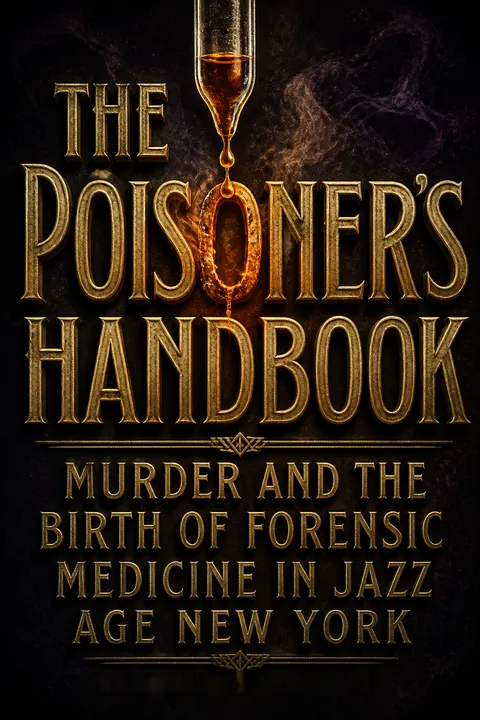
The Poisoner's Handbook is a fascinating blend of science, history, and true crime, focusing on the birth of forensic medicine in 1920s New York. Readers praise Blum's engaging writing style and the book's mix of chemistry, murder cases, and Prohibition-era history. The narrative follows pioneering medical examiner Charles Norris and toxicologist Alexander Gettler as they develop forensic techniques. While some found certain sections dry or disorganized, most reviewers were captivated by the shocking revelations about common poisons and government actions during Prohibition.
People Also Read




Glossary
forensic toxicology
poison analysis for legal casesThe use of chemistry and related medical evidence to identify toxic substances in bodies, tissues, or other materials connected to an investigation. In the book, it develops from uncertain university consultations into routine laboratory work that helps determine cause of death, guide public-health action, and support or challenge criminal prosecutions.
Reinsch’s test
metal detection using copperA chemical procedure used to detect metallic poisons, including arsenic and mercury, in biological material. Tissue is decomposed in acid, and a strip of copper is placed in the solution. A metallic deposit can form on the strip; further heating and examination help distinguish which element is present. Gettler refined the method to detect very small quantities.
Prussian blue test
a chemical test for cyanideA laboratory method for detecting cyanide in a distilled sample. The chemist adds iron compounds and acid, then observes the resulting color. A strong cyanide presence can produce a vivid blue layer; smaller traces may cause a slower color change. Gettler used this test alongside other procedures rather than relying on one result alone.
carboxyhemoglobin
hemoglobin bound to carbon monoxideThe form of hemoglobin created when carbon monoxide binds to the oxygen-carrying protein in blood. Because carbon monoxide binds far more strongly than oxygen, it prevents oxygen from reaching tissues and can cause chemical suffocation. Its presence and concentration help toxicologists identify carbon monoxide poisoning and distinguish it from other causes of death.
denatured alcohol
industrial alcohol made undrinkableAlcohol intended for industrial or commercial use that has been mixed with substances to make it unsuitable for drinking and avoid liquor taxes. During Prohibition, illicit sellers attempted to remove or disguise these additives. Some mixtures remained dangerously contaminated, especially with methyl alcohol, and the federal government later increased poisonous additives to discourage drinking.
Gettler Boys
Gettler-trained toxicologistsThe informal name for chemists and forensic toxicologists trained by Alexander Gettler or influenced by his laboratory methods. They carried his approach into laboratories elsewhere, extending the professional reach of forensic toxicology. The name reflects the importance of teaching and succession in a field that initially had few formal training programs.
Radium Girls
workers poisoned by luminous paintThe popular name for young women who painted luminous watch and instrument dials with radium-containing paint. They were taught to shape their brushes with their lips and unknowingly swallowed the radioactive material. Radium accumulated in their bones, damaging bone tissue and marrow. Their illness and legal fight exposed the dangers of poorly controlled industrial exposure.
Jake Leg
paralysis caused by adulterated ginger drinkThe name given to an epidemic of paralysis associated with Jamaican Ginger drinks adulterated during Prohibition. Some bootleggers added an industrial plasticizer, tri-o-cresyl phosphate, which damaged motor nerve cells. Victims lost control of muscles in their feet and hands, producing a distinctive high-stepping walk. The episode revealed that an industrial compound could become a mass poisoning agent in an illicit market.
Gettler’s scale
brain-alcohol impairment ratingsA scale developed by Gettler and Arthur Tiber that related measured ethyl alcohol in brain tissue to observed impairment. It used one to four plus signs for increasing levels, from no obvious impairment at low concentrations to severe intoxication and fatal alcohol poisoning at the highest levels. The scale emphasized brain concentration rather than the amount swallowed or found in the stomach.
FAQ
What's The Poisoner's Handbook about?
- Historical Context: The Poisoner’s Handbook by Deborah Blum explores the evolution of forensic medicine in New York City during the Jazz Age, focusing on the rise of poisoning as a method of murder.
- Key Figures: The narrative centers on Charles Norris and Alexander Gettler, who were instrumental in transforming forensic toxicology and bringing many poisoners to justice.
- Chemical Insights: It delves into various poisons, such as arsenic, cyanide, and mercury, detailing their effects on the human body and their detection in forensic investigations.
Why should I read The Poisoner's Handbook?
- Engaging Narrative: Deborah Blum combines elements of true crime, science, and history, making the book a compelling read for both science enthusiasts and true crime fans.
- Educational Value: Readers gain insights into the development of forensic science and the challenges faced by early toxicologists, enhancing their understanding of how poisons work.
- Cultural Context: The book provides a vivid portrayal of life in Jazz Age New York, illustrating how societal issues like Prohibition influenced crime and public health.
What are the key takeaways of The Poisoner's Handbook?
- Forensic Science Evolution: The book highlights significant advancements in forensic toxicology, particularly through the work of Norris and Gettler, who established methods still in use today.
- Impact of Poisons: It emphasizes the dangers of common poisons, such as arsenic and methyl alcohol, and their historical use in crimes, showcasing the need for public awareness.
- Societal Reflections: The narrative reflects on how societal issues, like Prohibition, created new opportunities for crime and the challenges faced by law enforcement.
What are the best quotes from The Poisoner's Handbook and what do they mean?
- “The knowledge, and the scientific determination, spread across the Atlantic to the United States.”: This quote underscores the transfer of scientific knowledge from Europe to America, crucial in developing forensic toxicology.
- “Poisoning can be a crime of passion, but it requires a calculating intelligence.”: This highlights the nature of poisoning as a premeditated act, contrasting it with more impulsive forms of murder.
- “The government knows it is not stopping drinking by putting poison in alcohol.”: This statement critiques the government's approach to Prohibition, suggesting that poisoning alcohol only exacerbated public health issues.
Who were Charles Norris and Alexander Gettler?
- Pioneers in Forensic Toxicology: Charles Norris was the first Chief Medical Examiner of New York City, and Alexander Gettler was the city’s chief toxicologist. Together, they transformed the field of forensic medicine.
- Innovative Techniques: They developed new techniques for detecting poisons in the human body, including methods for analyzing alcohol levels and identifying various toxic substances.
- Legacy: Their contributions laid the foundation for modern forensic science, influencing how toxicology is practiced today.
How did Prohibition influence crime in The Poisoner's Handbook?
- Rise of Bootlegging: Prohibition led to a surge in illegal alcohol production, creating a lucrative market for bootleggers and increasing the risk of poisoning from poorly made spirits.
- Public Health Crisis: The government’s decision to poison industrial alcohol to deter consumption resulted in numerous deaths and illnesses, highlighting the unintended consequences of Prohibition.
- Increased Violence: The competition among bootleggers for control of the alcohol market led to violent confrontations and murders, reflecting the darker side of the Jazz Age.
What methods did Norris and Gettler use to detect poisons?
- Reinsch’s Test: This method involves using copper strips to detect arsenic and other heavy metals in tissues, providing a reliable way to confirm poisoning.
- Chemical Analysis: Gettler developed various chemical tests to isolate and identify poisons in human organs, improving the accuracy of forensic investigations.
- Autopsy Techniques: Norris emphasized thorough autopsies, ensuring that all organs were examined and preserved for toxicological analysis, crucial in solving poisoning cases.
What challenges did early forensic scientists face in The Poisoner's Handbook?
- Lack of Training: Many coroners and medical examiners lacked formal training in toxicology, leading to misdiagnoses and failures to identify poisons in cases.
- Public Skepticism: There was widespread skepticism about the reliability of forensic science, making it difficult to secure convictions based on toxicological evidence.
- Evolving Poisons: As new poisons emerged, forensic scientists struggled to keep up with detection methods, requiring constant adaptation and innovation in their techniques.
What role did Prohibition play in the rise of poisoning cases?
- Increased Alcohol Poisoning: Prohibition led to the widespread use of toxic denaturants in industrial alcohol, resulting in numerous poisoning deaths.
- Public Health Crisis: The rise in poisoning cases during Prohibition highlighted the dangers of unregulated alcohol and the government’s complicity in these deaths.
- Societal Impact: Prohibition changed drinking culture, pushing people towards more dangerous forms of alcohol consumption, affecting individual health and broader societal implications.
How did Norris and Gettler revolutionize forensic science?
- Scientific Methods: They introduced rigorous scientific methods to the investigation of deaths, emphasizing the importance of toxicology in autopsies.
- Public Awareness: Norris and Gettler raised public awareness about the dangers of various poisons, advocating for better regulations and public health measures.
- Training Future Generations: They laid the groundwork for future forensic scientists by establishing educational programs and training opportunities.
What were the most common poisons discussed in The Poisoner's Handbook?
- Methyl Alcohol: Often referred to as wood alcohol, it was a significant cause of poisoning during Prohibition due to its presence in illicit alcohol.
- Cyanide: Known for its rapid lethality, cyanide was used in various murder cases and highlighted the challenges of detection.
- Thallium: This poison gained notoriety for its use in cosmetics and its insidious effects on health, explored through infamous cases.
How did The Poisoner's Handbook change perceptions of forensic science?
- Legitimization of Toxicology: The book illustrates how Norris and Gettler’s work helped establish forensic toxicology as a respected field.
- Public Awareness: By detailing the dangers of common poisons, the book raises awareness about public health issues and the importance of understanding toxic substances.
- Cultural Impact: The narrative connects forensic science to broader societal issues, showing how crime, public health, and science intersected during a transformative period in American history.
About the Author
Other books by Deborah Blum

Download PDF
Download EPUB
.epub digital book format is ideal for reading ebooks on phones, tablets, and e-readers.








