

Key Takeaways
A crowded life can still feel empty when every pause gets filled.
A field trip revealed the habit. Mark Hawkins recalls taking his high-school class outside on a warm spring day to watch clouds. Most students quickly reached for their phones. The scene made him question a culture in which teachers are expected to entertain, and people treat spare minutes as problems to solve.
Activity can disguise disconnection. Work, errands, social media, and leisure may keep a schedule full without making life feel meaningful. Hawkins argues that constant stimulation can conceal dissatisfaction rather than resolve it. When evenings become only recovery from work and weekends become escape from the week, busyness may be crowding out the quiet needed to notice what is missing.
The field-trip story gives the argument a useful human scale: the issue is not simply screen time, but the reflex to fill an unstructured moment before discovering what it feels like. That distinction matters because technology can be a tool, a pleasure, or an avoidance strategy, depending on context. The same is true of work. A packed calendar may reflect care and necessity, not evasion. The practical question is therefore not whether an activity is respectable, but whether it is chosen and nourishing, or automatic and numbing.
Treat boredom as a signal that reveals what engagement has lost.
Boredom comes in different forms. Hawkins distinguishes situational boredom from existential boredom. Situational boredom arises during an unengaging activity or an empty wait. Existential boredom is broader: the things that once mattered seem drained of interest. Either can arrive while someone is busy or doing nothing. The most painful form combines a sense of meaninglessness with unoccupied time.
Discomfort is part of the signal. The book cites research linking boredom with stress, anger, and health risks. One study followed more than 7,000 people for 25 years and found higher mortality among those reporting boredom. That association does not establish boredom as the cause. Hawkins suggests that the coping behaviors used to escape it may also matter.
This distinction prevents a common mistake: treating a dull meeting and a life that feels hollow as the same problem. The first may call for a change of task; the second may call for reflection on commitments, relationships, or values. The research examples also support caution. Boredom can be stressful, but a correlation between reported boredom and mortality cannot show that boredom itself causes harm. As a practical signal, it is informative, not infallible. Persistent loss of interest can also call for support beyond solitary reflection.
Stay still long enough to hear which borrowed standards are hurting you.
Quiet can uncover learned judgments. Hawkins describes boredom as a space where expectations absorbed from family, school, work, and media can become harder to ignore. His own example is the pressure to be outgoing. He enjoyed solitary interests, yet repeatedly encountered the message that extroversion was the ideal. During quiet moments, that standard could surface as shame about who he was.
Separate discomfort from its explanation. Feeling bad while alone does not prove that being alone is wrong. The feeling may be attached to a belief such as “I should have more friends” or “I am not successful enough.” Boredom offers a chance to notice the belief, ask where it came from, and test whether it deserves authority over a life.
This is a strong use of introspection: the emotion is treated as a clue to an assumption, rather than as proof that the assumption is true. That move resembles the difference between having a thought and endorsing it. It also gives private discomfort a social history. A person may experience an ideal as personal failure when it was first learned as a cultural rule. Reflection has limits, however. Some standards are internalized because they express real needs for connection or security, so questioning a belief should include asking what need it may be trying to protect.
Notice when entertainment becomes an escape hatch, not chosen pleasure.
Small diversions can grow. Hawkins calls ordinary ways of passing time “filling” or “killing” time: watching television, browsing online, shopping, or having a drink. These can be harmless ways to rest. The concern is when they become increasingly consuming and displace work, relationships, or health. He describes students whose video-game use grew from a few hours into all-night play, with falling grades and sleepiness in class.
Escape can look admirable. Excessive work, constant travel, risky thrills, and manufactured conflict can also keep boredom at bay. Hawkins recounts returning home to Vancouver after teaching in Seoul and wanting to go back because home seemed dull. That restlessness prompted a useful question: was travel a genuine desire, or a way to avoid being at home with oneself?
The useful distinction is not between virtuous and frivolous hobbies. It is between chosen recreation and behavior that steadily narrows a person’s options. This resembles the difference between enjoyment and compulsion: an activity can feel good in the moment while making it harder to stop. The book’s examples invite honest self-audit, but they should not be used to diagnose addiction from enthusiasm alone. Frequency, loss of control, harm, and persistence despite consequences offer more grounded warning signs than whether an activity seems excessive to an observer.
Schedule small unoccupied stretches and build your tolerance gradually.
Make room before the reflex takes over. Hawkins recommends noticing when distraction is most tempting, often in the evening or on weekends, then protecting a short period without television or a phone. Waiting in line or at a dentist’s office can provide a small opening too. A useful test is to ask what would happen if a task were left undone. If nothing urgent follows, it may be an excuse to stay busy.
Let restlessness be the cue. Boredom cannot be summoned on demand, but the conditions for it can be created. When restlessness appears, pause instead of immediately reaching for a new stimulus. Start with a manageable interval, allow thoughts and feelings to arise, and stop if the experience becomes too intense. Hawkins recommends support when difficult emotions surface.
This approach turns an abstract invitation into a repeatable practice: notice the trigger, interrupt the automatic response, and give attention time to settle. It has something in common with distress-tolerance skills, which aim to help people experience discomfort without reacting impulsively. The limit is important: tolerating discomfort is not the same as forcing oneself through overwhelming distress. Hawkins acknowledges that boredom can be stressful and advises going gradually. A deliberate pause should create room for choice, not become another performance target or a reason to dismiss serious emotional symptoms.
Question inherited scripts, then choose meanings that fit your actual life.
Meaning is not a perfect destination. Drawing on existentialist thinkers, Hawkins argues that people need meaning but cannot be certain of one universal formula that guarantees fulfillment. A job, status, spiritual practice, or relationship may matter deeply and still fail to provide constant satisfaction. Boredom can expose the gap between a prescribed life story and what a person actually values.
Awareness makes revision possible. Hawkins compares this to noticing the unseen narrator directing a character in the film Stranger Than Fiction. Once the character recognizes that his life is being scripted, he can challenge its direction. Likewise, boredom may reveal assumptions about success, marriage, money, or personality. The point is not that nothing matters, but that people can examine and revise the meanings they live by.
The argument’s liberating force comes from separating meaning from certainty. A person need not discover a cosmic instruction manual before making commitments; a chosen purpose can matter without being universal or permanent. This fits a broader view of identity as something formed through ongoing choices and relationships, not simply uncovered as a fixed essence. Still, “choose your own meaning” can sound easier than it is. Economic pressure, caregiving, and social exclusion constrain available choices. Personal authorship is real, but it operates within conditions that individuals do not freely select.
Protect unstructured time where unfinished ideas can recombine.
Ideas need room to develop. Hawkins argues that creative insights often arrive when focused effort has stopped. While attention is occupied, people may see only a narrow part of a problem. In unstructured time, less conscious processes can combine memories, knowledge, and impressions in new ways. He likens this to ingredients being left to develop before they become something different.
Prepare, then step away. Hawkins describes immersing himself in books and articles about boredom while writing this book. Later, when he was bored, those materials returned in unexpected combinations, which he wrote down. The practical lesson is not to wait passively for inspiration. Work on a question, absorb relevant material, then leave some quiet space for the mind to make connections without demanding an immediate answer.
The chapter offers a valuable counterweight to the belief that creativity is simply a matter of concentrating harder. Creative work often involves both deliberate effort and periods of loosening attention, and the book’s “prepare, then pause” sequence makes that relationship concrete. Unstructured time is not automatically productive, nor does every idle moment produce insight. Its value is that it gives thought room to wander beyond the immediate task. That room is especially scarce when every transition is occupied by a feed, a message, or another assignment.
Use pauses to renew ordinary pleasure, not chase permanent bliss.
Three modes need balance. Hawkins names creation, consumption, and boredom as different ways of spending time. Creating includes work, study, and chores. Consuming includes eating, watching, and other forms of taking in pleasure. Boredom offers a pause from both. Without such pauses, work can become exhausting and pleasurable activities can lose their appeal through repetition.
A small return can feel vivid. Hawkins describes how, after sitting quietly, even a walk to the store can make trees, leaves, and moving air seem newly noticeable. He also uses boredom to step back when passions become tiring, so that he can re-engage with them. The aim is not permanent stillness. It is to let periods of non-engagement restore perspective and make ordinary activities feel less automatic.
The three-part model is useful because it refuses to equate a good life with either constant productivity or constant pleasure. A pause can restore contrast, much as silence makes a sound easier to notice. It also challenges the fantasy that one activity can supply endless stimulation. But boredom is not the only form of restoration, and its benefits should not be promised on demand. Sleep, companionship, movement, and genuinely enjoyable leisure also matter. The practical insight is balance, not a prescription to make every quiet moment empty.
Do not turn people into entertainment for your own escape.
Attention has an ethical dimension. Hawkins argues that people can use friends or family to avoid being alone with uncomfortable feelings. A gathering may be arranged less for mutual enjoyment than to keep the evening stimulating until everyone is too tired or intoxicated to feel restless. In that pattern, others become instruments for relief rather than people with their own needs and preferences. This is what he means by objectification: treating someone as a means to an end instead of recognizing them as a person.
Check the motive, not just the activity. Spending time with others is not inherently avoidance, and asking for support is not exploitation. The question is whether the relationship includes genuine interest in the other person, or whether their presence is expected to keep emptiness away. Noticing that distinction can make ordinary social choices more considerate and more freely chosen.
This is one of the book’s most important ethical extensions: a private discomfort can shape how another person is treated. The insight connects attention to empathy. When someone is viewed mainly as a source of amusement, reassurance, or rescue, their own experience becomes easier to overlook. Yet the distinction must be handled with care. Relationships naturally include mutual support, and seeking company while lonely is not automatically objectifying. The ethical test is reciprocity: can each person be present as a subject with independent needs, rather than assigned the job of fixing the other’s mood?
Analysis
The book’s central move is to rescue boredom from its reputation as wasted time. Hawkins reframes it as an interruption in which familiar sources of stimulation stop working, making room to notice dissatisfaction, inherited expectations, and unrealized creative possibilities. The argument gains force through its progression: a teacher watches students reach for phones during a quiet outdoor break, then traces the same reflex through busyness, compulsive escape, creativity, and ethics. This structure makes boredom more than an individual inconvenience. It becomes a way to examine how a culture of constant engagement shapes attention and choice.
The most compelling contribution is the link between boredom and agency. If cultural scripts present a narrow account of success, a quiet interval can expose the difference between following that script and endorsing it. The book also makes a thoughtful ethical connection: habits of escaping discomfort can affect how people use friends, causes, and communities. That widens the subject beyond personal productivity or wellness.
The argument is strongest when boredom is treated as an invitation to investigate, not as a truth-producing instrument. The text sometimes describes it as unusually direct access to existence and meaning. Yet boredom has many sources, including dull tasks, isolation, exhaustion, and mental distress. It cannot reliably tell someone which life choices are authentic, and some people lack the time or security to create unoccupied space. The cited associations between boredom and health outcomes also do not establish that boredom itself causes harm.
A careful application preserves the book’s core practice while resisting overstatement: notice the urge to escape, ask what it is protecting, and consider whether the answer changes a choice. The aim is not to worship emptiness or condemn distraction. It is to recover enough attention to decide what deserves engagement, and to recognize that meaning is made through choices that remain limited, revisable, and shared with others.
Review Summary
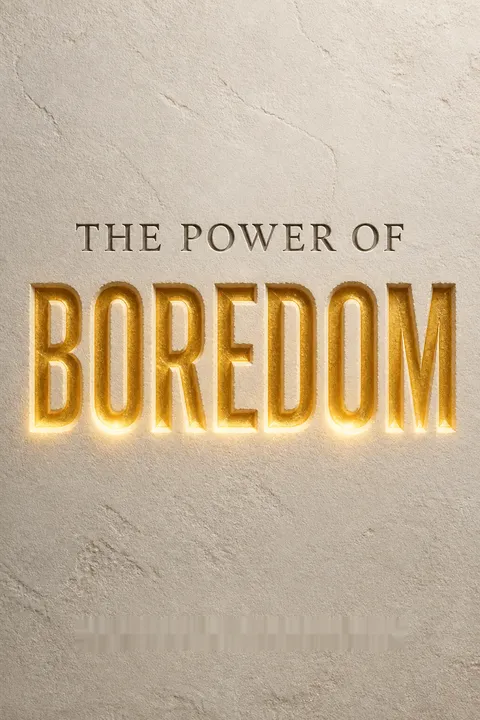
The Power of Boredom receives mostly positive reviews, with readers appreciating its fresh perspective on boredom as a path to creativity, self-analysis, and meaning. Many found the book insightful, citing its philosophical depth and practical implementations. Some readers enjoyed the author's use of quotations from various thinkers. A few criticisms include the lack of a bibliography and the book's unexpected focus on Buddhist and philosophical views. Overall, readers found the book thought-provoking and relevant in today's age of constant distraction.
People Also Read



Glossary
Full situational boredom
Unengaged activityA mild form of boredom experienced while doing something that feels dull, unwanted, or repetitive. A person is occupied, but not meaningfully engaged. Hawkins gives examples such as sitting through an uninteresting class or growing tired of a television show. A change of activity may relieve it.
Empty situational boredom
Unengaged waitingBoredom that occurs when a person has no engaging activity to do, such as waiting at a dentist’s office or passing a quiet weekend with no plans. It is usually limited to a particular situation, and a new activity can often ease it.
Full existential boredom
Life feels meaninglessA broad loss of interest in the activities and commitments that make up a person’s life. Someone may remain busy, yet feel that they are merely going through the motions. Hawkins uses the term for a more pervasive withdrawal of meaning than ordinary boredom with a task.
Empty existential boredom
Meaninglessness in free timeA combination of existential boredom and unoccupied time. With no tasks or distractions to provide structure, a person feels the lack of meaning more sharply. Hawkins connects this experience with anxiety, depressed feelings, and attempts to fill time quickly, while emphasizing that such moments can also prompt reflection.
Crusadism
Compulsive devotion to causesA pattern described by psychiatrist Irvin Yalom in which someone urgently devotes themselves to a cause, often framed as a struggle against something. Hawkins distinguishes genuine commitment from crusadism used to avoid boredom or fill a felt lack of purpose. In the latter case, a person may cling to a failed cause or seek another after one ends.
Will to meaning
Drive to find purposeViktor Frankl’s term for the human desire to find meaning beyond simply staying alive. In Hawkins’s account, meeting basic needs does not necessarily satisfy this drive. A personal sense of meaning helps orient choices, goals, and judgments about what makes a life worthwhile.
Creative mode
Making or doingOne of the three modes of being Hawkins distinguishes. It includes producing, working, studying, and carrying out necessary tasks. The mode is useful and can provide engagement, but constant activity may become exhausting or serve as a way to avoid unoccupied time.
Consumptive mode
Taking in pleasureA mode of being centered on receiving or enjoying experiences and things, such as eating, watching television, reading, or drinking. Hawkins presents it as a normal part of life that can become overused when pleasure is repeatedly sought to fill boredom. He contrasts it with creation and periods of non-engagement.
FAQ
1. What is "The Power of Boredom" by Mark A. Hawkins about?
- Central Thesis: The book argues that boredom is not a negative state to be avoided, but an essential and powerful emotion that can lead to a more meaningful, creative, and fulfilling life.
- Modern Context: Hawkins explores how our current culture of constant distraction and busyness has eroded our tolerance for boredom, making us less satisfied and more disconnected from ourselves.
- Practical Guide: The book provides philosophical insights, psychological research, and practical advice on how to embrace boredom and use it as a tool for self-examination, creativity, and personal growth.
- Structure: It is divided into two main parts: understanding boredom (its nature, why we avoid it, and its destructive avoidance) and harnessing its power (as meditation, for creativity, and as an ethical practice).
2. Why should I read "The Power of Boredom" by Mark A. Hawkins?
- Reframe Boredom: The book challenges the negative stigma around boredom and shows how embracing it can transform your life.
- Combat Distraction: It addresses the modern epidemic of distraction and offers a path to deeper satisfaction and meaning.
- Personal Growth: Hawkins provides actionable strategies to use boredom for self-discovery, breaking limiting beliefs, and fostering creativity.
- Ethical and Social Impact: The book discusses how our relationship with boredom affects not just personal well-being, but also our ethical behavior and relationships with others.
3. What are the key takeaways from "The Power of Boredom"?
- Boredom is Essential: Boredom is a necessary emotional state that creates space for meaning, creativity, and self-examination.
- Avoidance is Harmful: Constantly avoiding boredom leads to destructive behaviors, addiction, and a lack of fulfillment.
- Embrace the Discomfort: By allowing ourselves to experience boredom, we can uncover limiting beliefs and societal pressures that shape our lives unconsciously.
- Boredom as a Tool: Boredom can be harnessed as a form of meditation, a catalyst for creativity, and a foundation for ethical living.
4. How does Mark A. Hawkins define boredom in "The Power of Boredom"?
- Unemotional Emotion: Boredom is described as an "unemotional emotion," lacking the intensity of feelings like anger or joy, but deeply significant.
- Spectrum of Boredom: Hawkins distinguishes between situational boredom (mild, activity-based), existential boredom (profound, meaning-based), and their "full" and "empty" forms.
- Space of Potential: Boredom is conceptualized as a space of pure potential, similar to an empty room that can become anything.
- Meaning and Space: The absence of engagement in boredom creates the necessary space for new meaning and self-understanding to emerge.
5. Why do people avoid boredom, according to "The Power of Boredom"?
- Cultural Taboo: Society teaches us that boredom is negative, equating it with laziness, lack of productivity, or even moral failing.
- Fear of the Self: Boredom exposes us to uncomfortable truths about ourselves, our unmet societal expectations, and limiting beliefs.
- Survival Instincts: Our evolutionary drive for survival and improvement makes stillness and lack of engagement feel intolerable.
- Existential Anxiety: Boredom reveals the inherent meaninglessness and absurdity of life, which can be frightening to confront.
6. What are the destructive reactions to boredom described in "The Power of Boredom"?
- Filling and Killing Time: Engaging in trivial or mindless activities (TV, social media, shopping) to avoid discomfort.
- Addiction and Compulsions: Overindulgence in substances, work, exercise, or even travel as socially acceptable ways to escape boredom.
- Excessive Busyness: Using constant activity as a distraction, often justified as productivity or ambition.
- Risky Behaviors and Drama: Seeking excitement through risky actions or creating interpersonal drama to avoid the void of boredom.
7. How does "The Power of Boredom" connect boredom to meditation and mindfulness?
- Natural Meditation: Boredom is likened to a powerful, natural form of meditation that strips away distractions and reveals the true nature of existence.
- Beyond Mindfulness: While mindfulness is intentional and slightly engaging, boredom is a deeper state of pure nothingness and lack of meaning.
- Window into Existence: Boredom provides a unique opportunity to experience the emptiness and arbitrariness of meaning, leading to profound self-insight.
- Embracing Discomfort: Allowing boredom, rather than escaping it, is essential for genuine self-examination and transformation.
8. What practical advice does Mark A. Hawkins give for embracing boredom in daily life?
- Create Space for Boredom: Intentionally schedule times (e.g., before bed, during waiting periods) to do nothing and allow boredom to arise.
- Reduce Distractions: Limit the use of devices and avoid filling every spare moment with activity.
- Build Tolerance Gradually: Start with short periods of boredom and increase as your comfort grows, being gentle with yourself.
- Reflect on Feelings: Use boredom as a time to notice and deconstruct the thoughts and emotions that surface, leading to greater self-awareness.
9. How does "The Power of Boredom" link boredom to creativity?
- Mother of Creativity: Boredom is essential for creativity, providing the empty space needed for new ideas to emerge.
- Incubation Period: Creative breakthroughs often occur when the mind is not actively engaged, allowing unconscious processes to work.
- Destruction and Creation: Boredom breaks down old meaning systems, making room for innovative thinking and self-creation.
- Universal Creativity: Everyone has creative potential, and embracing boredom is key to unlocking it in any area of life.
10. What ethical and social implications of boredom are discussed in "The Power of Boredom"?
- Moral Imperative: Being aware of our reactions to boredom is a moral obligation, as avoidance can lead to unethical behaviors and objectification of others.
- Empathy and Connection: Embracing boredom helps us see the arbitrariness of our beliefs, reducing dogmatism and increasing empathy for others.
- Freedom and Responsibility: Awareness of boredom frees us from unconscious drives, allowing for more ethical and intentional choices.
- Social Harmony: Recognizing our shared existential predicament through boredom can foster understanding and reduce conflict.
11. What are the most important concepts and methods in "The Power of Boredom" by Mark A. Hawkins?
- Boredom as Space: Viewing boredom as a space of pure potential, necessary for meaning and creativity.
- Deconstructing Beliefs: Using boredom to uncover and challenge limiting societal and personal beliefs.
- Tuning In: Actively noticing and reflecting on the messages and emotions that arise during boredom.
- Boredom as Ethical Practice: Understanding how our relationship with boredom shapes our behavior toward ourselves and others.
12. What are the best quotes from "The Power of Boredom" and what do they mean?
- “Boredom is the most powerful human emotion.” – Emphasizes the transformative potential of boredom when embraced rather than avoided.
- “Boredom is a special space in time that provides us with a bird’s eye view of life.” – Suggests that boredom allows for self-reflection and perspective.
- “Boredom dissolves your identity and selfhood so that you can build it up again yourself.” – Highlights the role of boredom in personal reinvention and growth.
- “In an age of distraction, nothing can feel more luxurious than paying attention.” (Pico Iyer, quoted) – Underscores the value of presence and awareness in a distracted world.
- “Embrace boredom and the absurdity that comes with it. Feel them right down to your bones. This is when you are the most human.” – Encourages readers to accept the discomfort of boredom as a path to authenticity and meaning.
Download PDF
Download EPUB
.epub digital book format is ideal for reading ebooks on phones, tablets, and e-readers.








