

Key Takeaways
Build social intelligence by studying people, not winning every exchange
Being right is not enough. Social intelligence is the ability to relate well across conversations, groups, disagreements, and different kinds of people. Buzan learned this the hard way as a teenager: he tried to impress others with his intelligence and fitness, often by pointing out their mistakes. He won arguments, but made few friends. Watching more popular people, he noticed their warmth, humor, helpfulness, and ease with others. His lesson is that intellectual ability alone does not make someone socially effective.
Relationships have breadth. The book describes a study by psychologist Sheldon Cohen in which 276 adults were exposed to a cold virus. About 62 percent of people with fewer kinds of social ties developed colds, compared with 35 percent of those whose connections spanned six or more categories. The book emphasizes variety, not just a large contact list.
What's useful here is the shift from social success as performance to social skill as attention. A person can be brilliant and still miss what an interaction asks of them. The study also points toward a richer idea of connection: a neighbor, colleague, relative, and friend may each offer different forms of support. However, the reported difference does not prove that diverse ties alone prevent illness. Health and social life influence each other, and the quality of relationships matters. The practical implication is not to collect contacts, but to cultivate reciprocal relationships across the parts of life that matter.
Treat body language as a clue, then check it with curiosity
Bodies join the conversation. Buzan argues that posture, gesture, facial expression, energy, and voice help communicate feelings that words may leave unsaid. He cites an estimate that physical demeanor conveys 55 percent of meaning, though that figure should not be treated as a universal rule for every conversation. The practical point is to notice the whole person, including whether their signals seem to fit their words.
Comfort is personal. At a party, Buzan watched two businessmen repeatedly approach and retreat from one another. One preferred close conversational distance; the other, raised on a large Texas ranch, stood farther away. Neither understood the other's signals. The lesson is to notice personal space, eye contact, and energy without assuming that one gesture has the same meaning for everyone. A smile can welcome, but it should be genuine and appropriate to the moment.
Nonverbal awareness can improve empathy because it gives people more than words to respond to. It is also easy to turn observation into amateur mind-reading. A crossed arm may reflect discomfort, cold, habit, or simply a convenient place to rest a hand. Cultural norms and individual differences complicate any universal body-language dictionary. The strongest version of Buzan's advice is therefore not to decode people with certainty, but to notice possible discomfort and respond gently, perhaps by giving more space or asking a simple question.
Listen for meaning, not your opening to speak
Attention changes the exchange. Buzan recalls attending a party with a throat infection that left him barely able to speak. He listened, nodded, and occasionally asked a question while another guest did most of the talking. He expected to seem dull. Instead, the guest later described him as fascinating. Buzan realized that attentive listening had helped the speaker explore ideas and feel heard.
Make listening active. The book says listening takes roughly 45 percent of communication time, yet receives less teaching than speaking, reading, or writing. Its practical guideline is the 2:1 Ratio: aim to listen about twice as long as you speak. Focus on the speaker, notice their nonverbal signals, ask questions that invite more than a yes or no, and listen for central ideas rather than only collecting facts.
Listening is not silence with a better public image. It is sustained attention, which gives a speaker room to clarify what they mean and gives the listener better information. In that sense, good listening resembles careful interviewing: open questions uncover context that a quick rebuttal would miss. The 2:1 guideline is a useful corrective for people who dominate conversation, not a rigid accounting rule. Some exchanges require advice, concise decisions, or a speaker who needs help finding a voice. The test is whether attention is responsive, not whether a stopwatch approves.
Design first meetings and goodbyes to leave people at ease
Beginnings and endings linger. Buzan calls the tendency to remember the start of an experience the First Things First principle, and the tendency to remember its ending the Last Things Too principle. In a first meeting, a warm greeting, appropriate appearance, confident posture, and interest in the other person can set a welcoming tone. In a talk, placing key ideas near the beginning and end may help an audience remember them.
End with care. A pleasant farewell, sincere thanks, and good wishes can give an interaction a positive close. The same applies when saying no: explain the limit clearly, acknowledge the request, and offer another option if one is genuinely available. That approach combines kindness with clarity, rather than leaving the other person to guess whether a refusal means no or perhaps later.
Attention to beginnings and endings has a practical basis in how people organize experiences into memorable episodes. It also reminds people that ordinary transitions, greetings, farewells, and refusals, carry relational meaning. Still, a polished opening cannot substitute for reliable behavior, and a cheerful goodbye will not erase a hurtful exchange. These principles work best as cues to be present at moments people often rush through. Clear boundaries are part of that care: a considerate refusal is more respectful than a reluctant yes followed by resentment.
Make names memorable by linking them to vivid personal details
Distinctiveness aids recall. The von Restorff Effect is the tendency to remember something that stands out from its surroundings. Buzan pairs it with the Association Brain Principle: connect new information to something already familiar. In practice, when meeting someone, listen for a distinctive interest, experience, or detail, then link it to the person's name in memory. The book also describes an IBM salesman who built a recognizable identity around the color blue, making himself unusually easy for customers to remember.
Interest is part of the method. Asking what someone cares about or remembers most can create a useful mental link, while also showing genuine attention. The goal is not to manufacture a clever image at every introduction. A natural association, such as connecting a person's name with a memorable hobby they mentioned, is often enough to help recall them next time.
Memory improves when information has distinctive cues and meaningful connections, so the advice draws on more than social charm. It also exposes a useful distinction between remembering someone and merely remembering a trick about them. Asking a thoughtful question can create a richer, more durable association because it joins a name to a piece of the person's own story. The caution is that memory techniques can become manipulative when they are used to simulate intimacy. The ethical version is simple: remember details because they help sustain attention, not because they make another person easier to influence.
Interrupt conformity and stereotypes before they rewrite what you see
Groups can distort judgment. In the line-judgment experiment described by Buzan, two participants deliberately gave wrong answers about which bar was longest. More than 60 percent of the unsuspecting participants went along with them at least once, even though they identified the lines accurately when tested alone. The example shows how social pressure can make people doubt what they directly observe.
Labels shape expectations. The book also recounts a study in which 464 British psychiatrists assessed the same description of a young man, presented under different names. The name Matthew received more sympathetic interpretations than Wayne. Buzan's response is to add insight to the instinctive urge to withdraw from or confront someone unfamiliar: pause, gather evidence, and meet the individual rather than a stereotype. Expectations can influence both how others are treated and how they see their own abilities.
These examples expose how judgment is socially situated. People do not always perceive first and interpret second; expectations can guide what they notice and how they explain it. This is especially important in institutions, where a label may affect a diagnosis, evaluation, or opportunity. Yet brief experiments do not capture the full complexity of prejudice, and a pause alone cannot undo structural bias. The practical value is more modest and still powerful: treat first impressions as provisional, ask what evidence supports them, and notice when a label is doing more work than a person's actual behavior.
Negotiate by understanding the other side before advancing your own
Avoid turning conflict into combat. Buzan uses Aikido, a martial art that redirects an opponent's force rather than meeting it head-on, as an analogy for negotiation. In a story by Aikido student Terry Dobson, a drunk man threatens passengers on a train. An elderly passenger engages him warmly by asking about his drink and talking about home life. The man softens and begins speaking about grief and loss. Instead of escalating the confrontation, the older man meets the person beneath the aggression.
Prepare for agreement. Know what outcome matters to you and what limits you have. Ask what the other person wants before arguing for your own position. Bring relevant facts, watch for signs of discomfort, allow time, and look for an outcome both parties can accept. A win-win result is not simply a pleasant compromise; it is an agreement that does not depend on one side feeling defeated.
This approach resembles interest-based negotiation: separate a person's underlying needs from the position they initially defend. Asking about those needs can uncover shared ground and reduce the impulse to retaliate. The train story makes the principle vivid, but it should not be mistaken for a universal conflict tactic. A dangerous situation may require distance, outside help, or firm boundaries, not conversation. In ordinary disagreements, however, curiosity can create options that argument conceals. The key is to understand another person's perspective without surrendering judgment about what is safe or acceptable.
Turn manners into specific acts of attention, not empty etiquette
Make appreciation concrete. Buzan recommends thanking people for the particular thing they did, such as patience, skill, or useful advice. A short note after a meeting or visit can extend that appreciation beyond the moment. Small gifts and remembered birthdays can also communicate that someone has been considered, rather than treated as an afterthought.
Learn the meaning of rituals. The book contrasts a common Western business-card exchange with a Japanese practice in which people offer and receive cards with both hands, take time to read them, and keep them visible during the meeting. These gestures signal attention and respect within that custom. When someone is grieving, a note, practical help, flowers, or a sympathetic embrace may communicate care more effectively than trying to find perfect words. The right gesture depends on the person and the culture.
Rituals make values visible. A specific thank-you tells someone what was noticed, while a card exchange can slow a meeting enough to acknowledge the person behind a professional role. Such gestures are small forms of social coordination: they help people understand how regard is being offered. But manners are not universal codes, and an imported ritual can misfire if its meaning is unknown or unwanted. The deeper principle is attentiveness, supported by learning local customs and adapting to the recipient. Etiquette becomes hollow when the gesture is performed without regard for the person receiving it.
Use every intelligence together, from spatial awareness to imagination
Social skill uses more than words. Buzan's Multiple Intelligences framework treats social intelligence as one capacity among several, including verbal, spatial, physical, sensual, and creative abilities. His argument is that these capacities strengthen one another. Spatial awareness helps someone notice whether a room or conversational distance feels comfortable. Verbal ability helps express an idea clearly. Imagination helps a host make an event engaging rather than merely functional.
Plan with the whole scene in mind. Buzan's Mind Map® is a visual way to organize a central idea with branches of related topics and images. A host could use one to plan guests, introductions, food, music, and comfort. That approach turns social planning into more than a checklist: it considers the people, setting, and sensory details together. The book also treats social interaction as practice, encouraging readers to build skill through ordinary conversations and gatherings.
The broad lesson is compelling: social interaction draws on perception, memory, language, movement, and creativity at once. A host who notices that a guest is cold and introduces them to someone with a shared interest is combining several capacities, not deploying a single social trick. The taxonomy is best used as a set of lenses rather than a settled map of separate brain modules. The familiar left-brain and right-brain contrast, in particular, can oversimplify how cognition works. Its practical reminder remains valuable: communicate with words, but do not neglect the environment, senses, and ideas that make conversation possible.
Analysis
The book's central argument is that social competence is learnable, and that it matters as much as the abilities conventionally rewarded by school or work. Its structure moves from self-awareness to reading nonverbal cues, listening, forming connections, navigating groups, shaping attitudes, negotiating, and practicing social rituals. The sequence is practical rather than theoretical: each section offers a behavioral adjustment, an anecdote, or an exercise. Buzan's teenage story supplies the narrative hinge. He begins by confusing intelligence with social effectiveness, then discovers that winning arguments can cost him the relationships he wants.
The strongest through-line is reciprocal attention. Smiling, listening, remembering names, adapting to personal space, and offering thanks all communicate that another person matters. The book's negotiation chapter extends the same idea into conflict: understand the other party before pressing for an outcome. Together these ideas make social intelligence less a performance of charisma than a discipline of noticing and responding. The vivid examples, from a host easing a guest's discomfort to the elderly passenger calming a drunk traveler, make the advice memorable.
The book also presents scientific findings to lend authority to its claims, but the evidence varies in quality and scope. A result about one communication task, social network, or laboratory experiment should not be treated as a universal law. The frequently cited percentage assigned to body language is particularly easy to overgeneralize. Likewise, Buzan's multiple-intelligences and hemispheric language works better as a practical invitation to use varied abilities than as a precise account of brain architecture. These limitations do not erase the value of the practices; they clarify what kind of confidence to place in them.
The most useful modern reading is therefore both generous and discriminating. Treat the book's techniques as prompts for attention, not scripts for controlling other people. Ask rather than assume when signals are ambiguous. Use memory to recognize people, not to simulate closeness. Seek mutual benefit while maintaining boundaries. Social intelligence in this account is ultimately a repeatable cycle: notice another person, interpret cautiously, respond with care, and learn from the result.
Review Summary
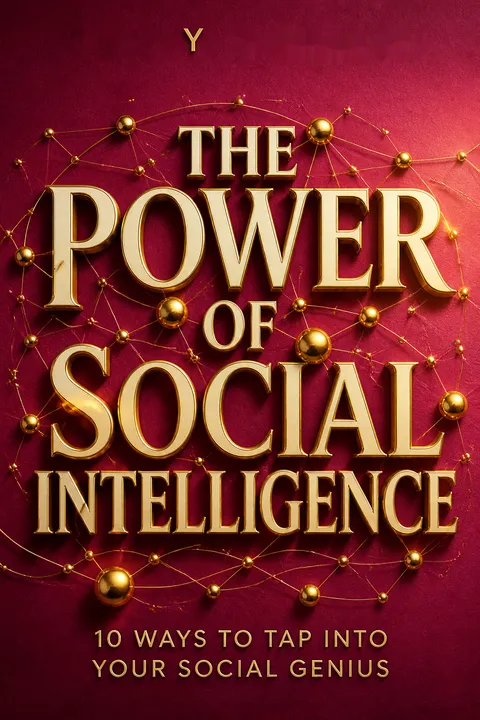
The Power of Social Intelligence receives mixed reviews. Some find it insightful and useful for improving social skills, especially for beginners. Others criticize it as lacking depth and originality. Readers appreciate the book's practical tips on body language, listening, and building relationships. However, some feel it rehashes common advice. The book's structure and readability are praised, but its repetitiveness and overreliance on studies are noted as drawbacks. Overall, it's considered a decent introduction to social intelligence concepts, though not groundbreaking for experienced readers.

Glossary
Social Intelligence
Skill in relating to peopleThe ability to relate effectively to other people across one-to-one conversations, groups, and wider social settings. In Buzan's account, it includes reading nonverbal cues, listening, building rapport, remembering people, adapting to different backgrounds, handling conflict, and showing consideration. It is presented as a set of capacities that can be developed through awareness and practice.
Mind Map®
Visual map of connected ideasA visual method for organizing information around a central subject. Related ideas branch outward, with words, images, colors, or associations helping show connections and make information easier to review. Buzan uses Mind Maps for listening notes, remembering people, preparing conversations, and planning social events.
von Restorff Effect
Distinctive things are memorableThe tendency to remember an item more readily when it stands out from the surrounding material. Buzan applies this idea to social life: distinctive details can help people remember a person, and a memorable feature can make an introduction or presentation easier to recall.
Association Brain Principle
Connect new ideas to known onesBuzan's name for the use of connections to support learning and memory. New information becomes easier to recall when linked to something already familiar. In social situations, a person's name can be associated with a memorable feature, interest, or image.
First Things First
Beginnings are easier to rememberBuzan's label for the tendency to recall the first items or moments in a sequence more readily than those in the middle. He applies it to first meetings and presentations, recommending that people make openings welcoming and place important ideas near the beginning.
Last Things Too
Endings remain memorableBuzan's label for the tendency to remember the last items or moments in a sequence. Applied socially, it suggests paying attention to farewells, final comments, and the close of a meeting, while recognizing that a positive ending cannot replace good conduct throughout an interaction.
Flight! Fight! Insight!
Pause before reacting to differenceBuzan's proposed response to the fear or defensiveness that can arise when encountering someone unfamiliar. Rather than stopping at withdrawal or confrontation, a person pauses, observes, and gathers information about the individual. The aim is to replace stereotypes and reflexive assumptions with a more considered response.
Aikido
Redirect force without escalationA Japanese martial art that Buzan uses as an analogy for conflict resolution. Instead of meeting an opponent's force directly, an Aikido practitioner redirects it. In social situations, the analogy means understanding another person's perspective and responding in a way that reduces unnecessary opposition while protecting one's own position.
Multiple Intelligences
Interacting kinds of abilityBuzan's framework for describing several forms of human ability, including verbal, numerical, spatial, creative, sensual, physical, personal, sexual, spiritual, and social intelligence. He argues that developing one can support the others. The framework functions here as a practical way to notice how varied capacities contribute to social interaction.
The 2:1 Ratio
Listen twice as long as you speakBuzan's conversational guideline to spend roughly twice as much time listening as speaking. It is intended to counter the habit of dominating a conversation and to encourage people to show interest, ask questions, and understand what another person means. It is a flexible prompt, not a rule for measuring every exchange.
FAQ
What's "The Power of Social Intelligence" about?
- Author and Purpose: Written by Tony Buzan, the book explores the concept of Social Intelligence, which is the ability to effectively navigate and negotiate complex social relationships and environments.
- Core Focus: It emphasizes the importance of understanding and improving one's social skills to enhance personal and professional relationships.
- Practical Guidance: The book provides practical advice and exercises to help readers develop their Social Intelligence, including reading body language, listening effectively, and making meaningful connections.
- Broader Impact: It also discusses how improving Social Intelligence can lead to better health, increased happiness, and greater success in life.
Why should I read "The Power of Social Intelligence"?
- Enhance Relationships: The book offers tools and techniques to improve your interactions with others, making it valuable for personal and professional growth.
- Boost Confidence: By understanding and applying the principles of Social Intelligence, you can become more confident in social settings.
- Health Benefits: The book highlights studies showing that a diverse social life can improve your immune system and overall health.
- Comprehensive Approach: It covers a wide range of topics, from body language to negotiation, providing a holistic approach to developing Social Intelligence.
What are the key takeaways of "The Power of Social Intelligence"?
- Definition of Social Intelligence: It is the ability to get along with others and effectively manage social interactions.
- Importance of Body Language: Over half of communication is non-verbal, making body language a crucial aspect of Social Intelligence.
- Listening Skills: Effective listening is more about understanding than speaking, and it plays a vital role in successful communication.
- Positive Attitude: A positive outlook can significantly impact your social success and relationships.
How does Tony Buzan define Social Intelligence?
- Relating to Others: Social Intelligence involves the ability to relate to people on various levels, from one-on-one interactions to larger groups.
- Brain-to-Brain Communication: It requires using your brain's full capacity to communicate and understand others.
- Negotiation Skills: Socially Intelligent people can navigate conflicts and disagreements amicably.
- Cultural Comfort: They are comfortable with people from different backgrounds and can make others feel at ease.
What are the best quotes from "The Power of Social Intelligence" and what do they mean?
- "Use what language you will, you can never say anything but what you are." This quote by Ralph Waldo Emerson emphasizes the importance of authenticity in communication.
- "A man without a smiling face must not open a shop." A Chinese proverb highlighting the power of a smile in social interactions.
- "If you think you can or can’t, you’re always right." A quote by Henry Ford illustrating the impact of attitude on success.
- "Only connect!" By E. M. Forster, stressing the importance of making meaningful connections with others.
How can I improve my body language according to Tony Buzan?
- Awareness: Be aware that 55% of communication is through body language, so it's crucial to understand what your body is conveying.
- Practice: Engage in exercises that help you become more conscious of your posture, gestures, and facial expressions.
- Congruence: Ensure that your body language matches your words to avoid sending mixed signals.
- Observation: Learn to read others' body language to better understand their feelings and intentions.
What exercises does "The Power of Social Intelligence" suggest for improving listening skills?
- Active Listening: Focus on what the other person is saying rather than planning your response.
- Body Language: Use your body to show interest, such as nodding and maintaining eye contact.
- Mind Mapping: Take notes using Mind Maps® to organize and remember key points from conversations.
- Open Mind: Listen with an open mind, avoiding judgments and distractions.
How does Tony Buzan suggest making a good first impression?
- Positive Body Language: Stand with poise, make eye contact, and offer a firm handshake.
- Confidence: Act confidently, even if you don't feel it, to make others more comfortable.
- Appropriate Dress: Dress appropriately for the occasion to make a positive impression.
- Engagement: Show genuine interest in the other person by asking questions and listening attentively.
What role does attitude play in Social Intelligence according to Tony Buzan?
- Positive Outlook: A positive attitude can significantly enhance your social interactions and relationships.
- Self-Confidence: Believing in yourself helps you relax and be yourself in social situations.
- Peer Influence: Be aware of the impact of peer pressure and strive to set a positive example.
- Avoid Stereotypes: Challenge stereotypes and approach each person as a unique individual.
How can I apply the "win-win" negotiation strategy from "The Power of Social Intelligence"?
- Mutual Respect: Enter negotiations with respect for the other party's perspective and needs.
- Common Goals: Identify common goals to find solutions that satisfy all parties involved.
- Patience: Take your time and avoid rushing the negotiation process.
- Body Language: Use body language to convey openness and willingness to cooperate.
What are some Social Graces highlighted in "The Power of Social Intelligence"?
- Showing Appreciation: Express gratitude and appreciation to strengthen relationships.
- Gift Giving: Thoughtful gifts can enhance social bonds and show you care.
- Celebrations: Mark significant events with rituals to reinforce social connections.
- Cultural Sensitivity: Be aware of and respect cultural differences in social interactions.
How does "The Power of Social Intelligence" suggest using Multiple Intelligences to enhance Social Intelligence?
- Spatial Intelligence: Use it to understand personal space and create comfortable environments.
- Physical Intelligence: Maintain physical fitness to attract others and boost your social appeal.
- Sensual Intelligence: Engage all five senses to enrich social experiences.
- Verbal Intelligence: Use language effectively to communicate and connect with others.
About the Author
Other books by Tony Buzan



Download PDF
Download EPUB
.epub digital book format is ideal for reading ebooks on phones, tablets, and e-readers.








