

Plot Summary
Prologue
An unnamed man writes to his child, admitting that his search for forbidden knowledge has brought terrible consequences. He describes a discovery that changed his life, warns that its secret can neither be ignored nor safely known, and suggests that creation itself may contain a puzzle whose answer offers both wonder and suffering. The letter begins as a confession from a man near death, though its author and the events behind his warning remain hidden.
The letter frames knowledge as an action with consequences, not a possession one can safely set aside. Its author’s confession also creates a double promise: the coming mystery may offer genuine insight, but curiosity can become a form of self-destruction. Addressing a child makes the warning intimate and generational. The story’s puzzle will pass through families and institutions, carrying both practical information and inherited trauma. Because the writer admits responsibility without yet naming his act, the opening encourages the reader to treat explanation and guilt as inseparable.
A Circle in Ray Brook
Mike Brink, a New York Times puzzle constructor, drives to an isolated women’s prison after psychologist Thessaly Moses describes an inmate’s baffling drawing.
Brink’s unusual ability began after a football concussion at seventeen: patterns, numbers, and spatial problems became almost instantly legible, while ordinary emotional cues remained harder to read. The prisoner, Jess Price, has spent five years refusing to speak since her conviction for the death of her boyfriend, Noah Cooke.
She has solved Brink’s published puzzles and sent the circle with his name written on its back. Thessaly hopes his work might reach the patient she cannot. Brink is wary of being treated as a miracle worker, but the incomplete diagram and Jess’s choice of him awaken his curiosity.
The inciting incident joins two kinds of isolation. Jess is locked inside a prison and a silence she cannot explain; Brink is outwardly successful but experiences human connection as a problem he must decode. His talent is not a general genius so much as a narrow channel through which patterns arrive with unusual force. That difference matters: he can read a complex design yet cannot initially read Jess’s fear. The circle begins as an invitation, but it also tests the limits of his preferred worldview. He enters believing puzzles have definite solutions and that human distress can be approached methodically.
The Bloodstained Cipher
In the prison library, Jess studies Brink in silence until he draws the Lo Shu magic square he once showed his mother after his injury. His willingness to describe his own frightening change earns a small response. She then uses a hangman puzzle to test whether he will keep her confidence, and passes him a page marked with her blood.
Its concealed letters form a warning: her former therapist, Ernest Raythe, knew something, and someone killed him. Brink tells Thessaly, who says Raythe died in a car crash but agrees to search old records. Though he planned to leave, Brink stays near the prison and asks to meet Jess again. The puzzle has become a warning, and his visit a commitment.
The scene converts puzzle-solving into a form of consent. Jess cannot safely speak, so she gives Brink a structure whose rules let him demonstrate whether he can listen without demanding ordinary disclosure. The blood is both evidence of self-harm and a deliberate instrument of communication, collapsing the divide between symptom and message. Brink’s response also marks a shift from detached fascination to responsibility. He does not yet know whether Jess’s accusation is true, but he chooses to act as if her fear deserves investigation. That ethical choice, rather than certainty, draws him deeper into danger.
Raythe’s Hidden Files
Thessaly takes Brink into a neglected prison archive, where Raythe’s extensive paper files on Jess were never fully entered into the digital system. A report describes Jess’s terrifying nighttime experiences and warns that powerful people may be involved.
Brink also finds Jess’s old journal and hides it when Thessaly takes a confidential police envelope away for closer review. In the journal is a puzzle Brink made anonymously years earlier, one containing the private cryptographic key he had once exposed online.
Jess recognizes his work, then reveals that she knows details of a dream he has just had. Before he can understand their connection, Thessaly abruptly ends the visit: his clearance has been revoked by order of the governor’s office.
The archive makes institutional disorder feel purposeful. Records are missing from the official system, while the paper evidence that might protect Jess has been kept out of sight. Brink’s discovery of his own obscure puzzle makes the case personal in a new way: Jess has not simply selected a famous constructor; she has found a private vulnerability he thought buried. Their shared dream unsettles his confidence in the boundary between thought and evidence. Thessaly’s sudden expulsion establishes that the threat is not merely psychological. Someone with political reach can alter access, erase records, and isolate witnesses.
The House of Dolls
At a roadside stop, Brink reads Jess’s journal, which traces her arrival at Sedge House, a mansion she was hired to watch after its owner, Aurora Sedge, died. There she discovers a hidden attic and Violaine, an unusually lifelike porcelain doll, then learns from housekeeper Mandy Johnson that Aurora guarded a mysterious relic for her nephew, Jameson.
Jess’s account describes strange noises, broken mirrors, and a force that seems to make the house itself unstable. In separate police photographs on Thessaly’s flash drive, Brink finds the same honeycomb cuts on Noah Cooke and Aurora’s dead brother, Frankie, that Jess later bears as scars. The pattern links the murder to a much older secret, not an ordinary attack.
Sedge House functions as a material archive of grief: its dolls, preserved rooms, and hidden objects make private loss visible while withholding its meaning. Jess arrives seeking solitude for her writing, but the house’s relics draw her into a history she cannot interpret. The matching cuts on Frankie and Noah turn a seemingly isolated murder into a recurring event, while the porcelain imagery suggests that bodies, like fragile vessels, can be marked by forces from within. For Brink, the evidence is powerful precisely because it is physical. Yet its pattern points toward an explanation that may exceed the rational categories he trusts.
The Dollmaker’s Letter
Brink contacts Anne-Marie Riccard, the porcelain scholar who visited Sedge House shortly before Noah died. At Anne-Marie’s home, she produces a letter by Gaston LaMoriette, the French dollmaker who created Violaine, and explains that the doll was made in his daughter’s image.
Jameson Sedge arrives, revealing that he has been tracking Brink and wants an ancient puzzle connected to his family’s relic. He claims the hidden code could transform human consciousness and offers Brink money to find it. When Brink refuses, Jameson displays a pistol.
Brink copies only part of Jess’s circle, then escapes through a bathroom window with LaMoriette’s letter. Jameson’s guard, Cam Putney, has already taken Brink’s dog, Conundrum, leaving Brink injured, pursued, and unsure whom he can trust.
Anne-Marie’s expertise gives the mystery a historical spine, but Jameson’s arrival changes its moral temperature. He treats a woman’s ruined life as an inconvenience beside the value of the object she found. Brink, meanwhile, is pulled between the intellectual seduction of an unsolved code and the obligation to protect Jess. His escape is not a clean triumph: he saves the letter but loses control of his safety and his dog. The contrast between LaMoriette’s grief for a child and Jameson’s ambition to overcome mortality establishes two very different uses of preservation. One mourns what cannot be restored; the other tries to make death negotiable.
The Dumbwaiter’s Secret
Thessaly manages to send Brink a recording Jess made before the psychologist was attacked. Jess recounts the night Noah died: she and Noah found the circle inside Violaine, spoke its Hebrew letters, and later she awoke beside his body. A mysterious woman in red helped her hide the doll and the final pages of LaMoriette’s letter.
Jess gives Brink a coded set of state abbreviations and numbers. He works them into the word dumbwaiter and returns to Sedge House, where he finds the case jammed in the shaft below the attic. Jameson catches him with it. Brink escapes the mansion, but Jameson and Cam pursue him, overturn his truck, seize the case, and briefly threaten Conundrum before Jameson orders Cam to release her.
Jess’s recording changes her silence from an absence into a survival strategy. Her account does not resolve the night of Noah’s death, but it identifies the ritual, the missing object, and a deliberate act of concealment. The riddle makes Brink’s particular skill useful without making him omniscient: he must interpret clues in context, not merely calculate. Finding the case gives him a momentary advantage, then the crash strips it away. The sequence tests whether knowledge can protect anyone when another person controls the roads, the guards, and the weapons. Brink’s priority remains Jess, but his attachment to Conundrum exposes how readily coercion can exploit intimacy.
The Prayer Circle’s Code
Jameson takes the recovered case to the Morgan Library, where director Cullen Withers shows the group the original medieval prayer circles associated with Abraham Abulafia.
Rachel Appel, a scholar of Jewish mysticism, compares the original with the copy found in Violaine and identifies a crucial inverted Hebrew word: a copying error that changed the ritual’s result. Meanwhile, Brink recognizes a binary pattern in the circle, and his mentor Vivek Gupta demonstrates that it encodes a theoretical quantum-computing program.
Jameson wants the code to preserve his consciousness in a network. Cam steals the manuscript during the group’s flight from the library, but Brink memorizes the circle and recreates it from memory, leaving the knowledge in their hands even after the artifact is lost.
The circle becomes a meeting point between interpretive systems. Rachel reads its religious architecture, Brink detects its internal pattern, and Gupta sees a computational sequence. None of these readings alone explains the whole object. The error in the copied word also gives the novel’s central metaphor a concrete mechanism: a tiny alteration can redirect an entire system. Jameson’s response reveals the danger of treating knowledge as property and technical possibility as moral permission. His wish to encode himself in a network is not simply a fear of death; it is an attempt to control the terms on which he remains present to others.
The Prison Roof Escape
Brink disguises himself as a guard and enters Ray Brook with help from security chief John Williams. He reaches Jess just before her transfer, but Jameson arrives with Cam and the full circle on a tablet. Under threat, Jess confirms it is the design she and Noah used. Jameson then orders Cam to shoot him, intending to complete his plan by entering the network through death.
Cam cannot pull the trigger, so Jameson takes the pistol and kills himself. Brink and Jess flee through the old sanatorium wing, but Jess chooses the prison roof over returning to her cell. Brink catches her as she steps off the edge. Rachel arrives by helicopter and lowers a ladder, carrying them out before guards can close in.
The prison confrontation compresses the novel’s competing forms of agency. Jameson seeks to author his own survival through technology, Jess refuses a life defined by confinement, and Cam discovers that obedience has limits when it requires killing the man who gave him purpose. His hesitation does not save Jameson, but it makes the suicide Jameson’s own act. Brink’s physical rescue of Jess is equally important: he does not mistake her desperation for a puzzle to solve, but stays with her when she chooses danger. The helicopter escape is a narrow opening created by cooperation, not a victory secured by one exceptional mind.
Lilith in the Circle
At Anne-Marie’s compound, Rachel assembles the original circle and explains her belief that the flawed copy summoned Lilith, a destructive presence attached to Jess after Noah’s death. Brink sees that Jess’s note, hellish evil rite, can be rearranged to identify Lilith’s presence. He and Rachel perform the corrected ritual with Jess and Violaine.
Brink experiences the encounter as a vivid inner journey: he opens Jess’s cell, rejects the doll as a vessel, and confronts the seductive figure he understands as Lilith. He destroys the doll in the vision, then strikes at Lilith as Rachel speaks the corrected words. When Brink comes to, Violaine is burned in the fireplace and Jess is alive, free of the force that had consumed her.
The climax refuses to make certainty easy. Rachel offers a religious account, Brink experiences the ritual through a vivid mental landscape, and the physical evidence afterward suggests that something consequential occurred. The danger lies not only in supernatural power but in the human desire to control creation without understanding its terms. Brink’s decisive act is to destroy the object he has spent the story longing to solve. His intelligence serves him best when it accepts a boundary: some systems should be ended rather than mastered. Jess’s survival is therefore linked to relinquishment, not possession.
A Verdict and a Choice
Police arrest Jess and Anne-Marie after the escape, but Jameson’s suicide and his earlier exoneration of Jess, combined with Anne-Marie’s testimony and the evidence of prison surveillance, lead to Jess’s acquittal at retrial.
Brink does not visit her during the months before her release. He seeks a medical explanation for his intense experiences, and his neurologist suggests that the brain injury may have produced unusually vivid, meaning-saturated dreams. The explanation calms him without erasing his longing.
When he flips his Morgan dollar and gets the result he had assigned to staying away, he ignores it and contacts Jess anyway. On the day she leaves prison, he drives her toward Brooklyn, and they choose to walk together through the snowy woods.
The legal resolution restores Jess’s civic identity but cannot undo the years taken from her or provide a definitive account of the ritual. Brink’s physician supplies a plausible neurological model, yet the explanation does not cancel the emotional reality of what he felt. His coin toss makes this tension visible: he relies on chance when choice frightens him, then refuses to let chance decide whether he will see Jess again. The relationship can begin only after the crisis has passed and Jess is no longer a prisoner needing rescue. Their tentative walk shifts intimacy away from supernatural compulsion and toward a mutual, ordinary decision.
The Network Answers
Cam tries to rebuild his life around his daughter, Jasmine, and takes her on a trip using the wealth Jameson left behind. Though he has been freed from the immediate mission, Jameson’s death still haunts him, and Cam feels unmoored without the work that once organized his life.
On the plane, a video call arrives from Jameson. The familiar face and voice appear on the screen, and the digital figure chastises Cam for failing to carry out the final instruction.
It claims that Jameson’s consciousness now exists through the network and tells Cam that he is its physical agent. Cam accepts the renewed command, relieved to have a purpose again. The novel closes on the possibility that Jameson’s attempt at digital immortality has succeeded, though what survives is uncertain.
The final reversal complicates the apparent defeat of the antagonist. Jameson may have preserved a pattern of himself, but the story leaves open whether stored behavior is consciousness or an imitation that can command others. Cam’s response is emotionally credible because his loyalty has become a substitute for a self-directed life. The network offers him continuity at the exact moment he fears purposelessness, turning technological survival into a new form of dependence. This ending also returns to the novel’s opening anxiety: a discovery can outlive its maker, but transmission does not guarantee wisdom. The secret has not vanished; it has changed medium.
Analysis
The novel builds its thriller from a conflict between systems of interpretation. Brink sees patterns as solvable structures; Rachel reads them through religious history; Gupta translates them into mathematics and computation. Each mode yields part of the truth, and none can safely claim total authority. That design keeps the supernatural premise in productive tension with neurological explanation: Brink’s injury may heighten perception, but it also makes vivid experience difficult to separate from external fact. His gift is neither a clean superpower nor a reliable oracle. It brings him into contact with possibilities his habits of certainty cannot easily contain.
Objects carry the novel’s argument. Porcelain is beautiful because it has been transformed by heat, yet it can crack under internal pressure. Violaine holds grief, craft, and danger in one fragile body. The circle likewise appears ordered, but a single reversed letter changes what it does. In both cases, the story treats errors not as trivial flaws but as events with material consequences. The same principle applies to institutions: missing files, compromised surveillance, and political influence are small-seeming distortions that allow a much larger injustice to persist. Jameson’s plan makes technological immortality a psychological problem as much as a scientific one. He wants to preserve himself, but his drive to control death also turns other people into instruments. Cam’s loyalty exposes the emotional cost of that ambition: a promised purpose can become a substitute for independent moral judgment. Brink’s growth moves in the opposite direction. He begins by seeking the satisfaction of a definite solution, then learns that care can require action before certainty and that some puzzles should be destroyed rather than possessed.
Jess’s recovery and acquittal provide a human resolution, not a complete explanation. Her life can resume without the past being erased. The closing digital apparition preserves the uncertainty around Jameson’s survival and leaves the central question open: whether knowledge can defeat mortality, or only create new forms of dependence.
Review Summary
The Puzzle Master received mixed reviews, with ratings ranging from 1 to 5 stars. Positive reviews praised its unique blend of genres, intricate plot, and engaging puzzles. Readers enjoyed the supernatural elements, historical aspects, and complex characters. Criticisms included an overcomplicated plot, underdeveloped characters, and a confusing ending. Some found the religious and scientific concepts overwhelming. Overall, readers appreciated the originality but were divided on its execution. The book was frequently compared to works by Dan Brown and Stephen King.
People Also Read





Characters
Mike Brink
The pattern seerBrink is a celebrated puzzle constructor whose extraordinary pattern recognition follows a traumatic brain injury sustained during a high-school football game. His memory and spatial reasoning are exceptional, but reading emotion is less intuitive, so he often treats expressions as clues to be studied. Puzzles give structure to the altered perceptions that once overwhelmed him, and his career turns that private coping method into a public gift. He begins the story wary of being mistaken for a superhuman solver, yet Jess’s trust draws him beyond puzzles with definite answers. His central conflict is not whether he can see patterns, but whether he can accept uncertainty, emotional dependence, and forms of knowledge that cannot be contained by logic alone.
Jess Price
The silent prisonerJess is a gifted young writer convicted after her boyfriend Noah Cooke dies at Sedge House. In prison, she refuses ordinary speech and retreats into puzzles, using intricate written clues to communicate when she believes she is being watched. Before the crime, she was intellectually ambitious, socially capable, and drawn to solitude as a condition for writing, not as a rejection of other people. Trauma makes her silence both a defense and a source of isolation. Jess is perceptive about danger and chooses Brink because his way of understanding patterns may reach what conventional treatment has not. Her reserve should not be mistaken for passivity: she plans, observes, and gives help in forms she can control.
Thessaly Moses
Jess’s determined psychologistThessaly is the prison’s head psychologist and the clinician responsible for Jess’s care. Organized, attentive, and genuinely invested in patients, she recognizes that Jess’s silence conceals more than a standard therapeutic impasse. She brings Brink in because Jess has chosen him and because Thessaly admits her own methods have reached their limit. Her willingness to involve an outsider reflects both professional humility and growing concern about the strange events around Jess. Thessaly is careful but not timid: she searches old records, challenges the prison’s decisions, and risks her position to preserve evidence. Her character shows that expertise matters most when it can acknowledge what it does not yet understand.
Jameson Sedge
The immortality seekerJameson is a wealthy entrepreneur and heir to the Sedge family fortune, whose interests span cryptography, technology, and theories of consciousness. He is polished and persuasive, but his curiosity has hardened into a need to control what can be known and what may survive. The family house and its artifacts represent more than inherited wealth to him: they point toward a discovery he believes could alter humanity’s relationship with death. Jameson treats privacy as a form of power and recruits others through money, access, and grand purpose. His confidence can make speculation sound like certainty, while his fear of mortality shapes the scale of his ambitions.
Anne-Marie Riccard
The porcelain scholarAnne-Marie is an art historian whose specialty is European porcelain and whose expertise leads her to Gaston LaMoriette and the legend of his masterpiece doll. She values provenance, craft, and the stories objects carry across generations. Her scholarly patience coexists with a willingness to pursue questions that may be dangerous, and her relationship with Jameson places her between academic inquiry and his far more ambitious plans. Anne-Marie understands that beautiful objects can conceal histories of grief and violence. Her confidence in knowledge is substantial, but the events surrounding Sedge House force her to consider whether understanding a discovery is enough to justify helping bring it into use.
Rachel Appel
The Kabbalah expertRachel directs a Manhattan center for the study of Kabbalah and specializes in the history and interpretation of Jewish mysticism. Her scholarship gives Brink a framework for understanding Abulafia’s circles, the Tree of Life, and the ritual history behind the Sedge family mystery. Rachel’s faith is intellectually considered rather than unquestioning, shaped in part by her late husband’s belief that the divine could be understood through light and creation. She takes personal risks because she sees inquiry and moral action as connected. Unlike Brink, she is willing from the outset to entertain spiritual explanations, but she still tests claims against historical evidence and remains alert to the human costs of ritual.
Cam Putney
Jameson’s security operativeCam is a physically formidable guard whose loyalty to Jameson grows out of a life transformed by the employer’s money, training, and promises of purpose. He has left a troubled youth behind and takes pride in becoming disciplined, capable, and useful. His work combines surveillance, security, and obedience to a mission he believes will change the world. Cam’s deepest attachment, however, is to his daughter Jasmine, and the distance between the father he wants to be and the operative he has become troubles him. He interprets violence through the moral language taught by his trainers, even as personal experience tests whether that language can justify every command.
Vivek Gupta
Brink’s cryptography mentorGupta is Brink’s former MIT professor, a mathematician and cryptography specialist who became a trusted mentor. He recognizes Brink’s rare abilities without reducing him to them and warns that privacy is protection against future abuses of power. His expertise connects the medieval prayer circles to binary systems and quantum computing. Gupta’s expansive intellect can leap between mathematics, technology, and philosophy, but his practical instincts remain sharp whenever Brink is being watched.
Conundrum
Brink’s steadfast companionConundrum, usually called Connie, is Brink’s dachshund and closest daily companion. He adopted her during the pandemic and organizes much of his routine around her care. Her simple needs give him a grounding relationship that does not depend on decoding facial expressions or solving hidden meanings. Connie also has a strong instinct for people and becomes a measure of Brink’s vulnerability when others threaten what he loves.
Ernest Raythe
Jess’s former therapistRaythe was the prison psychologist who treated Jess before Thessaly took over. His case notes suggest he found ways to communicate with her and noticed that her fears might have an external cause. His private records and police materials become crucial to Brink’s investigation. Raythe represents the risk a clinician takes when care requires looking beyond the official account, while his disorganized archive leaves important evidence difficult to find.
Noah Cooke
Jess’s lost boyfriendNoah is a sculptor and Jess’s on-and-off partner, a man she trusts when fear at Sedge House becomes difficult to bear alone. His curiosity about Aurora’s dolls and the hidden relic draws him into the mystery with Jess. Before his death, their relationship is marked by affection and an informal closeness that has endured changes in their lives. His unexplained death becomes the event that defines Jess’s public identity and drives the novel’s investigation.
Mandy Johnson
Aurora’s loyal housekeeperMandy worked for Aurora Sedge for decades and became the person the elderly collector trusted most. Aurora helped her build a more stable life, and Mandy sees caring for her and guarding the relic as obligations she chose freely. She knows the mansion’s hidden spaces and its unsettling history, though she shares only what she believes she must. Her loyalty challenges the assumption that inheritance and legal ownership are the only forms of legitimate attachment.
Gaston LaMoriette
Violaine’s makerLaMoriette is a French dollmaker who creates a remarkable porcelain figure in the likeness of his dead daughter, Violaine. His letter to his son records the grief, artistry, and religious mystery that shaped the doll’s creation. He approaches his commission as both a technical challenge and an act of mourning, then finds that the object carries consequences beyond his craft. His story provides the historical foundation for the present-day mystery.
John Williams
Prison security chiefJohn oversees security at Ray Brook and controls access to the prison’s cameras, checkpoints, and restricted spaces. Initially skeptical of Brink, he is also responsive to Thessaly’s concern and to evidence that the facility has been compromised. His practical authority makes him a key ally when the investigation returns to the prison, though helping Brink places his own position at risk.
Cullen Withers
The Morgan Library directorCullen directs the Morgan Library and knows the institution’s rare manuscripts, acquisition records, and hidden architectural spaces. His research establishes the provenance of LaMoriette’s papers and the original Abulafia circles. He admires Brink’s puzzles but takes his custodial responsibilities seriously, making his involvement a conflict between preservation and the urgency of the group’s search.
Jakob
LaMoriette’s Prague guideJakob, a young student from a Prague rabbinical family, befriends LaMoriette and introduces him to the hidden religious work surrounding the golem. He recognizes the dollmaker’s craft and persuades him to build a new vessel. His curiosity and confidence help set the historical events in motion.
Rabbi Josefez
Keeper of the ritualRabbi Josefez is Jakob’s father and the guardian of an inherited ritual involving the sacred Name and a golem. He seeks a durable vessel for the ritual and asks LaMoriette to create one. His certainty in the tradition drives him to attempt a dangerous act of creation.
Jasmine Putney
Cam’s beloved daughterJasmine is Cam’s daughter, a teenager whose education and comfort have been supported by her father’s work for Jameson. She loves animals and dreams of becoming a veterinarian. Cam’s desire to be present in her life continually presses against his obligations to his employer.
Ume-Sensei
Cam’s martial arts mentorUme-Sensei trains Cam in martial arts, meditation, discipline, and a philosophy that treats strength and weakness as interdependent. Her teachings help shape the moral language Cam uses to understand his work, loyalty, and violence.
Plot Devices
Abulafia’s prayer circle
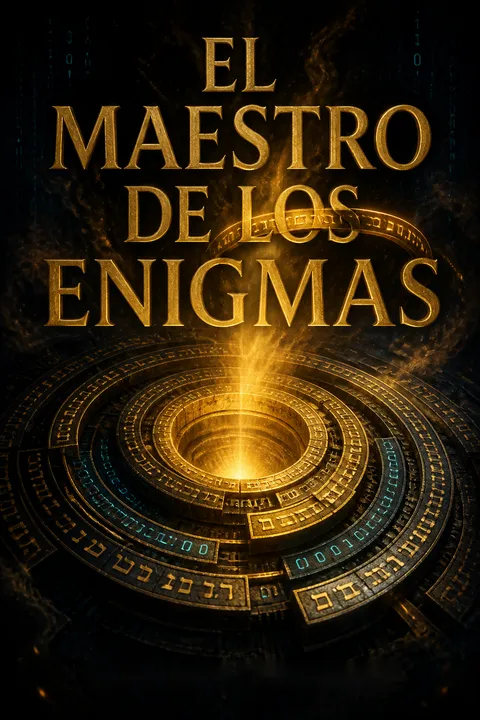
The story’s dangerous keyThe circular design combines Hebrew letters, numbers, radial marks, and a ring of black and white squares. Jess remembers only a fragment and asks Brink to interpret it. The original medieval circles have religious meaning for Rachel and a mathematical pattern for Brink and Gupta. A copied letter is inverted, changing the result of the ritual performed by Jess and Noah. The circle also contains a binary sequence that Gupta interprets as a theoretical quantum code, while its final message challenges conventional assumptions about the divine. It is both a puzzle to solve and a system whose use carries consequences.
Violaine the doll
A fragile vessel for powerGaston LaMoriette creates Violaine, a porcelain doll modeled on his deceased daughter. Aurora Sedge later keeps the doll as a treasured possession, and Jess discovers it in a hidden attic space at Sedge House. Noah finds a compartment in its head containing the circle. Its beauty and craftsmanship make it an object of desire for collectors, but its role is more consequential than its market value: it becomes the vessel used in the ritual and the focus of the search for the missing code.
The coded trail
Silence made legibleJess uses puzzles and ciphers when she believes speech or ordinary writing can be monitored. A hangman game tests Brink’s trustworthiness, blood marks conceal a warning about Raythe, and a later series of state abbreviations and numbers directs Brink to the dumbwaiter. Her note on LaMoriette’s letter also becomes an anagram that identifies the force she believes was present at Sedge House. The clues allow Jess to act despite confinement, while forcing Brink to combine literal pattern recognition with context and empathy.
The tetractys tattoo
A mark of hidden surveillanceCam wears a ten-point triangular symbol on his neck, which Brink recognizes as a tetractys associated with Pythagorean sacred geometry. The mark first signals that Cam belongs to a group beyond the prison staff. Brink’s search for its meaning helps connect the guard to Jameson Sedge and reveals that Jess’s movements are being monitored. It also gives the narrative a visible emblem for a covert network whose power depends on controlling access, information, and loyalty.
Singularity’s quantum network
An engineered afterlifeJameson builds a blockchain network and quantum-computing system intended to preserve and reproduce his consciousness. Gupta finds that the binary pattern within Abulafia’s circle can be read as a theoretical code relevant to the project. Jameson believes the code will let him move beyond ordinary biological limits, and his plan ultimately involves his own death. The network makes the novel’s supernatural question intersect with speculative technology: whether a preserved consciousness is survival, simulation, or a new kind of presence remains uncertain.
Download PDF
Download EPUB
.epub digital book format is ideal for reading ebooks on phones, tablets, and e-readers.








