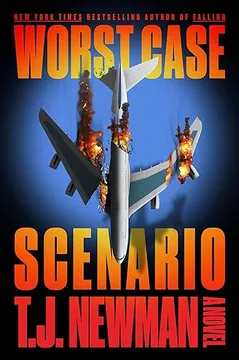


Plot Summary
Prologue
At thirty-five thousand feet, Coastal Airways Flight 235 loses its captain to a fatal heart attack. A flight attendant tries to pull his body off the controls while another struggles to reach the unconscious first officer, locked in the lavatory. The attendant in the cockpit finally finds the radio, but broadcasts her panic over the cabin speakers instead.
The first officer wakes, forces his way back, and reaches the cockpit just as a runaway drinks cart pins a colleague against the door. He takes in the dead captain, the warnings, and the ground rushing closer. The plane is already falling toward Waketa, Minnesota.
The opening turns a technical emergency into a chain of ordinary human failures: a medical crisis, a locked door, a mistaken switch, a body too heavy to move. No single person causes the disaster, yet each second narrows the room for choice. The passengers are initially unable to understand their danger, a delay that makes the first screams more chilling than immediate panic would be. By ending at the cockpit threshold, the prologue makes the reader feel the crash as both spectacle and consequence. It also establishes the novel’s central pressure: people must act before they have enough information, and the cost of waiting can be irreversible.
A Jet Falls on Waketa
On Good Friday, fire chief Steve Tostig sits alone in church, still grieving his wife Claire, when a commercial jet tears across the sky and an explosion shakes the town. Power fails across the Twin Cities. Aircraft wreckage falls through Waketa, killing and injuring people and blocking the main highway.
Steve sees smoke near his son Matt’s school, checks that the school is not burning, then continues to Clover Hill nuclear plant, where he works. Nuclear specialist Joss Vance, recently returned to her hometown, recognizes the danger from the blackout and an alert on her satellite phone.
Plant manager Ethan Rosen steadies his shaken control-room staff and sends Steve to assess the damage. The town’s ordinary morning has become a disaster with no clear boundaries.
The crash does not arrive as a single clean impact. It fragments into separate emergencies, forcing Waketa’s residents to interpret smoke, silence, and debris without reliable communications. Steve’s decision to pass the school and continue to the plant establishes his defining conflict between private attachment and public duty. His grief is not background decoration: it has trained him to retreat into tasks, which makes duty both a strength and a refuge. Joss’s immediate recognition contrasts with the community’s understandable disbelief. The opening therefore makes expertise emotionally complicated. Knowing what may happen does not make Joss less afraid; it only gives her fear a direction.
The Pool Starts Leaking
At Clover Hill, the reactors have shut down, but the crash has scattered debris across the site and severed the plant’s connection to the electrical grid. Steve finds a damaged dry cask with exposed radioactive fuel and a worker, Vinny, who has been lying beside it.
A more dangerous discovery follows: aircraft debris has cracked the building and liner of Reactor Two’s spent fuel pool. Water is escaping, and the newest fuel rods are densely packed inside. Joss calculates that the pool could reach ignition temperature in less than sixteen hours if the leak continues.
The rods cannot be allowed to burn; the resulting fire could spread radioactive contamination far beyond Minnesota. The crisis is no longer just the plane crash. Clover Hill’s remaining safety systems are now a countdown.
The damaged cask makes the danger visible through Vinny’s exposure, while the leaking pool presents a more frightening threat precisely because its consequences are delayed. The novel distinguishes between immediate injury and infrastructural risk: a person can be carried away, but a failing cooling system threatens whole regions. The sixteen-hour estimate gives the story a practical deadline while exposing how little margin safety systems may have when damage exceeds the scenarios they were designed for. Joss’s calculations are not abstract expertise. They translate invisible radiation into a finite amount of time, making her knowledge both indispensable and psychologically punishing.
A President Orders Evacuation
President Michael Dawson learns that the plane struck Clover Hill and orders commercial aircraft grounded while officials investigate. Plant manager Ethan Rosen confirms that the reactors remain intact, but explains that the spent fuel pool is leaking and that emergency diesel generators now power the facility.
Joss gets past confused security guards and reaches the control room, where she and Ethan clash over whether to release accumulating hydrogen from the damaged pool building. Waiting could allow an explosion; venting will release radioactive material into the air.
Dawson consults Joss, extends the evacuation radius to twenty miles, and orders a public warning. The plant begins preparations to vent while National Guard helicopters measure radiation. The decision is not between danger and safety, but between a controlled release and a potentially uncontrolled catastrophe.
This choice exposes the limits of a purely technical definition of safety. Venting reduces the risk of an explosion inside the plant, but it transfers danger outward to residents who may not know they need to leave. Joss argues from the worst credible consequence, while Ethan weighs the immediate exposure of workers and the possibility that the danger may remain contained. Neither position is simply cowardice or heroism; each makes a different population visible. Dawson’s willingness to widen the evacuation zone gives political authority a useful role, but the order is only meaningful if people can receive and act on it. The scene makes communication part of emergency engineering.
Waketa Builds Its Own Lifeline
With phones, power, and emergency alerts failing, retired Clover Hill worker Marion uses his knowledge of the plant to lead his daughter Dani’s family to an abandoned Cold War bunker. He finds an old plant radio and reaches the control room, then uses a CB channel to relay updates across Waketa.
At United Grace Church, Reverend Michaels and local teachers turn the building into a supply and evacuation center. Principal Gazdecki and Carla organize children and residents; when roads are blocked, neighbors ferry evacuees by boat.
The bunker gives Carla and Marion a place to shelter Brianna, but it also connects them to the plant’s transmissions. Information moves through familiar local networks instead of official systems, allowing residents to make plans while federal evacuation instructions struggle to reach them.
Marion’s old equipment matters because it is embedded in local memory: he knows what the radios can do and where the bunker is. The town’s response is not a rejection of official help, but a bridge built while official systems are damaged or delayed. Church, school, boats, and CB radios become infrastructure because people already trust one another enough to use them. This challenges the assumption that resilience comes only from centralized resources. At the same time, the improvised response carries an emotional cost: Carla must choose between her pupils and her family, then later return to help the town. Care is distributed, but never without difficult trade-offs.
Connor Waits Above Fire
A detached aircraft wing slides onto a bridge and crushes the front of the Hays family minivan, leaving its back end hanging over the Mississippi. Father Paul, an emergency-room doctor, and the family’s teenage daughter and mother lie motionless, while five-year-old Connor remains trapped in his car seat.
Paul dies after directing Connor to obey the firefighters. Dani Allen and her crew, including her husband Levon, fight the burning jet fuel, but their chief orders them to leave and report to the plant.
The crew understands that a nuclear emergency threatens far more lives, yet they also know Connor will die if they abandon him. Rookie firefighter Boggs backs Dani and Levon. The team refuses the order and stays at the bridge, committing their scarce equipment and time to one stranded child.
The bridge scene makes the book’s argument about collective survival concrete rather than sentimental. A nuclear catastrophe could threaten millions, but Connor is not a statistic to the people who can hear him and see him waiting. The firefighters’ disagreement is morally serious because both choices carry consequences: leaving may save the plant, while staying may preserve a single life and cost crucial response capacity. Dani’s instinct to protect Connor is intensified by her own daughter, but the crew’s decision is not only personal identification. They insist that rescue remains the purpose of their work, even when command structure demands triage.
The Town Finds Its Welder
Joss’s team concludes that the pool leak must be patched from inside, using a sheet of metal positioned by the overhead crane and welded underwater. The specialized equipment is unavailable, so Joss and Carla drive to find Ray Jay Brown, a former Marine and local boat-repair operator with the necessary diving gear.
R.J. resents Clover Hill and the institutions that left his business to fail; he refuses to join the mission, but gives the women the equipment. Carla tells him plainly that the town needs him, then leaves with the gear.
Back at the plant, Steve volunteers to enter the radioactive pool after ruling out sending engineers or his firefighters. In parallel, the town’s CB network carries plant updates, and the firefighters continue searching for a way to reach Connor.
R.J.’s resentment is rooted in material abandonment, not a simple refusal to be brave. The plant needs the skills of someone it has no reason to expect loyalty from, and Carla recognizes that moral appeals alone cannot erase his grievance. Her argument gives him agency by naming the opportunity to act, even though he still chooses not to enter the pool. Steve’s decision reveals a different form of responsibility: he will not designate a colleague’s child as the acceptable sacrifice. The improvised repair depends on people whose labor and equipment sit outside the institution’s formal plans, exposing the gap between technical design and the communities expected to absorb its failures.
A Patch Beneath the Water
Wearing improvised diving gear, Steve guides a sheet of metal over the damaged pool wall while his colleagues control the crane and welding current. The old wetsuit sheds pieces into radioactive water, and the taped air connection begins to unravel.
Steve completes the patch but is electrocuted and sinks toward the fuel rods. A colleague and the crane operator pull him clear. The pool begins refilling, confirming that the repair has held, and Steve wakes after emergency treatment. Doctors estimate that his radiation exposure may leave him only months to a year.
He tells Matt the truth and admits that, after Claire’s cancer, he hid from grief by retreating into protocols and pushing his son away. Matt asks him to fix their broken fishing pole together, giving them a promise grounded in time they may not have.
The repair succeeds through a chain of imperfect substitutions: old gear, improvised air supply, untested technique, and the coordinated labor of colleagues. Steve’s physical collapse makes the technical victory inseparable from its human cost. His prognosis also breaks the emotional defense that has shaped his relationship with Matt. Where he once used procedures to avoid naming Claire’s illness, he now acknowledges his own likely death without hiding behind a plan. The fishing pole matters because it is an ordinary unfinished task, not a symbolic cure for grief. Matt asks for shared work, and Steve finally understands that protection without presence can become another form of abandonment.
Dani Swings Into the Van
The firefighters cannot reach Connor through the flames, and a National Guard helicopter’s downwash intensifies the fire, burning the rescuer who tries to descend. With the aircraft leaving, Dani’s crew has no safe plan.
R.J. hears Marion’s radio updates and arrives in his tow truck, offering its boom as a makeshift rescue crane. Dani is lifted over the river toward the van, but the cable falls short. She swings herself into the open doorway, secures her harness, and reaches Connor.
He is too frightened to cross the gap, so she goes to him instead. As she takes him in her arms, the bridge gives way. The van, the aircraft wing, and both rescuers plunge into the Mississippi, leaving Levon and the crew on the bank without knowing whether either will survive.
Dani’s rescue depends on a change in perspective. The first plan assumes Connor can overcome terror and move toward safety; when he cannot, Dani accepts the greater physical risk and crosses to him. Her decision is not a denial of fear, but a response to what trauma has made impossible for a five-year-old. R.J.’s arrival also complicates the earlier refusal: he does not become a cleanly transformed volunteer, but his equipment and practical skill return to the crisis when they are needed. The bridge collapse strips away the illusion that a successful rescue can be controlled from shore. Care can reach the endangered person, but it cannot guarantee a safe landing.
A Second Clock Starts
While Dani and Connor remain trapped underwater, Joss discovers that the intact tail section of Flight 235 struck the building housing Reactor Two’s emergency generators. It also ruptured an ordinary building water line connected to the plant’s wider system.
Contaminated water has been flooding the basement unnoticed, threatening the generators that keep the reactor and pool coolant pumps running. Joss warns that losing power could leave less than half an hour before the water heats dangerously. Marion prevents the control room from running its emergency pump dry, but no camera covers the subbasement.
Brianna realizes that a person should not be sent in if the water will kill them. Matt offers his drone and guides it through the building. Its camera reveals rising water, but the drone fails before it can inspect the pump, and one generator shuts down.
The new threat grows from the same wreckage that began the crisis, but it is hidden behind an ordinary pipe and outside the plant’s monitored systems. This failure is more than bad luck: the infrastructure’s safety logic does not account for every connected system, and the people running it cannot act on what they cannot see. Marion’s warning protects the pump from being destroyed by a mistaken start, while Brianna reframes the problem by questioning the assumption that a human must perform the inspection. Matt’s drone turns his earlier reckless curiosity into useful skill, but its destruction shows that technical ingenuity can reveal danger without solving it.
The River Takes Them Under
In the submerged van, Dani finds an air pocket and keeps Connor positioned above the water while rescuers search from the river. R.J. first locates them, but the van’s thick window resists a crowbar and crash ax. When Connor begins to lose consciousness, R.J. returns with a handgun and shatters the glass. Coast Guard divers bring Connor out first with an air regulator.
The van shifts, forcing water into Dani’s pocket; another diver frees her trapped leg, but she stops breathing before reaching the surface. Levon performs CPR on the bank, then rides with Dani and Connor in the helicopter as medics treat their severe hypothermia. He chooses the pediatric hospital Connor needs, trusting that Dani can hold on long enough to reach care.
The rescue asks the characters to manage several forms of vulnerability at once: oxygen, cold, trauma, and the physical instability of the wreck. Dani’s care for Connor continues even when she is exhausted, but the scene refuses to make love a substitute for medical skill. R.J.’s improvised shot succeeds where the expected tools fail, and the Coast Guard’s expertise completes what local ingenuity began. Levon’s hospital decision is an especially painful form of care: he must prioritize Connor’s specialized treatment while fearing that the extra distance may cost Dani her life. The sequence makes rescue a collective process, with no single person able to secure the outcome alone.
Two Wheels, One Last Chance
With two generators failing and the subbasement pump unavailable, the plant must drain the flooded area or lose power to vital cooling systems. Steve and Joss enter the building in protective suits, reach the flooded basement, and find the pump’s manual switch dry behind discarded siding.
Steve tries it, but the siding shifts, water floods the panel, and the switch fails. The only remaining option is a pair of sluice wheels that must be turned together. Both are already suffering from radiation exposure as they brace themselves and force the wheels around.
The chapter ends with the waterline still holding. The coda confirms that the effort prevents the catastrophe, though Steve and Joss do not survive the day. The immediate danger passes at a cost their community cannot undo.
The final operation gathers the book’s competing forms of responsibility into one physical task. Steve’s earlier willingness to enter the pool and Joss’s insistence on confronting worst-case risks now converge in contaminated water, where neither expertise nor courage can make the danger disappear. The failed switch matters because the last chance is lost through a small, mundane piece of debris, not a grand act of sabotage. They must then rely on paired effort, an apt culmination for a novel whose crises are solved by interdependence rather than solitary mastery. The coda’s confirmed survival of the wider world does not convert their deaths into a fair exchange. It only shows what their choices made possible.
Epilogue
A year later, President Dawson honors Joss, Steve, and Dani for their actions. Ethan accepts Joss’s medal and carries her research forward through a foundation; Matt receives Steve’s medal, supported by the aunt and uncle who have taken him in and by Waketa’s wider community. Connor helps place Dani’s medal around her neck.
Dani and Levon are expecting a daughter they plan to name Jocelyn. Later, Matt rides to the river with his repaired fishing pole and ties the knot his father taught him. Fishing alone, he finds that the familiar silence can still feel like time spent with Steve. He casts again, and a fish takes the line.
The coda refuses to make public honor a substitute for private loss. Dawson names the unfairness of Steve’s death directly, giving Matt permission to grieve without converting pain into a patriotic lesson. Meanwhile, Ethan’s foundation turns Joss’s unfinished research into ongoing work, and Dani’s daughter will carry Joss’s name into a future she never saw. Matt’s final fishing trip offers a quieter form of continuity: the learned knot, the repaired pole, and the place he shared with his father. These inheritances do not restore the dead. They let the living keep acting within relationships shaped by love, memory, and practical care.
Analysis
Worst Case Scenario treats disaster as a test of attention: who notices a failing system, who believes an unwelcome warning, and who recognizes the person directly in front of them. The crash creates several scales of emergency at once. A plane’s passengers die, a town loses power and transport, a nuclear plant risks losing cooling, and a child remains trapped within sight of rescuers. The story refuses to let the largest number automatically settle every moral question. Engine 42 understands the danger at Clover Hill, yet refuses to accept that Connor’s life becomes negligible simply because millions may be at risk. The novel’s idea of collective responsibility therefore begins with the individual rather than erasing them.
Its treatment of expertise is equally grounded. Joss can calculate the pool’s danger, Ethan can organize a control room, Marion can restore forgotten communications, Renee can propose an unconventional repair, and Matt can operate a drone. None can solve the emergency alone. Institutional systems fail not because knowledge is useless, but because knowledge is siloed, assumptions go untested, and critical equipment sits outside the systems being monitored. The town’s improvised network works because people share information and skills across boundaries that formal plans overlook.
The emotional arc centers on the costs of protective detachment. Steve has tried to spare Matt by hiding from grief, but this leaves his son alone with it. The crisis forces Steve to name death honestly and offer the time he still has. Dani’s rescue of Connor embodies the opposite risk: she does not demand that a traumatized child behave bravely before she helps him. Across these relationships, care means seeing another person’s actual limits and adapting the plan around them.
The ending resists a consoling bargain. The larger catastrophe is prevented, but the deaths of Joss and Steve are not made fair by medals or public gratitude. Their work survives in research, family, memory, and a community that keeps helping. The book’s final measure of success is not that sacrifice becomes beautiful, but that the living are given a future in which they can remember it honestly.
Review Summary
Worst Case Scenario receives overwhelmingly positive reviews, averaging 4.07/5 stars. Most readers praise T.J. Newman's relentless pacing, emotional depth, and meticulous research, describing it as an adrenaline-fueled disaster thriller that reads like an action movie. The audiobook narration by Joe Morton receives particular acclaim. Common criticisms include an overly large cast of characters, occasionally unrealistic dialogue, and some implausible plot points. Many readers finished it in a single sitting and consider it Newman's most emotionally resonant work yet.
People Also Read







Characters
Steve Tostig
The grieving fire chiefSteve is Clover Hill’s fire chief and Matt’s widowed father. Broad-shouldered, practical, and trusted in Waketa, he has built his identity around being useful when other people are in danger. Since Claire’s illness and death, however, he has relied on work and compartmentalization rather than emotional honesty. His instincts are protective, but protection often means keeping others at a distance, especially Matt. Steve’s professional discipline gives him authority during the emergency; his private struggle is learning that a son needs presence and candor as much as safety. His attachment to fishing, shared with Matt, represents the kind of ordinary closeness he hopes to recover.
Joss Vance
The nuclear realistJoss is a nuclear engineer and regional representative of the Nuclear Emergency Support Team. A Waketa native with years of policy experience in Washington, she is sharp, direct, and unwilling to soften warnings merely to make powerful people comfortable. Her vigilance comes from understanding how low-probability risks can be dismissed until they become immediate. Joss’s competence is matched by impatience with bureaucracy and a deep attachment to the community she sometimes feels out of step with. She wants safety grounded in evidence, not reassurance. Her history at Clover Hill and her personal ties there make the crisis more than an abstract professional assignment.
Ethan Rosen
Clover Hill's steady managerEthan manages Clover Hill and leads the control-room response after the crash. He is methodical, technically knowledgeable, and capable of calming a room by giving people concrete work. His instinct is to preserve options and avoid exposing others to unnecessary risk, but a crisis repeatedly forces him to make decisions before certainty is available. Ethan’s professional composure does not mean he is untouched by fear; he worries about his family and the people under his authority. His working relationship with Joss brings old differences about responsibility and risk into the present, making their disagreements both operational and personal.
Dani Allen
The child-first firefighterDani is a Waketa firefighter, Levon’s wife, and Brianna’s mother. She is observant and decisive, with a talent for reading what frightened people need rather than demanding that they behave rationally under pressure. Her maternal instincts deepen her awareness of danger, but they do not make her cautious at another child’s expense. Dani treats rescue as a relationship: she builds trust with Connor before asking him to move. At work, she is part of a close-knit crew that debates hard choices openly. At home, her bond with Brianna keeps the ordinary future she hopes to return to vivid even during the emergency.
Matt Tostig
The grieving, inventive sonMatt is Steve and Claire’s eleven-year-old son. Smart, technically curious, and eager to prove himself, he has become rebellious in the wake of his mother’s death and his father’s emotional withdrawal. His interest in drones and electronics gives him practical abilities that adults sometimes overlook, while his immaturity leads him to take risks he does not fully understand. Matt wants recognition, but beneath the bravado he is a grieving child unsure whether his father still sees him. The fishing pole he shares with Steve connects his impatience and stubbornness to memories of a closer relationship.
Connor Hays
The stranded young passengerConnor is five years old and traveling with his family when the plane wreckage traps their minivan on a bridge. Quiet and overwhelmed, he cannot simply follow instructions or overcome fear on command. Dani learns to reach him through small, familiar subjects, including his favorite dessert and his imagined superhero training. Connor’s vulnerability makes the firefighters’ choices immediate and personal, while his growing trust allows them to plan a rescue around what a young child can actually do. He is not a miniature adult; his age shapes every practical challenge the rescuers face.
Levon Miller
Dani's firefighter husbandLevon is Dani’s husband and fellow member of Engine 42. He is a committed firefighter who stands with Dani when the crew must choose between the plant and Connor. At home, he is devoted to Carla and grapples with not knowing how to help her through repeated pregnancy losses. His instinct to protect the people he loves sometimes leaves him uncertain what to say, but he listens and stays present. Levon’s loyalty to his crew and family makes him a bridge between the emergency at the river and the private life the responders are trying to preserve.
Carla
The teacher turned organizerCarla is a first-grade teacher, Levon’s wife, and a trusted adult to the children of Waketa. She is warm with her students but firm when their safety is at stake. The crisis forces her to weigh her responsibility to the classroom against her connection to Brianna and Matt. Carla knows the town’s people and histories well enough to find the right local help, and she later helps connect the plant’s warnings with the community’s improvised communications. Her practical compassion is rooted in relationships, not sentiment: she notices who is missing, who needs transport, and who may have a skill the emergency requires.
Marion
The retired plant guideMarion is Dani’s father, Brianna’s grandfather, and one of Clover Hill’s earliest employees. Decades of plant experience have left him with knowledge of forgotten facilities, emergency equipment, and the landscape around the site. He is methodical and protective, especially toward Brianna, but his competence is not limited to the plant: he can turn an old radio system into a town-wide source of information. Marion tends to act before explaining himself, which can frustrate Carla, yet his choices are grounded in careful knowledge of local roads, resources, and people.
Ray Jay Brown
The resentful local diverR.J. is a former Marine and boat-repair operator who once worked on vessels along the Mississippi. As Clover Hill’s decline dried up his business, he was left feeling discarded by the institutions now asking for his help. He is rough-edged, suspicious, and protective of his independence, with a strong practical grasp of diving and heavy equipment. R.J. does not respond to appeals that pretend the town treated him fairly. His skills and his anger are both real, and those around him must reckon with both rather than treating him as a convenient tool.
Michael Dawson
The tested young presidentDawson is the youngest president in American history, newly in office and facing a national emergency before he has had time to settle into the role. He is decisive, politically aware, and willing to make public safety orders without waiting for perfect information. His lack of a spouse or children shapes the way he thinks about family, but it does not prevent him from empathizing with the people at risk. Dawson must translate technical realities into public instructions, balancing the need to project steadiness with the responsibility to admit uncertainty.
Brianna
Dani's perceptive daughterBrianna is Dani’s six-year-old daughter and Marion’s granddaughter. She is close to both adults and accustomed to their shared family life. Her age leaves much of the nuclear emergency beyond her understanding, but she notices the practical truth in front of her and asks direct questions. Her suggestion that the plant use a machine rather than send a person into lethal water gives the adults a fresh way to frame the problem. Brianna also represents the ordinary childhood the adults are trying to protect, from favorite desserts to the simple question of which bunk bed she may use.
George
Steve's second-in-commandGeorge is Steve’s deputy in the plant fire department and a close colleague who understands the risks of responding inside Clover Hill. He helps coordinate the underwater repair and works the line while Steve welds. George is practical and capable, but the scale of the disaster places him in situations without a familiar procedure for every outcome. His concern for Steve is personal as well as professional, and his presence shows how emergency work depends on partners who can improvise, communicate, and keep hold of one another when equipment or plans fail.
Reverend Michaels
The church's steady hostReverend Michaels leads United Grace Church, which serves Waketa as both a place of worship and a community center. He understands that people need more than instructions in a crisis: they need food, practical help, information, and a place to gather. He turns the church into a coordination point without making the emergency about himself. His instinct is to recognize the forms of care already present in the town and help them work together, whether that means organizing supplies or relaying Marion’s radio updates.
Claire Tostig
The remembered wife and motherClaire is Steve’s late wife and Matt’s mother, a teacher whose absence shapes the family’s daily life. Her death from cancer leaves Steve struggling to speak openly about grief and leaves Matt without the parent who once helped him feel understood. In Steve’s memories, Claire is warm, perceptive, and willing to challenge his instinct to manage pain by retreating into work. Her influence remains present in Matt’s stubbornness and in Steve’s desire to become a more emotionally available father.
Paul Hays
Connor's devoted fatherPaul is Connor’s father and an emergency-room doctor traveling with his family. When the minivan is trapped, he tries to orient the firefighters and keep his young son focused on the people trying to help.
Valerie Hays
Connor's motherValerie is Paul’s wife and Connor’s mother. She is traveling with her family through Waketa when the detached aircraft wing blocks the bridge.
Caity Hays
Connor's teenage sisterCaity is thirteen and Connor’s older sister. She rides in the family minivan with her parents and younger brother during the crash that leaves the vehicle trapped on the bridge.
Tony Yoshida
Dawson's trusted adviserTony is Dawson’s chief of staff, longtime mentor, and closest adviser. He carries information between the president and the crisis teams while helping Dawson move from public ceremony into command.
Renee
The overlooked engineerRenee is a fluid-dynamics engineer at Clover Hill. Often talked over by colleagues, she identifies a way to patch the pool from inside by positioning damaged steel and welding it in place.
Vinny
The exposed plant workerVinny works at Clover Hill and is caught near a dry cask struck by aircraft debris. Steve remembers his humor from the plant cafeteria, making the abstract danger of radiation painfully personal.
Boggs
Engine 42's rookieBoggs is the newest firefighter on Engine 42. He defers to Dani’s judgment but makes clear that rescuing a single child remains part of the job he chose.
Plot Devices
The spent fuel pool
The hidden countdownThe pool stores recently used nuclear fuel under water, which cools the rods and shields radiation. Aircraft debris cracks its structure, allowing water to drain away. Joss’s estimate of less than sixteen hours gives the main crisis its deadline. Repairing the leak does not end the danger, since later damage to the building’s water line threatens the generators that power the coolant pumps. The pool therefore links the crash’s visible destruction to the slower, less visible threat of overheating and radioactive release.
Emergency power systems
The shrinking safety netClover Hill first loses its connection to the electrical grid, then relies on emergency diesel generators and backup systems to keep cooling equipment operating. These redundancies are meant to preserve safety, but crash damage and flooding threaten them in sequence. Their priority settings determine which systems fail first, complicating the team’s effort to operate the subbasement pump. The plant’s power hierarchy turns technical details into a dramatic question: how long can a damaged facility maintain the conditions that prevent the crisis from becoming a meltdown?
Marion's CB network
A town-wide lifelineWhen electricity, phones, and emergency alerts fail, Marion revives an older radio system and broadcasts updates from Clover Hill. Local residents, school buses, and people with CB radios carry the information onward. The network helps Waketa organize evacuation and reach residents who might otherwise be cut off. It also connects plotlines that official communication cannot: Carla can hear what is happening at the plant, and Dani’s crew can learn what resources are moving nearby. Its effectiveness comes from the people who already know how to listen and respond.
Matt's drone
A machine enters the dangerMatt’s drone is first a tool of adolescent bravado, used to film the damaged plant without permission. Later, his knowledge of the controls helps the engineers send it into a flooded building to inspect the basement. The camera reveals that water is reaching the emergency generators, information the control room cannot obtain through its failed monitors. The drone is not durable enough to complete the inspection, but its partial footage changes the team’s understanding of the threat. It turns Matt’s risky curiosity into a useful contribution while showing that seeing a problem is not the same as solving it.
The old emergency bunker
Shelter beneath the plantMarion knows of a Cold War bunker built into the wooded grounds of Clover Hill and retains the key after retiring. He brings Carla, Brianna, and Matt there to avoid road congestion and exposure while the crisis develops. The bunker provides supplies and an old plant communications system, allowing Marion and Carla to relay updates to the town. It is not merely a safe room: its radio helps connect the plant’s technical response to Waketa’s evacuation efforts, making forgotten infrastructure useful again.
Download PDF
Download EPUB
.epub digital book format is ideal for reading ebooks on phones, tablets, and e-readers.








