

Key Takeaways
Make the QBR a coaching room, not a forecast-pressure theater
The numbers told the story. At Forego, reps faced a public forecast review where managers asked shallow questions, then pressured them to commit to a number. The results exposed the cost: Shannon forecast $250,000 and closed $150,000; Kathleen forecast $350,000 and closed $150,000; Hannlin forecast $400,000 and closed about $50,000. Carlos forecast only $175,000, despite pressure to raise it, and closed $250,000.
Trade pressure for learning. A useful review uncovers what is known, what is missing, why the deal is advancing or stalled, and what the rep should do next. Shared deal lessons help the whole team recognize familiar traps. The goal is not to extract a more convenient promise, but to improve judgment and get bad news early enough to act.
What's striking is how the meeting's incentives made inaccurate forecasts predictable: reps learned that confidence was rewarded, while candor invited scrutiny. Organizational psychology calls this a problem of psychological safety, meaning people need to believe that reporting a mistake will not trigger humiliation or retaliation. Safety does not mean lowering standards. It makes rigorous questions more useful because the answers become more trustworthy. The case also suggests that a forecast meeting has two jobs, planning the business and developing sellers. When the first crowds out the second, leaders may get a number but lose the information needed to improve it.
Standardize deal stages with buyer-verifiable evidence, not rep optimism
Give everyone the same map. Forego's reps and managers used terms such as Champion and Economic Buyer inconsistently, so their account descriptions did not create a shared picture. The book recommends a common sales process, moving from customer discovery and scoping through executive confirmation, a value test, a business case, and closing.
Require evidence to advance. Each stage needs exit criteria, meaning observable customer actions or information that show its work is complete. For example, discovery is stronger when the rep sends the customer a summary confirming the problem, relevant people, desired outcome, and next meeting. A CRM stage alone proves little. Shared stages and evidence give managers a way to see where a deal stands, diagnose skill gaps, and compare results across teams.
This is measurement used for learning rather than surveillance. A common process reduces ambiguity, much as shared standards let a hospital team or engineering crew coordinate without renegotiating every term. But a checklist can become another performance ritual if employees learn to produce documents that satisfy managers without reflecting buyer reality. The useful distinction is whether evidence comes from the customer and changes a decision. A process should also bend to genuine differences in how customers buy. Standardization works best as a common language, not a script that mistakes conformity for competence.
Prove urgent business pain before rushing customers into product tests
Activity is not qualification. Forego's proof-of-concept tests lasted about four weeks, averaged $50,000 in deal value, and converted only 25 percent of the time. With a $1.2 million annual quota and an average $50,000 deal, a rep needed 24 wins. If 18 came from new customers, a 25 percent win rate meant roughly 72 tests to produce them. More tests could not fix the underlying weakness: reps had not established that the product solved an important business problem.
Investigate before demonstrating. The book describes an insurance salesperson who asked about family obligations and expenses, then helped the buyer recognize what could happen if he died without coverage. The questions made an abstract risk urgent. In enterprise sales, discovery and scoping should similarly uncover pain, quantify its cost, and clarify the consequences of inaction before proposing a test.
The conversion math makes a powerful operational point: low-quality activity consumes capacity that could have gone to better opportunities. This resembles Goodhart's law, the warning that once a measure becomes a target, people can optimize the count while weakening the outcome it was meant to represent. Counting product tests may therefore create more tests, not more customer value. The insurance story also marks an ethical boundary. Clarifying a real consequence can help a buyer decide; intensifying fear beyond the evidence becomes manipulation. Urgency is legitimate when it is grounded in the buyer's actual risks and priorities.
Target accounts where your product's edge creates measurable business value
Define the right customer. An Ideal Customer Profile, or ICP, identifies the organizations and use cases where a product's distinctive capabilities solve meaningful pain. The work connects product strengths to customer problems, measurable benefits, the people responsible for those problems, and the industries or companies most likely to benefit.
Rank for reality, too. A strong theoretical fit may still be a poor target if the company is unlikely to buy soon or its sales process is unusually complex. Forego's managers considered factors such as cloud adoption, regulatory deadlines, product cycles, executive access, and the number of stakeholders involved. A large financial institution might have substantial needs but slow procurement and difficult access. The best prospect is not simply the biggest company. It is one where value, willingness to act, and the seller's ability to serve align.
The ICP is more than a marketing segment. It connects product strategy to sales capacity, implementation capability, and customer economics. That makes it a useful antidote to the assumption that a broad addressable market means every account deserves equal effort. The nuance is that propensity and complexity should be assessed at the level of a use case or business unit, not only at the level of an entire company. A large organization can contain fast-moving pockets inside a cautious enterprise. Treating segmentation as a permanent verdict risks overlooking exactly those openings.
Treat a Champion as an influential partner, not a friendly contact
Influence matters more than warmth. A Champion is a person with enough credibility and influence to help the seller reach the Economic Buyer and shape the purchase. A helpful contact who shares information but cannot mobilize others may be a coach, not a Champion. An organization chart shows reporting lines; a power chart maps who actually influences decisions.
Earn, educate, and test. Carlos struggled to find a Champion at Fujitsu until he noticed someone asking substantive questions about both technology and business outcomes. He met privately, checked whether the person had influence, and built the relationship through further investigation. A real Champion helps with concrete actions, such as introducing stakeholders or shaping evaluation criteria. The seller must first earn trust and help that person understand the solution, its limits, and the case for buying.
This distinction resembles the difference between formal authority and informal influence in organizational sociology. Decisions often travel through trusted relationships that a reporting chart cannot capture. The book's practical test is behavioral: does the contact take consequential action, or merely provide agreeable conversation? That standard protects teams from mistaking rapport for access. It also makes trust reciprocal. A Champion risks professional credibility by advocating for a vendor, so the seller's preparation, honesty about limitations, and attention to the buyer's interests are part of the qualification, not optional polish.
Reach the budget owner before the evaluation rules harden
Confirm priority with the person who controls funds. The Economic Buyer is the person with discretionary use of the budget, including the ability to redirect funds and make the final decision. A title or a statement that someone has budget is not enough. The seller should confirm the problem's priority, the buyer's authority, the intended timing, and willingness to fund a purchase if the solution meets agreed conditions.
Get above the small problem. In an ABB Transformers sale, the team initially built its case around engineering productivity. The executive buyer saw a wider opportunity: more accurate drawings could reduce factory scrap, which represented 20 percent of production. The story shows why senior buyers may value a solution through a broader business lens. A Champion helps the seller reach that buyer and helps ensure the proposed change can be implemented successfully.
The executive conversation is a test of strategic relevance, not merely a request for approval. A buyer near the top of an organization may connect a local operational problem to cost, risk, revenue, or capacity elsewhere in the business. That wider lens can reveal value the original contact did not own. Still, access alone is not control, and seniority does not guarantee accurate information. A credible business case should be checked with the people closest to the work, then confirmed with the person empowered to prioritize and fund the change.
Make every product evaluation a pre-agreed proof of customer value
Test the business outcome. A Proof of Value, or POV, is a customer evaluation designed to establish that a solution addresses a defined business problem, not merely that the technology functions. Before it begins, the customer and seller should agree in writing on the required capabilities, scoring, participants, timeframe, and criteria for success. Those criteria should reflect the customer's needs and the seller's real differentiators.
Earn the right to test. The book argues that a POV belongs after discovery, quantified scoping, a trusted Champion, and an Economic Buyer conversation confirming priority and budget. The buyer should understand what a successful result would mean for a purchase. After the test, the team should review findings with the Champion and update the business case if the evidence changes the expected value.
Pre-agreed criteria protect both sides from moving goalposts and make an evaluation more informative than an open-ended demo. This is close to good experimental design: define the question and success measures before seeing the result. Yet the seller's interest in having its differentiators included can conflict with the buyer's interest in an impartial comparison. Fairness requires criteria that genuinely represent the customer's use case, not a test engineered to guarantee a vendor's win. Clear agreement on the method makes a successful evaluation more credible and a failed one more useful.
Coach the person, not just the activity dashboard
Inspect causes, not just counts. Forego managers tracked calls, emails, and product tests, but did not know why deals advanced or stalled. McMahon argues for a recurring management practice: understand what motivates each rep, coach the knowledge or skill that is missing, then inspect whether the work is improving. Listening carefully and asking questions rooted in the account are more useful than telling a struggling rep to try harder.
Separate ability from willingness. Competence concerns what a rep knows and can do; commitment concerns motivation and drive. A manager should diagnose which is in question before responding. The narrative follows Jim, a supportive but underprepared manager, as he learns to coach individuals instead of relying on activity pressure. Forego's reported results improved as its selling changed, including a later quarter 15 percent above plan.
This approach fits a basic principle of skill acquisition: useful feedback identifies a specific behavior and gives the learner a chance to practice it. It also reframes care as investing in another person's capability, not simply being agreeable. The competence and commitment distinction is helpful, but managers should avoid treating motivation as a character flaw before checking workload, incentives, product gaps, or unclear expectations. A sound diagnosis asks what conditions shape performance as well as what the individual needs to learn. Accountability becomes more credible when coaching precedes judgment.
Hire for character, then match selling skill to account complexity
Define success before hiring. A useful position description specifies the knowledge, skills, character traits, and execution experience required for the company's sales process. A resume offers clues, not proof. Interviews should test how candidates think, learn, respond to feedback, and act under pressure. The book especially values intelligence, persistence, coachability, adaptability, integrity, and curiosity.
Fit the rep to the sale. A seller who succeeds with one contact and one use case may struggle in an account requiring coordination across departments and seniority levels. McMahon recounts a company that hired representatives experienced in a simpler, single-contact sale for a more complex analytics product; the mismatch contributed to repeated failure. Leaders should also develop skills incrementally, focusing on one meaningful improvement at a time rather than overwhelming a new hire with every deficiency.
Hiring for the actual work is stronger than relying on pedigree, and matching people to account complexity recognizes that sales is not one universal skill. The caution is that labels such as an A player or strong character can conceal subjective judgments and reproduce a manager's personal preferences. Structured interviews, realistic work samples, and consistent scoring make those judgments more testable. The book's emphasis on adaptability is especially relevant in changing markets, but even highly capable people need training, fair territories, and product support. Character cannot substitute for a functioning system.
Remove unqualified deals early, then make reps rebuild the forecast gap
Demand evidence, not hope. If a rep cannot explain a deal's status after careful questioning, the manager should remove it from the forecast until the evidence supports it. This creates a useful shortfall to address while there is still time to generate qualified opportunities. A forecast reconciliation turns that gap into an account-by-account plan rather than a late-quarter scramble.
Build enough coverage. In McMahon's example, a rep with a $300,000 quota and $200,000 in credible business had a $100,000 gap. At a 25 percent close rate, the plan needed about $400,000 in additional qualified opportunities. Managers should review pipeline generation regularly and meet the Champions behind forecasted deals, rather than accepting CRM entries as proof. The book counts only about 61 selling days in a typical quarter, making early action valuable.
Removing a weak deal can feel like making the forecast worse, but it improves the distinction between expected revenue and wishful thinking. The reconciliation plan also distributes responsibility: the manager is not left carrying an invisible gap alone. This resembles risk management, where acknowledging exposure early creates more options than concealing it. However, a fourfold pipeline target is only as sound as the conversion assumptions behind it. Teams should calibrate coverage to their own history, deal mix, and sales cycle instead of treating any multiplier as a universal law.
Defend price with the buyer's quantified case, not a discount debate
Make value concrete before procurement arrives. A business case should be written from the customer's perspective and connect the problem to measurable outcomes, such as revenue, cost, risk, or time to market. It should include a baseline that can later be compared with actual results. That evidence supports the price and helps the buyer assess implementation risk.
Know the final paperwork path. The paper process is the organization's sequence of approvals, legal review, procurement, and purchase-order creation, including the people and time each step requires. Procurement may seek discounts or invite competitors to bid. A seller with an agreed value case, an informed Champion, and a known approval timeline is better prepared to negotiate calmly than one discovering the process at quarter's end.
A quantified case shifts negotiation from an isolated price to the cost of achieving a desired outcome. A post-implementation baseline also makes the promise accountable: value must be measured, not merely asserted. The book's adversarial portrayal of procurement needs nuance. Procurement can be a legitimate steward of budgets, and competitive bids may protect the buyer from inflated pricing. Sellers preserve trust by responding with transparent evidence and realistic implementation plans, not by manufacturing pressure. A strong commercial relationship should survive scrutiny from the customer's finance and purchasing teams.
Analysis
The book is a narrative sales manual for enterprise software leaders. Its central argument is that reliable results come from building a sales system that makes customer value, deal progress, and rep development visible. The Forego story supplies the spine: a tense quarterly review exposes weak qualification and manager habits; shared vocabulary, a staged process, buyer-focused selling, and coaching then change how the team works. Its strongest insight is that forecasting is not a separate spreadsheet exercise. It is the output of how well a team has understood the buyer, verified the decision, and developed opportunities.
The practical detail is unusually strong. The author links discovery, quantified pain, executive access, a value test, approval steps, and forecast discipline into a coherent enterprise-sale journey. The characters make those lessons memorable, especially the contrast between managers who pressure reps and those who learn to coach. The reported Forego improvements, including a quarter 15 percent above plan and average productivity rising to $1.4 million per rep, give the story a concrete payoff. They are case outcomes, however, not controlled evidence that the method alone caused the gains.
The framework is best suited to complex business purchases with multiple stakeholders, meaningful implementation, and substantial deal values. Its discipline can help sellers avoid premature demos and buyers avoid vague evaluations. Its risks arise when qualification turns into box-checking, when a seller's preferred criteria displace the customer's real priorities, or when urgency becomes fear rather than informed choice. The same rigor applied to the buyer should apply to the seller: distinguish verified facts from inference, test assumptions, and measure delivered value after purchase. Used that way, the book's playbook is not a bag of closing tricks. It is a model for making enterprise selling more legible, teachable, and accountable.
Review Summary
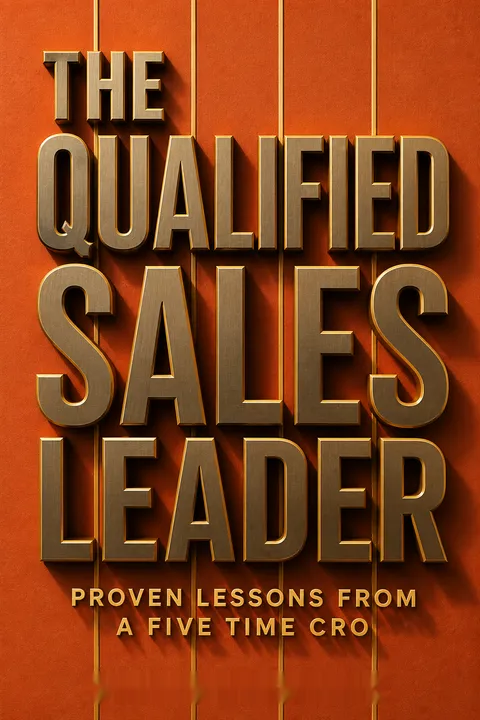
The Qualified Sales Leader receives overwhelmingly positive reviews, with readers praising its practical insights into enterprise sales leadership. Many highlight the book's engaging storytelling approach, making complex sales concepts easily digestible. Readers appreciate the focus on fundamentals, MEDDPICC methodology, and actionable advice for both sales representatives and leaders. The book is particularly valued by those in software and SaaS sales. While a few critics find it repetitive or lacking innovation, the majority consider it a must-read for sales professionals seeking to improve their skills and processes.
People Also Read







Glossary
MEDDPICC
Deal qualification frameworkA qualification framework for understanding whether an opportunity is real, where it sits in the sales process, and what evidence or action is missing. Its dimensions cover measurable value, the Economic Buyer, decision criteria and process, the customer's pain or initiative, approval paperwork, a Champion, and competition. It is intended to guide analysis and coaching, not replace the sales process.
Ideal Customer Profile
Best-fit customer descriptionA description of the companies, use cases, and buyer roles most likely to receive substantial value from a product. It connects distinctive product capabilities to customer pains, measurable benefits, and consequences of inaction. The profile can also account for buying propensity, sales complexity, and the seller's capacity to support the customer.
Champion
Influential internal advocateA customer-side person whose credibility and influence can help a seller reach the Economic Buyer and shape the purchase. A Champion takes meaningful action, such as arranging introductions, influencing evaluation criteria, or sharing decision information. A friendly contact who provides advice but cannot influence others may be a coach rather than a Champion.
Economic Buyer
Discretionary budget authorityThe person who can decide how funds are used, including reallocating budget, and who has authority over the final purchase decision. Confirming that person's priority, budget, timing, and willingness to proceed is a central qualification step. Job title alone does not establish that someone is the Economic Buyer.
Proof of Value
Customer outcome evaluationA structured evaluation intended to demonstrate that a product can address a customer's defined problem and support the expected business value. It should follow discovery and scoping, use agreed success criteria, and have a clear timeframe and participants. It is distinct from testing only whether the technology functions.
Power chart
Map of decision influenceA view of the people who influence a decision, beyond the formal reporting lines shown on an organization chart. It helps a seller identify who can shape choices, who has access to the Economic Buyer, and where a potential Champion may sit. Influence may exist at different organizational levels.
Gates
Evidence-based stage boundariesThe exit criteria between stages of a sales process. A gate requires tangible, preferably customer-verifiable evidence that the work of one stage is complete before the opportunity advances. Gates help managers assess progress consistently and identify missing information rather than relying on a rep's optimistic stage label.
Paper process
Purchase approval sequenceThe steps, people, and timelines an organization follows to approve a purchase and issue a purchase order. It may include financial review, budgeting, legal review, and procurement. Mapping the sequence helps sellers and managers judge whether a deal can close within a forecast period.
Forecast reconciliation
Plan to close forecast gapsA process for responding to the difference between a rep's quota and the value of qualified business expected to close. The rep identifies additional opportunities, tracks them by sales-process stage, and specifies actions for each account. The book suggests planning coverage above the gap to account for losses, using a multiplier calibrated to close rates.
Emotional proprioception
Awareness of interpersonal impactThe leader's ability to notice how words and actions affect other people, especially the team. The term adapts proprioception, the body's sense of its position and movement, to interpersonal leadership. Developing this awareness helps a manager adjust communication and recognize when behavior discourages honest discussion or engagement.
FAQ
What's "The Qualified Sales Leader" about?
- Sales Leadership Focus: "The Qualified Sales Leader" by John McMahon is a guide for sales leaders, particularly in the enterprise software industry, focusing on building effective sales teams and processes.
- Proven Lessons: The book shares lessons from McMahon's experience as a five-time Chief Revenue Officer (CRO) at successful public software companies.
- Sales Process and Strategy: It emphasizes the importance of a structured sales process, effective deal qualification, and the role of sales leaders in driving team success.
- Real-World Examples: Through real-world scenarios and examples, McMahon illustrates common challenges and solutions in sales leadership.
Why should I read "The Qualified Sales Leader"?
- Expert Insights: Gain insights from John McMahon, a renowned sales leader with a track record of success in the software industry.
- Practical Advice: The book offers practical, actionable advice for improving sales processes and leadership skills.
- Comprehensive Framework: It provides a comprehensive framework for sales qualification and management, applicable to various sales environments.
- Career Growth: Whether you're a sales rep aspiring to leadership or a current leader, the book offers strategies to enhance your career and team performance.
What are the key takeaways of "The Qualified Sales Leader"?
- Sales Process Importance: A well-defined sales process is crucial for consistent success and accurate forecasting.
- Champion Identification: Identifying and nurturing Champions within client organizations is key to closing deals.
- Qualification Methodology: The MEDDPICC framework is essential for qualifying deals and understanding their progression.
- Leadership and Coaching: Effective sales leadership involves inspiring, coaching, and developing team members to maximize their potential.
What is the MEDDPICC framework in "The Qualified Sales Leader"?
- Definition: MEDDPICC is a qualification framework that stands for Metrics, Economic Buyer, Decision Criteria, Decision Process, Identify Pain, Paper Process, Champion, and Competition.
- Purpose: It helps sales teams understand their position in the sales process and identify gaps in information or strategy.
- Integration: The framework is designed to work seamlessly with a structured sales process, providing a roadmap for deal progression.
- Benefits: Using MEDDPICC can lead to more accurate forecasting, better deal control, and higher win rates.
How does "The Qualified Sales Leader" define a Champion?
- Influence and Access: A Champion is someone within the client organization who has influence and access to the Economic Buyer.
- Personal Win: They have a personal stake in the success of the solution, often seeking recognition or advancement.
- Trust and Partnership: Building trust with a Champion is crucial; they should see the salesperson as a trusted business partner.
- Role in Sales Process: Champions help shape decision criteria and processes, making them essential for deal success.
What advice does "The Qualified Sales Leader" offer for finding Champions?
- Identify Key Players: Look for individuals working on critical projects or recently promoted, as they may have influence.
- Understand Personal Wins: Determine what personal gains a potential Champion might achieve by supporting your solution.
- Build Trust: Establish trust by demonstrating a deep understanding of their business and aligning your solution with their needs.
- Test and Educate: Test their commitment by asking them to perform specific actions and educate them on your product and competitive landscape.
What are the Three WHYs in "The Qualified Sales Leader"?
- Why Buy: Understand the major pain or initiative driving the need for a solution.
- Why Buy From Us: Identify how your product's unique differentiators align with the customer's pain points.
- Why Buy Now: Determine the urgency and implications of not solving the pain, creating a compelling reason for immediate action.
How does "The Qualified Sales Leader" suggest improving sales forecasting?
- Qualification and Reconciliation: Use the MEDDPICC framework to qualify deals and reconcile forecast shortfalls early in the quarter.
- Champion Verification: Meet with Champions of forecasted deals to ensure control and qualification.
- Pipeline Management: Maintain a robust pipeline to avoid last-minute pressure and ensure consistent deal flow.
- Consistent Process: Implement a consistent sales process and qualification methodology to improve forecasting accuracy.
What role does the Economic Buyer play in "The Qualified Sales Leader"?
- Discretionary Use of Funds: The Economic Buyer has the authority to allocate budget and make final purchasing decisions.
- Priority Confirmation: Meeting with the Economic Buyer confirms the priority of solving the pain and the availability of funds.
- Decision Process: The Economic Buyer meeting is a critical step in the sales process, determining whether the deal will proceed.
- Preparation and Confirmation: Proper preparation with a Champion ensures the meeting is confirmatory, aligning all parties on the decision criteria and process.
What are the best quotes from "The Qualified Sales Leader" and what do they mean?
- "Time kills all deals without urgency." This emphasizes the importance of creating urgency in the sales process to prevent deals from stalling.
- "People don’t leave companies, they leave managers." Highlights the critical role of effective leadership in retaining talent and driving team success.
- "Simplicity becomes a limitless gift presented to individuals that master the fundamentals." Suggests that mastering the basics leads to greater success and opportunities.
- "Be selfless, not selfish." Encourages salespeople to focus on the customer's needs and build trust, rather than pushing their own agenda.
How does "The Qualified Sales Leader" address sales leadership and management?
- Transformational Mindset: Leaders should focus on transforming their team members, not just managing them.
- Inspire and Coach: Effective leaders inspire, coach, and develop their team, rather than simply inspecting activities.
- Accountability and Standards: Set clear performance standards and hold team members accountable to drive a culture of excellence.
- Role Models: Leaders should be role models, demonstrating the behaviors and attitudes they expect from their team.
What is the significance of the "Box Up" story in "The Qualified Sales Leader"?
- Creating Urgency: The story illustrates how to create urgency by highlighting the negative consequences of inaction.
- Targeted Questions: It demonstrates the power of asking precise, targeted questions to uncover pain and drive decision-making.
- Personal Connection: The story shows the importance of connecting with the customer's personal situation to make the solution relevant.
- Sales Strategy: It serves as an example of leading the witness, guiding the customer to recognize their need for the solution.
Download PDF
Download EPUB
.epub digital book format is ideal for reading ebooks on phones, tablets, and e-readers.








