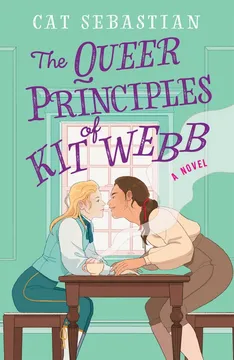


Plot Summary
The Coffeehouse Proposition
For a year, Kit Webb has tried to live honestly, running a London coffeehouse instead of robbing rich travelers. His injured leg has narrowed his world to the shop and the short walk home with Betty, his sharp-minded employee and friend. Then a flamboyantly dressed stranger spends hours watching him before approaching him upstairs.
Calling himself Edward Percy, the stranger asks Kit to steal papers from a guarded aristocrat. Kit refuses, unwilling to return to the life he has left behind, though the offer stirs the excitement he has been trying to bury. The visitor’s nerve, wealth, and unmistakable interest in Kit leave him with more questions than the proposed robbery answers.
Kit’s retirement is less a moral conversion than an enforced confinement. His leg has taken away the movement that gave his life its shape, while the coffeehouse keeps him close to the rough community he knows but makes him feel like a spectator. Percy’s proposal therefore works on two levels: it offers a crime, but also a way back into consequential action. Their first encounter establishes attraction as a destabilizing force, yet Kit’s refusal shows that he still wants to believe he can choose what kind of man to be.
A Family Built on Fraud
Percy and Marian Hayes, his father’s new wife and his childhood friend, have received a blackmail demand based on the Duke of Clare’s earlier marriage in France. If that marriage was valid, Percy is not the legitimate heir, and Marian’s infant daughter, Eliza, may lose her place and security as well.
Percy has confirmed the marriage in a parish register; Marian’s brother, Marcus, is searching for the first wife and any child. Their father guards a small green book, once belonging to Percy’s dead mother, and Percy believes it can give them leverage. He wants enough money to protect Marian and Eliza, then intends to expose the duke himself rather than remain under the blackmailer’s control.
Percy’s crisis is not simply the threatened loss of wealth. His identity has been built around an inheritance that may never have belonged to him, and his father’s secret has made the family’s public respectability another instrument of coercion. Marian and Percy respond differently but converge on the same refusal to let the duke dictate the terms of their future. The green book offers practical leverage, while its connection to Percy’s mother suggests that the tools of power have passed from one generation to the next. Their plan begins as self-protection, but already carries the risk of reproducing the methods they condemn.
Clare's Son Unmasked
After Kit turns him away, Percy returns in expensive clothes and describes the target as a cruel landlord and husband. Kit recognizes that Percy is concealing a personal connection and refuses to help until the truth emerges. Later, in a dark lane, Percy reveals that his father is the Duke of Clare. Kit strikes him: Clare’s power helped destroy the life Kit had before becoming a highwayman.
The blow does not end Percy’s pursuit. Kit eventually offers to teach him how to rob the duke himself, rather than accept payment to do it. He visits Scarlett, a brothel keeper and longtime source of information, to investigate Percy, learning that his supposed name does not fit anyone in elite society.
The duke’s name transforms a fanciful criminal commission into a collision between two histories. Kit’s anger is not abstract class resentment; it has a specific target, and Percy’s family name makes him seem like an extension of the man Kit hates. Yet Kit does not simply take revenge on Percy. His decision to teach him, rather than rob the duke for money, preserves Kit’s insistence on acting by his own terms. Percy’s concealed identity and Kit’s investigation also establish a relationship founded on mutual scrutiny, not easy trust.
Lessons Behind the Counter
Once Percy accepts Kit’s offer, the coffeehouse’s back room becomes a rough training ground. Kit asks Betty to help Percy learn how to disarm an attacker, but Percy will not grapple with her, even when she insists she can defend herself. Kit takes his refusal as proof that Percy is not serious and sends him away.
That night Percy returns drunk, explaining that he will not become a man who willingly frightens or hurts a woman. Kit recognizes that Percy’s restraint is more than polished manners, and lets him sleep by the fire. In the following lessons, Percy proves a quick student, while Kit reveals that his dead partner Rob once gave their robberies a sense of purpose that Kit cannot find alone.
The training tests more than Percy’s competence. Kit believes a robbery may require violence, while Percy refuses to treat an ethical limit as a weakness to be trained away. Betty’s presence matters because she is neither fragile nor a prop: she demands to be treated as an equal, and Percy’s reluctance arises from his own boundaries, not an assumption that she cannot fight. Kit’s grudging respect grows when he sees the difference. His memories of Rob introduce another absence beneath his boredom, suggesting that crime once gave Kit both motion and companionship.
A Sparring Match Softens
As their lessons continue, Kit and Percy become familiar with one another’s bodies and habits. During a sparring session, Percy’s quick thinking helps him keep up despite Kit’s bad leg. Afterward, Kit tells him that he once robbed for revenge, while his partner Rob stole because he believed it could set wrongs right.
Rob’s death left Kit without that conviction, and the injury that ended his career has kept him stranded in his coffeehouse. Percy understands the grief beneath Kit’s anger and admits that his own ideas of honor have begun to shift since his father’s betrayal. Their near-kiss ends when Kit pulls away, unwilling to let desire blur the history between them.
The scene changes the source of Kit’s criminal past from thrill-seeking alone to a damaged attempt at justice. Rob’s moral certainty had lent Kit’s actions a structure he could not supply for himself; without it, Kit has mistaken stillness for penance. Percy, meanwhile, begins to see that his own inherited rules may be manners dressed up as virtue. Their restraint at the end is not lack of desire. It marks their awareness that intimacy would connect Kit to the family he blames and Percy to a man who does not yet trust what he wants.
The Baron Takes the Stage
Uncertain how to earn a living if his inheritance disappears, Percy disguises himself and enters a public sword fight. He is wounded when he tries to fight efficiently instead of entertaining the crowd, and the humiliation unsettles him almost as much as the cut.
Later, he returns in leather fighting clothes, prolongs his matches with skill and theatrical flair, and wins the purse. Kit watches, alarmed by the danger and impressed by Percy’s command of the blade.
When the two argue afterward, Kit apologizes for assuming Percy had no hidden skills; Percy makes clear that he wanted Kit’s company as much as his approval. Back at the coffeehouse, they finally sleep together. Rob, whom Kit believed dead for a year, walks in before the moment can settle.
Percy’s prizefighting turns aristocratic skill into precarious labor. He discovers that talent alone does not pay: he must adapt his performance to an audience and accept the risk of injury. The victory gives him a first taste of earned accomplishment, while Kit’s presence makes that achievement emotionally charged. Their first sexual encounter follows an argument in which Kit recognizes Percy as more than a novice to be managed. Rob’s sudden return then interrupts the intimacy with an older bond and a grief Kit had never finished resolving.
Rob Returns from the Dead
Rob explains that he survived the robbery where Kit thought he had died, then left England after receiving troubling news from his mother. He offers no details and refuses to explain why he stayed away, leaving Kit grateful and hurt in equal measure. Percy leaves after Kit dismisses him in front of Rob, and Kit later apologizes for making him feel unimportant.
Meanwhile, Percy tells Kit that his parents’ marriage was invalid and that he and Marian may be left without protection. Kit admits the duke’s crimes helped ruin his own family. Rob learns that the duke is their target, suspects Percy may be using Kit, then agrees to help with the job. The team prepares to intercept the duke’s carriage.
Rob’s return restores a friendship while exposing its limits. Kit has grieved him, but Rob’s unexplained disappearance leaves a fresh breach where certainty used to be. Percy’s reaction to being dismissed also reveals that their relationship has become more than convenience, though neither man can safely assume what the other will choose. The robbery gives Rob a practical way back into Kit’s life, but his suspicion of Percy mirrors Kit’s own earlier distrust. These loyalties are not opposites: Kit is trying to protect the friend who returned and the man he has begun to love.
A Kiss on the Heath
Kit takes Percy to a stretch of road near Hampstead Heath to show him how a carriage can be stopped before its occupants have time to react. He explains how to use a bend, a waiting accomplice, and an archer hidden in a tree. Percy struggles with the prospect of using force, but admits that his old principles were mostly habits suited to a life of privilege.
Kit sees that Percy is trying to protect Marian and Eliza, not merely punish his father. The recognition draws them into their first kiss. They stop when a real carriage approaches, return to the practical lesson, and ride back to London with their desire no longer safely disguised as flirtation.
The roadside lesson makes the political and personal plots touch. Percy’s change in moral outlook is not a sudden conversion to criminality; he is trying to distinguish inherited decorum from choices that protect people who depend on him. Kit’s response is tenderness, but it is also recognition of Percy’s capacity to act. Their kiss arrives amid planning rather than outside it, making desire inseparable from risk. The interruption by the passing carriage restores the immediate stakes: this is not a romantic escape from the plot, but a relationship forming inside a dangerous plan.
A Robbery Takes Shape
After winning a second prizefight, Percy reunites with Kit in the street, where their argument gives way to a first night together. Rob’s return has left Kit uneasy, but Percy’s confession of his illegitimacy gives Kit a clearer reason for the scheme. Kit recruits Hattie, an archer, and plans to use Rob to delay the other carriages in the duke’s party.
Rob warns that Percy might be setting Kit up, yet agrees to manage the distractions and check the carriage for weapons. Kit insists on joining the roadside party himself, despite his unreliable leg, because he wants Percy safe. Before they leave, Percy and Kit each know the job may cost them more than money or freedom.
The plan gathers people whose loyalties are personal as well as tactical. Kit’s insistence on going is both courage and a warning sign: his concern for Percy is beginning to override the caution Betty and Rob have urged on him. Rob’s doubts are reasonable because Percy has withheld crucial facts, even as Percy’s disclosure gives Kit a basis for trust. The job’s design distributes danger across the group, but it cannot remove the emotional risk. Each participant has a private stake, and that makes a clean division between strategy and feeling impossible.
The Duke’s Carriage Stops
At dusk, Percy, Kit, and Hattie wait on the road while Rob fails to arrive with the warning they expected. When a coach and six approaches, Kit makes Percy decide whether to act without confirmation. Percy steps into the road, recognizes his father’s horses, and demands the duke’s valuables. Marian is unexpectedly inside the carriage.
Percy takes the green book from his father, but the duke recognizes him and fires. A second shot follows; Marian has taken Percy’s pistol and shot the duke. Kit sees Percy emerge bloodied, while an outrider threatens him and Marian orders the carriage onward. Hattie escapes with the coin purse. Kit discovers Percy’s wound is a graze, then gets him away before the others can return.
The carefully rehearsed robbery collapses when the people inside the carriage refuse their assigned roles. Marian’s presence breaks the plan’s assumptions, and the duke’s recognition turns Percy from masked attacker into a son he is willing to shoot. The book is seized, but the intended leverage vanishes as violence takes over. Kit’s first response is not to secure the prize but to protect Percy, exposing how thoroughly affection has overtaken his stated wish to keep the job impersonal. Marian’s decision to shoot the duke changes the problem from blackmail to survival.
Shelter Among Old Ruins
Kit takes Percy to a cottage where Jenny’s grandmother, Dorothy, shelters them. Percy’s wound is only a graze, but the shock leaves him faint and Kit’s injured leg worsens as he gets him to safety. While they recover, Percy says Marian shot the duke after the duke shot him; neither man knows whether she acted in panic or had planned it.
The green book proves to be a Bible marked with his mother’s coded notes, though its purpose remains uncertain. Kit shows Percy the ruins of his childhood home and explains that the duke cleared the nearby village for the castle’s view. Kit’s wife died after transportation for poaching, and their infant daughter died soon after.
The cottage brings the consequences of aristocratic power out of the realm of argument and into Kit’s lived history. Percy sees what the duke’s policies cost a family, a village, and a marriage, while Kit lets him witness a grief he has kept largely sealed. Their tenderness does not erase the imbalance between them; it makes that imbalance harder to ignore. The coded Bible parallels the ruins: both are remnants of lives shaped by power, though one holds secrets and the other holds losses. Percy must decide what to do with an inheritance of harm he did not create.
The Castle Without Its Heir
Percy and Kit ride to Cheveril Castle hoping to find Marian, but the duke and duchess have not arrived. Percy takes Kit through the house and its portrait gallery, confronting the home he once expected to inherit. Kit points out that the castle’s parkland covers the village his father razed, making Percy’s childhood landscape newly legible as dispossession.
They return to London separately. Percy learns that the duke is alive but near death, and visits him with the Bible. Its names and markings appear to identify Jacobite supporters and the secrets his mother recorded. The duke dies the next morning. Percy now holds dangerous information, but neither the inheritance nor the family’s future is secure.
Cheveril functions as more than a lost estate: it is the physical form of Percy’s old identity. Kit’s account of the vanished village interrupts the beauty of the grounds with the labor and homes erased to create that beauty. Back in London, the coded Bible offers Percy a final chance to turn inherited knowledge into power, perhaps even to replace one title with another. His father’s death removes the immediate antagonist but does not resolve the moral problem. Percy has to choose whether his future will reproduce the family’s methods or refuse them.
The Blackmailer Is Family
When Percy returns to Kit, his suspicions about Rob’s disappearance finally connect with Scarlett’s history. Rob was born after the duke’s French marriage, making him a possible legitimate heir, while Rob himself wrote the blackmail letters to Percy and Marian.
The revelation explains why Rob vanished and why he kept his motives hidden, though it does not make the betrayal harmless. Percy decides not to use his mother’s coded Bible as a weapon: with Kit beside him, he burns it.
He also begins stripping the Clare estate of wealth, changing tenants’ arrangements and sending money toward schools, poorhouses, and the emancipation of enslaved people. He prepares to expose his own illegitimacy and relinquish the title rather than preserve it through blackmail.
The revelation rearranges the family tree and the moral stakes at once. Rob is not merely a returning friend with a secret; his claim exposes the instability of the title that Percy once treated as his destiny. His blackmail is an act of betrayal, but it is also consistent with a character who sees wealth as available for redistribution. Percy’s destruction of the Bible refuses to convert secret knowledge into a new form of domination. His estate changes are imperfect and irreversible gestures, a way to use power against the system even as he prepares to surrender it.
A Home Next Door
Percy tells Kit he intends to challenge his legitimacy and will not remain at Clare House; he leases the house next door so he can raise Eliza with Collins’s help. Rob sends word that he and Marian are alive, though both remain absent, and Percy understands that the coming legal settlement may make Rob the heir. Kit gives Percy a concealed swordstick, then teaches him to use it.
Their future becomes practical as well as romantic: two nearby households, shared meals, and room for Kit’s work against powerful wrongdoers. A portrait of Percy, Marian, and Eliza arrives from the Venetian artist Percy once commissioned. Marian’s note asks Percy to remember her to the baby, leaving her return uncertain but her bond with them intact.
The resolution defines love through arrangements rather than promises. Percy does not simply choose Kit over aristocratic life; he chooses a household, a neighborhood, and a set of obligations he can shape himself. The swordstick makes their partnership tangible, pairing Percy’s skill with Kit’s altered mobility. Marian’s portrait preserves a family that the duke’s schemes tried to reduce to legal status, while her absence keeps the cost of the crisis unresolved. Their future remains precarious, but it is no longer organized around inherited rank or secrecy.
Epilogue
In January, Percy brings the sleepless baby Eliza to Kit’s coffeehouse before dawn. Kit settles her by the fire while Percy struggles with the ordinary work of caring for a child. They plan supper together, and Percy says he still receives invitations, now as a curiosity who has defied his class.
He agrees to help Kit gather information about powerful people whose houses may need to be entered. Later, Kit returns Percy’s mother’s portrait and the blue bed hangings he rescued from Cheveril. Percy lets himself grieve for what he lost, then turns back toward Kit and the home they are making.
The epilogue measures transformation through unglamorous acts: warming a kettle, soothing a baby, sharing a room, and retrieving a portrait. Percy’s new life does not require him to become less himself; his fussy habits and social visibility persist, but now serve a household he chose. Kit’s proposed work also reclaims the energy of his criminal past without simply repeating it. Their alliance begins to redirect access and information toward people challenging power. The closing emphasis is not on perfect safety, but on being known, trusted, and useful to one another.
Analysis
The novel makes inheritance feel less like a neutral transfer of property than a story a powerful family tells about why it deserves to rule. Percy’s crisis begins when the title he has prepared for turns out to rest on a concealed marriage, but the deeper rupture is that his whole identity has been organized around a position his father may have fabricated. Kit’s history supplies the human cost behind the grandeur: a village erased for a better view, a wife punished for poaching, and a child lost in the aftermath of poverty. These histories prevent Percy’s dispossession from becoming a simple fall from privilege. He is not absolved by suffering, but is forced to see what privilege concealed.
Kit and Percy approach justice from opposite directions. Kit has acted against wealth through robbery, yet his old work depended on Rob’s conviction that theft could repair harm. Percy has inherited the authority Kit resents, yet his training in strategy and performance helps him survive once that authority fails. Their romance develops through friction over what counts as a principle: Kit distrusts respectable morality, while Percy learns that manners can protect injustice as easily as they can restrain cruelty. The story does not ask them to become morally identical. It asks whether they can recognize each other without pretending their histories are equal.
The book’s resolution rejects both passive inheritance and revenge as a complete remedy. Percy redistributes resources, prepares to give up his claim, and burns the coded book rather than turn its secrets into another instrument of control. Kit’s future work repurposes criminal skill toward exposing and disrupting entrenched power. Neither choice repairs the dead or guarantees safety. Their significance lies in making responsibility active: the characters stop treating the social order as inevitable and begin choosing what to do with the abilities, relationships, and resources they actually possess.
Review Summary
The Queer Principles of Kit Webb receives mostly positive reviews, praised for its witty dialogue, engaging characters, and exploration of class issues. Readers enjoy the romance between Kit, a retired highwayman, and Percy, an aristocrat planning a heist. Many appreciate the LGBTQ+ representation and historical setting. Some criticize the plot as convoluted or anticlimactic, and a few find the pacing slow. Overall, reviewers find it a charming, fun read with compelling character development, though opinions vary on its execution of the heist storyline.
People Also Read


Characters
Kit Webb
Retired highwaymanKit is a former highwayman who now runs a coffeehouse, where customers from London’s working and criminal worlds mingle. Strong, observant, and habitually blunt, he has built his identity around movement, daring, and resistance to wealthy landowners. A leg injury has curtailed that life, leaving him restless and unsure whether an honest business can give him purpose. He is fiercely loyal to Betty and to his absent partner Rob, but grief has made him wary of needing anyone. Kit’s attraction to Percy unsettles the clean divisions he tries to maintain between love, class, justice, and revenge. His deepest struggle is not whether he can fight, but what he wants his strength to serve.
Edward Percy Talbot, known as Percy
Dispossessed aristocratPercy is the elegant, talkative son of the Duke of Clare, raised to expect a title and trained by his mother to survive through wit, performance, and self-command. He enjoys fashion, books, fencing, and provocation, often using humor to keep others from seeing when he is frightened or hurt. His apparent confidence is supported by a lifetime of privilege, yet he is more morally attentive than his upbringing encourages. Percy cares deeply for his childhood friend Marian and her baby, and he is beginning to question the family hierarchy that shaped him. His precise manners and appetite for danger make him both an unlikely criminal and a willing student when circumstances demand it.
Marian Hayes
Strategic duchessMarian is Percy’s childhood friend, now married to his father and mother to the infant Eliza. She is intelligent, controlled, and capable of turning the expectations placed on a duchess into cover for private plans. Her loyalty to Percy is tested by the danger surrounding their family, but she does not simply defer to him. She wants to protect her daughter and resist the duke’s betrayal, even when the available choices are morally severe. Her reserve conceals a history Percy does not fully understand, and her strategic independence makes her more than an ally waiting to be rescued.
Betty
Kit’s clear-eyed allyBetty works in Kit’s coffeehouse and is also a skilled fence with deep roots in London’s criminal community. She has known Kit since childhood and can read his self-deceptions faster than he can. Practical, loyal, and unwilling to be patronized, she warns him when anger or attraction threatens to cloud his judgment. She cares for Kit without treating him as helpless, and expects the same respect in return. Her independence gives the coffeehouse much of its daily life and makes her one of the few people willing to challenge Kit directly.
Rob
Kit’s missing partnerRob is Kit’s longtime partner in highway robbery, remembered as the man who gave their criminal work a moral purpose. He is quick-witted, audacious, and difficult to pin down, with a habit of treating danger as an invitation. His bond with Kit is intimate and tested by years of shared hardship. Rob’s absence leaves Kit without his closest companion and unsettles the network around the coffeehouse. He carries secrets he is reluctant to share, partly from protectiveness and partly from a stubborn belief that he must manage his problems alone.
Scarlett
Keeper of secretsScarlett runs an exclusive London brothel and supplies Kit with information gathered through her house and its patrons. She is observant, commercially astute, and careful about the boundary between useful knowledge and personal exposure. Her relationship with Kit is built on years of mutual assistance, though she is unafraid to warn him when she thinks he is risking his heart. Her polished composure conceals a painful understanding of how wealthy men can make affection feel like safety and then withdraw it.
Collins
Percy’s devoted valetCollins has served Percy since he was seventeen and understands his habits, tastes, and sudden changes of direction. He is meticulous about clothing and presentation, often dismayed by Percy’s improvised disguises, but his loyalty is deeper than professional duty. As Percy’s life becomes uncertain, Collins helps him prepare for practical changes without stripping away the dignity he values. His dry restraint allows him to show care through competent service rather than emotional declarations.
Marcus Hayes
Marian’s protective brotherMarcus is Marian’s brother and Percy’s old friend. He helps investigate the duke’s past and approaches the crisis with a preference for cautious, legally defensible solutions. His concern for Marian and Percy is genuine, but he is less willing than they are to risk everything for vengeance. Their disagreement exposes the difference between preserving safety and refusing to let powerful people escape accountability.
Flora Jennings
Scarlett’s young employeeFlora works at Scarlett’s establishment and carries a message to Kit’s coffeehouse. She is resourceful enough to participate in the impression she makes on customers, while maintaining a modest public manner. Her presence helps create an ordinary explanation for Kit and Percy’s later journey outside London.
Hattie Jenkins
The hidden archerHattie is an archer recruited to provide support during the carriage robbery. Her skill gives the plan a quiet deterrent that a pistol might not offer, and she proves alert under pressure. She is a practical professional, not an ornamental figure in the men’s scheme.
Dorothy
Keeper of Kit’s pastDorothy is Jenny’s grandmother, an older countrywoman who gives Kit and Percy shelter after the robbery. She remembers Kit from his youth and recognizes that his late-night arrival has brought more than a simple accident. Her hospitality is brisk and unsentimental, but she makes room for people in danger.
Jenny
Kit’s lost first familyJenny was Kit’s wife, and her fate remains central to his anger toward the Duke of Clare. Kit remembers her as part of the family life he lost in Oxfordshire. Her absence shapes his grief, his distrust of power, and the limits he places on his hopes for a different future.
Eliza
The infant at riskEliza is Marian’s baby and Percy’s half-sister. Though too young to understand the family crisis, her security gives Percy a concrete reason to resist his father’s plans. Her care also draws him toward a future defined by responsibility rather than inheritance.
The Duke of Clare
Powerful family antagonistThe Duke of Clare is Percy’s father, a wealthy landowner whose public charm masks a controlling and self-serving private life. He treats family, tenants, and servants as people whose choices can be overridden when they inconvenience him. His authority has shaped both Percy’s upbringing and Kit’s hatred of aristocratic power. He is the source of the crisis that forces Percy and Marian to reconsider the lives they assumed were theirs.
Plot Devices
The Green Bible
A dangerous family ledgerPercy believes the small green book his mother carried can give him leverage over the Duke of Clare. It is closely guarded because it contains names and coded information tied to powerful people. The book motivates the planned robbery, connects Percy to his mother’s methods of gathering influence, and forces him to choose whether secret knowledge should be used as a weapon or destroyed. Its precise contents and eventual fate are major revelations.
The False Name
A disguise with emotional stakesPercy first approaches Kit under a false identity and later adopts plain clothes, a false scar, and a highwayman’s mask. The disguises let him enter spaces where his title would expose him, from Kit’s coffeehouse to the prizefighting scaffold and the planned robbery. They also reflect Percy’s uncertainty about which identity is real: the heir he was raised to be, the man whose name he gives Kit, or the person he is becoming through deliberate choices.
Kit’s Coffeehouse
A crossroads outside rankKit’s coffeehouse gives Londoners from different social worlds a place to gather, read, argue, and exchange news. It serves as his livelihood, a meeting place for the criminal network, and the setting where Percy and Kit first test one another. The shop’s informality contrasts with Clare House, where surveillance and inherited rank shape every interaction. Its back room becomes a place for training and intimacy, while its ordinary routines give the characters a provisional home amid upheaval.
Kit’s Injured Leg
A limit that reshapes actionKit’s injured leg has ended his former life as a fast-moving highwayman and constrained his daily range. It shapes his decision to teach Percy rather than perform the robbery himself, complicates travel and fighting, and repeatedly challenges his sense of usefulness. The injury is not only an obstacle: it forces Kit to reconsider what strength and purpose can look like when speed and physical independence are gone. Its presence also makes his choice to join the dangerous ambush a serious risk.
The Family Portrait
A fragile image of belongingPercy commissions a portrait of himself and Marian, initially intended to include the Duke of Clare. The painting becomes a record of family bonds that do not depend on the duke’s authority. When it reaches Percy after the crisis, its depiction of Marian and Eliza gives him a way to understand himself as part of a family without relying on legitimacy or inheritance. The portrait and the recovered objects from Cheveril make memory tangible, while Marian’s note keeps her absence and uncertain future present.
About the Author
Other books by Cat Sebastian



Download PDF
Download EPUB
.epub digital book format is ideal for reading ebooks on phones, tablets, and e-readers.








