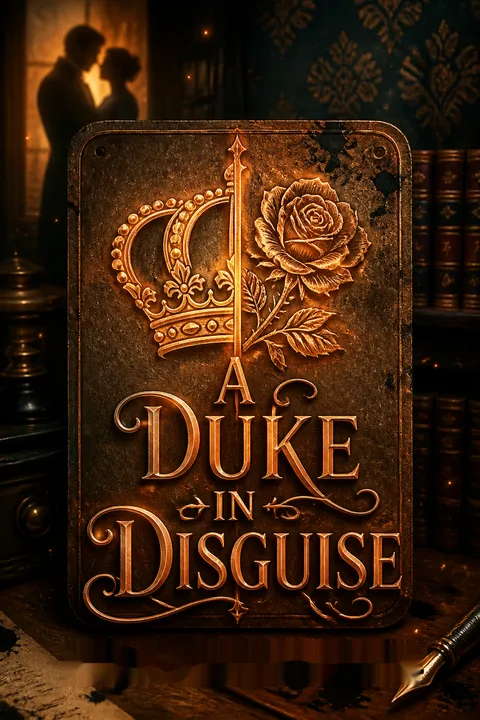


Plot Summary
Ash Comes Home
When his mentor Roger leaves London for Italy to seek relief for his failing lungs, engraver Ash returns to the Holywell Street home of Verity and Nathaniel Plum, the printer siblings who have been his closest friends for years. The familiar house softens his grief, but Verity’s presence unsettles the careful distance he has kept from her.
She is managing their struggling publishing business while clashing with Nate over his increasingly dangerous political writing. Ash tries to steady Nate without choosing between the siblings, and he hides how much he has missed Verity. Their jokes and old habits resume at once, but beneath them lie Ash’s fear of losing another family and Verity’s conviction that dependence can cost a woman her freedom.
The novel begins with one loss already in motion: Roger’s departure makes Ash confront how little of a family he believes he can keep. The Plums offer more than shelter, but Ash’s longing for Verity makes that refuge feel precarious. Verity’s political caution and Nate’s appetite for confrontation establish a second source of instability, one that is material as well as emotional. Her role in their business is essential, yet her labor is easily overshadowed by her brother’s public radicalism. The opening’s quiet domestic rhythm therefore contains the book’s central tension: belonging asks people to rely on one another, while reliance can feel like surrender.
A Magazine and a Manuscript
As Plum & Company’s sales shrink and costs rise, Verity devises a ladies’ magazine that she can write and manage herself. She studies existing publications, then turns her sharp practical mind toward advice columns, theater reviews, and fiction.
Portia Allenby, Verity’s former lover and a well-connected salon hostess, visits to ask that Verity keep her daughter Amelia away from the shop while Nate’s political work risks attracting a raid. Ash encourages Verity’s new project and accepts an assignment from Lady Caroline Talbot to copy rare pressed plants.
Soon Verity also receives an anonymous historical novel about Perkin Warbeck, padded with erotic scenes, and hires Ash to illustrate it. Their work puts money and desire in the same room, making their old restraint harder to maintain.
Verity’s magazine is not merely a commercial sideline. It gives her a public authorship separate from the political paper she has helped sustain without recognition. The anonymous erotic novel extends that independence into a market shaped by censorship, desire, and women’s limited access to pleasure. Meanwhile, Portia’s request reveals the cost of social respectability: Amelia’s prospects depend on avoiding the very people and ideas Verity welcomes. Ash’s botanical commission appears to offer respectable work, but it draws him toward an aristocratic household whose rules are not yet visible. These projects open competing routes out of poverty, each carrying a different risk.
Redcoats at the Shop
Nate insists on traveling to Derby to witness the execution of men convicted after the Pentrich rising, and plans to take his young apprentice Charlie with him. Ash challenges Nate’s responsibility to the boy, but Charlie chooses to go, partly to keep Nate from making trouble. While they are away, redcoats search Plum & Company and overturn the shop, leaving Verity frightened and furious.
Ash helps her restore the shelves, brings her food, and stays beside her as she admits the danger has become real. With Ash’s savings available to finance a new start, she decides Nate must leave England before the authorities return with an arrest warrant. Her decision turns protective worry into a plan that will separate the household.
The raid converts political danger from newspaper rhetoric into bodily vulnerability. Verity cannot dismiss the soldiers as an abstraction when they invade her shop and leave her alone to repair the damage. Her response is characteristically practical: she plans an escape before fear can paralyze her. But the plan also exposes her difficulty asking for help. Ash offers money without treating it as a claim over her, challenging her learned equation between assistance and loss of control. Charlie’s presence complicates Nate’s romantic self-image as a lone dissenter; his choices affect an apprentice who depends on him. Risk here is not noble in the abstract. It is distributed through a household.
The Plums Sail West
Nate returns from Derby exhausted, still convinced that the executions may strengthen the reform movement. Verity gives him a stark choice: sail to America with Charlie or watch her take the passage herself.
He resents the pressure but accepts, and Charlie agrees to accompany him rather than leave his former master to fend for himself. Ash helps pack and funds their new start. Before Nate departs, he recognizes Ash’s long-standing love for Verity and warns him to guard his own heart.
After the carriage takes Nate and Charlie away, Verity reaches for Ash, but he refuses to turn their closeness into a romance he fears will end in loss. The siblings’ departure empties the house, and Ash’s restraint leaves Verity hurt and unsure of what he wants.
The voyage makes the Plums’ chosen family suddenly smaller, while also shifting responsibility onto Verity and Ash. Nate accepts exile not because he has abandoned reform, but because his sister’s fear finally becomes impossible to ignore. Charlie’s loyalty gives the departure a quieter emotional weight: he is leaving a home that treated him as kin. Ash’s warning from Nate confirms that his feelings are no longer invisible, yet Ash still treats love as a threat to the relationship he most needs. His refusal is an attempt to control grief in advance. Verity experiences it as rejection, because to her, emotional safety cannot be separated from being allowed to choose.
The Botanist’s Locked World
At Arundel House, Lady Caroline keeps Ash’s botanical work on a strict schedule and hurries him out whenever her brother, Lord Robert, returns. Her herbarium holds specimens gathered through other people’s travels, a private record of places she cannot visit.
Ash notices burned pages, her anxious secrecy, and bruises at her wrists. He also feels a disturbing familiarity in the house and recognizes features in Caroline that resemble his own. When she asks about a scar on his arm, he refuses to discuss his childhood.
Ash knows only that seizures and memory gaps left him passed between foster homes before Roger gave him a craft and a home. Caroline’s questions suggest that his past may be connected to this family, but he resists the possibility of blood ties to people who have harmed her.
The herbarium functions as a portrait of Caroline’s constrained agency. She can possess evidence of distant places, but must experience the world through pressed leaves and other people’s accounts. Ash’s unease in her house is likewise embodied before it is understood: architecture, resemblance, and a scar make his past feel physically present. His refusal to investigate is not simple stubbornness. The identity he has built with Roger’s help is hard-won, while aristocratic lineage has so far meant abandonment and danger. Caroline’s bruises place the family mystery within a pattern of coercion. The scene asks whether kinship is discovered through blood or made through acts of care.
The Heir in Hiding
Caroline finally explains that Ash is not an illegitimate Talbot relative but the legitimate son of the Duke of Arundel’s eldest heir. As a child, he was pushed down the stairs by his uncle, Lord Robert, who wanted the succession for himself.
Caroline arranged for Ash to be hidden in Norfolk and allowed the family to believe he had died; his injured arm bears the scar she remembers. She also reveals that Ash’s epileptic father was confined to an institution because the family feared scandal.
Her evidence includes diaries and a letter from the servant who carried him away. Ash recoils from the title and the family’s cruelty, then agrees to help Caroline prevent Lord Robert from gaining power, asking for a month before the truth changes his life.
The revelation overturns Ash’s sense of abandonment without erasing its effects. He was not simply discarded by an unknown family; Caroline tried to save him, but her protection failed to restore his name or memory. The distinction matters, yet it cannot return the childhood he lost. His father’s institutionalization also links epilepsy to class power: the family treated a medical condition as a reputational threat and made the sufferer disappear. Ash’s agreement to help Caroline grows from his own ethics rather than attraction to rank. He understands power as a resource that can protect or injure, and accepts a role because Lord Robert has already shown what he does with unchecked authority.
A Month Borrowed
After Nate’s departure, Ash and Verity stop pretending their attraction is harmless. They begin a private affair, and Ash promises himself he will tell her about the succession claim when their agreed month is over.
Verity, who has feared that love will demand the independence she has guarded, discovers she wants more than a brief comfort. Ash’s seizures remain part of their domestic life: when one overtakes him at his worktable, Verity uses the warning bell he installed, stays nearby, and lets him recover without turning his illness into spectacle.
News that radical publisher William Hone has been acquitted briefly makes Verity question whether Nate needed to leave. Ash reassures her that the danger remains. His secret, however, makes their tenderness rest on information only he possesses.
The affair reveals how differently the lovers measure intimacy. Verity tries to keep physical pleasure distinct from commitment, because commitment has historically meant a woman losing control of her own life. Ash experiences their closeness as evidence of a future he is afraid to ask for. His silence about the inheritance is partly self-protection, but it also deprives Verity of the choice she insists on making for herself. The seizure scene offers a counterexample to his concealment: care can be practical, intimate, and nonpossessive. The Hone acquittal sharpens Verity’s guilt, showing how public outcomes cannot retroactively settle private risk. The month is borrowed time, but only Ash knows the deadline.
The Title Between Them
When Caroline arrives at the shop with a fresh injury from Lord Robert, Ash can no longer delay telling Verity the truth. He explains that he may become Duke of Arundel and believes their relationship has no workable future: Verity will not want a title, and he cannot offer her a safe place as a lover.
Verity objects that he has confused marriage with every possible form of partnership, but Ash leaves for Arundel House rather than risk asking for a compromise. Portia later visits Verity, arguing that accepting care need not create a debt.
Verity then goes to Arundel House and finds Lord Robert threatening Caroline. She distracts him long enough for Ash to intervene, but he rejects her offer of friendship because he is in love and cannot bear an unequal attachment.
The conflict is not simply love versus duty; it is a struggle over who gets to define the available choices. Ash sees the title as a wall that will make Verity’s life smaller, and leaves before she can decide whether to cross it. His protective impulse repeats the very paternalism Verity distrusts: he chooses what she can bear without asking her. Portia identifies the deeper pattern in Verity’s refusal of help, while the confrontation at Arundel shows that Verity’s care is active, not sentimental. Yet Ash’s refusal of friendship is also honest. He will not disguise his desire as a lesser bond simply to remain near her.
Roger’s Hidden Letters
With Ash’s inheritance case approaching, Verity searches the attic for Roger’s papers and discovers letters preserved in a Bible. One letter records that a Norfolk rector brought a boy with a broken arm to a schoolmaster, describing the rumor that the child belonged to a noble family and had escaped an uncle’s attempt on his life.
The correspondence connects Ash’s lost childhood to the Talbots, strengthening the evidence for his claim. Verity sends for him and makes clear that she will help him, though she still resents the trappings taking him away from her.
Their reconciliation is interrupted by Amelia, who reveals that she and Nate jointly created the Perkin Warbeck novel, with Nate contributing the erotic passages. Verity’s risky publication is succeeding, and Amelia has begun writing another historical novel to earn her own money.
The letters turn an intimate keepsake into legal evidence. Roger’s private attachment to the schoolmaster indirectly preserves the trace Ash needs, allowing affection between people outside conventional marriage to alter the course of a public inheritance dispute. Verity’s decision to help is a meaningful change: she does not suddenly approve of aristocracy, but separates Ash from the institution he may inherit. Amelia’s authorship broadens the book’s concern with women’s economic choices. The erotic novel is not a frivolous diversion; it gives Amelia a source of income and Verity a viable business. Their stories parallel one another: both seek a life built through work, but neither can fully escape the structures governing women’s security.
The Heir Goes to Court
At the court hearing, Lord Robert’s barrister attacks Ash’s identity and portrays Caroline as unstable. Caroline testifies that she witnessed the child’s fall and arranged his escape; the Duke of Arundel’s written statement confirms that he knew the boy had survived.
A school rector supplies another link to Ash’s early life. On the next day, Verity takes the stand with Roger’s letters, explains how she found them, and makes the court laugh when she refuses the idea that she wants to become a duchess.
Ash then testifies about what little he remembers of childhood and admits that discovering the truth may cost him Verity. His plain account wins the jury’s sympathy. Lord Robert recognizes the direction of the case and leaves before the proceedings conclude.
The courtroom translates private memory into evidence, but it cannot make Ash’s past fully legible. Caroline remembers the rescue; the rector and letters provide fragments; Ash himself cannot recover a continuous childhood. The case therefore depends on testimony that is emotionally charged and materially incomplete. Verity’s wit disrupts the assumption that she has engineered the claim for social advancement, turning public scrutiny back on the class system that would define her as an opportunist. Ash’s admission of love makes him appear credible not because vulnerability guarantees truth, but because he does not pretend the title will solve his losses. The trial tests whether institutions can recognize justice when its evidence is human and imperfect.
Fire at Arundel House
Caroline fears Lord Robert has gone to Arundel House to destroy her plants, but the women arrive to find smoke in the building. He has set a fire near the Duke of Arundel’s chamber and seizes Verity when she reaches the upper landing. Verity bites free; Caroline strikes her brother with a broken section of the banister. He falls over the stairwell and dies below.
The women report the death as an accident, and Ash arrives to find them alive beside the body. He has secretly sent the servants away to protect them from his uncle, leaving the house nearly empty. While they wait for the authorities and the coroner, Verity stays with Ash. The danger that had shadowed the succession case is ended by the two women Lord Robert tried to control.
The climax shifts decisive action away from the courtroom and into the domestic space Lord Robert believed he controlled. Verity’s physical resistance and Caroline’s strike are not polished acts of heroism; they are improvised responses to immediate violence. Their alliance overturns the expected hierarchy between a radical bookseller and an aristocratic woman, since both possess knowledge and courage the men around them have underestimated. The death is called accidental, but the scene refuses to make the women’s agency morally tidy. They act to survive, then choose what to tell the authorities. Ash’s decision to send the servants away reflects his growing understanding that power entails responsibility for people beyond himself.
A Duke Prints Sedition
Verity tells Ash she wants a life beside him, not the distant friendship he tried to impose, and agrees to marry him. The jury rules in his favor, and after the old duke dies, Ash inherits the title.
Rather than use his new position to retreat from his former convictions, he prints Nate’s suppressed argument about the Pentrich dead, operating the press himself and signing the pamphlet as Duke of Arundel. Verity recognizes the gesture as an act of political solidarity meant for her as much as for the public.
She considers how to preserve her Ladies’ Register while stepping back from daily control of Plum & Company. Ash offers to establish their home away from Arundel House, making room for her work and objections rather than demanding that she become a conventional duchess.
The resolution refuses the simple fantasy that love erases social difference. Ash inherits the very institution Verity distrusts, but uses its authority to expose the silencing of radical print rather than to demand her submission. Printing Nate’s words with his own hands joins craft, politics, and intimacy: Ash makes his new title answer to the convictions he held as an engraver. Verity’s choice to marry is not framed as surrendering her principles; she negotiates how her livelihood and independence will continue. Their future remains a compromise, not a perfect escape from hierarchy. The novel locates hope in specific practices of mutual adjustment, including the willingness to share power and revise what each person thought impossible.
Epilogue
Ash and Verity settle at Weybourne Priory while he repairs neglected village houses and she focuses on the Ladies’ Register. Roger’s letter from Italy confirms that his health has improved, and a later letter from America brings Nate’s news back into their home. Amelia sends word that the cat has produced a litter and that she has finished another historical manuscript.
When Ash asks whether Verity wants to return to London, they consider a deliberately ostentatious house that will make clear they have no interest in passing as respectable aristocrats. Their life together remains playful, political, and practical, built around work they have chosen and the people they still miss.
The epilogue measures happiness through ordinary continuities rather than a grand social transformation. Ash spends inherited wealth repairing homes, while Verity keeps her authorship and business alive through a new arrangement. Letters reconnect the couple to people whose absence once felt like another abandonment, and Amelia’s writing offers a future beyond the marriage market. The cat’s kittens bring domestic comedy into a household now shaped by deliberate choice. Even their imagined return to London is framed as a refusal to perform aristocratic respectability. The ending does not claim that class has vanished; it shows Ash and Verity making a shared life that exposes the rules without letting those rules dictate every room they inhabit.
Analysis
A Duke in Disguise places romantic intimacy inside three systems that claim to organize people’s lives: family, class, and the law. Ash’s childhood was shaped by a family that treated epilepsy as a scandal and a child as an obstacle to succession. His later life with Roger and the Plums demonstrates that kinship can be built through apprenticeship, shared work, food, and chosen responsibility. Yet these bonds do not automatically make their members good at asking for help. Ash withholds the truth to protect Verity, while Verity resists assistance because she has learned to associate dependence with control. Their conflict is not solved by declaring love more powerful than politics. It changes when each recognizes the other’s right to choose the risks of a shared life.
Verity’s publishing work gives the novel its sharpest account of women’s agency. The Ladies’ Register and the erotic Perkin Warbeck novel are not decorative subplots. They are businesses through which Verity and Amelia turn intelligence into income, public voice, and a measure of independence. Portia’s salon offers a contrasting strategy: she uses social polish to create options for her daughters, even when those options remain bound to marriage and rank. Each woman navigates a different compromise between safety and self-determination.
Ash’s inheritance creates an ethical problem rather than a reward. He objects to aristocratic hierarchy, yet his claim is the only credible barrier between Lord Robert and unchecked power. His choice to print Nate’s radical essay under his ducal name makes that contradiction productive. He does not become innocent of privilege; he makes privilege answer, briefly and publicly, to the people it usually silences. The romance’s resolution likewise depends on negotiation rather than rescue. Verity does not simply enter Ash’s world, and Ash does not return to his old one. They make a life in which work, political conviction, care, and desire remain in conversation. The book’s hope is practical: love matters when it changes who is allowed to decide, and who is expected to bear the cost.
Review Summary
A Duke in Disguise features publisher Verity Plum and illustrator Ash Ashby, longtime friends harboring secret feelings for each other. Reviewers praised Sebastian's inclusive representation—Verity is bisexual, Ash has epilepsy—and the progressive politics critiquing aristocracy. Many appreciated the friends-to-lovers dynamic and the characters' chemistry, though some felt their romance lacked spark. Common criticisms included inconsistent pacing, underdeveloped supporting characters, and Verity's seemingly hypocritical acceptance of aristocratic life despite her radical beliefs. Ash's deception about his duke heritage frustrated readers. While opinions varied from disappointed to delighted, most acknowledged Sebastian's strong writing and fresh approach to historical romance.
People Also Read


Characters
Ash
The watchful engraverAsh is an engraver whose life has been shaped by seizures, memory gaps, and the care of his mentor Roger. He prizes competence and self-control, partly because illness can make his own body feel unpredictable. His chosen family, the Plum siblings, gives him a place to belong, but his deep attachment to Verity makes him fear that honesty could cost him that home. He is observant, dryly funny, and more tender than he allows himself to appear. Ash’s instinct is to protect people by absorbing risk himself, a habit that can become its own form of control. His art and practical kindness reveal a man who wants to make beauty without pretending the world is fair.
Verity Plum
The radical booksellerVerity is a printer, publisher, and forceful businesswoman who shares responsibility for Plum & Company with her brother Nate. She distrusts institutions that grant men authority over women, a skepticism rooted in watching her mother’s marriage diminish her. Work gives Verity independence, but also teaches her to treat every favor as a debt and every need as a danger. Her sharp humor and uncompromising politics coexist with a longing for companionship she finds difficult to acknowledge. Verity is attracted to men and women, and resists the assumption that desire must lead to conventional marriage. Her challenge is not to abandon independence, but to discover whether it can coexist with chosen interdependence.
Nathaniel Plum
The reckless radicalNate is Verity’s brother and co-publisher of the Weekly Register. He writes with conviction and appetite, often treating personal danger as an acceptable price for speaking against injustice. His idealism is genuine, but his willingness to risk arrest leaves Verity carrying the practical consequences for the business and household. Nate can be charming and generous, especially with the people he considers family, yet he resists being managed and can mistake caution for cowardice. His friendship with Ash is built on long familiarity and blunt affection. He represents the exhilaration and cost of political defiance when public courage is sustained by private people who must clean up after it.
Lady Caroline Talbot
The guarded botanistCaroline is a duke’s daughter whose botanical collection offers a private intellectual life inside a restrictive household. She is precise, observant, and devoted to preserving what she has spent years gathering, yet she moves through her home with the caution of someone accustomed to another person’s anger. Her reserve can look like timidity, but beneath it lies a durable sense of responsibility toward vulnerable family members and servants. Caroline understands how easily women’s testimony can be dismissed, which makes her careful record keeping and strategic planning essential. Her relationship with Ash grows from an urgent need for help into a quieter recognition of kinship and shared history.
Portia Allenby
The salon hostessPortia is Verity’s former lover, a wealthy salon hostess, and Amelia’s protective mother. She has learned to navigate social hypocrisy by making respectability useful, maintaining a polished household that can secure opportunities for her daughters. Her priorities sometimes clash with Verity’s radical principles, but she respects Verity’s judgment and offers help without demanding repayment. Portia’s experience gives her a practical understanding of how affection, money, and dependence become entangled. She often sees the emotional pattern Verity is trying not to name, and challenges her to accept friendship as mutual care rather than a ledger of obligations.
Charlie
The loyal apprenticeCharlie is Plum & Company’s young apprentice, once brought out of the workhouse by Verity and Nate’s father. He is observant, independent-minded, and unafraid to point out when Nate is behaving recklessly. Charlie’s loyalty to the Plums comes from the family treatment he has received, not from obligation alone. He chooses to accompany Nate because he knows his friend may neglect his own safety, while recognizing the risk of leaving the shop. His presence makes the household’s chosen kinship concrete: care is something practiced in meals, wages, warnings, and difficult journeys.
Amelia Allenby
The aspiring novelistAmelia is Portia’s intelligent young daughter, raised with education and access to her mother’s intellectual salon but burdened by uncertain social standing. She enjoys debate and company at the Plums’ shop, where she can speak more freely than in the circles expected to judge her. Amelia’s interest in Nate is rooted in admiration and envy of his freedom more than romantic devotion. She is resourceful enough to turn her historical interests into paid writing, and her authorship gives her a possible path beyond the marriage market. Her wit makes her seem carefree, though she understands how little security her position offers.
Roger Bertram
Ash’s devoted mentorRoger is an engraver who took Ash on as an apprentice and gave him the stability of a home, a craft, and a name. His declining health forces him to seek a better climate in Italy, but his influence remains central to Ash’s sense of belonging. Roger is protective without treating Ash as incapable, and his care leaves traces in the skill and self-respect Ash carries into adulthood. He is a private man whose old loyalties matter even when he is absent. His history shows that family can be created through sustained acts of trust, not only inherited through blood.
Lord Robert
Caroline’s domineering brotherLord Robert is Caroline’s powerful brother, accustomed to having his decisions obeyed within the family home. He uses rank and wealth as instruments of control and treats disagreement as an insult to his authority. His entitlement is not merely a private flaw: it is protected by a social world that gives influential men room to intimidate those who depend on them. Robert’s presence makes Caroline’s quietness legible as a survival strategy rather than a lack of will. He serves as a personal embodiment of the danger created when inherited power meets impunity.
The Duke of Arundel
The failing family patriarchThe Duke of Arundel is Caroline’s elderly father, secluded by illness and surrounded by the habits of a powerful household. He represents a generation that has treated family reputation as more important than the wellbeing of people within it. His choices have lasting consequences for Caroline and Ash, even though he is physically weakened and increasingly withdrawn. The duke’s authority has not made him a reliable protector; his reluctance to confront wrongdoing reveals how power can be preserved by refusing responsibility. His presence forces Ash to consider what it means to inherit an institution shaped by cowardice as well as privilege.
Lady Staffordshire
The family’s senior witnessLady Staffordshire is an elderly relation who comes to London after Caroline contacts her. Her recognition of Ash and support for his claim give the family case an important measure of social credibility. She is direct and practical, more concerned with what must be done than with cushioning difficult truths.
Adrian Lewes
Roger’s old correspondentAdrian Lewes was a schoolmaster and correspondent of Roger’s. His letters preserve a fragment of Ash’s childhood and connect the boy’s passage through Norfolk to a hidden family history. Though absent from the present action, his writing makes private affection consequential across time.
Nan
The household’s steady handNan is the older woman who cleans and helps maintain the Plum household. She offers practical care without fuss, notices when Verity is struggling, and quietly insists that guests receive hospitality. Her small acts make the shop and home feel inhabited by more than its owners.
Plot Devices
The Warning Bell Cord
Summons help during seizuresAsh rigs a cord through his attic window so a bell will sound in the kitchen and shop if he begins to have a seizure. The device translates his fear of being alone and incapacitated into a practical arrangement the household can use. It also allows Ash to retain some independence rather than asking others to watch him constantly. When a seizure does occur, Verity responds promptly and stays nearby while he recovers. The cord’s importance is emotional as well as logistical: it gives Ash a way to accept care without pretending his body is predictable, and gives Verity a concrete role that does not require her to turn him into a patient.
Caroline’s Herbarium
Opens the hidden family historyCaroline’s collection of pressed plants brings Ash to Arundel House and provides a plausible reason for his repeated visits. Each specimen carries a label and a story of distant places, reflecting Caroline’s intellectual curiosity and limited freedom to travel. The burned pages hint that her household is not safe, while Ash’s growing familiarity with the house and his resemblance to Caroline raise questions about his origins. The herbarium is both evidence of Caroline’s private life and the instrument that draws Ash into the family conflict. It turns a botanical commission into the first step toward a truth that neither Ash nor Caroline can safely ignore.
The Ladies’ Register
Gives Verity independent authorshipVerity creates the Ladies’ Register to bring money into Plum & Company without depending entirely on Nate’s politically dangerous newspaper. Advice letters, theater criticism, and fiction let her write under her own name and address women’s everyday constraints with a sharper voice than conventional magazines permit. The publication also exposes her as a capable editor and businesswoman rather than merely the sister who manages the accounts. Its success gives Amelia a place to engage with the Plums’ work and helps her recognize writing as a means of earning money. The magazine turns Verity’s practical labor into a public identity she can negotiate as her life changes.
Roger’s Preserved Letters
Connects Ash to NorfolkLetters hidden inside a Bible in Roger’s stored belongings link a schoolmaster’s account of a displaced, injured boy to the story Caroline has told Ash. Their details strengthen the chain of evidence that Ash’s solicitors need to establish his identity. The letters also reveal how private loyalties can survive through objects and records long after their writers are gone. Roger had kept them rather than making their contents part of Ash’s childhood, likely because he feared the danger knowledge could bring. When Verity discovers the correspondence, she must choose whether to preserve the quiet life she and Ash had or help him pursue a claim that could make him a target again.
The Perkin Warbeck Novel
Makes illicit writing payVerity’s anonymous submission combines a historical romance about Perkin Warbeck with explicit scenes, giving Plum & Company a possible source of income outside political publishing. Ash’s illustrations treat the characters as people with mutual desires rather than objects in a crude print, shaping the book’s unusual tone. The project brings Verity and Ash into intimate collaboration and later reveals that Amelia and Nate created the text together, with Nate supplying the erotic passages. Its publication supports Verity’s business and gives Amelia a route toward paid authorship. This device links censorship, sexuality, and financial independence, while showing that collaboration can cross class and family boundaries.
Regency Imposters Series Series
About the Author
Other books by Cat Sebastian



Download PDF
Download EPUB
.epub digital book format is ideal for reading ebooks on phones, tablets, and e-readers.








