

Key Takeaways
Treat moral rules as historical answers, not timeless instructions from the sky
Homer’s moral world. The Iliad begins with Achilles and Agamemnon fighting over a captive woman, a quarrel that triggers deaths and suffering neither man fully controls. The gods manipulate events, while fate sets limits, yet people remain accountable for pride, dishonor, and foolish choices. For Homer, moral worth is bound to rank and a person’s ability to fulfill a social role, not to private intention as modern readers understand it.
A changing idea of choice. Homer’s world makes morality a way to find dignity within forces humans cannot command. As societies changed, people developed new ideas of the inner self, reason, and responsibility. The book’s central argument begins here: moral systems change alongside understandings of what people are and what they can choose.
This opening resists the easy assumption that past societies were simply less moral versions of ours. Their moral vocabulary made sense within a world where status, kinship, and divine fate organized life. Historical context can explain why a practice seemed acceptable without excusing its harm. That distinction matters in contemporary debates too: understanding how a norm became ordinary is often necessary before it can be challenged. A risk in any sweeping history is making change seem inevitable. The Iliad instead shows people navigating constraints without making those constraints disappear.
Use reason to test inherited rules, then ask whose flourishing they protect
From revenge to judgment. In Aeschylus’ Oresteia, the Furies demand vengeance for family bloodshed, while Athena establishes a civic trial for Orestes, who killed his mother to avenge his father. The jury’s decision marks a shift from inherited retaliation toward public reasoning about difficult cases. Socrates sharpened that shift by asking whether goodness is good in itself or merely approved by the gods, a question later called the Euthyphro dilemma.
Virtue and its limits. Aristotle called human flourishing eudaimonia: a life of living and acting well, not merely feeling pleasure. Practical wisdom helps a person find the fitting response in a particular situation. Yet Aristotle, like Plato, tied virtue and citizenship to wealth, gender, and free status. Reason could challenge old rules, but ancient theories still excluded much of the population from full moral standing.
The Greek turn toward argument is a powerful model of moral progress: a community can replace automatic retaliation with procedures that hear competing claims. Modern legal systems inherit that aspiration, especially the idea that judgment should consider circumstances rather than simply repeat a rule. But procedure alone cannot guarantee justice. Athens’ civic reasoning included a narrow circle of citizens, and Aristotle’s account of flourishing treated social privilege as a prerequisite. Any modern appeal to reason therefore needs a second question: who is allowed to participate in defining the common good?
Look beyond Europe for ethical traditions that link suffering, duty, and equality differently
Many routes through Asia. Hindu thought links action to karma, the moral consequences of deeds across lives. That idea gives people agency over their actions, but it could also explain present hardship as the result of past deeds and help justify caste hierarchy. Buddhism begins instead with the reality of suffering and the role of desire in sustaining it. Its ethical path aims to loosen attachment and escape the cycle of rebirth, rather than build a flourishing life in this world.
Order or wider concern. Confucius emphasized humaneness expressed through duties in relationships and social roles. Mo Tzu challenged this partiality, arguing that the interests of strangers and other states should count too. Daoist thought offered another contrast, warning that deliberate efforts to control life can obstruct its natural course. These traditions were not one Eastern worldview, but different moral answers to social change.
The global range prevents a familiar distortion: treating non-European philosophy as spiritual color around a supposedly universal Western story. The contrasts are substantive. Karma can explain responsibility while naturalizing inherited inequality; Mohist concern reaches beyond kin, while Confucian ethics grounds care in role and relationship. Contemporary moral debates still negotiate these competing intuitions, such as impartial rights versus special obligations to family. The book’s comparisons are most useful when they preserve internal disagreement rather than treating a civilization as a single voice.
Religion anchored moral rules in divine authority, while human needs kept reshaping their meaning
A new moral authority. Judaism, Christianity, and Islam developed amid social upheaval and offered a powerful reason to obey moral rules: God commands them. This changed the basis of morality, but it did not produce one unchanging code. Biblical texts contain both harsh commands and appeals to compassion. The Sermon on the Mount extended familiar Jewish teachings, while Paul and Augustine emphasized human weakness and the need for divine grace.
Interpretation and power. Pelagius argued that people could choose good, whereas Augustine stressed that sin had crippled human freedom. Their dispute concerned human nature as well as theology, and the church’s victory aligned with political demands for order. Islam likewise developed competing traditions: rationalists defended reason’s role, while traditionalists placed greater weight on revelation and practice. Across these faiths, sacred authority did not remove human interpretation. Communities decided what their scriptures required.
Religious ethics can motivate durable obligations by locating them beyond individual preference. Yet the historical record described here complicates the claim that divine command settles moral questions. Communities interpret texts through changing political and social circumstances, sometimes drawing opposite conclusions from the same scripture. This does not make faith insincere; it shows that moral judgment remains a human activity even when believers understand its source as divine. The key question is not only who authorizes a rule, but how people decide which interpretation deserves authority.
Modern ethics relocated authority to human beings, then split over duty and outcomes
The individual arrives. As inherited communities and religious authority weakened, thinkers asked how people could govern themselves. Hobbes imagined society as an agreement that restrains conflict and protects individuals. Spinoza offered a different route: understanding the causes of human passions can help people become less captive to them. Both reflect a modern focus on individuals, but they disagree about whether freedom means security or self-understanding.
Two influential tests. Kant argued that moral action must follow duties that could apply to everyone, and must treat people as ends rather than mere instruments. Bentham judged actions by their consequences for happiness, even proposing a calculus to compare pleasure and pain. Mill refined that approach by distinguishing higher from lower pleasures. These frameworks make moral claims testable in different ways, but each faces hard cases: rigid duties can ignore context, while aggregate benefits can justify sacrificing a minority.
The contrast between duty and consequences remains practical, not merely academic. Rights-based rules protect people from being traded away for collective advantage, while consequential reasoning forces attention to the real effects of policy. Institutions often need both: a firm prohibition against abuse and a serious assessment of outcomes. Neither framework supplies effortless answers. The hard work lies in deciding when a rule protects equal standing and when its rigidity creates avoidable harm, or when a claimed public benefit conceals the interests of the powerful.
Understand freedom through the social conditions people can change together
History shapes the chooser. Hegel argued that people do not arrive with fully formed desires and identities; social relationships help make them. His Master and Slave story shows how a ruler depends on the labor of the person he dominates, while the worker develops a sense of self through shaping the world. Marx carried this insight into his critique of capitalism, arguing that workers become alienated from both their labor and its products.
Agency needs a setting. For Marx and later Sartre, freedom is neither pure independence nor simple submission to circumstance. People act within conditions they did not choose, but collective action can alter those conditions. The Haitian Revolution offers a striking example: enslaved people used universal rights proclaimed in France to demand their own freedom, then fought to make that promise real. Moral claims gain force when they connect to social possibilities and organized action.
This account bridges two ideas that are often separated: people are shaped by institutions, and people can reshape institutions. Social science supports the first point through research on how opportunity, status, and group norms influence behavior. The second is harder but essential for political agency. A caution is that appeals to collective transformation can treat individuals as expendable for a promised future. Any liberatory project needs safeguards that preserve the freedom and dignity it claims to create.
Make universal rights real by letting excluded people claim them
A universal promise, unevenly applied. The French Revolution declared equal rights, but its leaders did not abolish slavery in the colony of Saint-Domingue. Toussaint L’Ouverture and the enslaved population treated the declaration’s language as a claim that applied to them too. Beginning in 1791, they defeated French, Spanish, and British forces, and Haiti won independence in 1803. The revolution made universal language concrete through the action of people whom its original authors had excluded.
A contested inheritance. Anti-colonial thinkers such as C.L.R. James argued that European intellectual traditions could be used against European domination. Others, including proponents of Négritude, stressed the need to recover cultural identities damaged by colonial rule. Frantz Fanon wrestled with both positions. The tension remains: universal ideals can challenge oppression, but they can also be distorted when powerful societies claim ownership of them.
The Haitian example changes the usual picture of universalism from a gift bestowed by European thinkers into a principle tested by those denied its protection. This resembles later rights movements, where excluded groups use a society’s stated commitments to expose the gap between law and practice. Still, universal language should not erase cultural histories or assume that one political model fits every setting. Its strongest use is as a shared standard against domination, open to revision and available to everyone.
Respect cultural difference without treating every inherited practice as beyond criticism
Difference can be overread. Anthropologist Franz Boas challenged racial hierarchies by arguing that culture, rather than biology, shapes much of human life and that societies should be understood in their own terms. This helped inspire moral relativism, the view that moral standards vary among cultures and cannot be judged by a single universal measure. The book recognizes the importance of this challenge, especially after colonial powers used claims of superiority to justify domination.
But history is not arbitrary. Nietzsche also traced moral values historically, arguing that Christianity had overturned older ideals of strength and nobility. His critique reveals how moral language can carry struggles over power, but his contempt for equality and democracy points toward an exclusionary alternative. The book argues that changing moral beliefs respond to social pressures and conflicts, not merely to taste. Understanding a norm’s history can open it to scrutiny rather than placing it beyond judgment.
Cultural humility is indispensable when powerful outsiders mistake unfamiliar practices for evidence of inferiority. Yet respect becomes a shield for local elites if it forbids criticism from within a community. The relevant distinction is between understanding a tradition on its own terms and granting every practice immunity. Social movements often make that distinction themselves, using both inherited concepts and broader principles to contest authority. Relativism is strongest as a warning against arrogance, and weakest when it silences people who challenge injustice.
Science can explain moral instincts, but it cannot choose our moral ends
Origins are not instructions. Darwin proposed that social instincts such as sympathy could help explain the development of conscience. Later evolutionary theories showed ways altruistic behavior might persist, including benefits to relatives or reciprocal help. But Thomas Huxley warned that explaining how moral tendencies evolved does not explain why one tendency is better than another. Facts about human behavior cannot, by themselves, settle what people ought to do.
Intuition and calculation collide. In trolley problems, many people accept redirecting a runaway train to kill one person rather than five, but reject pushing a bystander onto the track for the same numerical result. Joshua Greene links such differences to intuitive and deliberate judgment. Sam Harris argues that science can identify what improves wellbeing, yet the book questions how wellbeing is defined and whether torture can be assessed as a simple balance of costs and benefits. Data inform moral debate, but do not replace it.
Cognitive science can reveal biases that moral theories overlook, including our greater responsiveness to visible, immediate suffering than distant need. That knowledge can improve judgment by showing when intuition may be parochial. But choosing to correct a bias already assumes a value, such as impartial concern or reduced suffering. Scientific evidence can clarify likely consequences and expose false assumptions; it cannot decide which people, interests, or forms of dignity count most without a prior moral framework.
Build moral judgment together instead of outsourcing it to scripture, science, or tradition
No ready-made compass. The book rejects both the idea that moral values are objective facts like scientific measurements and the idea that they are merely personal tastes. Claims such as torture is wrong address the conditions people must share to live together. Their force comes through social reasoning, debate, and the possibility of changing those conditions, not from a perfect map handed down in advance.
Conversation needs power. The history of China shows what can happen when state and family dominate public life and independent debate is suppressed: moral and political change is then imposed from above, sometimes with catastrophic consequences. Modern societies have built wider forums and tools for collective action, from print and elections to strikes and liberation movements. The task is to keep those spaces open, so moral claims can be tested by the people affected by them.
This conclusion makes moral agency a civic practice. Public debate is not automatically wise, and majority opinion can reinforce prejudice; open institutions, dissent, and protections for minorities are therefore part of ethical reasoning, not optional extras. The book’s strongest claim is that moral disagreement is also a dispute about how people live together and what they can change. That framing avoids both false certainty and resignation, while leaving the difficult work of judgment where it belongs: among people accountable to one another.
Analysis
The book’s most important achievement is to make the history of ethics part of ethics itself. Moral concepts do not appear in a vacuum: Homeric honor fits a hierarchical world shaped by fate, while modern rights become plausible alongside institutions and movements capable of challenging inherited status. This approach also explains why moral arguments recur in altered forms. The dispute between duty and consequences, or between universal standards and cultural particularity, is not merely a contest among abstract theories. It reflects competing answers to social problems and competing pictures of human agency.
That historical method has a real strength and a real hazard. It prevents the present from mistaking its own assumptions for timeless truths. But a story organized around changing societies can imply that moral change follows a coherent route toward greater agency. The book resists that implication by showing reversals, exclusions, and political failures, yet the standard for calling one change progress remains contested. More open participation is not automatically more just, and a community’s shared needs can be invoked to suppress dissent.
The most productive resolution is neither absolute moral objectivity nor unrestricted relativism. Moral claims can be historically situated and still answer to reasons that others can examine: who bears the harm, who receives the benefit, whose voice is missing, and whether institutions make meaningful choice possible. These questions are not scientific measurements, but they are more disciplined than personal preference. They also connect moral judgment to institutional design. A society’s ethical quality depends partly on whether people can criticize its norms, organize alternatives, and revise policies without being silenced.
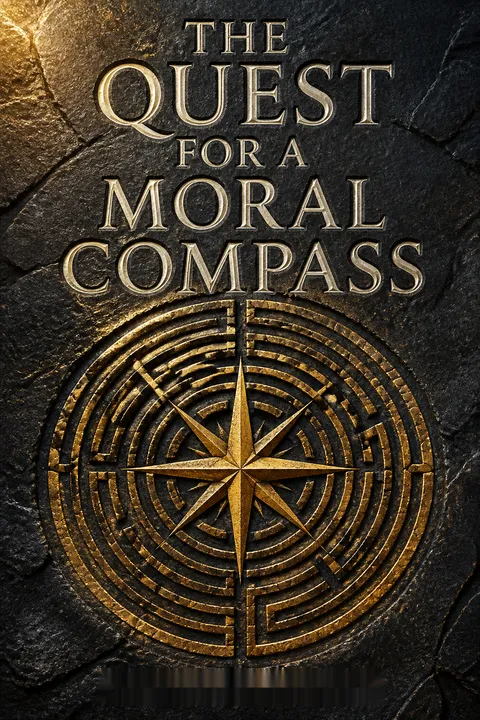
The final image of humans as moral mapmakers is compelling because it rejects moral outsourcing. It should not be read as permission to invent values at whim. It is a demand to justify them publicly, learn from history, and remain answerable to those who live with their consequences. The compass is not a fixed instrument; the need for orientation is real, and its reliability depends on collective scrutiny.
Review Summary
Readers praise The Quest for a Moral Compass as an accessible and comprehensive overview of ethical thought throughout history. Many appreciate its global perspective and engaging writing style. The book is commended for its analysis of how moral philosophies have evolved and intersected with historical events. Some criticize the lack of depth in certain areas or bias towards Western philosophy. Overall, reviewers find it thought-provoking and valuable for those interested in ethics, philosophy, and the development of moral ideas across cultures and time periods.
Glossary
eudaimonia
human flourishingAn ancient Greek conception of the good life, strongly associated with Aristotle. It means more than pleasure or a passing feeling of happiness: it describes living and acting well across a life. Aristotle connects it to exercising reason, developing virtue, and participating in a community, while recognizing that material and social conditions affect whether flourishing is possible.
phronesis
practical wisdomAristotle’s term for the judgment needed to act well in particular, changing circumstances. Unlike theoretical knowledge, practical wisdom cannot be acquired through abstract instruction alone. It develops through experience and helps a person discern what response is fitting for the people, reasons, timing, and situation involved.
Euthyphro dilemma
test of divine moralityA question posed in Plato’s dialogue Euthyphro: is an action good because the gods approve it, or do the gods approve it because it is already good? If divine approval makes it good, morality may seem arbitrary. If the gods recognize goodness independently, goodness does not depend entirely on divine command.
oikeiosis
expanding moral concernA Stoic idea describing the process of drawing people who initially seem distant into one’s circle of concern. Hierocles pictured concentric circles extending from the individual through family and community to humanity as a whole. Ethical development means treating those in outer circles with the closeness ordinarily reserved for those nearby.
wu-wei
non-forcing actionA Daoist principle often understood as acting without forcing events against their natural course. It is not simply laziness or inactivity. It counsels restraint from excessive interference and effortful control, on the view that deliberate attempts to impose order can disrupt the patterns through which change occurs.
categorical imperative
unconditional moral dutyKant’s name for a moral requirement that does not depend on what a person wants or hopes to achieve. A proposed action must follow a principle that could be applied consistently to everyone, and people must be treated as ends in themselves rather than merely as tools for another person’s purposes.
facticity
given conditions of choiceSartre’s term for the circumstances already present when people make choices, including their history, institutions, and social environment. Facticity constrains what actions are available but does not erase responsibility. Sartre connects freedom to the capacity to act within existing conditions and, through collective effort, to change them.
emotivism
moral claims as feelingsA twentieth-century position associated with A. J. Ayer, according to which moral statements do not report facts that can be proven true or false. Saying an action is wrong expresses disapproval and may encourage others to share it. Critics argue that this account struggles to explain why moral judgments carry more social force than personal preferences.
moral sense
capacity for moral approvalA concept developed by eighteenth-century moral philosophers and discussed by Hume. It describes human dispositions that enable people to approve or disapprove of character and conduct. Hume links this response to sympathy, which lets observers share imaginatively in the pleasure or pain caused by a trait or action.
telos
purpose or endA Greek term for the end, purpose, or fulfillment toward which something is directed. In ancient ethics, human beings could be judged by how well they fulfilled their proper function and developed their capacities. The book traces how modern thought weakened this fixed account and recast human development in historical and political terms.
FAQ
What's The Quest for a Moral Compass about?
- Exploration of moral history: The book examines the evolution of moral thought across various cultures and religions, tracing ethics from ancient times to modernity.
- Focus on key figures: It highlights the contributions of significant philosophers and religious leaders, such as Socrates, Confucius, and Muhammad, and their impact on moral frameworks.
- Interconnectedness of ethics and society: Kenan Malik argues that moral ideas are deeply intertwined with social structures and historical contexts, shaping societal understandings of right and wrong.
Why should I read The Quest for a Moral Compass?
- Broad perspective on ethics: The book offers a comprehensive view of moral philosophy, valuable for understanding the foundations of ethical thought.
- Engaging narrative style: Malik presents complex ideas in an accessible manner, weaving historical narratives with philosophical insights to keep readers engaged.
- Relevance to contemporary issues: The exploration of moral dilemmas and ethical frameworks is pertinent to modern discussions about morality, justice, and human rights.
What are the key takeaways of The Quest for a Moral Compass?
- Moral evolution is complex: Moral ideas have evolved over time, influenced by cultural, social, and historical factors rather than being static or universal.
- Interplay of fate and free will: The book discusses the philosophical tension between fate and free will, particularly in the context of moral responsibility.
- Diverse ethical frameworks: It highlights various ethical systems, from Aristotle's virtue ethics to religious moralities, showcasing their unique approaches to morality.
What are the best quotes from The Quest for a Moral Compass and what do they mean?
- “The history of moral thought...”: This quote emphasizes the ongoing struggle to reconcile fate and free will in understanding human agency.
- “To desire freedom, and be tortured...”: Reflects the human condition as portrayed in the Iliad, illustrating the conflict between individual desires and external constraints.
- “The moral world bound by myth...”: Highlights the transition from mythological to religious explanations of morality, marking a significant shift in ethical thought.
How does Kenan Malik define morality in The Quest for a Moral Compass?
- Morality as relational: Malik suggests that morality is not an absolute set of rules but varies across cultures and societies.
- Dynamic and evolving: He emphasizes that moral ideas change with social, political, and historical developments, rather than being fixed or universal.
- Interplay of ethics and identity: Moral frameworks are often tied to cultural identities, shaping how communities understand and enact ethical behavior.
How does The Quest for a Moral Compass address the conflict between reason and faith?
- Historical tension: The book illustrates the historical conflict between Rationalists and Traditionalists regarding the sources of moral truth.
- Philosophical dialogues: Malik presents key dialogues, such as those between al-Ghazali and Ibn Rushd, to show how these debates shaped moral landscapes.
- Modern implications: The exploration of this conflict is relevant today, raising questions about the role of reason and faith in public life and personal morality.
What role do historical figures play in The Quest for a Moral Compass?
- Influence of philosophers: Figures like Socrates and Aristotle are examined for their foundational contributions to Western moral philosophy.
- Religious leaders' impact: Leaders like Moses and Muhammad established moral codes that have influenced millions, intertwining ethics with faith.
- Cultural context of ideas: Malik places these figures within their historical and cultural contexts, showing how their ideas responded to moral challenges of their times.
How does The Quest for a Moral Compass compare Eastern and Western philosophies?
- Cultural differences in ethics: Malik contrasts Western individualism with the communal focus of Eastern philosophies like Confucianism.
- Influence of religion: The book discusses how monotheistic religions shaped Western moral thought, while Eastern traditions emphasize harmony and balance.
- Philosophical intersections: Despite differences, both traditions grapple with similar moral questions, revealing a shared human concern for understanding right and wrong.
How does The Quest for a Moral Compass address the relationship between ethics and politics?
- Ethics as a foundation for governance: Malik argues that moral principles have historically shaped political systems, influencing laws and governance structures.
- Political implications of ethical thought: The book explores how different ethical frameworks have justified political actions, from war to social justice movements.
- Interdependence of ethics and power: Malik highlights how ethical considerations can both empower and constrain political authority, shaping societies' moral landscapes.
What is the significance of the "death of God" in The Quest for a Moral Compass?
- Crisis of meaning: Malik discusses how the decline of religious authority has led to a search for new moral foundations, creating a crisis of meaning in modern societies.
- Shift in moral authority: The "death of God" signifies a transition from divine command to human agency in moral decision-making, emphasizing personal responsibility.
- Philosophical implications: This concept challenges individuals to construct their own moral frameworks, rather than relying on traditional religious or philosophical systems.
How does Malik address the concept of race in The Quest for a Moral Compass?
- Historical context: The book explores how racial ideologies emerged in the nineteenth century as a response to social inequalities, intertwining with concepts of morality.
- Critique of racial thinking: Malik critiques the use of race as a moral justification for inequality, highlighting the dangers of such ideologies in shaping societal norms.
- Call for equality: He advocates for a moral vision rooted in equality and shared humanity, challenging readers to confront and dismantle racial prejudices.
How does The Quest for a Moral Compass relate to contemporary moral dilemmas?
- Framework for discussion: Malik provides a historical context that helps readers understand current moral issues, such as human rights and social justice.
- Moral complexity: The book emphasizes that contemporary moral dilemmas often lack clear solutions, reflecting the complexities of modern society.
- Encouragement of dialogue: Malik advocates for open discussions about morality, suggesting that understanding diverse perspectives can lead to more nuanced ethical frameworks.
About the Author
Other books by Kenan Malik
Download PDF
Download EPUB
.epub digital book format is ideal for reading ebooks on phones, tablets, and e-readers.








