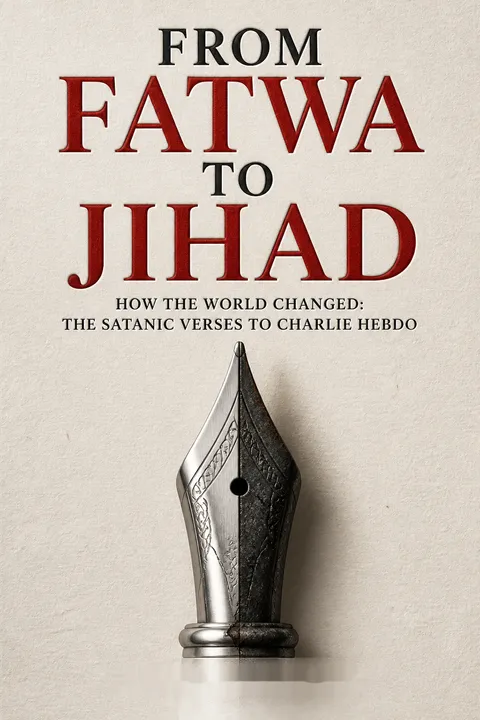


Key Takeaways
Read the Rushdie affair as political history, not an eternal war of civilizations.
A local protest went global. In January 1989, demonstrators in Bradford burned Salman Rushdie’s novel, The Satanic Verses. The image traveled worldwide, inviting a simple story: Islam and the West were destined to clash. But the controversy began with political organizing, local rivalries, and disputes about who could speak for Muslims. The book argues that the Ayatollah Khomeini’s death decree, issued in February, transformed a limited campaign into an international crisis.
Follow the changing context. The affair connects the book-burning to later events, including the 7 July 2005 London bombings, without treating one as the inevitable cause of the other. Malik’s central claim is that political choices, social conditions, and changing ideas of identity helped create the path from protest to jihad. Islam itself cannot explain why those changes happened when they did.
What is valuable here is the refusal to treat a religious label as a complete explanation. Historical events are better understood through sequences of decisions, institutions, and competing interests than through civilizational shorthand. That approach resembles process tracing in political science, which asks how one condition leads to another rather than treating correlation as destiny. The caution cuts both ways: a political account should not make theology irrelevant. Religious ideas can motivate people, but they do not explain why particular interpretations gain influence at particular moments.
Fund people by shared needs, not identities assigned by official spokespeople.
Policy can harden categories. Malik uses multiculturalism to describe policies that organize public life around distinct ethnic or religious communities, often through selected representatives. After the 1980s riots, councils including the Greater London Council consulted minority groups and directed funding to them. The stated aim was to give excluded people a voice. But officials often treated a small meeting or umbrella organization as the authentic voice of an entire community.
Birmingham shows the risk. The city created nine ethnic and faith-based umbrella groups to represent minority residents. In 2005, a rumor of a rape by Asian men helped trigger violence between Black and Asian residents in Lozells. The book argues that policies built around group competition had deepened divisions. That does not mean public funding caused the riot. It means that treating diverse populations as uniform blocs can reward leaders who emphasize difference and leave internal disagreements unheard.
The institutional problem is not recognition itself, but recognition without accountability. Public agencies need ways to hear groups that have been excluded, yet a single intermediary can turn a temporary role into a claim of permanent authority. Research on bureaucratic classification describes a related effect: administrative categories can shape how people understand and organize themselves. Still, universal programs can also overlook distinct barriers, such as language access or discrimination. The practical test is whether representation remains open, plural, and answerable to the people it claims to serve.
Treat radicalization as a modern search for belonging, not ancient theology.
Identity filled a social gap. Malik’s friend Hassan had been a secular left-wing activist before joining the anti-Rushdie campaign in Bradford. He described finding community and purpose as a Muslim. Malik argues that young radicals were not simply returning to an old religious world. Many were second-generation Britons who had rejected their parents’ customs but did not feel fully included in British political life.
Tradition was not the only force. The book describes the biradari, a network of kin and community ties that offers migrants mutual support but can also reinforce elders’ authority. Some young people rejected both that structure and secular politics. Islamist groups offered a portable identity, collective purpose, and an alternative to family expectations. This is not a claim that exclusion automatically produces extremism. It is an argument that modern social fragmentation can make a rigid, ready-made identity especially appealing.
This account makes belonging a political resource, not merely a private feeling. Social identity research likewise treats group membership as a source of recognition, status, and shared meaning, particularly when other routes to these are weak. That helps explain why a movement can appeal even to people with limited religious practice. The account also invites caution: the same need for belonging is met by unions, sports clubs, civic groups, and religious communities that are not extremist. The key question is not whether people seek identity, but which institutions offer it and what obligations come with it.
Track the peer group and local grievance before assuming a global terror command.
Networks can be improvised. Malik draws on Marc Sageman’s study of more than 500 people linked to al-Qaeda and argues that many were educated, socially connected, and not unusually mentally ill. He also points to local peer groups. In Beeston, the Mullah Crew began as young men trying to drive drug dealers from their neighborhood. The group’s local identity and ties mattered before any global jihadist story did.
The 7/7 plot was not a conventional army. The London bombers were British residents, and the book describes their movement toward violence through friendship groups, local activism, and contact with radical ideas. It also recounts amateur training efforts in Pakistan, not a tightly managed international operation. Malik’s point is that terrorism can emerge from small, loosely connected circles. That does not make ideology or foreign conflicts irrelevant, but it warns against assuming one central organization controls every attack.
The distinction between a network and a hierarchy matters for prevention. A tightly commanded organization can be disrupted through leadership and logistics; a loose network may depend more on friendship, imitation, and local status. This resembles diffusion in social networks, where behavior spreads through trusted ties rather than formal orders. Yet a focus on peer groups should not eclipse strategic actors or online recruitment. Different cases have different structures. Effective analysis starts by mapping actual relationships and capabilities instead of forcing every plot into the same model.
Defend offensive speech without pretending words have no consequences.
Offense and incitement are not identical. Malik traces the argument over blasphemy from The Satanic Verses to the Danish cartoons. The cartoons appeared in 2005, but the international protests followed months of campaigning and republication. The book argues that publication can cause offense without amounting to a direct instruction to commit violence. It also recounts how fear of controversy led institutions to cancel or alter artworks and books, including Random House’s decision to withdraw The Jewel of Medina.
Censorship changes the rules. Once offense becomes a sufficient reason to suppress expression, different groups can demand protection for incompatible beliefs. Malik warns that laws against hatred and indirect incitement can blur the line between speech and action. That warning does not mean speech is harmless: threats and direct incitement can cause real danger. The challenge is to identify those harms precisely rather than treat every insult as equivalent to violence.
A liberal defense of speech is strongest when it distinguishes criticism, insult, threats, and incitement instead of flattening them into one category. The distinction protects dissent while leaving room to address concrete risks. The harder question is how to assess indirect harm, especially where speech contributes to a climate of intimidation. That requires context and evidence, not automatic immunity or automatic prohibition. The book is persuasive about the dangers of censorship by anticipated offense, though its emphasis on free expression can understate the unequal power speakers have to make others bear the costs.
Make governments engage Muslims as citizens, not outsource them to unelected spokespeople.
Representation was built from above. The Muslim Council of Britain emerged in 1997 after earlier organizations formed during the Rushdie affair. Malik describes governments seeking a single partner to speak for British Muslims, much as Bradford City Council had supported a local Council of Mosques. The arrangement offered officials a convenient interlocutor, but it also gave organizations with limited democratic mandates an appearance of broad authority.
Polls revealed the gap. Surveys cited in the book found that only about 4 to 6 percent of British Muslims thought the MCB represented their views. Yet government and media often treated it as the community’s authentic voice. The book argues that this arrangement can alienate citizens whose views do not match those of the chosen representatives. Governments should consult religious organizations when relevant, but also engage people directly through ordinary political institutions and a wider range of civic groups.
A representative organization can be useful without being representative in the democratic sense. Institutions often rely on intermediaries because they lower the cost of consultation, but convenience can become a substitute for legitimacy. Political science distinguishes descriptive representation, where a representative shares an identity, from substantive representation, where they actually advance constituents’ interests. Neither is guaranteed by a religious label. The answer is not to exclude faith organizations, but to avoid giving any one group exclusive access and to create regular ways for constituents to contest who speaks for them.
Test claims of persecution against evidence without dismissing real discrimination.
Proportion matters. Malik rejects claims that British Muslims faced conditions comparable to Jews under Nazi rule. He also recognizes that Muslims experienced harassment, attacks, and heightened suspicion after terrorist incidents. To examine claims of police targeting, he cites 2003 figures: most terrorism-related stop-and-search operations involved white people, while Asians made up 14 percent of those stopped. In broader stop-and-search figures, Black people were stopped at a far higher rate than their share of the population.
Measure the specific harm. The book’s point is that exaggerated claims can hide other forms of discrimination and make grievance harder to assess. Its statistics are a dated snapshot, not proof that bias was absent. Official data can miss unreported incidents, and a group may experience stigma even when a particular enforcement measure is not disproportionately applied to it. Claims about prejudice should be tested carefully, while the people reporting harm are taken seriously.
Good measurement can prevent public debate from becoming a contest of competing victimhood. But data do not interpret themselves: the choice of denominator, category, and time period changes what a statistic can show. Administrative figures are especially limited when identity is recorded unevenly or incidents go unreported. The strongest approach pairs quantitative evidence with testimony and institutional context. Malik is right to resist inflated analogies, but a reader should not mistake a weak analogy for an absence of discrimination, or a low recorded count for a complete account of lived experience.
Protect dissenting voices inside minority communities, especially women and secular critics.
Respect can silence the people it intends to honor. Monica Ali’s novel Brick Lane portrays a Bangladeshi woman who gradually claims more control over her life. Some local activists called the book insulting and tried to stop its film adaptation from being made in the neighborhood. Malik argues that objections framed as defense of a community can obscure disagreement within it, including women’s opposition to restrictive customs.
Dissent has its own history. Southall Black Sisters, a feminist group, supported Rushdie’s right to publish and challenged both racism and religious fundamentalism. Its members rejected the assumption that male community leaders spoke for all women. The book’s broader lesson is that cultural protection can become a form of control when only approved representatives define authenticity. Respectful engagement matters, but it should not give any group a veto over the voices of its own members.
The politics of authenticity often grants authority to people who appear most conventional, while treating internal critics as compromised or disloyal. Feminist scholarship has long shown how appeals to cultural preservation can place the burden of continuity on women. At the same time, criticism from outside a community can reproduce stereotypes, even when it is well intentioned. The useful distinction is between protecting people’s equal standing and protecting a community from disagreement. The former supports pluralism; the latter can freeze power relations and narrow who is allowed to speak.
Defend universal rights without turning Enlightenment into a Western tribal badge.
Two opposing reactions share a trap. After the Rushdie affair, some liberals treated cultures as separate worlds whose beliefs should be shielded from challenge. After 9/11, others portrayed Islam as a single enemy of Western civilization. Malik argues that both responses weaken universal rights: one abandons common standards, while the other claims those standards belong only to the West.
Fear distorts the scale of danger. The book notes that violence between and within states had declined substantially after the Cold War, even as terrorism became more visible and frightening. It argues that societies can exaggerate a threat and, in response, restrict liberties or stereotype whole populations. The alternative is not to deny real security risks. It is to defend democratic rights consistently, including for people whose beliefs or origins are treated as alien.
Universal rights do not require cultural uniformity. They offer shared rules for disagreement among people who may hold very different beliefs. That is a more demanding ideal than either relativism or civilizational triumphalism, because it asks institutions to apply protections consistently, including when doing so is politically unpopular. The book’s defense of Enlightenment universalism is compelling, but the tradition’s historical failures cannot simply be waved away. Its best use is not as a badge of Western ownership, but as a standard by which every society, including Western ones, can be judged.
Analysis
The book’s most useful intervention is to replace a civilizational story with a political sequence. The Rushdie affair did not reveal an ancient, unified Islam confronting an equally unified West. It exposed how political actors, public institutions, and changing forms of identity could turn a literary dispute into a global symbol. Malik’s narrative links migration, anti-racist activism, municipal policy, religious authority, and individual radicalization without reducing the story to a single cause.
Its strongest insight concerns representation. When governments treat a religious or ethnic organization as the natural voice of a population, they do more than consult an existing community. They can privilege certain leaders, reward certain descriptions of identity, and make dissent less visible. This is a classic institutional feedback problem: categories intended to manage social reality can help produce the reality they claim merely to describe. The book makes that mechanism vivid through Bradford and Birmingham.
The argument is less secure when it assigns multicultural policy substantial causal weight. Councils adopted these policies amid real racism, exclusion, and political unrest. Recognition and targeted resources may have been flawed, but they also addressed failures that universal programs had not corrected. The account can sometimes make the policy’s consequences clearer than its alternatives, and risks understating how persistent discrimination can make communal organization necessary.
Its defense of free expression is strongest when it insists on distinctions: offense is not the same as threat, and religious dissent is not the same as hostility toward believers. But formal freedom alone does not ensure equal voice. A publisher, a protester, and a marginalized novelist possess different resources and face different risks. The book’s lasting challenge is therefore twofold: defend common rights against censorship and collective suspicion, while building institutions in which people can contest who represents them. That balance avoids both cultural segregation and the fantasy that universal principles apply themselves without politics.
Review Summary
From Fatwa to Jihad explores the rise of Islamic extremism in Europe, focusing on the Rushdie affair and its aftermath. Malik argues that misguided multiculturalism policies and self-censorship have inadvertently fostered radicalization. The book examines the evolution of free speech, identity politics, and social attitudes towards race and religion in the UK. While some reviewers found it thought-provoking and well-researched, others felt it lacked depth in certain areas. Overall, it's considered an important work for understanding contemporary issues surrounding Islamic extremism and Western societies' responses.
People Also Read





Glossary
Multiculturalism
Policy organized around group differenceIn Malik’s account, multiculturalism is both a description of a diverse society and a policy approach that recognizes and manages people through distinct ethnic or religious communities. He focuses especially on public institutions that fund group organizations and consult community representatives. His criticism is that these arrangements can treat diverse populations as uniform and reinforce identities that policy is meant to accommodate.
Biradari
Kinship and clan networkA biradari is a network of kinship and community ties, often recreated by migrants in Britain from relationships in their place of origin. It can provide practical support, including help finding housing, work, or money. Malik also describes how its obligations and elders’ authority can constrain individual choices, creating tensions between generations.
Plural monoculturalism
Separate cultures treated as uniformA phrase attributed to economist Amartya Sen for a model of society that treats it as a collection of distinct, internally uniform cultures. Malik uses it to criticize policies that recognize groups as fixed and self-contained rather than acknowledging disagreements within them and common interests across them. It describes a society that is diverse in population but organized as separate cultural blocs.
Islamism
Politics organized around IslamIslamism refers to political movements that treat Islam not only as a faith but as a basis for organizing society and political authority. In Malik’s account, Islamists often reject both liberal democratic politics and traditional religious institutions, seeking a unified political order grounded in their interpretation of Islam. Islamism is distinct from Muslim identity or religious observance.
Leaderless Jihad
Loosely connected jihadist activityA term associated with Marc Sageman’s account of contemporary jihadist networks, in which attackers may be linked by shared ideas and personal relationships without belonging to a tightly controlled organization. Malik uses this model to distinguish loosely coordinated groups from traditional political movements with clear leadership, membership, and strategic aims. It does not mean that all terrorist activity lacks organization.
Therapy culture
Public emphasis on emotional vulnerabilityA term from sociologist Frank Furedi, used to describe a culture that increasingly interprets people through emotional vulnerability and therapeutic needs. Malik connects it to new forms of religious revival in which personal feeling and individual experience can outweigh inherited institutions or shared obligations. The concept helps explain why perceived insults may be experienced as personal assaults on identity.
Fatwa
Religious legal opinionA fatwa is a religious legal opinion issued by an Islamic scholar or authority. Its scope and authority depend on who issues it and the context in which it is received. In the Rushdie affair, Ayatollah Khomeini issued a decree calling for Salman Rushdie’s death and urged Muslims worldwide to carry it out. Malik emphasizes the unprecedented global reach claimed by that decree.
About the Author
Other books by Kenan Malik

Download PDF
Download EPUB
.epub digital book format is ideal for reading ebooks on phones, tablets, and e-readers.








