

Key Takeaways
Transition toward raw foods gradually, without making purity the goal.
Start where you are. Rose argues that a person accustomed to processed foods should not abruptly switch to an all-raw diet. Her five transition levels tailor the amount of raw food to a reader's current habits and health history. The book recommends about 75 percent raw food at Level 5, increasing through the levels to 98 percent or more at Level 1. It suggests staying at a level for at least a month, and stepping back if the change feels difficult.
Keep the real aim in view. The author's goal is a lasting shift toward fruits, vegetables, and less processed food, not earning a raw-food identity. Her account of moving gradually from conventional dieting to mostly raw meals gives the plan its central story: change can be built through manageable steps rather than a dramatic reset.
The strongest feature here is behavioral, not detoxifying: gradual change can reduce friction, preserve familiar meals, and make a new eating pattern more sustainable. This aligns with research on habit formation, where manageable actions and a supportive environment tend to outperform short bursts of extreme effort. The transition levels are best treated as a flexible planning device, not a clinical assessment. The book's promised outcomes, including rapid weight loss and renewed youth, go beyond what this staged approach alone can establish.
Choose recognizable whole foods over engineered diet products and calorie math.
Read the ingredients. Rose urges readers to judge food less by calorie, fat, or carbohydrate counts and more by how processed it is. She contrasts packaged diet products, such as bars and sugar-free desserts, with ordinary foods such as avocados, fruit, leafy greens, and sweet potatoes. Her preferred pattern emphasizes fresh produce and minimally processed options, while allowing selected cooked foods, including whole grains, eggs, fish, and some meat.
Use a hierarchy, not a purity test. The book ranks fresh fruits and vegetables above more concentrated or heavily processed foods, and advises readers to move upward at their own pace. It also recommends keeping satisfying alternatives available, such as sprouted-grain bread, whole-grain pasta, and raw nuts, rather than relying on willpower to avoid every familiar comfort food.
The practical message to prioritize minimally processed foods is well supported by contemporary nutrition research. Whole foods often provide fiber and a broader nutrient profile, and replacing highly processed snacks with fruit or vegetables can improve diet quality. But calorie information is not meaningless: body weight is affected by energy balance, even though hunger, food structure, and satiety influence how much a person eats. Ingredient lists help identify processing, but a natural-sounding ingredient does not automatically make a food healthful, and not every packaged food is nutritionally poor.
Make fruits and greens the easy default, then build satisfying meals around them.
Put produce within reach. The book recommends fruit in the morning, a large raw-vegetable salad before cooked food, and a gradual increase in uncooked plant foods. Its signature Green Lemonade combines leafy greens, such as romaine and kale, with apple, lemon, and optional ginger. Rose presents fresh juice as a convenient way to consume vegetables, and describes a pattern called raw till dinner, in which raw foods dominate daytime meals while cooked food remains an option at dinner.
Make freshness enjoyable. The recipes aim to replace the image of raw food as plain celery sticks with flavorful salads, soups, dressings, and desserts. The point is not simply to add greens, but to make them appealing enough to eat regularly. The book also suggests starting with a salad before a cooked meal so vegetables are not crowded out by heavier dishes.
This takeaway translates well into environmental design: keep ready-to-eat produce visible, pair it with appealing flavors, and make the preferred option convenient. That is often more dependable than relying on motivation. A produce-rich diet can support health through fiber and micronutrients, but the book's claim that raw-food enzymes travel into cells to clean them is not established physiology. The body digests most food enzymes as proteins, while its own organs regulate metabolism and waste removal. Juicing is one option, not a necessary shortcut; whole vegetables retain their fiber.
Treat food-combining rules as experiments, not proven digestive mechanics.
Separate categories by the book's rules. Rose groups foods into starches, animal foods, nuts and seeds with dried fruit, and fresh fruit. She advises against mixing these groups in a meal, recommends eating fruit by itself, and suggests leaving several hours between different food categories. Her rationale is that certain combinations supposedly slow digestion and cause fermentation. The menus apply these rules to ordinary choices: fish with vegetables, or pasta with vegetables, rather than fish with pasta.
Notice your own response. The book also advises readers to observe whether particular meals leave them comfortable, gassy, or still hungry. That self-observation is more useful than trying to memorize every exception, such as its special treatment of avocado, bananas, and corn. Readers can borrow the idea of paying attention to patterns without assuming the book's digestive explanation is correct.
Food logs and symptom tracking can help people identify personal triggers, particularly when patterns are repeated and measured rather than inferred from one meal. The book's broader rules, however, are not supported by established digestive science. The human digestive tract routinely processes mixed meals containing carbohydrate, fat, and protein; stomach acid and digestive enzymes do not simply cancel each other out as the book proposes. For someone who finds these rules calming or convenient, they may function as a personal routine, but they should not be treated as a universal requirement or a proven weight-loss mechanism.
Make raw meals easy, varied, and satisfying enough to sustain.
Remove kitchen barriers. Rose deliberately avoids making soaking, sprouting, or long dehydration projects prerequisites. Many recipes rely on chopped produce, a blender, or a simple dressing, and the book offers prepared transition foods for busy schedules. Its menu ideas include raw salads and soups alongside cooked sweet potatoes, whole-grain pasta, eggs, fish, and other foods, depending on the reader's transition level.
Pleasure is part of the plan. The recipe section ranges from green juice and vegetable salads to raw chocolate pudding and ice cream. Rose argues that satisfying food makes it easier to continue, and she allows occasional restaurant meals and favorite foods rather than demanding strict veganism. In her account, she moved from heavy reliance on foods such as bagels and frozen yogurt to mostly raw meals over years, not overnight.
This is the book's most useful design principle: a plan that tastes good and fits an ordinary schedule is more likely to last. Behavioral nutrition research likewise emphasizes access, convenience, and enjoyment as influences on food choice. The book's flexibility also resists a common trap in restrictive diets, where a single deviation is treated as failure. Still, specialty products and large quantities of fresh produce can be expensive or unavailable. A practical version should adapt to budget, culture, allergies, and nutritional needs rather than treating costly ingredients as essential.
Plan for restaurants, travel, and gatherings before hunger makes the choice.
Prepare for real life. The book treats social occasions as part of the eating plan, not as interruptions to it. At restaurants, Rose suggests ordering a salad, vegetables, or fish and asking for substitutions when a dish includes ingredients the reader wants to avoid. At a private home, she recommends telling the host ahead of time or bringing a dish to share. For travel, she suggests packing fruit, sandwiches, nuts, or other portable foods.
Use small systems. The same approach appears in advice for the office and home: keep fruit and snacks available, store preferred salad dressing at work, and organize the kitchen so ingredients are easy to find. These strategies reduce the odds of choosing food simply because it is the only convenient option. The book also advises loosening the rules at celebrations rather than turning a special meal into a test of character.
Planning for predictable situations is a powerful, broadly applicable strategy. It shifts the decision from a moment of hunger and social pressure to a calmer moment when alternatives can be arranged. The book's specific restaurant scripts also normalize asking for simple substitutions, an underused skill. Its advice should not become a reason to avoid social eating or to judge other people's choices. Food is nutrition, but it is also culture and connection; a sustainable routine makes room for both without implying that one meal determines health.
Do not mistake the book's waste-release model for established physiology.
Understand the author's model. Rose describes excess weight as accumulated waste in the body's cells. In her account, raw foods supply enzymes that draw this material out, while the colon and other organs must remove it. She recommends additional practices, including dry brushing, sweating, deep breathing, and colon therapy, to support what she calls elimination. Symptoms such as headaches, skin changes, or fatigue are sometimes interpreted in the book as signs that waste is moving.
Separate metaphor from evidence. This model explains the title and organizes the five-step program, but it is the author's theory, not a demonstrated account of how body weight or digestion works. The book's claims about old food matter lodged in tissues, enzymes cleaning cells, and routine colonics releasing it should not be taken as medical fact. Symptoms can have many causes and are not reliable proof of detoxification.
The house-cleaning metaphor makes the author's system easy to remember, but vivid metaphors can smuggle in unsupported biological claims. The liver, kidneys, lungs, skin, and digestive tract do process and eliminate substances, yet this does not establish that ordinary diets leave years of food residue baked into cells or that raw-food enzymes extract it. Weight change is more plausibly explained by factors such as energy intake, water balance, and gut contents. Routine colon cleansing is unnecessary for most people and can carry risks, including dehydration, infection, and bowel injury.
Get clinical guidance before fasting, colon cleansing, or changing pregnancy nutrition.
The book recommends powerful interventions. It discusses juice fasts lasting several days, enemas, and regular colonics, and gives advice about diet during pregnancy and nursing. Rose cautions against aggressive detoxification during pregnancy, but also describes fasting after childbirth while nursing and recommends a highly raw diet for some families. These suggestions go well beyond ordinary meal planning.
Do not use them as self-care instructions. Fasting, enemas, and colonics are not necessary routine treatments for weight loss or general health, and can cause harm. Pregnancy, breastfeeding, childhood, chronic illness, and medication use all change nutritional needs and potential risks. Anyone considering major dietary restrictions or cleansing procedures should discuss them with a qualified clinician. For children especially, the book's weight-focused claims and restrictive meal patterns should not replace individualized guidance from a pediatric health professional.
The book's warm insistence on gradual change does not offset the risk of its more aggressive recommendations. Clinical guidance is especially important when a person is pregnant, nursing, taking medication, or managing a chronic condition, because adequate energy and nutrients matter more than pursuing a cleansing target. Colon cleansing can disrupt fluid and electrolyte balance or cause infection and injury; fasting can also be unsafe in some circumstances. The most transferable parts of the program are ordinary food and planning habits, not procedures that promise to flush hidden toxins.
Analysis
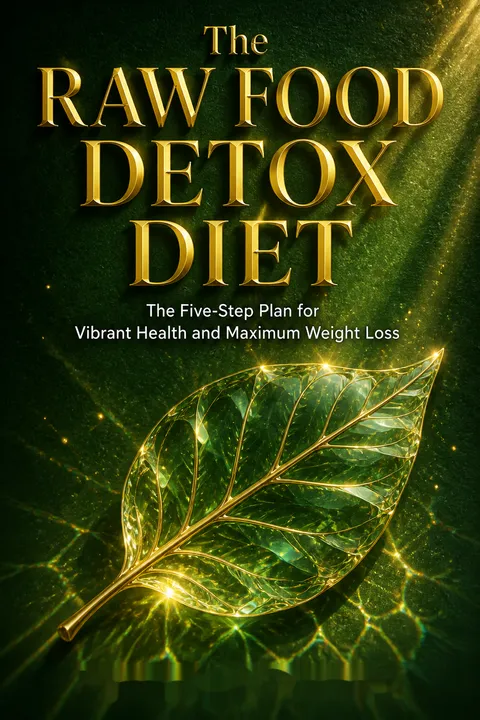
The Raw Food Detox Diet is part nutrition guide, part cookbook, and part personal testimony. Its organizing story is a move from frustration with conventional dieting toward a plant-heavy routine that is meant to change gradually. The five transition levels, menus, recipes, shopping advice, and restaurant strategies make a broad lifestyle pitch unusually actionable. Its most durable contribution is the insistence that food habits must fit a person's ordinary life. A reader can start by adding produce, reducing heavily processed foods, preparing satisfying alternatives, and planning for predictable social situations without accepting every claim in the book.
The text is also a product of its 2005 moment, when raw-food culture and detox language were especially persuasive alternatives to calorie counting and diet products. Its central physiological explanation, that waste accumulates in cells, raw enzymes remove it, and colon cleansing completes the process, is not established science. Food enzymes are generally broken down during digestion, while the body relies on its own metabolic and excretory systems. Food combining rules and claims that symptoms prove toxins are leaving likewise lack strong support. These are not minor details: they are used to justify restrictive schedules, fasting, and colonics.
A careful adaptation should preserve the practical value while separating it from the unsupported mechanism. More fruits and vegetables, less reliance on highly processed foods, and cooking that is enjoyable and convenient are reasonable goals for many people. They do not require eating nearly all raw food, avoiding mixed meals, or undergoing colon therapy. The book's uncritical confidence around children, pregnancy, and nursing requires particular caution. Its best lesson is not that one food category cleans the body, but that durable eating patterns are built through accessible choices. Its worst lesson is that discomfort is evidence of detoxification. Readers should keep the planning tools and recipes, and seek qualified medical advice before fasting, colon cleansing, or making restrictive changes.
Review Summary
The Raw Food Detox Diet receives mixed reviews. Many readers appreciate its flexible approach to transitioning to raw foods and find the recipes and meal plans helpful. Some praise the book for improving their health and energy levels. However, critics question the scientific basis of some claims, particularly regarding colonics and food combining. The emphasis on detoxification and bowel movements is controversial. While some find the advice life-changing, others view it as extreme or impractical for long-term adherence. Overall, readers appreciate the book's straightforward writing style and practical tips for incorporating more raw foods into their diet.
People Also Read



Glossary
Quick Exit Foods
Foods ranked by digestibilityRose's term for foods she considers easier to digest and quicker to pass through the body, especially fresh fruits and vegetables. Her hierarchy places these foods above more concentrated or processed choices. This is the author's dietary classification, not a standard medical measure of digestive speed or healthfulness.
Quick Exit Combinations
The author's meal-pairing rulesA set of food-combining rules that recommends separating fresh fruit, starches, animal foods, and nuts or seeds with dried fruit. Rose argues that particular combinations slow digestion and cause fermentation, and suggests leaving hours between categories. These rules are not established requirements of human digestion.
Raw Food Transition Number
A score for choosing a levelA self-scoring questionnaire intended to assign readers to one of five levels of the program. It asks about factors such as dietary history, age, weight, digestive problems, and food habits. The resulting level determines the raw-food proportion Rose recommends. It is a planning tool devised for this diet, not a validated health assessment.
Green Lemonade
A fresh green vegetable juiceThe book's signature juice, made by juicing leafy greens such as romaine and kale with apple, lemon, and optional ginger. Rose presents it as a convenient source of plant nutrients and a foundation of the program. It is a recipe, not a special detox treatment, and the book's claims that its enzymes cleanse cells are unproven.
autointoxication
The book's toxin-recirculation theoryRose uses this term for her proposed process in which raw foods release stored waste faster than the body's organs can eliminate it, causing the material to circulate again. She uses the idea to argue for gradual transitions and extra elimination methods. This is not a recognized explanation for ordinary symptoms during dietary change.
Download PDF
Download EPUB
.epub digital book format is ideal for reading ebooks on phones, tablets, and e-readers.








