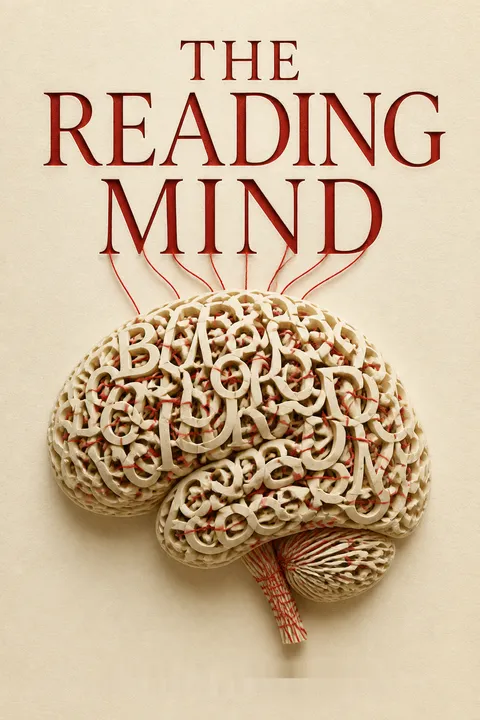


Key Takeaways
Treat reading as thought transported across time, not just decoded marks.
A message outlives its speaker. Writing began, in several places and eras, as a way to keep records of grain, property, and obligations. It extended memory, then let people share ideas without being together. Reading is the recovery of those stored thoughts. The book opens with a reader gasping at a fictionalized gangster’s final words, which conjure a whole world from a few lines of print.
The code carries speech. Pictures can be ambiguous, and a system with a separate symbol for every idea would demand an impossible amount of memorization while struggling to represent grammar. Writing instead encodes spoken language. The reader must recover words and the relations among them, not simply recognize shapes on a page.
The central reframing is powerful because it treats reading as communication infrastructure, not merely a school skill. Writing lets knowledge accumulate beyond any one person’s memory, making culture and institutions possible at scale. The analogy also clarifies why reading difficulty has consequences beyond test scores: it can restrict access to instructions, public information, and other people’s ideas. Still, the speech-code account is not the whole social story. Who gets to publish, whose language is treated as standard, and who has access to texts also shape what reading makes available.
Teach the alphabetic code, starting with the speech sounds ordinary conversation hides.
Sounds are not obvious units. Children often hear speech as a continuous stream, not as neat sequences of words and sounds. In spoken language, the same sound changes with the speaker and its neighboring sounds. The contrast between the first sounds in words like big and dig is easy to hear in context, but harder to isolate and describe. Phonemic awareness is the ability to notice and manipulate individual speech sounds.
English adds a messy map. Learning to read requires connecting letters with sounds, and English has roughly 44 phonemes but at least 200 common letter-sound pairings. A letter can sound different across words, and a sound can have several spellings. Rhymes, alliteration, and explicit instruction help children attend to sounds and learn the code. Practice with speech sounds and letter-sound relationships supports reading across languages.
This account explains why a task that appears effortless to fluent readers can be difficult for beginners: literacy asks the mind to inspect parts of speech that ordinary conversation processes without conscious analysis. It also distinguishes seeing a letter from understanding what it represents. That distinction matters for instruction and for identifying the source of difficulty. The emphasis on phonemic awareness should not imply that every child needs the same amount or form of support. Language experience, hearing, and the consistency of a writing system all affect the route into literacy.
Practice until familiar spellings free attention for understanding the text.
Readers learn words by sight. Experienced readers have orthographic representations, mental knowledge of how words and letter groups are spelled. They can reach meaning through sound, spelling, or both at once. This helps explain why a familiar word is easier to read than an invented spelling that sounds similar, and why surrounding letters can help identify a partly unclear letter.
Fluency protects working memory. Sounding out each word takes attention that would otherwise support comprehension. With practice, readers recognize more words quickly and use less mental effort to decode. The self-teaching hypothesis describes how successful sounding out gradually teaches readers what familiar words look like. Spelling instruction and reading practice can strengthen this knowledge. Fluency is not simply speed: it can also help readers hear sentence rhythm and emphasis in their minds, which supports interpretation.
The reciprocal relationship between letters and words is a useful model of expertise: a partial visual guess is checked against what words are plausible, and knowledge of likely words sharpens perception. Similar top-down and bottom-up exchanges appear in skilled perception more generally. The practical implication is not to replace sound-based decoding with visual memorization. Familiarity with spelling grows through accurate encounters with words, while decoding remains useful for unfamiliar ones. Fluency matters because it releases attention, but reading quickly without building meaning is not the same as reading well.
Build connected word knowledge, not a pile of dictionary definitions.
Words change with context. Knowing a definition is not always enough. The meaning of heavy depends on whether it describes a watermelon or a person; the sense of spill changes depending on what happens next. The mind is better pictured as a network of connected concepts than as a shelf of tidy dictionary entries. Reading one word partially activates related ideas, making relevant meanings easier to access when context points toward them.
Breadth and depth both count. Breadth means knowing many words. Depth means knowing their features, associations, and uses well enough to interpret them precisely and quickly. Readers generally need to know about 98 percent of the words in a text for comfortable comprehension. New meanings accumulate gradually as a reader encounters a word across different contexts. A single definition may start learning, but varied examples and further reading make knowledge more secure.
A network model captures something dictionaries miss: meaning is flexible and relational, and a concept’s useful features depend on the situation. It also explains why vocabulary size alone cannot describe what a reader knows. Depth resembles expertise in other domains, where concepts are linked into structures that support rapid retrieval and inference. There is a limit to how much context can rescue an unknown term, however. When too many meanings are missing, inference becomes exhausting, so rich context and direct teaching are complements rather than competing methods.
Comprehend by connecting sentences into a model of what is happening.
Understanding has layers. Readers first extract ideas from sentences, then connect those ideas, then build an overall representation of the text. That broader representation is called a situation model: a mental model of the events, people, and relationships described, rather than a memory of the exact wording. Readers may forget most sentences from a novel but retain its plot and a strong impression of a character.
Readers fill in what writers omit. To understand that icy sidewalks explain a parent’s warning, a reader must know that ice is slippery, people can fall, and parents want to protect their children. The text often leaves these links unstated. In the opening story, the reader infers that a dying character is reciting a safe combination and responds emotionally because the novel has already built a picture of him. Comprehension depends on both the text and what the reader brings to it.
The situation model helps explain how comprehension can be coherent without perfect memory for wording. It also makes clear that reading is constructive: readers supply causal links, resolve references, and track whichever features matter to their purpose. This is an asset, but it creates vulnerability. A reader may build a plausible interpretation from prior beliefs even when a text says something different. Good comprehension therefore involves both inference and monitoring, especially when a text contains contradictions or conflicts with what seems familiar.
Teach knowledge alongside strategies, because facts provide the bridges texts leave out.
Knowledge can outweigh general skill. In a study described in the book, children read a passage about soccer. Those who knew more about soccer remembered far more than children with less topic knowledge, even when the latter had stronger verbal skills. Broad knowledge helps readers interpret words, connect sentences, and decide which events matter. Research also found substantial links between reading performance and general cultural and factual knowledge.
Strategies cannot supply missing facts. Prompts to identify a main idea or make inferences can help readers coordinate information, especially when they have not been doing so. But a strategy cannot tell a student what an unfamiliar topic means. The book connects gaps in background knowledge with the drop some disadvantaged students experience when school reading shifts from decoding toward comprehension. Curricula therefore need carefully sequenced content that introduces new ideas without assuming students already know everything a text leaves unstated.
This is a consequential challenge to the idea that comprehension is a portable skill that can be trained independently of subject matter. Knowledge lets readers make more inferences with less effort, and it supplies context that a general strategy cannot manufacture. The policy challenge is deciding which knowledge belongs in a shared curriculum. That choice is not neutral: communities disagree about whose history and cultural references deserve emphasis. A strong response is not to abandon knowledge-rich teaching, but to make selections deliberate, broad, and open to scrutiny.
Make reading feel achievable before asking children to love it.
Reading reinforces its own appeal. Children are more likely to enjoy reading when it feels manageable; enjoyment can support a positive attitude, which makes reading more likely. More reading builds fluency, vocabulary, and knowledge, creating a reinforcing cycle. The Matthew Effect is the pattern in which early advantages compound: confident readers read more and improve, while struggling readers may avoid the practice that would help them catch up.
Motivation is more than liking books. Expectancy-value theory describes motivation as depending on the value of an activity and the expectation of succeeding at it. A child may want a book but doubt their ability to read it. Rewards can also backfire: preschoolers who received a certificate for drawing with attractive markers later showed less interest in them than children who were not rewarded. The reward gave them a reason to see the activity as something done for payment, not its own sake.
The feedback loop links skill development with identity and emotion, rather than treating motivation as a pep talk problem. It suggests that success experiences and achievable materials can be more persuasive than distant promises about future achievement. The reward example also cautions against assuming that any pleasant incentive creates lasting interest. Yet external rewards are not inevitably harmful; their effects depend on how they are framed and what activity they support. The central question is whether the child experiences reading as meaningful and possible once the incentive is gone.
Put appealing books within reach and make reading the easy choice.
Access changes behavior. Leisure reading competes with other activities, so a child need not dislike books to skip them. One teacher recommended a book, learned that copies sat in the school library, then brought them to class. Several students volunteered to read it, though none had gone to the library themselves. A short walk was enough friction to matter. Keeping books visible and immediately available makes choosing one easier.
Shape the menu of options. The value of reading rises when a book connects to a child’s interests, friends, or practical goals. A crowded or noisy home can make reading difficult even for a willing reader. Screens also compete for attention, so families can set limits while ensuring good reading material is close by. Reading habits are shaped not only by what children think, but by the opportunities and alternatives around them.
The library story is a small example of a broad principle in behavioral design: choices are shaped by convenience, visibility, and friction, not just by stated preferences. This is especially useful because it avoids blaming a child for failing to act on an intention. It also implies that access interventions should account for unequal home conditions, including noise, space, and book availability. Restricting alternatives may help in some settings, but it works best when adults offer attractive substitutes rather than treating reading as a punishment or screen use as a moral failing.
Use digital tools selectively; access is not the same as comprehension or judgment.
A screen is not automatically an upgrade. Digital reading and teaching tools have varied results. Reading on paper has shown a small advantage over screens for some comprehension and speed measures, while features such as scrolling and visible links can add demands on attention. The difference depends on the design and the task. The book also questions the fear that digital media has destroyed young people’s ability to concentrate, proposing instead that constant entertainment may lower patience for boredom.
Online reading needs source checks. In one demonstration, seventh-graders selected for online reading skill were shown a convincing website about an imaginary tree-dwelling octopus. Every student accepted it as real. Search ranking and polished design are not reliable evidence of truth. Readers need to check who created a page, what organization supports it, and whether independent sources corroborate it. Digital access supplies information, but not the knowledge or judgment needed to evaluate it.
The useful distinction is between access to information and the ability to learn from or assess it. Digital media can reduce friction, yet links, interface choices, and entertainment cues can redirect attention. Source evaluation is also a form of epistemic literacy: readers must judge not just what a claim says, but why it should be trusted. The book’s media-use figures and technology landscape reflect the period in which it was written, so they should not be treated as timeless measurements. Its broader principle remains valuable: evaluate specific tools and behaviors, not technology in the abstract.
Analysis
The book’s strongest move is to make reading intelligible by decomposing it without pretending that any single component explains the whole. Letters, sounds, spelling, vocabulary, sentence meaning, inference, memory, and motivation are not isolated modules in ordinary life. They interact. A fluent word representation frees attention for comprehension; background knowledge sharpens interpretation; successful reading can strengthen the identity and motivation that lead to more reading. This gives educators a causal map rather than a list of disconnected techniques.
The model also unsettles a common policy assumption: reading comprehension is not a context-free capacity that can be improved simply by drilling strategies. Strategies can direct attention, but content knowledge supplies the material for inference. That insight has implications for assessment. A score on one passage can reflect a reader’s familiarity with its topic as well as general reading ability. Fair assessment therefore requires varied content and careful interpretation of what a result measures.
A further strength is the book’s restraint around technology. It distinguishes the medium, the software design, and the habits surrounding digital devices instead of treating them as one cause. Yet its claims about screen use and media time are tied to evidence available in 2017. New devices and platforms alter the conditions, so the safest lasting conclusion is methodological: test specific tools against specific reading goals.
The cognitive perspective is not a substitute for sociocultural analysis. A reader’s knowledge, confidence, and access to books are shaped by family, schooling, language, and social opportunity. Moreover, a knowledge-rich curriculum requires decisions about which histories and reference points become common knowledge. Scientific models can describe consequences of those choices, but cannot settle their values. The book’s most durable contribution is therefore both explanatory and modest: reading is a remarkable coordination of learned code and existing mind, while the social conditions that support it remain matters for deliberate public choice.
Review Summary
The Reading Mind is highly praised for its comprehensive exploration of the cognitive processes involved in reading. Reviewers appreciate Willingham's clear explanations of complex concepts, making the book accessible to educators and general readers alike. Many find it valuable for understanding how the brain processes written language, from letter recognition to comprehension. The book's insights on fostering a love for reading in children are particularly well-received. Readers commend Willingham's research-based approach and practical implications for teaching and encouraging reading.
People Also Read







Glossary
Phonemic awareness
Noticing individual speech soundsThe ability to identify and manipulate the individual sounds, or phonemes, in spoken words. It differs from broader phonological awareness, which includes noticing larger sound units such as words, syllables, and rhymes. Because alphabetic writing maps letters to speech sounds, phonemic awareness helps children learn how the code works.
Alphabetic principle
Letters represent speech soundsThe understanding that letters and letter groups correspond to sounds in spoken language. Learning letter names or recognizing familiar printed words does not by itself demonstrate this principle. A reader must grasp that written symbols encode speech sounds and learn the particular mappings used by the language.
Orthographic representations
Mental knowledge of spellingsStored knowledge of how written words and recurring letter groups look. Experienced readers use these representations to recognize familiar words and help identify uncertain letters. They work alongside sound-based decoding, supporting faster word recognition and reducing the attention required to understand a passage.
Self-teaching hypothesis
Decoding builds visual word knowledgeThe proposal that readers learn many spellings through successful encounters with print. When a reader decodes an unfamiliar word accurately, its written form becomes associated with its identity. Repeated encounters gradually strengthen knowledge of words and letter patterns, often without deliberate memorization.
Idea-web
Connected ideas from a textThe reader’s developing representation of the ideas expressed in a text and the connections among them. Each newly understood sentence is linked to earlier ideas through shared people or objects, time, setting, properties, or causal relations. The idea-web captures text meaning beyond the sentences’ exact wording.
Situation model
Mental model of described eventsA broad, selective representation of the situation described by a text. It organizes important events, relationships, and features such as goals, causes, time, or space, depending on the reader’s purpose and knowledge. It is more abstract than a list of sentence meanings and helps explain what readers retain.
Expectancy-value theory
Motivation reflects value and expectationA framework for understanding choices in which motivation depends on the value a person expects from an activity and the expectation that they can obtain that value. For reading, a child may value a book but avoid it if reading seems too difficult, or may try a challenging text if success feels likely.
Matthew Effect
Early reading gaps can compoundA pattern in which early differences in reading ability can widen through reciprocal effects. Children who read successfully are more likely to read often, gaining fluency, vocabulary, and knowledge. Children who find reading difficult may avoid it, reducing practice and making future reading harder.
Functional equivalence hypothesis
Similar activities displace each otherThe proposal that a new activity is most likely to replace an existing one when both serve a similar purpose. In the book’s example, television competed with light entertainment in print and evening radio programs more than it displaced newspapers. The concept offers a way to examine media substitution rather than assume it.
FAQ
What’s The Reading Mind by Daniel T. Willingham about?
- Cognitive science of reading: The book provides a comprehensive cognitive approach to understanding how the mind reads, breaking down the mental steps from letter recognition to comprehension.
- Stepwise exploration: Willingham explains the process of reading in a step-by-step manner, covering writing systems, decoding, vocabulary, comprehension, motivation, and the impact of digital technology.
- Focus on mental processes: Rather than focusing on the brain’s biology, the book emphasizes the cognitive processes involved in reading, such as memory, language, and attention.
- Practical implications: The book aims to inform educators, parents, and policymakers about how reading works and how to support literacy development.
Why should I read The Reading Mind by Daniel T. Willingham?
- Accessible science: Willingham translates complex cognitive science research into clear, understandable language for non-experts.
- Practical insights for educators: The book offers evidence-based advice for reading instruction, motivation, and intervention strategies.
- Comprehensive coverage: It addresses foundational topics like the alphabetic principle, orthographic knowledge, vocabulary, and comprehension.
- Relevance to digital age: The book discusses how technology and changing reading environments affect literacy and reading habits.
What are the key takeaways from The Reading Mind by Daniel T. Willingham?
- Reading is complex: Reading involves multiple cognitive processes, including vision, memory, language, and emotion.
- Background knowledge is crucial: Comprehension depends heavily on the reader’s prior knowledge and ability to make inferences.
- Motivation and environment matter: Attitudes, self-concept, and access to books significantly influence reading behavior and development.
- Explicit instruction is needed: Effective reading instruction requires explicit teaching of phonics, vocabulary, and comprehension strategies.
How does The Reading Mind by Daniel T. Willingham define the purpose of reading and writing?
- Communication of thought: Reading allows us to understand others’ thoughts or our own from the past by decoding written symbols.
- Writing as memory extension: Writing preserves and transmits ideas across time and space, acting as a tool for memory and communication.
- Sound over meaning: Writing systems, especially alphabets, encode the sounds of spoken language rather than direct meanings.
- Implications for reading: This focus on sound shapes how readers learn to decode and understand written language.
What is the relationship between writing and reading in The Reading Mind by Daniel T. Willingham?
- Writing encodes speech: Writing is a code for spoken language, with letters representing speech sounds (phonemes).
- Alphabetic principle: English uses an alphabetic system, requiring readers to learn letter-sound correspondences.
- Oral language connection: Reading ability is closely linked to oral language skills, making phonemic awareness essential.
- Instructional implications: Explicit teaching of letter-sound relationships is critical for learning to read.
What are the main challenges in learning to read English, according to The Reading Mind by Daniel T. Willingham?
- Letter recognition difficulties: Readers must distinguish letters despite variations in appearance, which requires visual discrimination skills.
- Phonemic awareness challenges: Identifying and manipulating individual speech sounds is difficult because they are not naturally segmented in speech.
- Complex spelling system: English has many-to-many mappings between letters and sounds, making decoding more challenging than in more consistent languages.
- Need for extensive practice: Mastery requires learning hundreds of letter-sound pairings and repeated exposure to print.
How does The Reading Mind by Daniel T. Willingham explain orthographic (spelling) knowledge and its role in reading?
- Dual-route reading model: Skilled readers use both phonological decoding and direct recognition of word spellings (orthographic route).
- Orthographic representations: Mental images of word spellings help readers identify words quickly and reduce cognitive load.
- Reciprocal influence: Knowledge of words aids letter recognition and vice versa, explaining why letters are easier to identify in real words.
- Fluency development: Orthographic knowledge supports fluent reading, freeing up working memory for comprehension.
What does The Reading Mind by Daniel T. Willingham say about vocabulary and word meaning in reading comprehension?
- Breadth and depth matter: Both knowing many words and having rich, interconnected knowledge about each word are crucial for understanding text.
- Context-sensitive meanings: Word meanings are flexible and depend on context, requiring readers to activate related concepts.
- Gradual acquisition: Vocabulary is learned gradually through repeated exposure in varied contexts, both explicitly and incidentally.
- Support for comprehension: Strong vocabulary knowledge enables better inference-making and deeper comprehension.
What are the three levels of meaning representation in reading, according to The Reading Mind by Daniel T. Willingham?
- Extracting sentence ideas: Readers form mental representations of individual sentences by decoding words and understanding grammar.
- Connecting ideas across sentences: Readers build an “idea-web” by linking ideas using referents, properties, settings, and causal or temporal cues.
- Building a situation model: Readers create an abstract, overarching mental model of the text’s meaning, focusing on main characters, events, and causal relationships.
- Role of background knowledge: Prior knowledge is essential for making inferences and constructing a coherent situation model.
Why is background knowledge so important for reading comprehension in The Reading Mind by Daniel T. Willingham?
- Bridging omitted information: Writers often leave out details, expecting readers to fill gaps using their background knowledge.
- Empirical support: Studies show strong correlations between reading ability and cultural literacy, highlighting the importance of broad knowledge.
- Situation model construction: Background knowledge shapes how readers interpret and remember the overall meaning of a text.
- Struggling readers: Lack of relevant knowledge can lead to confusion, missed inferences, and poor comprehension.
How does The Reading Mind by Daniel T. Willingham address motivation, attitudes, and strategies for encouraging reading?
- Emotional basis of attitudes: Positive reading experiences and associations shape attitudes toward reading more than logical reasoning.
- Expectancy-value theory: Motivation depends on how valuable reading seems and the reader’s expectation of success, influenced by self-concept and environment.
- Role of self-concept: Seeing oneself as a reader reinforces positive attitudes and increases reading frequency.
- Practical strategies: Make books accessible, align reading materials with interests, and limit competing activities to encourage more reading.
What does The Reading Mind by Daniel T. Willingham say about digital technology’s impact on reading and literacy?
- Small comprehension cost: Reading from screens shows a slight disadvantage in comprehension and speed compared to paper, though this may change as technology improves.
- Design and preference: Features like scrolling, hyperlinks, and navigation affect comprehension, and many readers still prefer paper for certain types of reading.
- No strong displacement: Despite increased screen time, digital media have not significantly reduced overall reading time.
- Educational implications: Digital literacy requires more than basic tech skills; critical evaluation of online information and adaptation of reading instruction are necessary.
About the Author
Other books by Daniel T. Willingham

Download PDF
Download EPUB
.epub digital book format is ideal for reading ebooks on phones, tablets, and e-readers.








