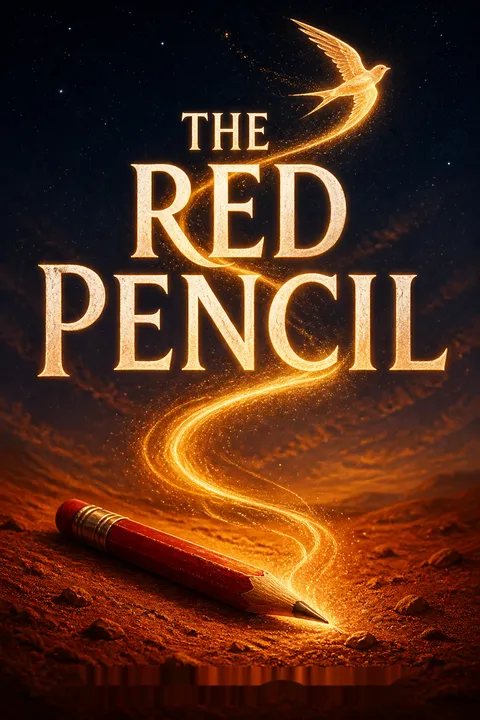


Plot Summary
Halima Leaves for Gad
At twelve, Amira lives on her family’s farm in Darfur, where wheat ripens, chores fill the day, and her father, Dando, still lifts her in play. Her closest friend, Halima, is leaving with her parents for Nyala. They hope to earn more in the city, and Halima expects to attend Gad Primary School, which welcomes girls.
Amira wants that future too, but her mother, Muma, insists that farm work and marriage matter more than reading. The departure sharpens a wish Amira has barely dared to name: she wants to learn beyond the limits of the village. As Halima’s family disappears down the road, Amira feels not only the loss of her friend, but the ache of being left behind.
Halima’s departure gives Amira’s educational desire a human face. School is not yet an abstract ideal: it is the place her friend may go, and the possibility that makes their separation hurt. The farm offers affection and belonging, especially through Dando’s playful attention, but it also assigns Amira a future before she can choose one. Muma’s refusal is rooted in practical need and inherited expectations, not simple cruelty. That tension matters because Amira must later seek independence without ceasing to love the people whose fears constrain her.
The Twig Finds Wings
Amira’s new birthday twig lets her draw birds and figures in the farm’s sand, giving shape to thoughts she cannot yet express in words. Dando and their neighbor Old Anwar notice her curiosity and agree that she might have a talent for learning, though Dando cannot persuade Muma to send her to school. At home, Amira hears explanations of the war and the Janjaweed, the mounted militia Muma warns may attack without warning.
The adults’ fear unsettles her, while their descriptions of conflict seem as senseless as Dando and Old Anwar’s quarrels over tomatoes. She keeps drawing, following the marks her hand makes across the goz. Her twig becomes a small instrument of possibility in a life where adults decide which possibilities are useful.
The twig links Amira’s creativity to her dawning understanding of the world. She cannot make sense of political explanations, but she can recognize the contradictions in adult behavior, including the way a petty argument resembles the conflicts they condemn. Her drawings offer an alternative form of attention: she observes, tests, and revises rather than accepting a ready-made account. At the same time, the war’s threat enters daily life through Muma’s warning. The chapter places imagination beside danger without pretending that art can prevent violence.
Haboob, Then Flitter
When a haboob, a towering dust storm, bears down on the farm, Amira refuses to leave the livestock pen because she cannot find Nali, her beloved sheep. Dando tries to pull her to shelter, but Amira clings to his leg until the storm veers away. Muma has already brought Nali inside, and the family’s relief exposes how badly Amira frightened her father.
She later apologizes, recognizing that her worry for Nali made her disregard the danger to everyone. Soon Nali gives birth to a frail lamb. Amira names her Flitter, and Leila, Amira’s younger sister, helps welcome the newborn. For a brief time, the farm’s rhythms return: the sisters visit the lamb, and Amira watches new life steady itself on uncertain legs.
Amira’s refusal to abandon Nali shows a form of courage that has not yet learned to distinguish devotion from recklessness. Dando’s fear gives her a glimpse of how her choices affect those who love her, and her apology turns stubbornness into reflection without extinguishing her fierce attachment. Flitter’s birth then makes the family’s bonds tangible: care is shared among Amira, Leila, and the animals. The scene’s fragile happiness also raises the stakes of the farm as a home. The more Amira loves its people and creatures, the more devastating the approaching violence will be.
The Raid Burns Everything
The attack arrives with helicopters, gunfire, and riders on horseback. Muma sends Amira and Leila to hide, but Amira sees Dando fall as the Janjaweed shoot through the village and set homes and livestock pens ablaze. Nali dies in the fire. After the riders leave, Amira cannot find Flitter among the charred remains.
Muma gathers what she can carry, and Old Anwar helps the surviving villagers prepare to flee. Gamal, Leila’s friend, is now without his parents and badly burned; Old Anwar treats his wounds with a poultice. Amira, Muma, Leila, Gamal, and the other survivors leave their ruined homes in darkness. Behind them, even Muma’s wedding garment lies among the ashes.
The raid destroys more than shelter and possessions. It collapses the ordinary relations that made the farm intelligible to Amira: her father’s presence, the animals’ routines, and the material traces of family history. The abruptness of the violence mirrors a child’s limited power to comprehend events as they happen; she sees fragments, not a coherent military explanation. Yet the immediate aftermath also reveals a counterforce to destruction. Old Anwar treats Gamal, Muma gathers the children, and survivors move together. Their care does not redeem the attack, but it makes survival possible.
Kalma Silences Amira
Old Anwar leads the survivors along hidden routes, traveling by night to avoid the militia. They ration water and food, while Muma carries Leila and Amira walks beside Gamal, whose burns remain painful. Amira tries to imagine Dando walking with her, but cannot make the memory feel real. After many nights, the group reaches Kalma, a crowded displacement camp.
Their shelter is patched from rice sacks, and clean water must be collected in strict daily rations. In the camp, Amira’s voice dwindles until she can no longer speak. Muma grieves for Dando in secret, believing her daughters cannot see her cry. Amira watches her mother’s hidden sorrow while her own remains locked inside, beyond the reach of ordinary words.
The journey makes displacement physical: exhausted feet, scarce water, and a destination that offers safety without restoring home. Amira’s silence is not a choice to withhold information but a bodily response to loss that she cannot yet organize into speech. Muma’s concealed mourning repeats that pattern in adult form. Each tries to protect the other by hiding pain, and each becomes more isolated as a result. Kalma’s crowding places them among thousands with similar losses, yet collective hardship does not automatically create intimacy. Amira needs a means of expression that does not demand immediate explanation.
A Red Pencil Returns
A relief worker named Miss Sabine visits the camp and gives Amira a red pencil and yellow writing tablets. At first, Amira cannot make the pencil draw Nali, whose loss is too painful to face directly. Gradually, she uses it to depict the attack, including the helicopter and the people running below.
The images give her a way to approach what happened without forcing a full account into speech. When Leila and Gamal borrow the pencil and tablet, Amira’s anger breaks through as a loud demand for them back. Her voice has returned in a sudden burst. Later, she finds Muma grieving at night and reaches for her; the two finally cry together, sharing the sorrow each had tried to hide.
The pencil does not function as a cure or a simple symbol of optimism. Amira first resists it because the tool cannot make grief manageable on command. Drawing becomes useful when it lets her approach memories at her own pace, and the return of her voice follows a concrete act of anger and attachment rather than a miraculous recovery. Her shared tears with Muma mark another change: expression is no longer solitary. The scene suggests that recovery requires both a medium for private feeling and a relationship in which pain can be witnessed.
Lessons Beneath the Lantern
Old Anwar notices Amira’s drawings and begins teaching her at night in an empty shelter, keeping the lessons secret from Muma. He starts with the English letter A, showing Amira that a written character is also a kind of picture.
She takes eagerly to letters and words, though arithmetic frustrates her because it interrupts the drawing she loves. Her lessons widen her ambitions: she wants to make pictures and words, then teach other children to read. A television report showing Gad Primary School in Nyala intensifies that wish.
Amira looks for Halima among the students and sees girls learning together in a proper classroom. In Kalma, meanwhile, Gamal turns his grief into a drawing of himself reaching toward his dead parents, while Leila and Amira keep finding ways to play.
Old Anwar’s teaching connects Amira’s existing artistic intelligence to literacy instead of treating school as a separate capacity. Letters become images she can understand through the same visual attention that guides her drawings. Her frustration with arithmetic also matters: learning is not presented as effortless uplift, and Amira’s talents do not make every lesson equally welcome. The television image of Gad gives her ambition a concrete destination, while Gamal’s drawing shows that art can carry feelings a child cannot otherwise communicate. Creativity becomes both a personal language and a shared resource.
Muma Learns to See
Muma discovers the secret lessons and confronts Old Anwar and Amira, angry that they have kept them from her. She fears schooling will pull Amira away from marriage, family, and the work needed to survive. Old Anwar argues that denying the girl’s ability also wastes her future, but admits that Gad costs money and Nyala is dangerous to reach.
Later, beside the cooking fire, Amira draws two faces in the dirt. Muma takes up a stick and adds a frame and smiles, joining the picture instead of rejecting it. The moment does not solve the family’s practical problems, but Amira understands that Muma can recognize her gift. She tells Leila she intends to reach Nyala and promises to return with books and lessons for the children left behind.
Muma’s shift begins not with a winning argument but with participation. By adding to Amira’s drawing, she enters a language her daughter already trusts, and their shared image briefly replaces the tug of war over the tablet. The change is meaningful but incomplete: money and danger still block access to Gad, and Muma has not arranged a safe route. Amira’s promise to Leila transforms a private wish into a responsibility toward other children. Her emerging independence is therefore relational. She wants to leave, but imagines education as something she will bring back.
Amira Slips Through Kalma
After giving Leila her birthday garment and leaving small gifts for her family and friends, Amira waits until dusk. She carries food and sesame oil against mosquitoes, then heads for Kalma’s guarded entrance, following her belief that the moon can guide her. Two guards are distracted when they quarrel over a bottle of Fanta.
Amira slips through the gate while they struggle over the spilled drink. Beyond the fence, she is alone and does not know the route to Nyala. Still, she keeps walking toward the moonlight, frightened by every sound behind her. A lantern approaches, then hands seize her shoulders. Old Anwar has followed and found her before she can disappear into the dark.
Amira’s escape is an act of agency, but the scene refuses to confuse determination with preparedness. She has a destination and a compelling reason to go, yet no map, escort, or reliable knowledge of the terrain. Her success at the gate depends on the guards’ momentary distraction, echoing the hedgehog she once watched slip beneath Kalma’s fence. The gifts left behind show that she understands the emotional cost of departure. She is not rejecting her family; she is trying to reach a future the camp cannot provide, and she takes that risk without first securing anyone’s permission.
Old Anwar Joins Her
Old Anwar is angry that Amira has risked traveling alone, but he listens as she explains that she is headed to Nyala for Gad Primary School. She admits she does not know how to get there. Rather than drag her back to Kalma, Old Anwar unloads the firewood from his wheelbarrow and prepares it for the journey.
He oils its squeaking hinges and protects them both against mosquitoes, then places Amira in the wheelbarrow and takes up the handles. At dawn, they leave the camp together. Amira does not arrive at Gad within the story, and her schooling is not guaranteed. What changes is that she no longer faces the road alone: Old Anwar’s practical help turns her solitary attempt into a shared journey.
The ending resolves the immediate conflict without pretending to solve the larger one. Amira has not reached school, and the danger beyond Kalma remains real. Old Anwar’s response preserves the seriousness of her decision while correcting its most dangerous flaw: she needs guidance and companionship, not merely courage. The wheelbarrow is an ordinary tool repurposed into a vehicle of possibility, consistent with the book’s attention to making new uses from what is available. The final departure is therefore neither a guaranteed triumph nor a return to obedience. It is a beginning secured by trust.
Analysis
The novel follows Amira’s movement from a farm where her future is prescribed toward a future she tries to shape for herself. Its central conflict is not simply tradition against modernity. Muma’s resistance to school grows from poverty, danger, and a belief that familiar roles may protect her daughter. Old Anwar’s support matters because he offers practical instruction rather than treating education as an easy escape. Amira’s wish to learn is personal, but it also carries a social horizon: she imagines returning with knowledge for Leila, Gamal, and other children.
Art develops as a sequence of capacities. Amira begins by drawing in sand, where pictures emerge from observation and play. Trauma then makes speech inaccessible, and the red pencil gives her another route toward memory. When she draws the attack, she does not erase what happened; she makes it possible to approach. Drawing also becomes literacy when Old Anwar teaches her letters as shapes. The book therefore links expression with agency without suggesting that creativity can undo violence or guarantee material opportunity.
The novel’s emotional movement depends on relationships as much as individual resilience. Amira’s refusal to leave Nali during the haboob reveals both her devotion and her impulsiveness. Her later apology shows that courage must include awareness of others. Muma and Amira’s shared drawing changes their conflict more deeply than argument alone, because Muma participates in her daughter’s imaginative world. Old Anwar, meanwhile, turns care into concrete help, first through lessons and finally by accompanying Amira beyond the camp.
The ending remains open. Amira has not reached Gad, and the road is still dangerous. Yet she has moved from waiting for permission to pursuing a goal, and she does not have to make that journey alone. Hope in this story is neither optimism about outcomes nor denial of loss. It is the capacity to imagine a next step, then find the people and means to take it.
Review Summary
The Red Pencil receives praise for its poetic storytelling, powerful themes, and evocative illustrations. Readers appreciate the book's portrayal of Amira's struggle for education amidst conflict in Sudan. Many find the verse format effective, though some struggle with it. The book is lauded for making complex topics accessible to young readers while maintaining hope. Some criticize the pacing and abrupt ending. Overall, reviewers recommend it as an important, moving story that raises awareness about the Darfur conflict and the value of education.
People Also Read


Characters
Amira
The drawing girlAmira is a twelve-year-old Darfurian girl whose life on a family farm has taught her patience, humor, and close attention to the world. She loves her parents, younger sister Leila, friend Halima, and the animals around her, but she also wants to read, write, and imagine a future beyond farm work and marriage. Her drawings in sand reveal an instinct for making meaning through images before she has formal language for them. Amira is observant and stubborn, sometimes acting before she has weighed the danger, yet she is capable of remorse and deep tenderness. Her central struggle is not whether she belongs to her family, but how to pursue a self-directed life without abandoning the people she loves.
Muma
The protective motherMuma is Amira and Leila’s mother, a tireless farm worker whose strength comes from practical knowledge, habit, and responsibility for her daughters. She believes a girl’s education may be useless or dangerous when a family needs help at home, and she expects Amira to accept the roles tradition has prepared for her. Her resistance is bound to fear and scarcity as much as authority: she knows how easily safety can vanish. Muma loves her daughters fiercely, but grief and worry make her hide what she feels. She is not without curiosity; beneath her certainty is a capacity to notice and respond when Amira finds a form of expression they can share.
Dando
Amira’s joyful fatherDando is Amira’s affectionate father, a farmer who makes room for play even as he works the land. He celebrates Amira’s curiosity and treats her as someone with a brightness worth encouraging, rather than simply another pair of hands for the farm. His humor appears in his friendly rivalry with Old Anwar over their tomatoes, while his conversations with Amira show that he wants her to understand the danger surrounding their village. Dando’s warmth does not make him careless: he can be firm when he sees his daughter take a risk. He gives Amira an early model of love that recognizes a child’s individuality.
Old Anwar
The village teacherOld Anwar is Dando’s longtime neighbor, friend, and teasing rival, with a farmer’s practical knowledge and a teacher’s patience. He sees Amira’s curiosity as a real ability, not an inconvenient distraction from work. Where Muma worries about what education might cost the family, Old Anwar is willing to find small, workable ways to teach, beginning with what Amira already knows about drawing. He is observant without being sentimental, and his respect for children shows in how he listens to them and takes their feelings seriously. Old Anwar also understands that ideals need practical support: encouragement matters, but so do food, safety, and a way forward.
Leila
Amira’s spirited sisterLeila is Amira’s younger sister, born with physical disabilities that make walking difficult but do not diminish her appetite for play or independence. She and Gamal invent games from battered household objects, and she cherishes her makeshift doll with the seriousness of a devoted caretaker. Leila can be stubborn, funny, and perceptive; she notices when Amira is withdrawn and responds in songs and gestures. Her relationship with Amira blends affection with the ordinary friction of sisters. Leila’s desire to do things for herself reflects the book’s insistence that vulnerability and capability can exist together.
Gamal
Leila’s lively playmateGamal is a village boy who becomes Leila’s close playmate, joining her in soccer games made from a dented tin can. He is mischievous and energetic, sometimes careless with other children’s feelings, but his behavior also reveals a child trying to manage emotions he cannot easily name. He makes games from scraps and sees possibilities in objects others might discard. Amira’s friendship with Gamal grows through shared play and hardship, giving the children ways to connect when adult explanations and words fall short.
Halima
Amira’s schoolgoing friendHalima is Amira’s closest childhood friend. Their bond is built from small adventures, shared jokes, and the easy intimacy of growing up side by side. Halima’s family is more open to new opportunities, and her hopes for education give Amira a glimpse of a life beyond the farm. Her move toward Nyala makes her an important presence even when she is absent: Amira carries the friendship in memory and imagines the school they once discussed. Halima represents a possible path, not a rival or a judgment on Amira’s family.
Miss Sabine
The visiting aid workerMiss Sabine is a Sudan Relief worker who visits Kalma carrying supplies for the children. She notices Amira’s silence without demanding that the girl explain it, and offers attention without pressure. Her gentle way of responding matters as much as the materials she brings: she treats Amira as a child with her own pace and inner life, rather than a problem to be solved. Miss Sabine’s brief visit creates a connection between the camp’s harsh conditions and the possibility of creative expression.
Nali
Amira’s beloved sheepNali is Amira’s sheep and a cherished part of the farm’s daily life. Amira tends her, recognizes her moods, and worries over her during the haboob. Nali’s pregnancy and care of her lamb make the family’s animal life feel intimate rather than incidental. Through Nali, Amira practices attention, responsibility, and affection.
Flitter
Nali’s newborn lambFlitter is Nali’s newborn lamb, named by Amira after she sees the small animal struggle to stand. The lamb’s early dependence gives Amira something delicate to protect and a new creature to visit with Leila. Flitter belongs to the family’s web of daily care and affection.
Plot Devices
The red pencil
A tool for expressionMiss Sabine’s red pencil gives Amira a new way to make marks after she has lost her voice. At first, she cannot use it to represent what she misses most, so the pencil does not provide instant comfort. Drawing gradually lets her approach memories of the attack, and the experience helps her reconnect with speech, feeling, and other people. The pencil also changes shape in meaning as Old Anwar teaches Amira to turn images into letters and words. It stands for access to expression, not a magical escape from trauma or poverty.
Sand and drawing
A language before wordsBefore Amira can write, she draws in the farm’s sand with a pointed twig. The changing surface allows her to invent pictures without paper, school, or formal instruction. In Kalma, she first finds the camp’s dirt and available branches inhospitable, then begins drawing again with the red pencil. Old Anwar recognizes that her visual thinking can lead into literacy, teaching her that letters are also shapes that make meaning. Drawing connects observation, memory, and learning, while giving Amira a medium that remains hers even when circumstances change.
What Else Is Possible
A practice of hopeAmira and Dando play a game in which they answer worry with a possible good outcome. The game does not deny that trouble exists; it asks Amira to keep imagination available when fear narrows her thinking. As events become more dangerous, the habit becomes harder to sustain, and Amira has to decide whether possibility is merely comforting or can lead to action. Its importance lies in the difference between hope as fantasy and hope as a question that opens another choice.
Moonlight and guidance
A spiritual compassThe moon is part of Amira’s village traditions and family memory. People once make noise to call it out from behind clouds, believing its visibility can affect their luck. During flight, the group instead values darkness because it helps them avoid detection. Later, Amira draws on Old Anwar’s religious teaching about seeking the path that shines brightest, and follows moonlight as she leaves Kalma. The changing meaning of the moon lets the story hold folk belief, faith, fear, and personal decision in the same image without making the moon a literal source of rescue.
Kalma’s fence
A boundary to crossKalma’s guarded boundary offers protection from immediate danger while also restricting movement. Residents hear that leaving may be dangerous and that the camp’s gates are controlled by guards who question those entering and leaving. Amira’s observation of a hedgehog slipping beneath the fence gives her a vivid image of escape, and later she uses a moment of distraction at the entrance to pass through. The fence is both a real obstacle and a measure of the choices available to a displaced child. Crossing it does not guarantee safety; it makes the need for help more urgent.
FAQ
Synopsis & Basic Details
What is The Red Pencil about?
- Amira's journey of resilience: The Red Pencil tells the story of Amira, a young Sudanese girl whose life is upended by violence, forcing her to flee her village and seek refuge in a camp.
- Finding hope through education: Amidst the harsh realities of displacement, Amira discovers the power of education and self-expression through a simple red pencil, which becomes a symbol of hope.
- Overcoming adversity with community: The narrative explores themes of loss, trauma, and resilience, highlighting the importance of community and the human spirit's ability to overcome adversity.
Why should I read The Red Pencil?
- Powerful emotional impact: The story is told in verse, creating a lyrical and emotionally resonant experience that allows readers to connect deeply with Amira's struggles and triumphs.
- Insight into refugee experience: It offers a poignant and accessible glimpse into the lives of refugees, shedding light on the challenges they face and the strength they possess.
- Celebration of education: The book emphasizes the transformative power of education and the importance of supporting opportunities for all, particularly in regions affected by conflict.
What is the background of The Red Pencil?
- Sudanese conflict backdrop: The story is set against the backdrop of the conflict in Sudan, specifically the violence perpetrated by the Janjaweed militia, which caused widespread displacement and suffering.
- Refugee camp realities: The narrative depicts the harsh conditions and challenges faced by refugees in camps, highlighting the lack of resources, the trauma of displacement, and the struggle for survival.
- Cultural context of tradition: The story also explores the cultural context of traditional Sudanese society, where girls' education is often not prioritized, adding another layer to Amira's personal struggle.
What are the most memorable quotes in The Red Pencil?
- "My father says, 'A mind is a garden. It must be tended.'": This quote, attributed to Amira's father, encapsulates the theme of education as a vital and nurturing force, highlighting the importance of intellectual growth.
- "The red pencil is a seed. It will grow into a tree of words.": This quote, spoken by Old Anwar, emphasizes the symbolic power of the red pencil as a catalyst for learning and self-expression, connecting it to the idea of growth and potential.
- "I will not be silent. I will write my story.": This quote, representing Amira's resolve, signifies her journey from voicelessness to empowerment, highlighting her determination to use her voice and share her experiences.
What writing style, narrative choices, and literary techniques does Andrea Davis Pinkney use?
- Verse narrative for emotional depth: Pinkney employs a verse narrative style, which enhances the emotional impact of the story, allowing for a more lyrical and intimate portrayal of Amira's inner thoughts and feelings.
- Symbolism of the red pencil: The red pencil is used as a powerful symbol of hope, education, and self-expression, recurring throughout the narrative to represent Amira's journey.
- Focus on sensory details: The author uses vivid sensory details to immerse the reader in Amira's world, from the harsh desert landscape to the crowded refugee camp, creating a strong sense of place and experience.
Hidden Details & Subtle Connections
What are some minor details that add significant meaning?
- Amira's sand drawings: Amira's initial drawings in the sand with a twig foreshadow her later use of the red pencil, highlighting her innate creativity and desire for expression even before formal education.
- The significance of names: The name "Amira" means "princess" in Arabic, which contrasts with her circumstances but also hints at her inner strength and potential for greatness.
- Muma's quiet observations: Muma's initial silence and adherence to tradition are not signs of apathy but rather a reflection of her own struggles and fears, which later evolve into support for Amira.
What are some subtle foreshadowing and callbacks?
- Halima's departure foreshadows Amira's: Halima's move to the city early in the story foreshadows Amira's own eventual departure from the refugee camp in pursuit of education, highlighting the theme of seeking opportunity.
- Dando's words echo in Amira's actions: Dando's encouragement of Amira's dreams and his belief in the power of education are echoed in Amira's determination to learn and share her knowledge, creating a powerful callback to his influence.
- The recurring image of the desert: The harsh desert landscape, initially a symbol of hardship and displacement, later becomes a backdrop for Amira's journey of self-discovery and resilience, showing how she transforms her environment.
What are some unexpected character connections?
- Old Anwar's mentorship: Old Anwar's role as a mentor is unexpected, as he is not a family member but a neighbor who recognizes Amira's potential, highlighting the importance of community support.
- Miss Sabine's brief but impactful role: Miss Sabine's brief appearance and simple act of giving Amira the red pencil have a profound impact on Amira's life, demonstrating the power of small acts of kindness.
- Gamal's friendship: Gamal's playful nature and friendship with Amira and Leila provide a sense of normalcy and joy amidst the harsh realities of the camp, highlighting the resilience of children.
Who are the most significant supporting characters?
- Old Anwar as a guide: Old Anwar serves as a wise mentor, guiding Amira on her journey of self-discovery and emphasizing the importance of education, acting as a catalyst for her growth.
- Miss Sabine as a catalyst: Miss Sabine's act of giving Amira the red pencil is a pivotal moment, igniting Amira's passion for learning and symbolizing the potential for change.
- Gamal as a symbol of resilience: Gamal's playful spirit and resilience in the face of adversity highlight the strength of the human spirit and the importance of finding joy even in difficult circumstances.
Psychological, Emotional, & Relational Analysis
What are some unspoken motivations of the characters?
- Muma's fear of change: Muma's initial resistance to Amira's education stems from her fear of change and her desire to protect her daughter within the confines of tradition, not from a lack of love.
- Amira's need for self-expression: Amira's silence after the attack is not just a result of trauma but also a reflection of her need to find a new way to express herself, which she eventually does through writing and drawing.
- Dando's hope for a better future: Dando's encouragement of Amira's dreams is driven by his hope for a better future for his daughter, one where she has opportunities beyond traditional roles.
What psychological complexities do the characters exhibit?
- Amira's trauma and resilience: Amira's journey is marked by the psychological trauma of witnessing violence and displacement, but she also demonstrates remarkable resilience and a determination to overcome her experiences.
- Muma's internal conflict: Muma's character is complex, as she grapples with her traditional beliefs and her growing understanding of Amira's need for education, showcasing an internal conflict between tradition and progress.
- Old Anwar's quiet wisdom: Old Anwar's character embodies a quiet wisdom and understanding of human nature, recognizing Amira's potential and guiding her with patience and encouragement.
What are the major emotional turning points?
- Dando's death as a catalyst: The death of Amira's father is a major emotional turning point, shattering her world and propelling her on a journey of loss and resilience.
- Receiving the red pencil: The gift of the red pencil is a turning point, reigniting Amira's passion for learning and providing her with a means to express her emotions and find hope.
- Amira's decision to leave the camp: Amira's decision to leave the camp in pursuit of education is a powerful emotional moment, signifying her journey from voicelessness to empowerment and her determination to shape her own destiny.
How do relationship dynamics evolve?
- Amira and Muma's evolving bond: The relationship between Amira and her mother evolves from one of traditional expectations to one of mutual understanding and support, as Muma begins to recognize Amira's need for education.
- Amira and Old Anwar's mentorship: The relationship between Amira and Old Anwar develops into a mentorship, with Old Anwar guiding Amira on her journey of self-discovery and encouraging her to pursue her dreams.
- Amira and Gamal's friendship: The friendship between Amira and Gamal provides a sense of normalcy and joy amidst the harsh realities of the camp, highlighting the importance of human connection.
Interpretation & Debate
Which parts of the story remain ambiguous or open-ended?
- The future beyond Gad Primary: The story ends with Amira leaving for Gad Primary School, but her future beyond that point is left open-ended, allowing readers to imagine the possibilities and challenges she might face.
- The long-term impact of trauma: While Amira finds hope and empowerment, the long-term impact of her trauma is not fully explored, leaving readers to consider the lasting effects of violence and displacement.
- The broader political context: The story focuses on Amira's personal journey, but the broader political context of the Sudanese conflict is not fully resolved, leaving readers to ponder the complexities of the situation.
What are some debatable, controversial scenes or moments in The Red Pencil?
- Muma's initial resistance to education: Muma's initial resistance to Amira's education can be seen as controversial, raising questions about the role of tradition and the limitations it can impose on women.
- The depiction of the Janjaweed: The portrayal of the Janjaweed as brutal antagonists can be seen as controversial, raising questions about the complexities of conflict and the need for nuanced perspectives.
- The simplicity of the red pencil's impact: The red pencil's transformative power might be seen as overly simplistic, raising questions about the complexities of overcoming trauma and achieving lasting change.
The Red Pencil Ending Explained: How It Ends & What It Means
- Amira's departure for education: The ending sees Amira leaving the refugee camp to attend Gad Primary School, symbolizing her journey towards empowerment and a brighter future through education.
- Symbolism of the red pencil: The red pencil remains a powerful symbol of hope and self-expression, representing Amira's ability to overcome adversity and shape her own destiny.
- Open-ended hope for the future: The ending is open-ended, leaving readers with a sense of hope and possibility, while also acknowledging the ongoing challenges faced by refugees and the importance of supporting education and opportunities for all.
Download PDF
Download EPUB
.epub digital book format is ideal for reading ebooks on phones, tablets, and e-readers.








